Category: Social Media
TikTok and Snapchat dodge trial on harm-to-kids lawsuit
TikTok will no longer be on trial when it comes to a lawsuit that claims Instagram, Snapchat, TikTok, and YouTube have platforms that are addicting and harmful to children.
The lawsuit, which involves a 19-year-old plaintiff going only by KGM, says the social networks caused her to become addicted to the apps and led to depression and suicidal thoughts.
‘New families every day … are speaking out and bringing Big Tech to court for its deliberately harmful products.’
TikTok has reportedly decided to settle and agreed in principle just hours before jury selection started in Los Angeles this week. Bloomberg Law reported that along with TikTok, Snap Inc. — owner of Snapchat — also reached a confidential settlement with the woman on January 20.
“Plaintiff KGM and defendant TikTok have reached an agreement in principle to settle her case,” Joseph VanZandt, the woman’s attorney, reportedly said in a statement.
The trial, which will continue with the other social media companies later this year, is just one of many that claim the sites are harmful, addictive, and otherwise have failed to protect children.
RELATED: Google’s new motto: Don’t be Christian
While this is the first case to go to trial, there are thousands of complaints from users and families that have sparked other lawsuits in Santa Fe, New Mexico, New York City, and the Northern District of California.
For example, in the Northern District of California, Instagram, Snapchat, TikTok, and YouTube were accused of “relentlessly” pursuing growth and “recklessly” ignoring the impacts their products have on children’s mental health.
In that case, Instagram’s former head of safety and well-being testified that Meta had a “17x” strike policy toward those who reportedly engaged in “trafficking of humans for sex.”
“You could incur 16 violations for prostitution and sexual solicitation, and upon the 17th violation, your account would be suspended,” the former employee claimed, citing internal documents.
Meta strongly denied the claims, stating, “We strongly disagree with these allegations, which rely on cherry-picked quotes and misinformed opinions in an attempt to present a deliberately misleading picture.”
“The full record will show that for over a decade, we have listened to parents, researched issues that matter most, and made real changes to protect teens,” Meta went on.
RELATED: Matt Damon: Netflix dumbs down movies for attention-impaired phone addicts
 Photo by Matt Cardy/Getty Images
The settlement between TikTok and KGM should come as no surprise, said Sacha Haworth, executive director of the Tech Oversight Project.
“This was only the first case — there are hundreds of parents and school districts in the social media addiction trials that [have started], and sadly, new families every day who are speaking out and bringing Big Tech to court for its deliberately harmful products,” she said in a statement provided to Blaze News.
If social media apps are found guilty in these trials, it could set a huge precedent for high-value settlements and possibly lead to sweeping regulation for how the sites handle youth accounts.
Like Blaze News? Bypass the censors, sign up for our newsletters, and get stories like this direct to your inbox. Sign up here!
Americans aren’t arguing any more — we’re speaking different languages
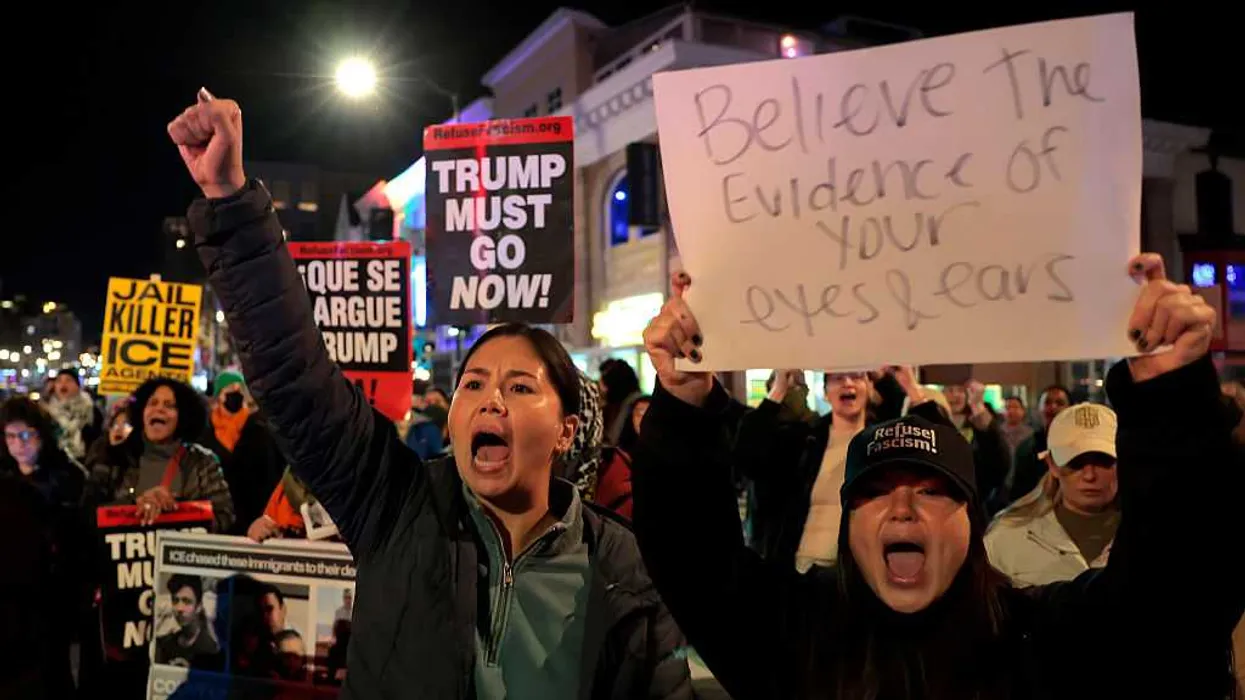
A few days ago, I found myself in a text exchange about two women killed by agents of the state.
One was Renée Nicole Good, a 37-year-old activist mother shot last week by an ICE agent in Minneapolis. The other was Ashli Babbitt, a 36-year-old U.S. Air Force veteran shot by a Capitol Police lieutenant inside the Speaker’s Lobby on January 6, 2021.
Are words being used to think — or to show whose side someone is on?
I asked what I thought was a simple moral question: Does the state ever have the moral right to kill an unarmed person who poses no immediate lethal threat?
I did not try to provoke. I did not claim the cases were the same. I said plainly that the facts, motives, and political contexts differed. My own answer was no. The purpose was not to merge the stories, but to test whether the same moral rule applied in both cases.
I was asking my friend to reason with me.
The response was not an argument. It came as a rush of narrative detail, moral verdicts, and firm insistence that the question itself was illegitimate. “Not comparable.” “Straw man.” The stories did not clarify the rule. They aimed to shut down the conversation.
But what struck me most was not the emotion. It was the disconnect.
I asked about a principle. I received a story. I tested a rule. I got a verdict. We used the same words — justice, murder, authority — but those words did very different work.
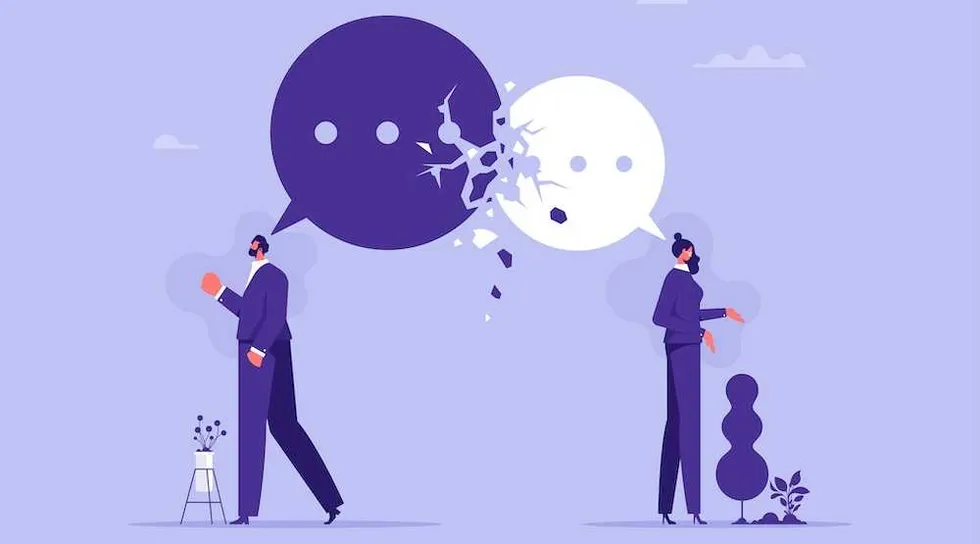
The exchange failed not because of tone or ideology. It failed because we spoke different civic languages. More troubling, we no longer agree on what civic language is for.
More than a failure of civility
For years, we have blamed polarization and tribalism. We shout past one another. We retreat into bubbles. All of that is true. But the deeper problem runs deeper than disagreement.
We no longer share a civic vocabulary shaped by common expectations about clarity, restraint, and universality.
We still speak words that are recognizably English. But we use the same words to reach very different ends.
One civic language treats words as tools for reasoning. Call it “principled” or “rule-based.” Questions test limits and consistency. Moral claims aim at rules that apply beyond one case. Disagreement is normal. When someone asks, “What rule applies here?” the question is not an attack. It is the point.
This language shapes law, constitutional argument, philosophy, and journalism at its best. Words like “justified” or “legitimate” refer to standards that others can test and challenge. If a claim fails under scrutiny, it loses force.
The other civic language works differently. Call it “narrative” or “moral-emergency” language. Here, words signal alignment more than reasoning. Stories carry moral weight on their own. Urgency overrides abstraction. Questions feel like invalidation. Consistency tests sound like hostility.
RELATED: The day the media taught me it’s always wrong to be right
 treety via iStock/Getty Images
In this mode, terms drift. “Murder” no longer means unlawful killing. It means moral outrage. “Straw man” stops meaning logical distortion and starts meaning emotional offense. “Not comparable” does not mean analytically distinct. It means do not apply your framework here.
Neither language is dishonest. That is the danger. Each serves a different purpose. The breakdown comes when speakers assume they are having the same kind of conversation.
The principled speaker hears evasion: “You didn’t answer my question.” The moral-emergency speaker hears bad faith: “You don’t care.”
Both walk away convinced the other is unreasonable.
Moral certainty over moral reasoning
Social media did not create this divide, but it rewards one language and punishes the other. Platforms favor speed over reflection, story over rule, accusation over inquiry. Moral certainty spreads faster than moral reasoning. Over time, abstraction starts to feel cruel and questions feel aggressive.
That is why so many political arguments stall at the same point. Facts do not resolve them because facts are not the dispute. The real question is whether rule-testing is even allowed. Once someone frames an issue as a moral emergency, universality itself looks suspect.
A simple test helps. Is this person using words to reason toward a general rule, or to signal moral alignment in a crisis?
Put more simply: Are words being used to think — or to show whose side someone is on?
RELATED: I don’t need your civil war
 Photo by Tom Williams/CQ-Roll Call Inc. via Getty Images
Once you see this, many conversations make sense. You understand why certain questions trigger anger. You see why consistency tests go unanswered. You recognize when dialogue cannot move forward, no matter how careful you sound.
This does not mean outrage is always wrong. It does not mean people should stop caring. It does mean we need better civic literacy about how language works. Sometimes restraint is a virtue. Walking away is not cowardice. Declining to argue is not surrender.
What cannot work is trying to make a principled argument within a moral-emergency frame.
America’s founders understood this. They designed institutions to slow decisions, force deliberation, and channel arguments into forms governed by rules rather than passion.
If we fail to see that we now speak different civic languages, we will lose the ability to talk calmly about the ideas and ideals that should bind us together. The alternative is full adoption of moral-emergency language — where persuasion gives way to force.
Too many Americans have already chosen that path.
The algorithm sells despair. Christmas tells the truth.
I recently did something that I usually avoid. I stayed up too late and wandered into the digital sewer we politely call “the conversation.” X, feeds, clips, comments, rage-bait. I knew it would not end well, but I kept scrolling anyway. By the time I finally shut it off, it was clear that the despair and resentment social media produces are not a bug — they are the feature.
The world you see online is a world stripped of context and proportion. Everything is framed as an emergency, everything demands outrage, nothing asks for wisdom. Human suffering is turned into ammunition, children are turned into slogans, and hatred is dressed up as moral clarity. If you sit with it long enough, you begin to feel foolish for believing in decency at all.
God is not dead. He is not asleep. And the story is not finished, no matter how much the algorithm wants you to believe otherwise.
It made me think of a poem I had not thought about for some time.
Henry Wadsworth Longfellow’s “Christmas Bells” is often quoted for its opening lines about peace on earth and goodwill toward men. That is usually where people stop.
But Longfellow wrote the poem in the middle of the Civil War. His country was fractured, his own son a casualty of the fighting, and his wife killed in a tragic accident. The poem is an honest look into the mind of a man laid low.
In the early stanzas, Longfellow describes hearing church bells repeat the old promise of peace. Then reality intrudes, cannons thunder, violence drowns out the song. He writes that it felt “as if an earthquake rent the hearthstones of a continent.” That is what civil war feels like from the inside.
That line has stayed with me for a very long time.
We are not there yet, but the pressure is mounting. Anti-Semitism has returned openly, not whispered, but justified. The Jewish people — history’s most reliable early warning system — are being threatened again, and too many voices respond with silence, excuses, or applause. We swore we would never allow this again. Now it is happening all over the West.
At the same time, the world is edging toward wider conflict. Alliances are hardening, borders matter again. But this time, there is no obvious force capable of stabilizing the chaos. America is busy devouring itself. Europe is exhausted. The rest of the world is watching to see what happens next.
This is the part of the poem most people skip.
Longfellow does not rush to hope. He admits his despair. “There is no peace on earth,” he writes, “for hate is strong, and mocks the song.” Honesty is not weakness. Pretending everything is fine when it is not is how civilizations collapse quietly.
But the poem does not end there.
The final stanza matters because it follows despair instead of denying it. Longfellow writes:
Then pealed the bells more loud and deep:
“God is not dead, nor doth He sleep;
The Wrong shall fail,
The Right prevail,
With peace on earth, good-will to men.”
That is not cheap optimism promising a quick end to suffering. It is a conviction insisting that evil does not get the last word.
That distinction matters a lot right now.
RELATED: Culture’s great subversion machine has broken down at last
 Blaze Media Illustration
Hope is not pretending the algorithm is wrong. It is recognizing that what trends is rarely what endures. The quiet courage that holds families together, the decency that stops violence when no camera is present, the faith that steadies people when institutions fail — those things do not go viral, but they do prevail. History does not turn on outrage. It turns on character.
Every civilization that survives a moment like this does so because enough people refuse to surrender their moral bearings. They do not deny the danger or excuse the evil. They do not outsource conscience to crowds or machines. They decide, quietly and stubbornly, to let their lives reflect the fact that truth still matters.
Longfellow had not yet seen the end of the war when he wrote that poem. He wrote it because despair was real and hope was necessary anyway. The bells did not silence the cannons overnight. But they reminded him — and us — that order is not an illusion and truth is not negotiable.
God is not dead. He is not asleep. And the story is not finished, no matter how much the algorithm wants you to believe otherwise.
Kids have already found a way around Australia’s new social media ban: Making faces
The liberal-dominated Australian parliament passed an amendment to its online safety legislation last year, imposing age restrictions for certain social media platforms.
As of Dec. 10, minors in the former penal colony are prohibited from using various platforms, including Facebook, Reddit, Snapchat, TikTok, X, and YouTube — platforms that face potential fines exceeding $32 million should they fail to prevent kids from creating new accounts or from maintaining old accounts.
Australian kids were quick, however, to find a workaround: distorting their faces to appear older.
‘They know how important it is to give kids more time to just be kids.’
Numerous minors revealed to the Telegraph that within minutes of the ban going into effect, they were able to get past their country’s new age-verification technology by frowning at the camera.
Noah Jones, a 15-year-old boy from Sydney, indicated that he used his brother’s ID card to rejoin Instagram after the app flagged him as looking too young.
Jones, whose mother supported his rebellion and characterized the law as “poor legislation,” indicated that when Snapchat similarly prompted him to verify his age, “I just looked at [the camera], frowned a little bit, and it said I was over 16.”
RELATED: App allegedly endangers ICE agents — now its creator is suing the Trump administration
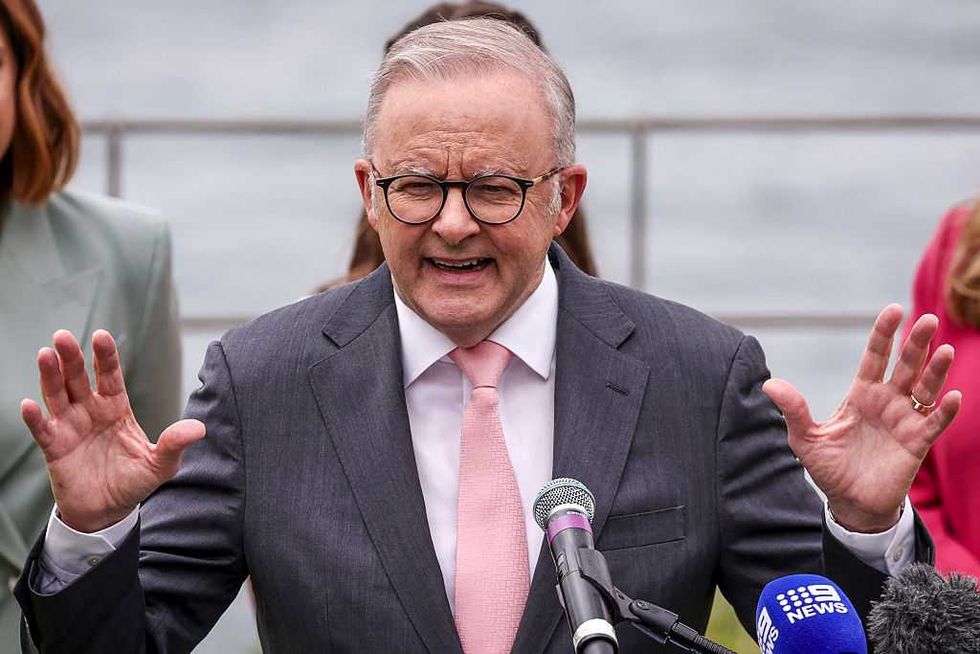 Australian Prime Minister Anthony Albanese. Photo by DAVID GRAY / AFP via Getty Images.
Jones suggested to the Telegraph that some teens may alternatively seek out social media platforms the Australian government can’t regulate or touch.
“Where do you think everyone’s going to?” said Jones. “Straight to worse social media platforms — they’re less regulated, and they’re more dangerous.”
Zarla Macdonald, a 14-year-old in Queensland, reportedly contemplated joining one such less-regulated app, Coverstar. However, she has so far managed to stay on TikTok and Snapchat because the age-verification software mistakenly concluded she was 20.
“You have to show your face, turn it to the side, open your mouth, like just show movement in your face,” said Macdonald. “But it doesn’t really work.”
Besides fake IDs and frowning, some teens are apparently using stock images, makeup, masks, and fake mustaches to fool the age-verification tech. Others are alternatively using VPNs and their parents’ accounts to get on social media.
The social media ban went into effect months after a government-commissioned study determined on the basis of a nationally representative survey of 2,629 kids ages 10 to 15 that:
- 71% had encountered content online associated with harm;
- 52% had been cyberbullied;
- 25% had experienced online “hate”;
- 24% had experienced online sexual harassment;
- 23% had experienced non-consensual tracking, monitoring, or harassment;
- 14% had experienced online grooming-type behavior; and
- 8% experienced image-based abuse.
Australian Prime Minister Anthony Albanese said in a statement on Wednesday, “Parents, teachers, and students are backing in our social media ban for under-16s. Because they know how important it is to give kids more time to just be kids — without algorithms, endless feeds and online harm. This is about giving children a safer childhood and parents more peace of mind.”
The picture accompanying his statement featured a girl who in that moment expressed opposition to the ban.
The student in Albanese’s poorly chosen photo is hardly the only opponent to the law.
Reddit filed a lawsuit on Friday in Australia’s High Court seeking to overturn the ban. The U.S.-based company argued that the ban should be invalidated because it interfered with free political speech implied by Australia’s constitution, reported Reuters.
Australian Health Minister Mark Butler suggested Reddit was not suing to protect young Aussies’ right to political speech but rather to protect profits.
“It is action we saw time and time again by Big Tobacco against tobacco control, and we are seeing it now by some social media or Big Tech giant,” said Butler.
Like Blaze News? Bypass the censors, sign up for our newsletters, and get stories like this direct to your inbox. Sign up here!
Gen Z in the Age of Digital Polyculture
Americans often say the 1960s marked the height of monoculture, but that moment was really the midpoint of a broader…
Parents Have Everything They Need to Keep Their Children Safe Online
The politically engaged members of Generation Z have undertaken to instruct the nation as to the proper regulation of technologies…
Botoxic femininity? ‘Titanic’ star bashes ‘cartoon’-faced plastic surgery addicts
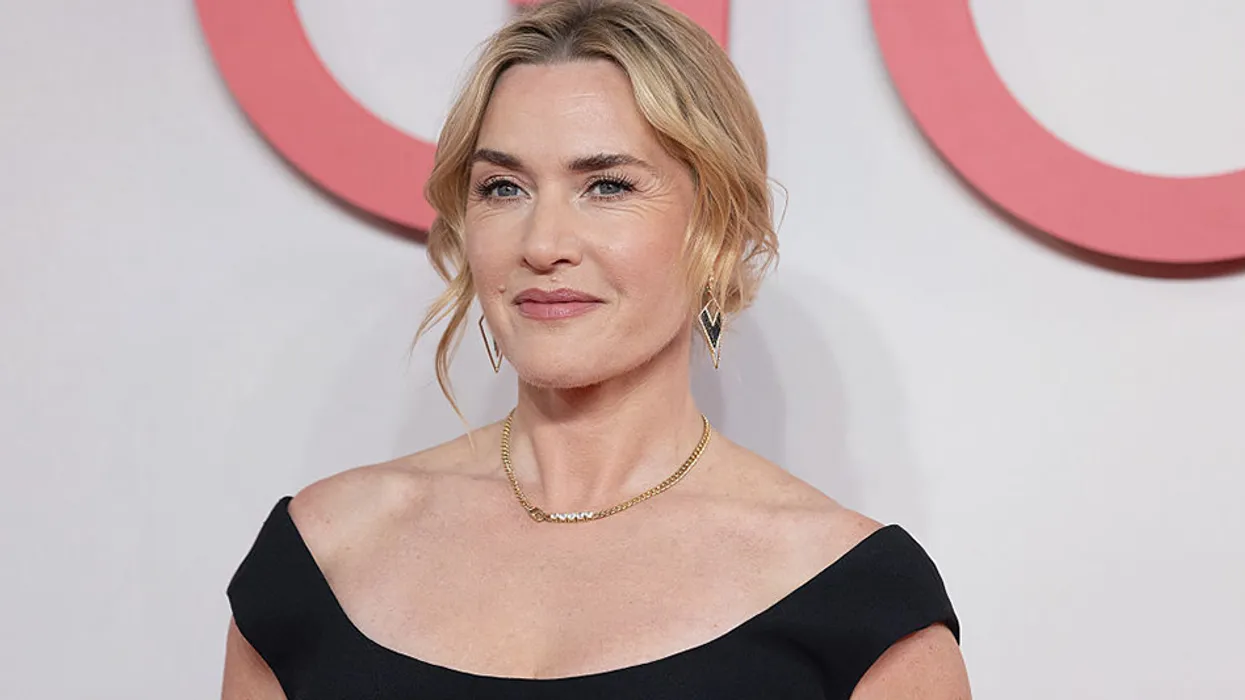
Our looks-obsessed, social-media-fueled culture is out of control — and it is causing more and more women to turn themselves into “cartoons.”
So says Hollywood star Kate Winslet, who unloaded on the subject in a recent interview with the Times.
‘It is f**king chaos out there.’
Carpet-bombed
Winslet, who rocketed to worldwide fame after starring in 1997’s “Titanic,” recalled enduring incessant scrutiny of her weight early in her career — at one point being described as “a little melted and poured into” a dress she wore at an awards show.
Still, the now-50-year-old said she never reacted to these barbs by getting surgery or taking weight-loss drugs, two approaches she feels are so common today that they have warped our idea of beauty.
Winslet added that her first reaction when seeing another woman with Botox or filler in her face is to think “No, not you! Why?”
But, Winslet continued, “No one’s listening because they’ve become obsessed with chasing an idea of perfection to get more likes on Instagram. It upsets me so much.”
Lip service
Nor is Winslet a fan of weight-loss drugs like Ozempic.”
“Do they know what they are putting in [their bodies]?” she asked. “The disregard for one’s health is terrifying. It bothers me now more than ever. It is f**king chaos out there.”
RELATED: Can conservatives reclaim pop culture?
 Photo by SC/Mirrorpix via Getty Images
Winslet implied that while she gets why the Hollywood crowd is obsessed with appearances, what really bothers her is the thought of everyday people “who save up for Botox or the s**t they put in their lips.”
Character flaw
To illustrate her point, she told the Times about a BBC article she read about a car crash with a young woman.
“She looked like a cartoon,” Winslet scolded. “You do not actually know what that person looks like — from the eyebrows to mouth to lashes to hair, that young woman is scared to be herself. What idea of perfection are people aspiring to? I blame social media and its effect on mental health.”
To that end, she added that it has been “heartbreaking” to see people constantly looking at their phones.
“Nobody’s looking into the f**king world any more.”
RELATED: Transracialism is back — and it’s worse than ever
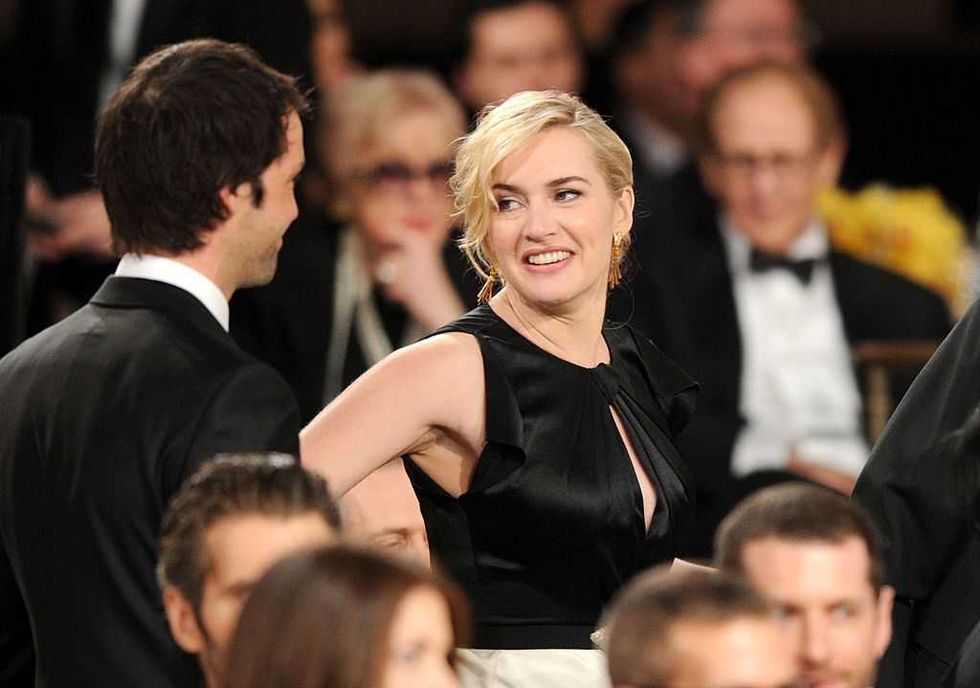 Photo by: Vince Bucci/NBC/NBCU Photo Bank
While attempting to show that “life” is in one’s hands, Winslet remarked, “Some of the most beautiful women I know are over 70, and what upsets me is that young women have no concept of what being beautiful actually is.”
The interviewer noted that Winslet went out of her way to prove she “hasn’t got anything” in her face and even squeezed her hands to show creases around her veins.
Australia BANS key social media apps for kids under 16 — and platforms must enforce the rule
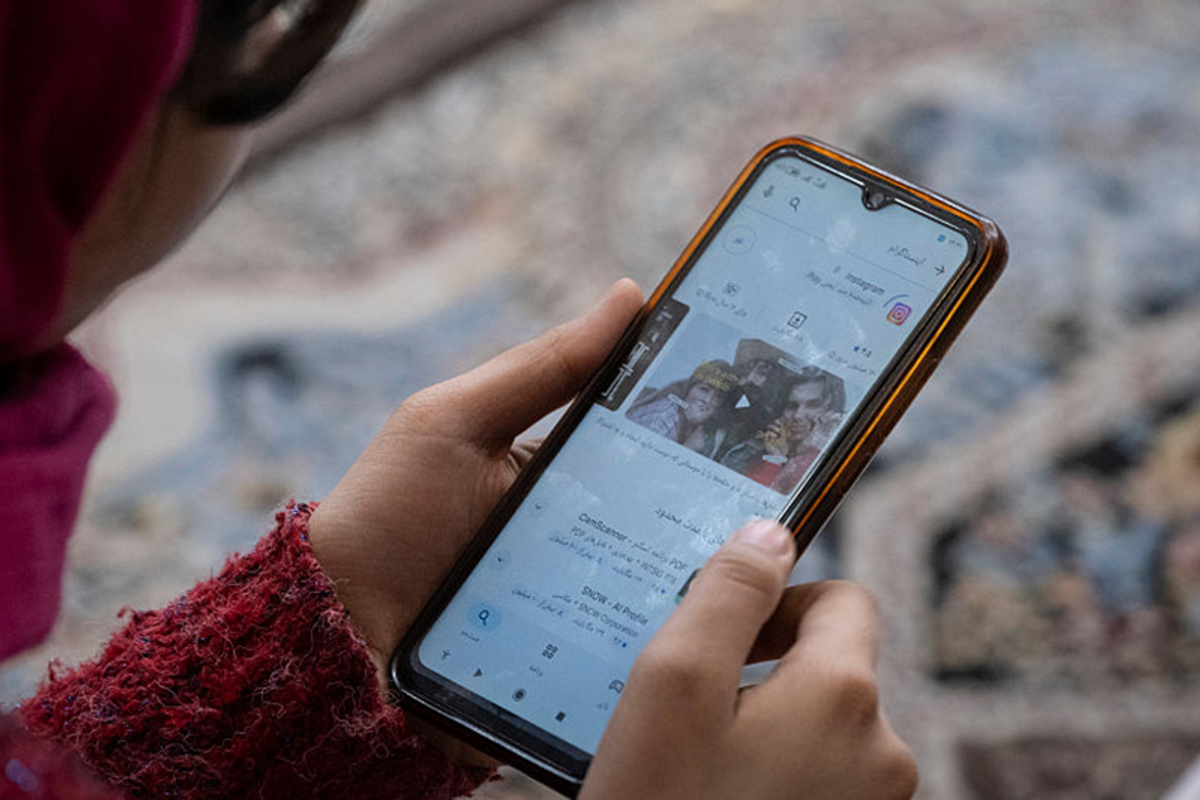
Australia will put the onus on social media platforms to limit access to children under 16 years old.
The Online Safety Amendment (Social Media Minimum Age) Bill 2024 amended Australia’s reigning online safety measures and gave social media companies time to age‐restrict their platforms and “take reasonable steps to prevent Australian under 16s from having account[s].”
‘No Australian will be compelled to use government identification.’
Officially taking effect on December 10, the ban includes Facebook, Instagram, Snapchat, Threads, X, and YouTube’s general platform; YouTube Kids and WhatsApp do not meet the criteria for the ban.
Australia introduced its social media minimum-age framework that included a list of criteria that would result in a platform being banned for those under 16. This included if a platform’s sole purpose, or “significant purpose,” is to “enable online social interaction between two or more end‐users.”
Or if the service “allows end‐users to link to, or interact with, some or all of the other end‐users” and “allows end‐users to post material on the service” and “meets such other conditions (if any) as are set out in the legislative rules,” it will not be available for younger Australians.
The legislation can also specify certain platforms, or classes, to not include in the ban.
Social media platforms will be responsible for enforcement, and neither children nor their parents will face punishment should they gain access. Companies face fines of up to $32 million USD or just under $50 million in Australian dollars.
RELATED: How Texas slammed the gate on Big Tech’s censorship stampede
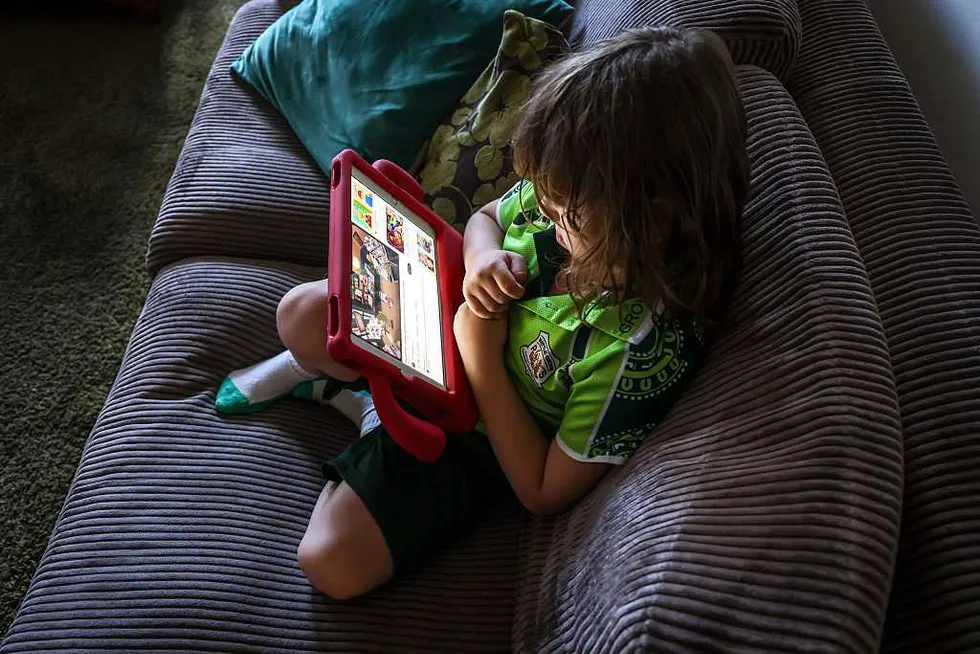 Photo by DAVID GRAY/AFP via Getty Images
The government further defined the requirements placed upon the platforms, adding that they must “take reasonable steps to prevent” those under 16 from having accounts.
The legislation also specified that “no Australian will be compelled to use government identification (including Digital ID) to prove their age online” and that platforms must offer reasonable alternatives to its users.
According to the BBC, other countries are hot on Australia’s tail in terms of implementing their own similar bans. This includes the French government, which has begun a parliamentary inquiry into banning children under 15 years old from social media, while also implementing a “digital curfew” for those between 15 and 18.
The Spanish government has also drafted a law that would require parental consent for children under 16 to access social media.
RELATED: Conservative influencers promote Qatar as a desert paradise — but are they lying?
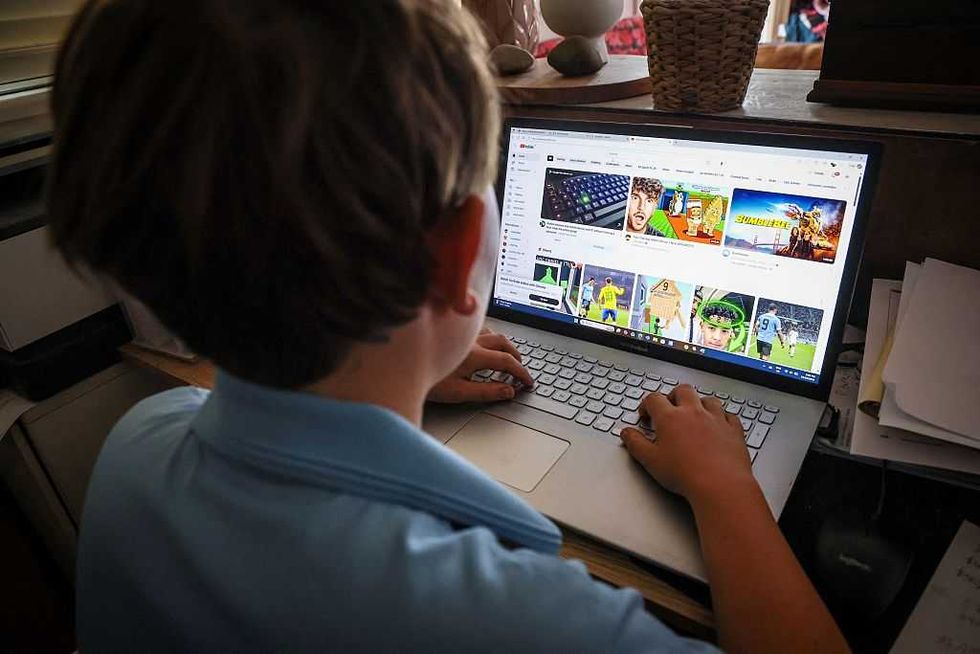 Photo by DAVID GRAY/AFP via Getty Images
Ruling left-wing Labour Party official Anika Wells, who serves as Australia’s communications minister (and minister of sport), said that the ban is not “perfect” and is going to “look a bit untidy on the way through.”
“Big reforms always do,” she added.
Australians under 16 will still be able to access content that is available on a website without being logged in or being a member, as there is virtually no way to prevent that without restricting access to the internet entirely.
Like Blaze News? Bypass the censors, sign up for our newsletters, and get stories like this direct to your inbox. Sign up here!
How Much More Attention Span Do We Have Left to Lose?
If you look back over the last 50 years, you could chart the evolution of how many seconds a person…
Conservative Principles Lost in Tech Regulation
Consequences unintended, though not unforeseen, lurk within many of the most popular proposals in technology policy. In their haste to…