

Category: Health Care
Senate stares down fraught health care battle with ObamaCare subsidies set to expire
Senate negotiators are set for a high-wire act on health care in the coming weeks after leaving Washington for the holidays without a resolution on the expiring enhanced subsidies, with lawmakers increasingly shifting into campaign mode as the calendar flips to the new year. The chamber has been consumed for months by a fight over…
Jeffries says House ‘will pass’ ObamaCare subsidies extension ‘with a bipartisan majority’
House Minority Leader Hakeem Jeffries (D-N.Y.) predicted Sunday that an extension of subsidies offered under the Affordable Care Act (ACA) will pass the House with backing from both sides of the aisle. “House Democrats are going to continue to fight to get this extension through the Congress on our side. It will pass with a…
Doctors warn of ‘super flu’ variant circulating in hot spots across the country
Ahead of the holiday tourist rush, city health officials in New York City reported nearly 14,000 flu cases in the first week of December.
Your lawmakers’ big drug-price stunt could strand millions without meds
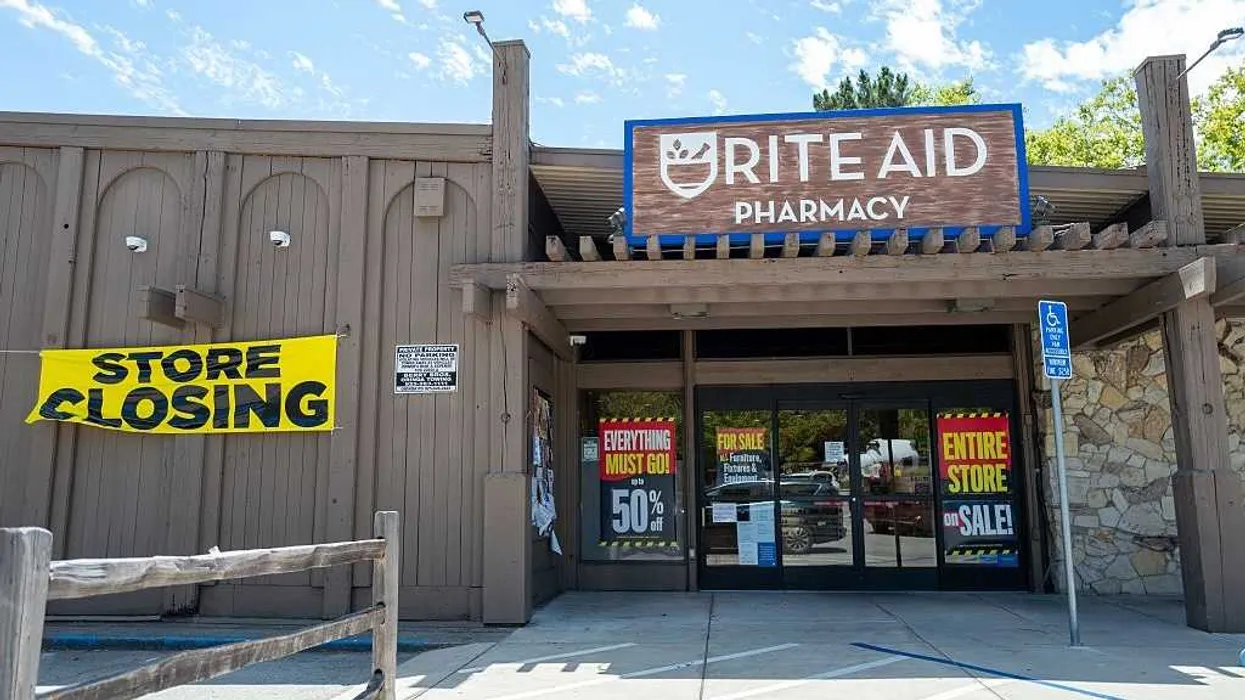
State lawmakers, desperate to address America’s sky-high drug prices, have turned their fire on pharmacy benefit managers. Their chosen tools — outright bans in Arkansas and suffocating regulations in Indiana — will not rein in drug costs. They will close pharmacies, however. And disabled Americans will feel the pain first and worst.
For millions of people living with disabilities or chronic illnesses, the neighborhood pharmacy isn’t just a place to pick up a prescription. It is a medical anchor — often the only dependable access point in a fragmented health care system.
Policy leaders must hold three truths at once: Drug prices are too high, access is too fragile, and for disabled Americans, both problems collide.
When states make it harder for pharmacies to operate, they aren’t tightening consumer protections. They are tightening a noose around the patients they claim to protect.
Proximity is key
Healthy, mobile adults can switch pharmacies with mild frustration. Disabled Americans can’t. They rely on stable, nearby pharmacy relationships to manage complex regimens, limited transportation, and conditions that make in-person care indispensable.
A person with epilepsy juggling multiple medications cannot suddenly travel to a pharmacy two towns over. A disabled veteran with hearing loss cannot sit on hold for an hour to fix a refill problem. A parent caring for a child with developmental disabilities needs a pharmacist who knows her family and can explain changes — especially potential interactions — face to face.
For disabled patients, proximity isn’t convenience. It is continuity, safety, and sometimes survival.
Long before I served as commissioner for the Administration on Disability at Health and Human Services, I was a teacher who learned that real service depends on presence. You must know the person in front of you. The same holds true in every field: the banker who helps you fix a missed payment, the pastor who walks beside his congregation. Their influence comes from relationship.
Pharmacists are no different. They cannot be replaced with apps, compliance checklists, or centralized call centers. Their work depends on knowing their patients — and being close enough to serve them.
What happens when pharmacies disappear?
Imagine telling a cancer patient he now needs to drive 20 miles for treatment because a state ban forced his local pharmacy to close.
Imagine telling a parent managing her child’s seizure medications that she must start over with a new pharmacy because the compliance burden became too much to stay open.
Imagine telling a stroke survivor who no longer drives that “it’s only a few minutes farther.” For many disabled Americans, a few minutes farther means losing independence — or tipping into crisis.
Pharmacies provide far more than prescriptions. They monitor complex drug regimens and catch dangerous interactions. They manage refills when cognitive disabilities make self-management difficult. They offer immediate, walk-in guidance when something feels wrong. They coordinate with doctors on sudden changes. And maybe most importantly, they provide calm, in-person clarity that no software platform can match.
Lawmakers say they want to help, but they are ignoring what disabled Americans need most: stable, nearby pharmacies that can remain open.
RELATED: The maligned and misunderstood player that Big Pharma wants gone
 Oleg Elkov via iStock/Getty Images
Access is a crisis
Drug prices in America are too high. Disabled Americans feel that burden more than anyone because they use more medications, more often, and for longer durations. Many rely on mail-order programs and already face delays and shortages.
So yes, policymakers should push for lower prices. They should demand transparency from pharmacy benefit managers so patients know what they are paying. They should pressure pharmaceutical companies to create pricing structures that serve consumers instead of shareholders.
But none of that will matter if the pharmacies disabled Americans depend on are regulated out of business.
Policy leaders must hold three truths at once: Drug prices are too high, access is too fragile, and for disabled Americans, both problems collide.
You cannot help vulnerable people by making their closest health care providers harder to reach. If states want to protect patients, they should create a regulatory environment where pharmacies can survive — and where the communities that depend on them can too.
Pritzker Signs Law Welcoming State-Sanctioned Suicide To Illinois

 State-sanctioned euthanasia not only pressures patients to choose suicide, but also inevitably ends in health care systems forcing suicide on patients.
Husband of woman failed by Canadian health care system thanks Glenn Beck for intervening: ‘You’ve opened up a lot of doors’
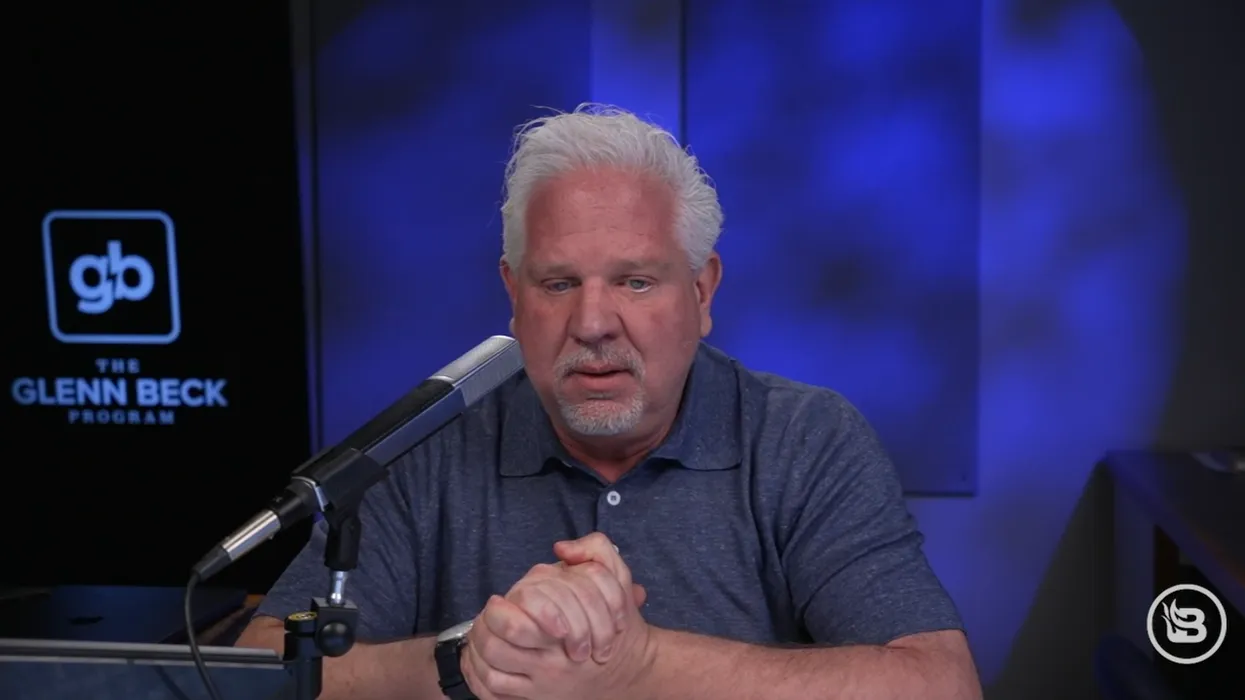
Blaze Media co-founder Glenn Beck and his team, now working in conjunction with elements of the Trump administration, are in the process of rescuing a Canadian woman failed by her country’s socialist health care system and led into thinking the only remedy for her painful living-nightmare might be state-facilitated suicide.
The day after Canadian state media did its apparent best to frame the American intervention as “political posturing” and a “distraction from the real issues,” the Saskatchewan woman’s husband expressed his profound gratitude to Beck for his efforts to help Jolene Van Alstine.
‘If it was me, I think I would have had a gun to my head long ago.’
Miles Sundeen, speaking on Thursday to Beck in what became a tear-filled episode of “The Glenn Beck Program,” said at the outset, “First of all, I just wanted to say thank you so much. Apparently you’re a very popular guy. You’ve opened up a lot of doors.”
“It’s been a long and very arduous journey. It’s been over eight years now that Jolene has been very ill. We’ve gone through very tough times trying to get help through our health care system; long, long wait times both to see specialists, to get a diagnosis initially, and then, of course, to wait times for surgeries as well,” said Sundeen. “The problem is, of course, as this disease continues to devastate her body, it becomes worse and worse as time goes on.”
Van Alstine has a rare parathyroid disease called normocalcemic primary hyperparathyroidism, which causes nausea and vomiting and draws calcium from the bones into the blood, resulting in extreme bone pain, weakened bone density, and fractures. According to Sundeen, Van Alstine’s immobilization by the disease has also resulted in other conditions, namely diverticulitis and osteoporosis, not to mention “mental damage.”
While she has undergone multiple surgeries in hopes of addressing the disease, she still requires a specialized procedure to remove her overactive parathyroid gland.
The trouble is that there is presently no surgeon in her province able to perform the operation. While she could potentially receive the surgery elsewhere in Canada, Van Alstine has indicated that she must first obtain a referral but cannot secure one as none of the endocrinologists in her region are accepting new patients.
 L: Alla Gnidenko/Getty Images; R: Blaze Media
Sundeen suggested that the endocrinologists and specialists aren’t necessarily to blame, noting that the Canadian health care system is “just absolutely overwhelmed.”
While Sundeen suggested that mismanagement is the system’s top problem, he noted that the system has also been “completely devastated” by underfunding and the huge influx of immigrants into the country.
According to the 2021 census, 23% of people living in Canada were foreign-born and 2.5% — over 924,000 — were nonpermanent residents. A government report released on Nov. 26 indicated that the 2021 census actually missed 38% of nonpermanent residents in that count. The top three national origins of the immigrants flooding into Canada under the Trudeau Liberal regime were India, Philippines, and China. Pakistan and Iran also made the top-10 list of national origins.
The sudden surge in demand on citizen resources helped strain a system that was already set for a reckoning with a graying population.
The apparent failure of the health care system is especially frustrating for Sundeen, who told Beck that “with this surgery, the parathyroid symptoms will disappear.”
“She can get back to an almost-normal life as far as the parathyroid hormone goes,” added Sundeen.
‘We’ll get it done.’
After years of pain and little evidence that her nation’s strained health care system will get around to helping her, Van Alstine started the process of joining the tens of thousands of other Canadians who’ll be killed under the government’s Medical Assistance in Dying euthanasia program, which has in recent years become one of the top five causes of death in Canada.
George Carson, a MAID approval doctor, confirmed this week that he assessed Van Alstine and provided her with his approval.
Sundeen stressed to Beck, however, that “she wants to live.”
“But when your life is absolutely stolen from you — stolen from you for eight years, and you suffer so much pain, depression, and anxiety — I love her with all my heart,” said Sundeen.
“She’s a strong girl. If it was me, I think I would have had a gun to my head long ago.”
Beck emphasized to Sundeen that neither he nor his wife was alone.
“We’ll find a way to make this happen if it is at all possible. We pray for you. There are millions of people who are praying for you now, and we’ll do everything we can,” added Beck.
Beck indicated that he has been in contact with elements of the Trump administration, and there appears to be some movement on getting Van Alstine help in America.
He noted that a “very high-level administrative official just called and said, ‘Let’s save her life. We’ll get it done.'”
Beck has personally volunteered to fly her down, put her up, and set her up to meet some doctors.
Visibly moved by his conversation with Sundeen and fighting back tears, Beck noted that he hopes to be able to call him back with some “good news.”
Like Blaze News? Bypass the censors, sign up for our newsletters, and get stories like this direct to your inbox. Sign up here!
House GOP leaders to pitch health care options for vote next week
House Majority Leader Steve Scalise (R-La.) said Republican leaders will present their health care proposals to the full House GOP conference on Wednesday to find out which items have consensus for votes in the House next week. The development comes after a meeting with a “good cross-section of our members” and committee leaders in the…
Trump hails vaccine panel’s hepatitis B vote as ‘very good decision’
President Trump praised a Centers for Disease Control (CDC) panel’s vote to change guidance for hepatitis B vaccinations as a “very good decision” in a Friday night post on his social platform Truth Social. “Today, the CDC Vaccine Committee made a very good decision to END their Hepatitis B Vaccine Recommendation for babies, the vast…
American Medical Association trustee denounces CDC panel’s vaccine vote as ‘reckless’
A trustee of the American Medical Association (AMA) denounced a Centers for Disease Control (CDC) panel’s vote to change hepatitis B vaccine guidance as “reckless” and urged the agency to reject the recommendation. “The Advisory Committee on Immunization Practice’s (ACIP) vote to weaken the birth-dose recommendation for the Hepatitis B vaccine is reckless and undermines…





