

Category: Healthcare
Confessions of a Hospital Hypochondriac
I’m from the Once Upon a Time… Life generation. That 80s cartoon series where antibodies were like CIA agents, and…
The Spectator P.M. Ep. 189: Doctors Performing Trans Surgeries Are in Huge Trouble
Two New York doctors pushed Fox Varian to get a double mastectomy when she was just 16 years old. Varian,…
Who really controls behavioral health care — and why it matters now

Americans seeking mental health or addiction treatment often encounter a system that claims to coordinate care but rarely delivers it quickly. As demand for behavioral health services rises, a basic question deserves a clear answer: Who actually controls behavioral health care in the U.S., and is that control helping or hurting patients in crisis?
When someone finally reaches out for help, he encounters waiting lists, paperwork, and network gaps that push him toward emergency care or no care at all.
Nevada offers a revealing case study. The state’s Department of Health and Human Services certifies programs and distributes federal grants. County and regional commissions convene advisory meetings to reflect local priorities. Medicaid sets reimbursement rates and payment timelines. Managed-care organizations impose prior authorizations that can delay or deny treatment. Each layer is designed to promote accountability. Together, they often produce delays.
The result is not a coordinated system but a fragmented patchwork of public agencies, insurers, and contractors. Federal funding arrives with compliance requirements that consume clinicians’ time. States enact parity laws to ensure mental health and substance abuse treatment is covered like other medical care. Legislatures debate how to curb investor influence over clinical decisions, insisting that licensed professionals — not financial managers — direct care.
These tensions are unfolding as Washington rethinks the structure of federal health policy. The proposed Administration for a Healthy America would consolidate agencies such as the Substance Abuse and Mental Health Services Administration into a single entity. Supporters promise efficiency; critics warn that consolidation could slow local responses.
At the state level, the policy picture is equally unsettled. In 2025, lawmakers across the country revised behavioral health statutes with competing priorities: workforce shortages, crisis response systems, parity enforcement, and the elimination of out-of-pocket costs. Some states strengthened insurance mandates. Others reconstructed governance and funding to regain control over fragmented delivery systems.
Federal policy choices loom over the whole picture. Potential Medicaid funding cuts and weaker enforcement of mental health parity threaten access as demand continues to rise. Proposed budget changes could reduce support for community mental health clinics, suicide prevention programs, and substance abuse treatment — services that are often the last line of defense before emergency rooms or jails.
RELATED: AI in education: Innovation or a predator’s playground? | Blaze Media
 Shelby Tauber/Bloomberg via Getty Images
Technology adds another complication. States are beginning to regulate artificial intelligence in behavioral health, with some banning AI-driven psychotherapy outright and others exploring guardrails for diagnostic or treatment support tools. These debates reflect a larger concern: the potential for innovation to replace clinicians or create unregulated substitutes for human judgment.
What patients experience is the cumulative effect of misaligned authority. Financial power, regulatory oversight, and clinical delivery point in different directions. When someone finally reaches out for help, he encounters waiting lists, paperwork, and network gaps that push him toward emergency care or no care at all.
Reform should start with three principles. First, policymakers must reduce administrative burdens that trap providers in compliance while patients wait. Second, insurance reforms must deliver real parity in access — not just coverage on paper. Third, oversight should protect quality while allowing local systems to innovate and respond quickly to community needs.
Behavioral health care is not a niche service. It is a public safety imperative and a core function of a serious health system. Until policy shifts its focus from control to care, patients will continue to pay the price.
Florida nurse wishes Karoline Leavitt agonizing, life-altering birth injury — red state delivers swift takedown
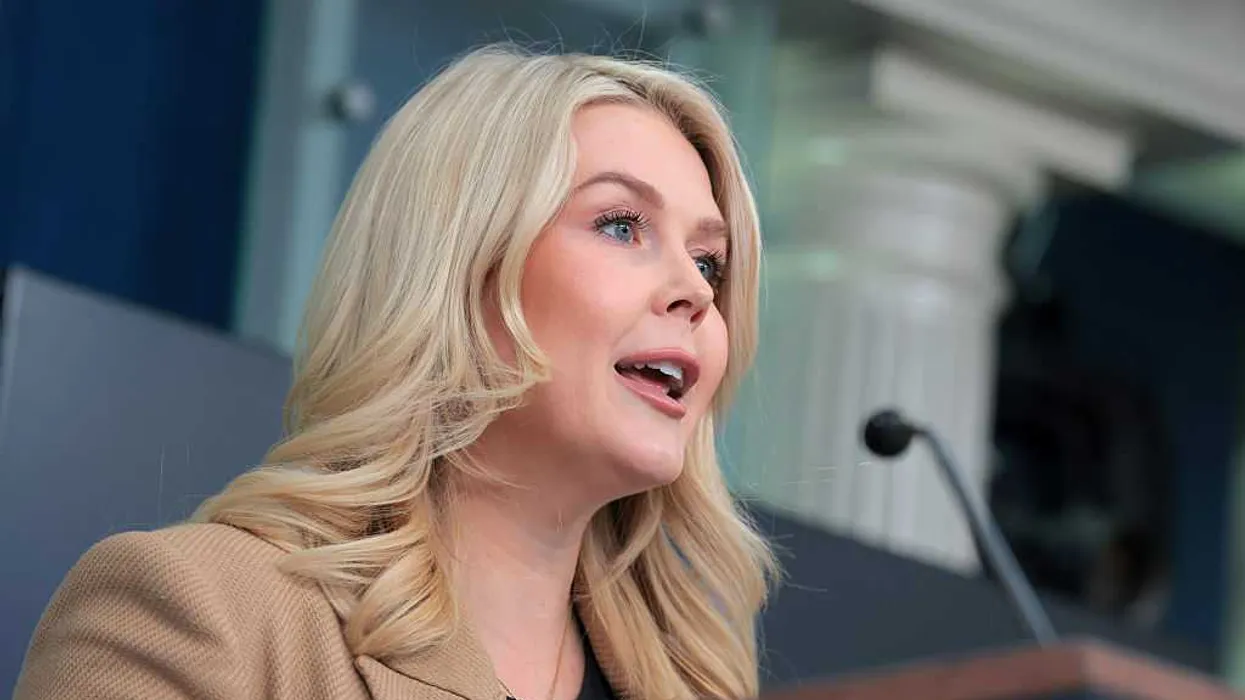
A delivery nurse was stripped of her ability to practice in Florida after she posted a video online wishing harm on a pregnant Trump administration official.
A video circulated on social media of Lexie Lawler, a then-nurse for Baptist Health Boca Raton Regional Hospital, stating that she hopes White House press secretary Karoline Leavitt suffers a painful childbirth that leaves her with permanent injuries.
‘Making statements that wish pain and suffering on anyone, when those statements are directly related to one’s practice, is an ethical red line we should not cross.’
“As a labor and delivery nurse, it gives me great joy to wish Karoline Leavitt a fourth-degree tear. I hope that you f**king rip from bow to stern and never s**t normally again, you c**t,” Lawler stated in the video.
Lawler was fired this week from her position with Baptist Health Boca Raton Regional Hospital.
“The comments made in a social media video by a nurse at one of our facilities do not reflect our values or the standards we expect of health care professionals,” a spokesperson for the hospital told the Palm Beach Post. “Following a prompt review, the individual is no longer employed by our health system.”
“While we respect the right to personal opinions, there is no place in health care for language or behavior that calls into question a caregiver’s ability to provide compassionate, unbiased care,” the spokesperson added.
 Photo by Christopher Furlong/Getty Images
Florida Attorney General James Uthmeier reacted to the Lawler video, stating, “Being fired isn’t good enough. Any healthcare worker who fails to uphold his or her obligation to provide adequate, safe healthcare should not be licensed in Florida. No excuses!”
Lawler responded to the public pushback in a separate video posted to social media.
“They murdered a man in Minnesota, and you motherf**kers are coming after me because I used bad language?” Lawler said, referring to the death of Alex Pretti. “F**k you. I’m on the right side of this. F**k you.”
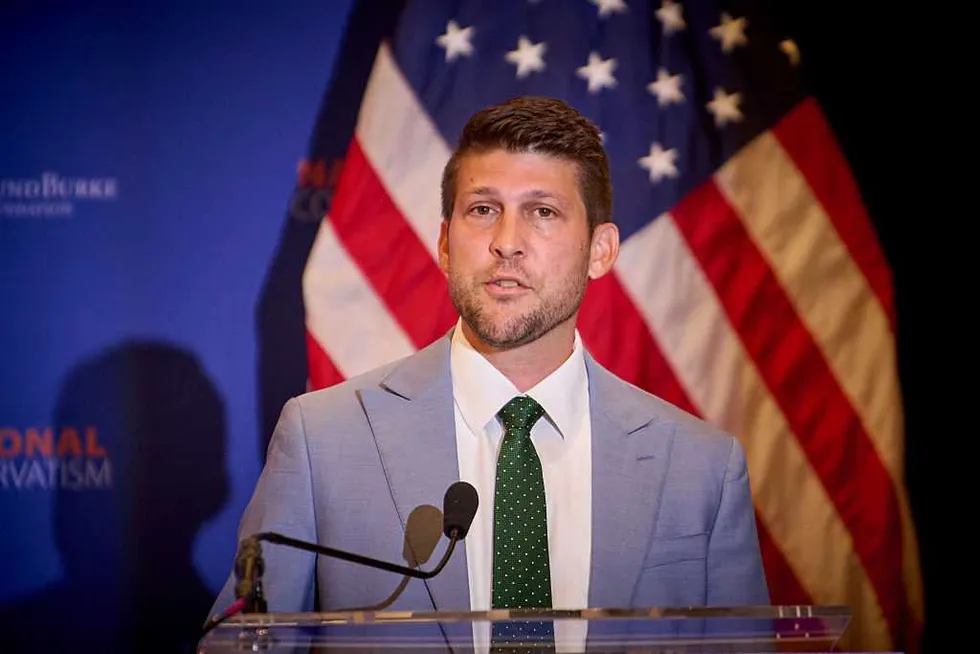 James Uthmeier. Photo by DOMINIC GWINN/Middle East Images/AFP via Getty Images
Uthmeier announced on Wednesday that Lawler “is no longer allowed to practice nursing in Florida.”
“Making statements that wish pain and suffering on anyone, when those statements are directly related to one’s practice, is an ethical red line we should not cross. I’m proud of @FLSurgeonGen for taking this decisive action,” he wrote.
Lawler’s husband, Tim, created a GoFundMe requesting $14,000 in donations for his wife’s legal fund. As of Wednesday afternoon, the fund had raised over $10,000.
“Lexie Lawler was fired for political speech,” the GoFundMe post reads. “She is a liberal woman who used her personal social media — on her own time — to sharply criticize a public figure tied to a cruel, harmful administration. Her words were blunt, angry, and unapologetic. They were directed at power, not her workplace. That speech was lawful. The retaliation was real.”
Like Blaze News? Bypass the censors, sign up for our newsletters, and get stories like this direct to your inbox. Sign up here!
Empowering Patients in a Broken System
President Trump reentered the healthcare debate with The Great Healthcare Plan (GHP), as families confront another year of rising insurance costs. After…
Senate GOP Prepares To Hold The Line On Hyde As White House Walks Back Trump’s ‘Be Flexible’ Remark

 ‘I am absolutely committed to ensuring that no taxpayer funding is used to fund the radical left’s agenda, including abortion,’ Sen. Moreno said.
Congress Faces Mountain Of Unfinished Business After Christmas Break
‘my Democrat colleagues are not there yet’
House Passes Last Minute GOP Healthcare Bill After Moderates Revolt
Republicans in the House of Representatives passed a healthcare reform bill on Wednesday evening targeting rising costs as expiring Obamacare tax credits rally support for change ahead of midterm elections. The new GOP-backed legislation, titled the Lower Health Care Premiums for All Americans Act, does not extend the Affordable Care Act (ACA) enhanced premium tax […]
The country that mocks America’s ‘culture of death’ has embraced one of its own

Canada loves to lecture America about compassion. Every time a shooting makes the headlines, Canadian commentators cannot wait to discuss how the United States has a “culture of death” because we refuse to regulate guns the way enlightened nations supposedly do.
But north of our border, a very different crisis is unfolding — one that is harder to moralize because it exposes a deeper cultural failure.
A society that no longer recognizes the value of life will not long defend freedom, dignity, or moral order.
The Canadian government is not only permitting death, but it’s also administering, expanding, and redefining it as “medical care.” Medical assistance in dying is no longer a rare, tragic exception. It has become one of the country’s leading causes of death, offered to people whose problems are treatable, whose conditions are survivable, and whose value should never have been in question.
In Canada, MAID is now responsible for nearly 5% of all deaths — 1 out of every 20 citizens. And this is happening in a country that claims the moral high ground over American gun violence. Canada now records more deaths per capita from doctors administering lethal drugs than America records from firearms. Their number is 37.9 deaths per 100,000 people. Ours is 13.7. Yet we are the country supposedly drowning in a “culture of death.”
No lecture from abroad can paper over this fact: Canada has built a system where eliminating suffering increasingly means eliminating the sufferer.
Choosing death over care
One example of what Canada now calls “compassion” is the case of Jolene Bond, a woman suffering from a painful but treatable thyroid condition that causes dangerously high calcium levels, bone deterioration, soft-tissue damage, nausea, and unrelenting pain. Her condition is severe, but it is not terminal. Surgery could help her. And in a functioning medical system, she would have it.
But Jolene lives under socialized medicine. The specialists she needs are either unavailable, overrun with patients, or blocked behind bureaucratic requirements she cannot meet. She cannot get a referral. She cannot get an appointment. She cannot reach the doctor in another province who is qualified to perform the operation. Every pathway to treatment is jammed by paperwork, shortages, and waitlists that stretch into the horizon and beyond.
Yet the Canadian government had something else ready for her — something immediate.
They offered her MAID.
Not help, not relief, not a doctor willing to drive across a provincial line and simply examine her. Instead, Canada offered Jolene a state-approved death. A lethal injection is easier to obtain than a medical referral. Killing her would be easier than treating her. And the system calls that compassion.
Bureaucracy replaces medicine
Jolene’s story is not an outlier. It is the logical outcome of a system that cannot keep its promises. When the machinery of socialized medicine breaks down, the state simply replaces care with a final, irreversible “solution.” A bureaucratic checkbox becomes the last decision of a person’s life.
Canada insists its process is rigorous, humane, and safeguarded. Yet the bureaucracy now reviewing Jolene’s case is not asking how she can receive treatment; it is asking whether she has enough signatures to qualify for a lethal injection. And the debate among Canadian officials is not how to preserve life, but whether she has met the paperwork threshold to end it.
This is the dark inversion that always emerges when the state claims the power to decide when life is no longer worth living. Bureaucracy replaces conscience. Eligibility criteria replace compassion. A panel of physicians replaces the family gathered at a bedside. And eventually, the “right” to die becomes an expectation — especially for those who are poor, elderly, or alone.
 Photo by Graham Hughes/NurPhoto via Getty Images
The logical end of a broken system
We ignore this lesson at our own peril. Canada’s health care system is collapsing under demographic pressure, uncontrolled migration, and the unavoidable math of government-run medicine.
When the system breaks, someone must bear the cost. MAID has become the release valve.
The ideology behind this system is already drifting south. In American medical journals and bioethics conferences, you will hear this same rhetoric. The argument is always dressed in compassion. But underneath, it reduces the value of human life to a calculation: Are you useful? Are you affordable? Are you too much of a burden?
The West was built on a conviction that every human life has inherent value. That truth gave us hospitals before it gave us universities. It gave us charity before it gave us science. It is written into the Declaration of Independence.
Canada’s MAID program reveals what happens when a country lets that foundation erode. Life becomes negotiable, and suffering becomes a justification for elimination.
A society that no longer recognizes the value of life will not long defend freedom, dignity, or moral order. If compassion becomes indistinguishable from convenience, and if medicine becomes indistinguishable from euthanasia, the West will have abandoned the very principles that built it. That is the lesson from our northern neighbor — a warning, not a blueprint.





