

Category: The Hill
Nikki Glaser cracks CBS News, Epstein jokes during Golden Globes
Nikki Glaser was cracking jokes about CBS News and the Epstein files within moments of taking the stage for her Golden Globes monologue. “There’s so many A-listers,” Glaser told the audience Sunday at the awards show in Los Angeles. “And by A-listers, I do mean people who are on a list that has been heavily…
Trump says US military considering ‘strong options’ on Iran
President Trump said Sunday the U.S. military is considering “strong options” on Iran as the country’s regime cracks down on growing nationwide protests. When asked on Air Force One whether Iran is crossing a red line, the president told reporters “they’re starting to, it looks like.” “There seemed to be some people killed that aren’t…
Powell confirms DOJ probe into Fed, blasts Trump pressure on rates
The Department of Justice (DOJ) has opened a probe into the Federal Reserve’s ongoing renovation of its headquarters in Washington, D.C. Federal Reserve Chair Jerome Powell said in a statement Sunday that the DOJ served the Fed with grand jury subpoenas and threatened a criminal indictment related to his testimony before the Senate Banking Committee…
Trump says he’s ‘inclined’ to keep Exxon Mobil out of Venezuela deals
President Trump said on Sunday that he is inclined to keep oil giant Exxon Mobil out of deals regarding Venezuela following the CEO’s skeptical response to future investment in the South American country. “I’d probably be inclined to keep Exxon out,” Trump told reporters on Air Force One en route to Washington, D.C. “I didn’t…
Stock futures fall after Powell confirms criminal probe into Fed
Stocks fell in overnight trading Sunday after Federal Reserve Chair Jerome Powell confirmed the Trump administration had opened a criminal investigation into the central bank. Dow Jones Industrial Average futures were down 200 points shortly after 8:30 p.m. EST, falling 0.4 percent. S&P 500 futures were down 0.5 percent and Nasdaq futures were down 0.7…
The Obamacare subsidy fight exposes who Washington really serves
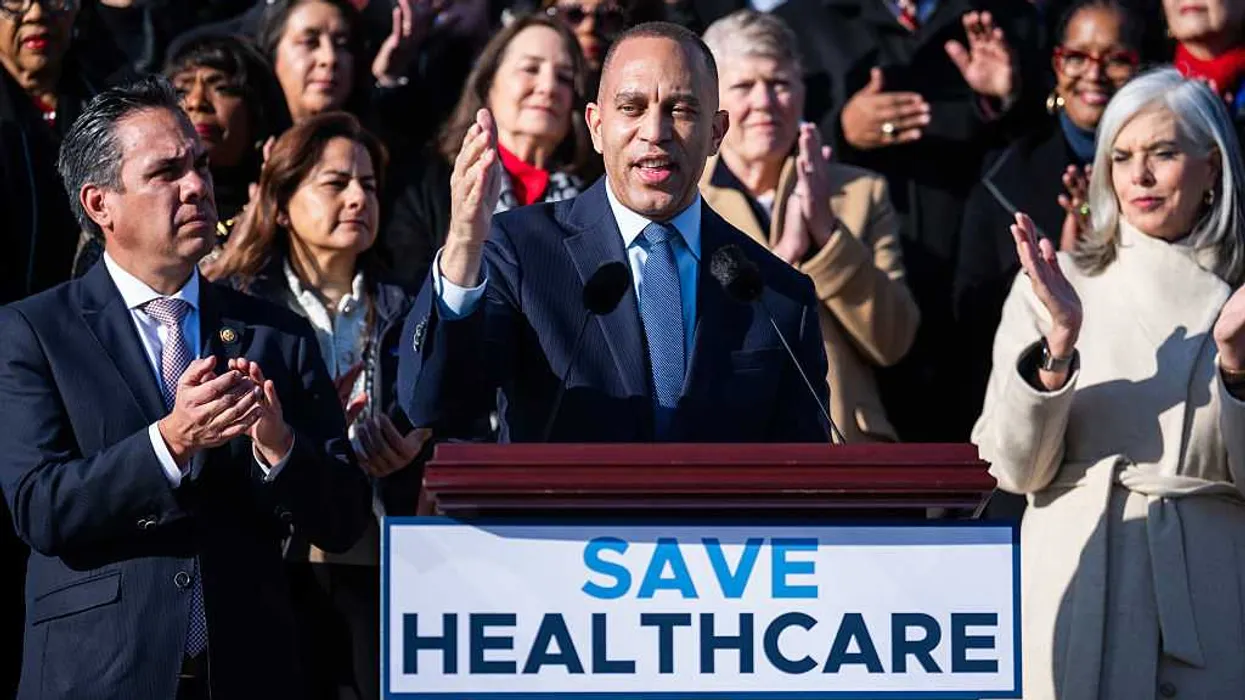
The failure of both Democrat and Republican plans to extend or partially replace enhanced Obamacare subsidies offers a clear lesson: Escaping an entitlement trap almost never happens.
Yes, the House of Representatives on Thursday voted to extend the COVID-era Affordable Care Act subsidies that expired at the end of 2025. Seventeen Republicans even joined a unanimous Democratic Caucus in voting for the extension. But Senate Majority Leader John Thune (R-S.D.) said Republicans have “no appetite” for an extension — at least not without reforms.
Republicans remain an impediment to the necessary reforms and are working hand in hand with Democrats to bring on economic collapse. Time is not on our side.
The reality is, once government creates a welfare entitlement, logic and sustainability exit the conversation. Politicians do not debate whether to grow the program. They argue only over how much to increase spending and how to disguise the costs. That pattern now governs the fight over enhanced Obamacare subsidies.
Why the premise never gets challenged
When the Senate rejected a nearly identical bill in December, the Wall Street Journal reported that Congress faces “no clear path for aiding millions of Americans facing soaring Affordable Care Act insurance costs next year.”
The Journal’s framing accepts the entitlement premise without question. It treats “aiding millions” as morally self-evident while ignoring the coercion necessary to fund that aid. Government assistance does not materialize from thin air. It transfers responsibility, money, and risk from one group of Americans to another.
Once imposed, that transfer only grows.
Both rejected plans would have sent more taxpayer money to insurers than the ACA already guarantees. With no deal in sight, the Journal observed last month that hope for extending the subsidies is fading. That assessment may be accurate politically, but an extension does not deserve hope. It deserves scrutiny.
How entitlement politics works
Democrats want Republicans to extend an expansion they never voted for of a program they never supported. Republicans respond by proposing modest adjustments to reduce political damage without challenging the underlying structure.
Rep. Max L. Miller (R-Ohio), who voted for the bill, summarized the dilemma perfectly. “I just want to make this abundantly clear: This is a Democratic piece of legislation. It is absolutely horrific. Now, it is the best alternative to what we have at the moment.”
That is how entitlement traps operate.
For decades, big-government advocates have followed a reliable strategy. They create a benefit for a defined group, allow costs to spiral, then dare the opposition to take something away from a newly entrenched constituency. When the moment arrives, those who claim to favor limited government retreat or propose cosmetic reforms that leave the core system untouched.
That dynamic explains why the country remains locked into the socialist ratchet, the uniparty routine, and a political class that acts as tax collector for an ever-expanding welfare state.
RELATED: Democrat senator makes stunning admission about Obamacare failures
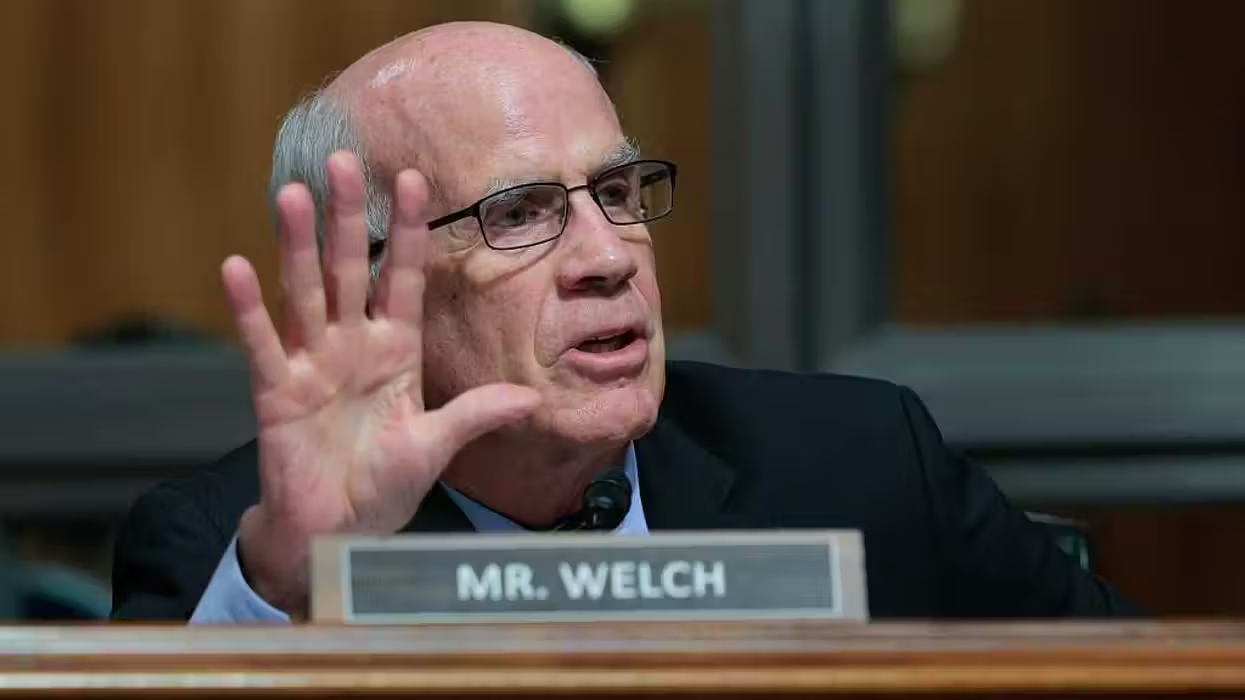 Photo by Chip Somodevilla/Getty Images
Trapped voters, trapped taxpayers
Entitlements squeeze the nation from both sides. They trap recipients by discouraging work and mobility, and they trap taxpayers by locking future governments into permanent obligations.
The Affordable Care Act stands as one of the most powerful modern examples of this system. The law forced millions into government-regulated insurance markets while guaranteeing insurers a growing pool of subsidized customers. The result was predictable: higher costs, deeper dependency, and a massive political constituency invested in permanent expansion.
Not a single Republican voted for the ACA. They understood what the law would do. Democrats passed it anyway, and it worked exactly as designed.
Who Obamacare was really built to serve
As Connor O’Keeffe has argued at Mises Wire, federal health care policy has long served industry interests. Government interventions channel money toward providers, pharmaceutical companies, and insurers under the guise of helping patients.
Obamacare accelerated that process by mandating coverage and expanding what insurers must provide, driving demand and cost growth in tandem. Once people rely on government assistance to afford insurance, any reduction becomes politically unthinkable.
Republicans now scramble to avoid electoral consequences. House Speaker Mike Johnson says the GOP will advance health care proposals without extending subsidies, yet many lawmakers privately admit that only an extension prevents immediate pain ahead of the 2026 midterms.
That admission exposes the trap. Spending limits become cruel. Taxpayer costs disappear from the conversation. Only the next premium increase matters.
Why conservatives keep losing
History explains where this leads. Entitlement debates almost always end with higher spending. Political power depends on payments to voters. Reducing benefits means losing elections.
Progressives act decisively when in power. Conservatives obsess over procedure and restraint, even as the administrative state grows unchecked.
Last week alone offered two examples. The House overturned President Trump’s March 2025 executive order blocking collective bargaining for over a million federal employees, with 20 Republicans joining Democrats. Even Franklin Roosevelt opposed public-sector unions. Modern conservatives could not summon the resolve to block them.
On the same day, Indiana Republicans declined to redraw their congressional map despite the risk of losing the House and triggering impeachment proceedings against Trump. They clung to unwritten norms while their opponents prepared to exploit the outcome.
RELATED: If conservatives will not defend capitalism, who will?
 Leontura via iStock/Getty Images
This pattern defines conservative failure. Republicans manage decline. They preserve a decaying system rather than reverse it.
Donald Trump broke from that habit. A former Democrat, he understands power. Win elections, then act. Trump restored a political energy absent on the right for decades.
His approach to entitlements focuses on restraining growth outside Social Security while expanding private-sector freedom to increase economic output. The goal is not austerity. It is to shrink government’s share of the economy by growing everything else faster.
Reform or collapse
That strategy may succeed or fail. It remains the only alternative to collapse. Without reform, federal spending and debt will overwhelm the system within a decade, possibly sooner. Borrowing costs will explode. Inflation will surge. Control will vanish.
The United States approached that danger under unified Democrat control and Joe Biden’s autopen in 2021 and 2022. Voters halted the slide by electing Republican majorities and returning Trump to the White House.
Trump failed to drain the swamp in his first term, largely because congressional Republicans refused to legislate when they had the chance. In his second term, he has advanced reforms through executive action. Congress has responded with delay and timidity.
The country will escape the entitlement trap one way or another. Reform can arrive through disciplined growth and economic expansion, or through collapse driven by massive overspending.
With their conservative approach to governance, Republicans remain an impediment to the necessary reforms and are working hand in hand with Democrats to bring on that collapse. Time is not on our side.
Homan asks critics to ‘tone down the rhetoric’ about ICE after Minneapolis shooting
White House border czar Tom Homan urged critics to “tone down the rhetoric” about Immigration and Customs Enforcement (ICE) officers in the wake of the Minneapolis shooting. “Let’s decrease the temperature here,” Homan said on a Friday episode of “The Dr. Phil Podcast.” “Let the investigation play out.” An ICE officer shot and killed 37-year-old…
Loeffler says SBA will relocate Minneapolis district office amid ‘local hostility’ toward ICE
Small Business Administration (SBA) head Kelly Loeffler said Saturday that the agency’s Minneapolis office is being relocated, citing “overwhelming local hostility” toward Immigration and Customs Enforcement (ICE) officers in recent days. “Since Day One, I have been clear that SBA will not continue to surge resources to communities that refuse to protect their small business…
Smithsonian swaps Trump portrait at national gallery, removes impeachment text: Report
The Smithsonian Institution’s National Portrait Gallery revealed President Trump’s new photographic portrait, but also removed most of the adjoining text that mentions his two impeachments and the Jan. 6, 2021, Capitol attack, The Washington Post reported Saturday. The White House shared a photo of the updated “America’s Presidents” exhibit across its social media accounts on…
Trump says he hopes released Venezuelan prisoners ‘remember how lucky they got’
President Trump on Saturday said he hopes political prisoners released in Venezuela “remember how lucky they got” in the week after U.S. strikes ousted President Nicolás Maduro and brought him to the U.S. to face charges. “Venezuela has started the process, in a BIG WAY, of releasing their political prisoners,” Trump wrote on Truth Social….





