Category: Senate
Paul: Lindsey Graham was behind Trump’s decision to topple Maduro
Conservative Sen. Rand Paul (R-Ky.) on Monday pointed the finger directly at his colleague, Sen. Lindsey Graham (R-S.C.), as the primary instigator behind President Trump’s surprise mission to send U.S. special operators into Caracas to seize Venezuelan President Nicolás Maduro. Paul lamented what he sees as a reversal from Trump’s previous staunch opposition to nation-building…
Venezuela briefing leaves lawmakers questioning what’s ahead
Top Senate and House lawmakers from both parties emerged from a classified briefing given by President Trump‘s most senior officials with little clarity on the future of Venezuela, days after the president declared the U.S. would “run” the country after apprehending its president, Nicolas Maduro. Trump has given a green light for Venezuela’s Vice President…
10 predictions that could define 2026 — and upend expectations

Each January, I dust off the crystal ball and offer my top 10 predictions for the year ahead. If you want to see how last year’s fared, you can find them here.
Now, on to what I expect to see in 2026.
Trump rallies a demoralized base, but, barring a massive economic boom, history and opposition energy prevail.
1. China and the U.S. effectively swap Venezuela for Taiwan.
I predicted this weeks ago on Glenn Beck’s final Wednesday Night Special on Blaze TV, and the early contours are already visible following President Trump’s arrest of Venezuelan dictator Nicolás Maduro.
One of last year’s quieter stories involved China’s mounting unrest and economic instability. As Beijing grows more desperate, its pressure to resolve Taiwan increases. One way to avoid a world war over Taiwan involves a tacit bargain: The United States consolidates influence in its own hemisphere while China moves on Taiwan.
Venezuela holds the world’s largest crude oil reserves and has been sending nearly 80% of its exports to China. What America would lose in technology via Taiwan, it could gain in energy via Venezuela. Each superpower gains leverage, ideally enough to trade rather than fight. Regional hegemony comes first for both.
2. At least one sitting elected official claims communication with non-human intelligence.
The UFO/UAP psychological operation escalates in 2026. Steven Spielberg’s return with “Disclosure Day” only adds cultural fuel. The stage is set for someone “respectable” to come forward and give the narrative new legitimacy.
3. The Buffalo Bills defeat the Philadelphia Eagles in Super Bowl LX.
This season has defied prediction. With young and inexperienced teams dominating the standings, the door is open for a veteran squad to rev up. Josh Allen remains arguably the best football player on the planet. Why not Buffalo?
4. Christopher Nolan’s “The Odyssey” tops the box office.
An A-list director, an all-star cast, and a July release give Nolan’s adaptation a decisive edge over “Avengers: Doomsday,” which won’t arrive until Christmas. Add superhero fatigue and Marvel’s audience-alienating woke escapades, and the path clears.
5. Clarence Thomas or Samuel Alito retires.
Ideally both do.
This prediction will anger people I love and respect, but the future of the republic outweighs hurt feelings. Conservatives cannot afford a Ruth Bader Ginsburg-style miscalculation with hostile midterms looming.
6. Pam Bondi does not survive the year as attorney general.
Frankly, she should not have survived last year.
7. Trump’s foreign policy marginalizes the dissident right.
In 2025, figures such as Tucker Carlson, Candace Owens, and Nick Fuentes capitalized on anti-Zionist and anti-Semitic tropes, conspiracism, and the grievances of young men in desperate need of a dad and a direction.
That window narrows fast as Trump reasserts American power abroad. An “America Only (except Islam)” MAGA faction collapses once Trump himself acts aggressively on the world stage. It turns out that building a brand on hating Israel gets harder when Trump is the one moving the chess pieces.
Try growing an audience by calling Trump a schmuck anywhere outside BlueSky. Good luck.
RELATED: Trump’s agenda faces a midterm kill switch in 2026
 Douglas Rissing via iStock/Getty Images
8. The Trump administration blocks the Netflix-Warner Bros. merger.
Trump will not allow Netflix — the most ideologically aggressive streamer in the industry — to consolidate Apple-scale control over pop-culture IP.
9. Trump engineers a split midterm decision.
Trump will nationalize the midterms around his presidency and agenda, not congressional Republicans. He rallies a demoralized base, but, barring a massive economic boom, history and opposition energy prevail.
Republicans narrowly hold the Senate. Democrats narrowly flip the House.
10. We make this happen.

McCarthy says lawmakers heading for the door because ‘nothing is happening’
Former Speaker Kevin McCarthy (R-Calif.) on Friday said congressional lawmakers are retiring because “nothing is happening” on Capitol Hill. “If nothing’s being accomplished — because they are making a sacrifice, they’re being away from their family, sometimes it’s a long travel, you get harassed, you get death threats, all the different things — but you’re…
Ensuring Trust in Elections
Over recent years, trust in elections among the American electorate has been in decline. The Trump Administration has expressed a…
Senate bill would give nearly $6 billion to refugee programs despite record-low intake numbers
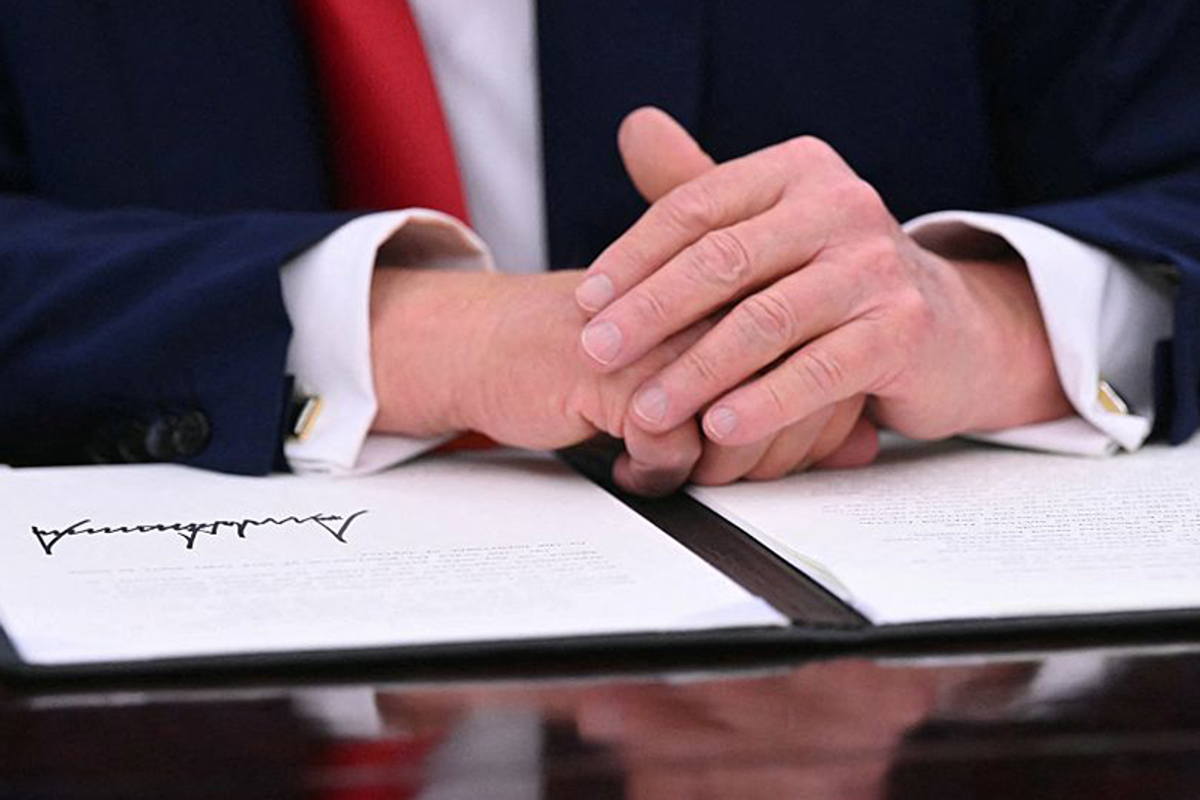
An appropriations bill could allocate billions in funding to refugee programs after temporary government funding expires.
Congress passed a clean funding extension in November 2025 that expires on January 30, 2026, when new funding allocation could take place.
‘These programs provide a variety of benefits and services to refugees, asylees, Cuban and Haitian entrants.’
This possibility has conservatives pointing out issues with legislation like a Senate appropriations bill, first proposed in July, for fiscal year 2026.
The bill, which allocates funding for the Departments of Labor, Health and Human Services, Education, and “related agencies,” has garnered significant attention from online researchers regarding its allocation of funds to refugee programs.
“Hey guys, all those insane ‘refugee assistance’ grants I’m always tweeting? The [GOP] is about to supercharge the funds,” wrote Oilfield Rando, an X account with more than 235,000 followers.
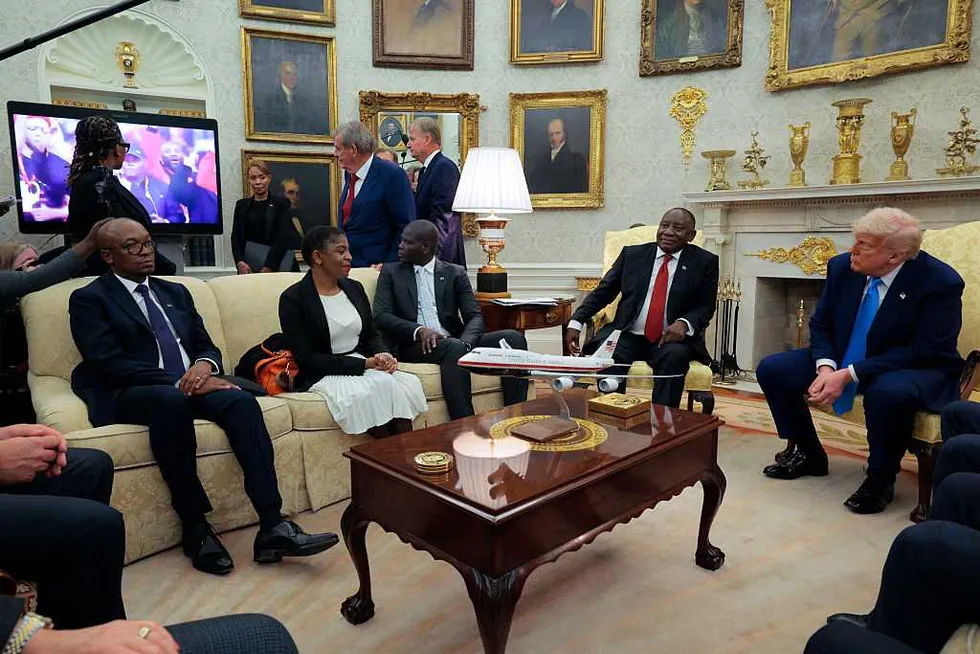 Photo by Chip Somodevilla/Getty Images
Particularly, conservatives online have taken issue with the bill’s recommendations for “Refugee and Entrant Assistance,” for which the committee recommends $5.691 billion.
“These programs provide a variety of benefits and services to refugees, asylees, Cuban and Haitian entrants, immigrants arriving on Special Immigrant Visas [SIV], trafficking victims, and torture victims,” the bill reads.
A whopping $564 million of those funds is recommended for “Transitional and Medical Services,” while providing grants to states and “nonprofit organizations to provide cash and medical assistance to arriving refugees, as well as foster care services to unaccompanied minors.”
More than $300 million is recommended for “Refugee Support Services.”
The Senate committee argued in the document that HHS needs to ensure funding for resettlement agencies so that they can maintain their infrastructure and capacity at a level to continue to serve “new refugees, previously arrived refugees,” and others who are eligible for “integration services.”
 Photo by Selcuk Acar/Anadolu via Getty Images
According to the Baker Institute, the Trump administration set the refugee cap at 7,500 for fiscal year 2026, the lowest in U.S. history. This is reportedly a 94% reduction from the 125,000 cap that the Biden administration set for FY 2025.
President Trump famously admitted 59 South African refugees into the United States in May; however, there have been no other major intakes by the administration over the course of 2025.
The Senate Committee on Appropriations is majority Republican, with 15 Republicans and 14 Democrats.
Like Blaze News? Bypass the censors, sign up for our newsletters, and get stories like this direct to your inbox. Sign up here!
Senators call on Trump administration to pause hike in national park fees
Senator Ron Wyden (D-OR) is calling on the Trump administration to pause its plan to raise national park entrance fees, calling the move “discriminatory.”
Senate stares down fraught health care battle with ObamaCare subsidies set to expire
Senate negotiators are set for a high-wire act on health care in the coming weeks after leaving Washington for the holidays without a resolution on the expiring enhanced subsidies, with lawmakers increasingly shifting into campaign mode as the calendar flips to the new year. The chamber has been consumed for months by a fight over…
Jeffries says House ‘will pass’ ObamaCare subsidies extension ‘with a bipartisan majority’
House Minority Leader Hakeem Jeffries (D-N.Y.) predicted Sunday that an extension of subsidies offered under the Affordable Care Act (ACA) will pass the House with backing from both sides of the aisle. “House Democrats are going to continue to fight to get this extension through the Congress on our side. It will pass with a…
Republican senator announces retirement, citing exhaustion: ‘I feel like a sprinter in a marathon’

Republican Sen. Cynthia Lummis of Wyoming becomes the latest GOP lawmaker to take a step away from politics.
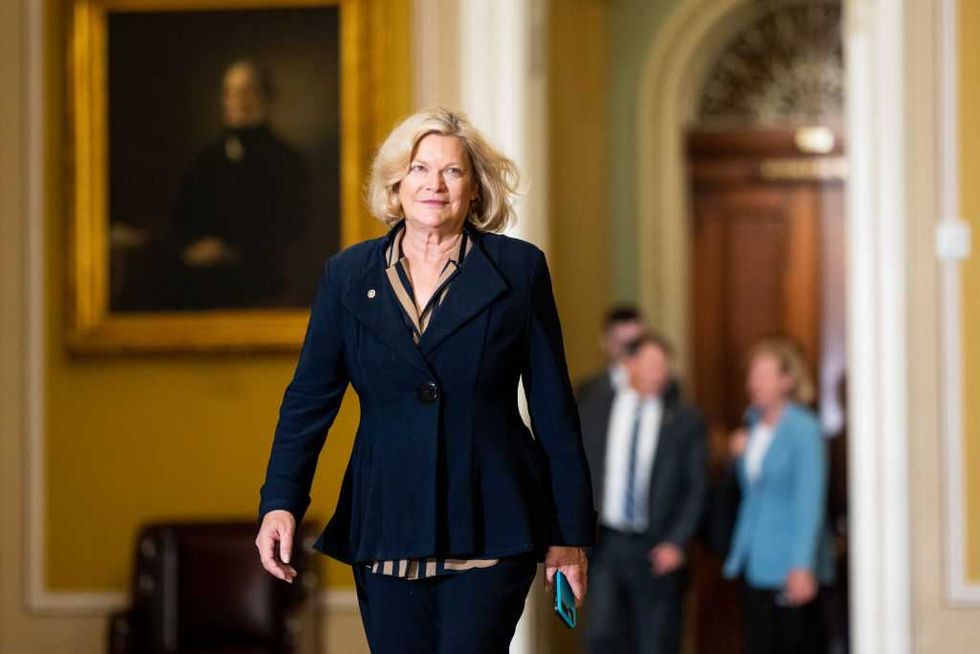
The freshman senator announced her retirement Friday after several “exhausting session weeks” this Congress. Lummis was first elected to the Senate in 2020 but previously represented Wyoming in the House from 2009 to 2017 as well as in state government prior to her career in Washington, D.C.
‘I feel like a sprinter in a marathon.’
“What a blessing to serve with Senators John Barrasso and Mike Enzi when I was in the U.S. House, and with John and Rep. Harriet Hageman while I’ve been in the Senate,” Lummis said in a statement Friday.
“We all put Wyoming first, which has cemented our cohesive working relationship.”
RELATED: ‘Unnecessary and protracted’: Elise Stefanik drops out of New York governor’s race
 Bill Clark/CQ-Roll Call, Inc via Getty Images
Lummis reiterated her commitment to the state and her constituents but noted that she no longer has the “energy required” for the job.
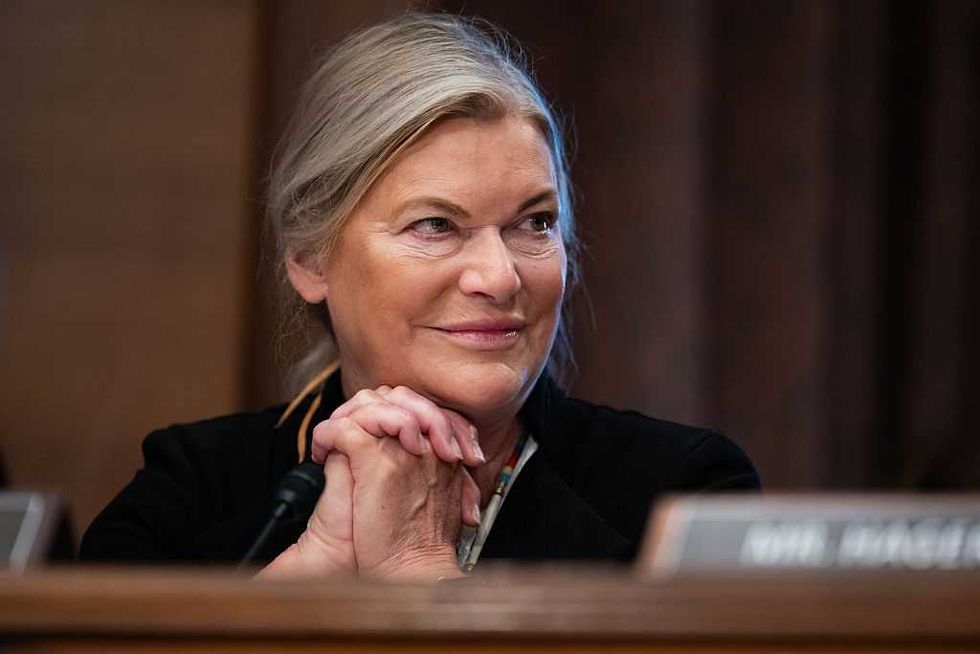
“Deciding not to run for reelection does represent a change of heart for me, but in the difficult, exhausting session weeks this fall I’ve come to accept that I do not have six more years in me,” Lummis said. “I am a devout legislator, but I feel like a sprinter in a marathon. The energy required doesn’t match up.”
 Tom Williams/CQ-Roll Call, Inc via Getty Images
“I am honored to have earned the support of President Trump and to have the opportunity to work side by side with him to fight for the people of Wyoming. I look forward to continuing this partnership and throwing all my energy into bringing important legislation to his desk in 2026 and into retaining commonsense Republican control of the U.S. Senate. Thank you, Wyoming!”
Like Blaze News? Bypass the censors, sign up for our newsletters, and get stories like this direct to your inbox. Sign up here!