

Category: China
Duel of the Faiths: Judeo-Christians vs China’s Marxist-Leninists
Billions of people around the world are celebrating two of the great advances in human freedom this weekend. Wednesday night marked the start of Passover, the Israelites’ divine rescue from slavery in Pharaoh’s Egypt. This Sunday, Christians will attend Easter services to commemorate Jesus’ resurrection and triumph over death after his execution by Roman soldiers.
The post Duel of the Faiths: Judeo-Christians vs China’s Marxist-Leninists appeared first on .
The Spectator P.M. Ep. 190: The Female Olympian You Should Be Cheering Against
Eileen Gu is a two-time Olympic gold medalist who was born and raised in San Francisco but insists on competing…
Another secret Chinese biolab found on US soil?
Following the discovery that Chinese communist agents were coordinating intimidation, espionage, and coercion campaigns out of illegal police stations in the United States, officials found something potentially more threatening in Reedley, California: a Chinese biolab containing deadly pathogens including Ebola.
The secret Chinese lab apparently was not one of a kind.
‘These items, importantly, were consistent in appearance to the items found and described in the Reedley, California, lab investigation.’
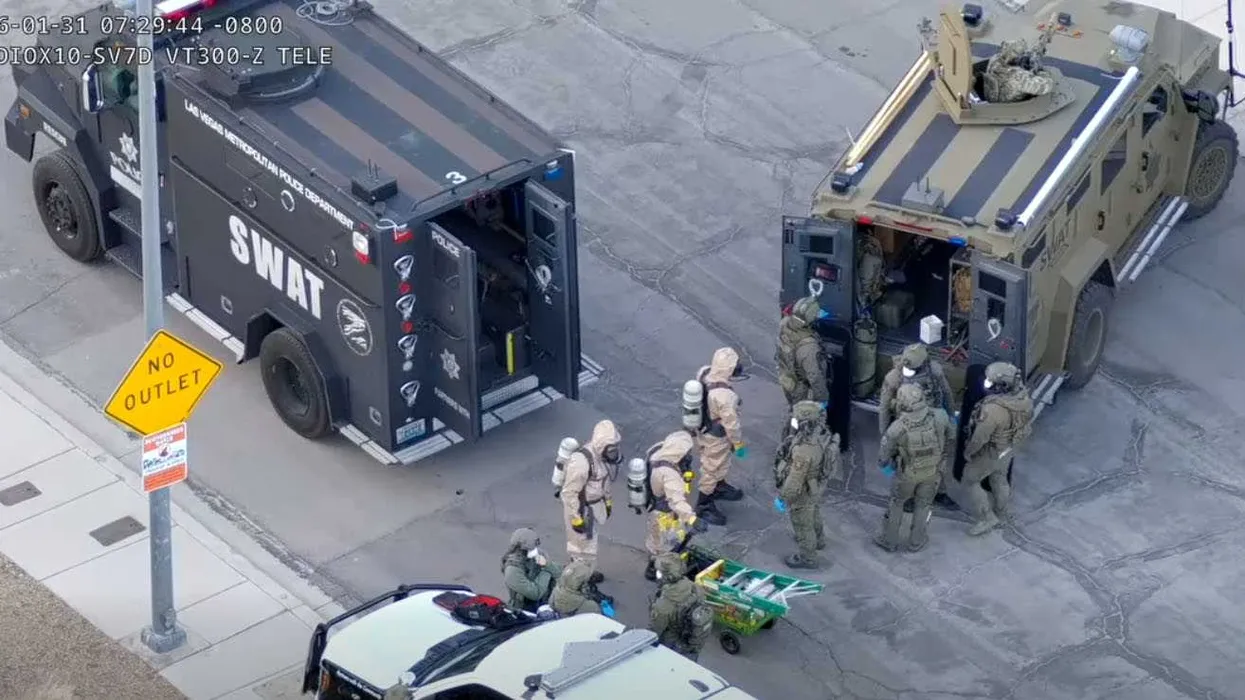
SWAT officers with the Las Vegas Metro Police Department raided a home in the city’s northeast end on Jan. 31, discovering a suspected illegal biolab apparently linked to the Chinese national who owned the Reedley site.
Footage shows local and federal agents massing outside a Sugar Springs Drive residence near Washington Avenue and Hollywood early Saturday morning while drones patrolled overhead.
A tactical robot dog explored the interior and conducted air sampling before members of the LVMPD’s All-Hazard Regional Multi-agency Operations and Response team made entry.
The main house was home to three renters who were safely removed and are apparently not targets of the investigation. The locked garage was home to “refrigerators, a freezer, laboratory-type equipment, and numerous containers holding unknown liquid substances,” according to police.
The apparent biological materials, which were carefully collected over the course of the weekend along with other evidence, were initially transported to a Southern Nevada Health District facility for safe storage, then taken to an FBI lab for testing.
LVMPD Sheriff Kevin McMahill indicated on Monday that “these items, importantly, were consistent in appearance to the items found and described in the Reedley, California, lab investigation.”
RELATED: How Americans can prepare for the worst — before it’s too late
 Photo by ARUN SANKAR/AFP via Getty Images
McMahill noted further that “the home was owned by the same individual connected to a prior, illegal bio-lab investigation in Reedley, California, that occurred in 2023.”
That individual is Jia Bei Zhu.
The House Select Committee on the Chinese Communist Party noted in its report on the Reedley biolab that the California lab operated under the direction and control of Zhu, a Chinese citizen associated with communist regime-linked companies as well with Chinese military-civil fusion entities.
‘This can’t keep happening.’
Zhu, a wanted fugitive from Canada, where he is the subject of a $330 million judgment for stealing American intellectual property, illegally entered the United States under the false identity of “David He,” said the report.
While unlawfully in the U.S., Zhu set up a network of companies and accumulated a vast supply of potential pathogens including including Ebola, COVID-19, HIV, malaria, and tuberculosis, which he is accused of keeping and poorly storing at one or more unlicensed and unregistered labs.
In addition to thousands of samples of potentially dangerous diseases and hundreds of boxes of medical devices subject to a U.S. Food and Drug embargo, the Reedley lab was home to roughly 1,000 mice that were genetically engineered to mimic the human immune system.
One lab worker reportedly told local officials that the transgenic mice were altered “to catch and carry the COVID-19 virus.” Dead mice were apparently disposed of “without the use of a licensed medical waste hauler.”
According to the congressional report, the Reedley biolab received millions of dollars in unexplained payments from Chinese communist banks.
Zhu was arrested by federal agents on Oct. 19, 2023, and indicted the following month for allegedly distributing adulterated and misbranded COVID-19 test kits and making false statements to authorities about his identity. He was slapped with additional charges in 2024 for alleged conspiracy and wire fraud.
Zhaoyan Wang, Zhu’s supposed lover and business partner, was charged with helping facilitate the alleged fraud through Universal Meditech Inc. and Prestige Biotech Inc. — biolabs she operated in Reedley and Fresno. Wang is also a Chinese national.
McMahill indicated that Zhu, who has a trial hearing scheduled for Feb. 23, remains in federal custody.
The LVMPD also arrested the property manager of the Vegas residence, 55-year-old Ori Solomon, on a charge of disposing and discharging hazardous waste. Solomon was booked into the Clark County Detention Center.
On Saturday, the FBI searched a second Vegas home on Temple View Drive but found no threat at the location. The FBI also revisited the Reedley lab on Sunday, reported KFSN-TV.
Republican Rep. Kevin Kiley (R-Calif.) said in response to the latest lab discovery, “This can’t keep happening.”
“The federal government must do more to stop illegal labs from operating in our communities,” added Kiley.
Kiley and fellow California Reps. Jim Costa (D) and David Valadao (R) have called for a hearing on their Preventing Illegal Laboratories and Protecting Public Health Act of 2025.
Editor’s note: The headline of this article has been edited after publication for clarity.
Like Blaze News? Bypass the censors, sign up for our newsletters, and get stories like this direct to your inbox. Sign up here!
China Is Stealing Our Tech. And It’s Partly Our Fault.
In recent years, there has been growing concern that the United States and China might find themselves in a war over Taiwan. Such worries overlook an important fact: Washington and Beijing are already at war. But as David Shedd and Andrew Badger document in their new book, The Great Heist: China’s Epic Campaign to Steal America’s Secrets, only one side has been acting like it.
The post China Is Stealing Our Tech. And It’s Partly Our Fault. appeared first on .
Judicial Watch Forces Justice Dept to Admit USADF Probe
Justice Dept. Admits Criminal Investigation of USADF in Judicial Watch FOIA Case Maryland Democrats Still Trying to Gerrymander Congressional Districts Judicial Watch Sues ODNI for Records on China Corruption Report Judicial Watch Urges Justice Dept. to Investigate Florida County for Woke Quota Scheme Justice Dept. Admits Criminal Investigation of USADF in Judicial Watch FOIA […]
The post Judicial Watch Forces Justice Dept to Admit USADF Probe appeared first on Judicial Watch.

The Spectacle Ep. 319: Exploring Venezuela’s Crisis and Canada’s Chinese Influence
A couple of weeks have gone by since the U.S. captured Venezuelan dictator Nicolás Maduro, leaving the country’s future potential…
Zhang Youxia’s Arrest: Xi Jinping’s Paranoia Leaves CCP Elites in Fear
The sudden arrest of Zhang Youxia, holder of the highest military position in the Chinese Communist Party (CCP), is a…
Senior Chinese General Under Investigation For Leaking Nuclear Weapons Info To US
Xi’s Closest Confidant
While Canada Cozies Up to China, Mexico Imposes Harsh Tariffs Due to Chinese Auto Dumping
In an attempt to figuratively poke Donald Trump and the United States in the eye, Canadian Prime Minister Mark Carney…
The US-Japan alliance keeps China from bullying the world into higher prices
China’s aggression in the Indo-Pacific no longer comes in bursts. It has become dangerous and systematic for America.
A recent long-range patrol by Chinese forces, conducted alongside Russia, prompted Japan to scramble fighter jets. It marked the latest in a string of incidents after months of heightened Chinese military activity around the Senkaku Islands.
If Washington and Tokyo keep strengthening this partnership, they can make the Indo-Pacific more difficult for Beijing to bully and far more stable for everyone who depends on it.
These shows of force don’t happen by accident. China uses them to normalize military pressure, probe red lines, and test the unity of U.S.-led alliances.
This latest episode also made one thing clear, at least: The Trump administration is watching closely.
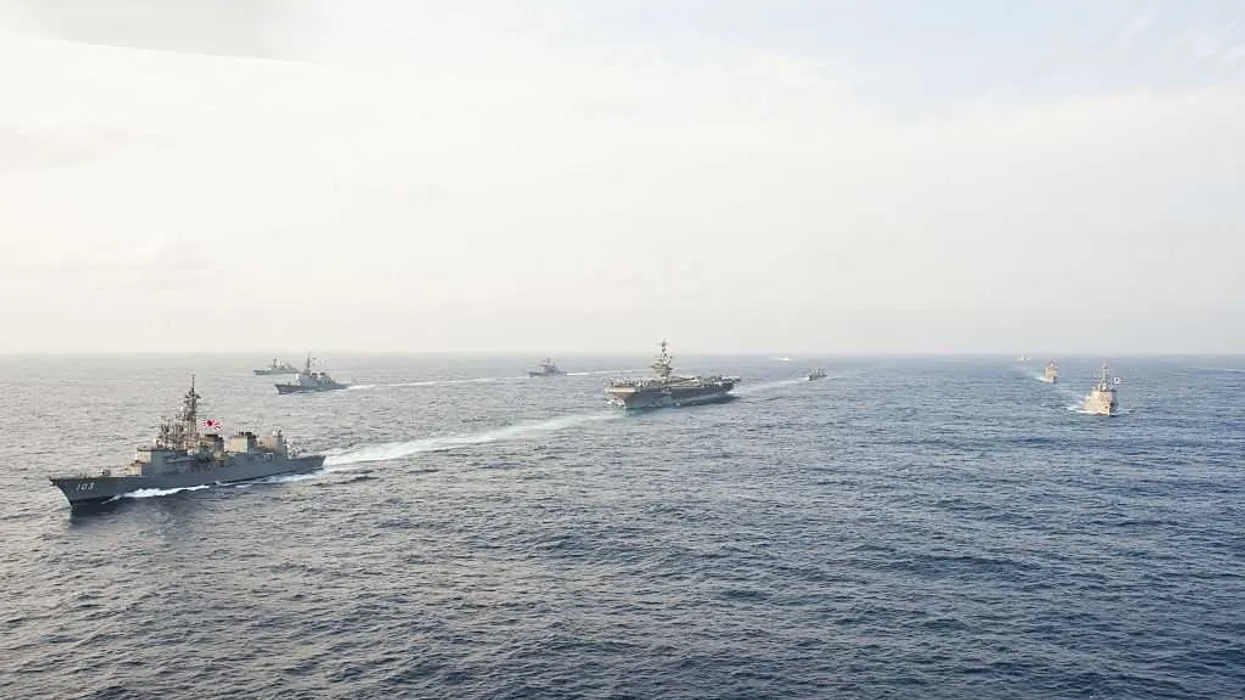
In a visible show of solidarity with Tokyo, U.S. strategic bombers joined Japanese fighter aircraft for high-profile drills. Days earlier, Chinese military aircraft conducted takeoffs and landings inside Japan’s air defense identification zone and shadowed Japanese aircraft with their radar off near Okinawa. Secretary of State Marco Rubio’s State Department expressed concern and reaffirmed its commitment to a “strong and more united” U.S.-Japan alliance.
Washington increasingly recognizes what Tokyo has understood for years: China’s behavior doesn’t just destabilize the region. It challenges the security order that has kept the Indo-Pacific from tipping into open conflict.
That reality puts a premium on reliable partnerships. No partnership matters more than the U.S.-Japan alliance.
Nowhere does that matter more than Taiwan. China’s large-scale military exercises, dubbed Justice Mission 2025, have pushed tensions in the Taiwan Strait to the highest levels in decades. Beijing aims to intimidate Taipei, warn off “external interference,” and alter the status quo through pressure rather than persuasion.
The Trump administration’s National Security Strategy arrived in that environment. While headlines still focus on Europe and the Middle East, the document makes the administration’s priorities clear: The Indo-Pacific remains central to U.S. strategy.
The NSS describes the Indo-Pacific as a critical economic hub that accounts for nearly half of global GDP. It commits the United States to a “free and open” Indo-Pacific by securing sea lanes and upholding international law.
RELATED: Inside China’s plan to beat the US at big tech forever
 MF3d via iStock/Getty Images
That framework didn’t start in Washington. Japan first advanced the concept of a free and open Indo-Pacific, and the region later adopted it through partnerships such as the Quad — the informal grouping of the United States, Japan, India, and Australia.
Rather than announcing a new direction, the NSS reinforces a familiar one: Alliances form the core of deterring China. Unlike the Trump playbook in Ukraine, the administration treats alliances as the bedrock of Indo-Pacific security against Beijing’s expanding military reach.
Japan sits at the heart of that network.
China pressures Japan across its waters and airspace, making Tokyo a frontline state. Japan also serves as the United States’ indispensable partner in the region, with basing, interoperability, and shared strategy that no other ally can match at the same scale. Under new conservative leadership, Japan has begun acting with urgency.
Japan’s defense minister, Shinjiro Koizumi, has emphasized that urgency, warning that the country now faces its most severe security environment since World War II. Japan has deepened coordination with the U.S. and other like-minded partners while strengthening its military capabilities by accelerating security reforms and easing restrictions on defense equipment transfers.
Japan has also moved up its plan to raise defense spending to 2% of GDP — from 2027 to now. That headline matters less than where the money goes.
Tokyo has prioritized capabilities suited for a long-term, high-risk environment: unmanned aerial vehicles, expanded surveillance platforms, and submarines equipped with vertical-launch missile systems.
RELATED: Hypersonic missiles are the new arms race. Can America catch up?
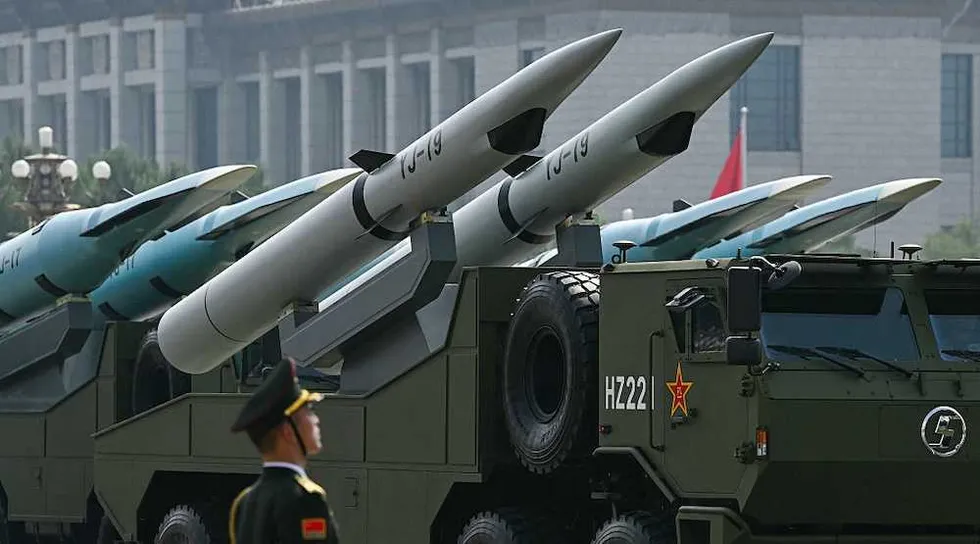 Photo by GREG BAKER/AFP via Getty Images
Japan’s objective looks straightforward. It aims to become a more capable military partner that complements U.S. forces rather than relying on them by default. That shift aligns with President Trump’s demand that allies reduce dependence on American power by strengthening their own defense industries and readiness.
The U.S.-Japan alliance has also moved beyond drills and declarations toward defense-industrial cooperation. Expanded maintenance and repair coordination, along with eased export controls, have begun laying the groundwork for a durable security partnership.
This collaboration marks a shift from rhetoric to endurance. Aligning strategy with industrial capacity won’t eliminate risk. It will raise the cost of Chinese coercion and reduce the chances that Beijing miscalculates.
Koizumi has stressed that 80 years after World War II, the U.S.-Japan alliance still embodies reconciliation and remains the best instrument to deter China’s rising aggression.
If Washington and Tokyo keep strengthening this partnership — in capability, production, and resolve — they can make the Indo-Pacific more difficult for Beijing to bully and far more stable for everyone who depends on it.





