

Category: China
Antitrust panic helped kill an American robotics pioneer
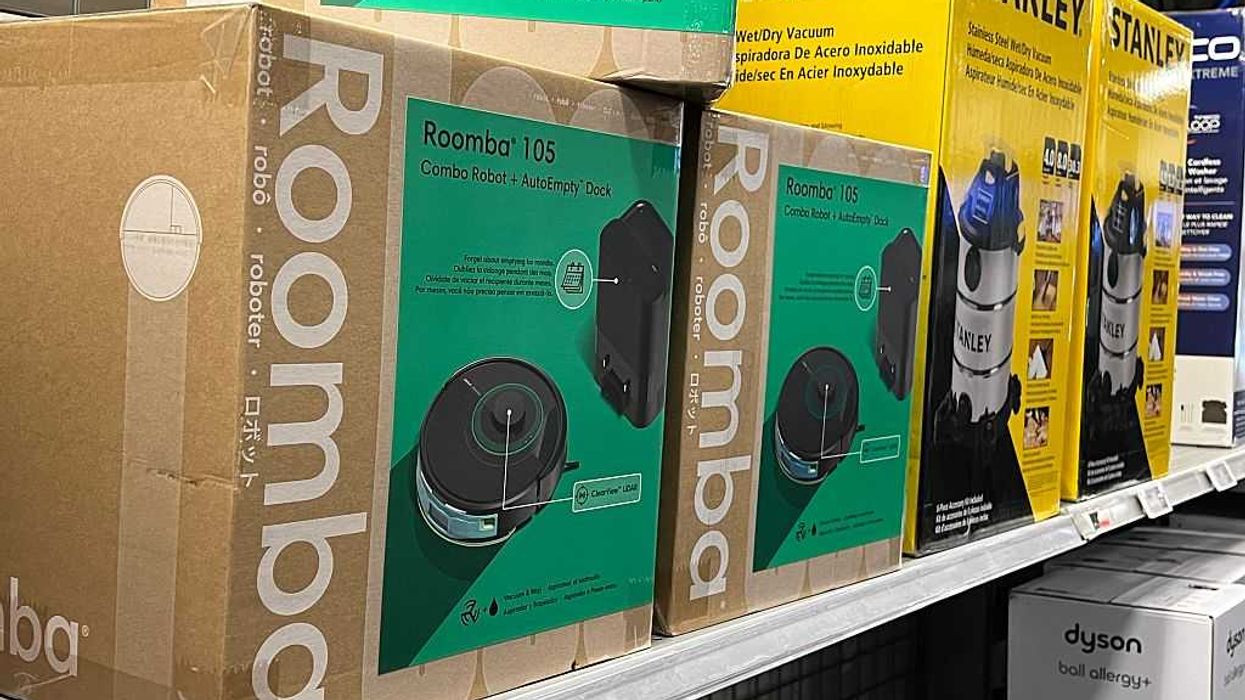
Antitrust regulators claim to protect competition. Their decision to block Amazon’s acquisition of iRobot did the opposite. It helped drive an American robotics pioneer into bankruptcy last December and pushed it into the arms of a Chinese creditor.
Antitrust law is supposed to defend consumers and prevent monopoly abuse. In this case, regulators killed a deal that could have kept iRobot alive, preserved American jobs, and strengthened a U.S. company facing brutal Chinese competition. Instead, the collapse of the acquisition forced iRobot into a court-supervised restructuring in which Shenzhen Picea Robotics — its largest Chinese creditor and key supplier — will take the company’s equity and cancel roughly $264 million in debt.
Ultimately, the acquisition’s collapse pushed iRobot into a deal with its largest Chinese creditor.
iRobot began in 1990, founded by roboticists from the Massachusetts Institute of Technology. The company built military and space exploration products before it introduced the Roomba in 2002, the device that turned home robotics into a household category. For years, iRobot stood as a rare American success story in consumer robotics.
Then the market shifted. Chinese manufacturers poured in with cheaper models, tighter supply chains, and rapid iteration. iRobot’s share price peaked in 2021, then slid hard over the next year. The company sought a lifeline and found one in Amazon, which agreed to acquire iRobot for roughly $1.7 billion.
That deal made strategic sense. iRobot needed capital, scale, and distribution power to compete against Chinese rivals such as Roborock, Ecovacs, Dreame, and Xiaomi. Amazon could have provided all three. Consumers likely would have seen faster innovation, deeper device integration, and lower prices, while iRobot kept more of its footprint and engineering talent intact.
Regulators saw a different story. The European Commission objected on antitrust grounds and signaled it would block the acquisition. The commission argued the deal could restrict competition in robot vacuum cleaners by allowing Amazon to disadvantage rival products on its marketplace. American critics piled on, including Sen. Elizabeth Warren (D-Mass.), who framed the acquisition as an attempt to buy out competition, along with privacy fears about Roomba’s mapping technology.
Facing regulatory opposition, Amazon and iRobot terminated the agreement in January 2024. Amazon’s general counsel, David Zapolsky, warned that the decision would deny consumers faster innovation and more competitive prices, while leaving iRobot weaker against foreign rivals operating under very different regulatory constraints.
The warnings proved accurate. After the deal collapsed, iRobot announced deep cost-cutting, including a 31% workforce reduction. The company shifted more production to Vietnam to compete on cost. Chinese brands continued to eat the market.
By December 2025, iRobot filed for Chapter 11 bankruptcy protection and announced a restructuring deal that hands control to Shenzhen Picea Robotics. According to iRobot’s own announcement, Picea will acquire the equity of the reorganized company through the court process and cancel about $264 million in debt.
RELATED: Why Trump must block Netflix’s Warner Bros. takeover
 Photo by Mandel NGAN/AFP via Getty Images
That outcome should haunt every regulator who claimed to defend competition. Regulators blocked an American acquisition and ended up delivering a storied American company to a Chinese creditor. They did not preserve a competitor. They helped bury it.
The iRobot collapse exposes a central problem with modern antitrust enforcement: Officials often substitute fear-driven hypotheticals for real-world consequences. They imagine a future in which Amazon squeezes competitors and consumers pay more. They ignore the present in which Chinese firms gain market power, American companies lose ground, and U.S. workers pay the price.
Markets discipline failure quickly. Regulators rarely pay for their mistakes. They can block a deal, watch a company fall apart, and declare victory because they prevented a theoretical harm.
This case produced the opposite of the intended result. Regulators killed a merger that could have strengthened an American company against Chinese competition. They weakened competition in the robot vacuum market by removing one of the few U.S.-based pioneers from the field. They also shrank the number of meaningful paths forward for iRobot until only one remained: a takeover by the company’s Chinese lender and supplier.
Policymakers should learn the right lesson. Antitrust action should not operate as a reflex against size or success. Regulators should measure outcomes, not slogans. If officials claim they protect competition, they should not celebrate decisions that end in bankruptcy and foreign control.
Exposing Our Enemies’ Weaknesses—and Our Own
The nationwide protests roiling Iran demonstrate the tremendous courage of the Iranian people, who brave hailstorms of bullets to call for a new and better government. They also reveal how the sweeping changes wrought by the information revolution create grave vulnerabilities for America’s adversaries. But the United States can only take advantage if it stops making its own share of mistakes.
The post Exposing Our Enemies’ Weaknesses—and Our Own appeared first on .

Chinese Universities Surpass Harvard Despite Glaring Lack of Racial Diversity
Harvard is no longer the most productive research university in the world, according to a respected global ranking that assesses schools on academic publication. The Ivy League darling dropped to No. 3 in 2025, surpassed by two Chinese universities that managed to excel despite an alarming lack of racial diversity.
The post Chinese Universities Surpass Harvard Despite Glaring Lack of Racial Diversity appeared first on .

The Spectacle Ep. 316: What Are the REAL Population Stats of China? Were Direct Energy Weapons Used in Venezuela? Will AI Replace Humans?
On this “grab bag” segment of The Spectacle Podcast, hosts Melissa Mackenzie and Scott McKay debunk and discuss various news…
The Myth of the ‘Liberal International Order’
In his latest Bloomberg op-ed piece, Hal Brands, the globalist academic at Johns Hopkins University’s School of Advanced International Studies…

China Sucks. Even Their Propaganda Makes America Look Awesome.
The American raid to capture Venezuelan dictator Nicolás Maduro was deeply embarrassing for Red China. The third-world communist thugs had provided much of the military equipment designed to protect Maduro’s regime from foreign intervention. It proved utterly useless against U.S. forces, who snatched Maduro just hours after his meeting with a delegation of Chinese officials.
The post China Sucks. Even Their Propaganda Makes America Look Awesome. appeared first on .
Battleships and Beyond: How To Stop China From Dominating the High Seas
The effects of Nicolás Maduro’s sudden downfall are now rippling far beyond the Caribbean basin. To wit, the U.S. military toppling the Venezuelan dictator without breaking a sweat is a humiliation for the Chinese Communist Party, which cannot dominate even its immediate neighborhood because of American armed might. Xi Jinping seeks not only to drive our military out of the Western Pacific, but also to build his own globe-spanning forces. If he succeeds, China will inhibit America’s ability to defend its interests even close to its shores.
The post Battleships and Beyond: How To Stop China From Dominating the High Seas appeared first on .
Venezuela was the stage. China was the target.
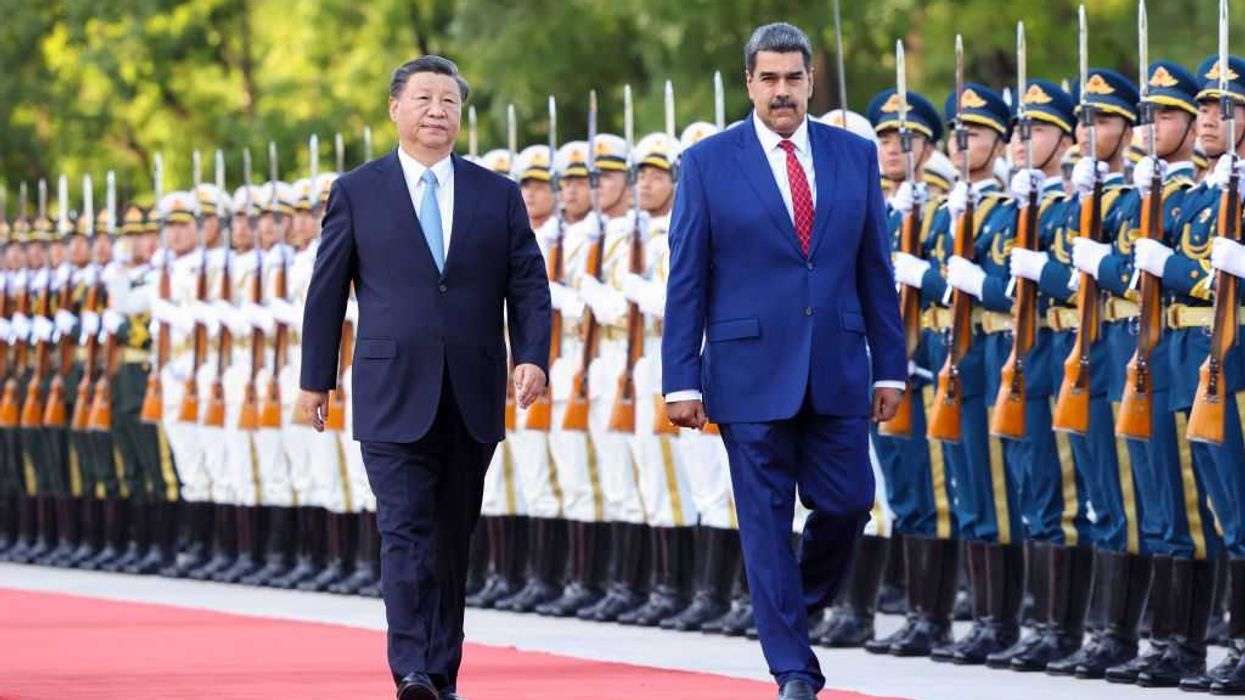
Last weekend’s Caribbean live-fire exercise in and around the suburbs of Caracas delivered a steady stream of tactical messages to the Western Hemisphere. We don’t like narco-terrorists, wannabe communists, bloated dictators, or people who supply oil to our adversaries.
But that wasn’t the real message.
Message to Xi: There’s a new sheriff in town. He isn’t ‘Sleepy Joe.’ And his call sign is FAFO.
The love note was addressed to China, and it read: We are awake now. Our game is FAFO.
America’s 36-year slumber on the Monroe Doctrine — “Stay out of the Western Hemisphere or else” — began after Panama in 1990. The Gulf War and the Global War on Terrorism followed, and Washington became dangerously myopic about threats in America’s own backyard.
Then came the turning point. When Bill Clinton signed off on communist China’s entry into the World Trade Organization in 2000, Beijing rapidly surged into a world-class economic power. Along with that rise came a succession of Chinese leaders who openly advanced the idea of global Chinese hegemony.
Oddly enough, many of those ideas came from an American — my late friend Alvin Toffler.
Toffler’s book “The Third Wave” so impressed Deng Xiaoping and Zhao Ziyang in 1984 that millions of bootleg Chinese translations were distributed — without royalties — throughout the People’s Liberation Army. The same thing happened after Toffler published “War and Anti-War.” Once again, millions of pirated copies circulated, and Beijing began integrating his ideas into military doctrine.
In the late 1990s, PLA Major General Qiao Liang and Colonel Wang Xiangsui wrote “Unrestricted Warfare,” borrowing heavily from Toffler while laying out a strategy to defeat the United States.
In hindsight, it should have been titled “Slow Motion War.”
The book focuses on perceived weaknesses in American character and American war-making. The United States remains a nation of quarterly earnings reports and election cycles. We change political leadership every two or four years. The Chinese think in generational time frames.
From their perspective, Americans only go to war when facing a “clear and present danger.”
The genius of “Unrestricted Warfare” lies in exploiting what happens when a threat is clear but not present — like cancer from long-term smoking — or present but not clear, like the slow poisons Lucrezia Borgia allegedly used on her enemies.
Qiao and Wang proposed a slow, steady pressure campaign against the four pillars of American national power: diplomatic, information, military, and economic — the DIME.
Examples abound. Diplomatic and economic leverage through the Belt and Road Initiative. Tight control of information inside China paired with aggressive information warfare abroad through platforms such as TikTok. A decades-long military buildup aimed at surpassing U.S. power. And a long trail of currency manipulation.
(And then there’s this gem from page 191 of “Unrestricted Warfare”: “Can special funds be set up to exert greater influence on another country’s government and legislature through lobbying?” Eric Swalwell might find that line interesting.)
RELATED: From Monroe to ‘Donroe’: America enforces its back yard again
 Photo by Tasos Katopodis/Getty Images
While America fixated on the Middle East, China quietly embedded itself throughout Latin America. In Panama, Beijing gained control of port management at both ends of the Panama Canal and began upgrading the system. In Costa Rica — which has no army — China donated 3,500 police cars and built a national stadium in San José, free of charge. It also cut sweetheart deals involving hundreds of Chinese fishing trawlers. Colombia saw similar treatment.
Then came Orange Man Bad.
Donald Trump is the first president to grasp that China isn’t a Red Godzilla stomping cities with napalm breath and a scything tail. China is more like the Blob — and Trump is Steve McQueen.
Venezuela, Maduro, oil, and narco-terrorism were all subsets.
China was the target. Xi Jinping was the bullseye.
Zero hour wasn’t set by the weather. It was set by the departure of Chinese envoy Qiu Xiaoqi, who had just wrapped up discussions on future ties with Venezuela. Unfortunately for Beijing, Delta Force snagged and bagged Nicolás Maduro and his wife and had them sitting in a Brooklyn jail before the envoy even made it home.
Message to Xi: There’s a new sheriff in town. He isn’t “Sleepy Joe.” And his call sign is FAFO.
Any questions?
Xi Jinping: ‘The Reunification of Our Motherland Is Unstoppable’
In a New Year’s address to the Chinese people, President Xi Jinping stated that “We Chinese on both sides of…





