

Category: Constitution
The Rise of the New Confederacy
“What has been is what will be, and what has been done is what will be done, and there is…
A Founding Document Finds Its Principles

Akhil Reed Amar’s Born Equal: Remaking America’s Constitution, 1840–1920 covers a period of American history that most of us learned as a series of familiar episodes: the crisis of the 1850s, the Civil War, Reconstruction’s rise and fall, the boom of the late 19th century, and the reforms of the Progressive Era. In the standard telling, the Constitution is the province of officials in the federal government—amended in dramatic fashion after the war, interpreted by courts in a mostly linear fashion, grappled over by men with names like Clay and Calhoun until the Progressives came along to say they no longer had any interest in it. (In my family we joke that there were no presidents or Supreme Court decisions between the end of Reconstruction and the rise of Teddy Roosevelt—our high-school and college U.S. history curricula pivoted hard to economic history for those three decades.) The business of the American people was business; obsession over constitutional text and foundational promises belonged to a small cadre of elites until it went underground and reappeared at the nation’s bicentennial.
The post A Founding Document Finds Its Principles appeared first on .
Washington, DC, has become a hostile city-state
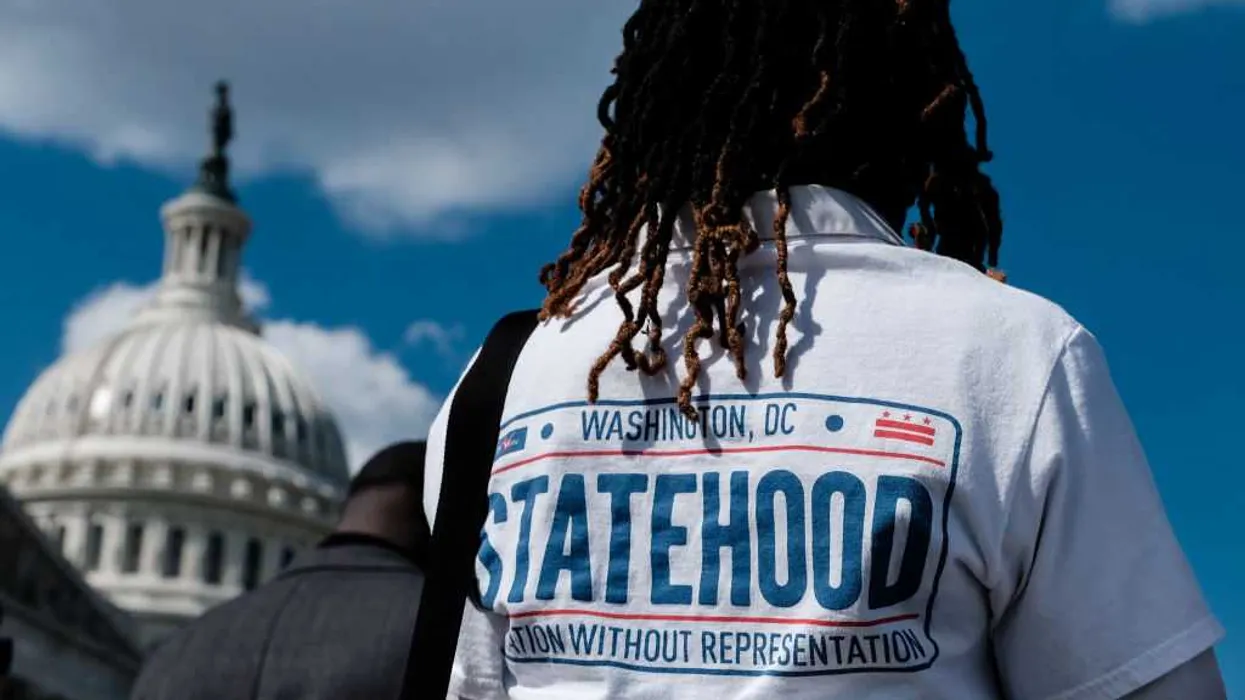
The District of Columbia wasn’t supposed to be like this. Hard as it is to believe today, the capital was set apart as its own district not to make it an untouchable bureaucratic citadel, but to make it work for all Americans. Unattached to any one state and free from the control of any one constituency, our government was supposed to serve the whole country.
Decades of misunderstanding, however, have muddled this design. Federalization gives us a fighting chance of restoring it.
Perhaps the most prudent solution would be to subsume the District’s entities into the federal government.
Under the Articles of Confederation, the federal government resided in Philadelphia until a military mutiny prompted it to leave. With this in mind, the framers proposed an optional federal district.
Under the proposal, Congress could create a capital and be vested with “exclusive” legislative authority over it. This would put the government in a position to contemplate and sympathize equally with all Americans. The states approved. And so the framers’ proposal was ratified under Article I, Section 8, Clause 17 of the Constitution. Congress then placed the capital along the Potomac River, and D.C. was organized in 1801.
Confusion soon followed. Congress tried many approaches to local governance and settled on a semi-independent model, enacted as the D.C. Home Rule Act of 1973. This established a congressionally appointed judiciary and a popularly elected city council, mayor, and attorney general. Under home rule, D.C. could make its own law, albeit with congressional oversight.
The founders warned us about this model, however. They anticipated that self-governance would embarrass, impede, and endanger the federal government.
This failure predates Trump
Trump derangement syndrome has only vindicated this position. In 2017, D.C.’s attorney general joined litigation against Trump’s so-called Muslim ban. Then in 2020, D.C. painted a “Black Lives Matter” memorial along 16th Street NW, flipping an urban bird at the Trump White House. And in 2025, the District’s attorney general protested Trump’s public safety initiative, contesting his right to seize the Metropolitan Police Department and deploy the National Guard across the city.
One might overlook these obstructions if the District’s fierce independence enabled it to ensure safe and efficient self-governance. But that doesn’t describe D.C. In 2023, a Senate staffer traversing the northeast part of the city was knocked to the ground and repeatedly stabbed in the head and chest. Then in May 2025, two embassy interns were murdered outside the Capital Jewish Museum. The following month, a congressional intern was fatally shot in the Mount Vernon Square neighborhood.
Nor is partisanship the only problem. D.C. behaves almost as poorly when Democrats wield federal power. In April 2024, pro-Palestinian protesters erected an encampment at George Washington University (a federally chartered school). City officials refused to remove the protesters for two weeks even though their disruptions interfered with students’ final exam preparations.
Bringing the capital to heel will ultimately require legislation. There’s already a proposal to repeal home rule. It’s a great start, but the proposal doesn’t detail how D.C. would operate afterward — not a promising omission when Congress tends to be so ineffective.
Perhaps the most prudent solution would be to subsume the District’s entities into the federal government. Then Congress need not work from a blank slate by creating new bodies for local governance. Instead, D.C.’s city council could become an advisory body to recommend local laws. This would meet the Constitution’s requirement that Congress make the laws without requiring it to fuss over the minutiae of local governance.
This idea won’t appease locals who want equal electoral representation to that enjoyed by other Americans, if not greater. We know that D.C. residents (or, more accurately, the Democrats in their ears) seek D.C. statehood. But if it’s a state they’re after, then they should entertain retrocession or repeal the District’s charter. Illegitimatizing the Constitution to preserve the mock state is not the way to go.
Forcing the issue through the courts
Knowing that Democrats in Congress will object on these grounds to any discussion of federalization, we should use litigation to force a solution on this matter. The difficulty with litigation is finding a plaintiff — a D.C. resident who believes in a federal capital and whose case wouldn’t be easily dismissed by local judges seeking to avoid the issue. But with so many conservatives currently serving in D.C. under the Trump administration, now might be the time to bring a suit.
The right litigant has two ways to attack home rule — challenge D.C.’s lawmaking power or neutralize its prosecutorial authority. The lawmaking approach likely faces two objections. First, judges might question how Congress’ ultimate legislative authority under home rule meaningfully differs from exclusive authority under the Constitution. Second, they might raise the constitutional liquidation theory, which posits that the post-enactment tradition fleshes out constitutional indeterminacies.
RELATED: Six questions Trump and conservatives can no longer dodge in ’26
 Photo by Joe Raedle/Getty Images
Neither objection holds water. For one thing, exclusive legislative authority means what it says — one body enacts the law. Using D.C.’s city council as a think tank wouldn’t violate this principle, because only Congress would oversee legislation from introduction to enactment. But home rule fails because Congress shares its authority with another body. In fact, a law could exist under home rule without Congress touching it at all. The Constitution doesn’t envision such an anomaly.
Relatedly, liquidation presupposes that a constitutional provision is ambiguous. But here, the framers couldn’t have written a clearer provision. Congressional authority over D.C. is exclusive; that means only Congress can exercise it. And so even though Congress has handed lawmaking power to D.C. on multiple occasions, viewing this abdication as indicative of the Constitution’s original meaning would only sanction congressional laziness and cowardice.
A limited win that still matters
The prosecutorial approach would open a more straightforward path to a more limited victory. The pitch is simple: The D.C. attorney general is a federal creation. And yet he is elected and can sue the federal government at will. This flouts the appointment process, as well as the president’s power to remove officers and direct executive-branch entities. Now would be the perfect time to press this argument, as the Supreme Court aims to clarify the president’s removal power later this term and the D.C. Circuit recently questioned whether “the District possesses an independent sovereignty that can give rise to an Article III injury from actions of the federal government.”
The only issue is that D.C. could still make law. But some of that law will be unenforceable if the attorney general cannot prosecute. Hence, a small win — but a win nonetheless.
Congress has subverted the Constitution by entertaining home rule. The results have been ugly and will get uglier. District residents will grow increasingly radical in their demands for self-governance. The framers, in their wisdom, didn’t create a sovereign D.C. — they bequeathed us a federal city to preserve a neutral national government. We should restore that vision.
Editor’s Note: A version of this article was published originally at the American Mind
A Nation That Can’t Explain 1776 Urgently Needs a Civic Education Revival
Why did the United States of America declare its independence from England in 1776? If you know the answer to…
Incoming Democrat Gov. Abigail Spanberger Appoints DEI Director Who Cheered On Dismantling Constitution
‘Oh, you’re my type of girl’
Mamdani dares ICE to come get him — and throws the Constitution in the trash

New York City Mayor-elect Zohran Mamdani calls himself a “Democratic Socialist,” but he clearly doesn’t support the cooperative federalism that keeps American democracy functioning.
Just weeks after projecting a diplomatic, moderate tone during an Oval Office visit, Mamdani issued a message that should chill any American who values the rule of law. Responding to a recent Immigration and Customs Enforcement raid in Chinatown, Mamdani in a video urged illegal aliens to “stand up” to federal agents by exploiting every legal loophole to stall enforcement.
Mamdani’s encouragement mirrors the toxic doctrine of states’ rights absolutism that fueled the nation’s march toward civil war.
“We can all stand up to ICE if you know your rights,” he declared, offering a tutorial on how to shut doors in agents’ faces, demand endless clarifications, and film operations to disrupt them.
This is a blueprint for openly defying federal authority, wrapped in the rhetoric of righteous resistance. As a self-avowed Democratic Socialist who promised to “fight back” against ICE and labeled the agency a “reckless entity,” Mamdani reveals a contempt for constitutional order that has moved from fringe to mainstream on the American left.
The peril in this rhetoric is not theoretical. While the circumstances differ, Mamdani’s encouragement mirrors the toxic doctrine of states’ rights absolutism that fueled the nation’s march toward civil war. In the 1850s, leaders of the nascent Confederacy preached nullification — the idea that states could ignore federal laws they deemed unjust, particularly those touching slavery.
South Carolina’s 1832 Ordinance of Nullification, defying federal tariffs, was a dry run for the secessionism that exploded in 1861. Confederate Vice President Alexander Stephens later declared in his “Cornerstone Speech” that the Confederacy rested on the principle of state sovereignty over federal authority.
Fast-forward to Mamdani’s New York, a sanctuary city where local laws are exalted above national ones and illegal aliens are coached to treat ICE as an invading force. This reckless approach can only ratchet up tensions, increasing the likelihood of violent confrontations and accelerating the erosion of our constitutional order.
This isn’t rights protection. It’s the resurrection of a philosophy that once split the nation in two. The Civil War claimed more than 600,000 lives because defiant states elevated their local priorities over the union’s supremacy. Mamdani’s sanctuary-state playbook risks igniting a similar dynamic — one resisted arrest at a time.
The hypocrisy is glaring. For nine years, Democrats and their media allies branded Donald Trump a “threat to democracy,” insisting that “no one is above the law.” Nancy Pelosi tore up his State of the Union address on camera, declaring his actions an assault on the Constitution. Chuck Schumer warned that Trump’s border enforcement would “Balkanize” America.
Yet when Mamdani — a rising progressive star — directly subverts federal immigration statutes, the same chorus falls silent. No calls for indictments. No panic-stricken editorials about authoritarianism.
Democrats declared Trump’s alleged election interference a constitutional crisis. But Mamdani’s defiance goes straight at the Supremacy Clause, which makes federal law the “supreme law of the land.” By elevating New York’s sanctuary policies and restricting cooperation with ICE to only 170 “serious crimes,” Mamdani is not safeguarding democracy. He is undermining it.
America’s founders envisioned a balance: states as laboratories of democracy but always subordinate to the union’s paramount authority. Sanctuary cities flip that design on its head. Once New York shields violators of immigration law, copycats are inevitable. What happens when California nullifies EPA emissions rules? Or Texas ignores ATF gun tracing? Or Florida decides federal taxes are optional?
 Photo by PATRICK T. FALLON/AFP via Getty Images
Localized resistance metastasizes into a patchwork of fiefdoms where the law becomes whatever the local politician decrees.
Mamdani’s vision, if replicated, promises rapid national deterioration: a swelling illegal population operating in the shadows, strained public resources, and cities like New York — home to at least a half-million illegal aliens — functioning as de facto no-go zones for federal agents.
Progressives who cheered Mamdani’s victory must reckon with the monster they helped unleash: a leader who cloaks defiance in compassion while sowing the seeds of anarchy. American federalism depends on shared laws, not selective compliance. If New York wants to lead, it should honor the union that made its success possible — not mimic the Rebels of 1861.
Otherwise we’re not securing the nation. We’re dismantling the house that stands between order and oblivion.
The Supreme Court Puts IQ on Trial Again
IQ is back in the news with the Supreme Court’s third look at IQ and capital punishment since 2002. On…
The Filibuster Must Be Protected Now
Conservative demands to abolish the filibuster, like earlier lamentations over the continued existence of the pesky debt limit, strongly indicate…
Bad Presidents or Bad Government?
No matter where one looks these days, there is an explosion of anger over the decline in political ethics and…
How the Senate’s phony ‘deliberation’ crushes working Americans
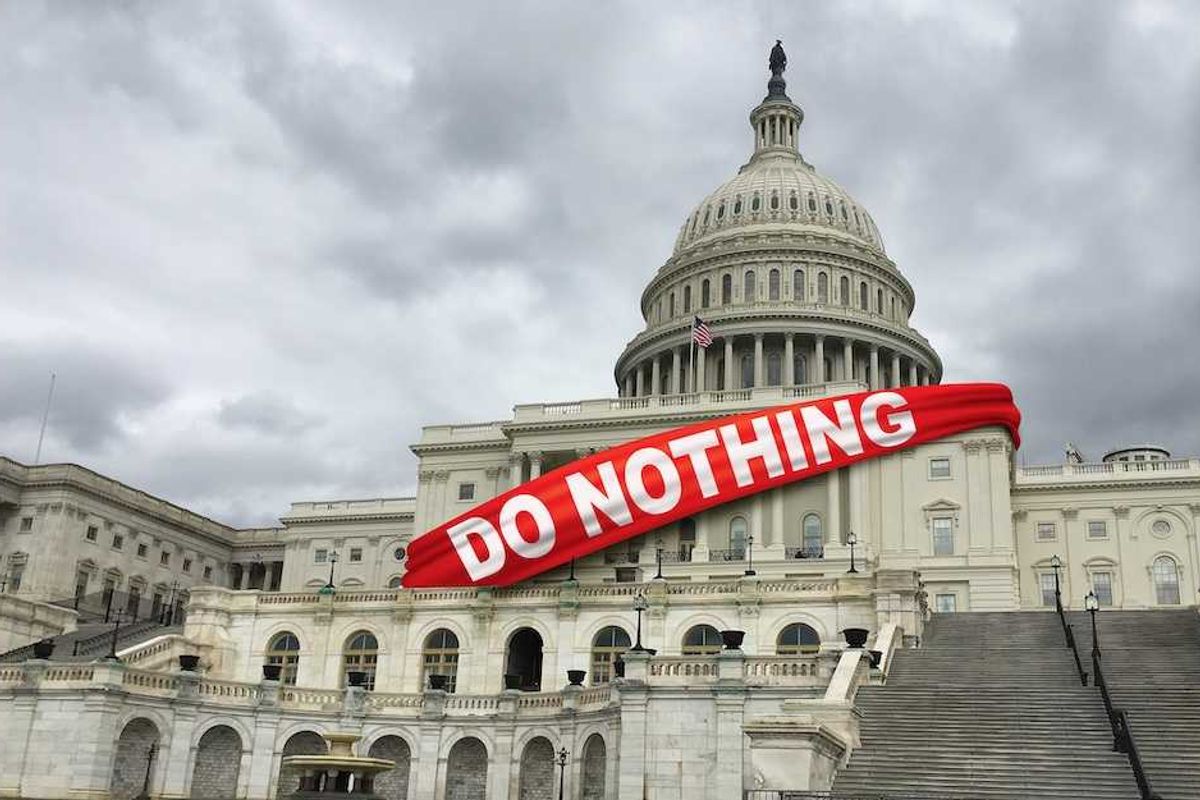
The United States Senate is broken, and most Americans know it — including President Donald Trump. A chamber that once passed laws with a simple 51-vote majority, a practice that held for more than a century, now demands 60 votes for nearly anything of consequence.
Defenders call this the “world’s greatest deliberative body,” guarding minority rights. In reality, the 60-vote threshold is a rule the Senate invented in the last century — and one it can discard tomorrow.
The filibuster transformed from a test of stamina into a tool for avoiding hard votes — and, today, a convenient excuse to delay or kill the America First agenda.
Article I lists exactly seven situations that require a supermajority: overriding vetoes, ratifying treaties, convicting in impeachment, expelling members, proposing constitutional amendments, and two obscure quorum rules. Passing ordinary legislation is not on the list.
The Senate’s tradition of unlimited debate — the seed of modern filibusters — wasn’t designed to create a supermajority requirement. It was an accident.
In 1806, on Aaron Burr’s suggestion that the Senate rulebook was cluttered, the chamber deleted the “previous question” motion, the mechanism the House still uses to end debate and vote. No one understood the implications at the time. Filibusters didn’t appear until the 1830s, and even then they were rare because they required real endurance. Senators had to speak nonstop, often for days, until they collapsed or yielded.
How the filibuster became a weapon
Everything changed in 1917. After 11 anti-war senators filibustered Woodrow Wilson’s bill to arm merchant ships on the eve of World War I, the public revolted. Wilson demanded action. The Senate responded by creating Rule XXII — the first cloture rule — allowing two-thirds of senators to end debate.
Instead of restraining obstruction, the rule supercharged it. For the first time, a minority didn’t need to speak until exhaustion. They only needed to threaten it. The majority now had to assemble a supermajority to progress.
The filibuster transformed from a test of stamina into a tool for avoiding hard votes — and, today, a convenient excuse to delay or kill the America First agenda.
The Senate has rewritten its filibuster rule many times since. In 1975, it lowered the cloture threshold from two-thirds to three-fifths (60 votes). In 2013, Democrats eliminated the filibuster for most presidential nominees; in 2017, Republicans applied that same exception to Supreme Court justices.
These changes all point to the same reality: The filibuster is not a sacred tradition. It is a standing rule, created and amended by simple-majority votes. The Senate can change it again any time.
The myth of ‘unprecedented change’
Filibuster defenders insist that ending the 60-vote rule would be radical.
It wouldn’t. In reality, it would restore the practice that governed the Senate for its first 128 years — unlimited debate, yes, but no supermajority threshold for passing laws.
RELATED: Democrats reject ‘current policy’ — unless it pays their base
 DOUGBERRY via iStock/Getty Images
Defenders also claim the filibuster forces compromise. History says otherwise. The biggest legislative achievements of the last century — Social Security, the Civil Rights Act, the Tax Cuts and Jobs Act — all passed when the filibuster was weakened, bypassed, or irrelevant.
What we have now is not deliberation. It is paralysis: a rule that allows 41 senators, representing as little as 11% of the country, to veto the will of the rest. The Senate already protects small states through equal representation and long tenures. Adding a 60-vote requirement for routine governance is not what the framers intended.
The fix
The solution is straightforward. The Senate can return to simple-majority voting for legislation. It can keep unlimited debate if it wishes — but require a real talking filibuster that ends when the minority runs out of arguments or public patience. Or it can leave the system as it is now and watch President Trump’s America First agenda stall for another generation.
The filibuster is not a 230-year constitutional safeguard. It is a 108-year experiment born in 1917 — and it has failed. The Senate invented it. The Senate can un-invent it.





