

Category: Donald Trump
JD Vance to Canada: Stop blaming Trump for your decline
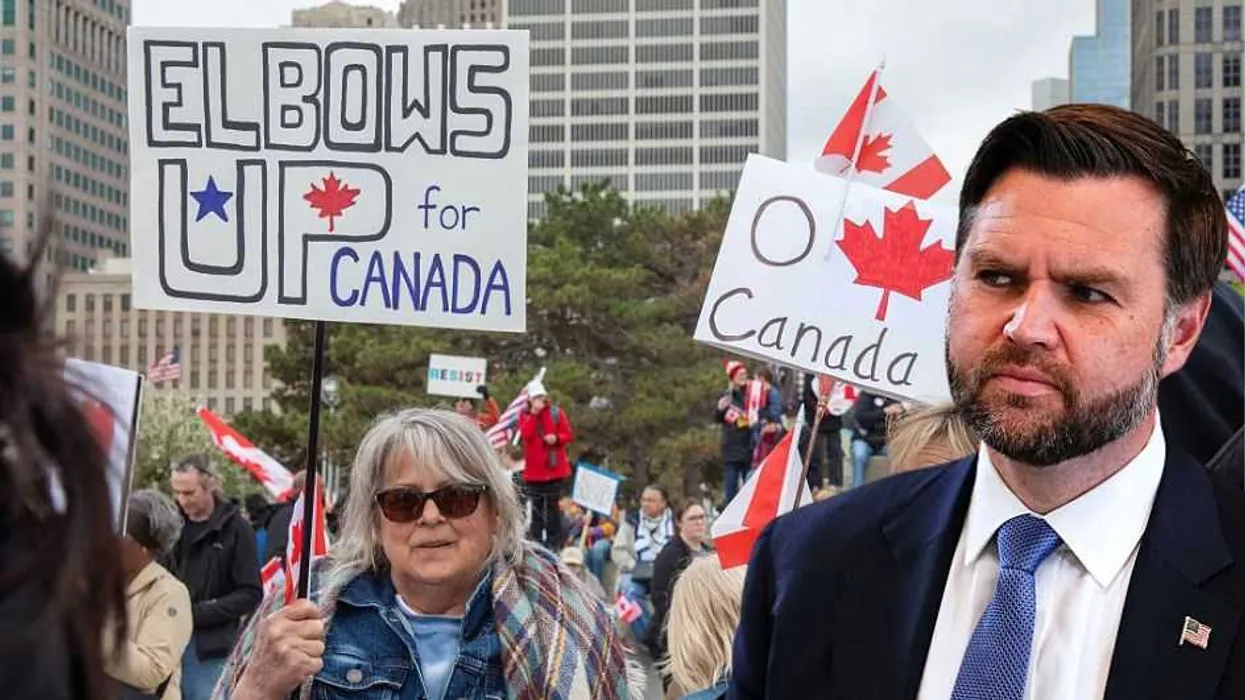
Vice President JD Vance did something remarkable last week: He described Canada more honestly than most of its own political leaders.
In a short series of posts on X, Vance captured the two anxieties that now define Canadian life — mass immigration and a refusal to take responsibility for national decline.
The deeper problem is leadership that seems consistently more focused on the fortunes of global capital than the welfare of Canadians.
“While I’m sure the causes are complicated,” he wrote, “no nation has leaned more into ‘diversity is our strength, we don’t need a melting pot we have a salad bowl’ immigration insanity than Canada. It has the highest foreign-born share of the population in the entire G7 and its living standards have stagnated.”
Vance continued, “And with all due respect to my Canadian friends, whose politics focus obsessively on the United States: your stagnating living standards have nothing to do with Donald Trump or whatever bogeyman the CBC tells you to blame. The fault lies with your leadership, elected by you.”
Truth hurts
Those comments struck a nerve because they describe a reality that Canadians live with every day. Immigration levels have soared to historic highs. Canada’s population is closing in on 40 million, with roughly 23% foreign-born in the 2021 census — and likely much higher today, given the recent revelation that 42% of babies born in 2025 will have foreign-born mothers. For years, political and media elites insisted that this was a sign of national strength. Ordinary people can now see the strain everywhere: stagnant wages, collapsing services, unaffordable housing, and infrastructure buckling under the load.
Vance’s second point was equally accurate. Canadian politicians — especially Liberal ones — have long relied on Trump as a universal scapegoat. No matter the problem, the reflexive response has been to point south and blame “American extremism” for Canada’s failures. It was a convenient distraction from the consequences of their own policies.
Man with no plan
Prime Minister Mark Carney was a master of this blame-shifting. Before entering politics, he spent years burnishing his reputation as a global technocrat. Yet when he ran for prime minister, he adopted an almost paranoid tone toward the United States, claiming in one speech: “President Trump is trying to break us so that America can own us. … We need a plan to deal with this new reality.” His “plan,” as it turned out, was simply to win power — and once in office, Carney abandoned the rhetoric even as he continued neglecting basic economic and security interests.
Nowhere has that neglect been clearer than in defense procurement. Ottawa is reportedly considering scrapping the F-35 fighter jet program in favor of Sweden’s Gripen — an aircraft incompatible with the F-35s flown by every branch of the U.S. military and central to NORAD’s interoperability. As U.S. Ambassador Pete Hoekstra has warned repeatedly, such a move would be sheer folly, undermining both North American defense and Canada’s most vital alliance.
The deeper problem is leadership that seems consistently more focused on the fortunes of global capital than the welfare of Canadians. Brookfield Asset Management — the firm Carney chaired before deciding to seek the leadership of the Liberal Party of Canada and replacing Justin Trudeau as prime minister — recently surfaced in headlines for its involvement in an $80 billion agreement with the Trump administration to produce nuclear reactors. That deal may be good business, but it has only reinforced public suspicion that Carney’s loyalties were formed long before he stepped into elected office.
RELATED: Is this the end of Canada?
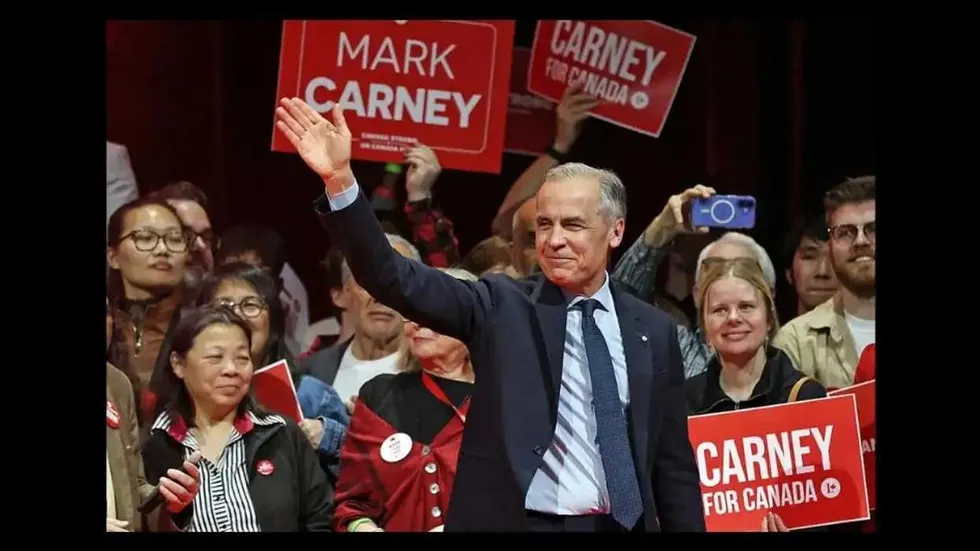 Dave Chan/Getty Images
Soft authoritarianism
Meanwhile, Canada’s once-vaunted bureaucracy is looking increasingly ideological, unaccountable, and hostile to the people it purports to serve. The Canadian Food Inspection Agency’s ongoing occupation of a family farm — and its insistence on slaughtering hundreds of healthy ostriches despite nearly a year without symptoms of avian flu — has alarmed Canadians across the political spectrum. It is the kind of aggressive, unrestrained government action that would have been unthinkable a generation ago.
All of this is unfolding as the Liberal government pursues sweeping censorship and surveillance legislation, from online speech controls to broad new powers for federal regulators. The United Kingdom has already slid into a soft authoritarianism that polices “offensive” speech through arrests and intimidation. Canada appears determined to follow the same path.
This is what Vance was speaking to: a country drifting into economic stagnation, cultural fragmentation, bureaucratic overreach, and political corruption. A country that no longer seems capable of telling itself the truth about what is happening. A country that responds to national crises not with reform, but with scapegoats — whether Donald Trump, American conservatives, or anyone who challenges the official narrative.
Canada is not yet lost. But it is undeniably breaking, and the political class shows little interest in repairing it.
As Vance noted, the ultimate responsibility lies with Canadians themselves. They elected the leadership that brought the country to this point. Whether Canada recovers will depend on whether they are willing to demand something better.
‘Ridiculous charade’: Bill O’Reilly torches Democrat senator over ‘seditious’ political stunt
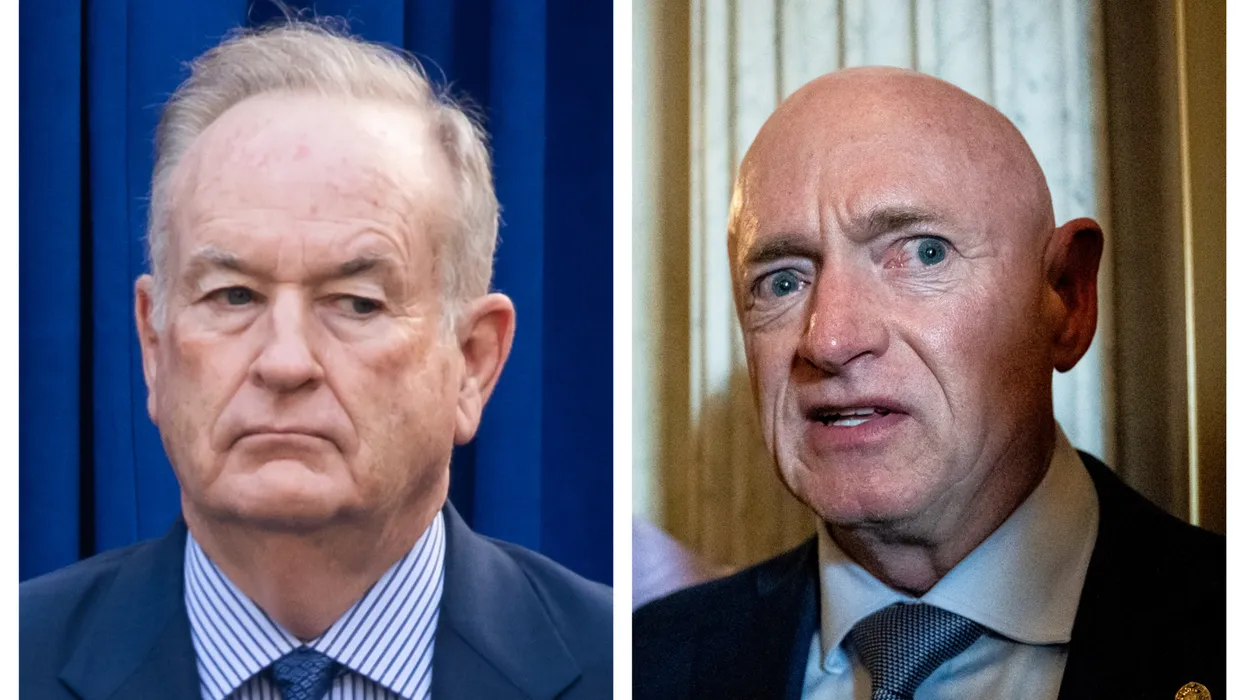
Bill O’Reilly ripped into Democratic Sen. Mark Kelly of Arizona over his involvement in left-wing lawmakers’ most recent political stunt.
Kelly and five other Democratic senators put out a video calling on military members to disobey “unlawful” orders from the commander in chief, President Donald Trump. Democratic Sen. Elissa Slotkin of Michigan, who reportedly orchestrated the video, admitted herself that she is not aware of any “unlawful” orders issued by the administration.
‘If you’re a responsible legislator, you don’t make things up.’
Kelly, who has an extensive military background, came under fire alongside his colleagues, with Trump and his allies branding the video “seditious.”
“I think the whole thing is contrived,” O’Reilly said. “I’m disappointed with Sen. Kelly. I think that he made a huge mistake by getting involved with this ridiculous charade.”
Because Kelly is a retired Navy commander, the Democratic senator is still subject to the Uniform Code of Military Justice, landing him an investigation from the Department of War.
“All servicemembers are reminded that they have a legal obligation under the UCMJ to obey lawful orders and that orders are presumed to be lawful,” a DOW statement reads. “A servicemember’s personal philosophy does not justify or excuse the disobedience of an otherwise lawful order.”
O’Reilly said Kelly’s irresponsible involvement in the Democrats’ political stunt was purely motivated by partisan affiliation.
“If you’re a responsible legislator, you don’t make things up,” O’Reilly said. “So if you don’t have an illegal order, then why are you talking about an illegal order? For what? What is the reason?”
“There’s only one,” O’Reilly added. “To embarrass Trump. To whip up hatred against Trump. That’s why they did it. I guess they didn’t have anything else to do on Monday.”
RELATED: ‘Canary in a coal mine’: Ousted speaker warns against the rising risk of GOP House resignations
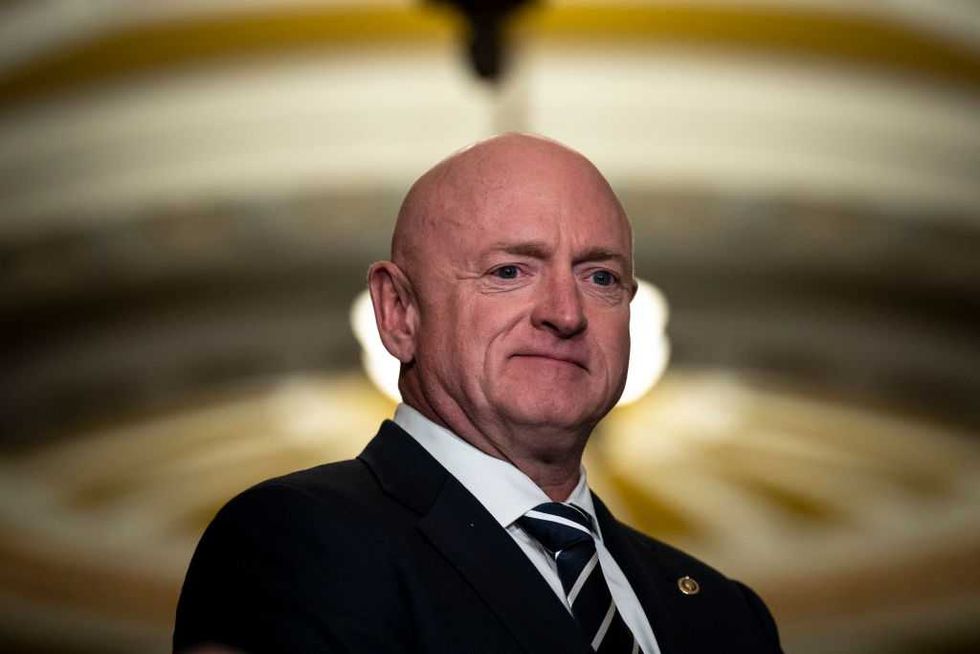 Photo by Drew Angerer/Getty Images
Kelly’s military background should have prevented him from such a public misstep, according to O’Reilly.
“But why would Kelly, who has a distinguished record both in the military and in Congress, why would he be part of it?” O’Reilly asked. “What’s the up side? And then, when all hell breaks loose, you weren’t expecting that backlash? … If they didn’t, they should retire.”
“What are you, 7 years old? When you go in there and tell the U.S. military not to obey orders because they may be ‘unlawful,’ you’re going to get push back.”
Like Blaze News? Bypass the censors, sign up for our newsletters, and get stories like this direct to your inbox. Sign up here!
Red State Reignites Redistricting Battle After Trump Turns Up Heat
‘Deserve to have fair representation’
Blue cities reject law, reject order — and reject America

Allow me to shock some of my readers by declaring my opposition to President Trump’s plan to send the National Guard into crime-ridden cities. My objection has nothing to do with constitutional authority. Having studied the matter, I believe the president does, in fact, have the power to deploy federal forces to address rising urban crime.
History also shows such interventions can work. The drop in violence in Washington, D.C., after federal forces arrived to restore order is evidence enough.
If residents wanted leaders who took crime seriously, they would vote for them. Their refusal to do so exposes their political priorities.
I also concede that a case can be made for this step in the District of Columbia. Washington is under congressional jurisdiction, and the president, operating within that framework, has made the city safer for residents, political leaders, and foreign visitors. The mayor has even expressed appreciation for the assistance, although the District’s electorate — heavily black, heavily Democratic, and deeply hostile to the administration — continues to seethe at the very idea of federal involvement.
And for the record, the president is entirely justified in directing Immigration and Customs Enforcement to pursue illegal aliens with criminal records. These offenders have no right to remain in the United States, and the Democratic effort to preserve them as foot soldiers for the party is as cynical as it is transparent. The administration deserves credit for removing these “high-value” assets from the Democratic client network.
Ungrateful, unwanted
My problem arises with Trump’s call for federal intervention in cities where the local government — and most of the population — passionately opposes it. Even if the president can deploy the National Guard without a governor’s approval, prudence suggests he shouldn’t.
I can think of few officials more odious than Illinois Gov. JB Pritzker (D) or Chicago Mayor Brandon Johnson (D). Yet both remain far more popular in their city than Trump or the GOP. Johnson’s approval is collapsing, but it is almost certain that whoever succeeds him will be another black or Hispanic Democrat who wins votes by railing against our supposedly “fascist” president.
Residents of Chicago’s most violent neighborhoods express emphatic disapproval of Trump’s plan. These are people who live amid constant danger yet habitually vote for leftist mayoral candidates. The same pattern holds in Portland, Charlotte, St. Louis, and Baltimore — cities Trump proposes to “liberate” with federal intervention.
Voters chose this
I cannot imagine why Trump should insert himself where voters clearly do not want him.
If residents wanted leaders who took crime seriously, they would vote for them. Their refusal to do so exposes their political priorities. I consider those priorities misguided and even self-destructive, but it is absurd to claim “the people are demanding” help when most are vocally rejecting it.
Voters should be allowed to live under the governments they choose. If they wanted different policies, they would stop electing Democrats who call for defunding the police, eliminating bail, and condemning crime prevention as racist. Despite the Fox News narrative, minorities who vote this way are not “victims” of Democratic manipulation. That idea is as fanciful as the GOP refrain that today’s Democratic Party is simply the slaveholding party of the 1830s. Voters who elect leftist Democrats are not trapped. They are expressing, clearly, the type of society they want.
RELATED: ‘He’s not that smart’: Homan lampoons Chicago mayor for pleading with UN to intervene against ICE
 Photo by Scott Olson/Getty Images
The vote that counts most
Ben Shapiro recently said something that rattled some listeners but which I find eminently defensible: If you abhor the politics of the place where you live, move. He followed his own advice, leaving deep-blue California for increasingly red Florida. Some interpret this as a call to uproot families and abandon long-standing communities.
But what exactly is the alternative? Should the federal government override election results because a city or state radicalized itself? Should Trump nullify votes? That will not happen. Nor can we easily disenfranchise those who lawfully exercise the franchise and continue electing the mayors, prosecutors, and governors responsible for our collapsing urban order.
Those who reject the leftist agenda retain one real option: vote with their feet. This path frees citizens from majorities who have democratically chosen anarcho-tyranny — not only for themselves but for everyone else who lives under their jurisdiction.
If a community insists on preserving violent disorder, permissive prosecutors, and ideological governance, the federal government cannot save them from themselves. Only the voters can. And until they do, they deserve the government they support.
Scott Jennings Delivers Perfect Retort When Asked About FBI Investigating Dems Who Told Military To Ignore Trump
‘Most Republicans I know are pretty darn angry’
‘Canary in a coal mine’: Ousted speaker warns against the rising risk of GOP House resignations

Former Speaker Kevin McCarthy (R-Calif.) warned that political breakups might become more commonplace in the Republican Party.
McCarthy’s prediction comes after Republican Rep. Marjorie Taylor Greene of Georgia announced that she will retire from the House in January before finishing her congressional term. This announcement followed a public falling-out with longtime ally President Donald Trump.
‘I’ve found Marjorie to be very effective.’
Despite being one of Trump’s most loyal supporters on Capitol Hill, Greene said their falling-out was over her commitment to releasing the Epstein files, which the White House later supported. Other reports suggested that the split came after the White House squashed Greene’s political aspirations beyond the House of Representatives.
“She’s leaving Congress, but I don’t think that’s the end that you’ll see about her,” McCarthy said.
RELATED: Marjorie Taylor Greene calls it quits after ‘traitor’ branding by Trump
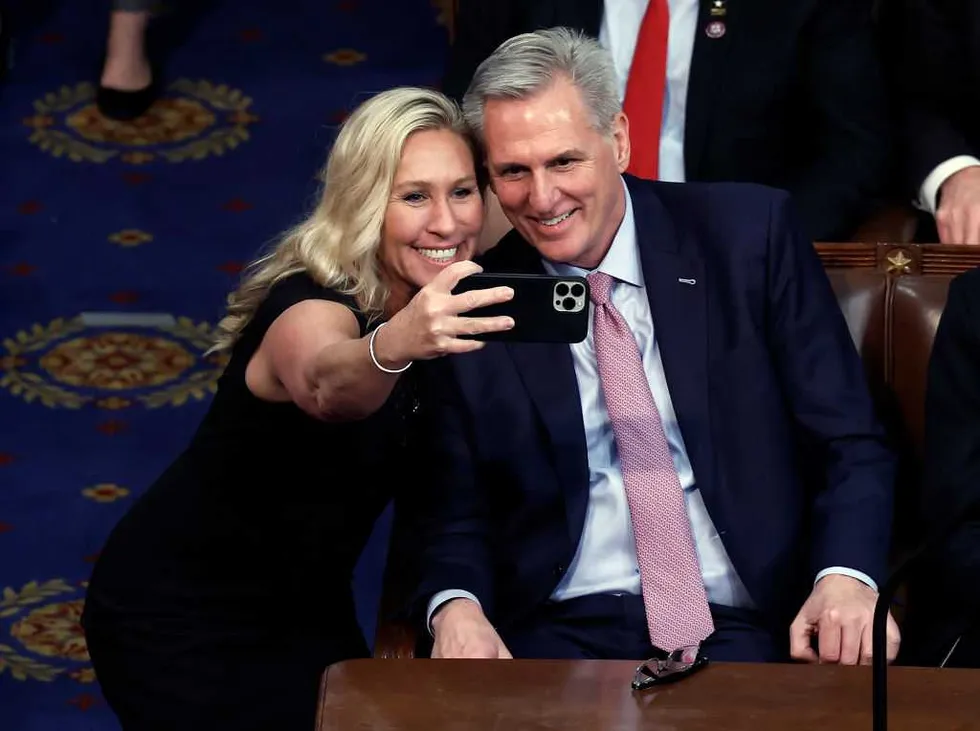 Photo by Anna Moneymaker/Getty Images
“I’ve always believed that any time you have an elected official that’s known by three initials, they’re effective on what they do,” McCarthy added. “And I’ve found Marjorie to be very effective.”
McCarthy, who is all too familiar with having one’s political career cut short by MAGA world, said Greene’s resignation may be the first of many unless Congress changes course.
“She’s almost like a canary in a coal mine,” McCarthy said. “And this is something inside Congress. They better wake up, because they’re going to get a lot of people retiring, and they gotta focus.”
RELATED: Marjorie Taylor Greene says she has received violent threats — and blames Trump
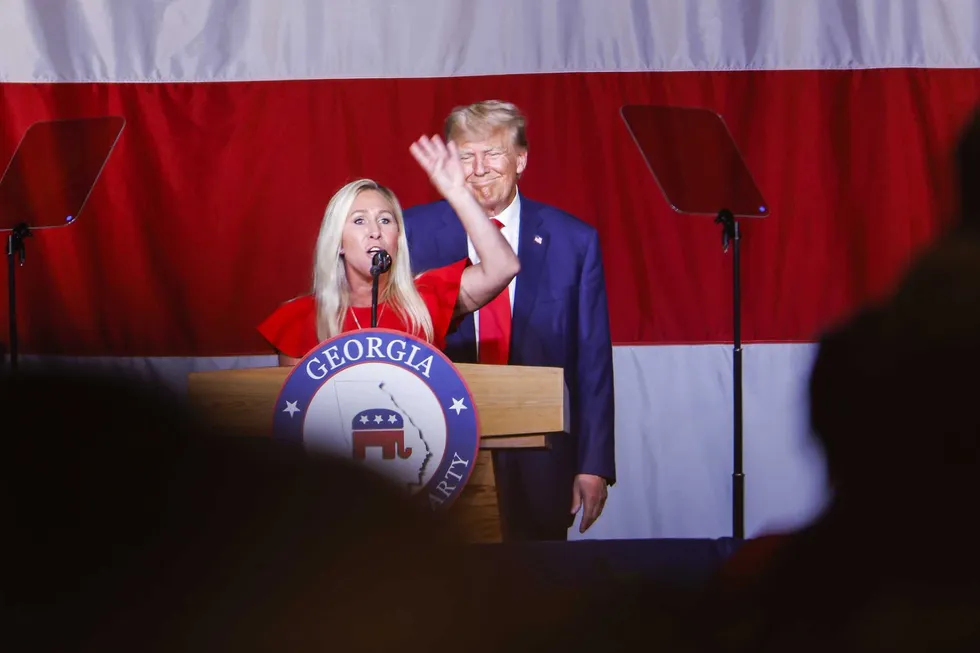 Photo by Anna Moneymaker/Getty Images
McCarthy also noted that the infighting ultimately takes away from a very small window of time in which Republicans hold the ultimate political advantage: a trifecta majority.
“I think keeping members out of Congress, you only get two years to be in the majority,” McCarthy said. “And if the Democrats get you not to work every day for two months, that’s losing two months of the majority.”
Like Blaze News? Bypass the censors, sign up for our newsletters, and get stories like this direct to your inbox. Sign up here!
Another historic peace imminent? Ukraine signals support for altered version of Trump’s peace plan
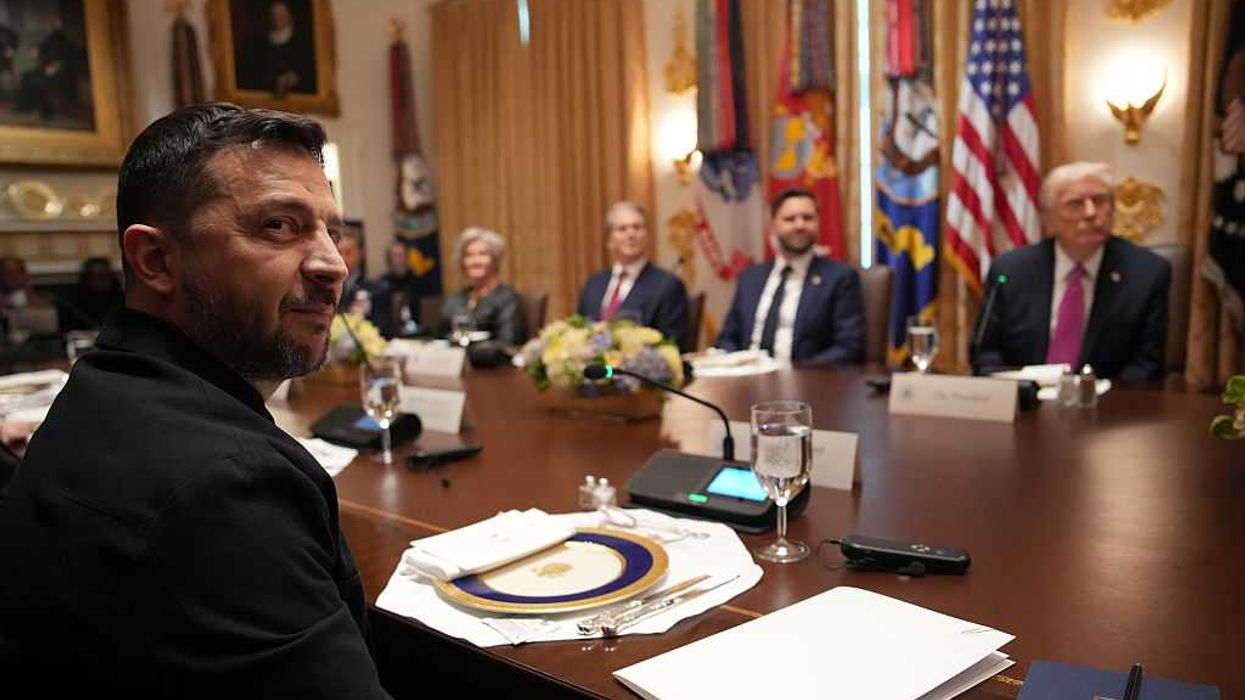
President Donald Trump has in recent months brokered peaceful resolutions between numerous warring parties, including Israel and Hamas; Azerbaijan and Armenia; Rwanda and the Democratic Republic of the Congo; Cambodia and Thailand; and India and Pakistan.
The major peace he campaigned on securing between Ukraine and Russia has, however, proven elusive.
Last week, Ukrainian President Volodymyr Zelenskyy and his government’s representative to the U.N. appeared to reject the fundamentals of the Trump administration’s 28-point plan for peace.
The plan would have: barred Ukraine from NATO, having an army exceeding 600,000 men, and acquiring nukes but provided Kyiv with a NATO-style security guarantee from the U.S.; recognized much of the occupied territory in eastern Ukraine as Russian; set the stage for an American-backed rebuilding of Ukraine; and granted full amnesty to all parties involved in the conflict.
‘Don’t believe it until you see it.’
While apparently averse to several of the 28 points, Kyiv has, however, since expressed support for an altered version of the peace plan, the details of which Trump and Zelenskyy — who has reportedly not authorized anyone but himself to discuss territorial matters — may soon iron out at the White House.
An official briefed on the negotiations told the Washington Post that Trump’s peace plan had been reduced from 28 points to 19 points by Monday. A European official briefed on the talks suggested that some of the provisions concerning European security didn’t make it to the new draft.
Ukrainian delegate Oleksandr Bevz noted, “Many of the controversial provisions were either softened or at least reshaped” to get Kyiv on board.
RELATED: Zelenskyy’s hold on power uncertain as criminal charges reach his inner circle
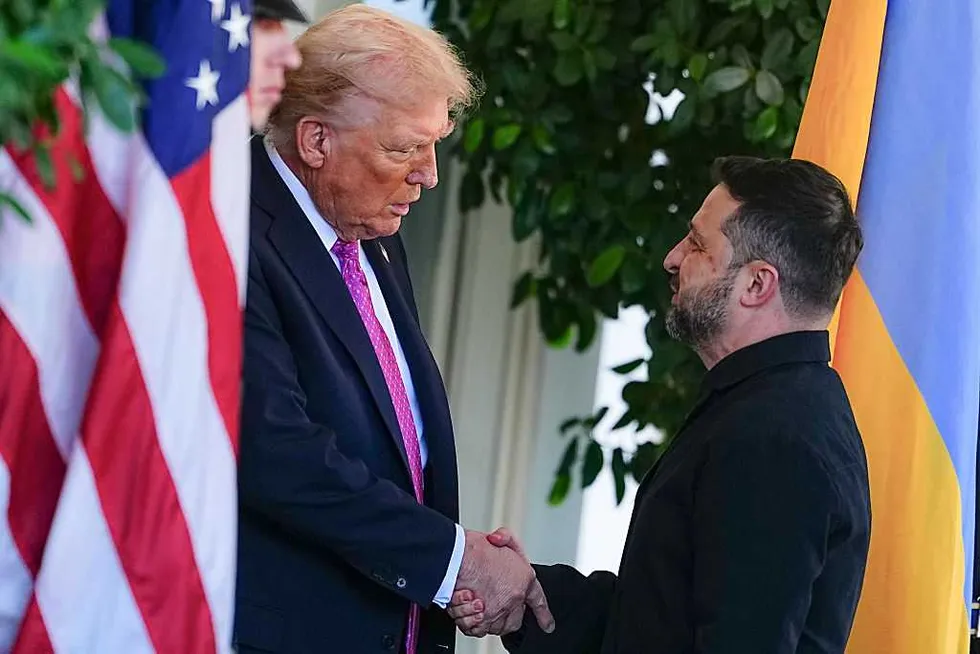 Photographer: Aaron Schwartz/Sipa/Bloomberg via Getty Images
After Ukraine’s delegation returned from Geneva, where they met over the weekend to discuss the American peace proposal with representatives of the Trump administration, Zelenskyy said in a statement on Monday evening that “now the list of necessary steps to end the war can become doable. As of now, after Geneva, there are fewer points — no longer 28 — and many of the right elements have been taken into account in this framework.”
“Our team has reported on the new draft of steps, and this is indeed the right approach,” continued Zelenskyy. “I will discuss the sensitive issues with President Trump.”
Echoing Zelenskyy, Ukraine’s national security secretary Rustem Umerov announced that the U.S. and Ukrainian delegations “reached a common understanding on the core terms of the agreement discussed in Geneva.”
Amid U.S. Army Secretary Daniel Driscoll’s meetings on Tuesday with Russian and Ukrainian officials in Abu Dhabi, which a spokesman said were “going well,” a U.S. official told CNN that “the Ukrainians have agreed to the peace deal. There are some minor details to be sorted out, but they have agreed to a peace deal.”
White House press secretary Karoline Leavitt confirmed on Tuesday that “tremendous progress towards a peace deal” has been made, adding that “there are a few delicate, but not insurmountable, details that must be sorted out and will require further talks between Ukraine, Russia, and the United States.”
Secretary of State Marco Rubio effectively said the same thing days earlier, adding, “I honestly believe we’ll get there.”
During a press conference with the Belarusian foreign minister on Tuesday, Russian foreign affairs minister Sergey Lavrov noted that Moscow “welcomed” the 28-point plan but will consider the “interim” plan produced by Washington, Kyiv, and the Europeans in the coming days.
Lavrov noted, however, that Russia expects the peace plan to adhere to the terms President Vladimir Putin discussed with Trump during their August summit in Anchorage.
“We are not hurrying. We’re not pushing our American counterparts. We have waited a long time since Anchorage,” said Lavrov. “We are only reminding them that we stick to those agreements.”
Lavrov added, “If the spirit and letter of Anchorage is erased in terms of the key understandings we have established then, of course, it will be a fundamentally different situation.”
Trump noted in a Truth Social post on Monday, “Is it really possible that big progress is being made in Peace Talks between Russia and Ukraine??? Don’t believe it until you see it, but something good just may be happening. GOD BLESS AMERICA!”
Like Blaze News? Bypass the censors, sign up for our newsletters, and get stories like this direct to your inbox. Sign up here!





