Category: Donald Trump
Carney puts America last at Davos; Trump hits back
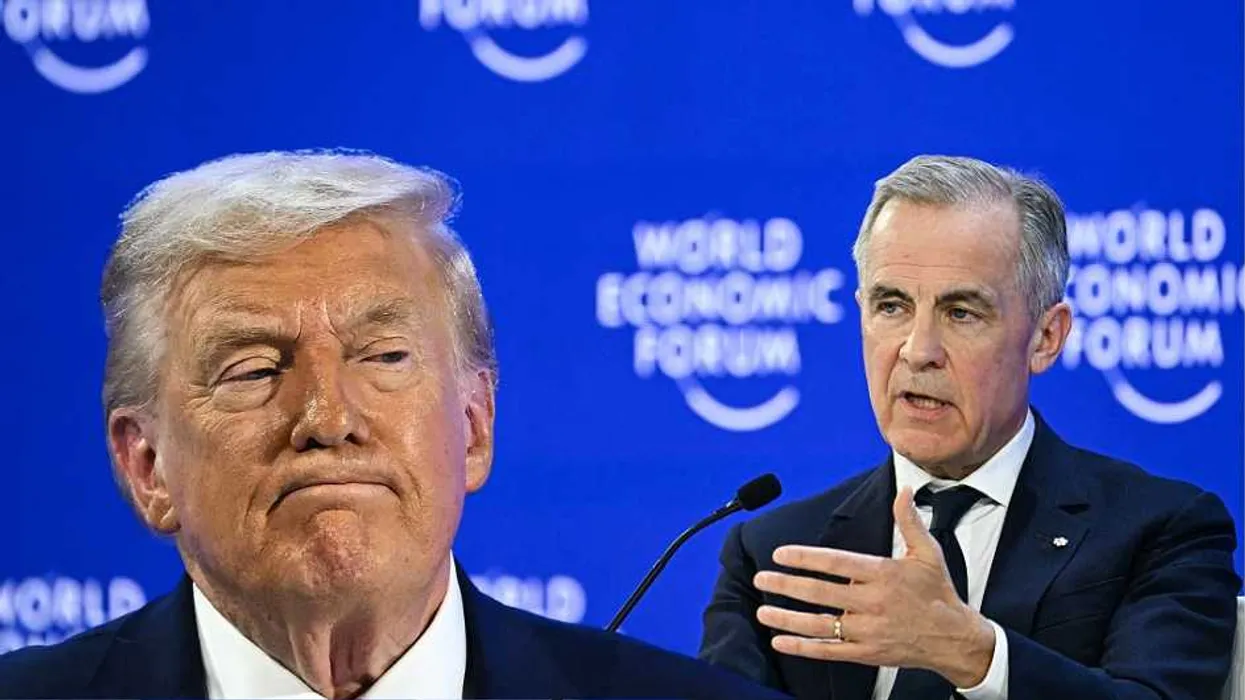
The World Economic Forum’s annual meeting in Davos offered a picture-perfect illustration of the clash between globalism and America First.
Canadian Prime Minister Mark Carney — a longtime advocate of globalist policies, whether as governor of the Bank of England or as a United Nations goodwill ambassador for climate change — delivered a speech that electrified woke forces around the world.
‘Canada lives because of the United States. Remember that, Mark, the next time you make your statements.’
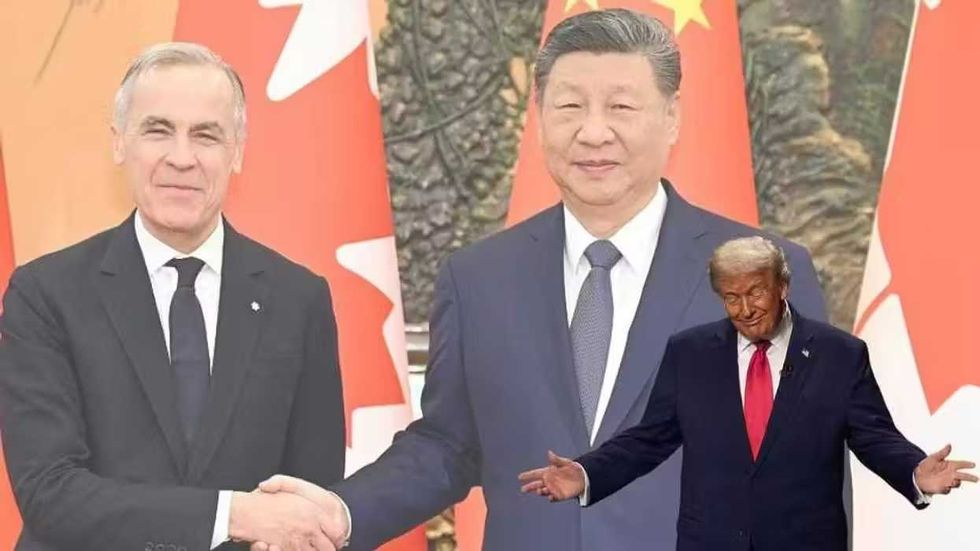
Yet while Carney proclaimed a kind of independence from U.S. economic and military hegemony, many seemed to forget that he had just signed a trade deal with China — against the backdrop of his declaration that Canada was joining Beijing’s “new world order.”
Past tense
Carney’s address waved a red flag at the United States and President Donald Trump, though he lacked the courage to name either directly. Instead, he spoke of America in the past tense, obliquely warning that the “rules-based international order,” under which “countries like Canada prospered,” was finished.
“We joined its institutions. We praised its principles. We benefited from its predictability,” Carney said.
And because of that, we could pursue values-based foreign policies under its protection.
We knew the story of the international rules-based order was partially false — that the strongest would exempt themselves when convenient, that trade rules were enforced asymmetrically. And we knew that international law applied with varying rigor depending on the identity of the accused or the victim. This fiction was useful, and American hegemony in particular helped provide public goods: open sea lanes, a stable financial system, collective security, and support for frameworks for resolving disputes.
Then came the line that sent globalist acolytes into rapture.
“This bargain no longer works. Let me be direct. We are in the midst of a rupture, not a transition.”
But isn’t Carney himself the author — and perhaps the finisher — of that rupture? For years, he has worked against the natural alliance between Canada and its largest trading partner and closest military ally. As we have pointed out before, Carney has labored to replace the United States with China as the world’s economic engine.
RELATED: Trump not worried about Canada’s China-centric ‘new world order’
 Brad Smith/ISI Photos/Xinhua News Agency/Getty Images
A little gratitude
Trump was listening — or at least was promptly briefed. During his own address to Davos, the president castigated both Carney and Canada for taking America for granted. Referring to the development of the Golden Dome defense system, Trump noted that it would, “by its very nature,” defend Canada as well.
“Canada gets a lot of freebies from us, by the way,” Trump said. “They should be grateful also, but they’re not. I watched your prime minister yesterday. He wasn’t so grateful.
“Canada lives because of the United States. Remember that, Mark, before you make your statements.”
By Friday morning, Trump had gone farther, withdrawing Carney’s invitation to join his proposed “Board of Peace.”
Trump spent much of his Davos remarks ridiculing the globalist “Green New Scam” and questioning why the United States continues to belong to NATO when it derives so little benefit from the arrangement.
Windbag
But his most biting remarks were reserved for the fantasy that green energy can power a modern economy.
China, Trump noted, makes “a fortune selling the windmills.”
“They’re shocked that people continue to buy those damn things,” he continued. “They kill the birds. They ruin your landscapes. Other than that, I think they’re fabulous, by the way. Stupid people buy them.”
Trump’s rejection of globalist orthodoxy was reinforced by Commerce Secretary Howard Lutnick.
“Globalization has failed the West and the United States of America,” Lutnick said. “It’s a failed policy. It is what the WEF has stood for, which is export, offshore, far-shore, find the cheapest labor in the world. … In reality, it has left America behind. It has left the American workers behind.”
“America First,” he continued, “is a different model — one that we encourage other countries to consider, which is that our workers come first. … Sovereignty is your borders. You’re entitled to have borders.”
All of this carries enormous implications for any renegotiation of the U.S.-Mexico-Canada agreement.
And Carney appears to have been left with no cards to play. China has already seen his hand.
Tomahawks look tough. Grid disruption actually wins.
As President Trump proposes a ceasefire-in-place to stop the meat grinder in Ukraine, Vladimir Putin appears to be doing what he does best: stalling. With the U.S. busy juggling Iran, Venezuela, and even Greenland, Putin likely figures he can drag this war out long enough to wear Ukraine down and force a surrender through attrition.
Meanwhile Volodymyr Zelenskyy is brooding over not getting Tomahawk cruise missiles — weapons that could strike deep inside Russia.
The goal is irritation, disruption, and humiliation — repeated so often that people start cursing the Kremlin for creating this mess.
But instead of fixating on Tomahawks, Zelenskyy should look at the position Putin is now in. It has a historical parallel worth taking seriously.
Putin resembles Czar Nicholas II in 1917.
In both cases, Russian treasure has poured into a black hole while generals kept ordering “meat attacks” that chewed through manpower by the hundreds of thousands. In 1917, the loss of blood and money turned the nobility against the czar and set the stage for the Kerensky Revolution.
Putin’s oligarchs now sit where the czar’s nobility once sat: close enough to power to profit and close enough to disaster to panic.
Ukraine should exploit that.
A weapon of mass disruption
The goal shouldn’t be a dramatic strike that makes Russians rally around “Mother Russia.” A Tomahawk barrage would do exactly that. It would unify the country behind Putin and hand him the cleanest propaganda gift imaginable.
Ukraine needs something else: a way to transfer the misery and frustration of war to the Russian public — especially in Moscow and other major cities — without creating a patriotic surge.
Russia’s population is insulated by propaganda. Ukraine should attack the insulation, not the borders.
Winter brings slower movement and fewer offensives. That gives Ukraine an opening to run a low-cost, high-annoyance campaign modeled on a little-remembered British operation from World War II.
RELATED: Pressed on Greenland, Trump tells Davos the US has weapons he ‘can’t even talk about’
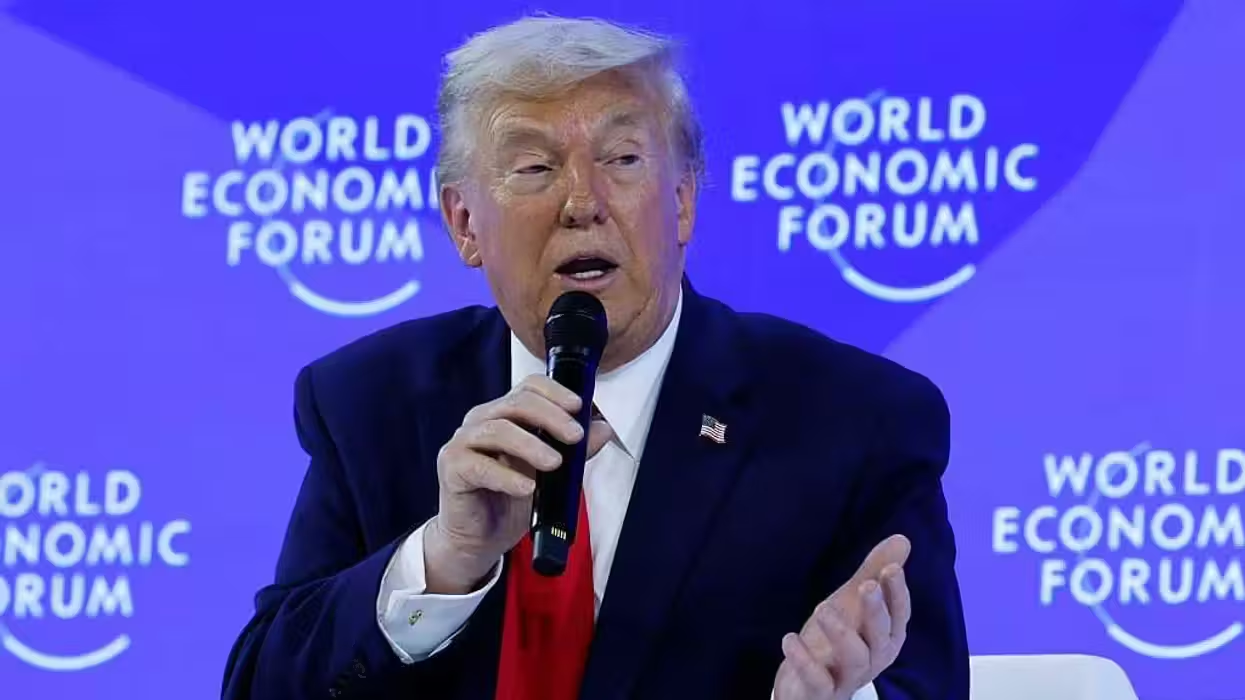 Photo by Chip Somodevilla/Getty Images
The British Royal Navy called it Operation Outward. Today strategists would call it a “cost-imposing” campaign: something cheap to launch that forces the enemy to spend far more to stop it.
The Royal Navy released nearly 100,000 weather balloons. About half carried incendiary bomblets. The rest dragged long wire strands designed to short out power lines and cause disruption across the German electrical grid. German forces had to waste time and resources trying to counter a swarm of cheap devices drifting across their territory.
Because winds in the northern hemisphere generally move west to east, the Germans couldn’t retaliate in kind.
(The Japanese later tried something similar against the United States with the Fu-Go balloons, launching roughly 9,300 of them toward the U.S. and Canada. They forced America to divert resources even though the overall damage remained limited.)
Ukraine’s geography makes this concept even more attractive. Ukraine sits southwest of Russia. That means a balloon campaign drifting into western Russia would give Moscow no easy, low-cost way to respond with the same trick.
And unlike the World War II version, Ukraine wouldn’t need incendiaries. The point isn’t to burn Russian cities or kill civilians. The last thing Ukraine needs is to create martyrs and rally Russians around Putin.
The goal is irritation, disruption, and humiliation — repeated so often that people start cursing the Kremlin for creating this mess.
The cost math
Peter Rosato of Kaymont Consolidated Industries, a major weather balloon manufacturer, estimates that an eight-foot diameter balloon costs about $5 to $7. A hydrogen generator could inflate them for only pennies more.
Using the British model, the balloon could carry a simple ballast mechanism that slowly lowers it while trailing a long tether: roughly 700 feet of hemp cord, tied to a thinner steel wire around 300 feet long. That wire drags across power infrastructure and can short out lines, forcing repairs and outages.
The British saw real success disrupting the German electrical grid. They also forced the Nazis to waste valuable fighter flight hours trying to shoot down balloons — an expensive response to a cheap threat.
Ukraine could buy 100,000 balloons at roughly $5 each and — even after adding wire and other components — build a unit for under $1 million.
Unlike the British, Ukraine also wouldn’t need the same complex altitude-control system used to guide balloons across the English Channel, France, and the Low Countries into Germany. A long, contiguous border allows Ukrainian launches to drift into Russian territory without the same navigation demands.
To improve the results, Ukraine could tweak the design. A better unreeling mechanism might outperform a simple trailing wire. A Ukrainian electrical grid specialist and a meteorologist familiar with conditions in the northeastern border region near Shostka could help optimize launch times for maximum impact.
Make it a war Russians can’t ignore
This isn’t just disruption. It’s information warfare.
The point is not only to knock out power lines but to make the disruption visible — balloons everywhere across western Russia, especially near Moscow — as proof that Putin cannot protect his own people from the consequences of his war.
Modern realities require modern execution. Ukraine couldn’t run this from fixed-launch sites. Russian reconnaissance drones would find them, and artillery or kamikaze drones would destroy them.
The operation would need to move.
A vehicle-borne launch system makes the most sense: military trucks large enough to carry inflated eight-foot balloons, gas tanks, uninflated balloons, payloads, communications gear, a generator, and basic workshop tools.
And for safety, Ukraine would likely need to use helium instead of hydrogen. Hydrogen is cheaper, but the risk of accidental detonation inside a truck is too high.
RELATED: The fastest way to stop Iran’s killers … without firing a single shot
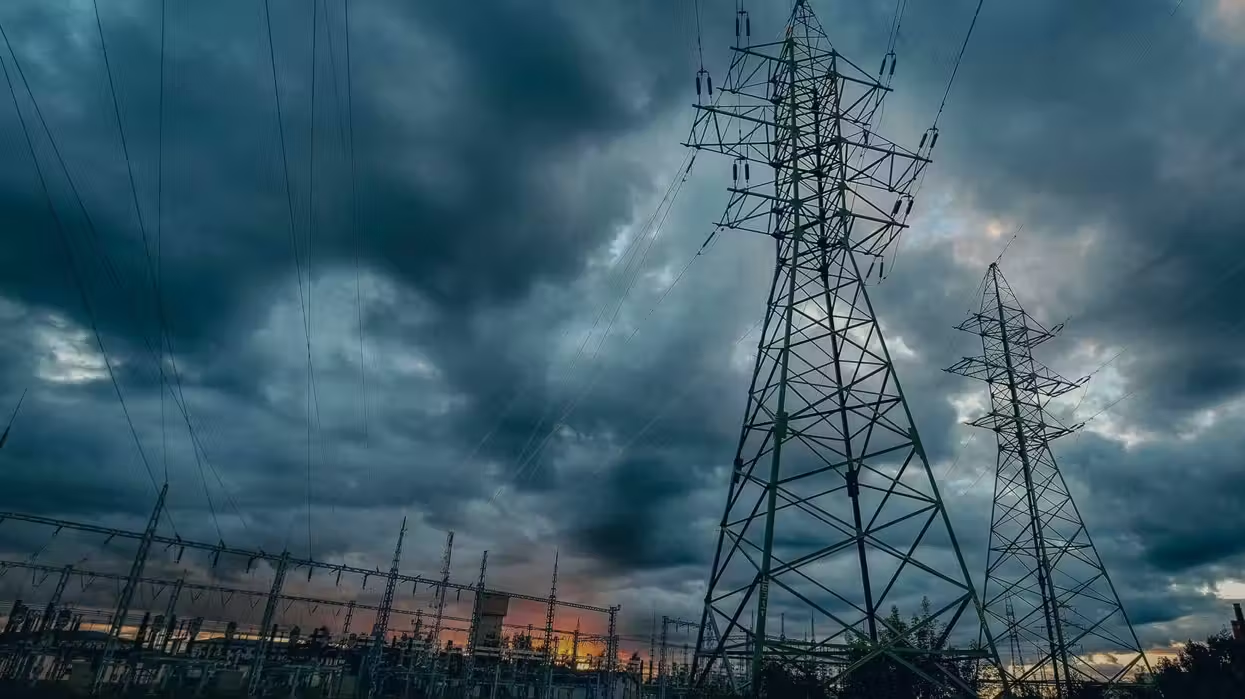 Antonina Satrevica / Getty Images
Night launches would also matter. To avoid detection, the trucks and equipment would need to be compatible with night-vision operations.
Now picture the outcome.
Imagine 1,000 yellow-and-blue balloons drifting into Russia every day, dragging wires across electrical lines.
Imagine the manpower, equipment, and aircraft Russia would have to divert from the front to hunt them down — at night — every night — for the next hundred nights.
And for the final touch, imagine the optics when Russian crews find one of these balloons in daylight, wires draped across a shorted power line, with a huge portrait of Vladimir Putin half-naked on a horse and the Russian phrase for “I did that!”
That kind of mockery lands differently when you’re freezing in the dark because of Putin’s war.
Ukraine doesn’t need Tomahawks to hit Russia where it hurts. It needs a cheap, persistent campaign that turns irritation into anger — and turns anger into political pressure on the regime that started this catastrophe.
California sticks with WHO as US exits
Click in for more news from The Hill {beacon} Health Care Health Care The Big Story California sticks with WHO as US exits Gov. Gavin Newsom (D-Calif.) affirmed his state’s continued departure from current federal health policy by announcing Friday that California will be the first state to join a World Health Organization (WHO)…
‘Sparkle Beach Ken’ Is Too Kind To Gavin Newsom
 The California governor correctly figures that if he stays on offense, his own dismal record will be ignored — even if that offense is odd.
Cuba next? Trump admin eying possible regime change after Maduro arrest: Report
The Trump administration indicated in its National Security Strategy that “after years of neglect, the United States will reassert and enforce the Monroe Doctrine to restore American preeminence in the Western Hemisphere.”
Making abundantly clear to all that this was not empty rhetoric, the U.S. kicked off 2026 by militarily deposing Venezuelan dictator Nicolás Maduro.
Maduro was the first leftist dictator removed from power this year, but he may not be the last.
Sources familiar with the matter told the Wall Street Journal that now with a blueprint for surgical governmental restructures in the region, the Trump administration is searching for well-placed insiders in Cuba who could help oust the island nation’s communist regime by the end of the year.
‘I strongly suggest they make a deal, BEFORE IT IS TOO LATE.’
That strategy appears, after all, to have worked in Caracas, Venezuela, where an asset within Maduro’s inner circle furnished American intelligence personnel with critical information about the leftist leader’s habits, travels, and whereabouts, according to administration officials.
It’s unclear if that asset was Maduro’s vice president, now acting President Delcy Rodríguez, whom four sources familiar with the discussions told the Guardian signaled a willingness to cooperate with the Trump administration ahead of the military extraction.
RELATED: The truth behind Trump’s Venezuela plan: It’s not about Maduro at all
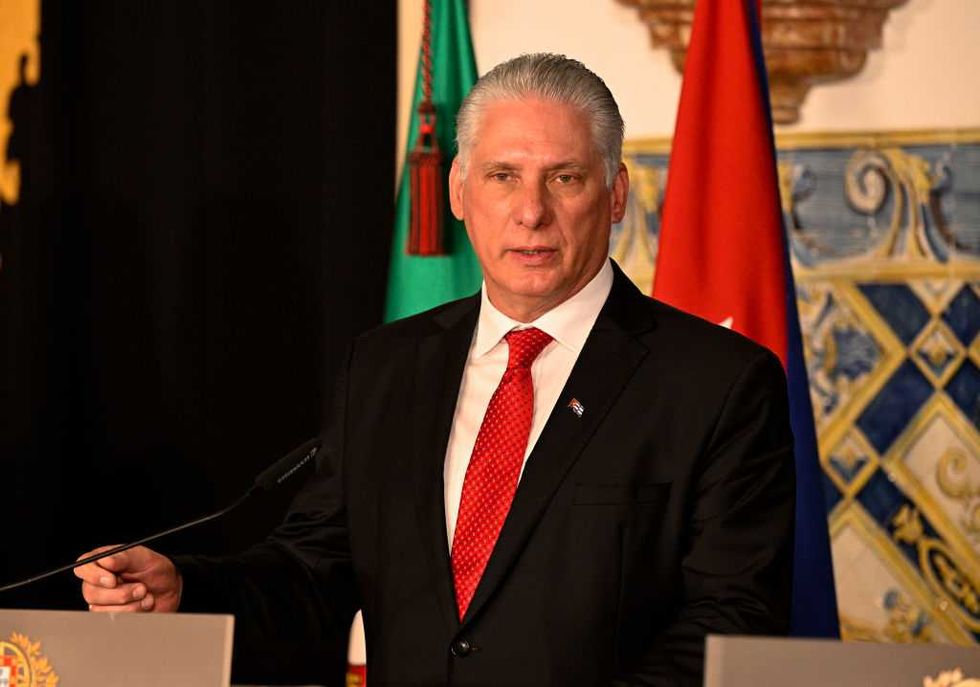 Photo by Horacio Villalobos#Corbis/Corbis via Getty Images
One U.S. official told the Journal that in recent meetings with Cuban exiles and civic groups, Trump administration officials have brainstormed possible individuals within the current Cuban regime who have an appetite for change and might want to make a deal.
The sense is that the time is ripe for a shakeup in the Stalinist island nation in light of its economic instability and loss of a key ally in Caracas.
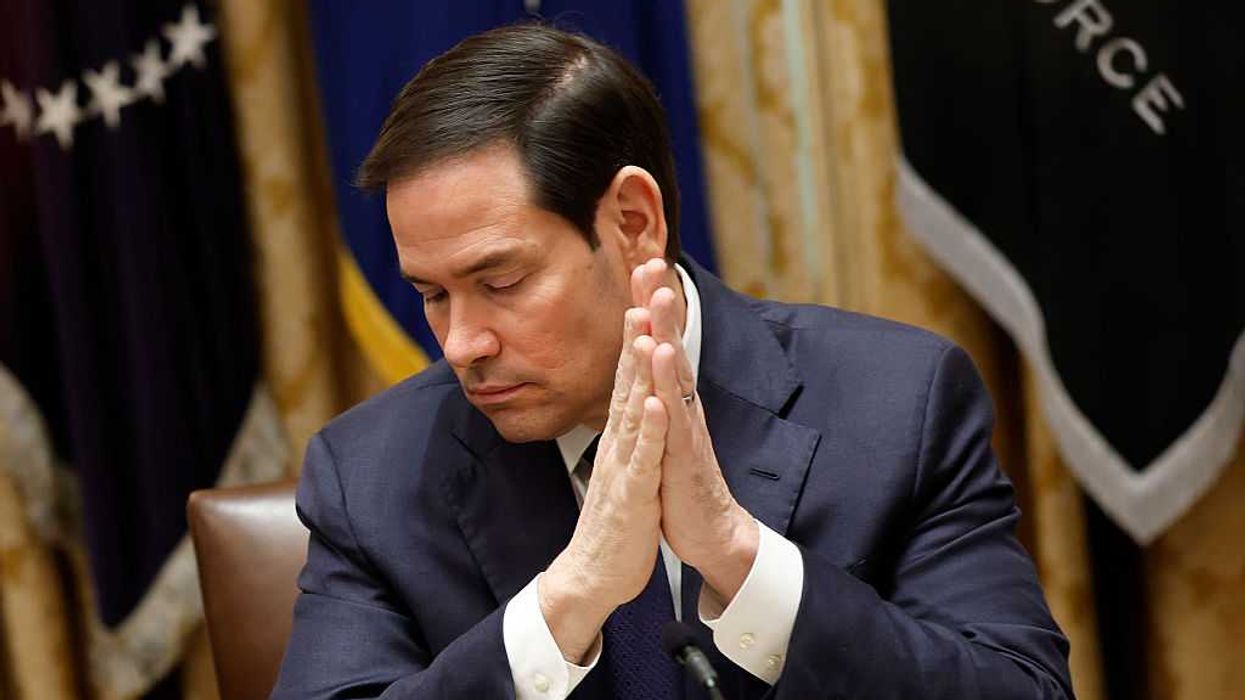
Secretary of State Marco Rubio, the son of Cuban immigrants, said earlier this month, “I think Cuba is going to be something we’ll end up talking about, because Cuba is a failing nation right now, a very badly failing nation, and we want to help the people.”
“If I lived in Havana, and I was in the government, I’d be concerned,” added Rubio.
Cuba — which has suffered rolling blackouts in recent months and years — has long relied on Venezuela for subsidized oil, which has made up around 70% of its total oil imports.
In the wake of Maduro’s removal, Pavel Vidal, a former Cuban central bank economist who teaches at Javeriana University, told NBC News, “If oil supply were to cease entirely, the Cuban economy would grind to a halt.”
Senior U.S. officials told the Journal that the U.S. plans to further undermine the Cuban regime by restricting its access to Venezuelan oil.
“Cuba lived, for many years, on large amounts of OIL and MONEY from Venezuela,” Trump noted in a Truth Social post on Jan. 11. “THERE WILL BE NO MORE OIL OR MONEY GOING TO CUBA — ZERO! I strongly suggest they make a deal, BEFORE IT IS TOO LATE.”
The State Department said in a statement that it is in America’s national security interests for Cuba “to be competently run by a democratic government and to refuse to host our adversaries’ military and intelligence services.”
Rubio made a point of noting last week that the Cuban regime was “illegitimate.”
Like Blaze News? Bypass the censors, sign up for our newsletters, and get stories like this direct to your inbox. Sign up here!
Glenn Beck: Trump just put the ENTIRE WORLD on notice in his Davos speech
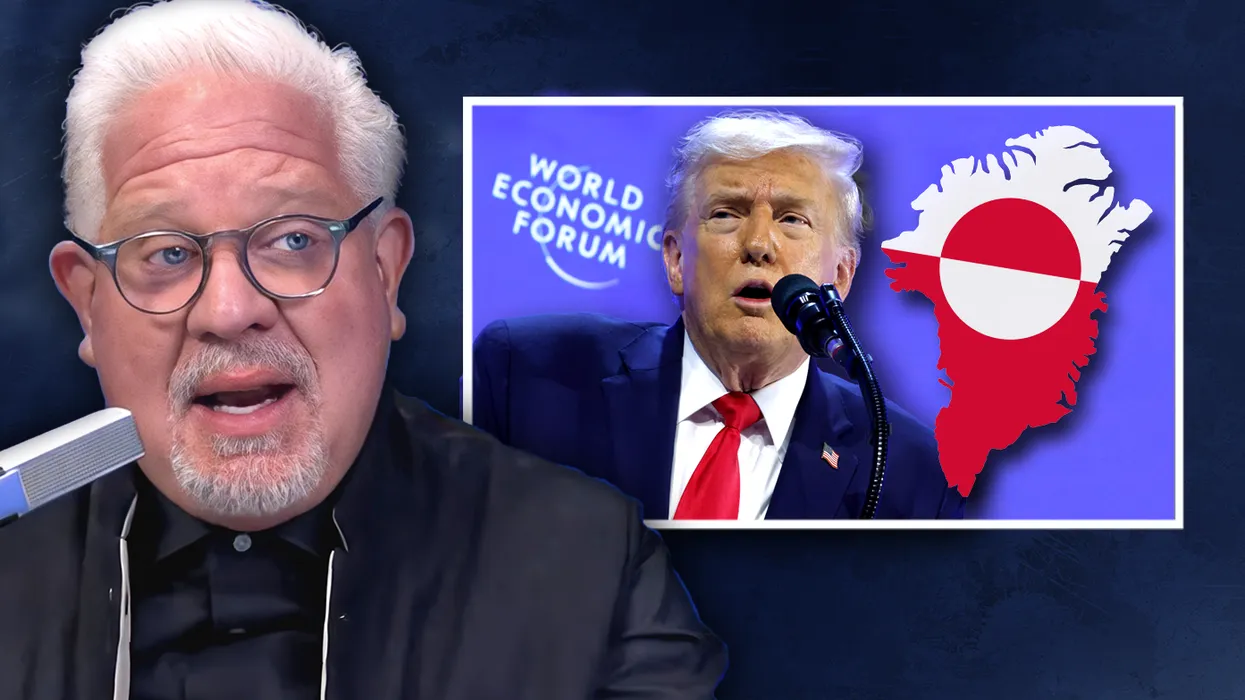
On Wednesday, January 21, President Trump delivered an address at the World Economic Forum’s Annual Meeting in Davos, Switzerland, that has the world buzzing. Glenn Beck calls it “the most consequential speech” since Ronald Reagan’s iconic Berlin Wall address.
“He is breaking up the United Nations. He is breaking up the bureaucracy of the WEF. He is putting Europe on notice,” he says.
He was especially impressed when Trump addressed Greenland — specifically when he said, “You can say yes, and we will be very appreciative, or you can say no, and we will remember.”
“I have never heard a president speak to the world like this,” Glenn remarks.
One thing was very clear from Trump’s Davos speech: “The world is changing,” but the U.S. is “carrying a very, very large stick.”
Trump pulled no punches when it came to calling out countries and world leaders. While he expressed love and respect for Europe, he boldly criticized it for importing foreign cultures that are destroying Western civilization.
“Western culture is dying in Europe because you refuse to stand up for it,” Glenn says, summarizing Trump’s words.
“He took on Canada in a way I have never heard before,” he adds, referencing Trump’s pointed rebuke of Canadian Prime Minister Mark Carney.
In response to Carney’s speech, delivered the day prior, in which he indirectly accused the United States of strong-arming weaker nations with economic integration, tariffs, and financial tools, Trump fired back, “Canada lives because of the U.S. Remember that, Mark, the next time you make your statements.”
“He didn’t even show [Carney] the deference of being prime minister. It was, ‘Mark, you should watch your words,”’ Glenn recaps. “He is not fooling around, and he is declaring an end to this new world order.”
Carney and other world leaders are pushing for “a new world order where the elites all get together from all over the world, and they make the decisions,” he explains.
But Trump’s speech made it crystal clear where he stands on that idea. Glenn summarizes his response: “That hasn’t worked. More bureaucracy will not fix it. More globalization, more melding of our countries together will not fix this.”
Glenn then pulls in his head writer and researcher, Jason Buttrill, to explain the full context of Trump’s Greenland comments.
Jason says that during Trump’s first term, he pressured NATO allies — including Denmark, which controls Greenland — to allocate more funding to its own defense instead of relying so heavily on the U.S. Trump specifically pushed Denmark to step up security in Greenland, and the Danes agreed, promising to dedicate roughly $224 million to better surveillance, reconnaissance, and Arctic defenses.
However as soon as Trump left office in 2021, Denmark backtracked.
“They only allocated 1% of that entire $224 million,” says Jason. “Most of that money that they set aside for defense went to social programs.”
Trump’s hardline Greenland comments during his speech, he says, are just “Daddy Trump … providing the tough love.”
To hear more analysis on Trump’s Davos speech, watch the video above.
Want more from Glenn Beck?
To enjoy more of Glenn’s masterful storytelling, thought-provoking analysis, and uncanny ability to make sense of the chaos, subscribe to BlazeTV — the largest multi-platform network of voices who love America, defend the Constitution, and live the American dream.
Iranian Regime Claims It Tested a Long-Range Missile That Can Hit US Eastern Seaboard
Iran claimed this week to have successfully tested its first long-range intercontinental ballistic missile (ICBM), a capability that would enable Tehran to strike the eastern seaboard of the United States, according to regime-controlled outlets.
The post Iranian Regime Claims It Tested a Long-Range Missile That Can Hit US Eastern Seaboard appeared first on .
In Greenland, Trump’s Tariff Logic Falls Apart
What constitutes a “national emergency”? It’s a question at the heart of the Supreme Court’s upcoming decision on tariffs and…