

Category: The Washington Free Beacon
Trump not worried about Canada’s China-centric ‘new world order’
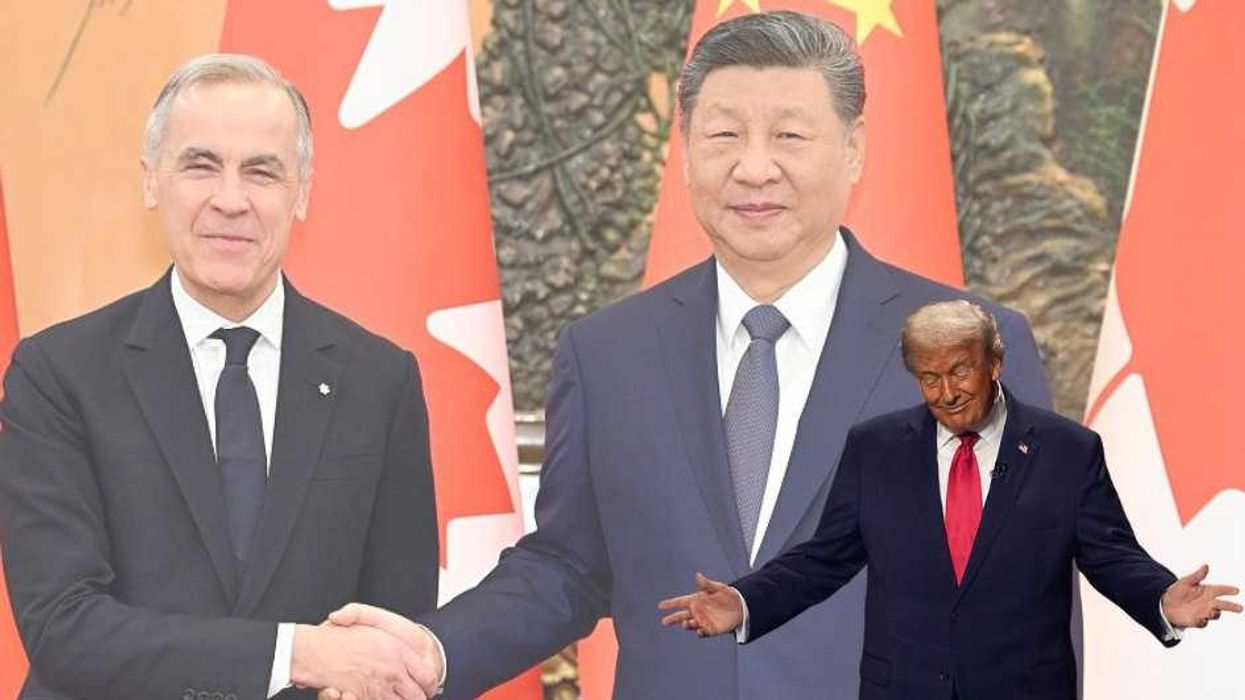
Try explaining this one: President Donald Trump’s relaxed — almost insouciant — response to news that Canadian Prime Minister Mark Carney pledged allegiance to a China-centered “new world order.”
Why did Trump appear to shrug off Carney’s insistence that Canada’s future lies more with China than with the United States?
Carney’s favorable assessment of China’s role in climate and green finance is not an isolated remark.
Perhaps it has something to do with Greenland and Canada being viewed as components of Trump’s broader Western Hemisphere security plan.
Cue the black helicopters
Not long ago, “new world order” belonged firmly in the vocabulary of conspiracy theorists. But in Beijing last week, Carney elevated the phrase into an official Liberal talking point.
So what did Carney say? Plenty.
Mine is the first visit of a Canadian prime minister to China in nearly a decade. The world has changed much since that last visit, and I believe the progress that we have made in the partnership sets us up well for the new world order.
Trump did not respond immediately. Instead, he waited until the end of the news day last Friday before offering his reaction.
“That’s what he should be doing, and it’s a good thing for him to sign a trade deal. If you can get a deal with China, you should do that,” Trump said.
Not the response many expected from a president who has urged countries in the Western Hemisphere to distance themselves from Beijing.
World order word salad
Pressed on what he meant by a “new world order,” Carney responded with his characteristic blend of abstraction and deflection.
So the question is, what gets built in that place? How much of a patchwork is it? How much is it just on a bilateral basis? Or where do like-minded countries in certain areas? So like-minded countries, just to be clear, doesn’t mean you agree on everything. So aspects, for example, on digital trade or agricultural trade, climate finance as another area to move into areas of geo-strategy, geo-security, you will have different coalitions that are formed. So what this partnership does is in areas, for example, of clean energy, conventional energy, agriculture, as we were just talking about, and financial services, which we have talked less about, but the evolution of the global financial system.
Trump’s nonchalance was not shared by conservative commentators, who sharply criticized Carney’s remarks.
Alex Jones, for one, described Carney as “a Klaus Schwab acolyte” and warned: “You are about to see the globalist prime minister of Canada pledge allegiance to the communist dictator in China, Xi Jinping.”
RELATED: What does Trump see in Canada’s pro-China prime minister?
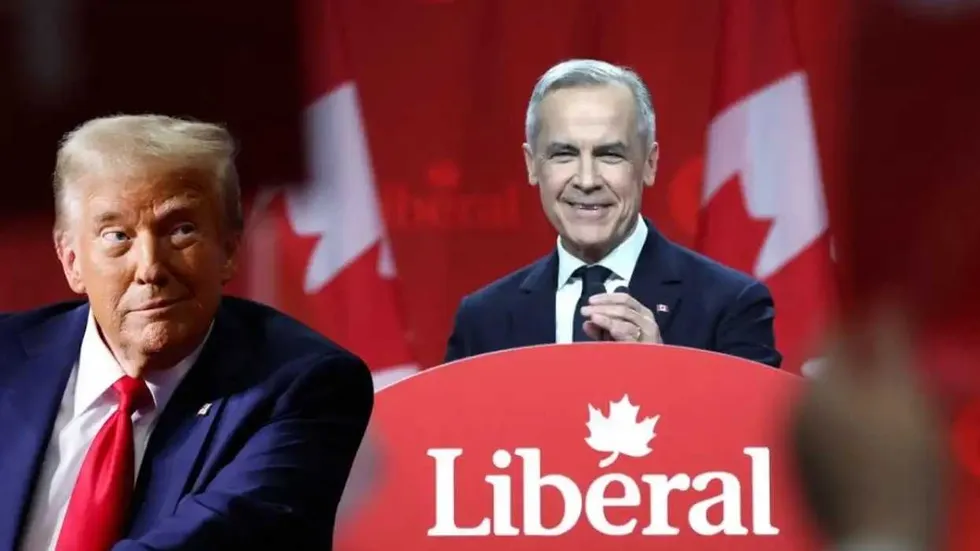 Chip Somodevilla/Dave Chan/Getty Images
China guy
So far, Carney’s new world order with China has produced a trade agreement allowing up to 49,000 electric vehicles to be imported into Canada annually at a reduced tariff of 6.1%. In return, China is expected to lower tariffs on Canadian agricultural exports — most notably canola oil, a key cash crop for Canadian farmers — to roughly 15%.
But there is nothing new about Carney’s deference to China.
After leaving the Bank of England in 2020, Carney became vice chairman of the board of Bloomberg L.P., the privately held financial data and media company founded by Michael Bloomberg. During the same period, he also served as co-chair of the U.N.-backed Glasgow Financial Alliance for Net Zero, working alongside Bloomberg in his separate capacity as the United Nations’ Special Envoy on Climate Ambition and Solutions.
In that capacity, Carney consistently praised the alleged environmental stewardship of China, somehow locating a deep commitment to fighting climate change in a country that continues to power its economy with coal-fired plants.
Take Carney’s March 2024 visit to China, during which he told a reporter for the Chinese business outlet 21st Century Business Herald (English translation via Google Translate):
China has made a huge contribution to the fight against climate change, not only in terms of its massive investment in clean technologies and exporting them to other countries, but also in actively developing the financial system needed for the green transition.
Yuan to grow on
Carney’s favorable assessment of China’s role in climate and green finance is not an isolated remark. It aligns with a broader argument he has advanced in recent years: that global economic leadership should become more multipolar, with China playing a larger role alongside — rather than beneath — U.S. dominance.
That worldview extends to currency and finance. At the 2019 Jackson Hole Economic Symposium, Carney argued that the world should reduce its dependence on the U.S. dollar by exploring a new “synthetic hegemonic currency,” a framework designed to dilute the dominance of any single national currency.
Carney did not explicitly call for the Chinese yuan to replace the U.S. dollar outright. But his proposal would, by design, weaken the centrality of the dollar and expand the influence of non-U.S. currencies and financial systems.
Trump, for his part, has twice endorsed Carney during Canadian federal elections. Their relationship — particularly during Oval Office meetings — has been described as friendly, though it may be better understood as Trump indulging a leader he views as temporary.
Why does Trump consistently give Carney a pass?
Perhaps because Trump sees Carney less as a lasting architect of global order than as a passing phenomenon — unlikely to impede the president’s broader aim of reinforcing American economic primacy, regardless of how warmly Carney speaks of China’s place in the world.
Taxing Lawnmowers, Gym Passes, And DoorDash Proves Dems Actually Hate ‘Affordability’
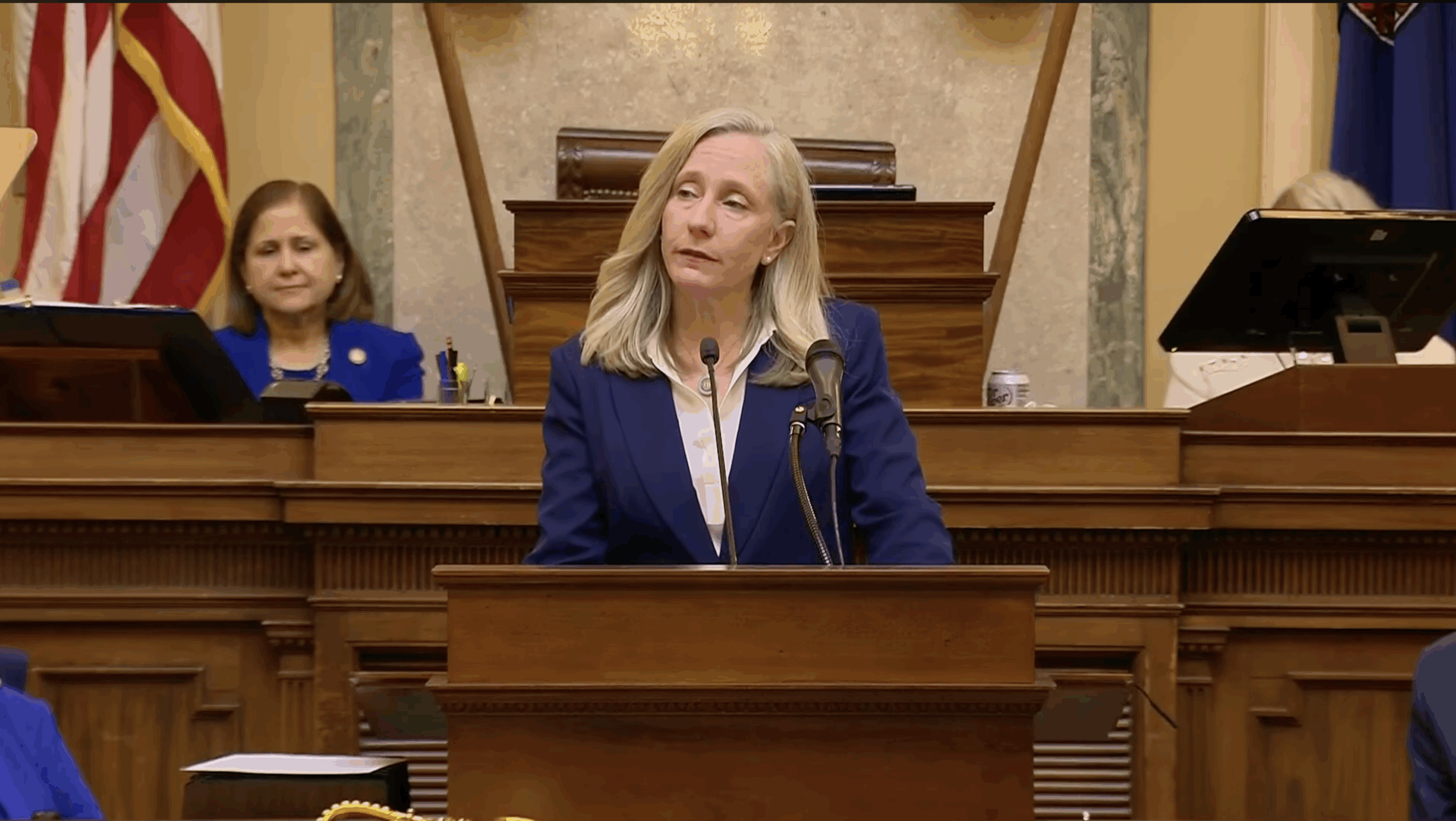
 Affordability carried the day — until Democrats actually got into office. Within weeks of Election Day, Virginia Democrats have made clear that “affordability” was never more than a campaign slogan.
Trump-backed Republican launches bid to challenge GOP Senate incumbent
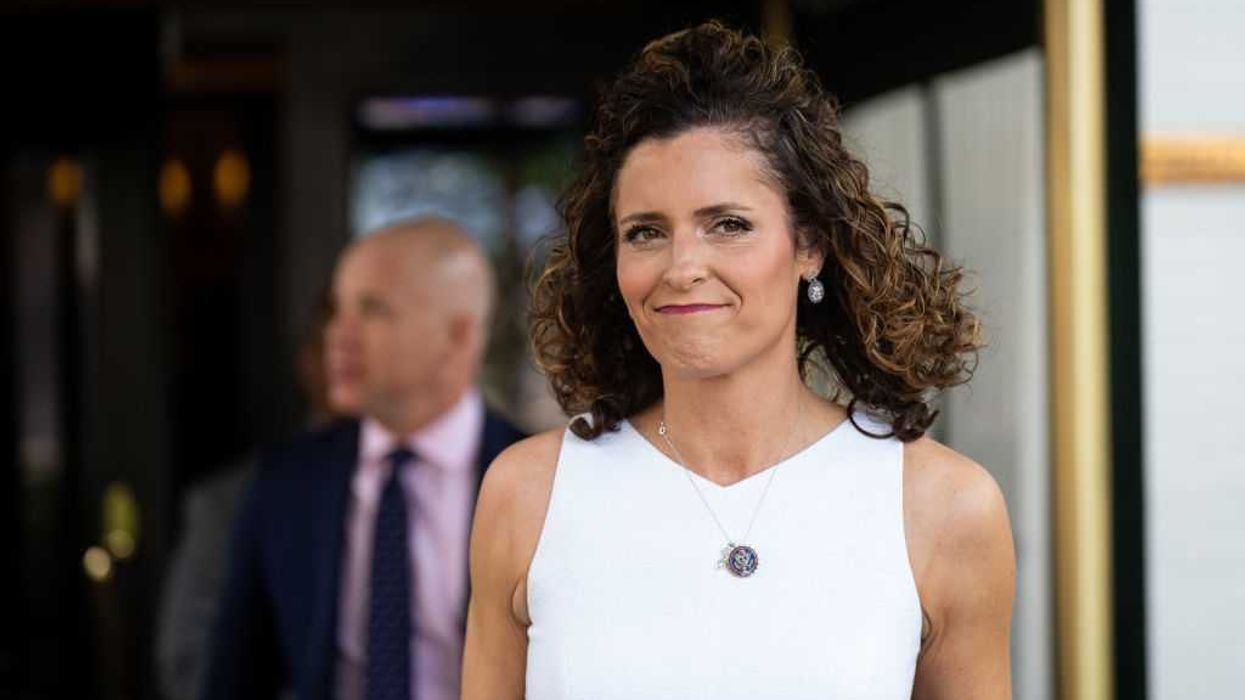
Republican Rep. Julia Letlow of Louisiana officially launched her campaign to oust Sen. Bill Cassidy (R-La.) just days after securing an endorsement from President Donald Trump.
Trump came out in support of Letlow on Saturday, calling her a “Big Star” who would embrace the MAGA agenda. Although Republican operatives like the National Republican Senatorial Committee customarily endorse the incumbent, Cassidy’s controversial votes may have cost him the support of the president.
‘I am confident I will win.’
“I’m honored to have President Trump’s endorsement and trust,” Letlow said in a post on X. “My mission is clear: to ensure the nation our children inherit is safer and stronger.”
“This United States Senate seat belongs to the people of Louisiana, because we deserve conservative leadership that will not waver.”
RELATED: ‘Federal dollars should not pay for abortion, period’: Sen. Cassidy doubles down on Hyde, abortion pill restrictions
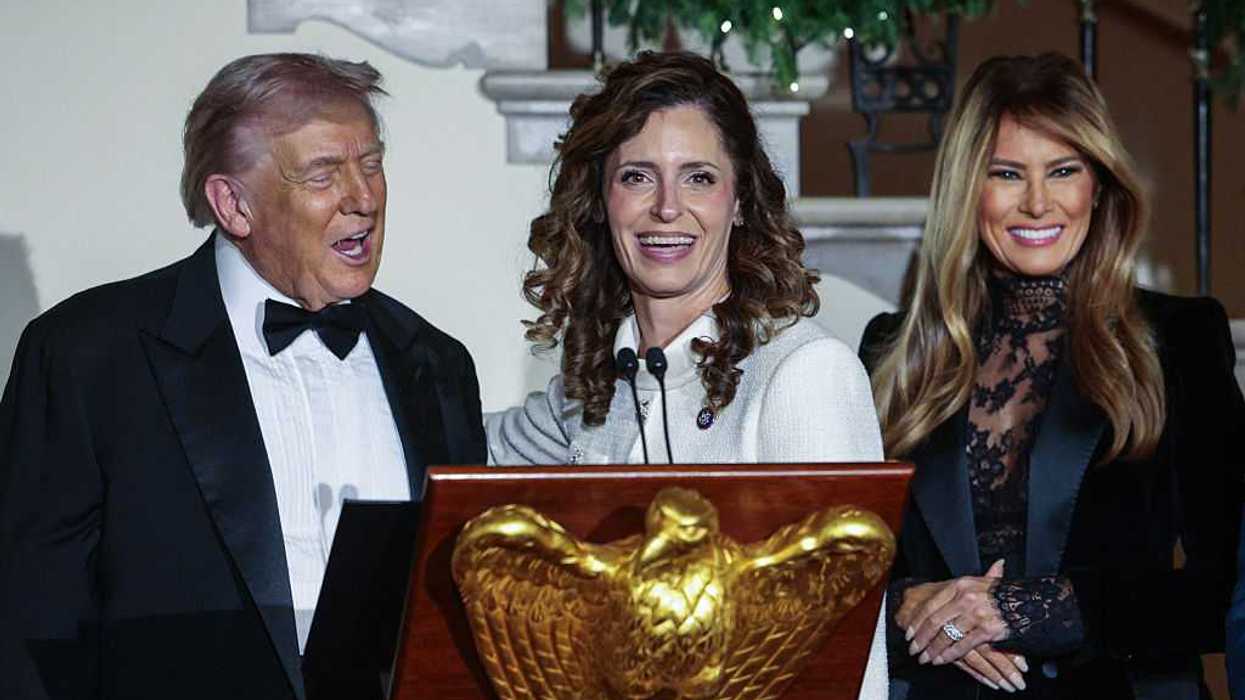 Shawn Thew/EPA/Bloomberg via Getty Images
While the race is shaping up to be a contested Republican primary, the NRSC is letting the chips fall where they may.
The Senate Republicans’ campaign arm is holding off from spending money on Cassidy, whom the NRSC endorsed, because “Louisiana will be won by a Republican regardless” and because the group doesn’t want to oppose the president, according to a source familiar with the NRSC’s decision-making.
RELATED: GOP senator warns Republicans will lose future elections if party continues to ‘idolize’ Trump
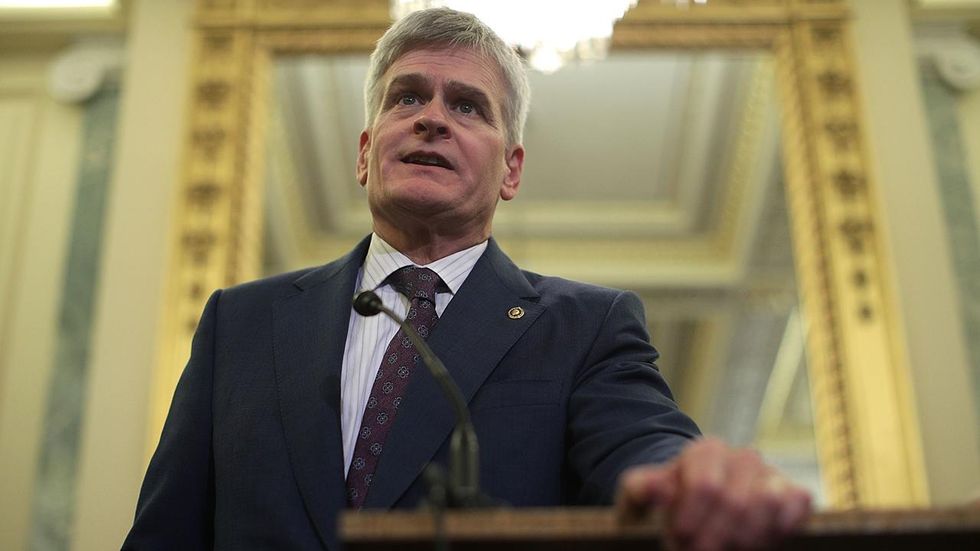 Photo by Alex Wong/Getty Images
Notably, Cassidy was one of the few Republicans who voted to go forward with Trump’s second impeachment trial in 2021, later voting to convict the president. Despite this, Cassidy remains confident about his race.
“I’m proudly running for re-election as a principled conservative who gets things done for the people of Louisiana,” Cassidy said after Trump endorsed Letlow. “If Congresswoman Letlow decides to run I am confident I will win.”
Like Blaze News? Bypass the censors, sign up for our newsletters, and get stories like this direct to your inbox. Sign up here!
WSJ piece claims Trump isn’t happy with Pam Bondi — divisive propaganda or based?
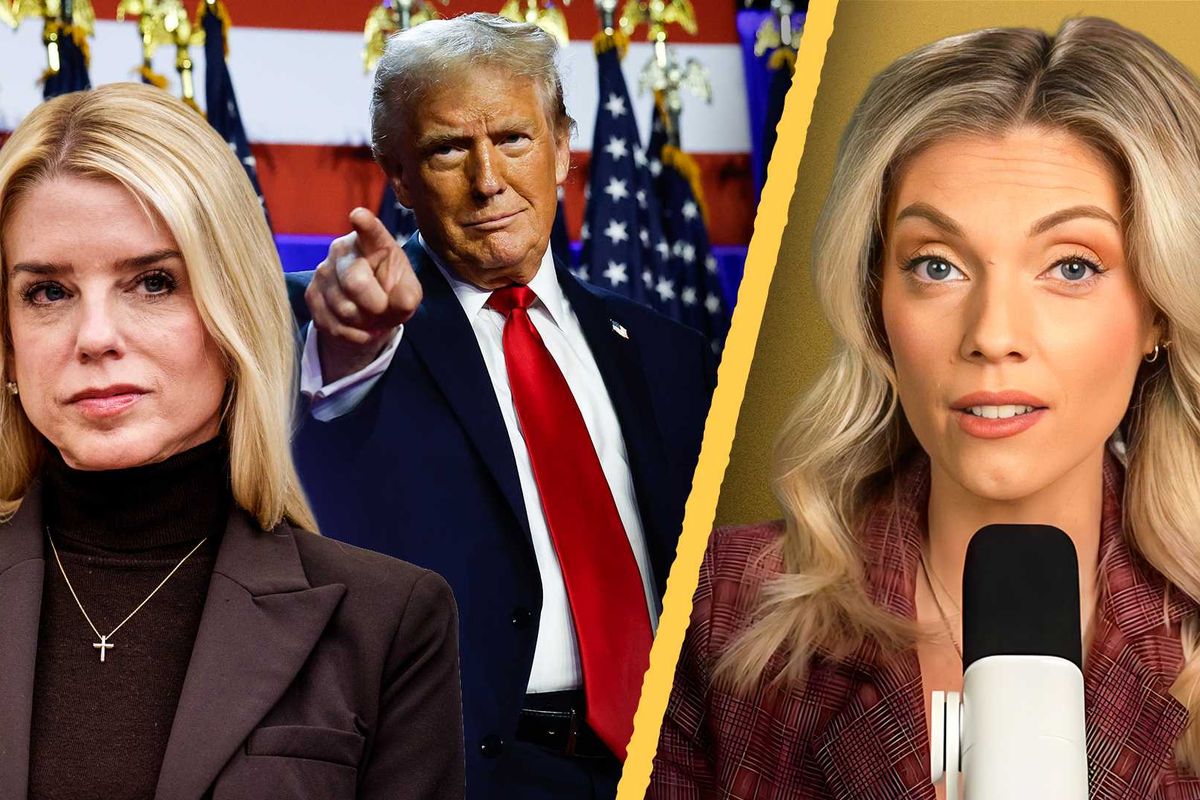
On January 12, the Wall Street Journal published an exclusive report claiming that President Trump is less than thrilled with Attorney General Pam Bondi.
According to the article, he has complained privately to aides repeatedly in recent weeks, describing Bondi as “weak” and “ineffective” at enforcing his agenda, specifically when it comes to the Epstein files, prosecuting people like former FBI Director James Comey and New York AG Letitia James, and pursuing the shadow figures who orchestrated Biden’s phony 2020 presidential victory.
This is music to many conservatives’ ears. From their perspective, MAGA has waited a year in vain for the heads of D.C.’s slimiest swamp creatures to roll, as was a campaign promise. To discover that Trump himself is perhaps also displeased with the DOJ’s lack of prosecutions is encouraging.
However the report is coming from a mainstream outlet, so a healthy degree of skepticism is necessary, says BlazeTV host Liz Wheeler.
Regardless she feels that the contents of the Wall Street Journal’s report are “very realistic” and “very plausible.”
“It seems like a summary of what you and I have experienced throughout the year,” she says.
According to the article, President Trump told the Wall Street Journal, “Pam is doing an excellent job. She’s been my friend for many years. Tremendous progress is being made against radical left lunatics who are good at only one thing: cheating in elections and the crimes they commit.”
“All right, so how do we analyze this article?” asks Liz. “Is this true? Is President Trump finally growing tired of Attorney General Pam Bondi?”
While she acknowledges that “it is true that Pam Bondi has been loyal to President Trump for many years, and that makes the situation perhaps personally a little more awkward,” the reality is President Trump has to decide “whether Pam Bondi is an effective attorney general, not whether she’s a loyal friend.”
And the facts don’t lie.
As early as February 2025, it was clear to Liz that Bondi “does not tell the truth to the American people” after she gave Liz and other conservative influencers those “infamous white Epstein binders” that contained no new information on the convicted child sex trafficker.
Bondi’s ineffectiveness has “become more obvious as the summer passed and the fall passed and the new year passed,” says Liz.
“Tulsi Gabbard handed Attorney General Pam Bondi on a silver platter a case against John Brennan and the Obama cronies that fabricated the intelligence community assessment to claim that Russia helped President Trump defeat Hillary Clinton … and what accountability have they faced?” she asks.
“Trump’s administration controls the Department of Justice. We should be seeing indictment after indictment after indictment. And yet what have we seen? We’ve seen nothing.”
To hear more of Liz’s commentary, watch the video above.
Want more from Liz Wheeler?
To enjoy more of Liz’s based commentary, subscribe to BlazeTV — the largest multi-platform network of voices who love America, defend the Constitution, and live the American dream.
Glenn Beck: Iran’s regime is crumbling — and the REAL villain isn’t China
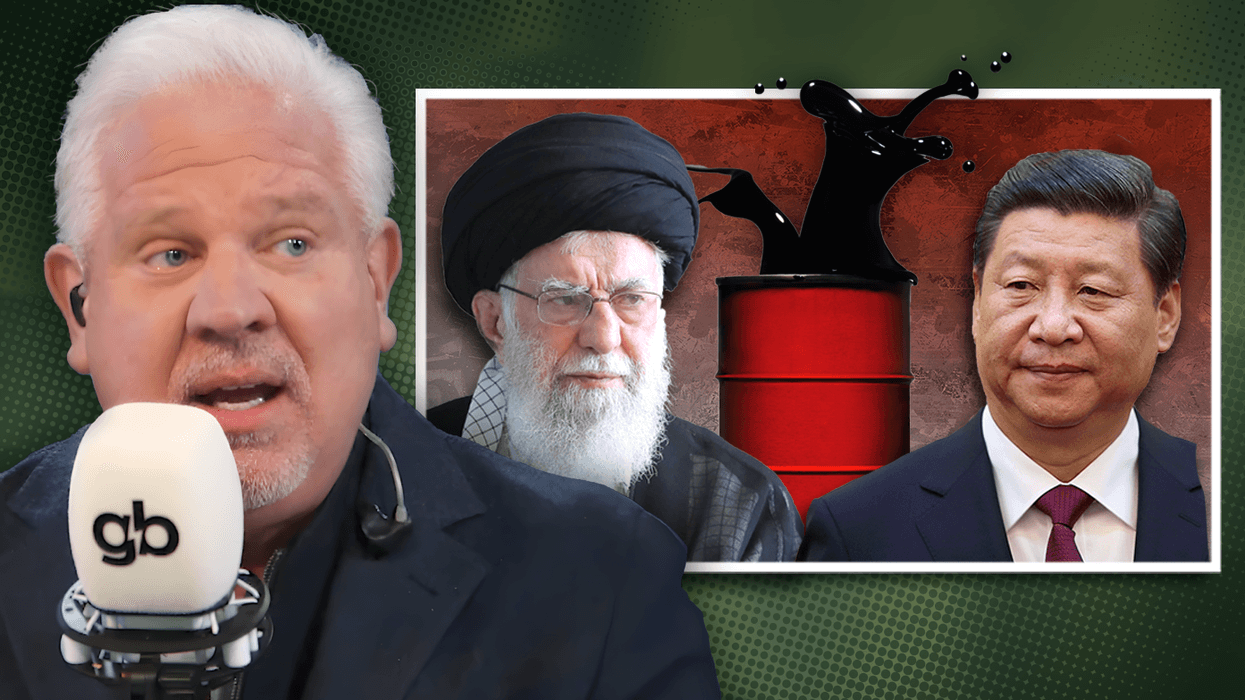
Iran’s streets continue to erupt in one of the most intense nationwide uprisings since the 1979 revolution. Thousands have been killed, tens of thousands arrested, and a brutal regime crackdown with live fire, mass detentions, and a near-total internet blackout has largely smothered visible protests for now. And yet whispers of regime fragility grow louder.
But there’s more to this story than meets the eye. Iran’s real vulnerability, says Glenn Beck, lies not in its inability to squash a protest movement but in its oil-dependent economy, propped up by shadowy deals that could unravel overnight.
Glenn breaks it down brilliantly with a simple, chilling apple farmer analogy that exposes how global banks and China’s “teapot” refineries have kept the regime afloat through sanction-skirting barter schemes … until the buyer suddenly says “no more.”
Glenn’s story begins with an apple farmer named Mo and an apple buyer named Ming.
“[Mo] starts out small. He has a few trees, a few crates. He works hard and everything, and he reinvests all the time. He plants more trees. He buys more land. He takes out loans for trucks and storage and refrigeration,” Glenn begins.
His business keeps growing and then “one day something incredible happens. A massive single grocery chain [run by Ming] picks up Mo’s apples — not a few apples, all of the apples. Which is good because what I didn’t tell you about Mo is he thinks he’s a good guy, but he’s pissed every other apple store off in the world,” he continues.
Ming tells Mo his plans to “refine” the apples into “apple cider and apple juice.” Mo, thrilled that now “demand is guaranteed,” expands even more.
“The trucks are financed. The warehouses are leased. The future looks locked in,” says Glenn.
But then one day, everything comes to a screeching halt. Suddenly “Ming says, ‘Yeah, we can’t take any more apples. We’re at capacity.”’
This news wrecks Mo’s world – without Ming, there’s nothing to keep his business empire afloat.
Almost immediately, apples begin to pile up, and the trucks loaded with supplies are parked. Then “the police are like, ‘Why are all these trucks on the sides of the roads?’ … Then they realize, ‘Wait a minute, you don’t have a license to ship apples. In fact, you don’t have a license on this truck,”’ Glenn continues.
It turns out Mo hasn’t been making any money from his apple farm because Ming has been paying him in equipment and infrastructure the entire time. Mo’s business collapses immediately because he never actually owned anything.
“The banks did,” says Glenn — not because they trusted Mo but because they trusted Ming, who took out the insurance policies.
“Ming is actually the refinery in China, and Mo is the oil in Iran,” he finally reveals.
The banks and insurance companies knew that China couldn’t legally purchase Iranian oil because there’s an embargo on it. But they were perfectly fine with a barter system — where China provided goods, services, and infrastructure in exchange for oil. As long as there was “no money changing hands,” the banks would sign.
This prospect is already enough to give Glenn “a brain aneurysm,” but sadly the story takes an even darker turn.
“The farmer Mo — he has sons, and each one ran a different part of his farm,” he says, returning to his analogy.
Ming’s sudden decision to bail stirs up tension in Mo’s family.
“One son says, ‘Sell the land while it’s worth something.’ Another says, ‘No, hold on — the store might come back.’ Another one says, ‘No, you know what? I’m not with either of you’ and starts moving equipment out of the barn in the middle of the night, and he’s just going to get onto a plane and disappear at some point,” says Glenn.
“This is when countries go down because each son stops asking how do we save the farm, and they start asking how do I get out before it collapses. The farm doesn’t change hands in a ceremony. It just empties out.”
It starts with Mo’s sons, then the farm workers, and then the security team. Protests erupt outside Mo’s gates, and he is forced to cope with the fact that his apple farm has rotted from the inside out.
“This is what’s happening in Iran,” says Glenn.
To hear more of his analysis, watch the video above.
Want more from Glenn Beck?
To enjoy more of Glenn’s masterful storytelling, thought-provoking analysis, and uncanny ability to make sense of the chaos, subscribe to BlazeTV — the largest multi-platform network of voices who love America, defend the Constitution, and live the American dream.

‘Racial Equity’ Group Funded by Minnesota Taxpayers Asks for Donations To Bail Fund Freeing Anti-ICE Agitators
A “racial equity” and “restorative justice” nonprofit funded by Minnesota taxpayers is calling for donations to a new bail fund that’s helping free anti-ICE agitators and illegal immigrants detained in Minneapolis.
The post ‘Racial Equity’ Group Funded by Minnesota Taxpayers Asks for Donations To Bail Fund Freeing Anti-ICE Agitators appeared first on .
Finding Our Constitutional Bearings
Vanishing Point: In Search of Our Constitutional Future By Edwin Hagenstein Real Clear Publishing, 184 pages, $16 There are two…
Trump attends college football national championship
President Trump on Monday attended the College Football Playoff National Championship in Florida taking place on the Martin Luther King, Jr., federal holiday. Trump, who has been at Mar-a-Lago over the long weekend, was in attendance to watch the Indiana Hoosiers battle the Miami Hurricanes at Hard Rock Stadium in Miami Gardens, Fla., alongside family…





