

Category: The Washington Free Beacon
‘Obvious f**king failure’: Even Hunter Biden admits dad’s Afghanistan exit was a total disaster
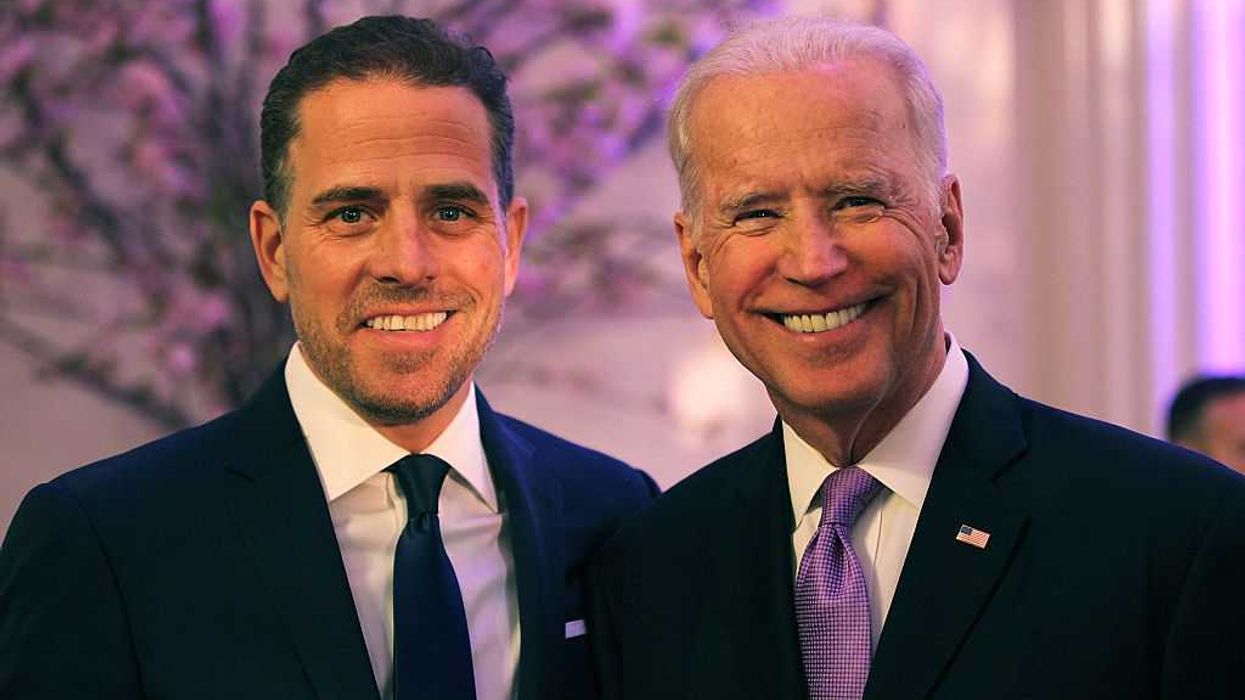
Hunter Biden criticized his father, former President Joe Biden, and his administration for the botched withdrawal of U.S. troops from Afghanistan, and he detailed his thoughts on the country’s immigration problem.
During an interview on the “Shawn Ryan Show” released Monday, Hunter Biden stated that he believes politicians on both sides of the aisle want to find a solution to immigration.
‘I think there was a better way to do it.’
Podcast host Shawn Ryan and Hunter Biden discussed how foreign nationals have been receiving abundant resources on the American taxpayer’s dime, including free hotel rooms.
“We need immigration. We need a vibrant immigration, but we don’t want immigrants that are coming here illegally, draining us of resources,” Biden told Ryan.
Ryan expressed concerns that more resources are being allocated to foreign nationals, while American veterans continue to struggle to obtain the necessary support.
Hunter Biden stated that he does not want immigrants prioritized over U.S. troops or other Americans.
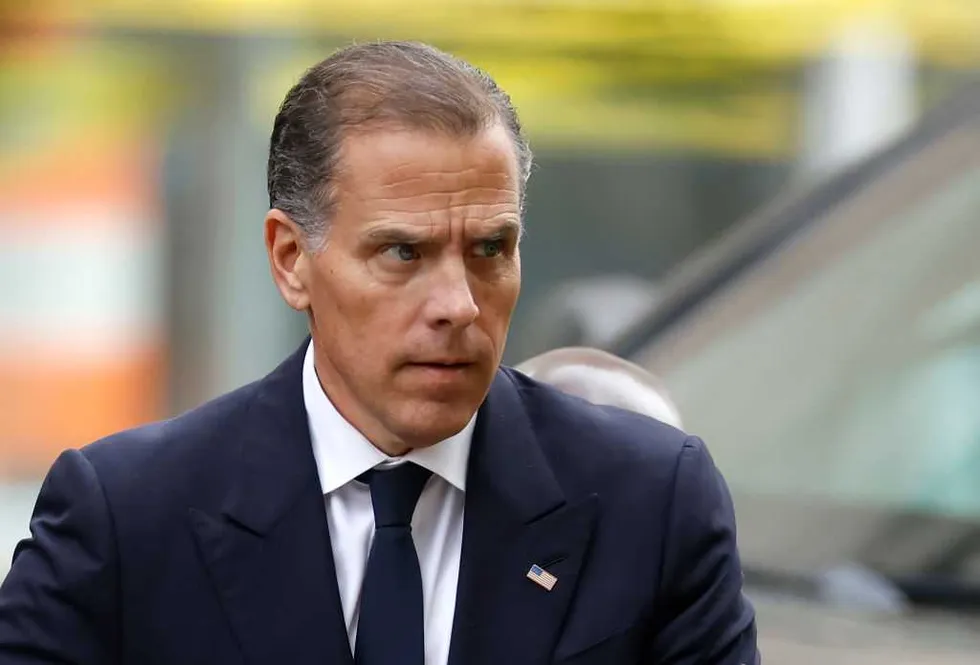 Hunter Biden. Photo by Kevin Dietsch/Getty Images
During the five-hour conversation, Ryan asked Biden about some of his father’s failures as president. Biden responded by mentioning the botched exit from Afghanistan, during which a suicide bomber killed 13 U.S. service members.
Biden stated that he believes it was necessary to leave Afghanistan but criticized the execution of the withdrawal.
“I think one of the failures was the way in which they executed the withdrawal from Afghanistan. I think it was an obvious f**king failure. I think 13 Marines are dead. I think that there was a better way to do it,” Hunter Biden said.
“And I can blame it on his generals. I can blame it on the people, the way in which we did it. But my dad always knew this also, is that the buck stops with him,” he continued. “I think that that was a failure.”
 Joe Biden, Hunter Biden. Photo by Demetrius Freeman/The Washington Post via Getty Images
Ryan asked Biden how his father feels about the withdrawal now.
“The same way that I do,” he replied.
“I don’t want to speak for my dad, but I know my dad, you know, is crushed by that,” Hunter Biden added, referring to the service members who lost their lives.
Like Blaze News? Bypass the censors, sign up for our newsletters, and get stories like this direct to your inbox. Sign up here!
GOP lawmaker who ousted Liz Cheney launches Senate bid following another Republican retirement

Republican Rep. Harriet Hageman of Wyoming is setting her sights on higher office as the 2026 primaries continue to take shape.
Hageman has served her district as an ally to President Donald Trump after kicking off a political career in the nation’s capital by ousting former Rep. Liz Cheney in the 2022 Republican primary. Cheney was one of 10 Republicans who voted to impeach Trump after the January 6 melee, resulting in a landslide defeat the following election cycle.
‘We must keep up this fight.’
Hageman is now pursuing the U.S. Senate after Republican Sen. Cynthia Lummis of Wyoming announced her retirement on Friday.
“Wyoming is a beautiful state, but our people matter the most,” Hageman said in her campaign announcement. “Our faith, our family, our community, and our county. That’s what we care about. That’s what we fight for.”
RELATED: Republican senator announces retirement, citing exhaustion: ‘I feel like a sprinter in a marathon’
 David Williams/Bloomberg via Getty Images
Hageman pointed to the massive energy contributions Wyoming has made to the country, fueling the exponential improvement in technology and quality of life for Americans across the country. Hageman vowed to protect the energy industry and the working class, touting Trump’s One Big Beautiful Bill Act she helped pass in Congress.
“We must keep up this fight, and that’s why today, I’m announcing my campaign for United States Senate,” Hageman said. “This fight is about making sure the next century sees the advancements of the last while protecting our culture and our way of life.”
RELATED: ‘Unnecessary and protracted’: Elise Stefanik drops out of New York governor’s race
 Photo by PATRICK T. FALLON/AFP via Getty Images
“We must dedicate ourselves to ensuring that the next 100 years is the next great American century. Wyoming is critical for achieving that goal.”
Like Blaze News? Bypass the censors, sign up for our newsletters, and get stories like this direct to your inbox. Sign up here!
Your laptop is about to become a casualty of the AI grift

Welcome to the techno-feudal state, where citizens are forced to underwrite unnecessary and harmful technology at the expense of the technology they actually need.
The economic story of 2025 is the government-driven build-out of hyperscale AI data centers — sold as innovation, justified as national strategy, and pursued in service of cloud-based chatbot slop and expanded surveillance. This build-out is consuming land, food, water, and energy at enormous scale. As Energy Secretary Chris Wright bluntly put it, “It takes massive amounts of electricity to generate intelligence. The more energy invested, the more intelligence produced.”
Shortages will hit consumers hard in the coming year.
That framing ignores what is being sacrificed — and distorted — in the process.
Beyond the destruction of rural communities and the strain placed on national energy capacity, government favoritism toward AI infrastructure is warping markets. Capital that once sustained the hardware and software ecosystem of the digital economy is being siphoned into subsidized “AI factories,” chasing artificial general intelligence instead of cheaper, more efficient investments in narrow AI.
Thanks to fiscal, monetary, tax, and regulatory favoritism, the result is free chatbot slop and an increasingly scarce, expensive supply of laptops, phones, and consumer hardware.
Subsidies break the market
For decades, consumer electronics stood as one of the greatest deflationary success stories in modern economics. Unlike health care or education — both heavily monopolized by government — the computer industry operated with relatively little distortion. From December 1997 to August 2015, the CPI for “personal computers and peripheral equipment” fell 96%. Over that same period, medical care, housing, and food costs rose between 80% and 200%.
That era is ending.
AI data centers are now crowding out consumer electronics. Major manufacturers such as Dell and Samsung are scaling back or discontinuing entire product lines because they can no longer secure components diverted to AI chip production.
Prices for phones and laptops are rising sharply. Jobs tied to consumer electronics — especially the remaining U.S.-based assembly operations — are being squeezed out in favor of data center hardware that benefits a narrow set of firms.
This is policy-driven distortion, not organic market evolution.
Through initiatives like Stargate and hundreds of billions in capital pushed toward data center expansion, the government has created incentives for companies to abandon consumer hardware in favor of AI infrastructure. The result is shortages that will hit consumers hard in the coming year.
Samsung, SK Hynix, and Micron are retooling factories to prioritize AI-grade silicon for data centers instead of personal devices. DRAM production is being routed almost entirely toward servers because it is far more profitable to leverage $40,000 AI chips than $500-$800 laptops. In the fourth quarter of 2025, contract prices for certain 16GB DDR5 chips rose nearly 300% as supply was diverted. Dell and Lenovo have already imposed 15%-30% price hikes on PCs, citing insatiable AI-sector demand.
The chip crunch
The situation is deteriorating quickly. DRAM inventory levels are down 80% year over year, with just three weeks of supply on hand — down from 9.5 weeks in July. SK Hynix expects shortages to persist through late 2027. Samsung has announced it is effectively out of inventory and has more than doubled DDR5 contract prices to roughly $19-$20 per unit. DDR5 is now standard across new consumer and commercial desktops and laptops, including Apple MacBooks.
Samsung has also signaled it may exit the SSD market altogether, deeming it insufficiently glamorous compared with subsidized data center investments. Nvidia has warned it may cut RTX 50 series production by up to 40%, a move that would drive up the cost of entry-level gaming systems.
Shrinkflation is next. Before the data center bubble, the market was approaching a baseline of 16GB of RAM and 1TB SSDs for entry-level laptops. As memory is diverted to enterprise customers, manufacturers will revert to 8GB systems with slower storage to keep prices under $999 — ironically rendering those machines incapable of running the very AI applications they’re working on.
Real innovation sidelined
The damage extends beyond prices. Research and development in conventional computing are already suffering. Investment in efficient CPUs, affordable networking equipment, edge computing, and quantum-adjacent technologies has slowed as capital and talent are pulled into AI accelerators.
This is precisely backward. Narrow AI — focused on real-world tasks like logistics, agriculture, port management, and manufacturing — is where genuine productivity gains lie. China understands this and is investing accordingly. The United States is not. Instead, firms like Roomba, which experimented with practical autonomy, are collapsing — only to be acquired by the Chinese!
This is not a free market. Between tax incentives, regulatory favoritism, land-use carve-outs, capital subsidies, and artificially suppressed interest rates, the government has created an arms race for a data center bubble China itself is not pursuing. Each round of monetary easing inflates the same firms’ valuations, enabling further speculative investment divorced from consumer need.
RELATED: China’s AI strategy could turn Americans into data mines
 Grafissimo via iStock/Getty Images
Hype over utility
As Charles Hugh Smith recently noted, expanding credit boosts asset prices, which then serve as collateral for still more leverage — allowing capital-rich firms to outbid everyone else while hollowing out the broader economy.
The pattern is familiar. Consider the Ford plant in Glendale, Kentucky, where 1,600 workers were laid off after the collapse of government-favored electric vehicle investments. That facility is now being retooled to produce batteries for data centers. When one subsidy collapses, another replaces it.
We are trading convention for speculation. Conventional technology — reliable hardware, the internet, mobile computing — delivers proven, measurable utility. The current investment surge into artificial general intelligence is based on hypothetical future returns propped up by state power.
The good old laptop is becoming collateral damage in what may prove to be the largest government-induced tech bubble yet.
Heritage Foundation Scholars Jump to Mike Pence’s Group in ‘Reorganization of the Conservative Movement’
Leaders of Advancing American Freedom (AAF), the nonprofit led by former vice president Mike Pence, said that their move to hire more than a dozen former Heritage Foundation employees represents a significant shift within the American right.
AAF president Tim Chapman described the organization’s addition of Heritage Foundation’s legal, data, and economics centers, a move that doubles its size, as a “reorganization of the conservative movement.”
“People are voting with their feet as to where they feel they are best suited to be,” Chapman said.
The post Heritage Foundation Scholars Jump to Mike Pence’s Group in ‘Reorganization of the Conservative Movement’ appeared first on .
Brown Lawyers Up After Bungled Response to Mass Shooting, Retaining Former US Attorney
Brown University has retained former federal prosecutor Zachary Cunha as it bolsters its legal team in the aftermath of last week’s mass shooting that killed two students and wounded nine others.
The post Brown Lawyers Up After Bungled Response to Mass Shooting, Retaining Former US Attorney appeared first on .
Brown University Head of Public Safety on Leave After Janitor Reveals Security Ignored Warnings of Suspicious Actor on Campus
Brown University’s head of public safety, Rodney Chatman, was placed on administrative leave Monday after a janitor revealed that he saw a suspicious person lurking around campus in the weeks leading up to the December 13 shooting—a person who ended up being the gunman, Claudio Manuel Neves Valente.
The post Brown University Head of Public Safety on Leave After Janitor Reveals Security Ignored Warnings of Suspicious Actor on Campus appeared first on .
Left-Wing Mayor Faces Calls To Resign for Saying Bondi Beach Terror Attack Was ‘False Flag’
Richmond, Calif., mayor Eduardo Martinez is facing calls to resign after reposting anti-Semitic social media content that labeled Australia’s Bondi Beach mass shooting an Israeli “false flag” operation and blamed Israel for rising anti-Semitism.
The post Left-Wing Mayor Faces Calls To Resign for Saying Bondi Beach Terror Attack Was ‘False Flag’ appeared first on .
Trump Sends a Cajun to Press the Message to Greenland
On Sunday, President Trump showed that even during the week of Christmas he’s still capable of setting political fires in…
Feds’ Case Against Ex-Democrat Aide Accused Of Working With China Hits Roadblock
Prosecutors said they intend to retry the case





