

Category: The Washington Free Beacon
Scott Jennings Delivers Perfect Retort When Asked About FBI Investigating Dems Who Told Military To Ignore Trump
‘Most Republicans I know are pretty darn angry’
Women’s March Leader Tossed Out for Anti-Semitism Lands on Mamdani Transition Team
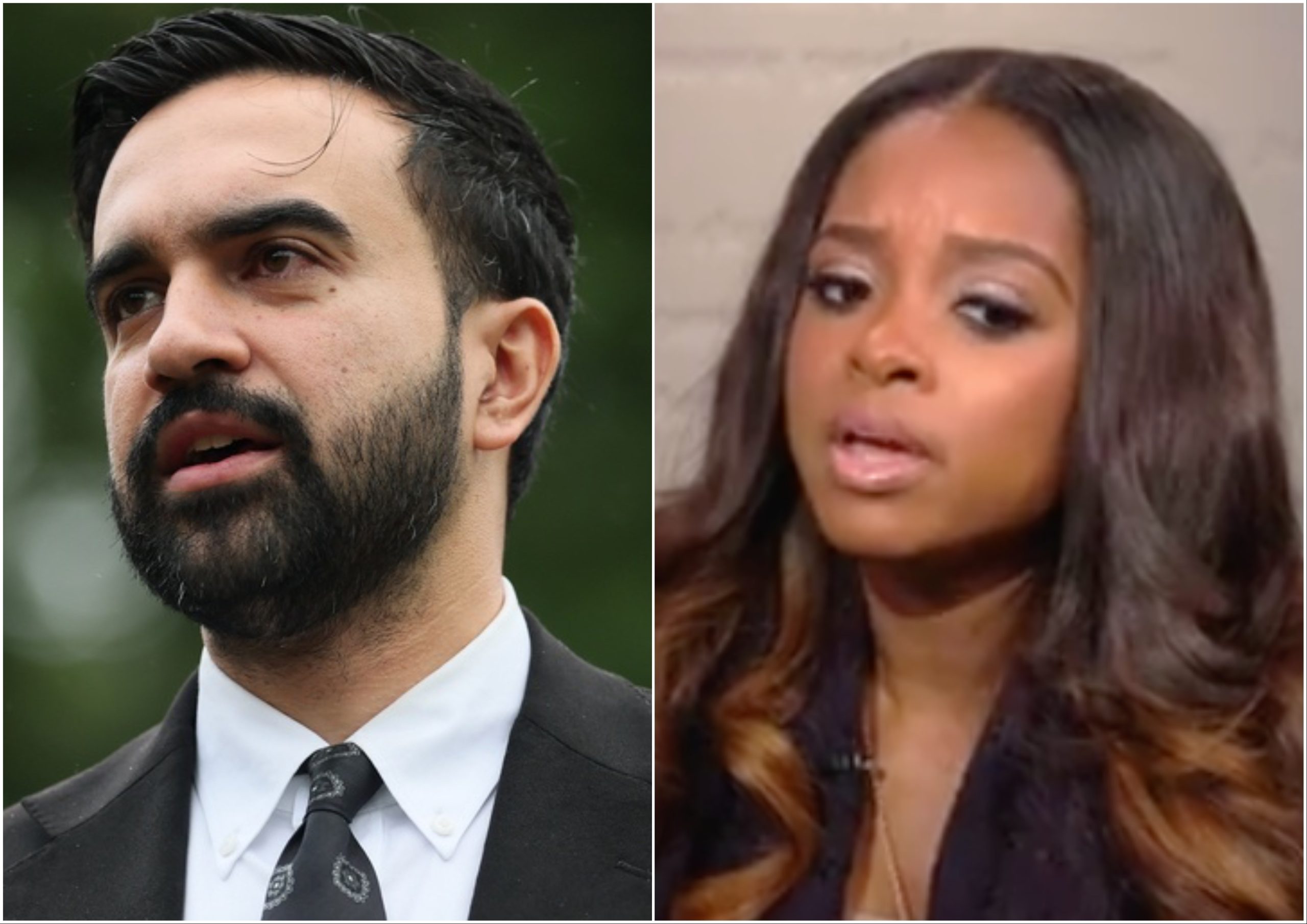
A former Women’s March leader who was forced out of the organization for anti-Semitism has reemerged as a member of Zohran Mamdani’s transition team.
The post Women’s March Leader Tossed Out for Anti-Semitism Lands on Mamdani Transition Team appeared first on .
Part 2: How I Found Out My Journalist Side Piece Was Cheating on Me With Her Fiancé Again

She did it again. It was roughly 107 days later. Another triumph over evil and incompetence. Another lump of salt in time’s gaping wound. Joseph R. Biden, the nominal president, had flamed out like a California wildfire kissing the Pacific Ocean for the first time. Mouths forced open, cheeks clenched tight. Engorged tongues tangling like cattails in the briny muck of beachfront bliss. The low whine of steam clouds billowing breast-like over the horizon. Almighty nature tamed at last.
The post Part 2: How I Found Out My Journalist Side Piece Was Cheating on Me With Her Fiancé Again appeared first on .
‘Canary in a coal mine’: Ousted speaker warns against the rising risk of GOP House resignations

Former Speaker Kevin McCarthy (R-Calif.) warned that political breakups might become more commonplace in the Republican Party.
McCarthy’s prediction comes after Republican Rep. Marjorie Taylor Greene of Georgia announced that she will retire from the House in January before finishing her congressional term. This announcement followed a public falling-out with longtime ally President Donald Trump.
‘I’ve found Marjorie to be very effective.’
Despite being one of Trump’s most loyal supporters on Capitol Hill, Greene said their falling-out was over her commitment to releasing the Epstein files, which the White House later supported. Other reports suggested that the split came after the White House squashed Greene’s political aspirations beyond the House of Representatives.
“She’s leaving Congress, but I don’t think that’s the end that you’ll see about her,” McCarthy said.
RELATED: Marjorie Taylor Greene calls it quits after ‘traitor’ branding by Trump
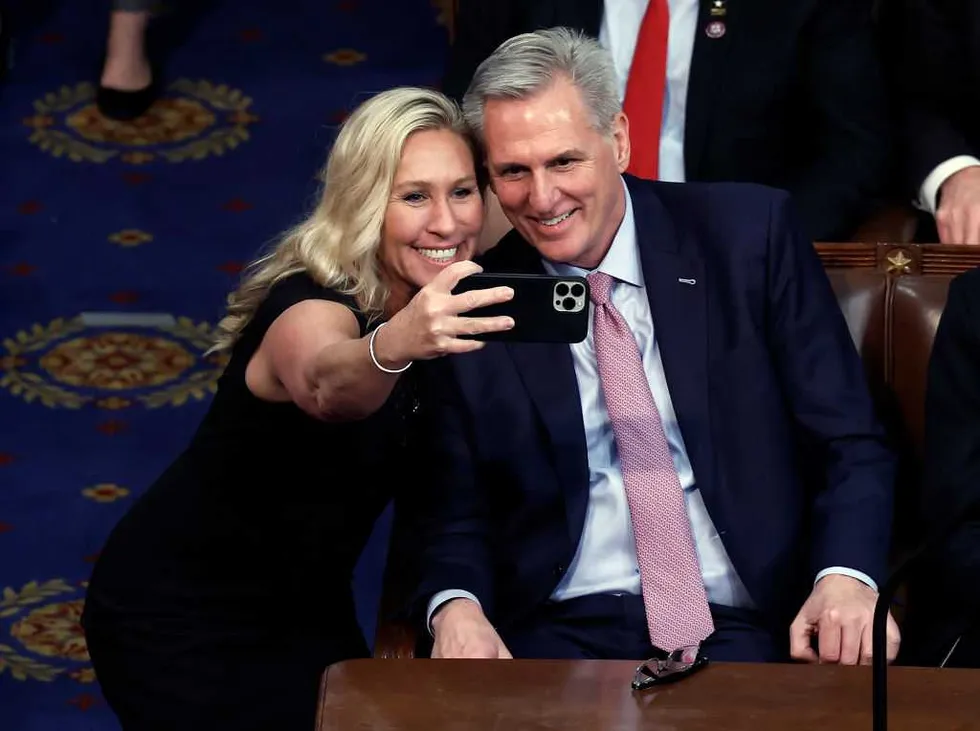 Photo by Anna Moneymaker/Getty Images
“I’ve always believed that any time you have an elected official that’s known by three initials, they’re effective on what they do,” McCarthy added. “And I’ve found Marjorie to be very effective.”
McCarthy, who is all too familiar with having one’s political career cut short by MAGA world, said Greene’s resignation may be the first of many unless Congress changes course.
“She’s almost like a canary in a coal mine,” McCarthy said. “And this is something inside Congress. They better wake up, because they’re going to get a lot of people retiring, and they gotta focus.”
RELATED: Marjorie Taylor Greene says she has received violent threats — and blames Trump
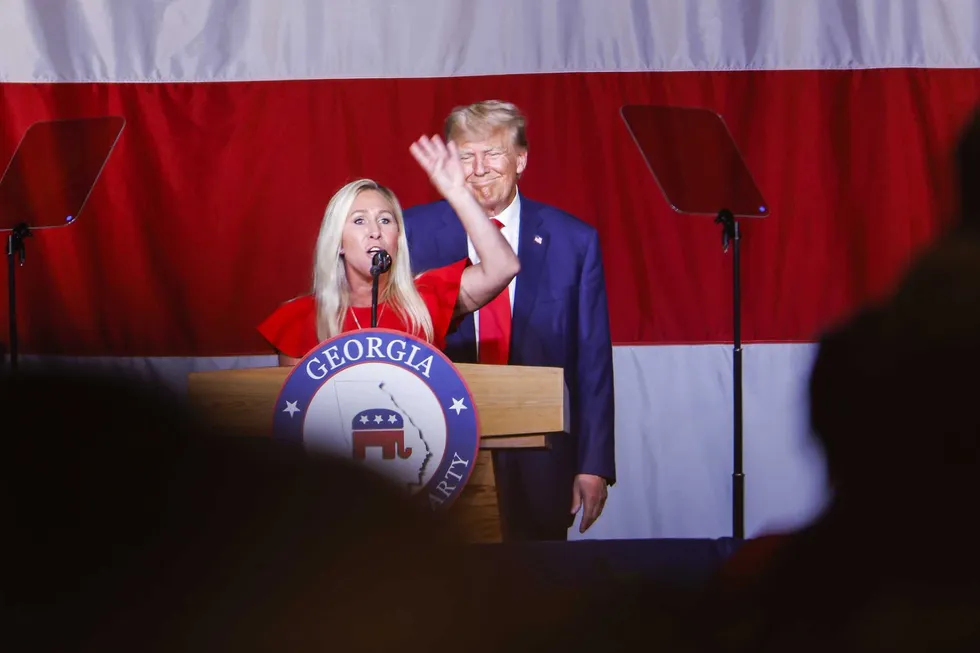 Photo by Anna Moneymaker/Getty Images
McCarthy also noted that the infighting ultimately takes away from a very small window of time in which Republicans hold the ultimate political advantage: a trifecta majority.
“I think keeping members out of Congress, you only get two years to be in the majority,” McCarthy said. “And if the Democrats get you not to work every day for two months, that’s losing two months of the majority.”
Like Blaze News? Bypass the censors, sign up for our newsletters, and get stories like this direct to your inbox. Sign up here!
Another historic peace imminent? Ukraine signals support for altered version of Trump’s peace plan
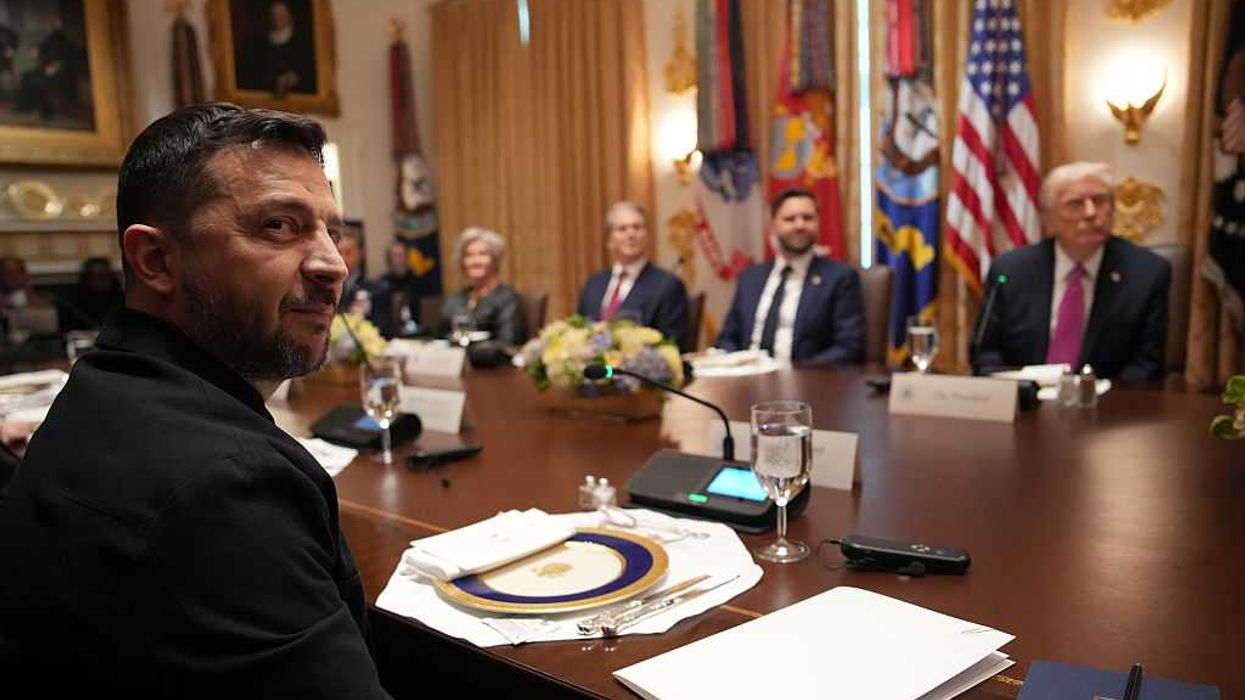
President Donald Trump has in recent months brokered peaceful resolutions between numerous warring parties, including Israel and Hamas; Azerbaijan and Armenia; Rwanda and the Democratic Republic of the Congo; Cambodia and Thailand; and India and Pakistan.
The major peace he campaigned on securing between Ukraine and Russia has, however, proven elusive.
Last week, Ukrainian President Volodymyr Zelenskyy and his government’s representative to the U.N. appeared to reject the fundamentals of the Trump administration’s 28-point plan for peace.
The plan would have: barred Ukraine from NATO, having an army exceeding 600,000 men, and acquiring nukes but provided Kyiv with a NATO-style security guarantee from the U.S.; recognized much of the occupied territory in eastern Ukraine as Russian; set the stage for an American-backed rebuilding of Ukraine; and granted full amnesty to all parties involved in the conflict.
‘Don’t believe it until you see it.’
While apparently averse to several of the 28 points, Kyiv has, however, since expressed support for an altered version of the peace plan, the details of which Trump and Zelenskyy — who has reportedly not authorized anyone but himself to discuss territorial matters — may soon iron out at the White House.
An official briefed on the negotiations told the Washington Post that Trump’s peace plan had been reduced from 28 points to 19 points by Monday. A European official briefed on the talks suggested that some of the provisions concerning European security didn’t make it to the new draft.
Ukrainian delegate Oleksandr Bevz noted, “Many of the controversial provisions were either softened or at least reshaped” to get Kyiv on board.
RELATED: Zelenskyy’s hold on power uncertain as criminal charges reach his inner circle
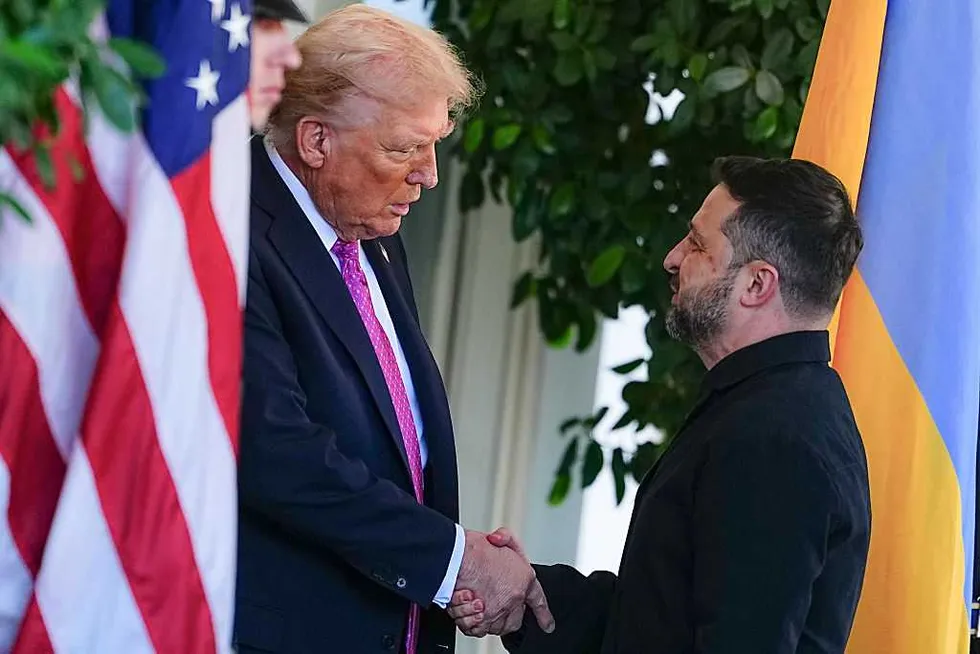 Photographer: Aaron Schwartz/Sipa/Bloomberg via Getty Images
After Ukraine’s delegation returned from Geneva, where they met over the weekend to discuss the American peace proposal with representatives of the Trump administration, Zelenskyy said in a statement on Monday evening that “now the list of necessary steps to end the war can become doable. As of now, after Geneva, there are fewer points — no longer 28 — and many of the right elements have been taken into account in this framework.”
“Our team has reported on the new draft of steps, and this is indeed the right approach,” continued Zelenskyy. “I will discuss the sensitive issues with President Trump.”
Echoing Zelenskyy, Ukraine’s national security secretary Rustem Umerov announced that the U.S. and Ukrainian delegations “reached a common understanding on the core terms of the agreement discussed in Geneva.”
Amid U.S. Army Secretary Daniel Driscoll’s meetings on Tuesday with Russian and Ukrainian officials in Abu Dhabi, which a spokesman said were “going well,” a U.S. official told CNN that “the Ukrainians have agreed to the peace deal. There are some minor details to be sorted out, but they have agreed to a peace deal.”
White House press secretary Karoline Leavitt confirmed on Tuesday that “tremendous progress towards a peace deal” has been made, adding that “there are a few delicate, but not insurmountable, details that must be sorted out and will require further talks between Ukraine, Russia, and the United States.”
Secretary of State Marco Rubio effectively said the same thing days earlier, adding, “I honestly believe we’ll get there.”
During a press conference with the Belarusian foreign minister on Tuesday, Russian foreign affairs minister Sergey Lavrov noted that Moscow “welcomed” the 28-point plan but will consider the “interim” plan produced by Washington, Kyiv, and the Europeans in the coming days.
Lavrov noted, however, that Russia expects the peace plan to adhere to the terms President Vladimir Putin discussed with Trump during their August summit in Anchorage.
“We are not hurrying. We’re not pushing our American counterparts. We have waited a long time since Anchorage,” said Lavrov. “We are only reminding them that we stick to those agreements.”
Lavrov added, “If the spirit and letter of Anchorage is erased in terms of the key understandings we have established then, of course, it will be a fundamentally different situation.”
Trump noted in a Truth Social post on Monday, “Is it really possible that big progress is being made in Peace Talks between Russia and Ukraine??? Don’t believe it until you see it, but something good just may be happening. GOD BLESS AMERICA!”
Like Blaze News? Bypass the censors, sign up for our newsletters, and get stories like this direct to your inbox. Sign up here!
Why Trump’s Obesity Drug ‘Deal’ Will Help Big Pharma Most Of All

 With the market for GLP-1s already exploding, Americans might be best served by a government that focuses on promoting competition to drive down prices.
Warmongers Dredge Up Neville Chamberlain (Again) To Bash Trump’s Ukraine Peace Negotiations

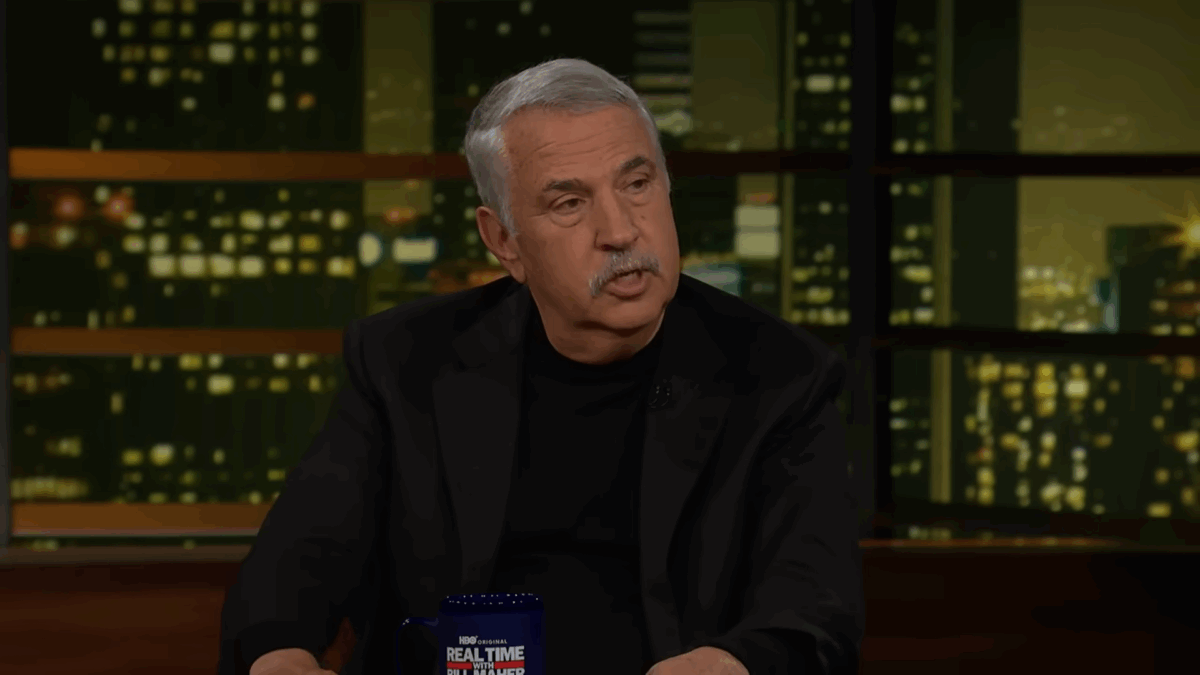 How many times do I have to teach you this lesson about appeasement, warmongers?
CAIR: Trump’s Revocation of Somali Deportation Protections Is Part of ‘Israel First’ Campaign
The Council on American Islamic Relations (CAIR) lashed out against President Donald Trump’s decision to eliminate deportation protections for Somali immigrants in Minnesota, blaming the move on an “Israel first” campaign that it says is also targeting podcasters Candace Owens and Tucker Carlson.
The post CAIR: Trump’s Revocation of Somali Deportation Protections Is Part of ‘Israel First’ Campaign appeared first on .





