






Don't miss...
NFL star, 44, joins Colts’ practice squad as team suffers drastic QB injuries: reports
Philip Rivers, who last played in the NFL in 2020, reportedly joined the Indianapolis Colts on Tuesday, and he he may possibly play Sunday.
Breakthrough GLP-1 implant promises major weight-loss benefits for pets
The world’s first GLP-1 weight-loss treatment for pets has begun with successful cat dosing. The six-month implant could revolutionize obesity care for cats, experts say.
FOX Nation taps acclaimed actor Zachary Levi for new docudrama ‘David: King of Israel’
FOX Nation announced on Tuesday that acclaimed actor Zachary Levi will host a four-part docudrama, “David: King of Israel,” which is set to debut in the first quarter of 2026.
Pritzker signs bill to further shield illegal immigrants in Illinois from deportations
Illinois enacts comprehensive immigration protection law safeguarding families at courthouses, hospitals, and day cares amid federal enforcement crackdown.
Greene says Trump’s response to family death threats was ‘shocking’ and ‘extremely unkind’
Marjorie Taylor Greene said Tuesday that President Trump’s response to text messages she sent about death threats to her family was “shocking” and “unkind.”
Jay Jones targeted as AGs urge national groups to deny membership over scandals: ‘Stain on our institution’
Montana AG Austin Knudsen leads effort against Virginia’s Jay Jones after violent rhetoric toward political opponents and their children surfaces in texts.
Major California health system ending transgender procedures for minors across its network
Sacramento’s Sutter Health ends transgender procedures for minors, joining a trend among California healthcare systems changing youth treatment policies.
Can this high-stakes overhaul save Ethereum from the dustbin of crypto?

It was once fashionable to speak of Ethereum as a “world computer,” a phrase that suggested a certain noisy, industrial utilitarianism. The idea was that every instruction, every transfer of value, every digital breath would be executed publicly and redundantly by a global network of nodes, a process that was transparent, unstoppable, and, as it turned out, prohibitively slow.
Although Ethereum in 2015 aimed at radical transparency, it is now engaged in a great transformation, an architectural renovation carried out while the building is still occupied. Ethereum is remaking itself not with more computing power, but with the mathematics of shadows: zero-knowledge proofs.
Ethereum replaces personal trust with mathematical guarantees, accountability without surveillance.
The central tension of the digital age has always been this trilemma: how to remain secure and decentralized while scaling to meet a global demand. Ethereum’s answer is to turn to an innovation in cryptography: the zero-knowledge proof, a protocol that allows one party to prove a statement is true without revealing why it is true, or indeed revealing any other information at all. It is a way to convince a stranger that you know a secret without ever telling him the secret itself. This property, which borders on the magical, is being woven into the very foundations of the network.
The heavy lifting of transaction execution is leaving the main stage. The Ethereum roadmap, in a phase titled the “Surge,” dictates that most activity will now occur off-chain, on Layer-2 networks known as rollups. These rollups bundle thousands of transactions, execute them in the dark, and generate a succinct validity proof, which is then posted back to Ethereum’s main layer. The main chain, once the sweating engine of the network, is now a high-security court, a judge that need not hear the testimony, only see the irrefutable mathematical certificate of the verdict.
Instead of a world computer, Ethereum is becoming a “world settlement layer,” an anchor for off-chain environments. To facilitate this, the network has introduced “blobs,” an inelegantly named but vital innovation of the Dencun upgrade. Blobs are temporary data, a cheap lane on the highway for rollup trucks, allowing vast amounts of information to be posted without clogging the passing lane. The new Fusaka upgrade promises to expand this capacity further, raising the gas limit and introducing PeerDAS, a system where nodes sample data rather than storing it. It is a move toward a system where the network holds everything, but no single participant must hold more than a fraction.
RELATED: Bitcoin billionaire will serve time after British police broke down her door and arrested her in bed
 Photo by Vince Mignott/MB Media/Getty Images
But the most radical application of this new approach lies in the “Verge,” a suite of upgrades intended to make the network “stateless.” The ambition is to allow a user with a basic laptop, or even a phone, to verify the chain. Through the use of Verkle trees — cryptographic accumulators that replace more cumbersome data structures — proofs of state become tiny, manageable things. Verification is broadened, flattening the hierarchy of nodes. In this future, we need not trust institutions or even the “full nodes” of the blockchain priesthood, but rather trust the math and verify the proof.
There is a detachment to this logic that appeals to the cypherpunk instinct. The implications are deeply social. In the classical world, trust was intimate; it required knowing a reputation, a face, a history. Ethereum replaces this personal trust with mathematical guarantees. It is a vision of accountability without surveillance. This affordance is particularly relevant in the realm of privacy, an area where the unblinking transparency of the blockchain has long been a liability.
The Privacy Stewards of Ethereum, a group operating within the Ethereum Foundation, have outlined a roadmap that seeks to make privacy a “first-class feature.” They speak of “private writes” and “private reads,” of enabling users to interact with the ledger without leaking their identity or intent. They reject the idea that scaling requires the sacrifice of privacy and posit that one might gain a degree of invisibility while the system enforces the rules so strictly that cheating becomes computationally impossible.
One could prove one is a unique human without revealing one’s name, or prove a vote was counted without revealing the ballot. It is a shift from universal transparency to a society of secret handshakes, where transparency is selective and discretionary.
Of course, the Ethereum roadmap has risks. There is the question of “gas limit politics,” the danger that the specialized hardware required to generate zero-knowledge proofs will reintroduce centralization by another name. There is the fragility of the new cryptography itself, the fear that a breakthrough in quantum computing could render these mathematical castles defenseless. There is the ever-present tension between the ideal of a decentralized network and the reality of complex governance.
Yet, the momentum is undeniable. The integration of a zkEVM at Layer 1, an implementation of the Ethereum Virtual Machine that generates proofs of the blocks themselves, represents the capstone of this overhaul. It is an attempt to scale to the level of global finance, to process hundreds of thousands of transactions per second, without utilizing trusted servers.
Ethereum aims to renovate digital society in real time, to reconcile the conflicting desires for scale, security, and privacy through a reliance on “moon math” that has suddenly, quietly become infrastructure. Ethereum is betting that cryptographic truth can substitute for consensus. It is moving toward a global notary that sees everything and nothing, verifying the unseen with absolute precision in a ballet of proofs, harmonizing to a music we are only just beginning to hear.
Gov. DeSantis joins Gov. Abbott in taking a stand against radical Islam
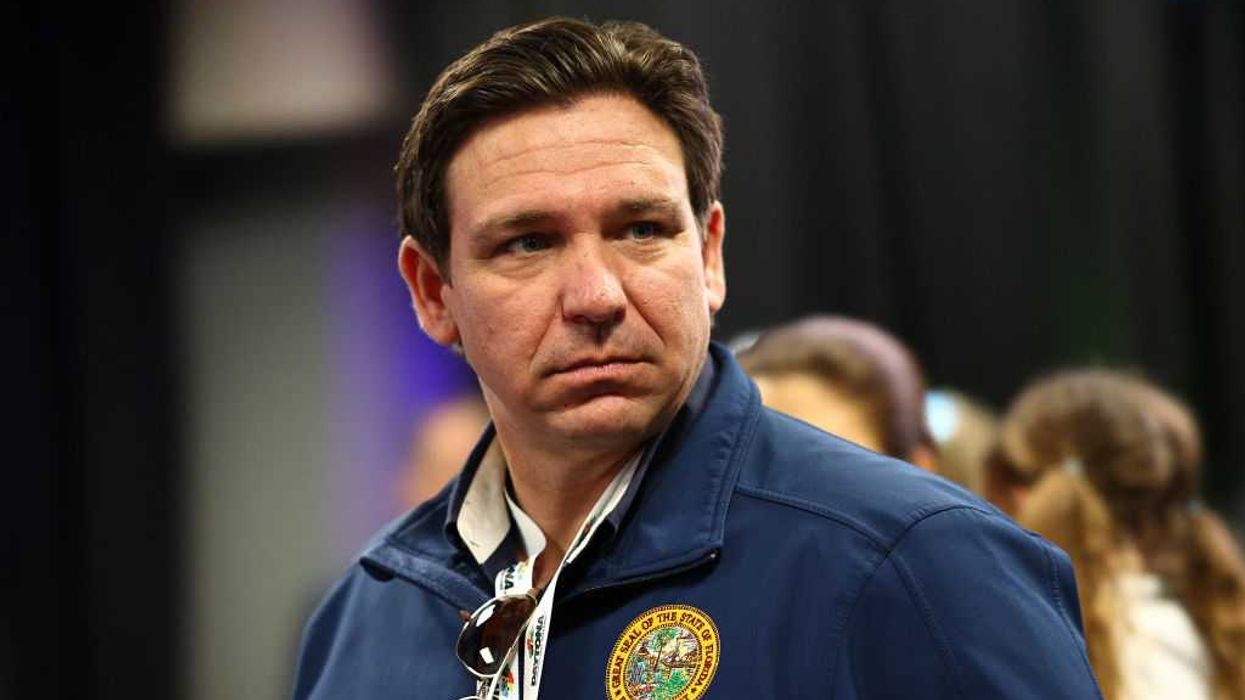
Florida Governor Ron DeSantis (R) announced a new executive order on Monday, taking action against radical Islam.
DeSantis issued an order designating the Muslim Brotherhood and the Council on American-Islamic Relations as foreign terrorist organizations.
‘CAIR was designated as an unindicted co-conspirator by the United States Government in the largest terrorism-financing case in American history.’
The order, which took immediate effect, argued that the Muslim Brotherhood is a “transnational network with a long history of engaging in or supporting violence,” noting that the group created Hamas in 1987. It stated that the U.S. designated Hamas as a foreign terrorist organization in 1997 and that the group was responsible for 1,200 murders on October 7, 2023.
DeSantis’ order explained that the Palestine Committee, a group affiliated with the Muslim Brotherhood, founded CAIR in the U.S. in 1994.
“CAIR was designated as an unindicted co-conspirator by the United States Government in the largest terrorism-financing case in American history, and the court found ‘ample evidence to establish the association[]’ of CAIR with terrorist organizations,” the order read, citing United States v. Holy Land Foundation for Relief and Development.
RELATED: Gov. Abbott talks redistricting victory, action against CAIR with Glenn Beck
 KHALIL MAZRAAWI/AFP via Getty Images
“Florida agencies are hereby directed to undertake all lawful measures to prevent unlawful activities by these organizations, including denying privileges or resources to anyone providing material support,” DeSantis stated.
DeSantis’ order follows similar executive action from Texas Governor Greg Abbott (R) in November.
RELATED: No Sharia law in Texas: Abbott draws a hard line against radical Islam
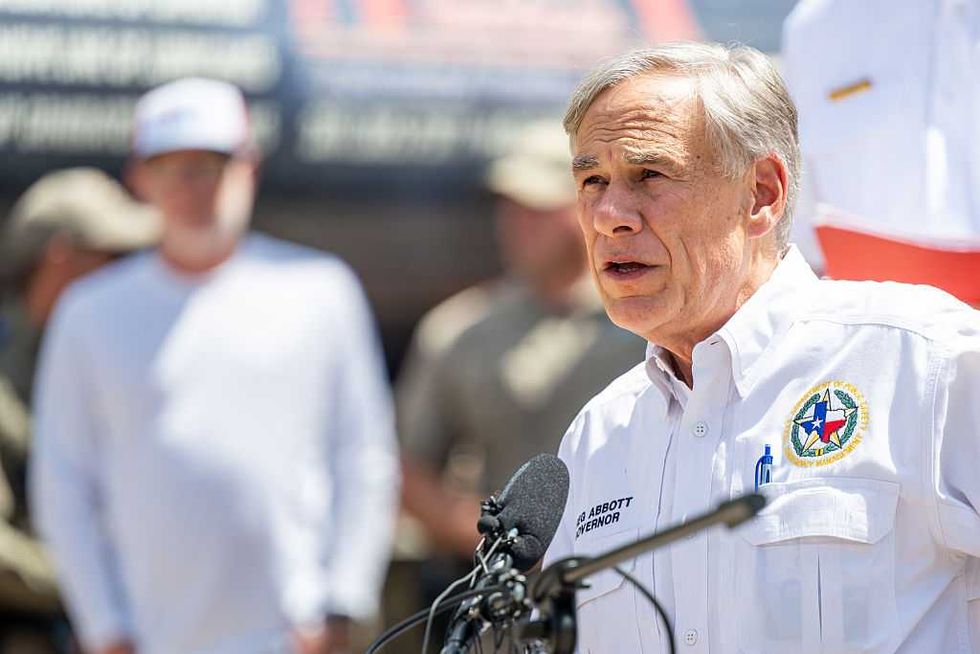 Greg Abbott. Photo by Brandon Bell/Getty Images
CAIR issued a statement declaring that it plans to file a lawsuit against DeSantis’ designation, accusing the governor of “serving the Israeli government over serving the people of Florida.”
“Like Greg Abbott in Texas, Ron DeSantis is an Israel First politician who wants to smear and silence Americans, especially American Muslims, critical of U.S. support for Israel’s war crimes,” CAIR National and CAIR-Florida said in a joint statement. “Governor DeSantis knows full well that CAIR-Florida is an American civil rights organization that has spent decades advancing free speech, religious freedom, and justice for all, including for the Palestinian people. That’s precisely why Governor DeSantis is targeting our civil rights group with this unconstitutional and defamatory proclamation.”
CAIR plans to hold a press conference on Tuesday to announce details of its forthcoming lawsuit against the state of Florida.
Like Blaze News? Bypass the censors, sign up for our newsletters, and get stories like this direct to your inbox. Sign up here!
Frustrated Trump calls for Ukrainian election after Zelenskyy seemingly torpedoes another peace opportunity
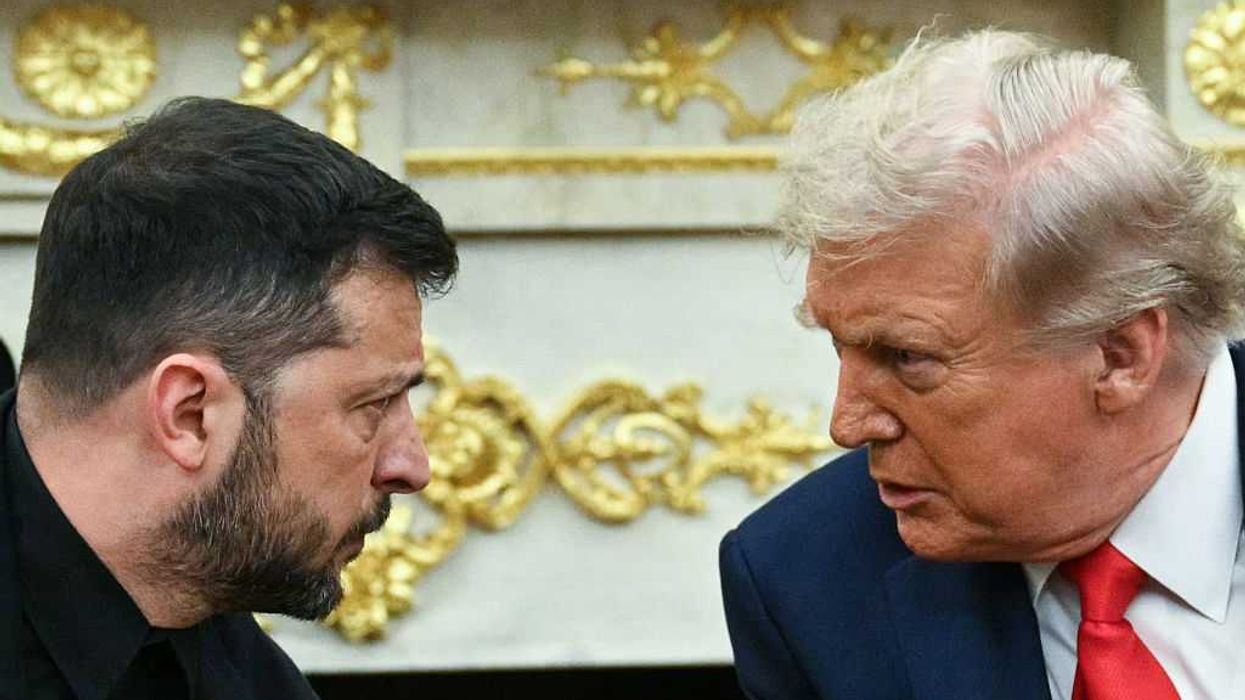
Ukrainian President Volodymyr Zelenskyy has effectively torpedoed President Donald Trump’s peace plan.
After his meeting on Monday with British Prime Minister Keir Starmer, German Chancellor Friedrich Merz, and French President Emmanuel Macron — who reportedly suggested last week that the U.S. might “betray” Ukraine — Zelenskyy reportedly told reporters that Kyiv will not cede any territory to Russia.
‘A lot of people are dying. So it would be really good if he’d read it. His people loved the proposal.’
“We have no right to give anything away — not under our laws, not under international law, not under moral law,” said Zelenskyy, reported the New York Post. “Russia is, of course, insisting that we give up territory. We, of course, do not want to give up anything — that is precisely what we are fighting for, as you are well aware.”
Zelenskyy, whom Trump accused in February of “gambling with the lives of millions of people,” added, “To be honest, the Americans are looking for a compromise today.”
Russia, which has slowly captured additional territory over the past year, presently occupies around 20% of the entire country and most of the Donbas — including all of the Luhansk region, most of the largely Russian-speaking Donetsk region, much of the Kherson and Zaporizhzhia regions, and parts of the Sumy and Kharkiv regions.
Under the Trump administration’s initial 28-point peace plan, embraced by Moscow but rejected by Kyiv and European leaders,
- the U.S. would recognize Crimea, Luhansk, and Donetsk as de facto Russian;
- Kherson and Zaporizhzhia would be divided along the current line of contact;
- Russia would cede other territories under its control outside the five regions; and
- Ukrainian forces would abandon the part of Donetsk Oblast currently under their control, leaving it as a demilitarized buffer zone.
 Photo by Rasid Necati Aslim/Anadolu via Getty Images
Trump has long maintained that Kyiv will have to make some territorial concessions to bring an end to war that has resulted in millions of casualties. In August, for instance, the president said that while the U.S. seeks to negotiate for some of the Russia-occupied territories back for Ukraine, inevitably “there will be some land swapping going on. I know that through Russia and through conversations with everybody.”
On Monday, Zelenskyy suggested that he and Trump see things differently, stating that Trump “certainly wants to end the war. … Surely, he has his own vision. We live here, from within we see details and nuances, we perceive everything much deeper, because this is our motherland.”
‘It gets to a point where it’s not a democracy anymore.’
Trump said in an interview with Politico on Monday that while he credits the Ukrainian people for their bravery in defending their homeland, Russia is presently in the stronger negotiating position and “size will win, generally.” Accordingly Ukraine has to “play ball,” suggested the president, who was uncertain about whether Zelenskyy had even bothered to read the latest peace proposals.
“That’s as of yesterday. Maybe he’s read it over the night,” said Trump. “It would be nice if he would read it. You know, a lot of people are dying. So it would be really good if he’d read it. His people loved the proposal. They really liked it. His lieutenants, his top people, they liked it, but they said he hasn’t read it yet. I think he should find time to read it.”
Zelenskyy indicated this week that he will provide Washington with his views on the current U.S. peace plan — which has reportedly shed eight of the original points Zelenskyy characterized as “anti-Ukrainian” — on Tuesday night but not until he discusses with European leaders the “reparations loan and security guarantees” he regards as critical to the peace process.
When asked what would happen if Zelenskyy rejected the deal, Trump said, “He’s gonna have to get on the ball and start accepting things.” As for the European leaders who appear keen to involve themselves in the process, Trump said, “They talk but they don’t produce, and the war just keeps going on and on.”
Trump noted further that it’s time now — 18 months after Zelenskyy’s term was originally scheduled to end and in the midst of an ever-worsening corruption scandal involving Zelenskyy’s administration and close allies — for a Ukrainian presidential election.
“It’s been a long time,” said Trump.
“I think it’s an important time to hold an election. They’re using war not to hold an election, but I would think the Ukrainian people would, should have that choice. And maybe Zelenskyy would win. I don’t know who would win. But they haven’t had an election in a long time. You know, they talk about a democracy, but it gets to a point where it’s not a democracy anymore.”
Zelenskyy said in a statement on Tuesday, “We are committed to a real peace and remain in constant contact with the United States. And as our partners in the negotiating teams rightly note, everything depends on whether Russia is ready to take effective steps to stop the bloodshed and prevent the war from reigniting.”
Like Blaze News? Bypass the censors, sign up for our newsletters, and get stories like this direct to your inbox. Sign up here!





