






Don't miss...
Air Force basketball coach suspended indefinitely pending investigation into treatment of cadet-athletes
Air Force men’s basketball coach Joe Scott has been suspended indefinitely pending an investigation into the treatment of cadet-athletes, the school announced Saturday.
Bills’ Josh Allen addresses viral photo of wife Hailee Steinfeld wearing Broncos gear
Buffalo Bills quarterback Josh Allen addressed the viral photo of his wife, Hailee Steinfeld, wearing Denver Broncos gear from a game 10 years ago.
Trump sends big message in US-Canada ice hockey rivalry with delegation selections for Milan-Cortina Games
US women’s hockey stars rare eady to fight Canada at Winter Olympics as Trump announces presidential delegation for Milan-Cortina games.
Minnesota National Guard placed on standby to support law enforcement as protests turn violent
Minnesota National Guard members will wear yellow reflective vests to distinguish themselves from other law enforcement if activated during anti-ICE protests.
Protests explode in Greenland amid Trump takeover push: ‘We are not interested in being Americans’
Thousands march in Greenland wearing ‘Make America Go Away’ hats, rejecting Trump’s purchase demands and tariff threats saying, ‘we are not interested in being Americans.’
Former Nickelodeon child star Kianna Underwood killed in NYC hit-and-run: police
Kianna Underwood, who appeared on Nickelodeon’s “All That” and voiced a character on “Little Bill,” died after being struck by two vehicles in Brooklyn, police confirmed with Fox News Digital.
Illegal migrant workers caught on camera leaping across rooftops to escape Border Patrol in California raid
Dramatic video captures alleged illegal immigrants fleeing across California rooftops as federal agents conduct enforcement raid at construction site.
US strike eliminates al Qaeda operative connected to ISIS ambush that killed 3 Americans in Syria
U.S. forces killed an al Qaeda affiliated leader allegedly linked to an ISIS attack that killed three Americans in Syria, as CENTCOM launched counterterrorism operations Jan. 16.
Antitrust panic helped kill an American robotics pioneer
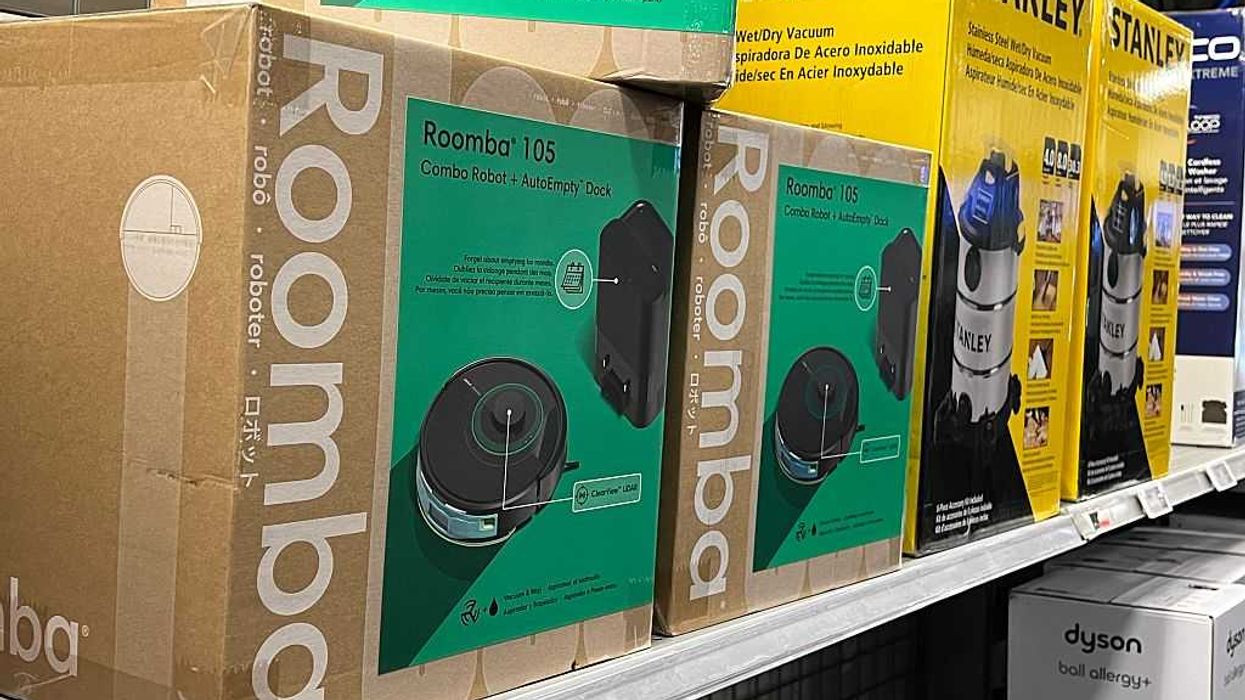
Antitrust regulators claim to protect competition. Their decision to block Amazon’s acquisition of iRobot did the opposite. It helped drive an American robotics pioneer into bankruptcy last December and pushed it into the arms of a Chinese creditor.
Antitrust law is supposed to defend consumers and prevent monopoly abuse. In this case, regulators killed a deal that could have kept iRobot alive, preserved American jobs, and strengthened a U.S. company facing brutal Chinese competition. Instead, the collapse of the acquisition forced iRobot into a court-supervised restructuring in which Shenzhen Picea Robotics — its largest Chinese creditor and key supplier — will take the company’s equity and cancel roughly $264 million in debt.
Ultimately, the acquisition’s collapse pushed iRobot into a deal with its largest Chinese creditor.
iRobot began in 1990, founded by roboticists from the Massachusetts Institute of Technology. The company built military and space exploration products before it introduced the Roomba in 2002, the device that turned home robotics into a household category. For years, iRobot stood as a rare American success story in consumer robotics.
Then the market shifted. Chinese manufacturers poured in with cheaper models, tighter supply chains, and rapid iteration. iRobot’s share price peaked in 2021, then slid hard over the next year. The company sought a lifeline and found one in Amazon, which agreed to acquire iRobot for roughly $1.7 billion.
That deal made strategic sense. iRobot needed capital, scale, and distribution power to compete against Chinese rivals such as Roborock, Ecovacs, Dreame, and Xiaomi. Amazon could have provided all three. Consumers likely would have seen faster innovation, deeper device integration, and lower prices, while iRobot kept more of its footprint and engineering talent intact.
Regulators saw a different story. The European Commission objected on antitrust grounds and signaled it would block the acquisition. The commission argued the deal could restrict competition in robot vacuum cleaners by allowing Amazon to disadvantage rival products on its marketplace. American critics piled on, including Sen. Elizabeth Warren (D-Mass.), who framed the acquisition as an attempt to buy out competition, along with privacy fears about Roomba’s mapping technology.
Facing regulatory opposition, Amazon and iRobot terminated the agreement in January 2024. Amazon’s general counsel, David Zapolsky, warned that the decision would deny consumers faster innovation and more competitive prices, while leaving iRobot weaker against foreign rivals operating under very different regulatory constraints.
The warnings proved accurate. After the deal collapsed, iRobot announced deep cost-cutting, including a 31% workforce reduction. The company shifted more production to Vietnam to compete on cost. Chinese brands continued to eat the market.
By December 2025, iRobot filed for Chapter 11 bankruptcy protection and announced a restructuring deal that hands control to Shenzhen Picea Robotics. According to iRobot’s own announcement, Picea will acquire the equity of the reorganized company through the court process and cancel about $264 million in debt.
RELATED: Why Trump must block Netflix’s Warner Bros. takeover
 Photo by Mandel NGAN/AFP via Getty Images
That outcome should haunt every regulator who claimed to defend competition. Regulators blocked an American acquisition and ended up delivering a storied American company to a Chinese creditor. They did not preserve a competitor. They helped bury it.
The iRobot collapse exposes a central problem with modern antitrust enforcement: Officials often substitute fear-driven hypotheticals for real-world consequences. They imagine a future in which Amazon squeezes competitors and consumers pay more. They ignore the present in which Chinese firms gain market power, American companies lose ground, and U.S. workers pay the price.
Markets discipline failure quickly. Regulators rarely pay for their mistakes. They can block a deal, watch a company fall apart, and declare victory because they prevented a theoretical harm.
This case produced the opposite of the intended result. Regulators killed a merger that could have strengthened an American company against Chinese competition. They weakened competition in the robot vacuum market by removing one of the few U.S.-based pioneers from the field. They also shrank the number of meaningful paths forward for iRobot until only one remained: a takeover by the company’s Chinese lender and supplier.
Policymakers should learn the right lesson. Antitrust action should not operate as a reflex against size or success. Regulators should measure outcomes, not slogans. If officials claim they protect competition, they should not celebrate decisions that end in bankruptcy and foreign control.
Antitrust panic helped kill an American robotics pioneer
Antitrust regulators claim to protect competition. Their decision to block Amazon’s acquisition of iRobot did the opposite. It helped drive an American robotics pioneer into bankruptcy last December and pushed it into the arms of a Chinese creditor.
Antitrust law is supposed to defend consumers and prevent monopoly abuse. In this case, regulators killed a deal that could have kept iRobot alive, preserved American jobs, and strengthened a U.S. company facing brutal Chinese competition. Instead, the collapse of the acquisition forced iRobot into a court-supervised restructuring in which Shenzhen Picea Robotics — its largest Chinese creditor and key supplier — will take the company’s equity and cancel roughly $264 million in debt.
Ultimately, the acquisition’s collapse pushed iRobot into a deal with its largest Chinese creditor.
iRobot began in 1990, founded by roboticists from the Massachusetts Institute of Technology. The company built military and space exploration products before it introduced the Roomba in 2002, the device that turned home robotics into a household category. For years, iRobot stood as a rare American success story in consumer robotics.
Then the market shifted. Chinese manufacturers poured in with cheaper models, tighter supply chains, and rapid iteration. iRobot’s share price peaked in 2021, then slid hard over the next year. The company sought a lifeline and found one in Amazon, which agreed to acquire iRobot for roughly $1.7 billion.
That deal made strategic sense. iRobot needed capital, scale, and distribution power to compete against Chinese rivals such as Roborock, Ecovacs, Dreame, and Xiaomi. Amazon could have provided all three. Consumers likely would have seen faster innovation, deeper device integration, and lower prices, while iRobot kept more of its footprint and engineering talent intact.
Regulators saw a different story. The European Commission objected on antitrust grounds and signaled it would block the acquisition. The commission argued the deal could restrict competition in robot vacuum cleaners by allowing Amazon to disadvantage rival products on its marketplace. American critics piled on, including Sen. Elizabeth Warren (D-Mass.), who framed the acquisition as an attempt to buy out competition, along with privacy fears about Roomba’s mapping technology.
Facing regulatory opposition, Amazon and iRobot terminated the agreement in January 2024. Amazon’s general counsel, David Zapolsky, warned that the decision would deny consumers faster innovation and more competitive prices, while leaving iRobot weaker against foreign rivals operating under very different regulatory constraints.
The warnings proved accurate. After the deal collapsed, iRobot announced deep cost-cutting, including a 31% workforce reduction. The company shifted more production to Vietnam to compete on cost. Chinese brands continued to eat the market.
By December 2025, iRobot filed for Chapter 11 bankruptcy protection and announced a restructuring deal that hands control to Shenzhen Picea Robotics. According to iRobot’s own announcement, Picea will acquire the equity of the reorganized company through the court process and cancel about $264 million in debt.
RELATED: Why Trump must block Netflix’s Warner Bros. takeover
Photo by Mandel NGAN/AFP via Getty Images
That outcome should haunt every regulator who claimed to defend competition. Regulators blocked an American acquisition and ended up delivering a storied American company to a Chinese creditor. They did not preserve a competitor. They helped bury it.
The iRobot collapse exposes a central problem with modern antitrust enforcement: Officials often substitute fear-driven hypotheticals for real-world consequences. They imagine a future in which Amazon squeezes competitors and consumers pay more. They ignore the present in which Chinese firms gain market power, American companies lose ground, and U.S. workers pay the price.
Markets discipline failure quickly. Regulators rarely pay for their mistakes. They can block a deal, watch a company fall apart, and declare victory because they prevented a theoretical harm.
This case produced the opposite of the intended result. Regulators killed a merger that could have strengthened an American company against Chinese competition. They weakened competition in the robot vacuum market by removing one of the few U.S.-based pioneers from the field. They also shrank the number of meaningful paths forward for iRobot until only one remained: a takeover by the company’s Chinese lender and supplier.
Policymakers should learn the right lesson. Antitrust action should not operate as a reflex against size or success. Regulators should measure outcomes, not slogans. If officials claim they protect competition, they should not celebrate decisions that end in bankruptcy and foreign control.





