






Don't miss...
Antitrust panic helped kill an American robotics pioneer
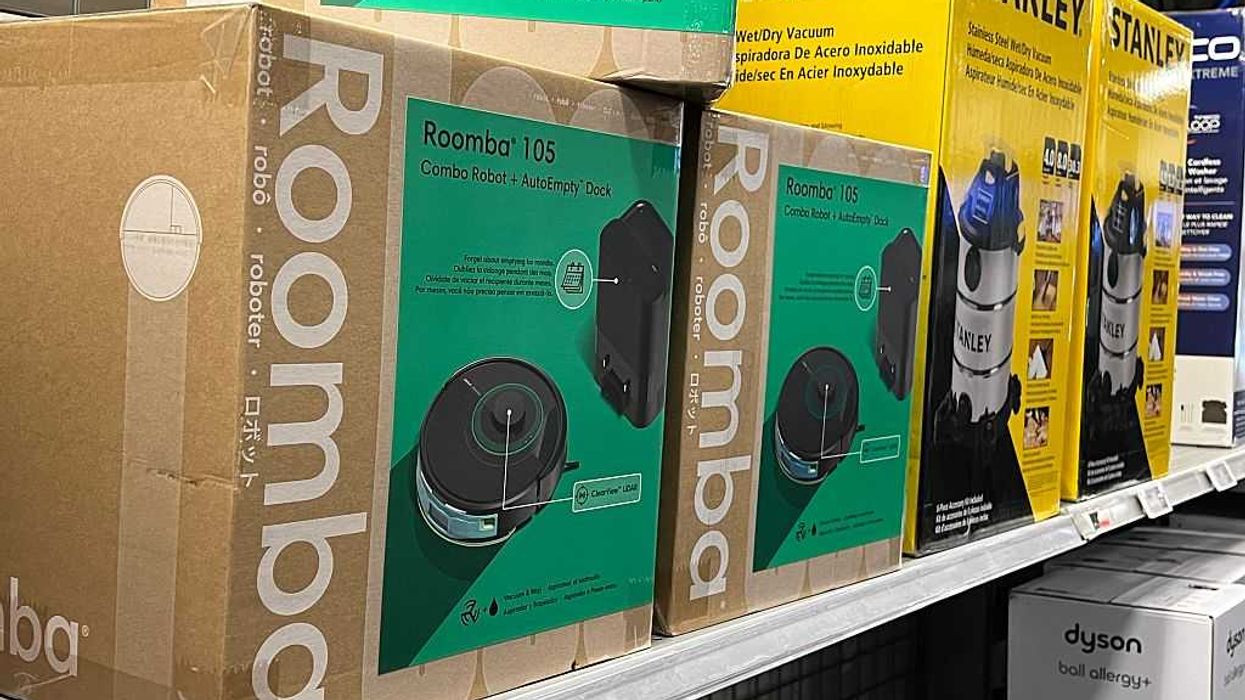
Antitrust regulators claim to protect competition. Their decision to block Amazon’s acquisition of iRobot did the opposite. It helped drive an American robotics pioneer into bankruptcy last December and pushed it into the arms of a Chinese creditor.
Antitrust law is supposed to defend consumers and prevent monopoly abuse. In this case, regulators killed a deal that could have kept iRobot alive, preserved American jobs, and strengthened a U.S. company facing brutal Chinese competition. Instead, the collapse of the acquisition forced iRobot into a court-supervised restructuring in which Shenzhen Picea Robotics — its largest Chinese creditor and key supplier — will take the company’s equity and cancel roughly $264 million in debt.
Ultimately, the acquisition’s collapse pushed iRobot into a deal with its largest Chinese creditor.
iRobot began in 1990, founded by roboticists from the Massachusetts Institute of Technology. The company built military and space exploration products before it introduced the Roomba in 2002, the device that turned home robotics into a household category. For years, iRobot stood as a rare American success story in consumer robotics.
Then the market shifted. Chinese manufacturers poured in with cheaper models, tighter supply chains, and rapid iteration. iRobot’s share price peaked in 2021, then slid hard over the next year. The company sought a lifeline and found one in Amazon, which agreed to acquire iRobot for roughly $1.7 billion.
That deal made strategic sense. iRobot needed capital, scale, and distribution power to compete against Chinese rivals such as Roborock, Ecovacs, Dreame, and Xiaomi. Amazon could have provided all three. Consumers likely would have seen faster innovation, deeper device integration, and lower prices, while iRobot kept more of its footprint and engineering talent intact.
Regulators saw a different story. The European Commission objected on antitrust grounds and signaled it would block the acquisition. The commission argued the deal could restrict competition in robot vacuum cleaners by allowing Amazon to disadvantage rival products on its marketplace. American critics piled on, including Sen. Elizabeth Warren (D-Mass.), who framed the acquisition as an attempt to buy out competition, along with privacy fears about Roomba’s mapping technology.
Facing regulatory opposition, Amazon and iRobot terminated the agreement in January 2024. Amazon’s general counsel, David Zapolsky, warned that the decision would deny consumers faster innovation and more competitive prices, while leaving iRobot weaker against foreign rivals operating under very different regulatory constraints.
The warnings proved accurate. After the deal collapsed, iRobot announced deep cost-cutting, including a 31% workforce reduction. The company shifted more production to Vietnam to compete on cost. Chinese brands continued to eat the market.
By December 2025, iRobot filed for Chapter 11 bankruptcy protection and announced a restructuring deal that hands control to Shenzhen Picea Robotics. According to iRobot’s own announcement, Picea will acquire the equity of the reorganized company through the court process and cancel about $264 million in debt.
RELATED: Why Trump must block Netflix’s Warner Bros. takeover
 Photo by Mandel NGAN/AFP via Getty Images
That outcome should haunt every regulator who claimed to defend competition. Regulators blocked an American acquisition and ended up delivering a storied American company to a Chinese creditor. They did not preserve a competitor. They helped bury it.
The iRobot collapse exposes a central problem with modern antitrust enforcement: Officials often substitute fear-driven hypotheticals for real-world consequences. They imagine a future in which Amazon squeezes competitors and consumers pay more. They ignore the present in which Chinese firms gain market power, American companies lose ground, and U.S. workers pay the price.
Markets discipline failure quickly. Regulators rarely pay for their mistakes. They can block a deal, watch a company fall apart, and declare victory because they prevented a theoretical harm.
This case produced the opposite of the intended result. Regulators killed a merger that could have strengthened an American company against Chinese competition. They weakened competition in the robot vacuum market by removing one of the few U.S.-based pioneers from the field. They also shrank the number of meaningful paths forward for iRobot until only one remained: a takeover by the company’s Chinese lender and supplier.
Policymakers should learn the right lesson. Antitrust action should not operate as a reflex against size or success. Regulators should measure outcomes, not slogans. If officials claim they protect competition, they should not celebrate decisions that end in bankruptcy and foreign control.
Jason Whitlock: Stephen A. Smith is a part of a controlled ‘clown show’

From allegedly false claims about Stephen A. Smith’s basketball background to what Jason Whitlock calls a lack of basic sports knowledge and writing ability, the BlazeTV host argues Smith’s success isn’t accidental.
Rather, it’s the result of a system that rewards obedience over independent thinking, particularly among black men.
“Stephen A. Smith, as I have exposed to you all on this show — his background, his narrative, his story: It’s all a fabrication. He wasn’t a college basketball player at Winston-Salem State. He didn’t knock down 17 straight three-pointers and earn a scholarship at Winston-Salem State,” Whitlock begins.
“You’ve seen me expose all of that. You saw Stephen A. Smith get triggered by me exposing all of that. You saw this man snap and put on a 45-minute profanity-laced tirade because I explained to you all — I read his book. We’ve done the research. We’ve gone through all these different lies,” he continues.
Whitlock believes that Smith is nothing more than a “fraud” who is “unqualified for all the things he’s been given.”
“They take someone with very limited talent, give them positions and jobs and a platform that they can’t do on their own,” he says, noting that even as a sportswriter, Smith “wrote at like an eighth-grade level” and “doesn’t know or follow sports in a real way.”
“Claims to be a New York Knicks fan, doesn’t know who’s on the roster, thinks you can kick a field goal on third down — and if you miss it, you can re-kick it on fourth down. That’s who has been installed at the top of the sports media landscape,” Whitlock explains.
“This is all intentional,” he continues. “Black men who can think for themselves, who have some sort of intellectual evolution, need not apply for the clown show that is being run.”
Want more from Jason Whitlock?
To enjoy more fearless conversations at the crossroads of culture, faith, sports, and comedy with Jason Whitlock, subscribe to BlazeTV — the largest multi-platform network of voices who love America, defend the Constitution, and live the American dream.
Jason Whitlock: Stephen A. Smith is a part of a controlled ‘clown show’
From allegedly false claims about Stephen A. Smith’s basketball background to what Jason Whitlock calls a lack of basic sports knowledge and writing ability, the BlazeTV host argues Smith’s success isn’t accidental.
Rather, it’s the result of a system that rewards obedience over independent thinking, particularly among black men.
“Stephen A. Smith, as I have exposed to you all on this show — his background, his narrative, his story: It’s all a fabrication. He wasn’t a college basketball player at Winston-Salem State. He didn’t knock down 17 straight three-pointers and earn a scholarship at Winston-Salem State,” Whitlock begins.
“You’ve seen me expose all of that. You saw Stephen A. Smith get triggered by me exposing all of that. You saw this man snap and put on a 45-minute profanity-laced tirade because I explained to you all — I read his book. We’ve done the research. We’ve gone through all these different lies,” he continues.
Whitlock believes that Smith is nothing more than a “fraud” who is “unqualified for all the things he’s been given.”
“They take someone with very limited talent, give them positions and jobs and a platform that they can’t do on their own,” he says, noting that even as a sportswriter, Smith “wrote at like an eighth-grade level” and “doesn’t know or follow sports in a real way.”
“Claims to be a New York Knicks fan, doesn’t know who’s on the roster, thinks you can kick a field goal on third down — and if you miss it, you can re-kick it on fourth down. That’s who has been installed at the top of the sports media landscape,” Whitlock explains.
“This is all intentional,” he continues. “Black men who can think for themselves, who have some sort of intellectual evolution, need not apply for the clown show that is being run.”
Want more from Jason Whitlock?
To enjoy more fearless conversations at the crossroads of culture, faith, sports, and comedy with Jason Whitlock, subscribe to BlazeTV — the largest multi-platform network of voices who love America, defend the Constitution, and live the American dream.
Melania’s bold AI message to America’s youth: ‘Use AI as a tool, but do not let it replace your personal intelligence’

Appearing at the “Zoom Ahead: AI for Tomorrow’s Leaders” virtual event from the White House on Friday, Melania Trump addressed the rapid advancement of AI technology, highlighting both its current capabilities and the potential risks and opportunities it may present in the future.
Thanking Zoom founder Eric Yuan for hosting the event, the first lady praised the company’s leadership in the tech space and connected the discussion to what she described as her broader “mission.”
Mrs. Trump said AI has expanded access to creative tools in ways that were previously unimaginable, allowing young people to explore fields such as film, fashion, art, and music.
“Your support directly advances my mission to prepare America’s next generation to use AI to enhance their education and ultimately their careers,” Mrs. Trump said.
She told the audience they were “fortunate” to be living in what she repeatedly described as “the age of imagination,” a new era shaped by artificial intelligence.
“The age of imagination is a new era, powered by artificial intelligence, where one’s curiosity can be satisfied almost magically in seconds,” she said.
RELATED: AI isn’t killing writers — it’s killing mediocre writing
 Photo by Alex Wong/Getty Images
Mrs. Trump said AI has expanded access to creative tools in ways that were previously unimaginable, allowing young people to explore fields such as film, fashion, art, and music from their own homes.
“For the first time in history, the young girl dreaming of becoming a fashion designer and the young boy who wants to stand up his school animated superhero series can do so from their own home,” Trump said.
She emphasized that curiosity has always been central to human progress, pointing to writers, scientists, architects, and artists who challenged unanswered questions and the status quo.
“Every giant at some point in time questions the status quo,” she said. “Their singular vision pushes humanity in a new direction.”
She noted, however, that the power of the technology actually lies in the human “imagination.”
“Artificial intelligence provides all the tools needed to implement your creative vision today,” she said.
“But what do you need to start? You need to harness your imagination.”
She encouraged students and creators to focus on developing the ability to ask meaningful questions and to think critically beyond the information AI can provide.
RELATED: Can artificial intelligence help us want better, not just more?
 Brooks Kraft/Getty Images
The first lady stressed that while AI can generate content, it cannot replace human purpose.
“Although artificial intelligence can generate images and information, only humans can generate meaning and purpose,” she said.
She concluded by urging the audience to treat AI as a tool rather than a shortcut, encouraging intellectual honesty and personal responsibility in how the technology is used.
“Use AI as a tool, but do not let it replace your personal intelligence,” Mrs. Trump said.
Like Blaze News? Bypass the censors, sign up for our newsletters, and get stories like this direct to your inbox. Sign up here!
Melania’s bold AI message to America’s youth: ‘Use AI as a tool, but do not let it replace your personal intelligence’
Appearing at the “Zoom Ahead: AI for Tomorrow’s Leaders” virtual event from the White House on Friday, Melania Trump addressed the rapid advancement of AI technology, highlighting both its current capabilities and the potential risks and opportunities it may present in the future.
Thanking Zoom founder Eric Yuan for hosting the event, the first lady praised the company’s leadership in the tech space and connected the discussion to what she described as her broader “mission.”
Mrs. Trump said AI has expanded access to creative tools in ways that were previously unimaginable, allowing young people to explore fields such as film, fashion, art, and music.
“Your support directly advances my mission to prepare America’s next generation to use AI to enhance their education and ultimately their careers,” Mrs. Trump said.
She told the audience they were “fortunate” to be living in what she repeatedly described as “the age of imagination,” a new era shaped by artificial intelligence.
“The age of imagination is a new era, powered by artificial intelligence, where one’s curiosity can be satisfied almost magically in seconds,” she said.
RELATED: AI isn’t killing writers — it’s killing mediocre writing
Photo by Alex Wong/Getty Images
Mrs. Trump said AI has expanded access to creative tools in ways that were previously unimaginable, allowing young people to explore fields such as film, fashion, art, and music from their own homes.
“For the first time in history, the young girl dreaming of becoming a fashion designer and the young boy who wants to stand up his school animated superhero series can do so from their own home,” Trump said.
She emphasized that curiosity has always been central to human progress, pointing to writers, scientists, architects, and artists who challenged unanswered questions and the status quo.
“Every giant at some point in time questions the status quo,” she said. “Their singular vision pushes humanity in a new direction.”
She noted, however, that the power of the technology actually lies in the human “imagination.”
“Artificial intelligence provides all the tools needed to implement your creative vision today,” she said.
“But what do you need to start? You need to harness your imagination.”
She encouraged students and creators to focus on developing the ability to ask meaningful questions and to think critically beyond the information AI can provide.
RELATED: Can artificial intelligence help us want better, not just more?
Brooks Kraft/Getty Images
The first lady stressed that while AI can generate content, it cannot replace human purpose.
“Although artificial intelligence can generate images and information, only humans can generate meaning and purpose,” she said.
She concluded by urging the audience to treat AI as a tool rather than a shortcut, encouraging intellectual honesty and personal responsibility in how the technology is used.
“Use AI as a tool, but do not let it replace your personal intelligence,” Mrs. Trump said.
Like Blaze News? Bypass the censors, sign up for our newsletters, and get stories like this direct to your inbox. Sign up here!
Google’s new plan: To learn everything about you from your online shopping
At some point, Google went from “don’t be evil” to “never mind.” The evidence is in its latest, duplicitous, and deceptive set of control mechanisms over online commerce.
Google’s vision involves a Universal Commerce Protocol, which allows its AI to access retailer client histories on its customers (all without human acknowledgment or accountability). The Universal Commerce Protocol leverages its shopper data to monitor and cross-reference between retailers the habits of individuals and adjust prices based on the AI bot’s understanding/projection of the shopper’s financial, personal, and psychological situation.
What seems to be happening is that online retailers have taken the AI bait. They’ve been sold on the purchase, implementation, and reliance upon so-called AI agents, which are designed to handle all possible aspects of internet commerce. It feels inevitable even though it isn’t. Either way, it’s happening. Our internet experience, even now, is being massively overwritten to effect the least-human outcomes possible.
Its grabbing up of data is cloaked, misdirected, or buried under mountains of legalese or made intentionally difficult to ascertain.
The truth is there’s been negligible-to-nonexistent customer service for most big corporations for almost a decade. Lose a box with Fed Ex and try to get an English-speaking human on the phone if you doubt this assertion. The differences in the now-unfolding AI era are mainly going to come down to the fact that whereas once a human was involved somewhere in the online experience, the new era will be almost entirely bot-derived, bot-managed, and bot-determined.
According to Lindsay Owens, who breaks all this down in a viral X post, “As one Google exec explained, it allows retailers to ‘offer custom deals to specific shoppers.’ If you’ve granted consent or the agent identifies you via identity linking, Direct Offers uses your conversation to trigger specific offers. At first it might recognize you as a ‘high value’ customer and show you a 30% coupon instead of 10%, without having to extend the same thing to everybody. But Google says the plan is to use the agent’s persuasive power to encourage shoppers to ‘prioritize value over price.’ Put simply, not only does it want you to spend more, it targets you specifically as someone likely to agree to it.”
RELATED: Google has had access to your docs longer than you realize. Here’s how to kick it out.
 Photo by Samuel Boivin/NurPhoto via Getty Images
For Google, which despite making everyone angry and churning out increasingly less impressive products for the last decade, the move from not evil to blithely diabolical is proved out insofar as all of its grabbing up of data is cloaked, misdirected, or buried under mountains of legalese or made intentionally difficult to ascertain. Legerdemain involving layering, shunting, enveloping, winding, and overly technical language is everywhere in the description of its Universal Protocol, and levels of fleecing the client heretofore unimaginable are now standard in the era of no responsibility or accountability corporate AI.
Owens, the executive director of Groundwork, a Washington, D.C.-based organization build to “change economic policy and narrative in order to build public power, break up concentrations of private power, and deliver true opportunity,” finishes her epic X thread with a stark conclusion. “By bundling Google ad targeting and conversational data with retailer history and third-party broker profiles, the Agent creates a perfect surveillance feedback loop. And Google isn’t the only one building wallet-seeking chatbot missiles.”
The ruthless logic of “line go up” has been coded into the machines we have come to depend upon, and resale of the data ensures the obliteration of privacy. Of course, we were warned innumerable times about this inevitability, but the shocking facts point to our complicity, or docility, with respect to even caring about the obliteration.
Google’s new plan: To learn everything about you from your online shopping
At some point, Google went from “don’t be evil” to “never mind.” The evidence is in its latest, duplicitous, and deceptive set of control mechanisms over online commerce.
Google’s vision involves a Universal Commerce Protocol, which allows its AI to access retailer client histories on its customers (all without human acknowledgment or accountability). The Universal Commerce Protocol leverages its shopper data to monitor and cross-reference between retailers the habits of individuals and adjust prices based on the AI bot’s understanding/projection of the shopper’s financial, personal, and psychological situation.
What seems to be happening is that online retailers have taken the AI bait. They’ve been sold on the purchase, implementation, and reliance upon so-called AI agents, which are designed to handle all possible aspects of internet commerce. It feels inevitable even though it isn’t. Either way, it’s happening. Our internet experience, even now, is being massively overwritten to effect the least-human outcomes possible.
Its grabbing up of data is cloaked, misdirected, or buried under mountains of legalese or made intentionally difficult to ascertain.
The truth is there’s been negligible-to-nonexistent customer service for most big corporations for almost a decade. Lose a box with Fed Ex and try to get an English-speaking human on the phone if you doubt this assertion. The differences in the now-unfolding AI era are mainly going to come down to the fact that whereas once a human was involved somewhere in the online experience, the new era will be almost entirely bot-derived, bot-managed, and bot-determined.
According to Lindsay Owens, who breaks all this down in a viral X post, “As one Google exec explained, it allows retailers to ‘offer custom deals to specific shoppers.’ If you’ve granted consent or the agent identifies you via identity linking, Direct Offers uses your conversation to trigger specific offers. At first it might recognize you as a ‘high value’ customer and show you a 30% coupon instead of 10%, without having to extend the same thing to everybody. But Google says the plan is to use the agent’s persuasive power to encourage shoppers to ‘prioritize value over price.’ Put simply, not only does it want you to spend more, it targets you specifically as someone likely to agree to it.”
RELATED: Google has had access to your docs longer than you realize. Here’s how to kick it out.
Photo by Samuel Boivin/NurPhoto via Getty Images
For Google, which despite making everyone angry and churning out increasingly less impressive products for the last decade, the move from not evil to blithely diabolical is proved out insofar as all of its grabbing up of data is cloaked, misdirected, or buried under mountains of legalese or made intentionally difficult to ascertain. Legerdemain involving layering, shunting, enveloping, winding, and overly technical language is everywhere in the description of its Universal Protocol, and levels of fleecing the client heretofore unimaginable are now standard in the era of no responsibility or accountability corporate AI.
Owens, the executive director of Groundwork, a Washington, D.C.-based organization build to “change economic policy and narrative in order to build public power, break up concentrations of private power, and deliver true opportunity,” finishes her epic X thread with a stark conclusion. “By bundling Google ad targeting and conversational data with retailer history and third-party broker profiles, the Agent creates a perfect surveillance feedback loop. And Google isn’t the only one building wallet-seeking chatbot missiles.”
The ruthless logic of “line go up” has been coded into the machines we have come to depend upon, and resale of the data ensures the obliteration of privacy. Of course, we were warned innumerable times about this inevitability, but the shocking facts point to our complicity, or docility, with respect to even caring about the obliteration.
Kamala Harris buys $8.15M seaside mansion after fearmongering about rising sea levels

Former Vice President Kamala Harris spent years fearmongering about so-called climate change. Her recent seaside acquisition suggests she may not have been as serious about the supposed threat as she previously let on.
During her first failed presidential campaign where she proposed the U.S. blow $10 trillion on tackling the professed problem, Harris wrote, “Our oceans are warming. Sea levels are rising. Pollution is threatening our air and water. Droughts are hurting our crops. Fires are burning our forests. Extreme weather is destroying our communities. We are poisoning the planet.”
‘To live in a coastal community is to live on the front lines of the climate crisis.’
Harris previously pushed legislation that would annually award $50 million in grants to various entities for the purposes of “carrying out climate-resilient living shoreline projects” and, in her words, “mitigat[ing] against sea level rise.”
When announcing in 2023 that the Biden-Harris administration was recommending $562 million in funding to make communities and the economy more resilient to the alleged climate change, Harris told a crowd at the University of Miami, “To live in a coastal community is to live on the front lines of the climate crisis.”
The Washington Free Beacon highlighted that the Biden-Harris administration also pushed a study the same year that claimed that “24%-75% of California’s beaches may become completely eroded” due to sea-level rises.
Despite Harris’ participation in the rising-sea hysteria that proved fellow Democrat Al Gore a poor prognosticator, she has reportedly purchased an $8.15 million oceanside mansion in Malibu, California.
RELATED: Al Gore wrong again: Study delivers good news for Arctic ice trends, bad news for climate hucksters
 Photo by Roxanne McCann/Getty Images.
A Zillow listing for the 4,000 square foot, four-bedroom home indicates that the property has a pool, a hot tub, a sauna, a cold plunge, a professional gym, a landscaped water feature, a “private putting and chipping green with a bunker,” a guest house, and “breathtaking ocean, island, and city views.”
The property, which sold on Dec. 2, is located in Point Dume, an affluent neighborhood with private, gated beaches. According to the New York Post, the community is populated by Hollywood and Silicon Valley elites.
Harris, who is reportedly contemplating a third White House bid, did not respond to Blaze News’ request for comment.
Fortunately for Harris and contrary to her past claims about rising sea levels, a study published last year in the Journal of Marine Science and Engineering indicated that the average sea level rise in 2020 was roughly 0.059 inches a year, which works out to about 6 inches per century.
One of the paper’s co-authors told the Post in September, “This is significantly lower than the 3 to 4 mm/year often reported by climate scientists in scientific literature and the media.”
Such a rate might explain why Al Gore’s 2006 prediction of a 20-foot rise in the global sea level “in the near future” has yet to manifest.
Like Blaze News? Bypass the censors, sign up for our newsletters, and get stories like this direct to your inbox. Sign up here!
Kamala Harris buys $8.15M seaside mansion after fearmongering about rising sea levels
Former Vice President Kamala Harris spent years fearmongering about so-called climate change. Her recent seaside acquisition suggests she may not have been as serious about the supposed threat as she previously let on.
During her first failed presidential campaign where she proposed the U.S. blow $10 trillion on tackling the professed problem, Harris wrote, “Our oceans are warming. Sea levels are rising. Pollution is threatening our air and water. Droughts are hurting our crops. Fires are burning our forests. Extreme weather is destroying our communities. We are poisoning the planet.”
‘To live in a coastal community is to live on the front lines of the climate crisis.’
Harris previously pushed legislation that would annually award $50 million in grants to various entities for the purposes of “carrying out climate-resilient living shoreline projects” and, in her words, “mitigat[ing] against sea level rise.”
When announcing in 2023 that the Biden-Harris administration was recommending $562 million in funding to make communities and the economy more resilient to the alleged climate change, Harris told a crowd at the University of Miami, “To live in a coastal community is to live on the front lines of the climate crisis.”
The Washington Free Beacon highlighted that the Biden-Harris administration also pushed a study the same year that claimed that “24%-75% of California’s beaches may become completely eroded” due to sea-level rises.
Despite Harris’ participation in the rising-sea hysteria that proved fellow Democrat Al Gore a poor prognosticator, she has reportedly purchased an $8.15 million oceanside mansion in Malibu, California.
RELATED: Al Gore wrong again: Study delivers good news for Arctic ice trends, bad news for climate hucksters
Photo by Roxanne McCann/Getty Images.
A Zillow listing for the 4,000 square foot, four-bedroom home indicates that the property has a pool, a hot tub, a sauna, a cold plunge, a professional gym, a landscaped water feature, a “private putting and chipping green with a bunker,” a guest house, and “breathtaking ocean, island, and city views.”
The property, which sold on Dec. 2, is located in Point Dume, an affluent neighborhood with private, gated beaches. According to the New York Post, the community is populated by Hollywood and Silicon Valley elites.
Harris, who is reportedly contemplating a third White House bid, did not respond to Blaze News’ request for comment.
Fortunately for Harris and contrary to her past claims about rising sea levels, a study published last year in the Journal of Marine Science and Engineering indicated that the average sea level rise in 2020 was roughly 0.059 inches a year, which works out to about 6 inches per century.
One of the paper’s co-authors told the Post in September, “This is significantly lower than the 3 to 4 mm/year often reported by climate scientists in scientific literature and the media.”
Such a rate might explain why Al Gore’s 2006 prediction of a 20-foot rise in the global sea level “in the near future” has yet to manifest.
Like Blaze News? Bypass the censors, sign up for our newsletters, and get stories like this direct to your inbox. Sign up here!
Police warn of ‘door kicking challenge’ that can turn viral prank ‘from funny to fatal’
Authorities issue warning as door-kicking prank trend gains traction on social media. The dangerous challenge has led to shootings and arrests nationwide.





