






Don't miss...
Federal agents deploy tear gas, rubber bullets on protesters outside Minneapolis federal building
Federal agents deployed tear gas and rubber bullets against Minneapolis protesters after snowballs were allegedly thrown at vehicles, authorities said.
Virginia Democrats Move To Establish Limitless Abortion, Ban Guns, And Gerrymander Districts
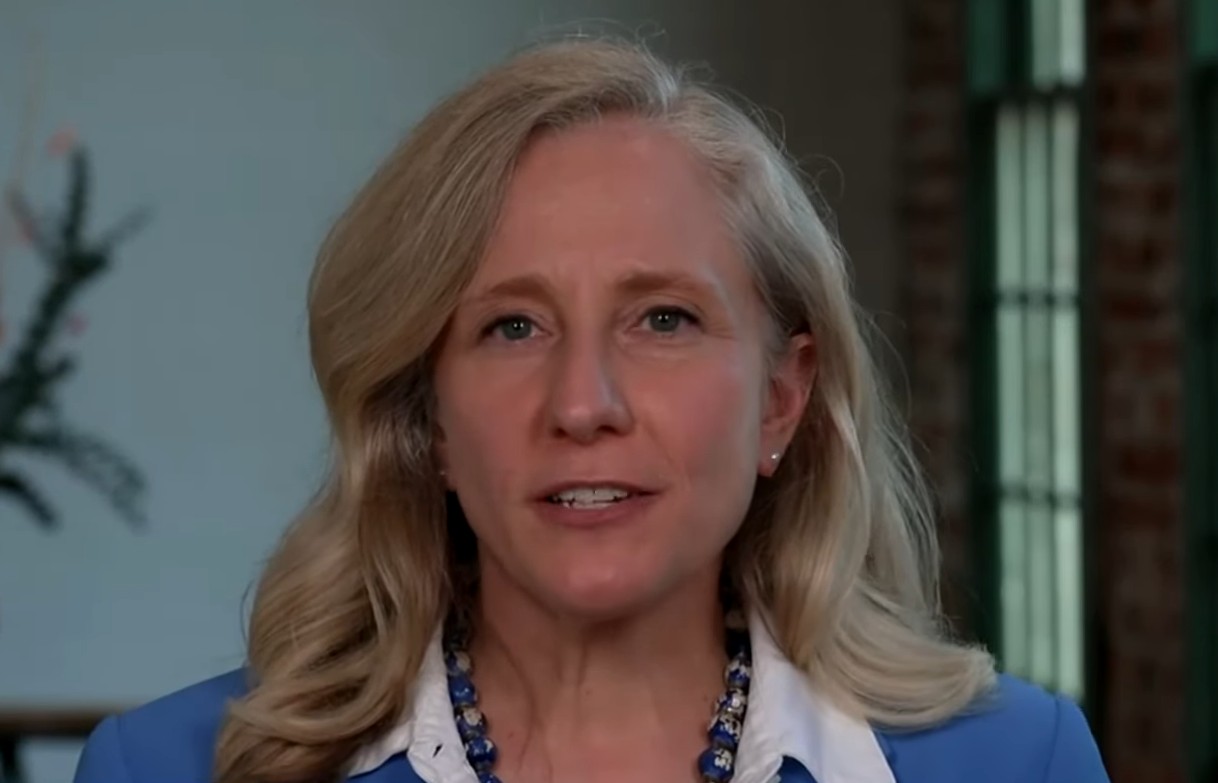
 While Democrats are planning day-one action on the amendments, they also have legislative goals — including a ‘right-to-contraception’ bill.
Judge Ho Takes A Sledgehammer To Judicial Supremacy And Its ‘Elite’ Enablers

 ‘If the American people can’t expect the judiciary to stay in its lane, then federal judges shouldn’t expect the American people to follow them.’
VIDEO: Homeowner arrested over infestation of hundreds of rats inside NY house

Video from inside a Long Island home showed the massive infestation of domesticated rats that led to the homeowner’s arrest.
Video shows the wounded rats running all over the debris and garbage left inside the home as volunteers work to rescue the rodents and try to get veterinary treatment for the animals.
‘A lot of them have huge wounds. … Their eyes are coming out. They have big abscesses. We have a few that are going septic.’
“It’s a disaster inside,” said Frankie Floridia, the president of Strong Island Animal Rescue. “It’s very hard to breathe. You need masks. You need gloves. It’s just a bad situation.”
The home on Whitewood Drive has been condemned after the owner was cited for sanitation violations.
“A lot of them are injured. A lot of them have huge wounds,” said Kristin Stephens, a veterinarian tech who is volunteering at the home. “Their eyes are coming out. They have big abscesses. We have a few that are going septic.”
The volunteers are separating the captured rats into different containers for male, female, and the sick. They have collected about 150 rats, and they believe more than 100 to 200 rats are inside the walls. They estimate that between 500 and 1,000 rats lived at the home.
“It’s a very sad situation, but we’re doing the best we can with what we have,” Floridia added.
The homeowner was accused of taking care of her 3-year-old grandson in the home with rat urine and feces. She has pleaded not guilty to the charges.
Stephens appeared to get emotional when she said the team found rat poison in the basement of the home.
“We have seen a couple that have had blood coming from their nose and that kind of thing, which is what happens when you poison rats,” she said.
She went on to say the rats are being treated for mites. She also said the infestation could have been easily avoided by the homeowner.
“Everybody knows rodents reproduce very, very quickly,” Stephens said. “So, I personally feel that if they were just separated — you know, you keep the males with the males and the females with the females — none of this could have occurred.”
Neighbors living next to the home told WABC-TV that they didn’t smell anything or see anything that let them know the infestation was inside.
The volunteers are asking for donations to help pay for the rats’ care and also for Good Samaritans to provide foster care for the rats.
Like Blaze News? Bypass the censors, sign up for our newsletters, and get stories like this direct to your inbox. Sign up here!
3 shadow radicals in Mamdani’s inner circle: Plotting to seize property, abolish police, and blame capitalists for ‘terror’

The Democratic Socialists of America may have Democrat in their name and operate as part of the Democratic Party, but they hate the team they play on.
DSA members see the Democratic Party as a cuckoo sees other birds: a means of achieving an end. Just as a cuckoo mother lays her eggs in other species’ nests so that her offspring will be fed and nurtured until her chicks are strong enough to kill the hosts, so the DSA has a parasitic relationship with the Democratic Party.
A video from the watchdog organization Canary Mission describes it like this: “DSA candidates run as Democrats in safe blue districts. They slip through low turnout primaries, and once inside, they use the Democratic label as camouflage while advancing an extremist anti-American agenda far beyond the party’s mainstream. … Once in office, DSA candidates take orders from DSA’s internal enforcers and working groups. City halls and state houses start running as socialist machines controlled by the organization, not the Democratic Party and certainly not voters.”
This kind of hostile takeover is happening right now in New York City, where Muslim democratic socialist Zohran Mamdani is now the mayor.
On this episode of “The Liz Wheeler Show,” Liz exposes three key figures inside the Mamdani administration who are currently working to ensure that the rotten fate of the Big Apple spreads like a cancer across the nation.
Mamdani’s recent appointment of NYC tenant rights activist Cea Weaver as the director of NYC’s Office to Protect Tenants is evidence that a total socialist takeover isn’t fear-driven speculation from the right wing, but the certified plan.
A resurfaced clip from a 2021 DSA event that’s recently gone viral captures Weaver discussing a push for shifts in housing policy: “I think the reality is that for centuries we’ve really treated property as an individualized good and not a collective good, and … in transitioning to treating it as a collective good and towards a model of shared equity will require that we think about it differently. And it will mean that families, especially white families but some POC families who are homeowners as well, are going to have a different relationship to property than the one that we currently have.”
“That is, in essence, Zohran Mamdani walking down the street and seizing private property, implementing racially biased, racially discriminatory policies that prevent white people specifically from having the same relationship with property (also known as ownership of property) that they have had in the past,” Liz translates.
“[Cea Weaver] will use her position of power to destroy private property, to take it away, despite the fact that her mom, by the way … owns a $1.6 million house in Tennessee,” she laughs.
But Weaver is just the tip of the iceberg. “[Mamdani] has saturated New York City with DSA members — DSA members who want to orient themselves towards insurrection, who want to overthrow the empire, who believe that you’re not just pushing socialism, you are tearing down a nation built on capitalism,” Liz continues.
One of those people is Alex Vitale — a key adviser on Mamdani’s transition team, specifically for the Committee on Community Safety. Vitale, a Brooklyn College sociology professor and coordinator of the Policing and Social Justice Project, is the author of a book titled “The End of Policing,” in which he argues for the “abolition of police.”
“He has pushed to abolish the New York City Police Department’s gang database. … And he’s very open about this,” Liz says.
Another deeply concerning member of Mamdani’s administration is a man named Gustavo Gordillo — the co-chair of the New York City chapter of the Democratic Socialists of America. He was a key architect of the chapter’s electoral strategy that helped propel Mamdani’s successful 2025 mayoral campaign, and he now serves on the transition team’s economic development and workforce development committee, advising on policies tied to Mamdani’s economic agenda.
Liz plays a video clip of Gordillo from a 2025 DSA rally spewing the following anti-American vitriol: “They make figures like Hamas and, quote, unquote, terrorists into effective enemies. I think all of us in the working-class movement need to spend more time villainizing too. There are actual terrorists in the United States, but they are not Mahmoud Khalil, nor are they the students and working-class people protesting Israel’s genocide. And it is definitely not the Palestinian people. The terror comes from the capitalists and their pawns. … The terror comes from their fascist government and their ICE squads.”
“These are the people in the Mamdani administration,” Liz says.
“Remember: Sometimes the most detrimental impacts are from policies that are imposed on us by people whose names we’re not even familiar with.”
To hear more of Liz’s analysis, watch the video above.
Want more from Liz Wheeler?
To enjoy more of Liz’s based commentary, subscribe to BlazeTV — the largest multi-platform network of voices who love America, defend the Constitution, and live the American dream.
How ‘Cruz vs. Cruz’ stars Vina Morales, Gladys Reyes, Neil Ryan Sese supported Lexi Gonzales amid reported breakup
_2026_01_13_18_05_05.jpg)
Vina Morales, Gladys Reyes, and Neil Ryan Sese shared how they offered comfort and support for co-star Lexi Gonzales while she went through a personal moment.
Filmmaker Roni Bertubin passes away
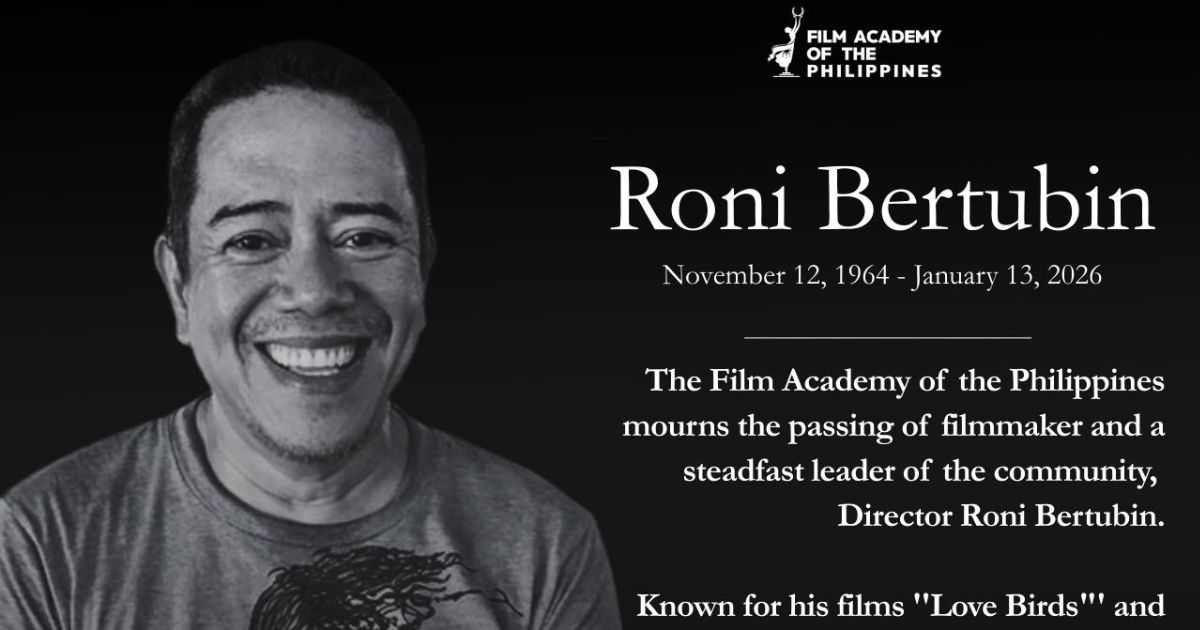
Filipino filmmaker Roni Bertubin has passed away. He was 61 years old.
PVL: Jonah Sabete, Aby Maraño bring veteran presence to Nxled

Jonah Sabete and Aby Maraño are taking their acts to Nxled after their previous teams, Petro Gazz and Chery Tiggo, announced their exits from the PVL.
These Top 100 players lead inaugural WTA 125 Philippine Women’s Open field

The inaugural WTA 125 Philippine Women’s Open will feature a star-studded field as 11 of the WTA’s Top 100 players are set to see action as the country hosts the prestigious tournament.
GSIS mulls broker-led pilot to revive member loans for stock investments

The Government Service Insurance System (GSIS) on Tuesday expressed openness to reviving member loans for stock market investments, but noted that this should be done through a phased pilot program with a broker-led model that would test investor suitability and risk controls.





