






Don't miss...
When Stupid Reigns
While we are “celebrating” the anniversary of fires, we cannot forget the Moss Landing fire of last January in Monterey County, CA. Unlike the wildfires of Southern California, this was a “Battery Energy Storage System” (BESS) fire – basically an EV fire writ large, and we all know how very nasty those are. Inextinguishable they must be contained and left to burn themselves out and they leave behind a toxic, nasty mess. Moss Landing has become one of the bigger project of the E.P.A.’s list of clean-ups. And yet, the installation of these type of facilities continues apace.
The post When Stupid Reigns appeared first on The Hugh Hewitt Show.
Fani Willis’ failed lawfare against Trump might cost her a fortune
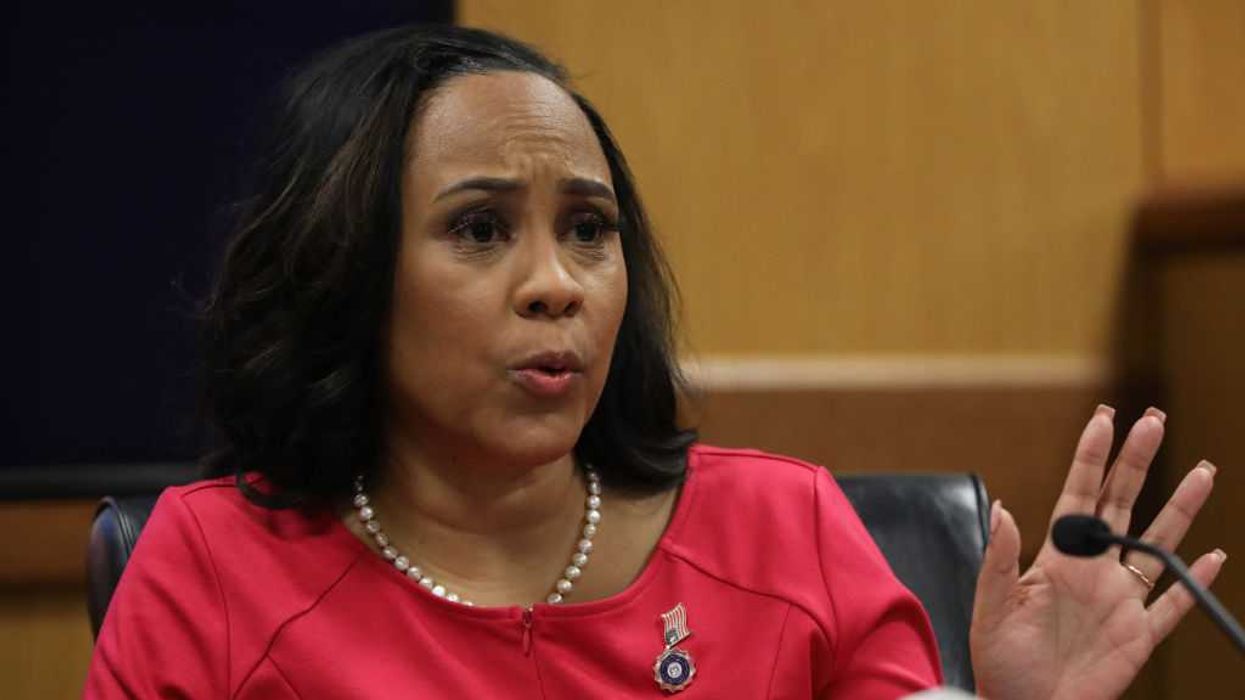
Fulton County District Attorney Fani Willis did her apparent best to throw President Donald Trump in jail and failed miserably.
While Willis was disqualified in 2024 from the Georgia case regarding alleged 2020 election interference and the case was dropped late last year, the Democrat DA has proven unable to put the lawfare behind her.
In addition to having to fight misconduct allegations, Willis now faces the possibility of having to shell out millions to the president in attorney fees and costs, thanks to legislation ratified in May by Georgia Gov. Brian Kemp (R).
‘It’s Fani Willis’ fault.’
The new law, which went into effect in July, provides “for the award of reasonable attorney’s fees and costs in a criminal case to the defendant upon the disqualification of the prosecuting attorney for misconduct in connection with the case and the subsequent dismissal of the case by the court of a subsequent prosecutor.”
Although the law might appear perfectly tailored to Trump’s case, the legislation had bipartisan support.
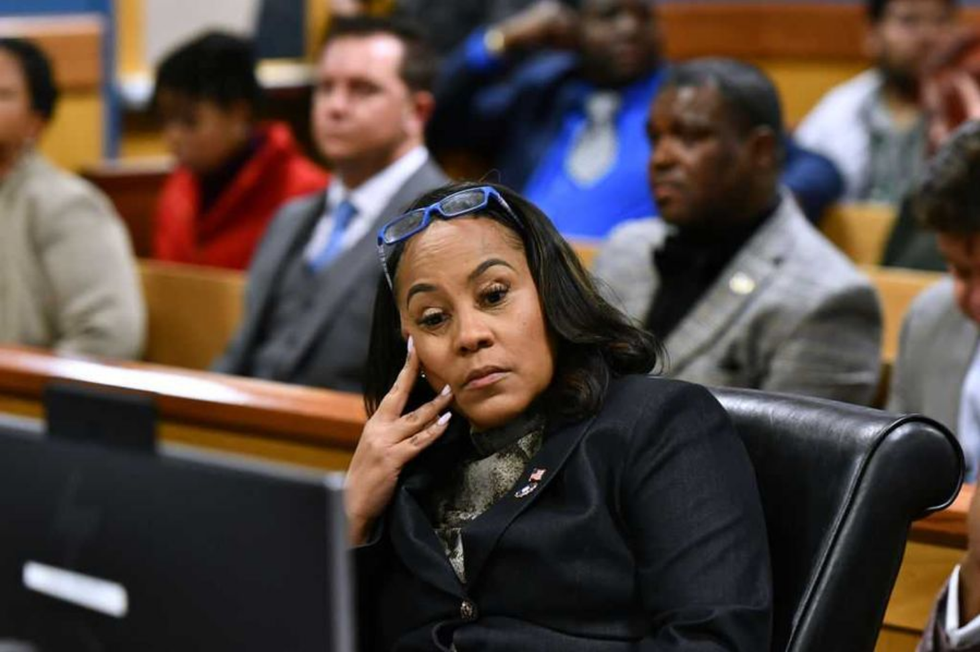 Photo by Dennis Byron-Pool/Getty Images
Trump is pushing for over $6.2 million in restitution. As the president’s legal team has reportedly already been paid, most of the requested funds would go to reimburse Trump.
Steve Sadow, Trump’s lead attorney in the case, told WXIA-TV, “I feel for the people in Fulton County, because Fani Willis has involved herself in improper conduct. She’s now set up a situation where her office, from funds that have been collected through Fulton County, will have to pay for it. It’s Fani Willis’ fault.”
“At the same time, maybe Fani Willis will tell us how much money she spent from her budget pursuing this politically motivated case against President Trump,” added Sadow.
Her office has since filed a motion to intervene in the matter, which states, “The statute raises grave separation-of-powers concerns by purporting to impose financial liability on a constitutional officer, twice elected by the citizens of Fulton County, for the lawful exercise of her core duties under the Georgia Constitution.”
Willis’ office did not immediately respond to a request for comment from Blaze News.
Like Blaze News? Bypass the censors, sign up for our newsletters, and get stories like this direct to your inbox. Sign up here!
Conan O’Brien calls out lazy Trump-hating comedians
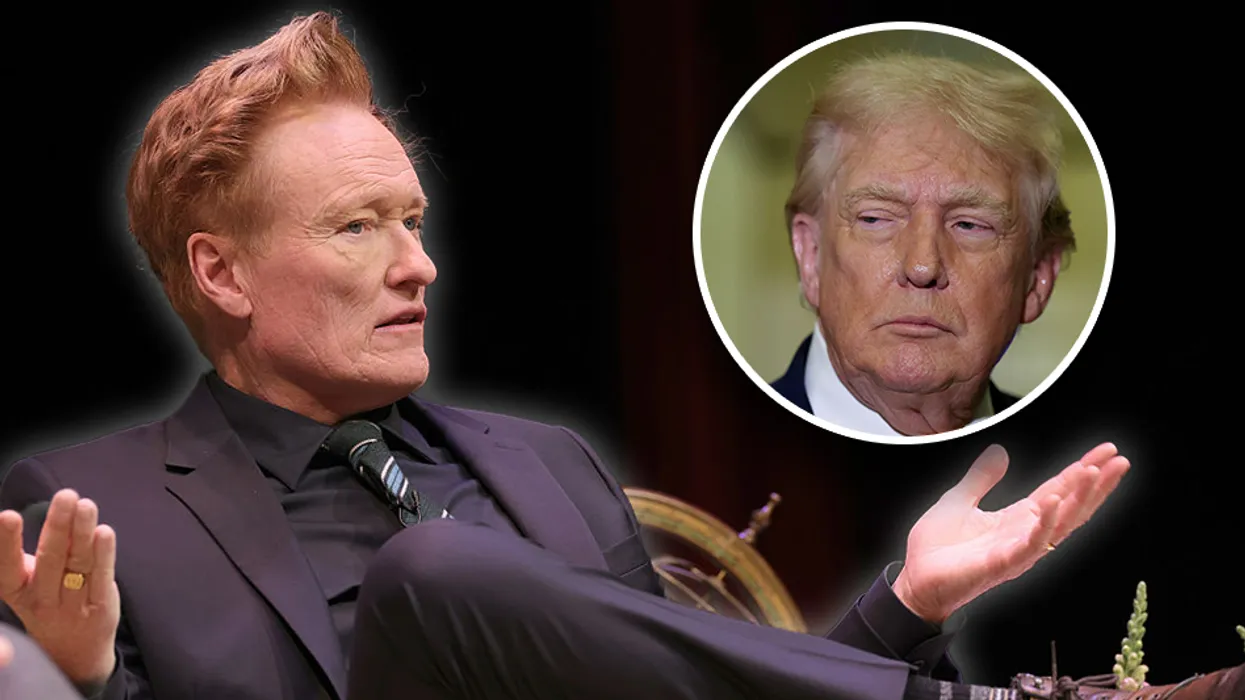
Late-night host and writer Conan O’Brien says Trump-deranged comedians need to step up their game.
Speaking at the Oxford Union Society, the former talk-show host and “Simpsons” writer lamented that some in the comedy establishment have given up on laughs in favor of angry tirades about President Trump.
‘We don’t have a straight line right now. We have a very bendy, rubbery line.’
“I think some comics go the route of, ‘I’m going to just say F Trump all the time’ [and] that’s their comedy. And I think, well, now, a little bit, you’re being co-opted because you’re so angry.”
“You’ve been lulled,” added the Harvard alum, likening the allure of crowd-pleasing but joke-free anti-Trump material to a siren song.
The comedian continued, “You’ve been lulled into just saying ‘F Trump. F Trump. F Trump. Screw this guy.’ I think you’ve now put down your best weapon, which is being funny, and you’ve exchanged it for anger.”
Finding the funny
The 62-year-old noted that he has always prided himself on finding a way to be funny in any situation, and he did not give his peers an out when it comes to political comedy.
RELATED: ‘I wouldn’t ask for no f**king charity!’ Mickey Rourke blasts ’embarrassing’ GoFundMe plea
“Any person like that would say, ‘Well, things are too serious now. I don’t need to be funny.’ I think, well, if you’re a comedian, you always need to be funny. You just have to find a way,” O’Brien told the audience at the esteemed student debating society.
“And you just have to find a way to channel that anger. … Good art will always be a great weapon, will always be a perfect weapon against power, but if you’re just screaming and you’re just angry, you’ve lost your best tool in the toolbox.”
Playing it straight
Earlier in the interview, O’Brien recalled that some of his most joyful memories in comedy were parodying different magazines or news outlets by mocking their tone and style. At the same time, he said it was impossible to parody something that doesn’t follow a “straight line.”
He referred to the National Enquirer, describing the outlet’s content as impossible to make fun of because it would print stories like, “Elvis found in Titanic lifeboat 105 years after sinking. He is now a woman, and he’s married a giant peanut-butter sandwich.”
“How do you parody that? You can’t,” he explained. “And I think with Trump we have a similar situation in comedy, which is people saying, ‘We’ve got a great Trump sketch for you. In this one, he’s kind of talking crazy and he’s saying stuff, and he tears down half the White House to build a giant ballroom, and he says it’s going to be the new Mar-a-Lago.’ Yeah, no, that happened yesterday,” O’Brien joked.
RELATED: How ‘conservative’ art can go from cringey to cathartic
 Photo by Michael Loccisano/Getty Images
“Comedy needs a straight line to go off of,” O’Brien added. “And we don’t have a straight line right now. We have a very bendy, rubbery line. We have a slinky. We have a fire hose that’s whipping around, spewing water at 100 miles an hour or something else.”
Cancer care is becoming another Wall Street extraction industry

Across rural America, families are learning a hard lesson. The biggest threat to their local hospital or cancer clinic no longer comes from distance, workforce shortages, or regulation. It comes from private equity.
Over the past two decades, private equity firms have quietly bought hundreds of cancer clinics, oncology practices, and community hospitals. They promise efficiency and stability. Many communities experience something else: consolidation, higher costs, fewer doctors, and the slow erosion of care. When profit targets fall short, clinics close. Patients travel hours for treatment — or go without it altogether.
The same forces that hollowed out manufacturing towns and family farms are now targeting essential health care.
This shift reflects a deeper failure: treating health care as a financial asset rather than a public obligation.
Private equity follows a familiar playbook. Firms acquire medical practices with borrowed money, cut staffing, increase billing, extract profits, and sell within a few years. That model rewards investors. It fails patients who need long-term care and towns that depend on a single hospital or cancer center.
The collapse of 21st-century oncology shows how destructive this approach can be. After private equity took control, the company expanded rapidly across the Southeast while piling on debt. Pressure to generate revenue intensified. Federal investigators later uncovered widespread abuse, including unnecessary testing and illegal billing. The company paid more than $86 million in fraud settlements to the federal government and patients before filing for bankruptcy.
Entire regions lost access to cancer care with little warning. Investors exited. Patients were left to deal with the fallout.
Rural communities suffer the most. In cities, the loss of a clinic often means longer wait times. In rural America, it can mean the end of cancer care entirely. Patients face long drives, delayed treatment, or impossible choices between health and family obligations.
The same pattern appears in rural hospitals owned by Apollo Global Management through its control of LifePoint Health. After the acquisition, hospitals took on heavy debt. Executives sold real estate to raise cash, cut staffing, reduced services, and closed cancer centers. In New Mexico, state officials opened an investigation after reports that an Apollo-owned hospital denied or delayed cancer care for low-income patients.
RELATED: The hidden hospital scam driving up drug prices, coming to a state near you
 amphotora / Getty Images
Defenders of private equity claim these firms rescue independent practices from hospital monopolies. In reality, they replace local control with corporate control.
Doctors lose authority to distant executives who never set foot in the affected communities. The language of independence disguises a transfer of power away from patients and physicians and toward investors.
Conservatives should recognize this for what it is. An elite financial class is extracting wealth from essential local institutions and leaving weaker communities behind. The same forces that hollowed out manufacturing towns and family farms are now targeting essential health care.
Cancer care should not function as a short-term investment. Rural hospitals should not exist to satisfy quarterly return targets. A system that allows this will continue to fail the people who rely on it most.
The answer is accountability, not a government takeover of medicine. Regulators must enforce antitrust laws. Policymakers should strengthen protections that preserve medical judgment from corporate interference. Communities deserve transparency about who owns their hospitals and who controls decisions about their care.
Health care depends on trust and continuity. When financialization dominates cancer care, rural Americans lose both. And once these institutions disappear, rebuilding them proves far harder than protecting them in the first place.
BURN NOTICE: ‘Hills’ heel Spencer Pratt to run for Los Angeles mayor

“It’s official. I’m running for Mayor of LA.”
After a year of calling out Democrat leadership for its handling of last year’s devastating Los Angeles wildfires, Spencer Pratt is offering Angelenos an alternative: himself.
Pratt, who shot to fame playing a villainous version of himself on hit MTV reality show “The Hills,” lost the Pacific Palisades house he shared with wife (and former castmate) Heidi Montag and their children in the January 7, 2025, conflagration. Since then, he has emerged as one of the most prominent critics of L.A. Mayor Karen Bass and California Governor Gavin Newsom, both Democrats.
‘Gavin Newsom and his state park policies actually literally dictated that we let the Palisades burn.’
Fired up
The Palisades native has accused Bass of bungling the response to the deadly blaze, which eventually spread to 23,448 acres, costing 12 lives and destroying almost 6,000 homes.
Pratt has also claimed that Newsom’s inadequate brush-clearance policy helped cause what was otherwise a preventable disaster.
Pratt kicked off his mayoral campaign on Wednesday with an impassioned speech to at least 1,000 attendees.
RELATED: ‘Reckoning day’ for Newsom: Trump DOT yanks $160 million over illegal trucker licenses
“It’s official. I’m running for Mayor of LA,” Pratt announced in a post sharing video of the speech. “I’ve waited a whole year for someone to step up and challenge Karen Bass, but I saw no fighters. Guess I’m gonna have to do this myself. Let’s make LA camera ready again!”
Brush-off
Pratt addressed the enthusiastic crowd with a mixture of defiance and sorrow.
“Standing here one year later, I have to tell you the most heartbreaking part of the past year wasn’t being displaced or losing everything I own. It was the realization that all of this was preventable,” he explained, fighting back tears.
The 42-year-old continued, “The state and local leaders let us burn. Gavin Newsom and the state of California let brush grow wild … no wildfire maintenance.”
RELATED: ‘Send in the next guy’: Nicki Minaj savages Newsom over his desire to ‘see trans kids’
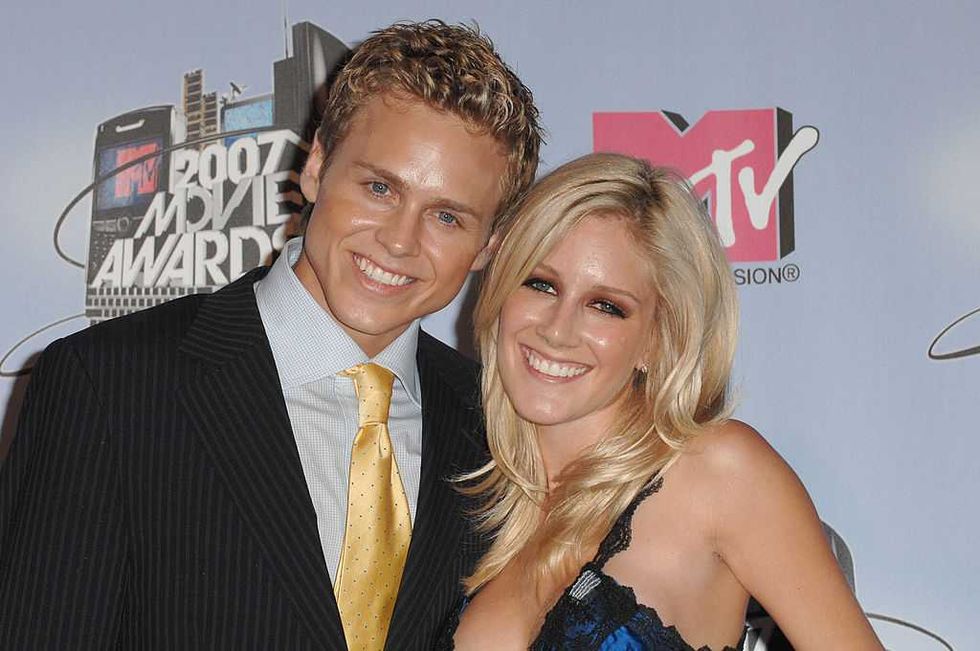 Photo by Steve Granitz/WireImage
Policy pinch
Like many of the would-be constituents in attendance, Pratt faced the fires without standard homeowners’ insurance, after insurers declined to renew policies for thousands of homes in the Palisades, Altadena, and other designated fire-prone areas in recent years. Most notably, State Farm announced in 2024 that it would discontinue coverage for roughly 72,000 houses and apartments statewide.
Pratt’s sole coverage came from the state’s supplementary California FAIR Plan, which he has previously said did not provide enough money to rebuild.
In his speech, Pratt laid the blame squarely on Newsom, who he said “created an insurance market so hostile that every major carrier stopped writing policies” and thereby “dictated that we let the Palisades burn.”
The candidate also had harsh words for the Los Angeles Fire Department, which he blamed for “fail[ing] to deploy sufficient firefighters, fire engines, and firefighting resources, whether it be due to lack of budget, lack of knowledge, or simply DEI.”
Pratt concluded by touting his showbiz experience as something that made him uniquely attuned to the workings of power in the city. Singling out “NGOs, nonprofits, and unions,” he vowed to make it his “mission” to dismantle what he labeled a “machine designed to protect the people at the top.”
Trump has the chance to end the welfare free-for-all Minnesota exposed
It’s the $1.2 trillion question.
The United States spends roughly $1.2 trillion every year on means-tested welfare programs — cash aid, food assistance, housing subsidies, and medical care. The list runs through a thicket of acronyms: SNAP, TANF, SSI, EITC, ACTC, WIC, CHIP, ACA subsidies, and CCDBG, plus school meals, Medicaid, and Section 8 housing.
States that eliminate fraud can afford to provide better aid to real residents in need — creating a race to the top in administration rather than a race to exploit Washington.
This guaranteed-income architecture now fuels a destructive cycle. Federal spending drives debt. Debt fuels inflation. Inflation expands dependence. And Washington responds by printing more money and sending it back to the states — without demanding serious accountability.
The result is a bottomless pit of spending, fraud, and inflation, with states handed endless federal funds and almost no incentive to police abuse.
Minnesota’s massive Somali-linked fraud scandal exposes this system in its most grotesque form. The question is whether President Trump will use it to force states to reclaim ownership — and responsibility — over welfare.
The day-care, nutrition, and medical fraud uncovered in Minneapolis is not an aberration. It is the predictable outcome of an open-ended entitlement state. Fraud networks thrive wherever federal money flows without limits or consequences. While the Minneapolis cases involved tight-knit ethnic networks, the underlying problem is national and structural. As long as states do not have to pay their own way, fraud will remain rational behavior.
California offers a parallel example. A report last summer found that roughly one-third of all community college applications in the state were fake — submitted solely to extract federal financial aid. That scam could not survive if California had to pick up the tab.
It isn’t just a blue-state problem, either. As Alex Berenson has reported, Indiana’s Medicaid spending on “autism behavioral therapy” exploded thirtyfold in just six years, reaching $75,000 per child for a few hours a week of unproven playtime therapy. When federal dollars cover the bill, discipline evaporates.
RELATED: Government fraud meets its worst enemy: Some dude with a phone
 Wanlee Prachyapanaprai via iStock/Getty Images
Many Americans ask how Minnesota allowed the Feeding Our Future scandal to persist for years. The answer is simple: Washington supplied unlimited money, and the state faced no budgetary consequence for ignoring warning signs.
Over 200 day-care and medical providers allegedly siphoned billions across Medicaid, child care, and nutrition programs. That scale of fraud does not occur without political indifference — or worse.
States have every incentive under this system to look away. Federal money enables a closed loop of special interests, dependency, and electoral protection. Oversight threatens the flow.
Devolving welfare programs to the states — using fixed block grants rather than open-ended federal matches — would cut this dynamic off at the knees. States must balance their budgets. They do not have a printing press. When fraud costs real money, enforcement follows.
This is the moment for Trump to make that case. Either states raise taxes to fund welfare programs themselves, or they reform and prioritize them. That choice restores democratic accountability.
Consider the contrast. The United States spends roughly $1 trillion on national defense — protecting everyone. Yet we now spend even more on means-tested welfare that serves narrower populations while distorting the economy for all. Open-ended welfare spending drives inflation, which then forces more people onto welfare. End the money-printing, and fewer people will need subsidies in the first place.
RELATED: The insane little story that failed to warn America about the depth of Somali fraud
 NoraVector via iStock/Getty Images
In response to the Minnesota scandal, Trump’s Office of Management and Budget froze $10 billion in funding for TANF and the Child Care Development Fund across several states. That is a start. But temporary freezes will not survive the next Democrat administration.
The durable fix is statutory restructuring — through budget reconciliation — to force states to assume full financial responsibility for welfare programs. Without unlimited federal backstopping, abuse becomes politically and fiscally intolerable.
Critics warn that block grants spark a “race to the bottom.” The 1996 welfare reform suggests the opposite. When states gained ownership, many innovated — emphasizing work, child-care support, and fraud reduction. Accountability improved because incentives changed.
Yes, benefits should be limited to the truly needy. Open-ended entitlements allowed 250 “meal sites” to appear almost overnight in Minnesota, claiming to feed 120,000 children a day.
Force states to balance their books, and they will treat taxpayer money with respect. States that eliminate fraud can afford to provide better aid to real residents in need — creating a race to the top in administration rather than a race to exploit Washington.
The real way to “feed our future” is to end inflationary money-printing and dismantle the infinite entitlement state — so families can afford food on their own again.

Jeric Gonzales to star in ‘Magpakailanman” episode ‘Pangarap at Hustisya: The Jimmy Aguilar Story”

Jeric Gonzales is set to star in an upcoming “Magpakailanman” episode titled “Pangarap at Hustisya: The Jimmy Aguilar Story.”
Sinner, Alcaraz tease doubles partnership ahead of Incheon exhibition match

As Carlos Alcaraz and Jannik Sinner prepare for their season-opening exhibition match in Incheon, the world’s top two men’s tennis players floated the prospect of one day playing together in a doubles tournament.
Alex Eala at the 2026 ASB Classic: Results, schedule, and matchups

Alexandra “Alex” Eala is kicking off her 2026 season in Auckland, New Zealand, as she competes in the WTA 250 ASB Classic.





