

Category: Bead funding
Trump can secure a big win for air travel
The Trump administration has reworked the $42 billion Broadband Equity, Access, and Deployment program with an eye toward greater efficiency and less top-down regulation. As a result, states are projected to come in roughly $21 billion under budget on broadband deployment. The National Telecommunications and Information Administration is actively soliciting ideas for how those funds should be used.
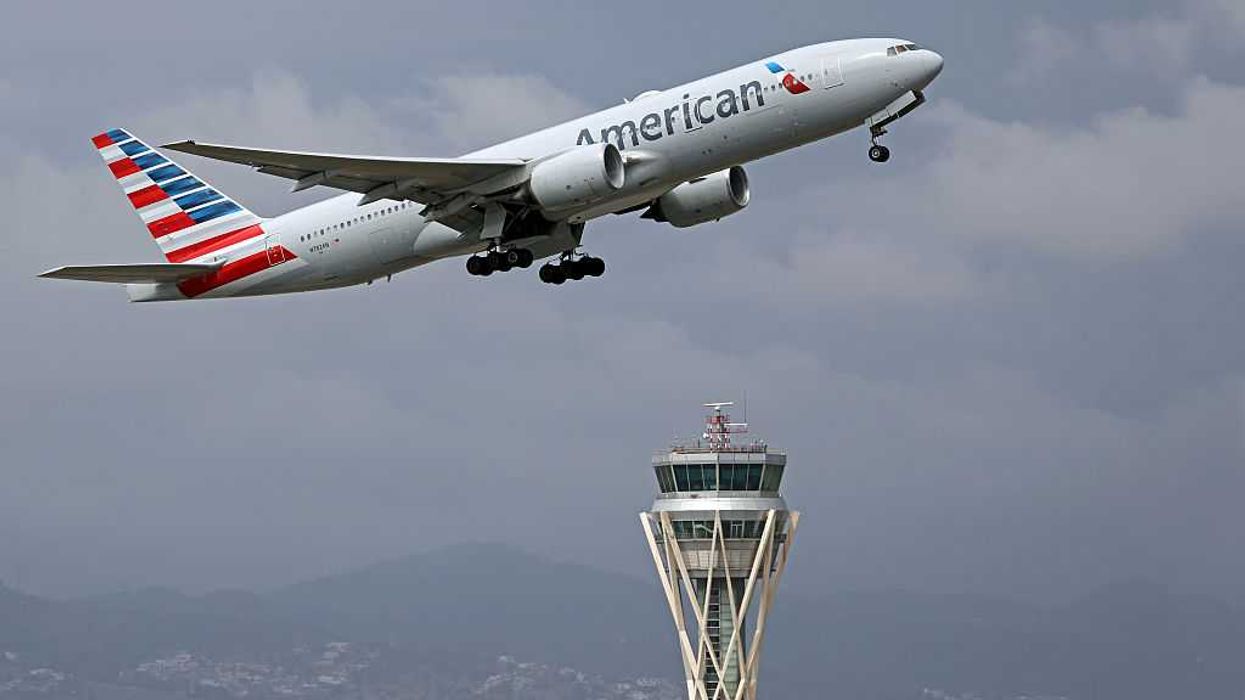
If the administration wants an easy political win and a solution to a real problem, the funds should be used to radically modernize our air traffic control systems.
Roughly 80% of FAA infrastructure is considered obsolete or unsustainable.
Policymakers should seize the moment and invest in something the country desperately needs — something that would deliver real, tangible benefits to the flying public and the broader economy.
The FAA’s own administrator, Bryan Bedford, has been blunt: Roughly 80% of FAA infrastructure is considered obsolete or unsustainable. Controllers are still using paper flight strips and radar systems that date to the Vietnam War era.
The $5 billion Congress appropriates annually for ATC operations sounds substantial until you learn that 85% to 90% of it goes to sustaining legacy systems — patching roofs, repairing elevators, and keeping aging equipment limping along.
Congress did take a meaningful step last year, allocating $12.5 billion in the reconciliation bill toward ATC modernization. Fiber optics are beginning to replace copper wire. Radar upgrades are being compressed from a 20-year timeline into a few years.
The early results are encouraging. But by official FAA estimates, an additional $19 billion is needed to fully complete the job — to build a genuinely modern, integrated national airspace system rather than an expensive patch on a broken one.
This is where BEAD’s leftover $21 billion could make a real impact.
Senator Ted Cruz (R-Texas), who chairs the Senate Commerce Committee and has long championed both infrastructure investment and Texas’ status as one of the nation’s busiest aviation hubs, is well positioned to recognize the strategic alignment here.
Texas is home to two of the nation’s largest airports — Dallas Fort Worth and Houston Bush Intercontinental — and its economy runs on the efficient movement of people and commerce. ATC modernization would be a huge benefit for Texans.
The legal question of whether this use fits within the BEAD statute’s framework is one that the NTIA will need to address carefully. The statute is written broadly enough to accommodate creative interpretation, and the administration has already demonstrated it is willing to read BEAD’s parameters with fresh eyes.
A next-generation ATC system — replacing copper with fiber, analog with digital, fragmented local computers with integrated national architecture — looks a great deal like the kind of advanced communications infrastructure BEAD was designed to fund.
RELATED: Trump is keeping his word on health care costs
 Win McNamee/Getty Images
Ironically, it’s easier to make the case that the federal government should be ensuring airline safety than subsidizing broadband deployment.
The BEAD funding was part of the massive infrastructure legislation, and our airline infrastructure is in dire need of investment. And unlike many government spending programs, ATC modernization has a defined scope and measurable milestones. This is not a slush fund — it’s a known project with a known price tag.
The alternative uses being floated for BEAD’s unused funds range from the reasonable to the fanciful: broadband adoption programs, rural mobile coverage, returning funds to the Treasury, and various state-level wish lists.
Some of those ideas have merit. But none of them represent the kind of once-in-a-generation infrastructure opportunity that a modern ATC system would deliver — one that improves safety for millions of air travelers daily, reduces delays that cost the economy billions annually, and positions the United States to lead in the airspace of the future.
The Trump administration’s 2027 budget request is going to include millions of dollars in additional ATC funding, but the BEAD funds are already there, waiting to be invested. That’s the beauty of budget reform — eliminating waste and finding savings can free up funds for other critical public needs.
Trump can secure a big win for air travel
The Trump administration has reworked the $42 billion Broadband Equity, Access, and Deployment program with an eye toward greater efficiency and less top-down regulation. As a result, states are projected to come in roughly $21 billion under budget on broadband deployment. The National Telecommunications and Information Administration is actively soliciting ideas for how those funds should be used.
If the administration wants an easy political win and a solution to a real problem, the funds should be used to radically modernize our air traffic control systems.
Roughly 80% of FAA infrastructure is considered obsolete or unsustainable.
Policymakers should seize the moment and invest in something the country desperately needs — something that would deliver real, tangible benefits to the flying public and the broader economy.
The FAA’s own administrator, Bryan Bedford, has been blunt: Roughly 80% of FAA infrastructure is considered obsolete or unsustainable. Controllers are still using paper flight strips and radar systems that date to the Vietnam War era.
The $5 billion Congress appropriates annually for ATC operations sounds substantial until you learn that 85% to 90% of it goes to sustaining legacy systems — patching roofs, repairing elevators, and keeping aging equipment limping along.
Congress did take a meaningful step last year, allocating $12.5 billion in the reconciliation bill toward ATC modernization. Fiber optics are beginning to replace copper wire. Radar upgrades are being compressed from a 20-year timeline into a few years.
The early results are encouraging. But by official FAA estimates, an additional $19 billion is needed to fully complete the job — to build a genuinely modern, integrated national airspace system rather than an expensive patch on a broken one.
This is where BEAD’s leftover $21 billion could make a real impact.
Senator Ted Cruz (R-Texas), who chairs the Senate Commerce Committee and has long championed both infrastructure investment and Texas’ status as one of the nation’s busiest aviation hubs, is well positioned to recognize the strategic alignment here.
Texas is home to two of the nation’s largest airports — Dallas Fort Worth and Houston Bush Intercontinental — and its economy runs on the efficient movement of people and commerce. ATC modernization would be a huge benefit for Texans.
The legal question of whether this use fits within the BEAD statute’s framework is one that the NTIA will need to address carefully. The statute is written broadly enough to accommodate creative interpretation, and the administration has already demonstrated it is willing to read BEAD’s parameters with fresh eyes.
A next-generation ATC system — replacing copper with fiber, analog with digital, fragmented local computers with integrated national architecture — looks a great deal like the kind of advanced communications infrastructure BEAD was designed to fund.
RELATED: Trump is keeping his word on health care costs
Win McNamee/Getty Images
Ironically, it’s easier to make the case that the federal government should be ensuring airline safety than subsidizing broadband deployment.
The BEAD funding was part of the massive infrastructure legislation, and our airline infrastructure is in dire need of investment. And unlike many government spending programs, ATC modernization has a defined scope and measurable milestones. This is not a slush fund — it’s a known project with a known price tag.
The alternative uses being floated for BEAD’s unused funds range from the reasonable to the fanciful: broadband adoption programs, rural mobile coverage, returning funds to the Treasury, and various state-level wish lists.
Some of those ideas have merit. But none of them represent the kind of once-in-a-generation infrastructure opportunity that a modern ATC system would deliver — one that improves safety for millions of air travelers daily, reduces delays that cost the economy billions annually, and positions the United States to lead in the airspace of the future.
The Trump administration’s 2027 budget request is going to include millions of dollars in additional ATC funding, but the BEAD funds are already there, waiting to be invested. That’s the beauty of budget reform — eliminating waste and finding savings can free up funds for other critical public needs.





