Day: April 19, 2026
iPhone and Samsung flashlight tricks you should know
Your iPhone and Samsung phone flashlights have hidden controls for brightness, beam width and voice commands that most people have never tried.
Watch Nick Shirley Confront California Dems Trying To Criminalize Exposing Fraud
‘There is no Stop Nick Shirley Act’
AI is powerful. It is not wise.
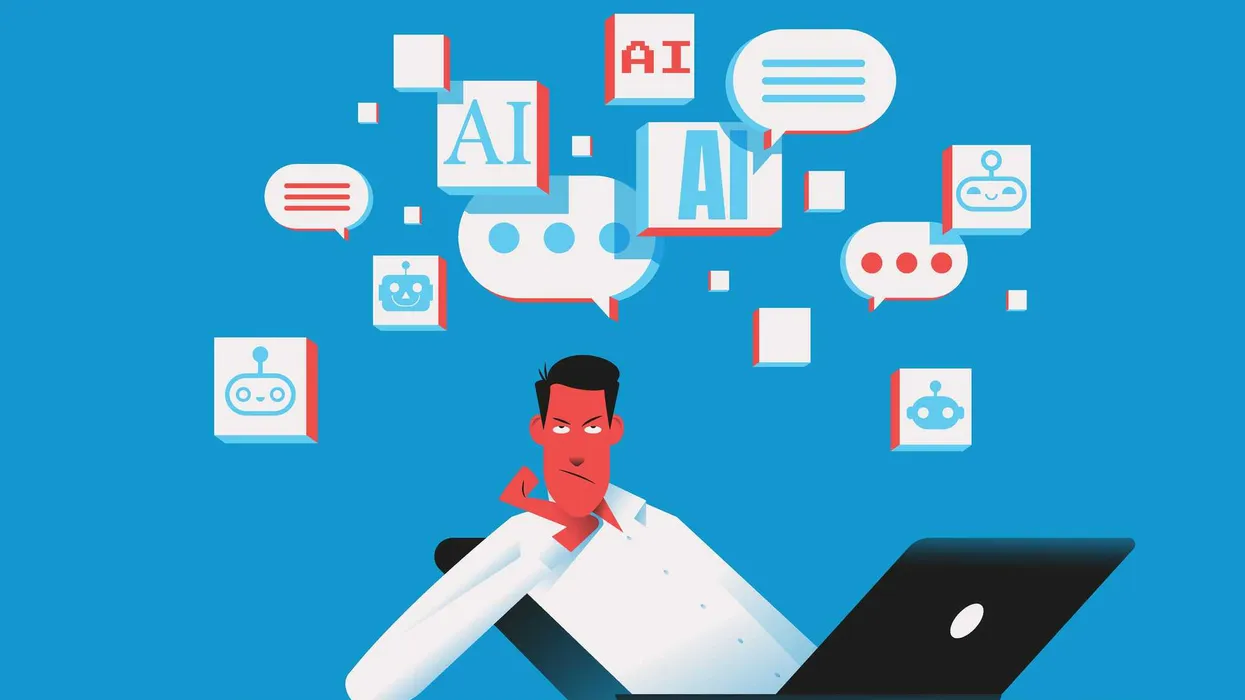
Artificial intelligence has taken the wired world by storm, but the backlash came almost as fast. Progressives complain about job losses, environmentalists question the ecological impacts of large data centers, and local activists clamor for assurances that household utility bills won’t skyrocket because of the centers’ voracious electricity demands. Others simply worry that the technology will overwhelm humans’ ability to control it.
At least in part, these reactions stem from the overselling of AI.
AI is super cool, but it’s not superhuman, nor is it superintelligent. AI is simply very fast processing of vast amounts of data.
Intelligence, knowledge, understanding, and wisdom are distinct concepts. The distinctions among them elucidate the scope and limits of both human and electronic “intelligence.”
AI models are amazing and useful despite being incomprehensible to most of us, but AI is not infallible.
Intelligence is the ability to process information into an internally coherent framework that is useful and adds or detracts from knowledge to the extent that it is more or less accurate. Knowledge is the accumulation of information organized into coherent frames or models that help us understand. Understanding is awareness of the significance, purpose, or meaning of accumulated knowledge.
And wisdom is judgment seasoned by experience and the awareness that intelligence, knowledge, and understanding are limited, inherently flawed, and useful only to the extent that they advance a worthwhile purpose.
Nearly 2,500 years ago, the Oracle of Delphi reportedly declared that no man was wiser than Socrates. Socrates claimed to be stunned by this because he was keenly aware of how much he didn’t know. But after talking to others widely acclaimed to be knowledgeable, such as the leading politicians, poets, philosophers, and artisans of his day, he discerned this Delphic wisdom: Those claiming knowledge were ignorant of their own ignorance, whereas Socrates knew he knew nothing.
For this insight, Socrates was put to death for impiety and corrupting the youth of Athens, thereby proving for all time both the foolishness of his accusers’ certainty and the wisdom of Socratic questioning.
This bears repeating today, as we enter the age of artificial intelligence: It’s wise to question the “intelligence” of machines, the “knowledge” they propagate, and our understanding of the significance and limits of the technology.
AI models are amazing and useful despite being incomprehensible to most of us, but AI is not infallible. AI will expand human knowledge and understanding of the world only if and to the extent that human users are encouraged to question AI results, processes, and functions.
People make mistakes, as do those who make and train the machines. Still, people tend to trust machines more than people, especially with respect to processing information that is harder to process. For example, tennis players have more faith in electronic line calls than in human ones, although that faith in the new technology has been shaken by errors, such as inconsistent ball marks with electronic line calls.
As AI use spreads, people will increasingly rely on AI and trust its results for routine tasks, like Google searches, while most people remain more skeptical of AI results for more complex tasks and do not trust AI to act to handle certain tasks for its users without human intervention.
It’s wise to question AI’s results; errors are common even in routine searches.
Examples of AI errors, hallucinations, and political bias are common. A Northwestern University business school professor of my acquaintance recently asked ChatGPT for advice evaluating investment alternatives. ChatGPT recommended that he invest in a particular fund and described in detail that fund’s returns, risks, and assets. When the professor went to invest in ChatGPT’s recommended fund, he discovered that the fund did not actually exist; ChatGPT made it all up, a phenomenon commonly referred to as “AI hallucination.”
Indeed, AI can screw up even mundane tasks: In my research for this piece, a Google AI summary ascribed quotes to Socrates that are not supported by any historical record.
Artificial intelligence — like human intelligence — is prone to error and is not always reliable, but that’s to be expected, especially in a fledgling technology. AI is artificial intelligence, not artificial knowledge, understanding, or wisdom. AI is a processor, a very fast processor, that organizes and distills information, and organized information is easier to evaluate and use by humans than vast amounts of unorganized information.
Properly understood, AI supplements and does not replace human intelligence, knowledge, or understanding; plus, the limitations and faults within these amazing models remind us that human intelligence is limited, too. Human intelligence imperfectly organizes the imperfect data to which a human has access and frames data in a subjective, not an objective, manner.
Many of us expect the machines that humans make to have “better” intelligence than the intelligence of its human creators — more objective, more comprehensive, more insightful. This is a naïve hope. In one sense, it is “better.” AI organizes more information faster than humans can. But who do people think programmed the thing? Every AI model is regurgitating imperfect information collected, created, and input by imperfect, subjective human beings.
What to make of all this?
First, perhaps the math nerds creating AI are mistakenly training machines to handle information processing on human topics as if they were math problems with a specific answer. Perhaps instead, machines should be trained to suggest questions to consider instead of answers to accept with respect to human inquiries relating to politics, economics, psychology, child-rearing, crop science — the full range of arts, humanities, and social sciences.
Second, people training these machines should be explicit about the biases and perspectives being built into how the AI organizes, sorts, and frames information. My own bias on this topic is that I believe American AI companies should be building AI with quintessentially American framing.
Third, AI creators should consider the political, regulatory, and legal risks of “overselling” what AI is and what it can do. For example, should AI creators anticipate a duty to warn users of shortcomings in AI’s results and/or disclaimers of warranties?
Fourth, AI creators need to consider improving the quality of the data on which the systems are trained, recognizing that many online data sources intentionally mislead to advance political agendas. Perfectly “unbiased” information is impossible to obtain, but some information is more accurate and less biased than other information; trainers should exercise better judgment about data.
The creation of AI large language models is an incredible feat of engineering. It’s quite useful and will soon be essential, but it is still a product of human invention. As such, we need to recognize that AI is ultimately just the latest, greatest — but still imperfect — implementation invented and used by homo sapiens to make life better for homo sapiens.
Editor’s note: This article was originally published by RealClearPolitics and made available via RealClearWire.
Deadly HS shooting deemed self-defense — but student who fired fatal shot isn’t completely in the clear

A deadly shooting that took place at a Northern California high school earlier this month has been deemed self-defense — but the student who allegedly fired the fatal shot isn’t completely in the clear.
Sacramento County prosecutors have declined to file homicide charges in the case because the April 10 killing at Natomas High School occurred during a violent attempted robbery, which falls under self-defense, KXTV-TV reported.
‘Our professional and ethical obligation requires us to decline charges when the evidence cannot establish guilt beyond a reasonable doubt.’
The Sacramento County District Attorney’s Office said Tuesday that two non-students went on campus looking for a specific student, the station said.
Authorities said one of them was wearing a ski mask and carrying a handgun, KXTV noted.
More from the station:
Investigators determined the pair found the student and violently tried to rob him, leading to a confrontation, according to the DA’s office. During that encounter, the targeted student — who was also carrying a firearm — shot and killed the armed suspect, according to prosecutors.
The person who was killed has been identified by family members as 16-year-old De’Jon Sledge.
After reviewing the facts, evidence and applicable law, including self-defense, the district attorney’s office concluded there was insufficient evidence to prove a homicide case beyond a reasonable doubt.
“Our professional and ethical obligation requires us to decline charges when the evidence cannot establish guilt beyond a reasonable doubt,” the office told KXTV in a statement.
The person associated with the individual who was fatally shot will be charged in juvenile court with attempted robbery, the station noted.
The intended target who fired the weapon will be charged with various weapons charges, KXTV said, citing the DA’s office.
The station said the DA’s office also raised concerns about school violence and noted that schools should be safe places for students — and that youths should not feel compelled to carry weapons for protection.
Like Blaze News? Bypass the censors, sign up for our newsletters, and get stories like this direct to your inbox. Sign up here!
PBA: Magnolia rolls past Converge for second win in a row

Magnolia has now won four of its last five games, unleashing a collective effort to pull off a 106-94 victory over Converge in the PBA Season 50 Commissioner’s Cup on Sunday at the Ynares Center Antipolo.
La Salle Lady Spikers fulfill date with destiny after sweep: ‘Ginusto ng mga bata manalo”
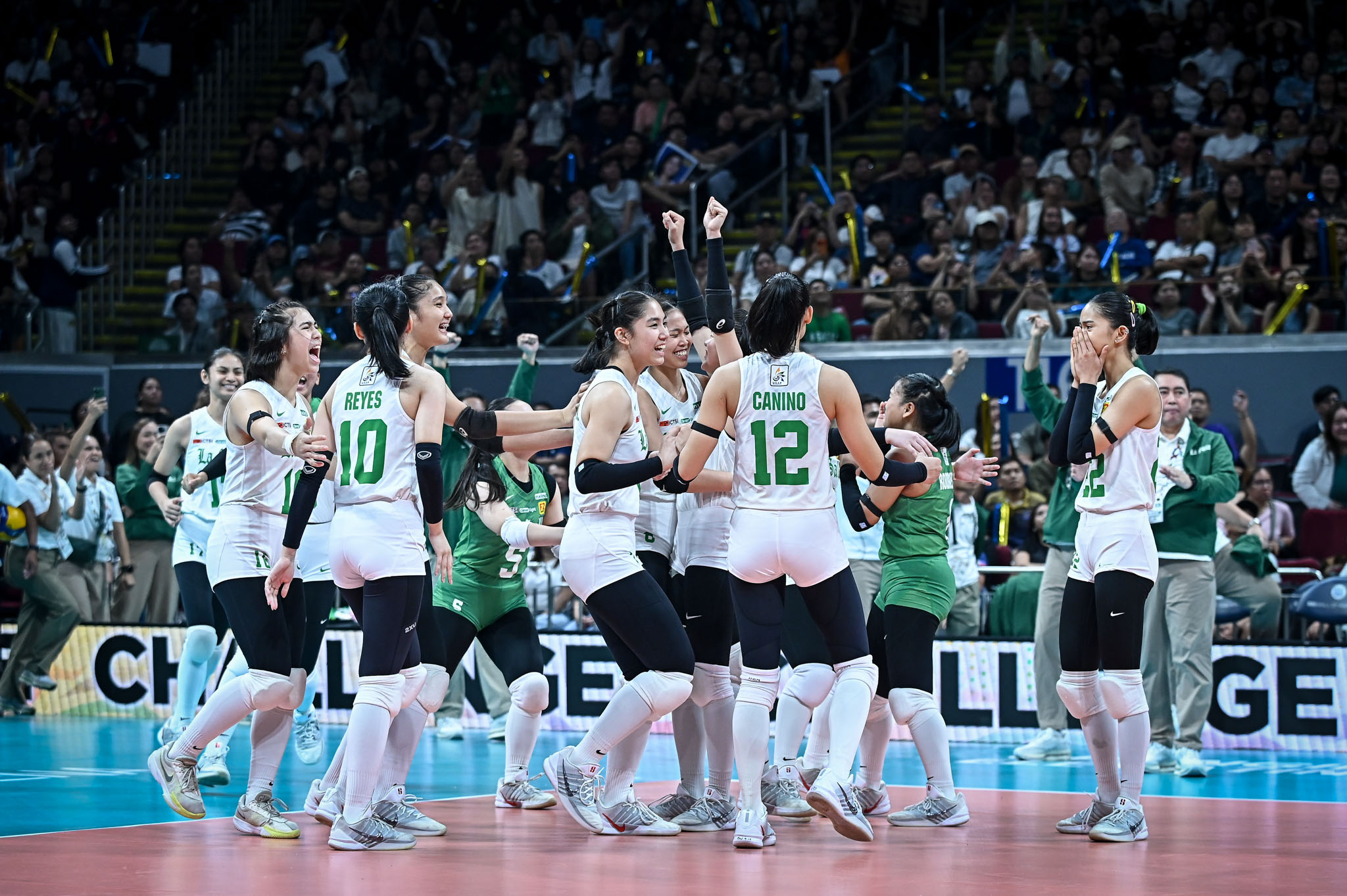
Accomplishing a momentous feat that has not been done by the program since UAAP Season 76, De La Salle University have swept through the elimination round and are now finals-bound for the 22nd time.
Bennie Boatwright on explosive return for San Miguel: ‘It’s like I never left’

Bennie Boatwright has returned to the PBA under circumstances strikingly similar to those he faced two years ago and he”s hoping history repeats itself.
UAAP: Net touch or four touches? How the final point of the La Salle-NU match was determined
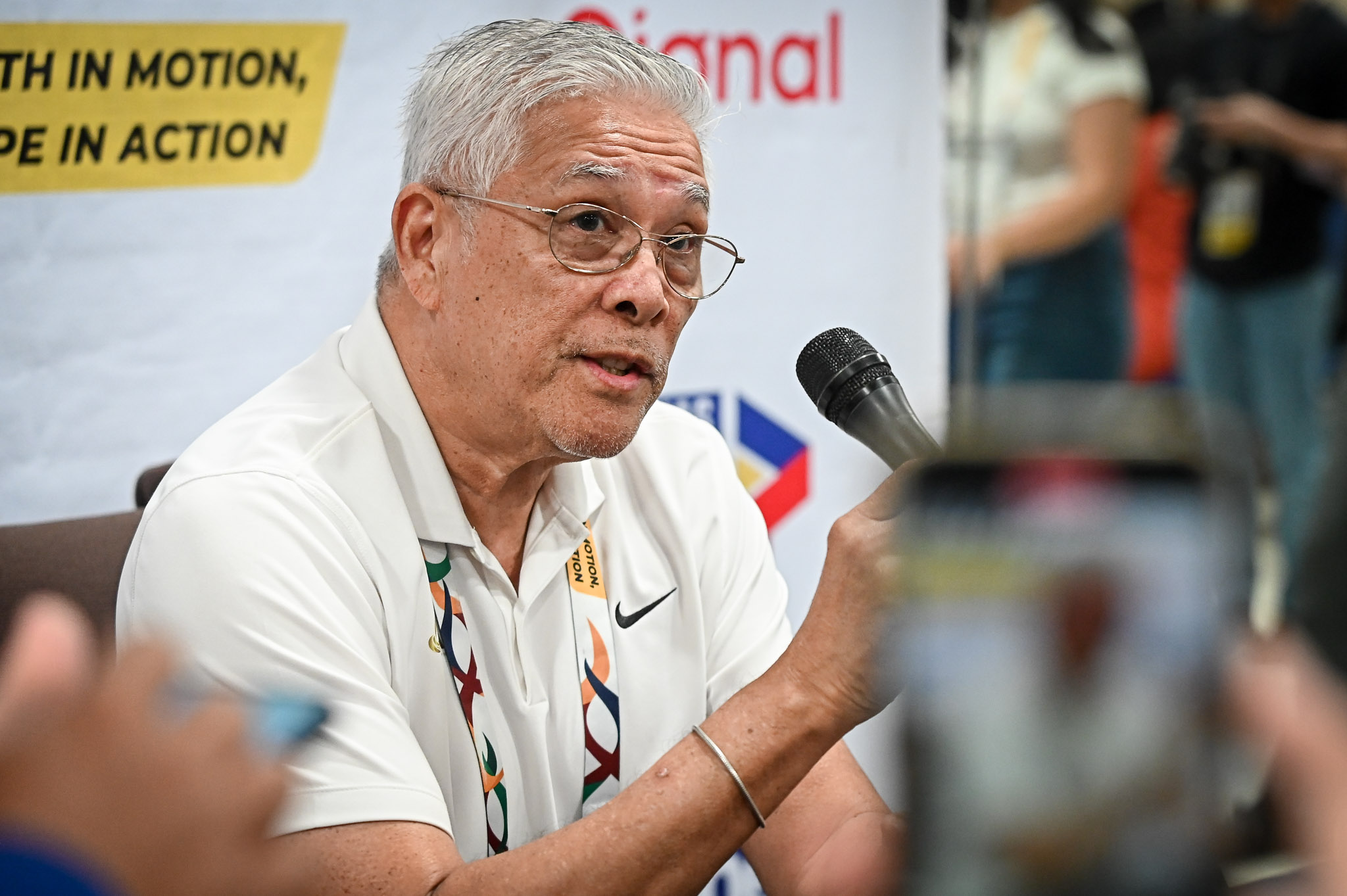
The second-round match between De La Salle University and National University went down to the wire, and after both teams challenged each other on the court, it was a referee”s challenge that ultimately sealed the victory for the Lady Spikers.
PBA: Bennie Boatwright shines in return as San Miguel ends skid vs NLEX
_2026_04_19_20_53_40.jpg)
Boatwright made an immediate impact in his return, powering San Miguel to a 98-94 escape win against the erstwhile surging NLEX in the PBA Season 50 Commissioner’s Cup on Sunday at the Ynares Center Antipolo.
Boracay Bridge plan sparks debate over transport, livelihood concerns
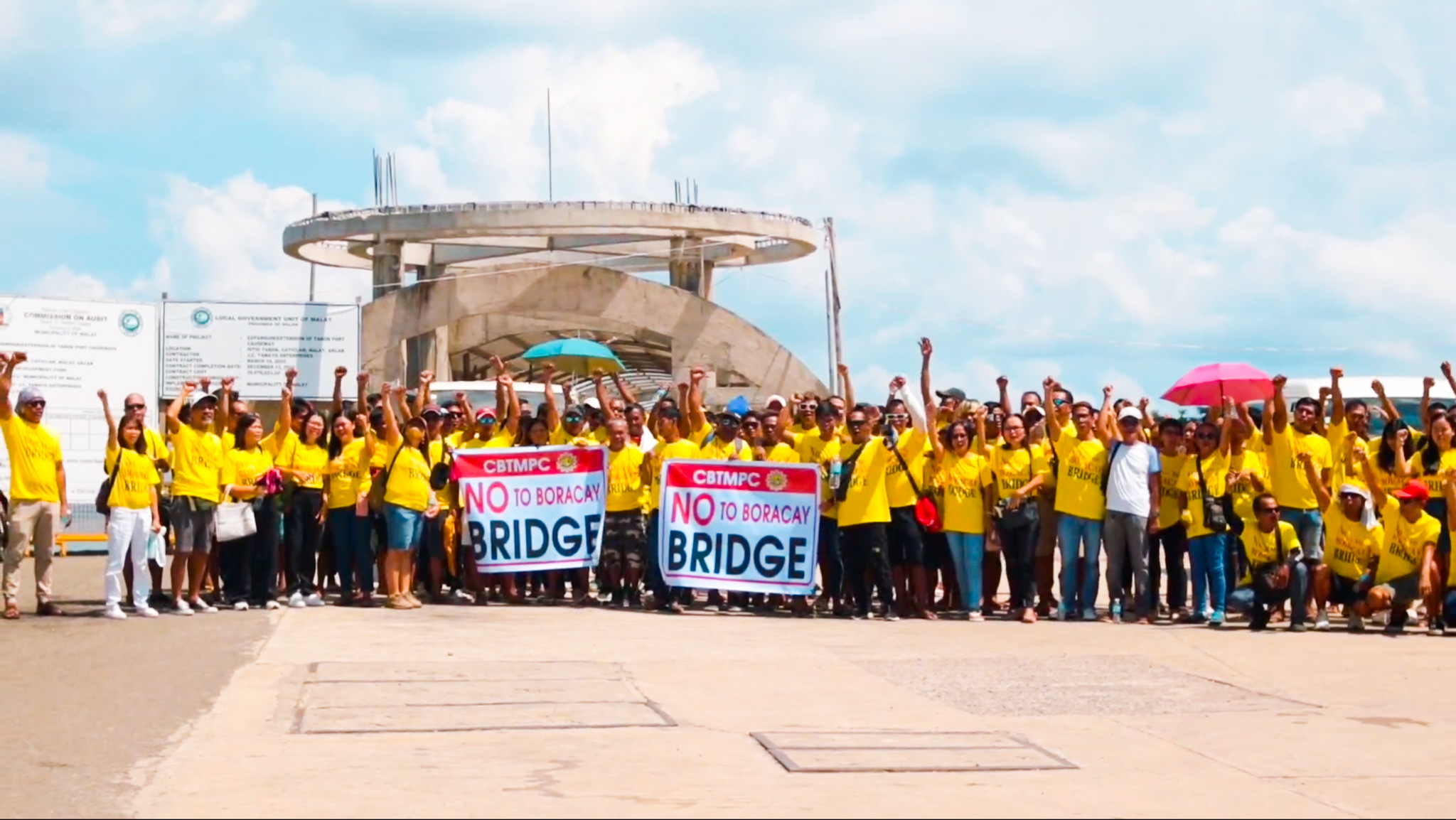
A dispute is brewing in Boracay over a proposed bridge that would connect the island to mainland Caticlan.