Category: America first
AIPAC targets Massie with massive spend as primary hits the homestretch
The American Israel Public Affairs Committee and its affiliates throw around tens of millions of dollars in American elections to ensure that hardline supporters of Israel are elected to the U.S. Congress on both sides of the aisle.
While the pro-Israel lobbying firm has long enjoyed success in America, it has encountered a number of setbacks in recent months.
For instance, by recently pouring millions of dollars into the Democratic primary against former New Jersey Rep. Tom Malinowski over his criticism of the Israeli government, AIPAC unwittingly paved the way for a fiercer critic of Israel, Analilia Mejia, to succeed ex-Rep. Mikie Sherrill.
‘One Republican is standing in the way.’
In Illinois, AIPAC also made a bad investment in Chicago City Treasurer Melissa Conyears-Ervin, who got crushed in the 7th District Democrat primary to replace retiring incumbent Rep. Danny Davis.
Despite its recent missteps and growing unpopularity on the left, AIPAC still appears confident that it can help unseat Rep. Thomas Massie (R) in Kentucky’s 4th Congressional District by characterizing him as a turncoat and Republican challenger Ed Gallrein as the optimal choice.
The United Democracy Project, an AIPAC super PAC established in 2022, recently spent $790,000 for a week of broadcast and cable ads in the Cincinnati, Louisville, and Charleston media markets, reported the Jewish Insider.
In the 30-second ad that AIPAC apparently hopes will hurt Massie, a narrator states, “What happened to Thomas Massie? He’s flipped. Massie started out as a conservative Republican but now votes with liberal Democrats.”
RELATED: IDF soldier caught smashing Jesus statue with sledgehammer — officials and critics react
 Andrew Harnik/Getty Images
The ad does not specify which votes the UDP perceives as blemishes on Massie’s record. The congressman did, however, recently vote in favor of resolutions directing Trump to remove the U.S. armed forces from hostilities with Iran, pursuant to section 5(c) of the War Powers Resolution, and voted last year against Trump’s One Big Beautiful Bill Act.
In November 2023, he also ruffled feathers when casting the lone “no” vote in Congress against a resolution that: reaffirmed the State of Israel’s right to exist, deemed denial of that right a form of anti-Semitism, rejected calls for Israel’s destruction, and condemned the Oct. 7, 2023, attack on Israel. Massie stated at the time that he agreed with the “title ‘Reaffirming the State of Israel’s Right to Exist’ and much of the language,” but voted no “because it equates anti-Zionism with antisemitism.”
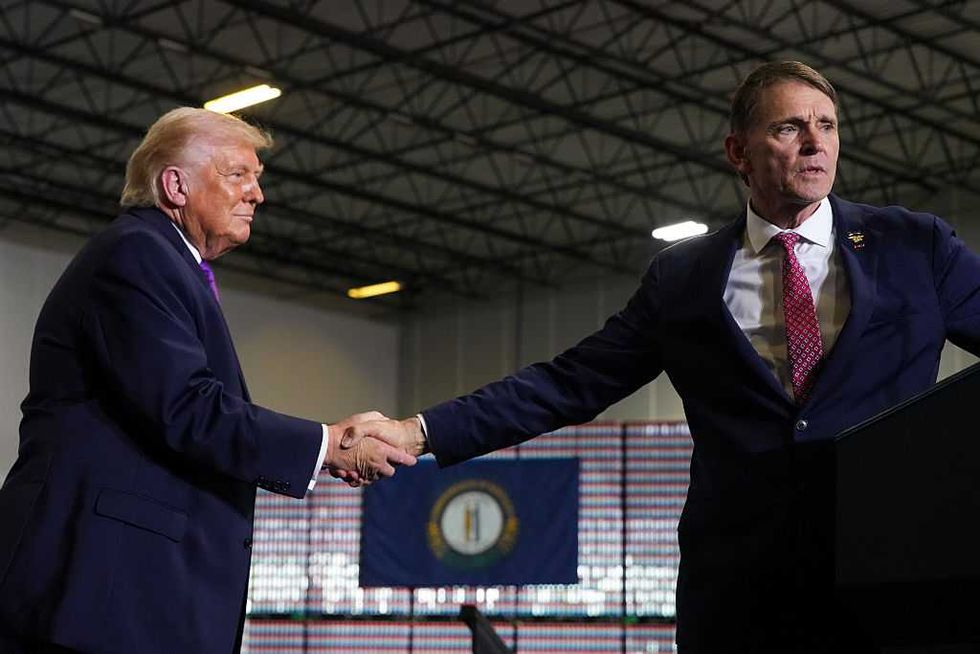
“On Israel, Massie votes with AOC and Ilhan Omar again and again,” says the narrator of the AIPAC ad. “Massie’s a flippin’ disaster. That’s why President Trump supports Ed Gallrein for Congress.”
In October, Trump endorsed Gallrein, a farmer and Navy SEAL combat veteran whose website notes that he’s “fighting for President Trump’s and the Republican Party’s America First Agenda.”
Last month, Trump reiterated his support for the GOP challenger, stating that Massie — a lawmaker with an 86.77% lifetime Turning Point Action score and a 91.25% score this Congress — is the “Worst ‘Republican’ Congressman we have had in many years,” and that Gallrein is alternatively “the person that will help us do the job, and do it right.”
Rep. Massie said in a statement to Blaze News, “The fact that AIPAC has resorted to using its pro-abortion super PAC shows how desperate they are to breathe life into their empty suit. Millions of dollars won’t make up for the fact that he’s AWOL on the campaign trail. He’s skipped seven debates and forums so far.”
The UDP previously blew over $328,000 in 2024 on a television campaign attacking Massie, reported McClatchy DC.
“Republicans are trying to help Israel,” said the 2024 ad. “But one Republican is standing in the way. It’s Kentucky’s Tom Massie.”
A spokesman for UDP said at the time that the AIPAC group wanted “to make sure every voter in the state knows how bad he is on Israel.”
Recent polling suggests that AIPAC might be throwing good money after bad as far as Massie’s race goes.
According to a Quantum Insights poll released on April 9, Massie led Gallrein 46.8% to 37.7% among likely Republican voters, with 14% undecided and 1.5% saying they wouldn’t vote. The same poll found that 49.9% of respondents preferred a candidate who is independent-minded while 37.4% preferred a strong Trump supporter.
On the prediction market platform Polymarket, Massie presently leads Gallrein 71% to 28.6%.
The primary race will be held on May 19.
Editor’s note: This article has been edited after publication to incorporate comment from Rep. Thomas Massie (R-Ky.).
Like Blaze News? Bypass the censors, sign up for our newsletters, and get stories like this direct to your inbox. Sign up here!
America First means taking care of our own, not another war

There’s a familiar drumbeat in Washington, and it rhymes with something that sounds a lot like “war in the Middle East.” Another conflict, another justification, another moment where the American people are told that war abroad is necessary, urgent, and somehow in our national interest.
The economic consequences of war abroad are making it even harder to build stability at home.
This time, it’s Iran. But before we rush headlong into yet another foreign entanglement, we need to ask a simple question: What about here at home? Because if America First means anything at all, it should mean putting Americans first.
A nation in debt, funding another war
Right now, the United States is staring down a national debt approaching $39 trillion, yet despite that staggering reality, Washington has no hesitation about opening the checkbook for another war.
In just the first week of the conflict with Iran, U.S. taxpayers were already on the hook for more than $11 billion, according to reports from Time. Estimates now suggest the war is costing anywhere from $1 billion to as much as $2 billion per day depending on the intensity of operations, as reported by Al Jazeera.
This misplaced priority becomes even more glaring when you look at how we treat our veterans. Every year, thousands of men and women who served this country come home and fall through the cracks. In 2023 alone, 6,398 veterans died by suicide — nearly 18 lives lost every single day according to the U.S. Department of Veterans Affairs’ annual suicide prevention report.
These are individuals who carried the burden of war only to return to a system that is too often underfunded, overwhelmed, and slow to respond. When a government struggles to meet its obligations to those who have already served but is more than happy to fund another conflict, it raises serious questions about whether our priorities are aligned with our values.
The hidden tax
War doesn’t just show up in a Pentagon budget; it shows up in everyday life.
It shows up at the gas pump, in grocery bills, and in the monthly budgets of families already stretched thin. Since the conflict with Iran began, gas prices have surged to around $3.90 to $4 per gallon nationally, with projections that they could climb toward $5 if the conflict continues.
In some regions, prices are already pushing beyond that threshold, and the increase has been sharp, with jumps of nearly $1 per gallon in a matter of weeks.
For young families, this is more than an inconvenience; it’s a compounding financial strain layered on top of an already difficult economic environment. Mortgage rates remain elevated, and inflation has eroded savings, making homeownership increasingly out of reach.
Higher fuel costs ripple through the economy, driving up the price of goods, services, and utilities, which means families are paying more to maintain their standard of living.
At a time when many Americans are struggling to get ahead, the economic consequences of war abroad are making it even harder to build stability at home.
RELATED: America First can’t survive an Iran quagmire
 Blaze Media Illustration
You can’t be pro-troop and pro-neglect
We cannot claim to support our troops while ignoring them the moment they take off the uniform. Public displays of patriotism are meaningless when thousands of veterans are left to navigate broken systems, inadequate care, and, in too many cases, homelessness and despair.
It is difficult to justify pouring billions into another war when we have not fully honored the commitments we owe to those who have already served.
This is not a question of isolationism but of responsibility. National strength is not defined solely by military capability or willingness to engage abroad; it is grounded in the health, stability, and cohesion of the nation itself.
President Trump and Republicans campaigned on this, won in 2024 because of this, and now risk losing everything because they are turning their backs on the people who gave them an unprecedented mandate.
Every new conflict inevitably creates more veterans scarred by war, and if we are unable or unwilling to properly support the ones we already have, it is fair to ask what exactly we are preparing for.
Washington often speaks about defending democracy overseas, but what about our people, our prosperity, our future? Right now, those priorities appear inverted. We have veterans sleeping on the streets, families struggling under rising costs, and a debt crisis that threatens long-term economic stability, yet the focus in Washington remains on another war.
That is not America First. It is America distracted.
If we want to restore strength and stability, it begins by rebuilding at home, honoring our commitments, and ensuring that the people who have already sacrificed for this country are not forgotten.
The Myth of the ‘Liberal International Order’
In his latest Bloomberg op-ed piece, Hal Brands, the globalist academic at Johns Hopkins University’s School of Advanced International Studies…
It’s Time for Young Conservatives to Touch Grass
Politics can be an isolating, draining pursuit. Each day, there are dozens of livestreams to keep up with, articles to…
America’s Robust National Security Strategy
In early December, the Trump administration issued its National Security Strategy, a 33-page document required by law that has been…
Trump’s Economy Grows 4.3 Percent, Dashing Economists’ Lower Expectations
The U.S. economy grew this summer at a surprisingly strong 4.3 percent annual rate in the third quarter, the most…
America First energy policy is paying off at the pump
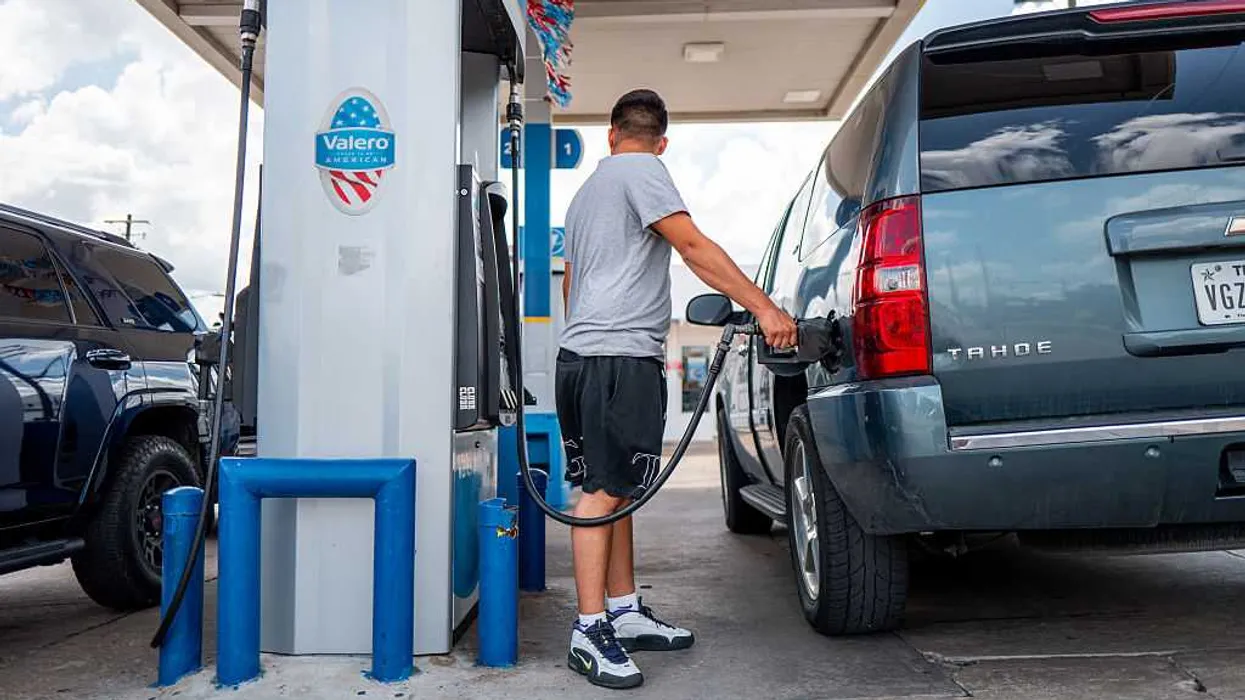
When it comes to gas prices, what a difference one administration can make. After peaking above $5 a gallon under President Biden, prices at the pump are now at their lowest levels in more than four years — and still falling. Today, the national average for regular gas sits at about $2.85, and a growing number of stations are dipping below $2. That’s a real Christmas gift for working families, one that makes a meaningful difference.
Falling gas prices bring immediate relief to households worried about affordability while also easing pressure across the broader economy. Compared with this time last year, Americans are saving a collective $400 million per week at the pump, according to GasBuddy.
Cheaper fuel deserves celebration, but there is more work to be done to lock in these gains and drive prices even lower.
Most people associate the One Big Beautiful Bill Act primarily with tax cuts. But it may prove to be one of the most consequential pro-energy laws passed in years. Lower gas prices do not happen by accident. They are the result of deliberate policy choices — specifically, President Trump’s reversal of the anti-energy agenda pursued by the Biden administration.
That agenda, driven by radical environmental activists, sought to force a rapid transition away from oil and gas regardless of cost. It relied on higher taxes, blocked infrastructure projects, restricted leasing, and constrained production. Taken together, those policies drove up prices and fueled inflation that hit working families hardest.
On day one, President Trump moved quickly to unwind many of those decisions, issuing nearly half a dozen energy-focused executive orders that restored certainty for producers. That early action was followed by his signature legislative achievement, the One Big Beautiful Bill Act, which combined broad-based tax relief with policies designed to restore American energy dominance.
The bill reduces production costs by repealing the Inflation Reduction Act’s misguided fee increase on oil and gas produced on federal lands. It cuts that fee by 25%, making domestic production more attractive and more affordable for drillers.
Just as important, the OBBBA restores predictability to federal leasing. The law mandates nearly 40 offshore oil and gas lease sales in the Gulf of America, Alaska, and other regions. It also establishes quarterly onshore lease sales and biannual offshore sales, giving the private sector long-term certainty. Under President Biden, leasing all but ground to a halt, with fewer leases issued than at any point since the 1960s — crippling the pipeline of future energy projects.
The bill also repeals or tightens a range of Green New Deal-style tax credits that heavily subsidized renewables at the expense of oil and gas. Those credits masked the true costs of renewable projects and distorted electricity markets, contributing to grid instability and higher energy prices.
RELATED: 5 truths the climate cult can’t bury any more
 Justin Hamel/Bloomberg via Getty Images
The bottom line is simple: The OBBBA encourages more oil and gas production at lower cost. Over the next decade, that means a steadier supply of crude ready to be refined into affordable gasoline.
Still, Congress and the administration should not take their foot off the gas. Cheaper fuel deserves celebration, but there is more work to be done to lock in these gains and drive prices even lower.
At the top of the list is permitting reform. Energy projects routinely take longer to permit than to build. Environmental reviews intended to inform decisions have morphed into open-ended processes that stretch on for years. Even approved projects can be tied up indefinitely by duplicative reviews and serial lawsuits from activist groups. The result is uncertainty that discourages investment and delays infrastructure Americans depend on every day.
America First energy dominance is working, and families are saving real money because of it. The House has already passed several pro-energy permitting reforms, but meaningful engagement with the Senate will be required to deliver a comprehensive overhaul to the president’s desk. Without permitting reform, the full benefits of the OBBBA’s energy provisions will remain unrealized.
The lesson is clear: Energy dominance follows when government gets out of the way. If permitting reform advances next year, producers will gain the certainty and speed they need to deliver reliable, affordable energy to consumers. In 2026, Congress should finish the job.
Trump Admin Reportedly Orders Dozens Of Ambassadors Home In Shakeup
‘This is a standard process in any administration’
The Weary Atlas
I At 11:37 in the morning of Nov. 20, 2025, Eastern European Time, the United States Embassy in Kyiv’s X…