

Category: Auto industry
Lego’s Model T: How Ford is bringing automotive history to a new generation, brick by brick

On a recent episode of “The Drive with Lauren and Karl,” we had a conversation that was a little different — but just as telling about car culture today.
It started with something unexpected: Lego. Not just as a toy, but as a way to connect automotive history to a new generation.
For an industry that often focuses on what’s next — EVs, software, autonomy — it’s easy to overlook how important the past still is.
Our guest, Ford heritage brand manager and archivist Ted Ryan, shared the story behind a new Lego model of the Ford Model T — and what went into getting it right. And the level of detail may surprise you.
To a T
This wasn’t just a half-baked licensing exercise. According to Ryan, the designer behind the set spent months researching the Model T, even reaching out directly to Ford’s archives to verify historical details.
Where was the fuel tank located? How many lights did the car have? What year-specific features mattered?
Those details were checked, corrected, and refined — sometimes multiple times — before the final design was approved.
The whole process took a year of back-and-forth, with emails and revisions to make sure the finished product reflected the real car, not just a simplified version of it.
That’s a level of effort you don’t usually associate with something that ends up on a toy shelf.
Wheeling and dealing
There’s a bigger idea behind it.
As Ryan explained, Lego has shifted in recent years to focus on things that matter culturally — music, film, architecture, and increasingly, cars.
That last one makes a lot of sense.
From Formula 1 to classic American vehicles, automobiles are a huge part of global culture. They’re also a way to tell stories — about innovation, design, and how people lived at a particular moment in time.
And what better example than the iconic Model T.
This is the vehicle that put America on wheels, transforming transportation and making mobility accessible to millions. Bringing that story into a Lego set makes that history visible — and tangible — for people who might never read about it otherwise.
RELATED: The EPA just proved it can lower gas prices overnight — so why wait for a crisis?
 Joe Raedle/Getty Images
Pieces of history
What stood out in the conversation is how much these sets are now aimed at adults as well as kids.
Lego calls them “AFOLs” — adult fans of Lego — and it’s a growing category. They want builds that are more complex, more detailed, and more likely to be display pieces than playthings.
In this case, the Model T set also includes historical context, helping explain why the car mattered — not just what it looked like.
It’s all part of a broader trend. Car culture isn’t just happening at racetracks or car shows anymore. It’s happening in living rooms, offices, and hobby spaces — through collectibles, models, and even digital experiences.
A classic you can keep
For an industry that often focuses on what’s next — EVs, software, autonomy — it’s easy to overlook how important the past still is.
Projects like this show there’s still real demand for that connection.
Not everyone is going to restore a classic car or attend a concours event. But a lot of people will build a model, display it, and learn something along the way.
For younger enthusiasts, this may be their first introduction to a crucial moment in history; for longtime car fans, it’s a potent reminder of what cars mean to them.
Either way, it goes to show that car culture — despite the carping of the environmental doomsayers — isn’t going anywhere anytime soon.
Lego’s Model T: How Ford is bringing automotive history to a new generation, brick by brick
On a recent episode of “The Drive with Lauren and Karl,” we had a conversation that was a little different — but just as telling about car culture today.
It started with something unexpected: Lego. Not just as a toy, but as a way to connect automotive history to a new generation.
For an industry that often focuses on what’s next — EVs, software, autonomy — it’s easy to overlook how important the past still is.
Our guest, Ford heritage brand manager and archivist Ted Ryan, shared the story behind a new Lego model of the Ford Model T — and what went into getting it right. And the level of detail may surprise you.
To a T
This wasn’t just a half-baked licensing exercise. According to Ryan, the designer behind the set spent months researching the Model T, even reaching out directly to Ford’s archives to verify historical details.
Where was the fuel tank located? How many lights did the car have? What year-specific features mattered?
Those details were checked, corrected, and refined — sometimes multiple times — before the final design was approved.
The whole process took a year of back-and-forth, with emails and revisions to make sure the finished product reflected the real car, not just a simplified version of it.
That’s a level of effort you don’t usually associate with something that ends up on a toy shelf.
Wheeling and dealing
There’s a bigger idea behind it.
As Ryan explained, Lego has shifted in recent years to focus on things that matter culturally — music, film, architecture, and increasingly, cars.
That last one makes a lot of sense.
From Formula 1 to classic American vehicles, automobiles are a huge part of global culture. They’re also a way to tell stories — about innovation, design, and how people lived at a particular moment in time.
And what better example than the iconic Model T.
This is the vehicle that put America on wheels, transforming transportation and making mobility accessible to millions. Bringing that story into a Lego set makes that history visible — and tangible — for people who might never read about it otherwise.
RELATED: The EPA just proved it can lower gas prices overnight — so why wait for a crisis?
Joe Raedle/Getty Images
Pieces of history
What stood out in the conversation is how much these sets are now aimed at adults as well as kids.
Lego calls them “AFOLs” — adult fans of Lego — and it’s a growing category. They want builds that are more complex, more detailed, and more likely to be display pieces than playthings.
In this case, the Model T set also includes historical context, helping explain why the car mattered — not just what it looked like.
It’s all part of a broader trend. Car culture isn’t just happening at racetracks or car shows anymore. It’s happening in living rooms, offices, and hobby spaces — through collectibles, models, and even digital experiences.
A classic you can keep
For an industry that often focuses on what’s next — EVs, software, autonomy — it’s easy to overlook how important the past still is.
Projects like this show there’s still real demand for that connection.
Not everyone is going to restore a classic car or attend a concours event. But a lot of people will build a model, display it, and learn something along the way.
For younger enthusiasts, this may be their first introduction to a crucial moment in history; for longtime car fans, it’s a potent reminder of what cars mean to them.
Either way, it goes to show that car culture — despite the carping of the environmental doomsayers — isn’t going anywhere anytime soon.
Why gas prices won’t be dropping — and how you can minimize the pain

On the latest episode of “The Drive with Lauren and Karl,” Karl Brauer and I talked about something every driver notices before almost anything else: the number on the pump.
And lately, those numbers have been going the wrong direction.
Sitting in a drive-through line for coffee, food, or dry cleaning may not feel like a big deal, but zero miles per gallon is still zero miles per gallon.
I was reminded of that the hard way when I filled my diesel SUV and saw the price climb past $5 a gallon. Karl had it even worse in California, where he paid more than $6 a gallon and described a friend filling a heavy-duty Ram for $167.
That’s not a small nuisance. For many drivers, it’s a direct hit to the household budget.
Fleeting relief
The frustrating part is that gas prices had started to moderate. As domestic production improved, prices eased. Diesel came down. Regular gas came down. Drivers finally got a little breathing room.
Now that relief is fading.
The reason is simple: Fuel prices do not respond only to what is happening at your local gas station. They respond to what is happening around the world. Global instability, supply concerns, and broader energy-market pressure push prices up quickly. And when that happens, drivers feel it immediately.
That is especially true in places like California, where prices are already higher than the rest of the country. When fuel rises nationally, it rises even more there.
For consumers, that means the practical question is no longer why it’s happening. It’s what to do about it.
Shop around
There is no magic fix, and no one is suggesting drivers can “budget” their way out of a price spike. But there are a few ways to reduce the damage.
The first is obvious: Shop around.
Apps like GasBuddy, AAA, and other fuel price trackers can help drivers compare prices before they fill up. The information is not always perfect, but it’s often good enough to spot the worst stations and find better options nearby. Membership clubs like Costco or BJ’s can also make a meaningful difference if you already belong and can tolerate the wait.
And that is the catch. When gas prices spike, everyone has the same idea. Those discount stations get crowded fast.
Fuel for thought
That makes another point more important than people realize: Avoid wasting fuel when you do not need to.
That means thinking harder about the little convenience habits most drivers don’t notice when gas is cheap. Sitting in a drive-through line for coffee, food, or dry cleaning may not feel like a big deal, but zero miles per gallon is still zero miles per gallon. If you can park, go inside, and get out faster, that saves fuel and time.
The same goes for trip planning.
If prices stay high, it makes sense to consolidate errands, reduce unnecessary driving, and stop making multiple short trips when one will do. It sounds simple because it is simple. But simple matters when every fill-up costs more than it should.
RELATED: Start-stop was just hit by the EPA. Now comes the real test.
 Heritage Images/Getty Images
No safe haven
Vehicle condition matters too.
Checking tire pressure once a month can make a real difference in fuel economy. Underinflated tires increase rolling resistance and cost you money over time. It’s not glamorous, but it’s one of the easiest ways to improve efficiency without changing vehicles or spending money.
The same logic applies across power trains.
If you drive a hybrid, you still use fuel. If you drive an EV, electricity has gotten more expensive too. There is no completely insulated category of driver anymore. Energy costs hit everyone one way or another.
That reality matters because it resets the conversation. This is not just about gas stations. It is about transportation costs broadly rising again.
Domino effect
And once that happens, everything else gets more expensive too.
Delivery fees go up. Services cost more. Operating a truck or SUV becomes harder to justify for some families, even if they need the capability. People start changing habits not because they want to, but because they have to.
That is why fuel prices always matter politically and economically. They are not just one more cost. They touch almost everything.
For now, the best drivers can do is limit waste, shop smart, and be realistic. Prices may come down again eventually, but they are not likely to stabilize until the broader global picture does.
Until then, drivers are back where they’ve been too many times before: staring at the pump and doing the math.
FIRST LOOK New York International Auto Show: Cool cars, but drivers still face sticker shock
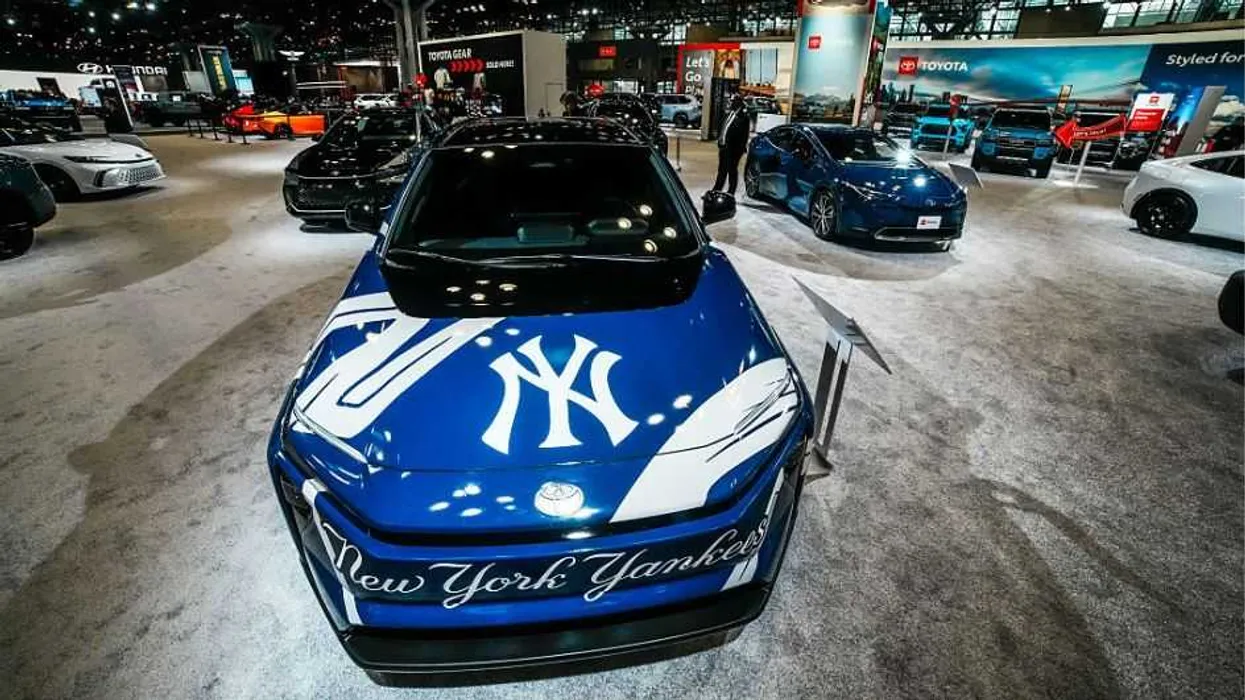
The 2026 New York International Auto Show — which runs through this weekend — made one thing clear: There is a widening gap between what the auto industry is celebrating and what consumers are actually looking to buy.
Affordability has emerged as the dominant factor shaping purchasing decisions — far more than design awards, performance credentials, or cutting-edge features.
Some automakers are exploring ways to bring down costs without stripping vehicles down to bare-bones models.
What buyers really want
The show also serves as the stage for the World Car of the Year awards, where I serve as a juror.
This year, a survey of more than 100 jurors reinforced what we’re already seeing in the market: Consumers are prioritizing affordability above all else, along with flexibility in powertrain options — gasoline, hybrid, and electric.
That may not sound surprising. But it highlights a disconnect.
Many of the vehicles being recognized at the highest levels of the industry don’t necessarily align with what buyers are actively seeking in dealerships.
Award winners vs. market reality
This year’s top honors went to the BMW iX3, selected from 58 global contenders. It is expected to be built in South Carolina and made available to U.S. customers. The iX3 also took the electric category, featuring a redesigned cockpit with an integrated head-up display.
Other winners included the Mazda 6e for design, the Lucid Gravity for luxury, and the Hyundai Ioniq 6 N for performance. The urban category went to the Nio Firefly, a model not expected to be sold in the United States.
These vehicles represent innovation and engineering progress. But they also highlight the gap between industry recognition and everyday affordability.
Show and sell
Beyond the awards, NYIAS marked a return to traditional vehicle unveilings after several years of automakers favoring private events.
Brands used the show to showcase new concepts and production models aimed at capturing attention across multiple segments.
Hyundai revealed a rugged, Bronco-inspired concept that reflects a broader multi-powertrain strategy. Genesis introduced updated luxury trims and performance-oriented concepts. Volkswagen unveiled a redesigned 2027 Atlas, expected to be built in Chattanooga.
Other reveals included a higher-performance Z model from Nissan, a redesigned Seltos and entry-level EV from Kia, and a new dual-motor electric model from Subaru. Ford Motor Company also highlighted a special-edition Expedition marking the model’s 30th anniversary.
Across the show floor, automakers leaned heavily into design differentiation — illuminated logos, special editions, and expanded trim levels — all aimed at standing out in a crowded market.
The price isn’t right
The biggest issue hanging over the show wasn’t design or technology — it was price.
Average transaction prices for new vehicles are now above $50,000. That reality is reshaping how consumers shop and what they’re willing to consider.
Automakers are starting to respond. Some are exploring ways to bring down costs without stripping vehicles down to bare-bones models, focusing instead on value — delivering features that matter while cutting excess.
‘No’ to tech overload
Another noticeable trend is a growing pushback against excessive in-vehicle technology.
While advanced features remain available, some buyers are moving toward simpler interiors and relying more on smartphone integration rather than built-in systems.
Subscription-based features are also facing increased scrutiny. Consumers are becoming more aware of long-term ownership costs — and less willing to pay ongoing fees for features they feel should be included upfront.
RELATED: How government and Big Tech can wreck your new car’s resale value
 Denver Post/Getty Images
EVs take a back seat
Electrification remains a major focus, but the tone is shifting.
Automakers are no longer presenting EVs as the only path forward. Instead, they’re balancing electric investments with hybrids and traditional gasoline options to better match real-world demand.
That flexibility is increasingly important to buyers who want options — not mandates.
Robo-stopped
Autonomous vehicle technology continues to develop, but widespread adoption remains limited.
While robotaxi services are expanding in select urban areas, challenges around safety, liability, and real-world performance continue to slow broader rollout.
For most consumers, fully autonomous driving is still a future concept — not a current buying factor.
For dealers and automakers alike, the message from this year’s show is clear: consumers are focused on affordability, flexibility, and simplicity.
Innovation still matters — but only when it aligns with what buyers can realistically afford and actually want to use.
Right now, the industry is still catching up to that reality.
The great Chinese EV hype: What the media isn’t telling you
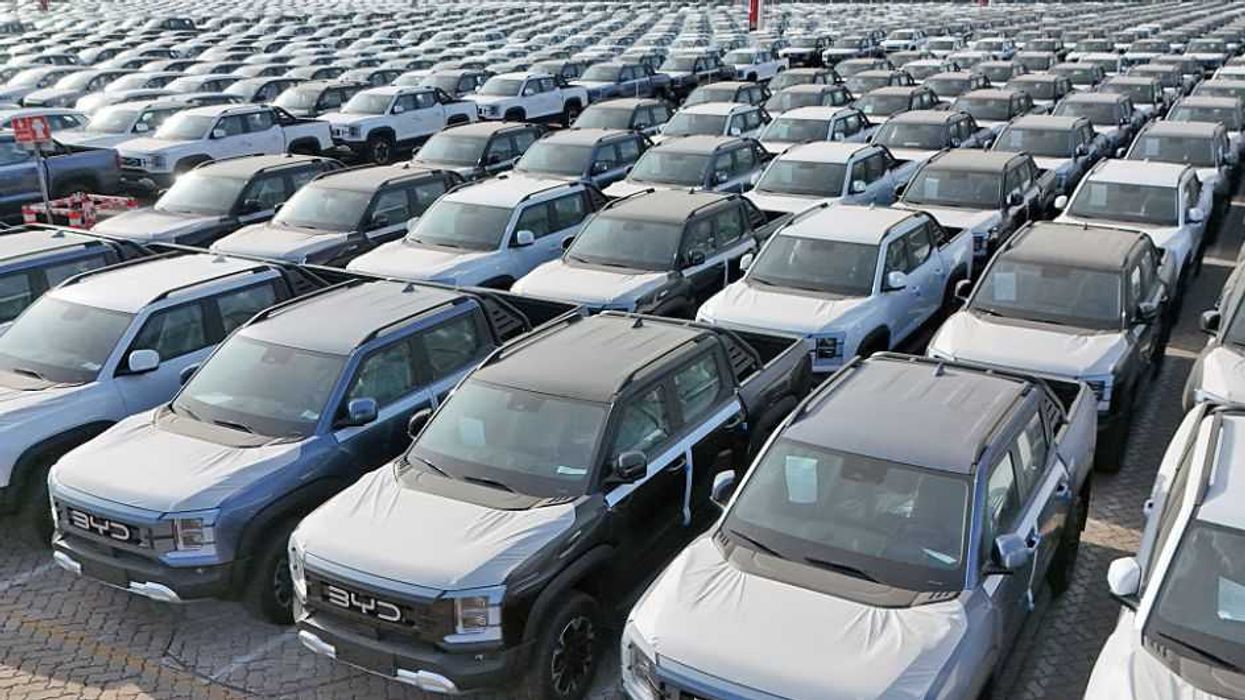
For the past few years, a familiar narrative has taken hold in American automotive media: Chinese electric vehicles are about to reshape the global car market.
Reviewers highlight low prices, sleek interiors, and giant screens. Commentators talk about a coming wave of imports that could challenge American, European, and Japanese automakers. Some even point to BYD surpassing Tesla in global EV sales as proof the shift is already happening.
Some reports suggest a large number of brands could disappear, merge, or restructure in the coming years.
That all sounds compelling — until you ask a simple question: What does this actually mean for a buyer?
Because right now, most of these vehicles aren’t even for sale in the United States.
Tariffs and regulations keep them out. So a lot of this hype is based on overseas test drives and showroom impressions — not real ownership in North America.
And where these vehicles are being used, the story isn’t nearly as clean.
What happens in real-world driving
Cold weather is one of the first reality checks.
Like all EVs, Chinese EVs lose range in low temperatures — sometimes up to 30% to 40% of their range.
That’s not a small difference. That’s the difference between getting home comfortably and watching your battery percentage like a hawk.
Shorter range means more charging. Charging takes longer in the cold. And more energy goes to heating the battery and cabin instead of driving the car.
If you live somewhere with real winters, this isn’t theoretical. It’s your daily routine.
The problem with ‘cool’ features
A lot of the appeal here is design — flush door handles, fully electronic entry, big minimalist interiors.
It looks great in photos; a different story in real life.
Electronic door handles and latches depend on power and sensors. Lose power after a crash, or deal with freezing conditions, and those systems can fail or become harder to use. There have already been reports of handles sticking or not working properly in cold weather.
That’s the trade-off with adding complexity to basic functions.
And when something breaks, it’s not a simple fix. It’s usually more expensive, more specialized, and more time-consuming.
Here’s the bigger issue
The structure of China’s EV industry may matter more than any individual feature.
Over the past decade, government incentives fueled a wave of EV startups. Dozens of companies jumped in. A lot of them are now competing on price, trying to survive.
And not all of them will.
Analysts at firms like Deutsche Bank and JPMorgan Chase expect consolidation. Some reports suggest a large number of brands could disappear, merge, or restructure in the coming years.
That’s not just industry chatter. That’s a real risk for buyers.
Because if the company behind your car disappears, what happens next?
Who provides software updates? Who supplies parts? Who services the vehicle?
That “great deal” doesn’t look so great if you can’t get support — or if resale value drops because buyers don’t trust the brand will still be around.
We’ve seen this before with failed automakers. The difference now is how dependent vehicles are on software.
RELATED: How government and Big Tech can wreck your new car’s resale value
 Denver Post/Getty Images
Price isn’t the whole story
There’s no question Chinese automakers have pushed prices down in some markets.
But price is only part of the equation.
Many of these companies are operating on thin margins while spending heavily to stay competitive. That creates pressure — and in some cases, instability.
Some brands will make it. Companies like BYD and Geely have the scale.
Others won’t.
And you don’t get to choose which one you bought after the shakeout happens.
What American buyers actually care about
Even if these vehicles eventually reach the U.S., they’ll be competing on more than price.
American buyers care about reliability, service access, resale value, and long-term support.
That’s not something you figure out in a quick test drive or a YouTube review.
That’s built over time — through dealer networks, parts availability, and how a company stands behind its product.
And that’s where newer players still have something to prove.
Don’t buy the hype
Chinese EVs are real. Some are competitive. Some are impressive.
But the idea that they’re about to flood the U.S. market and take over leaves out a lot.
They face trade barriers, infrastructure challenges, and a major shakeout at home.
For buyers, the takeaway is simple: Don’t buy the hype — buy what actually works for your life.
Look at how the vehicle performs in real conditions. Look at who’s going to support it. Look at what it’s likely to be worth in a few years.
Because in the end, the question isn’t how a car looks in a headline, but how it holds up when you’re the one paying for it.
Understanding gas tax hikes — and how your state is affected
As 2026 begins, fuel taxes are shifting across the country — and many drivers won’t notice until they fill up. Some states are adjusting rates by a cent or less, while others are imposing major increases or overhauling how fuel is taxed altogether. Much of it is happening quietly through automatic systems that rarely make headlines.
Fuel taxes rarely dominate headlines, but they remain one of the most direct ways government policy intersects with everyday life. Unlike income or property taxes, fuel taxes are paid in small increments, embedded into a necessity for most Americans. That makes them politically sensitive, economically significant, and easy to overlook — until prices jump.
The broader question is whether fuel taxes remain a sustainable way to fund transportation in an era of increasing vehicle efficiency.
Over the past year, more than a dozen states adjusted their fuel tax systems. Some increased rates to shore up transportation budgets strained by inflation and aging infrastructure. Others reduced taxes to ease costs for consumers and commercial operators. As 2026 begins, another wave of changes is rolling out, driven largely by automatic formulas rather than new legislative votes.
The result is a patchwork of increases, decreases, pauses, and structural overhauls that reflect broader debates about infrastructure, accountability, and the future of road funding.
Small changes — for now
Several states are seeing modest adjustments as of January 1. Florida, Georgia, Minnesota, and North Carolina are implementing small increases of about 1 cent or less per gallon. New York, Utah, and Vermont are seeing slight decreases, also under a penny.
These changes are not the product of last-minute political deals. Instead, they stem from automatic adjustment mechanisms written into state law, often tied to inflation, fuel prices, or construction costs.
Nebraska, Pennsylvania, and West Virginia also allow automatic adjustments, but their fuel tax rates remain unchanged at the start of 2026. That stability does not mean those states are immune from future increases — only that the formulas did not trigger a change this cycle.
Automatic adjustments are becoming more common because they provide predictable revenue without forcing lawmakers to cast politically risky votes. Critics argue they reduce accountability and disconnect tax increases from voter oversight. Supporters counter that they keep transportation funding aligned with real-world costs, especially as materials and labor become more expensive.
While these small changes may barely register for individual drivers, larger shifts in several states deserve closer attention.
Michigan’s major overhaul
Michigan is implementing the most significant fuel tax change taking effect this year. Governor Gretchen Whitmer (D) signed a nearly $2 billion transportation funding package into law that fundamentally changes how fuel is taxed in the state.
Currently, Michigan drivers pay a 31-cent-per-gallon state excise tax on fuel, along with a 6% state sales tax on gasoline and diesel. The problem with that structure is where the money goes. Much of the sales tax revenue flows into the state’s general fund rather than being dedicated to roads and bridges.
Under the new law, the sales tax on fuel is eliminated and replaced with a higher fuel excise tax. The goal is to ensure that all fuel tax revenue is dedicated to transportation projects, aligning with Michigan’s constitutional requirement that fuel taxes be used for infrastructure.
The tradeoff is cost. As of January 1, the fuel excise tax jumps from 31 cents to 52.4 cents per gallon. For drivers, that represents a substantial increase at the pump, even as state leaders argue the new system is more transparent and constitutionally sound.
Supporters say the change corrects a long-standing mismatch between how fuel is taxed and how the money is spent. Critics counter that drivers are still paying significantly more, regardless of how the tax is labeled, at a time when vehicle ownership costs are already rising.
RELATED: America First energy policy is paying off at the pump
New Jersey’s variable approach
New Jersey is also raising fuel taxes under a law passed in 2024 that allows annual increases through 2029 to meet transportation funding targets. The state uses a layered tax structure that combines a petroleum products gross receipts tax with a fixed motor fuels excise tax.
As of January 1, the petroleum tax on gasoline rises by 4.2 cents, from 34.4 cents to 38.6 cents per gallon. When combined with the fixed 10.5-cent motor fuels tax, the total state gasoline tax reaches 49.1 cents per gallon. Diesel taxes rise by the same amount on the petroleum side, bringing the total diesel tax to 56.1 cents per gallon when paired with its fixed excise tax.
New Jersey’s approach reflects a broader trend toward variable fuel taxes designed to stabilize transportation funding. By tying part of the tax to revenue targets or fuel prices, the state aims to avoid sudden funding shortfalls. The downside, particularly for commuters and commercial operators, is reduced predictability at the pump.
Oregon hits pause
Oregon tells a different story. A scheduled 6-cent gas tax increase set to take effect January 1 has been put on hold.
Lawmakers approved the increase during a special session, raising the gas tax from 40 cents to 46 cents per gallon as part of a broader transportation funding package. After Governor Tina Kotek (D) signed the bill into law, opponents launched a statewide petition drive to delay the increase until voters could weigh in.
Organizers gathered nearly 200,000 signatures — enough to force the state to pause the tax hike until the November 2026 election. As a result, the gas tax increase is suspended, along with planned hikes to passenger vehicle registration and title fees. Other elements of the transportation package will still move forward, including a change that applies the motor vehicle fuel tax to diesel.
Oregon’s situation highlights the growing tension between legislative action and direct democracy when it comes to fuel taxes. Even when increases are framed as infrastructure investments, fuel costs remain politically sensitive, and voters are increasingly willing to push back.
The rise of automatic fuel taxes
Behind these headline changes lies a complex web of automatic adjustment systems that now shape fuel taxes in roughly half the country. According to the National Conference of State Legislatures, 25 states use some form of variable fuel tax rate.
These systems vary widely. Some states set fuel taxes as a percentage of the wholesale price. Others combine a flat excise tax with a price-based component. Many tie adjustments to inflation, using measures such as the Consumer Price Index or highway construction cost indexes.
Timing also varies. Indiana updates its fuel sales tax monthly. Vermont adjusts quarterly. Nebraska recalculates every six months. Several states, including Alabama and Rhode Island, make changes every two years.
Annual updates are the most common and occur in states such as California, Florida, Georgia, Michigan, Minnesota, New Jersey, New York, North Carolina, Pennsylvania, and Washington.
For policymakers, these mechanisms offer a way to keep transportation funding solvent without reopening contentious debates year after year. For drivers, they can feel like stealth tax increases — predictable, recurring, and largely disconnected from economic conditions at the household level.
Are fuel taxes still sustainable?
The broader question is whether fuel taxes remain a sustainable way to fund transportation in an era of increasing vehicle efficiency. As cars travel farther on less fuel, states collect less revenue per mile driven, even as infrastructure costs continue to rise.
That gap is driving experimentation with mileage-based user fees, higher registration costs, and targeted fees for specific vehicle types. Despite those efforts, fuel taxes remain the backbone of transportation funding — and recent changes suggest states are not ready to let go of them.
For consumers, the short-term impact is straightforward. In some states, filling up will cost a bit more. In others, it may cost slightly less or stay the same. Over time, however, the cumulative effect of these policies reaches far beyond individual drivers, influencing shipping costs, retail prices, and household budgets.
Fuel taxes may be collected a few cents at a time, but they represent billions of dollars and fundamental choices about how roads are built, maintained, and paid for. As 2026 begins, drivers would be wise to pay attention. What looks like a small adjustment today often signals a much larger shift tomorrow.
A federal ‘kill switch’ for your car is coming — and neither Democrats nor Republicans will stop it

The federal government is moving closer to giving your car the authority to decide whether you are allowed to drive — without a warrant, without due process, and with no guaranteed way to reverse the decision once it is made.
And it is happening not because of one party alone, but because Congress, across party lines, has failed to stop it.
This is not about defending drunk driving. It is about stopping a government overreach that treats every driver as a suspect.
No accident
It’s no accident that all this happened quietly. It was written into law under the Biden administration’s 2021 Infrastructure Investment and Jobs Act, buried deep in Section 24220 — a provision few lawmakers publicly debated, but one that now threatens to fundamentally alter the relationship between Americans and their vehicles.
Section 24220 directs the National Highway Traffic Safety Administration to mandate “advanced drunk and impaired driving prevention technology” in all new passenger vehicles. In plain terms, it requires systems that continuously monitor drivers and can prevent a vehicle from operating if impairment is suspected. No breath test is required. No police officer is involved. The judgment is made by software.
Once flagged, a vehicle may refuse to start or restrict operation. Here is the most troubling part: Federal law provides no clear process for getting out of that lockout. There is no required appeal. No mandated reset timeline. No human review. Drivers can find themselves trapped in what critics have begun calling “kill switch jail,” with no guaranteed path to restore access to their own car.
This is not targeted enforcement. It applies to every driver, every time, regardless of driving history.
That alone should raise constitutional alarms.
Proven approach
Drunk driving laws already exist — and they work. Ignition interlock devices have long been required for convicted offenders, and there are 31 approved interlock systems currently in use nationwide. Those systems require a breath sample and are imposed only after due process. Section 24220 discards that proven, targeted approach and instead subjects all drivers to pre-emptive punishment, including those who do not drink at all.
To comply with the mandate, automakers may choose from a range of technologies: driver-facing cameras that track eye movement and head position; software that analyzes steering, braking, and lane-keeping behavior; or touch-based alcohol sensors embedded in the steering wheel or start button. None of these systems determine guilt. They calculate probability — and then deny access.
False positives are inevitable. Fatigue, prescription medications, medical conditions such as diabetes or neurological disorders, and even stress can trigger impairment alerts. Shift workers, caregivers, parents, and first responders are especially vulnerable. When the system is wrong, the consequences are immediate — and the driver has no guaranteed recourse.
Pre-emptive denial
This is not a passive safety feature like an airbag. It is a government-mandated, pre-emptive denial of mobility enforced by an algorithm.
Despite growing concern, Congress has chosen not to stop the mandate, with Democrats largely supporting continued funding and a number of Republicans also voting to keep the program intact.
In January 2026, the House voted on an amendment offered by Republican Representative Thomas Massie of Kentucky that would have blocked funding for NHTSA’s implementation of Section 24220. That amendment failed, allowing the mandate to continue moving toward full enforcement.
Supporters argue the technology does not allow government agents or police to remotely shut down vehicles. While that may be technically true today, the mandate still requires continuous driver monitoring. Once that hardware becomes standard across the national vehicle fleet, expanding its use becomes a political decision — not a technical limitation.
RELATED: Dystopian future as misguided safety push sends drivers to ‘kill switch jail’
 Library of Congress/Getty Images
Privacy risks
Privacy and cybersecurity risks only deepen the concern. Any system capable of denying vehicle operation must meet extraordinarily high standards of accuracy and security. Those standards have not been proven at national scale. A malfunctioning or compromised system could strand drivers during extreme weather, medical emergencies, or in remote locations.
Cost is another unavoidable consequence. Vehicles are already becoming unaffordable for many Americans. Adding cameras, sensors, software, and compliance infrastructure will only accelerate price increases and reduce consumer choice. Drivers who want simpler, more reliable vehicles will have fewer options — because mandates do not allow opting out.
Proponents often compare this mandate to seatbelts or airbags. That analogy fails. Seatbelts do not prevent you from driving. Airbags deploy after an accident. This system intervenes before any wrongdoing occurs, based on assumptions rather than certainty, and enforces compliance by denying access altogether.
This is not about defending drunk driving. It is about stopping a government overreach that treats every driver as a suspect and hands control of personal mobility to software.
If Americans want to prevent this future, Section 24220 must be defunded — before “kill switch jail” becomes the default setting for the next generation of cars.
The following are the Republican members who voted against the amendment to block funding for NHTSA’s implementation of Section 24220:
Mark Amodei (Nev.-02)
French Hill (Ark.-02)
Max Miller (Ohio-07)
Don Bacon (Neb.-02)
Jeff Hurd (Colo.-03)
Mariannette Miller-Meeks (Iowa-01)
Stephanie Bice (Okla.-05)
Brian Jack (Ga.-03)
Blake Moore (Utah-01)
Gus Bilirakis (Fla.-12)
John James (Mich.-10)
Tim Moore (N.C.-14)
Mike Bost (Ill.-12)
David Joyce (Ohio-14)
James Moylan (Guam-A.L.)
Ken Calvert (Calif.-41)
Thomas Kean Jr. (N.J.-07)
Greg Murphy (N.C.-03)
John Carter (Texas-31)
Mike Kelly (Penn.-16)
Dan Newhouse (Wash.-04)
Tom Cole (Okla.-04)
Jen Kiggans (Va.-02)
Zach Nunn (Iowa-03)
Mario Diaz-Balart (Fla.-26)
Kevin Kiley (Calif.-03)
Hal Rogers (Ky.-05)
Neal Dunn (Fla.-02)
Young Kim (Calif.-40)
Maria Elvira Salazar (Fla.-27)
Chuck Edwards (N.C.-11)
Kimberlyn King-Hinds (Northern Mariana Islands-A.L.)
Mike Simpson (Idaho-02)
Jake Ellzey (Texas-06)
Darin LaHood (Ill.-16)
Elise Stefanik (N.Y.-21)
Randy Feenstra (Iowa-04)
Nick LaLota (N.Y.-01)
Glenn “GT” Thompson (Penn.-15)
Randy Fine (Fla.-06)
Mike Lawler (N.Y.-17)
Mike Turner (Ohio-10)
Chuck Fleischmann (Tenn.-03)
Frank Lucas (Okla.-03)
David Valadao (Calif.-22)
Vince Fong (Calif.-20)
Nicole Malliotakis (N.Y.-11)
Derrick Van Orden (Wis.-03)
Brian Fitzpatrick (Penn.-01)
Celeste Maloy (Utah-02)
Rob Wittman (Va.-01)
Andrew Garbarino (N.Y.-02)
Brian Mast (Fla.-21)
Steve Womack (Ark.-03)
Carlos Gimenez (Fla.-28)
Dan Meuser (Penn.-09)
Ryan Zinke (Mont.-01)
A federal ‘kill switch’ for your car is coming — and neither Democrats nor Republicans will stop it
The federal government is moving closer to giving your car the authority to decide whether you are allowed to drive — without a warrant, without due process, and with no guaranteed way to reverse the decision once it is made.
And it is happening not because of one party alone, but because Congress, across party lines, has failed to stop it.
This is not about defending drunk driving. It is about stopping a government overreach that treats every driver as a suspect.
No accident
It’s no accident that all this happened quietly. It was written into law under the Biden administration’s 2021 Infrastructure Investment and Jobs Act, buried deep in Section 24220 — a provision few lawmakers publicly debated, but one that now threatens to fundamentally alter the relationship between Americans and their vehicles.
Section 24220 directs the National Highway Traffic Safety Administration to mandate “advanced drunk and impaired driving prevention technology” in all new passenger vehicles. In plain terms, it requires systems that continuously monitor drivers and can prevent a vehicle from operating if impairment is suspected. No breath test is required. No police officer is involved. The judgment is made by software.
Once flagged, a vehicle may refuse to start or restrict operation. Here is the most troubling part: Federal law provides no clear process for getting out of that lockout. There is no required appeal. No mandated reset timeline. No human review. Drivers can find themselves trapped in what critics have begun calling “kill switch jail,” with no guaranteed path to restore access to their own car.
This is not targeted enforcement. It applies to every driver, every time, regardless of driving history.
That alone should raise constitutional alarms.
Proven approach
Drunk driving laws already exist — and they work. Ignition interlock devices have long been required for convicted offenders, and there are 31 approved interlock systems currently in use nationwide. Those systems require a breath sample and are imposed only after due process. Section 24220 discards that proven, targeted approach and instead subjects all drivers to pre-emptive punishment, including those who do not drink at all.
To comply with the mandate, automakers may choose from a range of technologies: driver-facing cameras that track eye movement and head position; software that analyzes steering, braking, and lane-keeping behavior; or touch-based alcohol sensors embedded in the steering wheel or start button. None of these systems determine guilt. They calculate probability — and then deny access.
False positives are inevitable. Fatigue, prescription medications, medical conditions such as diabetes or neurological disorders, and even stress can trigger impairment alerts. Shift workers, caregivers, parents, and first responders are especially vulnerable. When the system is wrong, the consequences are immediate — and the driver has no guaranteed recourse.
Pre-emptive denial
This is not a passive safety feature like an airbag. It is a government-mandated, pre-emptive denial of mobility enforced by an algorithm.
Despite growing concern, Congress has chosen not to stop the mandate, with Democrats largely supporting continued funding and a number of Republicans also voting to keep the program intact.
In January 2026, the House voted on an amendment offered by Republican Representative Thomas Massie of Kentucky that would have blocked funding for NHTSA’s implementation of Section 24220. That amendment failed, allowing the mandate to continue moving toward full enforcement.
Supporters argue the technology does not allow government agents or police to remotely shut down vehicles. While that may be technically true today, the mandate still requires continuous driver monitoring. Once that hardware becomes standard across the national vehicle fleet, expanding its use becomes a political decision — not a technical limitation.
RELATED: Dystopian future as misguided safety push sends drivers to ‘kill switch jail’
Library of Congress/Getty Images
Privacy risks
Privacy and cybersecurity risks only deepen the concern. Any system capable of denying vehicle operation must meet extraordinarily high standards of accuracy and security. Those standards have not been proven at national scale. A malfunctioning or compromised system could strand drivers during extreme weather, medical emergencies, or in remote locations.
Cost is another unavoidable consequence. Vehicles are already becoming unaffordable for many Americans. Adding cameras, sensors, software, and compliance infrastructure will only accelerate price increases and reduce consumer choice. Drivers who want simpler, more reliable vehicles will have fewer options — because mandates do not allow opting out.
Proponents often compare this mandate to seatbelts or airbags. That analogy fails. Seatbelts do not prevent you from driving. Airbags deploy after an accident. This system intervenes before any wrongdoing occurs, based on assumptions rather than certainty, and enforces compliance by denying access altogether.
This is not about defending drunk driving. It is about stopping a government overreach that treats every driver as a suspect and hands control of personal mobility to software.
If Americans want to prevent this future, Section 24220 must be defunded — before “kill switch jail” becomes the default setting for the next generation of cars.
The following are the Republican members who voted against the amendment to block funding for NHTSA’s implementation of Section 24220:
Mark Amodei (Nev.-02)
French Hill (Ark.-02)
Max Miller (Ohio-07)
Don Bacon (Neb.-02)
Jeff Hurd (Colo.-03)
Mariannette Miller-Meeks (Iowa-01)
Stephanie Bice (Okla.-05)
Brian Jack (Ga.-03)
Blake Moore (Utah-01)
Gus Bilirakis (Fla.-12)
John James (Mich.-10)
Tim Moore (N.C.-14)
Mike Bost (Ill.-12)
David Joyce (Ohio-14)
James Moylan (Guam-A.L.)
Ken Calvert (Calif.-41)
Thomas Kean Jr. (N.J.-07)
Greg Murphy (N.C.-03)
John Carter (Texas-31)
Mike Kelly (Penn.-16)
Dan Newhouse (Wash.-04)
Tom Cole (Okla.-04)
Jen Kiggans (Va.-02)
Zach Nunn (Iowa-03)
Mario Diaz-Balart (Fla.-26)
Kevin Kiley (Calif.-03)
Hal Rogers (Ky.-05)
Neal Dunn (Fla.-02)
Young Kim (Calif.-40)
Maria Elvira Salazar (Fla.-27)
Chuck Edwards (N.C.-11)
Kimberlyn King-Hinds (Northern Mariana Islands-A.L.)
Mike Simpson (Idaho-02)
Jake Ellzey (Texas-06)
Darin LaHood (Ill.-16)
Elise Stefanik (N.Y.-21)
Randy Feenstra (Iowa-04)
Nick LaLota (N.Y.-01)
Glenn “GT” Thompson (Penn.-15)
Randy Fine (Fla.-06)
Mike Lawler (N.Y.-17)
Mike Turner (Ohio-10)
Chuck Fleischmann (Tenn.-03)
Frank Lucas (Okla.-03)
David Valadao (Calif.-22)
Vince Fong (Calif.-20)
Nicole Malliotakis (N.Y.-11)
Derrick Van Orden (Wis.-03)
Brian Fitzpatrick (Penn.-01)
Celeste Maloy (Utah-02)
Rob Wittman (Va.-01)
Andrew Garbarino (N.Y.-02)
Brian Mast (Fla.-21)
Steve Womack (Ark.-03)
Carlos Gimenez (Fla.-28)
Dan Meuser (Penn.-09)
Ryan Zinke (Mont.-01)
Why Canada’s Chinese EV bet is a big mistake

Canada’s decision to slash tariffs on Chinese electric vehicles is being sold as a pragmatic trade adjustment. In reality, it looks more like a self-inflicted wound to the country’s auto industry, workforce, and long-term economic sovereignty.
Lower prices today may come at the cost of lost manufacturing tomorrow — along with vehicles that struggle with quality and cold-weather reliability in a country where winter is not a minor inconvenience but a defining reality.
A vehicle that looks competitive on paper may tell a very different story after several Canadian winters.
Under an agreement announced earlier this month, Canada will allow up to 49,000 Chinese EVs into the country each year at a tariff of just 6.1%, down from the 100% rate imposed in 2024.
Officials emphasize that this represents less than 3% of the domestic market. But auto markets are shaped at the margins. Even a relatively small influx of aggressively priced vehicles can disrupt pricing, undercut domestic producers, and discourage future investment.
Under pressure
Canada’s auto sector is deeply integrated with the United States, with parts, vehicles, and labor flowing across the border daily. That system has supported hundreds of thousands of well-paying jobs for decades. Introducing low-cost Chinese imports into that ecosystem does not simply add consumer choice; it destabilizes a supply chain already under pressure from regulatory mandates, rising costs, and declining market share.
That pressure is already visible. The combined market share of General Motors, Ford, and Stellantis in Canada has fallen from nearly 50% to roughly 36%. These companies are not just brands on a dealership lot. They are employers, investors, and anchors for entire communities. When their market position erodes, the consequences ripple outward through plant closures, canceled expansion plans, and lost supplier contracts.
Cold comfort
Supporters argue that Chinese EVs will make electric vehicles more affordable, accelerating adoption and helping Canada meet emissions targets. But affordability without durability is a hollow promise. Many Chinese EVs entering global markets have yet to prove themselves in extreme climates. Cold weather is notoriously hard on batteries, reducing range, slowing charging times, and increasing mechanical stress — conditions Canadian winters deliver in abundance.
Reports from colder regions already using Chinese EVs raise concerns about performance degradation, software issues, and inconsistent build quality. Battery thermal management systems that perform adequately in mild climates can struggle in deep cold. Door handles freeze, sensors fail, and range estimates become unreliable. These are not minor inconveniences when temperatures plunge and drivers depend on their vehicles for safety as much as transportation.
Quality concerns extend beyond climate performance. Chinese automakers have made rapid progress, but speed has often come at the expense of long-term durability testing. Western manufacturers spend years validating vehicles under extreme conditions precisely because failure carries real consequences. A vehicle that looks competitive on paper may tell a very different story after several Canadian winters.
Cheap creep
There is also the question of what happens to Canada’s manufacturing base as these imports gain a foothold. History offers a clear lesson. When markets are flooded with low-cost vehicles produced under different labor standards and supported by state-backed industrial policy, domestic production suffers. Plants close, jobs disappear, and skills erode — losses that are extraordinarily difficult to reverse.
Europe offers a cautionary example. In the rush to meet climate targets, policymakers opened the door to inexpensive Chinese vehicles, only to see domestic automakers squeezed between regulatory costs and subsidized foreign competition. The result has been declining investment, layoffs, and growing concern about long-term competitiveness. Canada risks repeating that mistake but without Europe’s scale or leverage.
 Tom Williams/CQ-Roll Call, Inc via Getty Image
Spy game
The geopolitical implications cannot be ignored. Modern EVs are data-collecting machines, equipped with cameras, sensors, GPS tracking, and constant connectivity. U.S. officials have repeatedly warned that Chinese-built vehicles pose national security risks. Whether or not those fears are fully realized, perception matters. The United States has already signaled that Chinese EVs will not be allowed across its border, even temporarily.
That leaves Canadian consumers in a difficult position. A vehicle purchased legally in Canada could become a barrier to travel, commerce, or even family visits. The idea that a car could determine whether a driver can cross the world’s longest undefended border should give policymakers pause. Instead the Carney government appears willing to accept that risk as collateral damage.
Realism over resentment
Some Canadians, frustrated by U.S. tariffs and rhetoric, may view this pivot toward China as an act of defiance. But trade policy driven by resentment rather than realism rarely ends well. Replacing dependence on the United States with dependence on China does not restore sovereignty; it simply shifts leverage from one superpower to another, often with fewer shared values and less transparency.
President Donald Trump has made his position clear. He is open to Chinese companies building vehicles in North America if they invest in domestic factories and employ domestic workers. What he opposes are imports that bypass production, undermine jobs, and introduce security risks. Canada’s deal does nothing to address those concerns. Instead it places Canadian workers and consumers squarely in the crossfire.
The promise of cheaper EVs may sound appealing in the short term, but the long-term costs are becoming harder to ignore. Lost manufacturing jobs, weakened supply chains, unresolved quality and cold-weather issues, and strained relations with Canada’s largest trading partner are not abstract risks. They are predictable outcomes.
Canada built its auto industry through integration, investment, and a commitment to quality. Undermining that foundation for a limited influx of low-cost imports is not a strategy. It is a gamble — and one Canadian workers, manufacturers, and drivers are likely to lose.
EPA to California: Don’t mess with America’s trucks
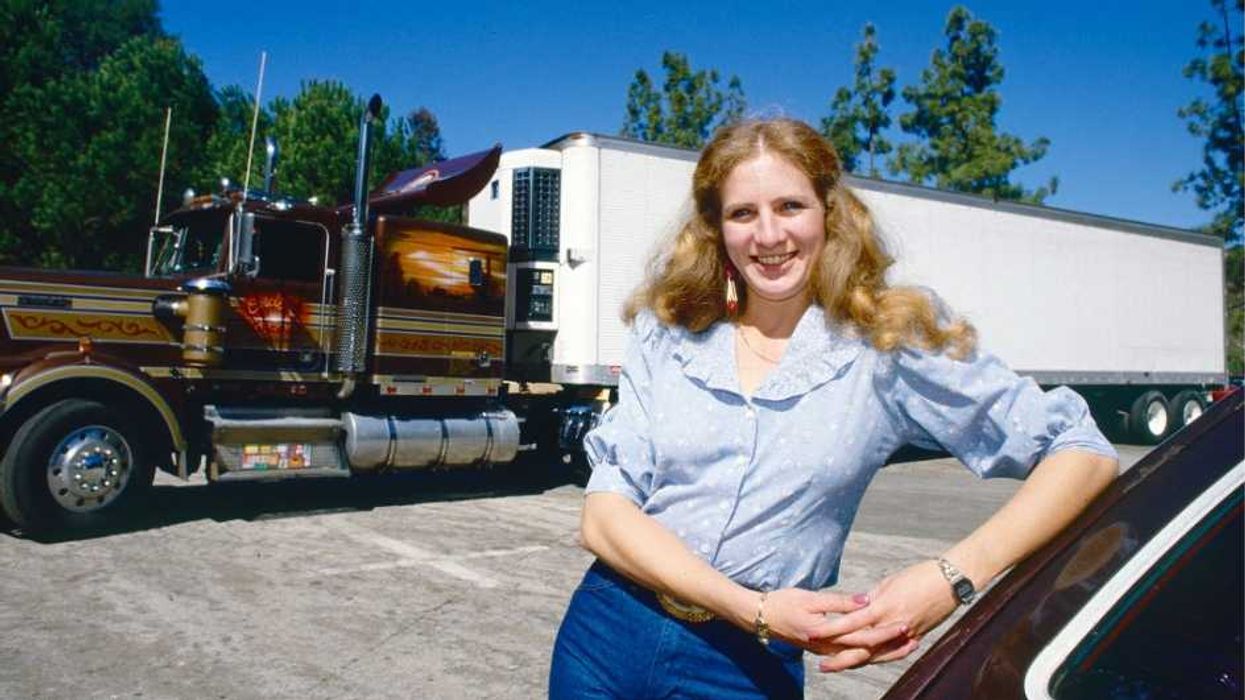
For decades, California has used its enormous market power to shape national vehicle policy, often pushing regulations far beyond its borders and into the daily lives of Americans who never voted for them. That long-running dynamic has now reached a critical moment.
The U.S. Environmental Protection Agency is moving to block California’s latest attempt to regulate heavy-duty trucks nationwide — a proposal first announced in 2025 but now entering a decisive phase of federal review.
California’s early emissions standards helped accelerate cleaner engines and better fuel systems. But leadership can turn into compulsion.
With final EPA action expected in 2026, the outcome will determine whether California can continue using its borders as a regulatory choke point for interstate trucking, or whether federal limits will finally be enforced.
Freight fright
At issue is California’s Heavy-Duty Inspection and Maintenance requirement, part of the state’s air-quality plan. The rule would apply not only to trucks registered in California, but to any heavy-duty vehicle operating within the state — including those registered elsewhere in the U.S. or even abroad. In practical terms, a truck hauling goods from Texas, Ohio, or Mexico could be forced to comply with California’s rules simply by crossing its borders.
The EPA has proposed disapproving that requirement, citing serious constitutional and statutory concerns.
This matters far beyond California. Heavy-duty trucks are the backbone of the American economy, moving food, fuel, medicine, building materials, and consumer goods across state lines every day.
Regulations that raise costs or restrict access for those vehicles ripple through supply chains and ultimately show up as higher prices at the checkout counter — including for online purchases. The EPA’s proposed action acknowledges that reality and draws a clear line between environmental policy and unlawful overreach.
Out of line
According to the agency, California’s proposal appears to violate the Commerce Clause of the U.S. Constitution, which prevents individual states from interfering with interstate trade. The Clean Air Act also requires state implementation plans to comply with federal law, and the EPA argues California’s approach fails that test. By attempting to regulate out-of-state and foreign-registered vehicles, California stepped into territory reserved for the federal government.
EPA Administrator Lee Zeldin has been blunt in explaining the agency’s position. California, he has argued, was never elected to govern the entire country, yet its regulatory ambitions — often justified in the name of climate policy — have imposed higher costs on Americans nationwide. Allowing one state to dictate trucking standards for the rest of the country undermines both federal law and economic stability.
Foreigners too
There is also a foreign-commerce issue that rarely gets discussed. California’s rule would apply to vehicles registered outside the United States, even though authority over foreign trade and international relations rests exclusively with the federal government. That alone raised red flags and reinforced the EPA’s conclusion that the state exceeded its legal authority.
This proposed disapproval is part of a broader federal effort to rein in California’s emissions authority. In 2025, the Department of Justice filed complaints against the California Air Resources Board, arguing that the state was effectively enforcing pre-empted federal standards through informal agreements with manufacturers. Together, these actions reflect growing concern in Washington that California has relied on market leverage rather than lawful authority to achieve national policy outcomes.
Waiver goodbye
Waivers are central to this conflict. For years, California received special permission under the Clean Air Act to set its own vehicle emissions standards, with other states allowed to follow its lead. Under the previous administration, the EPA granted waivers for California’s Advanced Clean Cars II, Advanced Clean Trucks, and Heavy-Duty Engine Omnibus NOx rules. Supporters framed them as environmental progress. Critics warned they would raise vehicle prices, limit consumer choice, strain the electric grid, and force changes the market was not ready to absorb — which is exactly what followed.
In June 2025, Congress overturned those waivers using the Congressional Review Act. That move sent a clear message: Vehicle standards should be national in scope, not dictated by a single state, regardless of its size or political influence. The EPA’s current review of California’s truck inspection rule builds directly on that message.
Supporters of California’s approach often point to the state’s historic role in improving air quality and advancing technology. That is true — up to a point. California’s early emissions standards helped accelerate cleaner engines and better fuel systems. But leadership can turn into compulsion, especially when it ignores regional differences, economic realities, and legal limits.
RELATED: Will Trump’s unconventional plan to stop the UN climate elites work?
 Chip Somodevilla/Getty Images
Recalibration
The heavy-duty truck sector makes this clear. Unlike passenger cars, trucks operate on thin margins and long replacement cycles. Fleet decisions are driven by reliability, infrastructure availability, and total cost of ownership. Mandating technologies before they are ready or widely supported does not accelerate progress; it creates higher costs and unintended consequences — especially when those mandates originate in a single state but affect national commerce.
The EPA’s move suggests that era may be nearing its end. By challenging California’s heavy-duty inspection requirement, the agency is asserting that environmental goals do not justify ignoring constitutional structure. Clean air matters — but so do the rule of law, economic practicality, and the free movement of goods across state lines.
The proposed disapproval remains open for public comment, after which the EPA is expected to take final action later this year. Whatever the outcome, the signal is unmistakable: Federal regulators are no longer willing to automatically defer to California when state ambition collides with national authority.
For truck drivers, fleet operators, manufacturers, and everyday consumers, this moment represents a recalibration. It reaffirms that vehicle regulation should be consistent nationwide — and that environmental policy works best when it respects both economic reality and the legal framework that holds the country together.





