

Category: Auto industry
Elon Musk to reveal flying car next year

Elon Musk says the next Tesla Roadster might fly. Not figuratively — literally.
Imagine an all-electric supercar that hits 60 mph in under two seconds, then lifts off the pavement like something out of “The Jetsons.” It sounds impossible, even absurd. But during a recent appearance on “The Joe Rogan Experience,” Musk hinted that the long-delayed Tesla Roadster is about to do the unthinkable: merge supercar speed with vertical takeoff.
If the April 2026 demo delivers even a glimpse of flight, it will cement Tesla’s image as the company that still dares to dream big.
As someone who has test-driven nearly every kind of machine on four (and sometimes fewer) wheels, I’ve seen hype before. But this time, it’s not just marketing spin. Tesla is preparing a prototype demo that could change how we think about personal transportation — or prove that even Elon Musk can aim too high.
Rogan reveal
On Halloween, Musk told Joe Rogan that Tesla is “getting close to demonstrating the prototype,” adding with his usual flair: “One thing I can guarantee is that this product demo will be unforgettable.”
Rogan, always the skeptic, pushed for details. Wings? Hovering? Musk smirked: “I can’t do the unveil before the unveil. But I think it has a shot at being the most memorable product unveil ever.”
He even invoked his friend and PayPal co-founder Peter Thiel, who once said, “We wanted flying cars; instead we got 140 characters.”
Musk’s response: “I think if Peter wants a flying car, he should be able to buy one.”
That’s classic Elon — part visionary, part showman. But underneath the bravado lies serious engineering. Musk hinted at SpaceX technology powering the car.
The demonstration, now scheduled for April 1, 2026 (yes, April Fools’ Day), is meant to prove the impossible. Production could start by 2027 or 2028, but given Tesla’s history of optimistic timelines, it may be longer before any of us see a flying Roadster on the road — or in the air.
Good timing
Tesla’s timing isn’t accidental. The company’s Q3 2025 profits fell short due to tariffs, R&D spending, and the loss of federal EV tax credits. With electric vehicle demand cooling, Musk knows how to recapture attention: promise something audacious.
Remember the Cybertruck’s “unbreakable” windows? The demo didn’t go as planned — but it worked as a publicity move. A flying Tesla Roadster could do the same, turning investor eyes (and wallets) back toward Tesla’s most thrilling frontier.
Hovering hype
So can a Tesla actually fly? It may use cold-gas thrusters — essentially small rocket nozzles that expel compressed air for brief, powerful thrusts. The result could be hovering, extreme acceleration, or even short hops over obstacles.
There’s also talk of “fan car” technology, inspired by 1970s race cars that used vacuum fans to suck the car to the track for impossible cornering speeds. Combine that with Tesla’s AI-driven Full Self-Driving systems and new battery packs designed for over 600 miles of range, and the idea starts to sound just plausible enough.
The challenge? Energy density. Vertical flight consumes enormous power, and even Tesla’s advanced 4680 cells may struggle to deliver it without sacrificing range. And if the Roadster truly hovers, it will need reinforced suspension, stability controls, and noise-dampening tech to keep your driveway from turning into a launchpad.
Sky’s the limit
Musk isn’t the first to chase this dream. The “flying car” has tempted inventors since the 1910s — and disappointed them nearly as long.
In the optimistic 1950s, Ford’s Advanced Design Studio built the Volante Tri-Athodyne, a ducted-fan prototype that looked ready for takeoff but never left the ground. The Moulton Taylor Aerocar actually flew, cruising at 120 mph and folding its wings for the highway — but only five were ever built.
Even the military tried. The U.S. and Canadian armies funded the Avrocar, a flying saucer-style VTOL craft that could hover but not climb more than six feet. Every generation since has produced new attempts — from the AVE Mizar (a flying Ford Pinto that ended in tragedy) to today’s eVTOL startups like Joby and Alef Aeronautics, the latter already FAA-certified for testing.
The dream keeps coming back because it represents freedom — freedom from traffic, limits, and gravity itself.
Got a permit for that?
Here’s where reality checks in. The Federal Aviation Administration now classifies electric vertical takeoff and landing aircraft under a new category requiring both airplane and helicopter training. You would need a pilot’s license, medical exams, and specialized instruction to legally take off.
Insurance? Astronomical. Airspace? Restricted. Maintenance? Complex. In short: This won’t replace your daily driver any time soon. Even if the Roadster hovers, the FAA isn’t handing out flight permits for your morning commute.
RELATED: You can now buy a real-life Jetsons vehicle for the same price as a luxury car
 Image provided to Blaze News by Jetson
Free parachute with purchase
Flying cars sound thrilling until you consider what happens when one malfunctions. A blown tire is one thing; a blown thruster at 200 feet is another. Tesla’s autonomy might help mitigate pilot error, but weather, visibility, and battery reliability all pose major challenges.
NASA and the FAA are developing new air traffic systems to handle “urban air mobility,” but even best-case scenarios involve strict flight corridors, automated control, and years of testing.
In short: We’re closer than ever to a flying car — but not that close.
Sticking the landing
So will the Tesla Roadster really fly? Probably — at least for a few seconds. Will it transform personal transportation? Not yet.
But here’s the thing: Musk doesn’t have to deliver a mass-market flying car. He just has to prove that it’s possible. And that may be enough to reignite public imagination and investor faith at a time when both are fading for the EV industry.
If the April 2026 demo delivers even a glimpse of flight, it will cement Tesla’s image as the company that still dares to dream big. If it flops, it will join the long list of “flying car” fantasies that fell back to Earth.
Either way, we’ll be watching — because when Elon Musk says he’s going to make a car fly, the world can’t help but look up.
Farewell to fake fuel efficiency stats, hello to tough future for EVs
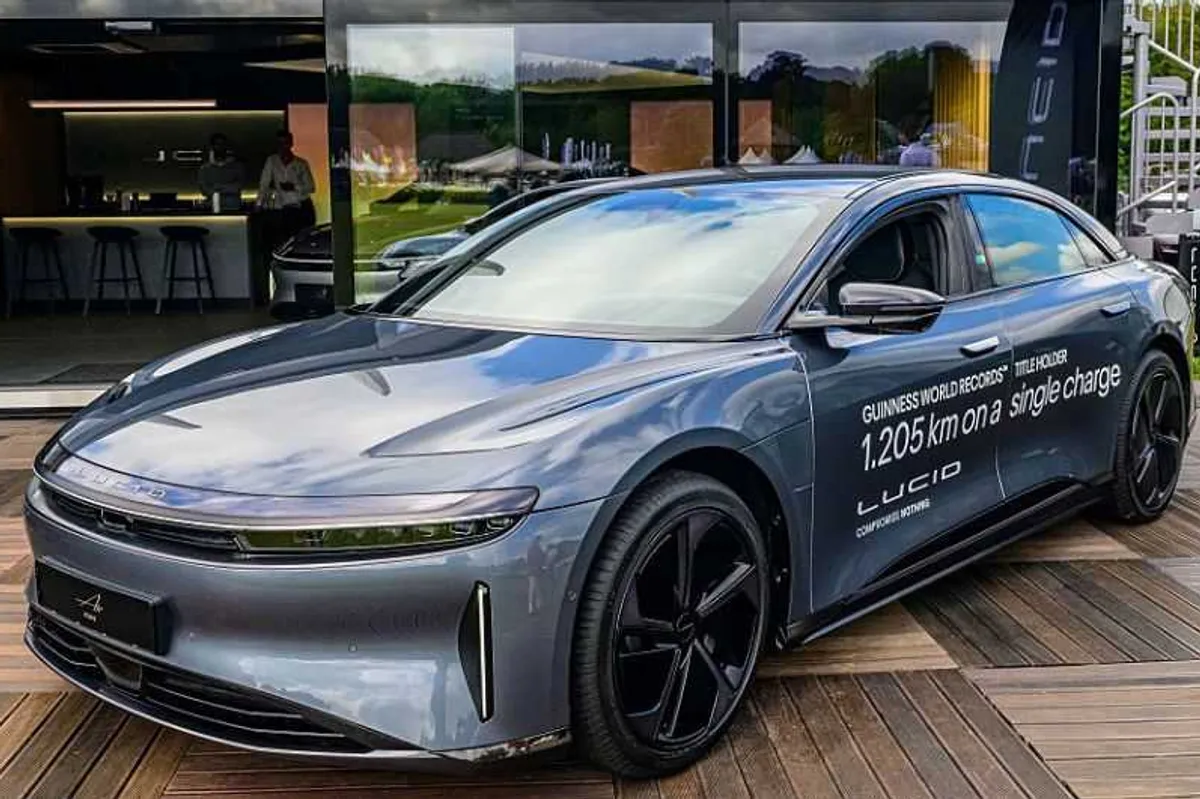
Fake fuel economy has got to go.
That’s the message of a recent decision by the Eighth U.S. Circuit Court of Appeals. Sent to the scrap heap: a Biden-era Department of Energy rule that critics say wildly inflated the fuel economy ratings of EVs — giving them an unfair regulatory advantage over gasoline and hybrid vehicles.
The court’s ruling was clear and direct: Federal agencies cannot manipulate timelines or definitions to advance a policy agenda without proper authorization from Congress.
This is a major correction to how the U.S. government measures vehicle efficiency, with consequences for automakers, consumers, and the future of the EV market.
Efficiency inflation
The case was brought by 13 Republican attorneys general, who argued that the DOE’s formula for calculating EV efficiency was misleading and legally indefensible. The court agreed, ruling that the Biden administration overstepped its authority by continuing to use an outdated, artificial formula that inflated electric vehicle performance under federal fuel economy standards.
At stake is the credibility of how America measures vehicle efficiency — a key driver in regulatory decisions that shape everything from automaker product lines to what cars consumers can buy.
For years, the DOE’s so-called petroleum equivalency factor has been used to translate electric power into miles-per-gallon equivalents. But the formula wasn’t based on realistic energy comparisons. Instead, it massively overstated how far an EV could travel on the energy equivalent of one gallon of gasoline — often rating electric cars above 100 MPGE, regardless of actual energy costs or grid efficiency.
Credits as currency
Rather than immediately fixing this issue, the Biden administration’s DOE planned a slow phase-out of the inflated metric between model years 2027 and 2030. That delay allowed automakers to continue claiming exaggerated efficiency numbers — and collecting fuel economy credits that made it easier to comply with the federal Corporate Average Fuel Economy standards.
Why does that matter? Because those credits act as a form of regulatory currency. A company that racks up credits through high-efficiency vehicles can use them to offset the sale of less efficient models or even sell them to other automakers.
In other words, the inflated EV math didn’t just look better on paper — it saved automakers millions of dollars in potential penalties while giving policymakers a talking point about “historic progress” in fuel efficiency that wasn’t based on real-world performance.
A direct rebuke
In its 3-0 decision, the Eighth Circuit ruled that the DOE had gone beyond its legal bounds. Agencies can’t rewrite laws through policy tweaks, the judges said, even under the guise of “phasing out” old rules. The DOE was required by statute to eliminate the flawed formula entirely — not stretch it over several more years of inflated numbers.
The court’s ruling was clear and direct: Federal agencies cannot manipulate timelines or definitions to advance a policy agenda without proper authorization from Congress.
That’s a significant rebuke not just to the DOE, but to a broader pattern of regulatory overreach that has characterized much of Washington’s EV push.
For the states that brought the lawsuit, the decision represents a major win for transparency, accountability, and consumer protection.
Pivoting on EVs
The implications for automakers are enormous. For years, inflated EV efficiency numbers helped carmakers meet federal fuel economy targets and avoid costly fines. Without that regulatory buffer, the industry will need to adapt quickly.
Automakers may now lose the valuable fuel economy credits they’ve relied on to remain compliant with CAFE standards, forcing them to find new ways to meet efficiency goals. That shift will require genuine engineering improvements — advances in aerodynamics, weight reduction, and hybrid technology — rather than relying on inflated paper-based advantages.
This change could also prompt a broader reassessment of electric vehicle strategy. If the regulatory math no longer tilts in favor of EVs, many manufacturers may slow their rollout plans or diversify their portfolios to include more hybrids and high-efficiency gasoline models.
The timing is significant: EV demand has cooled, dealer inventories are building up, and consumer interest has leveled off. Automakers such as Ford, General Motors, and Volkswagen have already scaled back or delayed certain EV programs in response to slower-than-expected sales and ongoing infrastructure limitations.
RELATED: Sticker shock: Cali EV drivers lose carpool exemption
 Justin Sullivan/Getty Images
Consumer transparency
For everyday drivers, this ruling doesn’t ban EVs — but it brings more honesty to the system.
Consumers deserve accurate information about vehicle efficiency, cost of ownership, and environmental impact. Inflated fuel economy ratings distort that picture, making EVs appear more efficient than they are when accounting for charging losses, battery manufacturing, and electric grid emissions.
Now, car buyers can make more informed choices — whether that’s a hybrid, plug-in hybrid, or traditional gasoline vehicle.
In the long term, this ruling could encourage a broader mix of technology rather than a forced, one-size-fits-all transition to battery electrics.
The fight to come
This case isn’t just about EVs. It’s about how much power federal agencies should have to rewrite laws without Congressional oversight.
For decades, Washington has leaned on regulatory agencies to shape environmental and energy policy — often through complex formulas that most Americans never see. But as the Eighth Circuit emphasized, the ends don’t justify the means.
Even if the goal is cleaner transportation, the process has to respect legal boundaries. When agencies overreach, courts must intervene to restore balance.
This decision reinforces an important principle: Policy must be grounded in law, not ideology. And in a country that values free markets and consumer choice, regulations should enhance transparency, not distort it.
The ruling leaves several key questions unanswered, but it is likely just the beginning of a much larger policy fight. Congress could attempt to step in by rewriting the laws that govern fuel economy standards, giving the DOE clearer authority to define how electric vehicle efficiency is calculated. However, such legislative efforts would almost certainly face significant political gridlock in an already divided Congress.
Much-needed realism
Automakers, meanwhile, are expected to take a hard look at how they allocate their research and development budgets and how they plan future vehicle lineups.
Companies heavily invested in electric vehicles have shifted strategies, focusing more on hybrids, plug-in hybrids, and improved gasoline technologies — especially in markets where EV sales have already shown signs of slowing or flattening.
Finally, the court’s reasoning may open the door to further challenges that could include renewed scrutiny of EPA emissions standards and federal tax credits, both of which critics argue have tilted the market in favor of electric vehicles rather than allowing consumer demand and market forces to guide the transition naturally.
The Eighth Circuit’s decision is a defining moment for the future of American automotive policy. It doesn’t kill the EV market — but it forces it to stand on its own merits.
Electric vehicles have their place in the market, but consumers deserve truthful efficiency data and honest cost comparisons. Inflated numbers and creative accounting don’t serve innovation — they undermine it.
This ruling restores some much-needed realism to the national conversation about the future of mobility. It’s a win for transparency, for accountability, and most importantly, for consumers who want to make decisions based on facts rather than politics.
Trump’s SHOCKING 25% truck tariff: A matter of national security?

President Donald Trump’s dropping another tariff on the auto industry.
Starting November 1, the U.S. will impose a 25% tariff on all imported medium- and heavy-duty trucks, a dramatic escalation in the administration’s ongoing effort to strengthen domestic manufacturing and reduce reliance on foreign-built vehicles.
The short-term effects could include delays in vehicle availability, higher fleet costs, and potential retaliation from trading partners.
This announcement sent shockwaves through global trade circles and Wall Street. According to Trump, the decision is rooted in national security and economic strength, not politics. But as with any sweeping trade action, there’s more under the hood than meets the eye.
Priced to move
While celebrating the immediate bump in automaker stock prices following the tariff announcement, Trump’s message was direct. “Mary Barra of General Motors and Bill Ford of Ford Motor Company just called to thank me. … Without tariffs, it would be a hard, long slog for truck and car manufacturers in the United States.”
The president framed the move as a matter of economic sovereignty, arguing that domestic production capacity in critical industries, like heavy vehicles used in logistics, defense, and infrastructure, is essential to national security.
That message resonates with many Americans frustrated by decades of outsourcing and the hollowing out of domestic manufacturing. But it’s also raising concerns among global partners and major U.S. companies with deep supply chain ties abroad.
Winners and losers
The new tariffs target a wide range of vehicles: delivery trucks, garbage trucks, utility vehicles, buses, semis, and vocational heavy trucks.
Manufacturers expected to benefit include Paccar, the parent company of Peterbilt and Kenworth, and Daimler Truck North America, which produces Freightliner vehicles in the U.S. These companies have much to gain from reduced import competition and potentially stronger domestic demand.
However, for companies like Stellantis, which manufactures Ram heavy-duty pickups and commercial vans in Mexico, the impact could be costly.
Under the United States-Mexico-Canada Agreement, trucks assembled in North America can move tariff-free if at least 64% of their content originates within the region. But many manufacturers rely on imported parts and materials, putting them at risk of higher costs and tighter margins.
Mexico, the largest exporter of medium- and heavy-duty trucks to the U.S., will be hit hardest. Imports from Mexico have tripled since 2019, climbing from about 110,000 to 340,000 units annually. Canada, Japan, Germany, and Finland also face new barriers under the 25% tariff.
Industry pushback
Not everyone is excited about the tariffs — especially considering that the import sources for these trucks (Mexico, Canada, and Japan) are long-standing American allies and trading partners.
Industry analysts warn of supply-chain disruptions, potential price increases, and reduced model availability for both commercial fleets and consumers. Tariffs could also pressure U.S. companies to adjust production strategies, increase domestic sourcing, or even pass higher costs on to customers.
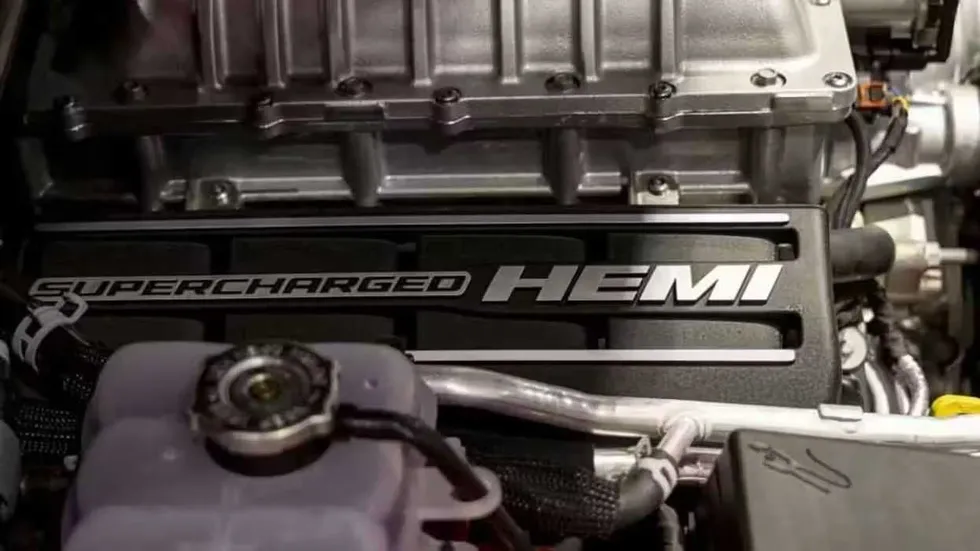
RELATED: Hemi tough: Stellantis chooses power over tired EV mandate
 Chicago Tribune/Getty Images
The politics of protectionism
This is not the first time a Trump administration has leaned on tariffs as an economic lever. During his previous term, tariffs on imported steel, aluminum, and Chinese goods aimed to bring manufacturing back to U.S. soil. Supporters argue those policies helped revitalize key industries and encourage job growth. Critics countered that they raised costs for American companies and consumers alike.
Still, there’s no denying that tariffs remain one of Trump’s most powerful economic tools and one of his most politically effective messages. By positioning tariffs as a way to protect American jobs, the policy appeals to workers and manufacturers across the Rust Belt, a region that will play a pivotal role in the upcoming election.
Short-term pain
For the U.S. trucking and logistics sectors, the short-term effects could include delays in vehicle availability, higher fleet costs, and potential retaliation from trading partners.
Truck leasing and rental companies that rely on imported chassis and components may see their operating costs rise. Meanwhile, domestic truck makers could ramp up production, potentially benefiting U.S. suppliers and job growth in states like Ohio, Michigan, and Texas.
The challenge will be whether domestic manufacturers can meet demand quickly enough without triggering inflationary pressures in the commercial transportation market.
Long-term gain?
Trump’s framing of the tariffs as a “national security matter” echoes earlier policies aimed at reducing foreign dependence in critical sectors, from semiconductors to electric vehicles. Advocates say this approach ensures that America can produce what it needs in times of crisis.
But opponents warn that labeling economic measures as “security” issues can backfire, alienating allies and inviting retaliation. European officials and trade negotiators in Canada and Japan are already signaling possible countermeasures if talks with Washington fail to yield exemptions.
Mind the gap
The real question now is how manufacturers will adapt. Companies may accelerate plans to localize assembly and parts production inside the U.S., while foreign brands could seek joint ventures or partnerships with American firms to skirt tariffs.
Consumers and fleets will likely see higher sticker prices for imported trucks and commercial vehicles as tariffs ripple through supply chains. That may also shift more buyers toward U.S.-built models, at least in the short term.
Ultimately, Trump’s move puts America’s industrial policy back in the driver’s seat. Whether it strengthens the economy or creates new trade turbulence will depend on how quickly domestic production can fill the gap left by imports.
President Trump’s 25% truck tariff is a high-stakes bet on American manufacturing dominance. It could fuel a resurgence in U.S. production or ignite new rounds of trade retaliation.
Either way, one thing is certain: The decision has already reshaped the conversation about what it means to build, and buy, American.





