

Category: Faith
Matthew McConaughey: Choose God and family, not ‘participation trophies’
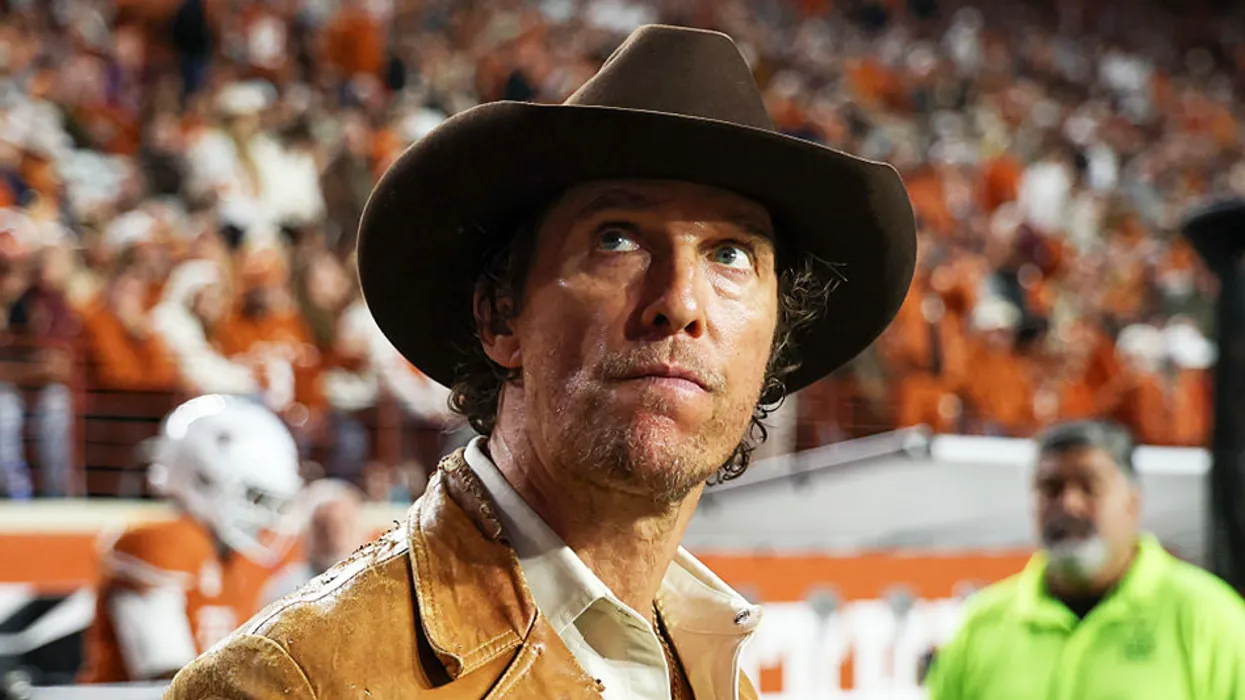
Matthew McConaughey doesn’t want participation trophies, and he doesn’t want success to be watered down.
The iconic actor recently gave a speech only he could deliver, forgoing giving traditional advice in favor of providing his own spiritual leanings that work for him.
‘I think in the West, because we want everyone to feel really great, participation trophies!’
The movie star was asked about how he critiques his performances on screen and how he gauges success.
“I know if I’m bogeying or if I’m birdieing. … I’ve seen myself on screen [and thought], ‘You’re kind of bulls***ting there,'” McConaughey told host Jay Shetty on his podcast.
Faking the grade
From there, McConaughey trashed the idea of expanded grade-point averages through extra credit.
“I’m not into extra credit. I don’t like 4.2 GPAs. That tells me, like, what happened? Are we, then, we’re not giving the right test? If 4.0 was the pinnacle, you know, that means not many people should be getting it, if anybody,” he explained.
The Texan said that with higher scores, institutions have either over-leveraged the original task or broadened the scope of scoring and therefore cheapened the credit.
“I think in the West, because we want everyone to feel really great, participation trophies! 4.2 GPA. Well, I feel better,” he said sarcastically.
It was from there that McConaughey began to explain where he seeks validation from, which was the true shining light of the discussion.
RELATED: Matthew McConaughey calls for ‘gun responsibility’ not gun control, goes on to demand gun control
Heavenly helpers
Aside from his wife and kids, McConaughey revealed he has a trio of people in heaven that he looks to for reactions — and God’s reaction through them.
“I have a council in the sky. Three people that are extremely important to me in my life: my dad, Penny Allen, and John Cheney.”
While the 56-year-old explained that Cheney is his old friend, it was not clear who Allen is.
“I see them, wink at them, talk with them, listen to them … run ideas by them, run decisions by them, and then I look up and see what their reaction is. And it’s been a very trusted council for me.”
This is a way to put “souls that are no longer with us” in “a heaven sense,” he explained. “They’re a conduit from God to me, and I have no expectations of them.”
In God he trusts
It doesn’t always go well for McConaughey, though. Sometimes his dad is “dancing in his underwear with a Miller Lite and a piece of lemon meringue pie,” he laughed, but sometimes “they’re not dancing,” and he has to figure out why.
RELATED: Matt Damon: Netflix dumbs down movies for attention-impaired phone addicts
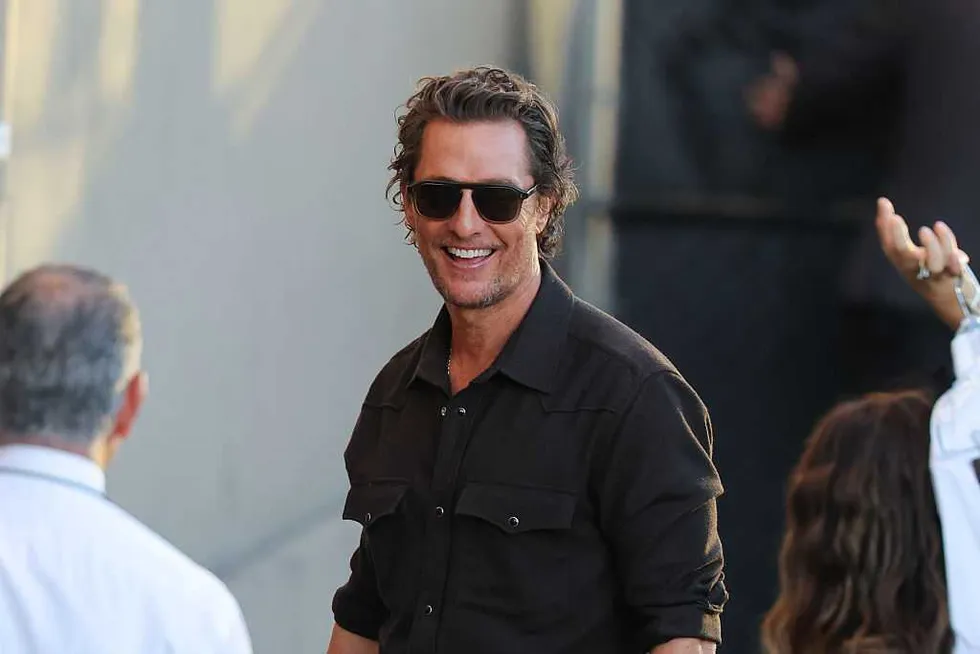 Photo by PG/Bauer-Griffin/GC Images
The Uvalde, Texas, native said it is very important to him to not have a picture of God in his mind, as he does not want to minimize his meaning.
In the end though, this all leads to McConaughey seeking his own validation, he admitted.
“I try to measure how I counsel and referee myself off of some of the people I just brought up to you,” he told the host.
“That’s where I prove it.”
McConaughey added that he does not look too far outside his own circle, because those he knows are who he trusts.
Like Blaze News? Bypass the censors, sign up for our newsletters, and get stories like this direct to your inbox. Sign up here!
Darwinism is a dead end — and biologists know it
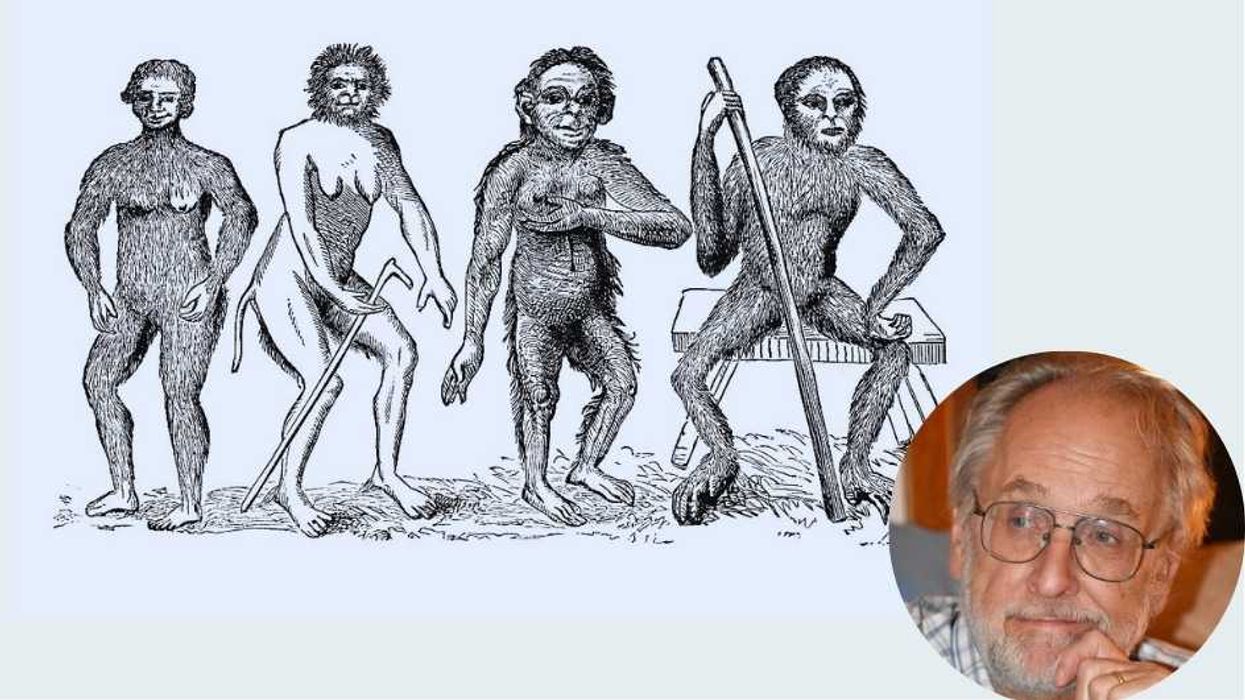
For more than a century, Darwinism has enjoyed a peculiar privilege. It is not merely taught as a scientific theory; it is treated as a final authority. Question it, and you are not mistaken — you are suspect, a heathen guilty of fidelity to first principles.
And yet the deeper one looks, the less sense it makes.
Darwinism is not merely incomplete; it is internally inconsistent. It claims to explain life while excluding what life most plainly displays.
Dr. J. Scott Turner, an American physiologist with decades of serious biological research behind him, is not a Bible-thumping believer or a culture-war activist. He is a scientist who followed the evidence where it led — and discovered that modern Darwinism could not follow him there, a conclusion he shared with me in a recent interview.
‘Marvelous contrivances’
The trouble, Turner explains, began with a quiet but decisive shift. Darwin’s original theory centered on organisms — living, striving creatures with what Darwin himself called “marvelous contrivances.” Modern Darwinism replaced them with something colder. Genes took center stage. Organisms were pushed aside.
Neo-Darwinism, Turner argues, became “a form of gene determinism embedded in a statistical framework that largely shoved organisms off the stage.” What disappeared with them were the qualities that make life recognizably alive: “intentionality, intelligence, and purposefulness.” What passed for progress was, in fact, reduction.
Christians have long sensed this loss, even without the language to name it. They were told that purpose was an illusion, design an accident, and meaning a projection — that life was nothing more than chemistry with better branding. Turner’s work shows what happens when that story is taken seriously.
Termite testimony
His research on termite colonies posed a problem Darwinism could not absorb. The termites were not merely adapting to their environment. They were building it — massive mounds precisely regulated for temperature and humidity, engineered for their own survival. The environment was not selecting them. They were shaping it.
“The old idea that organisms adapt to environments is only half the story,” Turner explains. “Organisms also adapt environments to themselves.” This is not unique to termites. Coral reefs, beaver dams, and human cities all tell the same story. Life has always been an active force, not a passive one.
Once organisms shape the conditions of their own survival, the Darwinian account begins to strain. Selection still operates, but it is no longer blind or passive. It is infused with preference — with direction, with desire.
Darwinism has no language for that.
Faced with obvious design — termite mounds, bird flight, the cantilevered structure of mammalian bones — modern Darwinism retreats into qualifiers. Design becomes “apparent” design. Purpose becomes “as if” purpose. Intelligence is reduced to coincidence wearing a lab coat.
RELATED: Science’s God-denying narrative just got crushed again
 Mongkolchon Akesin/iStock/Getty Images Plus
Darwin vs. design
Turner refuses the dodge. “I couldn’t support the notion of ‘apparent’ design or ‘apparent’ intentionality any more,” he says. “These weren’t illusions. They were fundamental properties of life.”
That refusal has consequences.
Darwinism is not merely incomplete; it is internally inconsistent. It claims to explain life while excluding what life most plainly displays. It demands silence precisely where the evidence speaks.
This is why Turner concludes — without theatrics or bitterness — that Darwinism cannot be true. Not because evolution is false, but because Darwinism lacks the conceptual tools to describe what evolution actually entails.
The hardest line Darwinism draws is at meaning.
Turner is blunt about this. Darwinism’s deepest limitation is not scientific but metaphysical. It operates within what he calls an “epistemic bubble” — a closed system that refuses to admit evidence challenging its assumptions.
That is not how science advances. It is how dogma survives.
An overdue truce
Christians are often told that faith and science are natural enemies. Turner’s work suggests something more unsettling: the conflict was never necessary. It was constructed.
Between militant Darwinism and intelligent-design polemics lies a broad, neglected middle ground — one Turner openly occupies, along with scientists and philosophers like Stuart Kauffman and Terrence Deacon, as well as researchers working on the Extended Evolutionary Synthesis — who accept evolution while rejecting the dogma that purpose and agency are illusions.
Here, intelligence is neither smuggled in from theology nor erased by materialism. It is treated as a real feature of living systems.
This view has ancient roots. Turner describes himself as an Aristotelian — not an atomist, reducing life to particles and chance, nor a Platonist, locating purpose outside the world altogether. Aristotle began with what could be observed: living things striving toward ends. That vision sits comfortably alongside religious belief, which has always held that life is ordered, directed, and intelligible. Turner’s approach simply takes life as it appears — purposeful, directed, alive.
For Christians, this matters.
A world without purpose is corrosive. It erodes responsibility, dignity, and moral meaning. It tells us that desire is a delusion and intention an error — that life is busy, but empty.
Darwinism promised a grand explanation. What it delivered was a grand refusal. And yet faith remains — not as an intrusion, but as a witness to reality.
Biden’s faith attacks backfire: Support for religious liberties soars to record high under Trump, new report shows
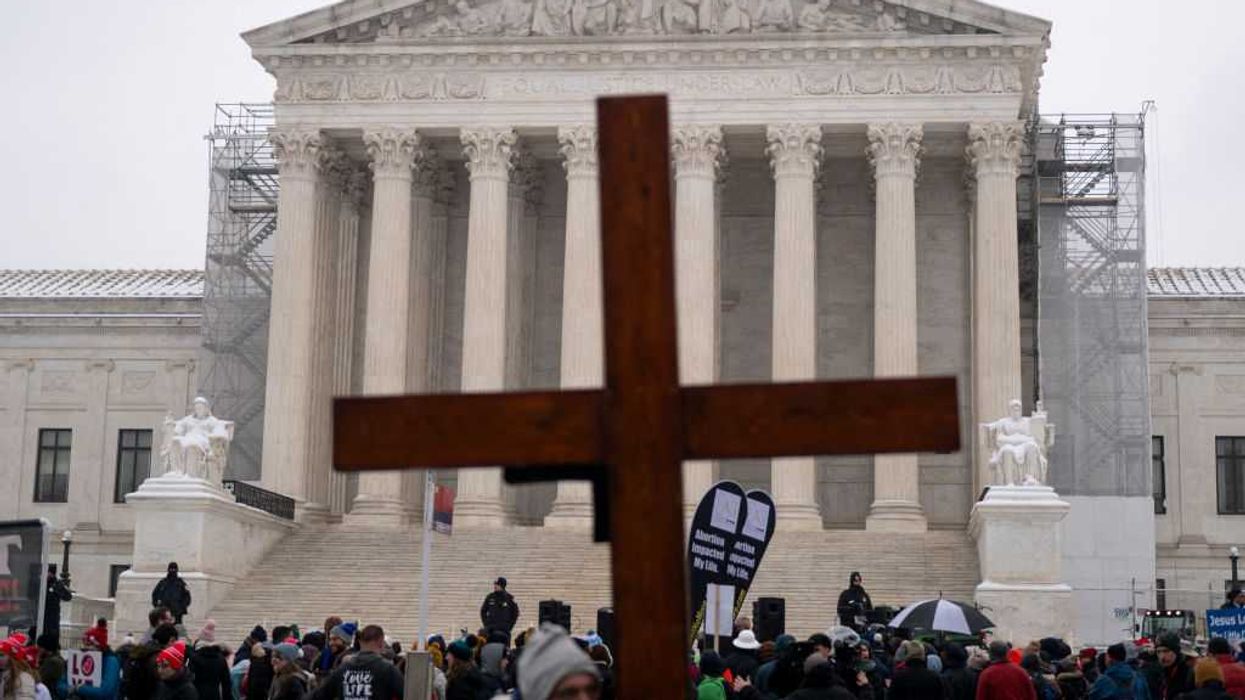
Against a backdrop of mounting attacks on churches, the Biden administration worked ardently to curb religious liberties wherever they came into conflict with the left’s radical agenda.
For example:
- the Biden Equal Employment Opportunity Commission implemented a rule requiring employers — including Christian organizations — to accommodate workers’ efforts to abort their unborn children;
- the EEOC attempted to force Christians to pay for employees’ sex-rejection mutilations;
- the Biden Department of Health and Human Services attempted to bar Christian providers who hold biblical and scientifically grounded views about sex and marriage from the foster-care system; and
- under Biden, a Catholic, the FBI characterized conservative Catholics as potential domestic terrorists and proposed to infiltrate Catholic churches as “threat mitigation.”
It’s clear from the Becket Fund for Religious Liberty’s latest Religious Freedom Index that unlike the administration voted out of power in 2024, the American people overwhelmingly — and increasingly — support religious liberties.
‘Our nation still believes that our first freedom belongs at the heart of our culture; not as a source of conflict, but as a foundation for overcoming it.’
Over the past six years, Becket has tracked public opinion on religious freedom. The legal group’s index for 2025 published on Friday registered the highest cumulative score for public support of religious freedom to-date — 71 on a scale from 0 to 100 where 0 indicates complete opposition to religious liberty and 100 indicates robust support.
This amounts to a dramatic shift, especially when compared to 2020, when the composite score was 66.
Whereas in 2020, 52% of respondents agreed that religious freedom is inherently public and that Americans should be able to share their faith in public spaces, that number jumped to 57% in the latest RFI.
There was an even bigger shift when it came to support for parents’ ability to opt out of public school curricula they believe to be inappropriate — a jump from 63% in 2021 to 73% in 2025.
RELATED: 6 ways I’m using 2026 to deepen my relationship with God
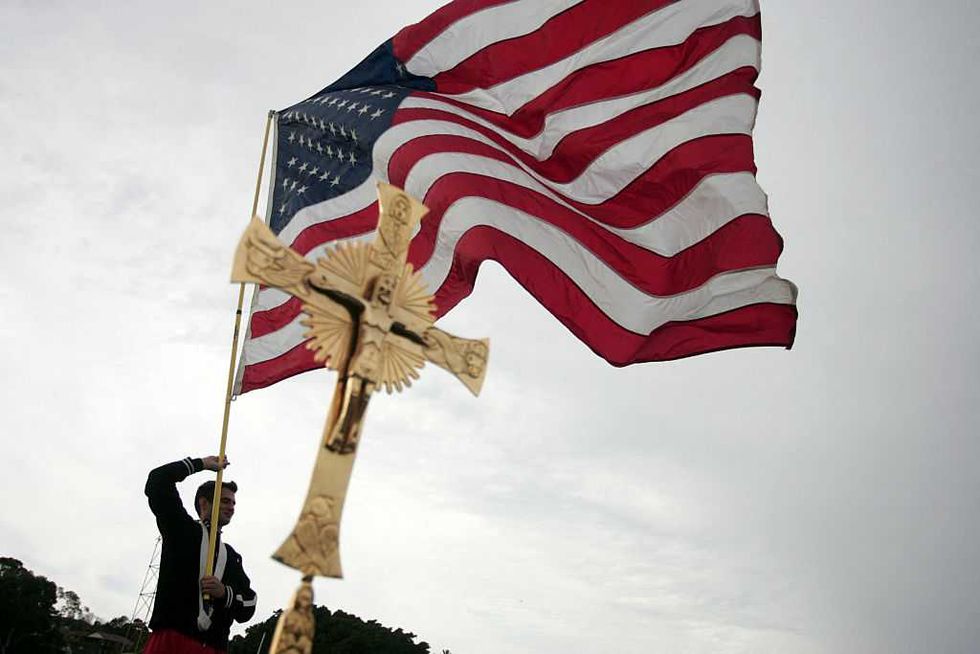 Photo by ANOEK DE GROOT/AFP via Getty Images
When asked specifically about the Supreme Court’s June 2025 ruling in Mahmoud v. Taylor, 62% of respondents signaled support for the high court’s decision to side with the Maryland parents who wanted to protect their children from LGBT propaganda in Montgomery County Public Schools.
On the question of whether public funding for education should be available to all families, including those who choose religious schools, 77% of respondents said they were mostly or completely in favor.
The report noted that “although this year’s Index found that Americans have cooled on the benefits of religion to society and are skeptical of institutions, they unify around the simple principles of religious freedom for all, even in difficult cases that invite scrutiny or controversy.”
A clear majority, 58%, of Americans said they support the right of a Christian baker to decline to make cakes that conflict with her sincere religious views.
Sixty-one percent of respondents said that the First Amendment’s guarantee of the free exercise of religion should protect Catholic priests from having to break the seal of confession as would have been required by Washington state Democrats’ now-enjoined Senate Bill 5375.
There was markedly less support for the Christian counselor in the case Chiles v. Salazar who challenged Colorado’s prohibition on so-called “conversion therapy” for non-straight youth. Only 47% expressed support for her ability to provide talk therapy to children to help them overcome their gender dysphoria.
“Year after year, the Index has made clear that religious liberty remains one of our most cherished values,” Mark Rienzi, president and CEO of Becket, said in a statement obtained by Blaze News.
“Even amid deep divisions, our nation still believes that our first freedom belongs at the heart of our culture; not as a source of conflict, but as a foundation for overcoming it,” continued Rienzi. “The work before us is to see that freedom protected for our children and theirs in the years to come.”
Like Blaze News? Bypass the censors, sign up for our newsletters, and get stories like this direct to your inbox. Sign up here!
Chuck Colson: Nixon loyalist who found hope in true obedience
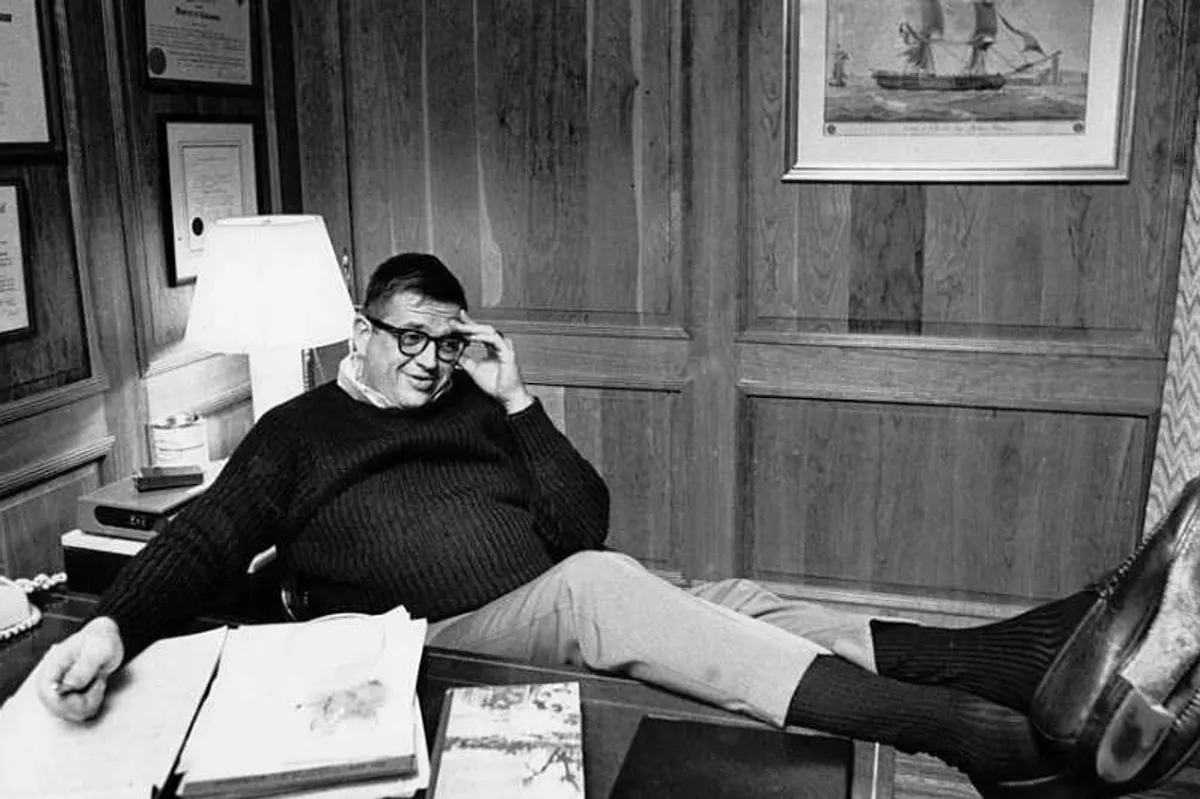
Long before he turned his life over to God, Chuck Colson burned with faith.
While working as an assistant to Massachusetts Senator Leverett Saltonstall (R), he met Richard Nixon — then vice president — and, by his own later admission, instantly became “a Nixon fanatic.” That loyalty, unwavering and severe, would become the defining feature of his life. It was also what made him so effective — and so dangerous.
For the first time in his adult life, Colson was forced to confront who he was without title, access, or leverage.
Hopelessly devoted
Colson’s devotion was not opportunistic. It was total. He believed loyalty was a virtue, even when it demanded cruelty. Years later, he would boast that he would “walk over my own grandmother” to re-elect Nixon. The line was meant to shock, but it also clarified something essential: Colson understood obedience as a moral good, independent of mercy or restraint. Colson was not a cynic pretending to believe. He was a believer who believed too much.
In Washington, that made him useful. He became the administration’s enforcer — a man willing to apply pressure, intimidate enemies, and blur lines. Politics, as Colson practiced it, was not persuasion. It was war. And war required soldiers willing to do what polite men would not.
Hatchet man
When Daniel Ellsberg leaked the Pentagon Papers, the government moved to prosecute him under the Espionage Act of 1917. For Colson, however, the embarrassment Ellsberg caused his mentor merited more than official retribution — it called for something more underhanded.
Colson’s instinct was not rebuttal but destruction: He supported efforts to smear Ellsberg as unstable and dangerous, a campaign that helped create the climate in which Nixon operatives burglarized Ellsberg’s psychiatrist’s office.
When Watergate collapsed the Nixon presidency, Colson collapsed with it. As legal consequences closed in, a friend pressed a copy of “Mere Christianity” into his hands and forced him to confront what power had allowed him to evade.
He pleaded guilty to obstruction of justice and became the first Nixon aide to get jail time. By then, the obedience he had given so freely had nowhere left to land.
Accustomed to command
Colson entered federal prison as a man accustomed to command. Early on, he braced himself for contempt from guards who knew who he was. Instead, one offered something worse: indifference — the unmistakable message that he was not special here and should act accordingly.
It was a small moment, but a decisive one. For the first time in his adult life, Colson was forced to confront who he was without title, access, or leverage. He was not feared or in control. He wasn’t even useful.
And so he began to learn a fundamental lesson of Christianity, one that power obscures: We are not self-sustaining. The first step toward obedience, Colson would later say, is realizing who you are when everything else is stripped away — and how dependent you are on grace you did not earn.
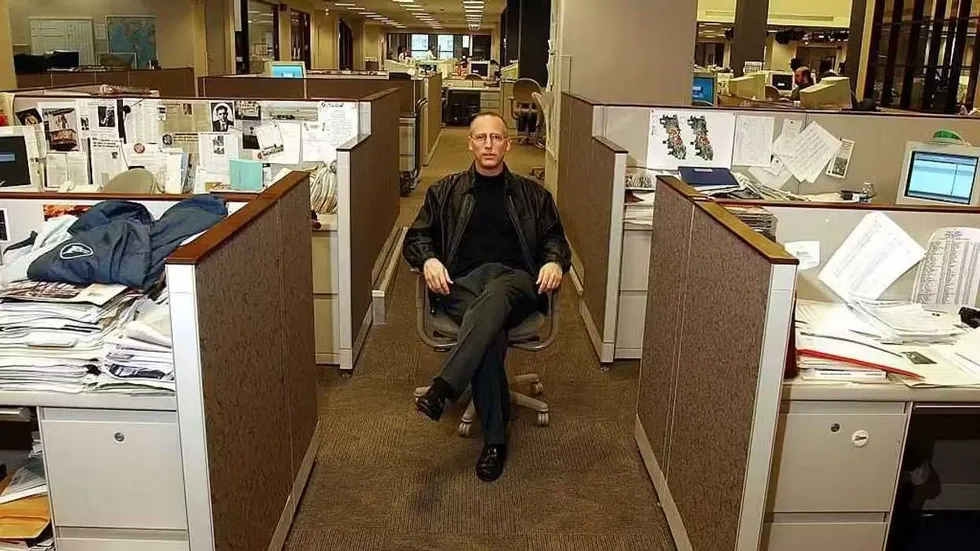 Scott Adams in 2002. Phil Velasquez/Chicago Tribune/Tribune News Service via Getty Images
Surprised by truth
After his release, Colson avoided the obvious paths. He did not rehabilitate his reputation through commentary. He did not return to politics as a chastened insider. Instead, he committed the remainder of his life to prisoners — men for whom dependence was not temporary.
“Christianity is not about becoming respectable,” Colson later said. “It is about becoming obedient.” Colson’s instinct for loyalty made him a quick study. But his newfound faith didn’t soften his nature as much as it reordered it toward something worthier.
To the end, Colson remained intense, structured, demanding, and — as those who doggedly proclaim the truth tend to be — dangerous.
‘Argument accepted’: Dying ‘Dilbert’ creator and Trump ally Scott Adams says he’s becoming a Christian
Scott Adams, the creator of the “Dilbert” comic strip and a frequent defender of President Donald Trump, revealed in May 2025 that he had been diagnosed with prostate cancer, it had metastasized to his bones, and he was not long for this world.
“The disease is already intolerable,” said Adams. “So if you’re wondering, ‘Hey Scott, do you have any good days?’ Nope. Nope. Every day is a nightmare, and evening is very worse.”
‘What happens next is between me and Jesus.’
While Adams had run out of good days, good news was on the horizon.
The 68-year-old cartoonist revealed on the Sunday episode of his show, “Real Coffee with Scott Adams,” that he is converting to Christianity.
In November, Adams requested Trump’s help in securing the prostate cancer drug Pluvicto for which his health care provider had apparently approved his application but “dropped the ball in scheduling the brief IV to administer it.”
Trump and members of his administration indicated they were “on it” and apparently intervened on the cartoonist’s behalf. However, Adams’ potentially life-changing treatment was postponed last month on account of his radiation treatment.
Last week, Adams noted on his show that “the odds of me recovering are essentially zero.”
In addition to suffering paralysis below the waist, Adams indicated that he is struggling to breathe on account of ongoing heart failure.
Days after telling his audience that January will probably be “a month of transition one way or the other,” Adams made clear on Sunday that the imminent changes in his life were not all of a medical nature.
RELATED: Christian, what do you believe when faith stops being theoretical?
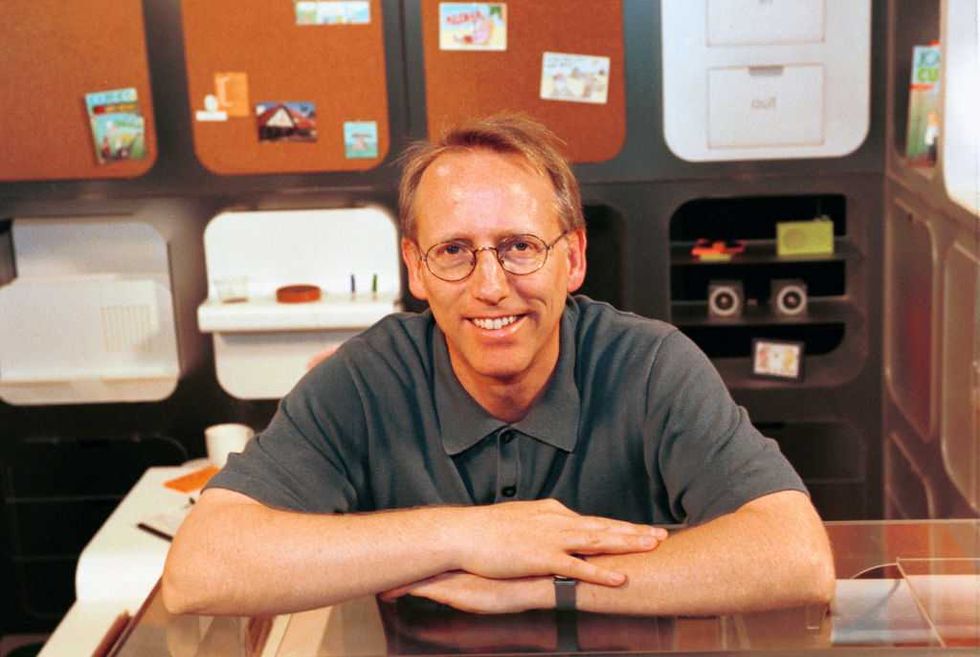 Photo by Bob Riha, Jr./Getty Images
“Many of my Christian friends and Christian followers say to me, ‘Scott, you still have time. You should convert to Christianity.’ And I usually just let that sit because that’s not an argument I want to have,” said Adams. “I’ve not been a believer. But I also have respect for any Christian who goes out of their way to try to convert me because how would I believe you and believe your own religion if you’re not trying to convert me?”
‘You’re never too late.’
Evidently the efforts of Adams’ friends were not in vain.
“You’re going to hear for the first time today that it is my plan to convert,” said Adams. “So I still have time. But my understanding is you’re never too late. And on top of that, any skepticism I have about reality would certainly be instantly answered if I wake up in heaven.”
Adams — who has long wrestled with questions about God and has been critical both of religion and atheism in his writing — notified his Christian friends that he does not require any more apologetics and has embraced what appears to be Catholic philosopher Blaise Pascal’s argument for believing in God.
“I am now convinced that the risk-reward is completely smart. If it turns out that there’s nothing there, I’ve lost nothing but I’ve respected your wishes, and I like doing that,” said Adams. “If it turns out there is something there and the Christian model is the closest to it, I win.”
“Argument made, argument accepted,” added Adams.
In the wake of his announcement, Adams wrote on X that while he appreciates the outpouring of support and questions, “What happens next is between me and Jesus.”
Like Blaze News? Bypass the censors, sign up for our newsletters, and get stories like this direct to your inbox. Sign up here!
Christian, what do you believe when faith stops being theoretical?
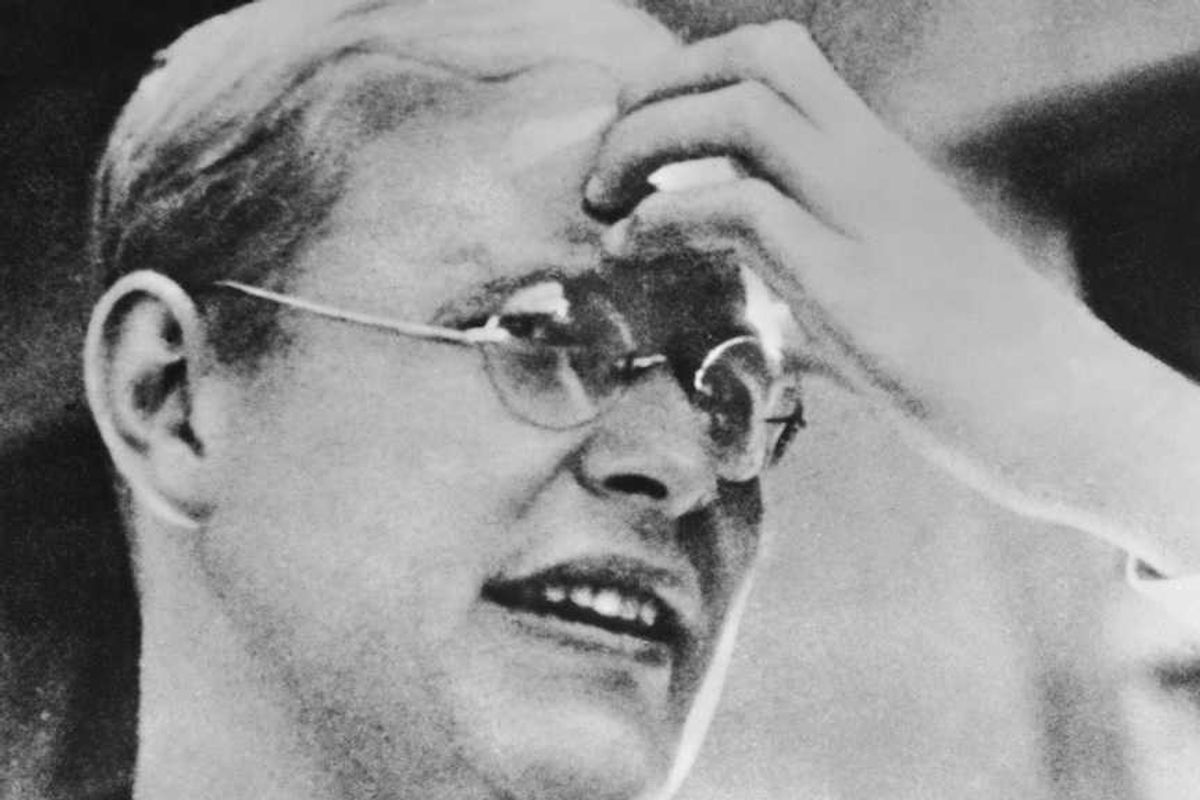
Dietrich Bonhoeffer once wrote from a prison cell, “It is only by living completely in this world that one learns to have faith.” He wrote those words after the world had closed in, when faith could no longer remain theoretical.
I live with someone who understands exactly what he meant.
In those moments, belief stops being a feeling and becomes a claim. Not something you summon, but something you test.
My wife, Gracie, has lived with disabilities for virtually her entire life. Hospital rooms and operating schedules do not interrupt our life — they form its familiar terrain. Over time, suffering has stopped being a concept and become a place we recognize.
I also have a friend who understands what Bonhoeffer was describing.
Her name is Joni Eareckson Tada. A diving accident in her teens left her a quadriplegic. Her life has unfolded under paralysis, chronic pain, and illness. She does not approach suffering from a distance.
Last year, during one of Gracie’s long hospital stays, Joni called.
Most people asked about Gracie. Joni did too. But then she asked about me.
That question deserved more than a stock reply.
I paused.
Moments like that strip away emotional self-examination and force you to examine your claims instead.
As I spoke with Joni, I shared something that has steadied me for decades.
In our church, there came a moment when the pastor would stop, look out over the congregation, and ask a single question: “Christian, what do you believe?”
We did not improvise. We did not search for language that felt expressive or current. We stood and recited the Apostles’ Creed or the Nicene Creed. No personal spin. No tailoring belief to the moment. Just a clear declaration of what had been received.
That question stayed with me.
It returned again and again over the years, especially in places where explanations had lost their usefulness. I learned the limits of “why.” Even good answers rarely hold steady there.
In those moments, belief stops being a feeling and becomes a claim. Not something you summon, but something you test.
If Christ is who I say He is, then what does that require of me here?
I was not trying to manufacture courage or resolve. I was asking whether the faith I professed in calm settings could bear weight when standing itself cost something.
“Christian, what do you believe?”
Over time, many of the questions I once carried narrowed to that one. Not because the pain diminished or the losses stopped coming, but because belief, when real, clarifies responsibility.
The apostle Peter tells believers to be ready to give an answer for the hope within them. That readiness has nothing to do with eloquence. It comes from knowing where you stand.
As a new year begins, many caregivers feel little sense of reset, except for the deductible and the co-pay.
Some stand outside an ICU, looking through glass at someone they love. Others stand in different hallways, facing different kinds of loss. Different rooms. The same ache.
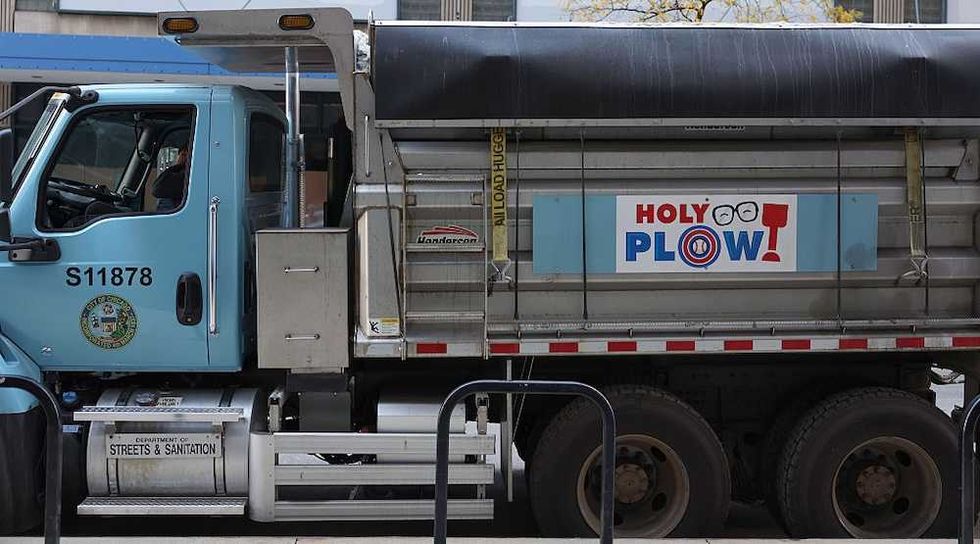
RELATED: Do not pass the plow: The danger of declaring a golden age without repentance
 John J. Kim/Chicago Tribune/Tribune News Service via Getty Images
Bonhoeffer did not write from a place of safety or control. He wrote from confinement, where faith could no longer remain theoretical. Many recognize that narrowing, the sense that life has closed in and the ground beneath you has given way.
Faith is learned there, not discussed.
Exhaustion thins memory. Words scatter. Not everyone can recall creeds when sleep runs short and decisions carry real weight. But belief does not measure itself by recall. It reveals itself by posture.
When the floor gives way, you still need to know where to stand.
If He is Lord at all, then He is Lord of all.
Not only of sanctuaries, but of hospital corridors.
Not only of strength, but of weakness.
Not only of moments we would choose, but of moments we would never script.
That confession does not remove pain. It does not explain every loss. But it does tell us where to stand when the world presses in.
And when glass separates you from the one you love, whatever room that glass happens to be in, the question does not stay abstract.
It turns personal.
Christian, what do you believe?
Pope Leo calls out gambling addiction and ‘demographic crisis’ in Vatican meeting
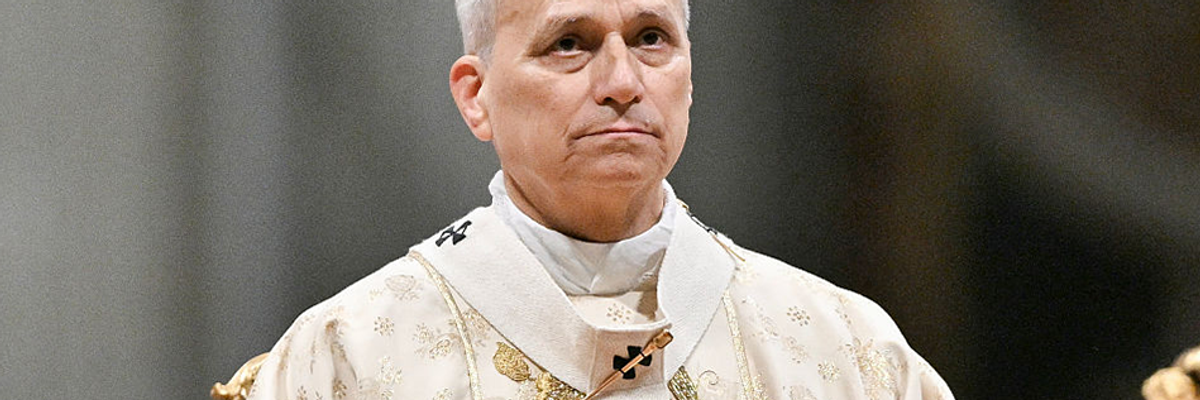
Pope Leo XIV says people need more face-to-face interaction in their lives.
Speaking with Italian mayors from the association of local Italian authorities, the Assocazione Nazionale dei Comuni Italiani, the pope touched on some of the biggest issues faces the world today.
‘Democracy atrophies, becomes just a name, a formality.’
During the Vatican meeting, Pope Leo noted that a “demographic crisis” and “struggles” among families and young people remain top issues. According to Vatican News, the Catholic leader also stated that social isolation and “social conflicts” are pervasive issues in Italy.
At the same time, the pope — Robert Francis Prevost — said he wanted to focus on one of the biggest topics in today’s world: gambling. The Chicago native explained that he wanted to “draw attention in particular to the scourge of gambling,” which has “ruined many families.”
Citing a “major increase” in gambling in Italy in recent years, Prevost cited a recent report that described gambling as a “serious problem” in terms of education, mental health, and societal trust for Italians.
RELATED: New York Archbishop Timothy Dolan resigns; pope appoints his replacement
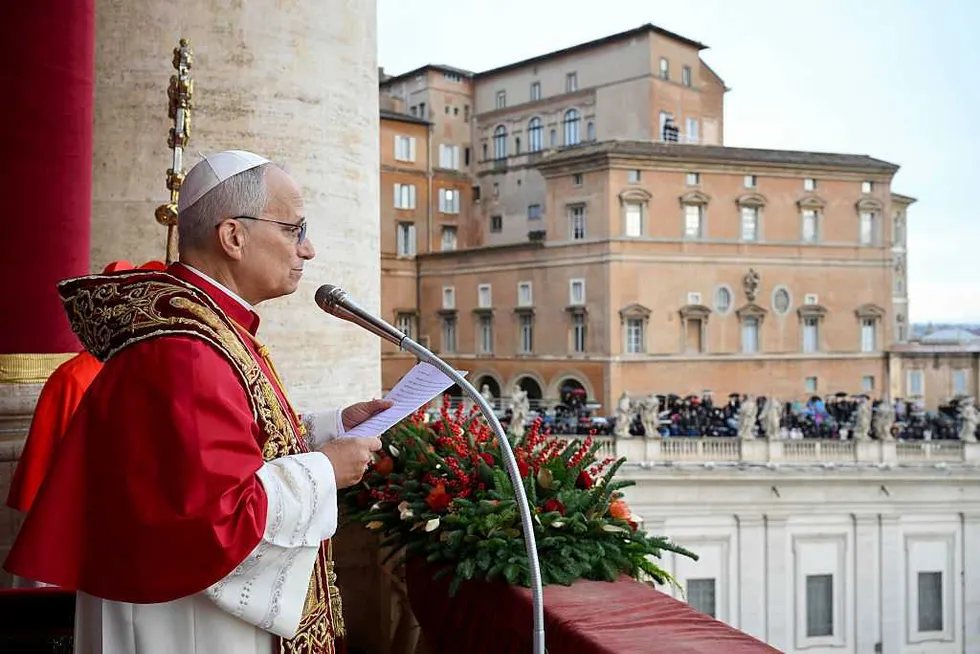 Photo by Simone Risoluti – Vatican Media via Vatican Pool/Getty Images
The pope stressed that gambling addiction is a form of “loneliness” and called on the local mayors to promote “authentically human relationships between citizens” as a way to tackle the issue.
Pope Leo reportedly drew from 20th-century Italian priest and activist Don Primo Mazzolari in order to illustrate the need for social interactions between Italians.
“[Italy] does not only need sewers, houses, roads, aqueducts, and pavements,” but also “a way of feeling, of living, a way of looking at one another, and a way of coming together as brothers and sisters.”
 Photo by Jacopo Raule/Getty Images for Philipp Plein
To solve many of these modern issues, authorities must listen to the weak and the poor, the pope said. If not, he said, “democracy atrophies, becomes just a name, a formality.”
Like Blaze News? Bypass the censors, sign up for our newsletters, and get stories like this direct to your inbox. Sign up here!





