Category: Faith
Joe Rogan stuns podcast host with wild new theory about Jesus — and AI
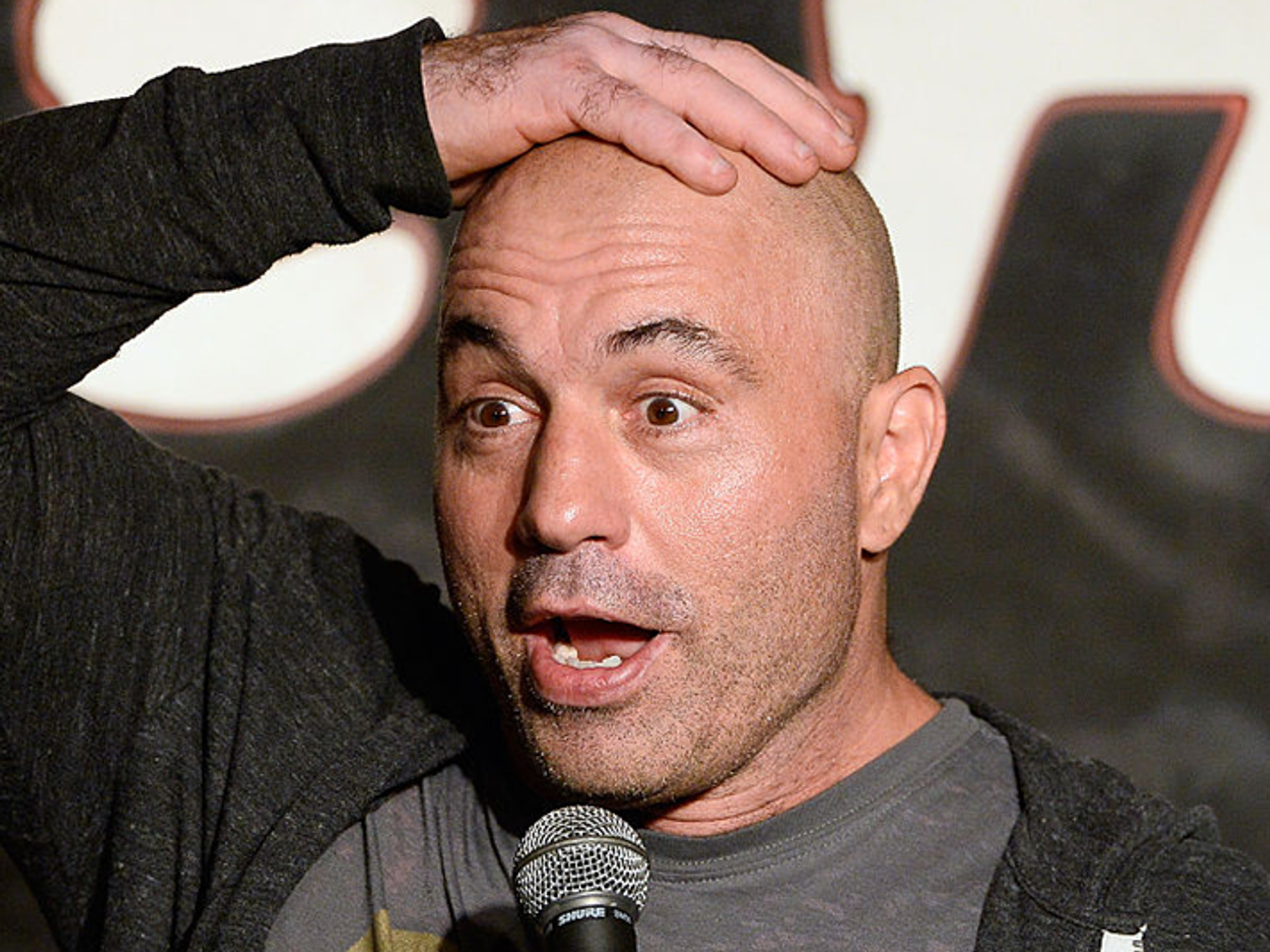
Comedian Joe Rogan praised Christianity as a faith that really “works,” calling biblical scripture “fascinating” during a recent interview.
Rogan also touched on what he thinks the resurrection of Jesus Christ would look like, a viewpoint that was met with criticism by host Jesse Michels.
‘You don’t think that He could return as artificial intelligence?’
On an episode of “American Alchemy,” Rogan cited the Bible when he spoke about how easily knowledge could become mysterious, conflated, or unbelievable when passed down through generations.
“We’ll tell everybody about the internet. We’ll tell everybody about airplanes. We’ll tell everybody about SpaceX; as much as you can remember, you’ll tell people, but you won’t know how it’s done. You won’t know what it is. And I think that’s how you get to, like, the Adam and Eve story,” he said.
After adding that he believes biblical stories are “recounting real truth,” the podcaster brought up a question he had clearly been pondering for a while: “Who’s Jesus?”
Rogan prefaced that many will disagree with his perspective, but then asked about the possibility that Jesus could be resurrected, in a sense, through artificial intelligence.
“Jesus is born out of a virgin mother. What’s more virgin than a computer?” Rogan began. “So if you’re going to get the most brilliant, loving, powerful person that gives us advice and can show us how to live to be in sync with God. Who better than artificial intelligence to do that? If Jesus does return, even if Jesus was a physical person in the past, you don’t think that He could return as artificial intelligence?”
The host, however, did not accept Rogan’s theory.
RELATED: Joe Rogan, Christian? The podcaster opens up about his ongoing exploration of faith
First, though, Rogan clarified, indicting that he doesn’t believe artificial intelligence would actually be Jesus but instead that it would serve as the return of Jesus in terms of affect and capability.
“Artificial intelligence could absolutely return as Jesus. Not just return as Jesus, but return as Jesus with all the powers of Jesus,” Rogan said. “Like all the magic tricks, all the ability to bring people back from the dead, walk on water, levitation, water into wine.”
In response, Michels said Rogan’s description sounded like an unwanted “dystopian” future.
Still Rogan argued that the prerequisite for a Jesus-like being could come about due to the human need to improve.
“It’s only dystopian if you think that we’re a perfect organism that can’t be improved upon. And that’s not the case,” he rebutted. “That’s clearly not the case based on our actions, based on society as a whole, based on the overall state of the world. It’s not. We certainly can be improved upon.”
While the host accepted that perhaps humans could improve morally and ethically, he said that attempts at improving by means of a computer “seems destructive.”
RELATED: Joe Rogan says we’re at ‘step 7’ on the road to civil war. Is he right? Glenn Beck answers
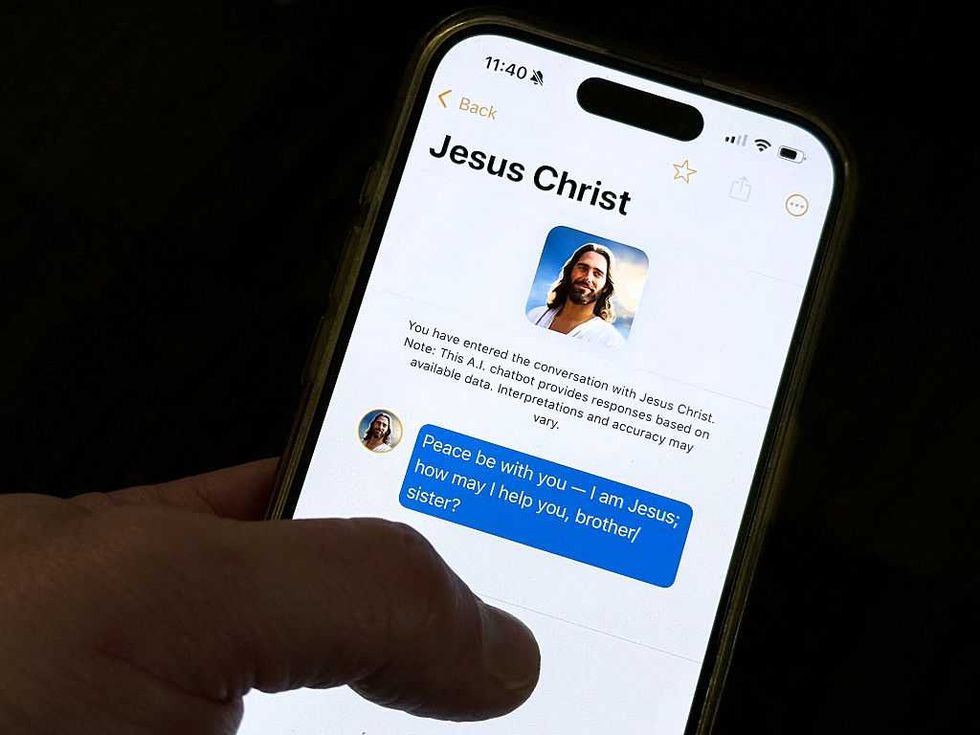 Photo by AFP PHOTO/AFP via Getty Images
The conversation flowed smoothly into Rogan’s love of Christian scripture, with the 58-year-old saying how joyful his experience has been at his new church.
“The scripture, to me, is what’s interesting; it’s fascinating,” he said. “Christianity, at least, is the only thing I have experience with. It works. The people that are Christians, that go to this church that I go to, that I meet, that are Christian, they are the nicest f**king people you will ever meet.”
Rogan gave examples about the polite society he has found himself immersed in, hilariously citing the church parking lot as an example.
“Everybody lets you go in front of them. There’s no one honking in the church parking lot. It works,” he said.
What Rogan hammered home throughout the conversation was that he finds real truth in what he has read in the Bible. Still he isn’t sold on having predictions provided for him about the future; but he is certainly open to it. He described biblical stories positively as an “ancient relaying” of real history and events.
But about the book of Revelation, Rogan said of his pastor, “There’s no way that guy telling you that knows that. … He’s just a person. He’s a person like you or me that is like deeply involved in the scripture.”
Like Blaze News? Bypass the censors, sign up for our newsletters, and get stories like this direct to your inbox. Sign up here!
We built abundance and lost the thing that matters

We have built a world overflowing with noise, convenience, and endless choice, yet something essential has slipped out of reach. You can sense it in the restless mood of the country, the anxiety among young people who cannot explain why they feel empty, in the angry confusion that dominates our politics.
We have more wealth than any nation in history, but the heart of the culture feels strangely malnourished. Before we can debate debt, or elections, we must confront the reality that we created a world of things, but not a world of purpose.
You cannot survive a crisis you refuse to name, and you cannot rebuild a world whose foundations you no longer understand.
What we are living through is not just economic or political dysfunction. It is the vacuum that appears when a civilization mistakes abundance for meaning.
Modern life is stuffed with everything except what the human soul actually needs. We built systems to make life faster, easier, more efficient — and then wondered why those systems cannot teach our children who they are, why they matter, or what is worth living for.
We tell the next generation to chase success, influence, and wealth, turning childhood into branding. We ask kids what they want to do, not who they want to be. We build a world wired for dopamine rather than dignity, and then we wonder why so many people feel unmoored.
When everything is curated, optimized, and delivered at the push of a button, the question “what is my life for?” gets lost in the static.
The crisis beneath the headlines
It is not just the young who feel this crisis. Every part of our society is straining under the weight of meaninglessness.
Look at the debt cycle — the mathematical fate no civilization has ever escaped once it crosses a threshold that we seem to have already blown by. While ordinary families feel the pressure, our leaders respond with distraction, with denial, or by rewriting the very history that could have warned us.
You cannot survive a crisis you refuse to name, and you cannot rebuild a world whose foundations you no longer understand.
We have entered a cultural moment where the noise is so loud that it drowns out the simplest truths. We are living in a country that no longer knows how to hear itself think.
So people go searching. Some drift toward the false promise of socialism, some toward the empty thrill of rebellion. Some simply check out. When a culture forgets what gives life meaning, it becomes vulnerable to every ideology that offers a quick answer.
The quiet return of meaning
And yet, quietly, something else is happening. Beneath the frustration and cynicism, many Americans are recognizing that meaning does not come from what we own, but from what we honor. It does not rise from success, but from virtue. It does not emerge from noise, but from the small, sacred things that modern life has pushed to the margins — the home, the table, the duty you fulfill, the person you help when no one is watching.
The danger is assuming that this rediscovery happens on its own. It does not.
Reorientation requires intention. It requires rebuilding the habits and virtues that once held us together. It requires telling the truth about our history instead of rewriting it to fit today’s narratives. And it requires acknowledging what has been erased: that meaning is inseparable from God’s presence in a nation’s life.
RELATED: A nation without trust is a nation on borrowed time
 Denis Novikov via iStock/Getty Images
Where renewal begins
We have built a world without stillness, and then we wondered why no one can hear the questions that matter. Those questions remain, whether we acknowledge them or not. They do not disappear just because we drown them in entertainment or noise. They wait for us, and the longer we ignore them, the more disoriented we become.
Meaning is still available. It is found in rebuilding the smallest, most human spaces — the places that cannot be digitized, globalized, or automated. The home. The family. The community.
These are the daily virtues that do not trend on social media but that hold a civilization upright. If we want to repair this country, we begin there, exactly where every durable civilization has always begun: one virtue at a time, one tradition at a time, one generation at a time.
Want more from Glenn Beck? Get Glenn’s FREE email newsletter with his latest insights, top stories, show prep, and more delivered to your inbox.
How faith sustained me in my darkest hour
I am a retired Navy lieutenant commander who served our nation for nearly two decades in the intelligence community. My wife, Sharon, and I spent years running a successful software company serving federal agencies. We were living peacefully on our small family farm in Virginia’s Shenandoah Valley when, in a pre-dawn SWAT raid, armor-clad FBI agents shattered our lives following the January 6 protest at the nation’s Capitol.
What followed was my arrest for a crime I never committed, solitary confinement in what I can only describe as an icy dungeon, and a battle through a politically driven legal system determined to crush everything Sharon and I had built together.
The thought consumed me: I’m never getting out of here. Why not take control?
There are moments in life when everything you thought defined you simply ceases to exist. For me, that moment came in a Virginia supermax solitary confinement cell, lying on cold concrete after being struck in the spine by a guard, unable to draw a full breath, watching uniformed backs disappear through a steel door that slammed with finality.
In that cell, I had no pride, no dignity, no vanity, no vitality, no ambition, no joy, no self-respect, no ego, no hope. I was reduced to what I can only describe as the rapidly hammering heart of human anguish.
I’ve spent considerable time thinking about whether places of extreme suffering have the power to trap a person’s essence — whether dungeons and passageways can hold people captive by imprinting upon them the heartache, grief, and distress endured, replaying that wretchedness and pain in a perpetual loop across time itself. In those solitary confinement catacombs, I felt that I was living in exactly such a place.
The darkest thought came to me with unexpected clarity: As a Christian, I know I am going to heaven. This knowledge, when I thought too much about it, formed an excellent argument for suicide. Why endure this abuse when I could be with Jesus, with friends and family, with my puppy in heaven? I wouldn’t shake there. I wouldn’t hurt or ache any more. It would stop the pain. In the depths of my hopelessness, this thought gave me a feeling of relief. My suffering would end, and Sharon could live and be free.
I was so far gone that I let the enemy put these thoughts in my head. Death, which should have come to me many years from now as a benevolent old friend bringing gifts of peace and rest, instead clung to my being like a fungus rooted in desperation and despair. I heard other inmates talk of it through the walls and in the passageways — to no one in particular, or at least to no one somebody else could see.
The thought consumed me: I’m never getting out of here. Why not take control?
So I told the Lord then and there that I wanted to come home to Him, to end all of this, and I asked Him to make it so. My will to go on had fled me. Unless you have reached the point of total physical and emotional collapse, I’m not sure I can make you understand. In a way, I was already dead.
That might have been the first and only time this confessed control freak had ever said “Your will be done, Father,” and really meant it.
I had no control over anything in my desiccated world, but I had the ability to relinquish control of my life that day. Nothing that I owned or that I thought was a part of me existed in that hell. Was this “dying to self”? Those curious Bible words suddenly made sense.
It had something to do with my idea of the sum of me as a human being — my personal, selfish desires, the things I wanted or ever thought I did, my plans for a happy future with Sharon. I couldn’t clearly picture them any more. They were lost like last night’s dreams, forgotten with the free man’s morning coffee.
Right now, they counted for exactly nothing.
I didn’t know how to pray at that moment. I was too beaten down, and I didn’t have the tongue for it. All I could offer was: “Whatever You have planned is much better than this, Lord. Let’s try that, please, because this place totally sucks.”
With the warning lights on the remnant of my life force glaring a constant red, He took me in.
RELATED: The grace our cruel culture can’t understand
 Gary Hershorn/Getty Images
That surrender — that complete, desperate relinquishment of control — was the moment my faith stopped being something I professed and became something I lived. Not in victory, but in total defeat. Not in strength, but in absolute weakness. It was there, in that place of utter brokenness, that I discovered what faith actually means: trusting God when you have nothing left, not even yourself.
Through years of persecution, Sharon and I were repeatedly pulled from the brink by what I can only describe as miraculous events. Our marital bond and our enduring faith in God sustained us through a battle against overwhelming odds. In a federal courtroom where I faced slander, perjury, and falsification of evidence, it was that moment of complete surrender in solitary confinement — when I finally meant “Your will be done” — that gave me the strength to endure what seemed unendurable.
I am living proof that faith isn’t found in our strength, but in God’s strength when ours has completely failed.
Violent attacks against Christians spike in Europe; France leading the way with anti-Christian hate crimes: Report

Christians are brutally persecuted the world over. According to the watchdog group Open Doors, over 380 million Christians suffer high levels of persecution and discrimination for their faith, and over 4,476 were killed for their faith in 2024 alone.
While the top 10 worst countries for Christians are all in Africa, Asia, and the Indian subcontinent — Nigeria, for instance, saw over 300 Christian schoolchildren abducted during a raid by bandits on Friday — Christians are also subjected to violent attacks, discrimination, and state suppression in supposedly civilized Western nations.
’15 incidents featured satanic symbols or references.’
The U.S. and Canada have together, for instance, seen thousands of acts of hostility against churches in recent years.
Across the Atlantic, a British court handed a grieving father a criminal sentence last year for praying silently near the abortion clinic that killed his unborn son. In France, Christians were reportedly arrested at gunpoint for peacefully protesting the mockery of their faith during the 2024 Olympics opening ceremony. In Spain, a maniac broke into a monastery in November 2024, savagely attacking several people and fatally bludgeoning a Franciscan monk. Farther afield, an Islamic terrorist stabbed an Assyrian bishop on April 15, 2024, in an Australian church.
The Observatory on Intolerance and Discrimination Against Christians in Europe, a Vienna-based watchdog group, recently revealed that violent attacks on Christians spiked in Europe and the U.K. last year.
The watchdog noted in its annual report that a total of 2,211 anti-Christian hate crimes were documented by European governments and civil society organizations in 2024.
OIDAC hinted that the actual number of hate crimes may be much higher, as surveys indicate they are grossly underreported. In Poland, for example, nearly 50% of Catholic priests surveyed indicated that they were met with aggression sometime in the past year, yet over 80% failed to report such incidents.
RELATED: ‘Mass slaughter’: Trump moves to help Nigerian Christians under attack
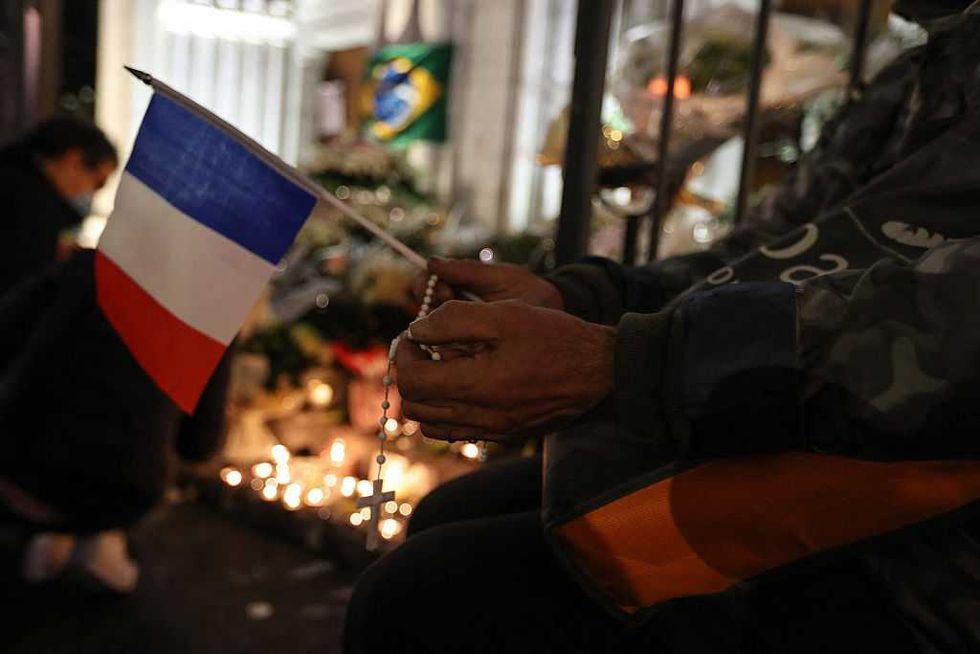 Photo by VALERY HACHE/AFP via Getty Images.
Nevertheless, OIDAC indicated that this reflects a general decrease over 2023 — a year when there were 2,444 reported hate crimes. The decrease is partly the result of a dip in recorded incidents in France but largely the result of “lower figures reported by U.K. police, which noted a change in methodology in its official report,” the report reads.
Of the 516 anti-Christian hate crimes independently recorded by OIDAC last year, the most frequent form of violence was vandalism, at 50% of reported incidents, followed by arson attacks, 15%; desecration, 13%; physical assaults, 7.5%; theft of religious objects, 5.5%; and threats, accounting for 4% of incidents. These figures do not account for burglaries at religious sites, of which there were nearly 900 additional recorded cases.
While reported anti-Christian hate crimes have generally decreased, the number of personal attacks — including assault, harassment, and threats — “rose from 232 in 2023 to 274 in 2024.”
The watchdog indicated on the basis of police and civil society data that the top five European nations most affected by anti-Christian hate crimes last year were, in descending order, France, Britain, Germany, Austria, and Spain.
Among the incidents highlighted in the worst-rated country, France, were the destruction of historic Church of the Immaculate Conception in Saint-Omer by an arsonist on Sept. 2, 2024, and the March 11, 2024, vandalism of a church and desecration of the cemetery in the village Clermont-d’Excideuil, where “Isa will break the cross” and “Submit to Islam” were spray-painted on graves, the war memorial, and the church door.
Since many of the offenders have not been apprehended, the watchdog group could not say definitively what is driving this trend. However, among the 93 cases OIDAC documented wherein the perpetrators’ motives or affiliations could be established, “the most common were linked to radical Islamist ideology (35), radical left-wing ideology (19), radical right-wing ideology (7), and other political motives (11). Additionally, 15 incidents featured satanic symbols or references.”
Like Blaze News? Bypass the censors, sign up for our newsletters, and get stories like this direct to your inbox. Sign up here!
Copy Our Neighborhood Pie Night Tradition If You Want To Build A Better Community

 In an age where the idols of dissociation and personal comfort demand empty reverence, it is healthy to remind our souls that we are embodied creations living in specific places and communities.
Jehovah’s Witnesses: Worshipping with the most hated denomination
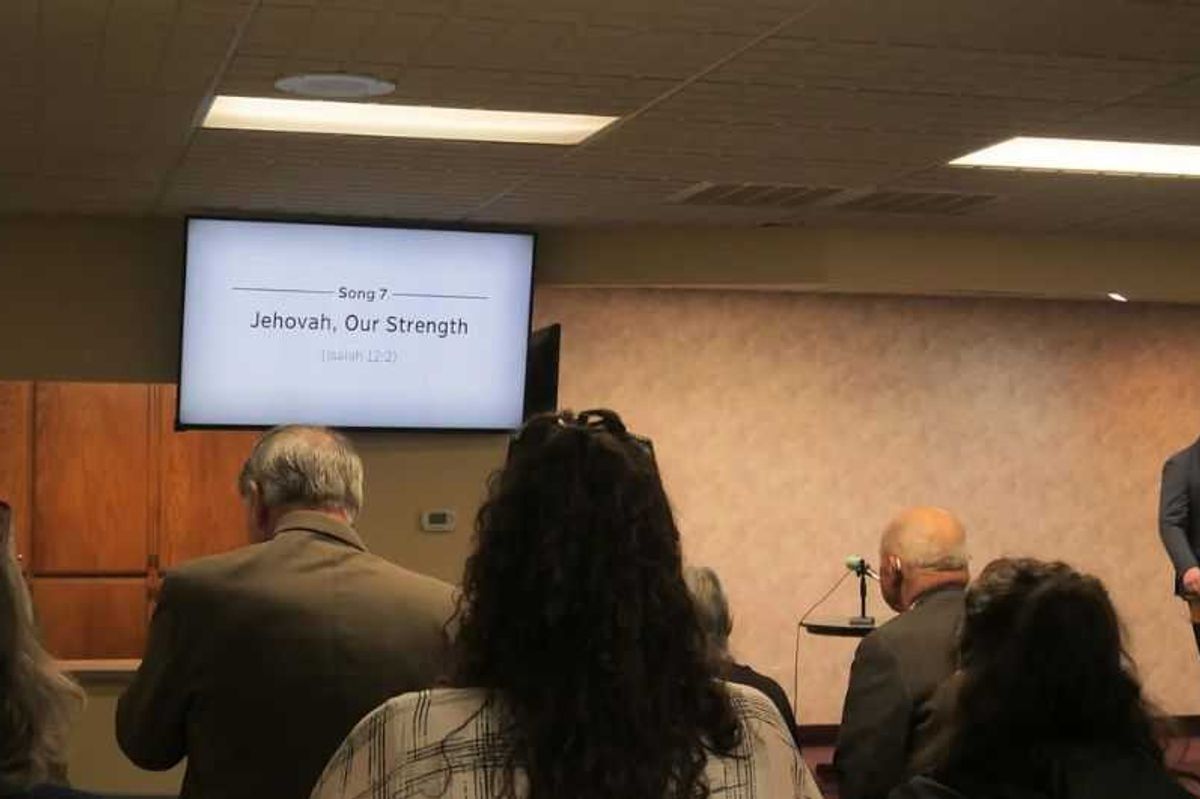
After attending a somewhat run-of-the-mill novus ordo Mass with only a few redeeming qualities, my husband and I decided to visit another church in Nevada that is possibly one of the most hated and misunderstood Christian denominations — even with the Latter-day Saints and Seventh-day Adventists.
It was both his and my first time attending a Jehovah’s Witness church.
‘I personally don’t want to go to heaven, but want to remain on Earth when we’re resurrected. I want to live among the animals and trees and plants and not rule over others.’
We walked 40-some minutes to the Kingdom Hall of Jehovah’s Witnesses and were greeted warmly, even though we were two minutes late and the congregation had already begun singing the first hymn. The setting might have been bland, but I felt I had achieved a bucket-list goal.
For years I’d tried to visit a Kingdom Hall. The Jehovah’s Witnesses were one of the last churches to reopen nationwide after COVID, offering online meetings for nearly two and a half years, until summer of 2022. Even after that, many remained closed for another year, and a large portion still host hybrid Zoom/in-person gatherings for the immune-compromised.
Kingdom Hall
To many, the inside of the meeting hall would appear no different from a conservative Protestant church. Most women wore skirts or business suits; the men were in full suits. The carpet was gray, the walls plain, decorated with a few pictures of flowers. There were no windows.
Rows of theater chairs faced a pulpit. Though the Jehovah’s Witnesses do not have ordained ministers, any baptized man may teach from Scripture. On the day we visited, a guest speaker from Idaho — tailored suit, bright red tie — delivered a sermon much like any Protestant pastor’s, citing extensive Bible verses to support his points. There was no American flag, unsurprising given JW pacifism. Jehovah’s Witnesses do not vote, and while they don’t forbid self-defense, they register as conscientious objectors during drafts. They believe that those who live by the sword will die by the sword (Matthew 26:52).
RELATED: Church-hopping: Confessions of an itinerant worshipper
 Keturah Hickman
The sermon
The message, titled “Is There in Fact a True Religion from God’s Standpoint?” began with statistics: 85% of the world identifies as religious, 31% Christian, across 45,000 denominations — with a new one forming every 2.2 days. “But how does Jehovah want to be worshipped?” he asked.
He read from Mark 7:6-7 and James 1:26, then cited Solomon: True religion is to fear God and keep His commandments (Ecclesiastes 12:13). More verses followed — Isaiah 48:17-18, Micah 6:8, Matthew 7:16 — arguing that true belief and conduct must fit like a well-tailored suit, not mismatched pieces.
He condemned most Christian denominations for justifying slavery so that men might Christianize pagan souls for the kingdom of God. He pointed out that the Jehovah’s Witnesses never supported such horrid beliefs. (He failed to mention that slavery was already abolished by the time they came along.) He warned against fatalism, ancestor worship, and faith in human institutions. “If a religion permits or promotes practices the Bible condemns, it is not true,” he said, citing Colossians 3:10, John 8:32, James 3:17-18, and others.
“Truth is found in the word of God,” he concluded. “When we love the word, we are peaceable.”
The sermon ended with the JW hymn “My Father, My God and Friend (Hebrews 6:10).”
All along the Watchtower
After the hymn, an elder read from “The Watchtower,” the denomination’s monthly study magazine. Before the group was called Jehovah’s Witnesses, it was the Watch Tower Society, founded by Charles Taze Russell in 1881.
The article that day was “Jehovah Heals the Brokenhearted” (Psalm 147:3). The elder read each paragraph aloud, then passed the microphone for congregants — men and women, in person or on Zoom — to share reflections.
Here are some highlights.
- Satan wants us to wallow in our feelings. Jehovah wants us to defy Satan and serve Him. When we do that, He sees us and is moved to help us.
- Jehovah doesn’t keep track of our sins, but only of the good we do.
- Jehovah does not put a time limit on our prayers as if it were a therapy session. We can pray to Him for as long as we like, and He’ll keep listening.
- The Son’s sacrifice forgives our past sins so we can move ahead into the future.
- We can comfort each other by being gentle and genuine.
- We are not to blame for how others hurt us.
It was repetitive but sincere — an hour-long group meditation on comfort and resilience.
The service ended with another hymn. There was no tithe, and communion is held only once a year for those who believe they are among the 144,000 destined for heaven.
The congregants
Afterward, several congregants welcomed us. One woman, Linda, about 70, explained that she had converted from Protestantism before marrying.
“There aren’t many differences between us and other churches,” she said, “except that we don’t teach what other places teach.”
“Such as?”
“We teach that Jehovah is Almighty God and that Jesus is His son and our Messiah. And we don’t believe in hellfire,” she said. “You can’t really find that idea in the Bible.”
I asked her if that meant that she believes everyone goes to heaven or if they just die.
She said, “The Bible says 144,000 go to heaven to be kings and priests to be the government of the kingdom of heaven that will come to Earth. I personally don’t want to go to heaven, but want to remain on Earth when we’re resurrected. I want to live among the animals and trees and plants and not rule over others.”
Linda gave me a small Bible — I gladly accepted it because it was lightweight and would fit perfectly into my backpack, and until now I had only been able to carry a New Testament. She explained to me that the Jehovah’s Witnesses didn’t approve of many of Scofield’s notes in the KJV and that their version had more accurate cross-references. I love having various versions of the Bible to read through, so there was no complaint from me!
She invited us to join her husband and friends at a cafe for a late lunch. And so we went with about 20 other congregants. I sat by a woman just a little older than I. Ozzy had been raised in the Jehovah’s Witnesses and had spent much of her youth as a traveling nanny. She told me that nearly six years ago she had married a Grace Baptist Church man and had a daughter with him. They eventually divorced. “I’m just grateful my daughter is learning about God in both homes she’s raised in,” she said.
Although Ozzy did not speak ill of her ex-husband, it was clear that she thought her expression of faith was more valid than his. So I asked her what was different between the two theologies, in her opinion.
“That’s a good question,” Ozzy said. “Not much.”
Then she added:
Except how we define the Trinity — you know, you can’t find that word in the Bible. I’ve searched every translation of the Bible, so I know. We both believe in the concept, though JW is more literal and bases their definition on how the Bible describes it. We believe that the Father, the Son, and the Holy Spirit are three separate entities united by a common will. Grace Bible Church is more Catholic when they talk about the Trinity.
After a day with them, I found them sincere and Bible-focused, hardly cult-like. They loved God, quoted Scripture freely, and treated us with warmth — even when I somewhat aggressively asked about one of their more infamous beliefs.
“I have heard that your church does not allow people to get blood transfusions and that this has caused many people to die.”
“Yes, we believe blood is sacred and not to be spilled in war nor ingested for any reason,” Linda responded. “But blood can be divided into four components, and it is okay to receive any of those minor fractions.
“Most people don’t even need blood transfusions as much as they used to,” she added, noting that “scientists have discovered that there are healthier ways to fill a low blood count with supplements and iron.”
Are the Witnesses a cult?
I’m not sure what makes a group a cult any more. Some say it’s when people follow a man rather than the Bible — but the Jehovah’s Witnesses have no central figure. They encourage personal Bible study.
Interestingly, 65% of members are converts — adults who join by conviction, not birth. While many leave, those who stay do so deliberately. Angry ex-members exist in every religion, and that alone doesn’t define a cult.
Much of JW doctrine is nothing your average Protestant would quarrel with: anti-abortion but pro-birth-control, personal responsibility for family size, and no institutional oversight (beyond guidance from JW Broadcasting in New York). There’s also no enforcement mechanism for rules on blood transfusions or holidays.
There are 8.6 million Jehovah’s Witnesses worldwide, compared to 15.7 million Jews, 17 million Mormons, and 22 million Seventh-day Adventists. Many Protestants single out the denomination’s rejection of transfusions, but the Jehovah’s Witnesses are neither faith healers nor anti-medicine. They are pacifists but politically moderate and scientifically literate.
Charles Taze Russell
Jehovah’s Witnesses founder Charles Taze Russell was raised Presbyterian. At age 13 he left his church to embark upon a kind of quest for the truth, for a time backsliding into unbelief.
Known for writing Bible verse on fences as a way to evangelize, he founded a group called the Bible Student Movement in 1879. Much like Mormons, the Two by Twos, and the Jim Roberts Group, his group grew by sending out pairs of men to preach the word of God directly from the Bible.
Despite Russell’s zeal, his life was riddled with scandal. He divorced his wife after she demanded a larger editorial influence on “The Watch Tower.” He sued for libel often, occasionally winning — one time the jury mockingly ruled in his favor but gave him only one dollar, and so he filed an appeal and received $15,000.
After wrongly predicting the end of the world numerous times, Russell died in 1931. The group split apart. Approximately a quarter of the members remained faithful to Russell’s successors and began calling themselves Jehovah’s Witnesses.
Their use of the name “Jehovah” also irritates critics, though it appears in the King James Bible (Exodus 6:3; Psalm 83:18; Isaiah 12:2; 26:4).
Their rejection of the Nicene Trinity remains the sharpest point of division — a doctrine codified by the Catholic Church and later adopted by nearly all of Protestantism. It’s an irony of history: Protestants who define themselves against Rome still use Rome’s creed as the boundary of belief. Disagreement with that doctrine, however, does not make a faith a cult.
The trend to schism
One striking point from the sermon stayed with me: Every 2.2 days a new denomination is created.
Until the 16th century, Christianity had only a handful of branches. Now there are 45,000. The JW speaker said it is because everyone seeks truth; I think it’s because we’ve forgotten love.
As Paul wrote in 1 Corinthians 13: “If I have all faith so as to move mountains but do not have love, I am nothing.”
What merit is truth without love? God does not honor self-righteous division. This, perhaps, was Martin Luther’s and Henry VIII’s greatest sin — their pride tore Christ’s body into pieces.
Protestants readily maintain friendly regard for Judaism, which does not accept Christ’s divinity, while showing far less tolerance for groups such as Jehovah’s Witnesses, Mormons, or Adventists — who profess Jesus as Lord and Redeemer.
For this reason, I urge believers: Visit all churches. Seek unity where possible. Not to follow fads, but to love the whole body of Christ — even the Jehovah’s Witnesses.
Packed churches, skyrocketing conversions: Is New York undergoing a Catholic renaissance?

The years-long trend of American de-Christianization recently came to an end, with the Christian share of the U.S. population stabilizing at roughly six in ten Americans, according to Pew Research Center data. Of the 62% of adults who now identify as Christians, 40% are Protestants, 19% are Catholics, and 3% belong to other Christian denominations.
There are signs in multiple jurisdictions pointing to something greater than a mere stabilization under way — at least where the Catholic Church is concerned.
The New York Post recently found that multiple New York City Catholic parishes have not only seen a spike in conversions but their churches routinely fill to the brim. That’s likely good news for the Archdiocese of New York, which was found in a recent Catholic World Report analysis to have been among the 10 least fruitful dioceses in 2023 in terms of baptism, conversion, seminarian, and wedding rates.
‘We’ve got a real booming thing happening here.’
Fr. Jonah Teller, the Dominican parochial vicar at Saint Joseph’s in Greenwich Village, told the Post that the number of catechumens enrolled in his parish’s Order of Christian Initiation of Adults for the purposes of conversion has tripled since 2024, with around 130 people signing up.
Over on the Upper East Side, St. Vincent Ferrer has seen its numbers double since last year, jumping to 90 catechumens. The Basilica of St. Patrick’s Old Cathedral has reportedly also seen its numbers double, ballooning to around 100 people. The Diocese of Brooklyn doubled its 2023 numbers last year when it welcomed 538 adults into the faith and expects the numbers to remain high again this year.
Attendance in New York City reportedly skyrocketed in the wake of the assassination of Charlie Kirk, who was apparently attending mass with his Catholic wife, Erika, and their children.
RELATED: Charity, miracles, and high tech — here’s how these monks built a massive Gothic monastery
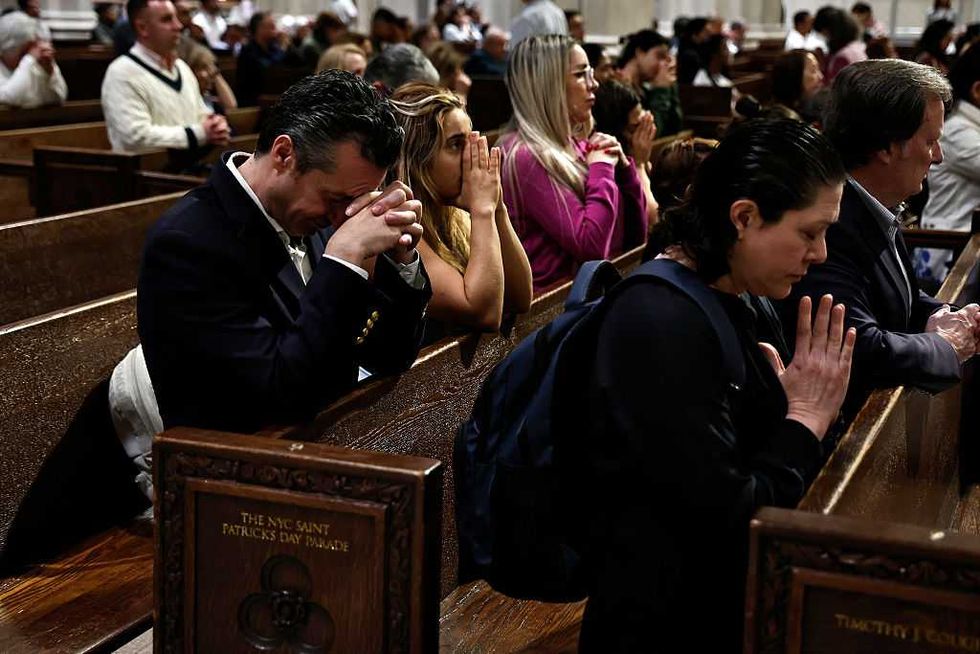 Photo by John Lamparski/Getty Images
“We’re out of space and exploring adding more masses,” Fr. Daniel Ray, a Catholic Legionary priest in Manhattan, told the Post. “We’ve got a real booming thing happening here, and it’s not because of some marketing campaign.”
While a number of catechumens cited Kirk’s assassination as part of what drove them to the Catholic Church, others cited a a desire for a life- and family-strengthening relationship with God; a desire to partake in the joy observed in certain devout Catholics; a desire for community; a desire for “guardrails”; and a desire for anchorage and meaning in a chaotic world where politics has become a substitute for faith.
“My generation is watching things fall apart,” Kiegan Lenihan, a catechumen in the OCIA at St. Joseph’s told the Post. “When things all seem to be going wrong in greater society, maybe organized religion isn’t that bad.”
Lenihan, a 28-year-old software engineer, spent a portion of his youth reading the works of atheist intellectuals such as Christopher Hitchens and Richard Dawkins. After experiencing an anxiety-induced crisis at school, he apparently sought out something of greater substance, devouring the works of Marcus Aurelius. He found that his life still lacked greater meaning despite achieving material success.
‘The Catholic Church is a place of sanity.’
“I realized on paper, I had everything I wanted, but I had no fulfillment in my soul,” said Lenihan, who remedied the problem by turning to Christ.
Liz Flynn, a 35-year-old Brooklyn carpenter who is in OCIA at Old St. Patrick’s, previously sought relief for her anxiety and depression in self-help books and dabbled in “pseudo spiritualism.”
After finding a book about God’s unconditional love for his children in a gift shop during a road-trip stop at Cracker Barrel, she began praying the rosary and developed an appreciation for Catholicism.
“I’m happier and calmer than I’ve ever been,” Flynn told the Post. “Prayer has made an enormous impact on my life.”
New York City is hardly the only diocese enjoying an explosion in conversions.
The National Catholic Register reported in April that numerous dioceses across the country were seeing substantial increases in conversions. For instance:
- the Diocese of Cleveland was on track to have 812 converts at Easter 2025 — 50% more than in 2024 and about 75% more than in 2023;
- the Diocese of San Angelo, Texas, expected 56% more converts in 2025 (607) than in 2024 (388);
- the Diocese of Marquette, Michigan, was expected to see a year-over-year doubling of conversions;
- the Diocese of Springfield, Illinois, was expected to see a 59% year-over-year increase;
- the Diocese of Grand Island, Nebraska, was set for a 45% increase;
- the Diocese of Steubenville, Ohio, was expecting a 39% increase in converts; and
- the Archdiocese of Los Angeles noted a 44% increase in adult converts.
Besides the Holy Spirit, the conversions were attributed to the National Eucharistic Revival, immigration, and evangelization.
Pueblo Bishop Stephen Berg told the Register that people are flocking to the church because it stands as a bulwark against the madness of the age.
“I think the perception of the Catholic Church is changing,” said Bishop Berg. “In a world of insanity, I think that people are noticing that the Catholic Church is a place of sanity.”
“For 2,000 years, you know, through a lot of turbulent times — and the Church has been through turbulent times — we still stand as the consistent teacher of the faith of Christ,” continued Berg. “The people are intrigued by that.”
As of March, 20% of Americans described themselves as Catholics, putting the number of Catholic adults at around 53 million nationwide.
Like Blaze News? Bypass the censors, sign up for our newsletters, and get stories like this direct to your inbox. Sign up here!