

Category: God
Matthew McConaughey: Choose God and family, not ‘participation trophies’
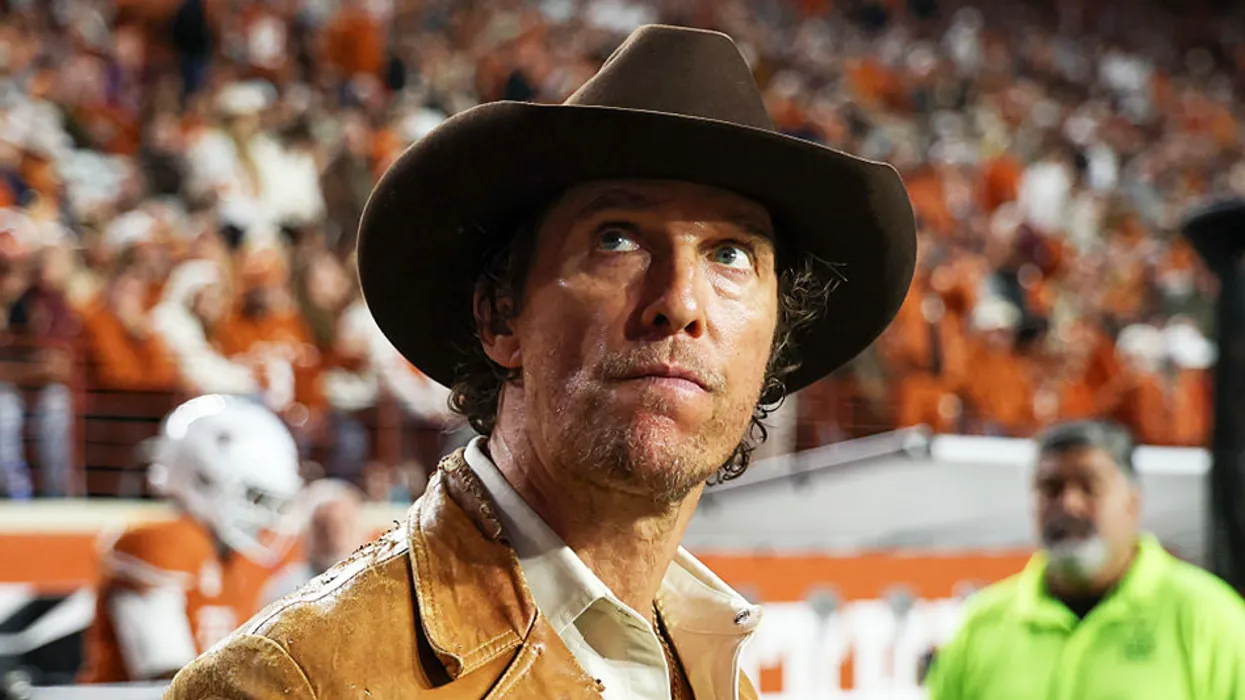
Matthew McConaughey doesn’t want participation trophies, and he doesn’t want success to be watered down.
The iconic actor recently gave a speech only he could deliver, forgoing giving traditional advice in favor of providing his own spiritual leanings that work for him.
‘I think in the West, because we want everyone to feel really great, participation trophies!’
The movie star was asked about how he critiques his performances on screen and how he gauges success.
“I know if I’m bogeying or if I’m birdieing. … I’ve seen myself on screen [and thought], ‘You’re kind of bulls***ting there,'” McConaughey told host Jay Shetty on his podcast.
Faking the grade
From there, McConaughey trashed the idea of expanded grade-point averages through extra credit.
“I’m not into extra credit. I don’t like 4.2 GPAs. That tells me, like, what happened? Are we, then, we’re not giving the right test? If 4.0 was the pinnacle, you know, that means not many people should be getting it, if anybody,” he explained.
The Texan said that with higher scores, institutions have either over-leveraged the original task or broadened the scope of scoring and therefore cheapened the credit.
“I think in the West, because we want everyone to feel really great, participation trophies! 4.2 GPA. Well, I feel better,” he said sarcastically.
It was from there that McConaughey began to explain where he seeks validation from, which was the true shining light of the discussion.
RELATED: Matthew McConaughey calls for ‘gun responsibility’ not gun control, goes on to demand gun control
Heavenly helpers
Aside from his wife and kids, McConaughey revealed he has a trio of people in heaven that he looks to for reactions — and God’s reaction through them.
“I have a council in the sky. Three people that are extremely important to me in my life: my dad, Penny Allen, and John Cheney.”
While the 56-year-old explained that Cheney is his old friend, it was not clear who Allen is.
“I see them, wink at them, talk with them, listen to them … run ideas by them, run decisions by them, and then I look up and see what their reaction is. And it’s been a very trusted council for me.”
This is a way to put “souls that are no longer with us” in “a heaven sense,” he explained. “They’re a conduit from God to me, and I have no expectations of them.”
In God he trusts
It doesn’t always go well for McConaughey, though. Sometimes his dad is “dancing in his underwear with a Miller Lite and a piece of lemon meringue pie,” he laughed, but sometimes “they’re not dancing,” and he has to figure out why.
RELATED: Matt Damon: Netflix dumbs down movies for attention-impaired phone addicts
 Photo by PG/Bauer-Griffin/GC Images
The Uvalde, Texas, native said it is very important to him to not have a picture of God in his mind, as he does not want to minimize his meaning.
In the end though, this all leads to McConaughey seeking his own validation, he admitted.
“I try to measure how I counsel and referee myself off of some of the people I just brought up to you,” he told the host.
“That’s where I prove it.”
McConaughey added that he does not look too far outside his own circle, because those he knows are who he trusts.
Like Blaze News? Bypass the censors, sign up for our newsletters, and get stories like this direct to your inbox. Sign up here!
Dancing in the Street, Listening for God
When I first saw the Grateful Dead play, I was just shy of 17, on December break, my junior year…
The Christmas Gift of Walter Russell Mead
This Christmas season, do yourself a favor by clicking on Providence magazine, a journal devoted to Christian realism, to read…
Why the pro-life movement fails without a Christian worldview

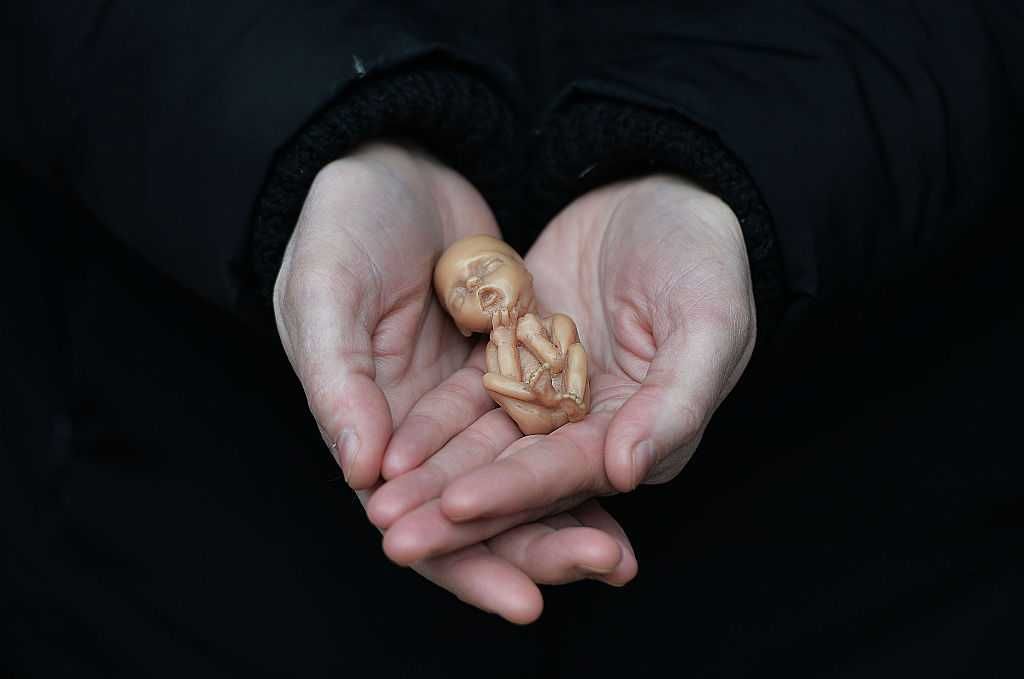
In the United States and other Western nations, pro-life organizations are the primary means through which conservative Christians oppose legalized abortion.
With their cultural engagement and legislative efforts, these pro-life groups and leaders purport to oppose the murder of preborn babies, ultimately desiring the complete end of abortion. But a simple examination of the worldviews held by these groups shows that many are not operating in a distinctly Christian fashion, even when they are led by professing Christians.
We continue to practice child sacrifice today through abortion.
Some pro-life organizations are self-admittedly non-sectarian, seeking to build coalitions of anti-abortion people who may be Christians, other religious conservatives, agnostics and atheists, or feminists.
But even the pro-life groups that are convictionally Christian, or led by convictional Christians, often functionally set aside the Christian worldview.
The church through the ages, bearing the gospel of life, has been the means by which the deathly deeds of child sacrifice have been overturned in countless cultures. The dearth of a Christian worldview in the current anti-abortion movement should, therefore, be gravely concerning to any believer who likewise wants to see modern child sacrifice abolished.
The doctrine of man
Christianity teaches that humans are creatures made in the image of God with rational souls (Ecclesiastes 7:29), but that mankind fell in the Garden of Eden (Genesis 3:1-7) and became dead in sin (Ephesians 2:1-3). We, therefore, have a thoroughly corrupted nature by which we are innately inclined toward evil (Romans 3:10-18).
The act of child sacrifice is one particularly brazen form of evil toward which man has always been predisposed. The murder of children for reasons of prosperity or convenience has occurred on every continent and was practiced by most major civilizations at some point in their history.
We continue to practice child sacrifice today through abortion.
In almost every abortion decision, the motivation is a rejection of inconvenient responsibility, the desire to prioritize college or career, or some other factor that could never even start to approach a justified reason for murdering an innocent human made in the image of God.
Western nations used to presuppose the Christian worldview. But in recent centuries, Enlightenment ideas have corrupted or entirely usurped the Christian worldview, especially concerning the sinful state of human nature.
Rather than saying that mankind is a valuable yet fallen creature, Enlightenment heretics taught that humans are fundamentally blank slates or even morally good and that with education or infusion of knowledge, mankind can experience true moral progression.
Such a worldview can be seen in pro-life groups claiming that “if wombs had windows, babies would be protected from abortions.” Others say that they are working to “make abortion unthinkable,” as if sin could ever be made completely unthinkable to fallen sinners.
Enlightenment presuppositions about human nature also impact pro-life legislative strategy. Many pro-life groups try to pass laws that seek to mandate informed consent or require viewing ultrasounds before a woman willfully decides to murder her preborn baby.
While some pregnant mothers, especially those who are already soliciting the help of a crisis pregnancy center, may choose life after seeing an ultrasound image of their babies, there are still plenty of others who choose to murder their babies even after seeing the images.
In other words, abortion is not caused by mere ignorance, but by the selfish desires of fallen men and women who value their own prosperity or convenience more than the very lives of their children.
We indisputably live in a culture of death that increasingly accepts abortion. But the development of this culture has occurred alongside the most rapid development of ultrasound technology.
In past generations, mothers and fathers did not see advanced ultrasounds of their preborn babies, yet those generations were considerably more anti-abortion than their children and grandchildren are today. In our current culture, everyone has seen ultrasounds of their own children or the children of others, but abortion is more accepted and even normalized, despite this increased knowledge about life in the womb.
The answer to legalized abortion is not merely an infusion of more education or knowledge for those who would willfully murder their preborn babies.
The answer to legalized abortion is to make abortion illegal. But pro-life organizations are often hesitant to embrace such a position.
The doctrine of government
Christianity teaches that God has established civil authorities to govern human society (Genesis 9:6). These civil authorities are servants of God commanded to bear the sword (Romans 13:1-7) against those who practice evil (1 Peter 2:14). The government exists under the dominion of Jesus Christ (Revelation 19:16) to uphold the public good and to deter evil conduct through the threat of swift punishment (Ecclesiastes 8:11). The act of murdering a preborn baby qualifies for such penalties (Exodus 21:22-25).
Most pro-life organizations would agree with God that abortion is murder. Many would agree that because preborn babies are made in the image of God, there is no inherent moral difference between murdering a person who has been born and a person who has not yet been born.
But when legislating against abortion, they almost never extend that moral equivalence into a legal equivalence, and they functionally address abortion as less than murder.
Many pro-life groups have even actively subverted efforts to establish equal protection of the laws for preborn babies.
Rather than simply treating abortion as murder, they self-admittedly seek to be “innovative” with the laws they write, and they almost never create effective anti-abortion deterrents as a result.
The vast majority of pro-life bills regulate the circumstances of abortion. They allow for abortion once certain conditions are met, such as murdering a baby provided that he or she receives a proper burial, or murdering a baby before he or she reaches a certain stage of development.
Some even adopt the false moral framework of abortion activists by regulating abortion like health care. They allow abortion after the woman who desires to murder her preborn baby first obtains permission from a doctor, essentially legitimizing and sanitizing abortion through the health care system.
There are many proposals specifically targeted at providers of abortion pills, ignoring the reality that even if the flow of abortion pills is truly halted, many methods of abortions exist beyond those substances and have become increasingly popular in recent years.
These laws largely shift behavior rather than save lives, ensuring that abortions continue through legally sanctioned channels instead of deterring the act of abortion entirely.
The emphasis of these pro-life regulations is not criminalizing abortion as murder. If the pro-life groups that write such legislation acted consistently with their professed beliefs about abortion as murder, they would seek to criminalize all abortion accordingly.
But instead of pursuing such an objective, many pro-life groups have even actively subverted efforts to establish equal protection of the laws for preborn babies.
Christian organizations have repeatedly proposed bills that would simply extend the existing homicide, assault, and wrongful death laws that protect born people in order to protect preborn people. Rather than supporting those bills, leading pro-life groups have issued a national open letter to all lawmakers in the U.S., urging them to oppose such proposals because they could lead to penalties for women who willfully have abortions.
Over the past decade, state and national pro-life organizations have been instrumental in subverting dozens of equal protection bills, largely in conservative states that should otherwise have the power to abolish abortion.
The task of civil authorities, as the Christian worldview affirms, is the punishment of wicked conduct, which preserves innocent life by deterring future wicked conduct and provides justice on behalf of the victims. God clearly expects abortion, which is an act of murder, to be punished by civil authorities.
When pro-life groups advocate for regulating abortion rather than punishing those who willfully murder their preborn babies, they protect the legally sanctioned practice of abortion and keep the sword of justice in the sheath.
These pro-life groups not only enable the murder of preborn babies made in the image of God, but protect conduct that damages the bodies and souls of the perpetrators.
The doctrine of repentance
Christianity teaches that repentance occurs when a sinner sees his or her sin as contrary to the nature and law of God (1 John 3:9), despises those sins (2 Corinthians 7:10), and turns from them to Jesus Christ (Acts 17:30-31). In order to properly confess sins, one must specifically name and acknowledge them before God (Psalm 32:5).
Many pro-life organizations not only oppose laws that could impose penalties on women who willfully have abortions, but actively write blanket legal immunity for women who have abortions into their laws. They insist that women who have abortions are categorically second victims, meaning that they cannot be held legally accountable for their actions.
Some pro-life groups claim that most women are coerced into abortions. Others insist that our culture of death removes all accountability from women by indoctrinating them into believing that their preborn babies are mere clumps of cells.
Such arguments are then used to support laws exempting all women — including those who can be shown in a court of law to have willfully murdered their preborn babies — from any criminal penalties.
But the assertions about widespread coercion are simply not true, as even surveys sponsored by pro-life research groups indicate that only a very small minority of women are truly forced into abortions they do not want.
In the same way, merely choosing to convince oneself of falsehood does not excuse evil actions that follow from those lies and almost never qualifies for the mistake of fact necessary to excuse someone of legal culpability.
Beyond the poor arguments required to support the claim that all women are categorical victims of abortion, and the ways in which they undermine the cultural and political credibility of pro-life groups, these arguments also deprive women who have had abortions of true repentance and, therefore, true forgiveness.
Those with a Christian worldview would invite a woman who has murdered her own preborn baby to confess her sin before God and receive abundant forgiveness through the gospel. But pro-life groups and leaders who believe that all women are second victims of abortion have little to offer such women beyond hollow “sympathy” and therapeutic reassurance.
If a woman is a mere victim who has not committed sin, then she has no need of repentance because she has no specific fault to confess before God.
But most women are willful participants in their own abortions. When pro-life groups insist to all women that they are indeed victims, they rob the very women they claim to love of any hope for true peace and pardon.
The pro-life groups functionally seeking to oppose abortion outside the Christian worldview will continue in their failure to end abortion. They will continue to lose, not only to the detriment of their cause but to the detriment of countless millions of preborn babies.
Christianity alone has the potency to end child sacrifice in a depraved civilization like the U.S. and the broader Western world. If we want to abolish abortion, Christians must never set aside the truth of God, but instead rely on the light of those truths to dispel the darkness of child sacrifice once and for all.
Why the world hates strong men — but it’s exactly what God wants
Something has gone wrong.
After years of being told they are toxic and problematic, many men have simply cowed in deference to the spirit of our age. They imbibed the poisonous slogans and succumbed to what the world says about them.
Those who live day after day in a state of passivity give themselves over to a lie.
Some men attempt to punch back either by embracing their “toxicity” or ideologies that are slapped onto them.
The temptation in such an age is for men to become passive. This passivity is not a new temptation for men. It is the same temptation that Adam failed to defeat in the garden. Passivity is that peculiar behavior that gives into evil, often standing back and doing nothing. It is the soul bowed in deference.
The passive man does not resist the evil doer, he gives in, and doesn’t stand firm in the faith.
Even in reacting against the spirit of the age, men can become passive and allow the enemy to set the terms of the engagement. The more common expression of passivity is the man who becomes “nice” in order to placate like a dog who cowers and tucks its tail hoping to stave off any harm. The passive man is an agreeable man. He wants to keep his head down. He would rather be dead than ever appear intimidating to anyone or anything.
The man who rejects passivity, on the other hand, is often perceived to be arrogant. He is something who can be accused of “thinking too highly” of himself.
But the opposite of passivity is not arrogance but agency.
We need men of agency. Men who act, initiate, and change what is within their power to change. Agency is taking responsibility and pushing forward in the face of opposition and obstacles. It is faith in motion. As James 2:17 says, “Faith without works is dead.”
There are two main contentions that keep Christian men particularly from taking agency.
First, they are told that control is a dangerous idol. Christians, men included, are often taught that if they try to exercise control, then they are not trusting God. This is reflected in surveys of pastors who claim that control is a top idol among their churches. Pastor Eric Geiger, for example, identifies “control” as a “root idol.” For Geiger, control is “a longing to have everything go according to my plan.” Heaven forbid that people want things to go according to plan.
Second, they are told that power is inherently bad. Therefore any accumulation of or dispensing of power is considered dangerous and harmful to others. Geiger also frames power itself as a number one root idol that he defines as “a longing for influence or recognition.” He encourages Christians to repent of their longing for power and control.
Both of these spurious notions are not rooted in scripture but in the upside-down world of the enemy who desires that Christians control nothing and have no power.
RELATED: Dear Christian: God didn’t call you to be a ‘beautiful loser’
 RomoloTavani/iStock/Getty Images Plus
Can a Christian idolize power? Sure. Can a Christian idolize control? Yep. But there is very little nuance when these pastors and Christian leaders speak. They simply wish to denounce power and control, both key ingredients in exercising agency.
People who excel at agency — let’s call it “high agency” — know what is within their power and control and how to maximize it for good. People with passivity or low agency instead fall back and behave as if nothing is within their control and that they cannot change anything.
Sadly it seems that low agency is what is required in some churches today. It is often reframed as a virtue where one is fully trusting God when, in reality, they have relinquished control.
Much of the depression, anxiety, and despondency we witness in our world is better understood as passivity and low agency. It is the posture of the soul that just gives itself over to obstacles. Rather than exhibiting resiliency and exertion when in duress, the passive person simply gives up. Consumerism only enables this type of low-exertion lifestyle where people become habituated to quick fixes and easy solutions.
Those who live day after day in a state of passivity give themselves over to a lie: They cannot change, nothing will change, they are helpless.
When believed en masse, this kind of population is easy to control because they have forsaken control themselves. They are always looking for a strong person, ideology, or drink to fix their problems.
This is particularly problematic in Christianity. We believe in providence and human responsibility. We are to love the Lord Jesus Christ by obedience, walking in righteousness and putting to death the deeds of the flesh. Our faith in God should always move us to act in courage as we do not doubt the goodness of God.
Agency works along the path of God’s providence and faith. It is the car on the road — and we are called to accelerate.
God may give you more than you can handle. He is generous in this way. In our feelings of being overwhelmed or swamped, God invites us to take action and trust in Him. If things do not go as planned, we trust the God who is in total control.
We need men today who gain power and control. They must first master themselves to worship the master, Jesus Christ. By the Spirit, we are able to exercise discipline and control over our bodies and put them to good use for God’s glory.
One of the quickest ways to slip into passivity is to wait to act until everything is easy. This day is probably not coming for you. Let’s say you want to get married. The man of agency will take the first step he can in finding a bride instead of just waiting around until she appears.
Passivity often leads to thinking like a victim. It invites jealousy and contempt for others because others seem to be in control and have power. It creates anxiety because it is always worried about failing or things not working out. Instead the agentic man trusts God’s providence, looks at what he has been given, and works out the problem.
In our age of anxiety, agency is the answer.
Agency works along the path of God’s providence and faith. It is the car on the road — and we are called to accelerate (and brake when necessary).
Men who exude agency will be misperceived today. They will be called prideful, toxic, power-hungry, and controlling. But none of these descriptions are necessarily true. They are simply the reaction strong men receive in an age of passivity.
The strong men that are needed in our hard times are ones who take the initiative, assume responsibility, and never give into evil. They are men of high agency.
The hidden hope of Christmas the world needs right now

Amid a dark and weary world, on an evening no one expected, the innocent cries of a baby broke through Bethlehem’s silent night. Hope had arrived and was ringing out for all to hear.
The first Christmas reminds us that God often begins His greatest work not with flash or attention, but with a flicker — a gentle whisper. Light enters quietly, almost hidden, yet strong enough to push back any darkness.
Jesus’ arrival in Bethlehem was God’s declaration that no one is beyond His reach.
That’s the pattern woven throughout scripture. Long before Jesus’ birth, the prophets spoke of a coming Messiah during a time when life felt unstable and discouraging. Their world was marked by division, oppression, and spiritual exhaustion. Many wondered if God still remembered them. Yet the prophets held on to a small, steady flame: a promise that hope was on the way.
Today, many feel that same dimming of hope. Some carry grief that resurfaces sharply during the Christmas season. Others feel worn down by the constant noise, conflict, and division around us. Even in a season filled with lights and celebration, joy can feel hidden.
But God’s story reminds us of this essential truth: Hope is rarely loud or obvious. It doesn’t always arrive in a dramatic or spectacular package. More often, it’s found in quiet faithfulness and small acts of love, moments so ordinary we might miss their significance.
The world expected a powerful king; God sent a child. The world expected a grand entrance; God chose a manger. The world expected an immediate victory; God chose a slow and steady redemption.
If God brought His light into the world through unnoticed moments, why would we expect Him to work differently today?
This is where the mission of Boost Others comes in. We exist to help make that hidden hope visible again. Because hope doesn’t just appear out of nowhere, it grows when people lift one another up. When we encourage someone, when we extend generosity, or when we offer our presence without conditions, we’re doing far more than meeting a practical need. We are participating in the very heart of the Christmas story: shining light into someone’s darkness.
These actions rarely make headlines, but they reflect the character of the Messiah who came not to be served, but to serve; not to condemn, but to lift; not to overwhelm, but to invite.
RELATED: Uncovering the surprising truth behind a beloved Christmas hymn
 lovelypeace/iStock/Getty Images Plus
Jesus’ arrival in Bethlehem was God’s declaration that no one is beyond His reach. When we extend hope to someone else, we are echoing that same message.
When Christ was born, the angels didn’t announce it to the masses but to a few shepherds who happened to be awake. That reminds us that God’s work often unfolds in hidden spaces. The world may overlook smallness, but God uses it.
Hope isn’t always obvious, and it isn’t always immediate. But it is always present, often waiting in the places we least expect. And sometimes, God calls us to be the instruments of comfort and renewal of another person’s life.
This season, more than anything, our world needs people willing to live this way: people who carry the joy of Christ into conversations, relationships, and everyday interactions, people who look for the quiet places where others feel overlooked or discouraged and choose to bring light.
What if the most meaningful gift we could give this Christmas isn’t wrapped at all? What if it’s the way we speak, the way we listen, the way we show up? What if the greatest impact isn’t found in big gestures but in consistent, faithful ones that remind someone that God sees them — and so do we.
Small lights matter. No act is too small. One candle doesn’t eliminate the darkness, but it pushes it back. And when more candles are lit, when more people step forward to encourage, uplift, and bless, the darkness doesn’t stand a chance.
So as Christmas draws near, I invite you to be attentive to the hidden places where hope is needed. Slow down enough to notice who might need a lift. Don’t wait for others to shine, take the first step and inspire others to shine alongside you. God delights to work through ordinary people doing ordinary things with extraordinary love.
When hope feels hidden, it isn’t gone — it’s simply waiting to be revealed. And you may be the one God uses to bring that light into someone’s life, turning a dim flicker into a steady burning flame.
Culture’s great subversion machine has broken down at last
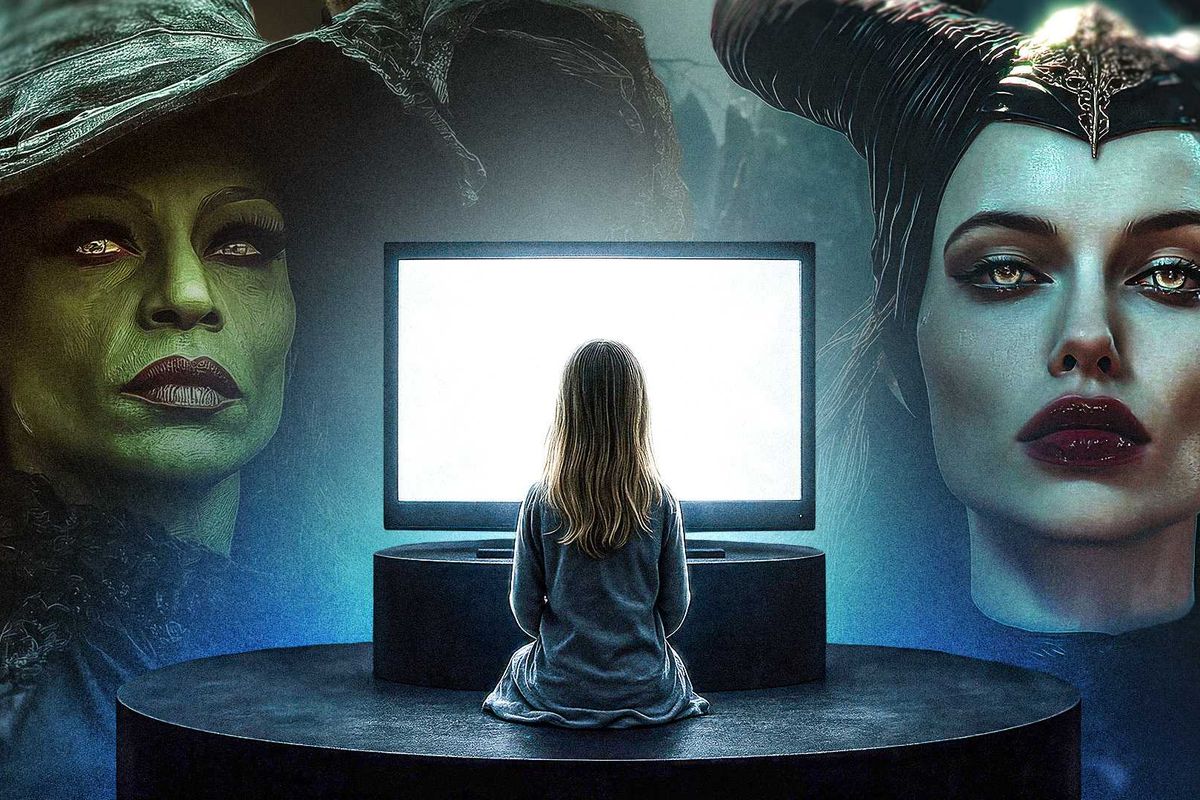
Netflix just announced its next animated children’s film, “Steps,” a Cinderella inversion in which the evil stepsisters are the real heroes. Shocking, I know. The platform is also releasing “Queen of Coal,” a film about a “transgender woman” overcoming the patriarchy in his small Argentinian town.
Reports of the demise of wokeness were premature. Its adherents remain committed to pushing it across every domain of society. What’s notable is how boring it has all become. Deconstruction has been the default mode of modern culture, but it is running out of things to deconstruct. The transgression has lost its power as the taboo fades, and in that exhaustion, something new — perhaps something true — stirs.
The revolution brought destruction, but its exhaustion brings new possibilities.
Some call Friedrich Nietzsche the first postmodernist for announcing that “God is dead.” Whether he was a precursor or ground zero, the genealogy of the movement clearly flows from his work. You can argue about whether he unleashed several horrors into the world or merely acknowledged their arrival, but Nietzsche at least understood the seriousness of his claim. He understood that having the blood of God on your hands was not a clever academic parlor trick — it was monstrous.
With the creator of the universe declared dead, modern man felt free to dismantle the order that once bound him. The sacred bonds of hierarchy were shattered. Postmodernism launched its assault on the good, the beautiful, and the true. And breaking sacred bonds releases immense energy. The leftist revolution that consumed the West drank deeply from it.
The church, the community, the family, marriage, gender roles, gender itself — each time the left destroyed one of these natural structures, it seized the power trapped inside and wielded it against its enemies.
Deconstruction reaches its natural end
But deconstruction has a natural end point. Transgression requires something sacred to violate. As I have written before, you eventually reach the point where there is nothing left to transgress.
When every movie, show, novel, game, and song “subverts” the traditional Christian norm, the subversion becomes the norm. That’s why these Netflix offerings feel so lifeless: They all follow the same trajectory toward the same inversion.
Fifty years ago, critics complained that stories were predictable because the squeaky-clean hero always triumphed. Today they are predictable because the villain is always a misunderstood victim of bigotry who deserves to win. The inversion isn’t clever or subversive. It’s the boring status quo.
The death of who?
So what happens when postmodernism has inverted every hierarchy, mocked every sacred symbol, and squeezed the last drop of power out of attacking Christianity?
The philosopher Alexander Dugin offers a compelling answer. If modernity was the death of God, the end of postmodernism is the exhaustion of subversive secular culture. At that point, new possibilities appear. Instead of proclaiming that “God is dead,” people start asking, “The death of who?” The old order fades so completely that secular man forgets what he was rebelling against.
Meanwhile, the promise of becoming like gods and remaking the world in our own image begins to sour. We see the consequences of rejecting the good, the beautiful, and the true — and find them unbearable.
A postmodern moral wasteland
Postmodern man has lived his entire life in a world re-engineered from the top down by “experts.” When he cast God from His throne, man imagined he would shape the world through his own individual will. But the modern secular man discovers instead a moral wasteland. He finds that he is captive not to his own liberated self, but to darker forces once held at bay by the divine order he dismantled.
He no longer remembers what that order looked like — or why he rebelled against it. And in that moment, the opportunity to rediscover the spiritual returns.
RELATED: We’re not a republic in crisis. We’re an empire in denial.
 Blaze Media Illustration
The revolution brought destruction, but its exhaustion brings new possibilities. People have forgotten the object of their rebellion, and now they look at the miserable world secular man has made. They crave something more.
Order, duty, faith, meaning. These begin to look far more promising than the ugly, pointless chaos modern man created for himself. People once again thirst for a world where the good guy wins and God reigns.
God never died — modernity did
The truth is that God never died. Christ died and rose again. Modern man tried to replace the divine with science and reason, but the Lord is the source of reason itself. He cannot be dethroned by His own creations.
As deconstruction loses its revolutionary energy and becomes stale, the desire to re-embrace sacred order returns. J.R.R. Tolkien captured this when he wrote: “Evil cannot create anything new. It can only spoil and destroy what good forces invented or created.” Eventually evil runs out of things to spoil. A barren, thirsty culture begins searching for the living water only divine truth can provide.
Ready for revival
Modern culture is bankrupt, and everyone feels it. The attempts at transgression now read as hollow conformity to a corrupted system. We are not the masters of our own world or our own truth — and thank God for that.
We do not have to live in the nihilistic abyss we created. The natural order waits just beneath the surface, ready to re-emerge in a cultural revival.
The creative future will not come from a relativistic Hollywood clinging to the corpse of deconstruction. It will come from those willing to embrace the transcendent — from those who understand that the world is held together not by our will to power, but by the truth and beauty of our Creator.
The West is terrified of reality — but this Christian priest says it out loud

Fr. Brendan Kilcoyne is one of the few priests in Ireland with the courage to say what others won’t.
Week after week, he tells the truth that the rest of public life tiptoes around: Ireland, like Britain and much of the West, is being reshaped by two forces at once — an aggressively secular culture that mocks belief, and a rising influx of people whose values come from religious traditions deeply at odds with Christianity.
This is the part the West refuses to face: A culture without God doesn’t stay neutral.
Both currents weaken what remains of Ireland’s Christian foundations. One breaks it down. The other builds something else in its place.
Kilcoyne doesn’t simply call for “legal immigration” — the safe line politicians repeat to sound reasonable — but he goes farther.
He calls for Christian-only immigration, not as a provocation but as a survival strategy for a civilization that once took the gospel for granted. In a country where faith once shaped the architecture of daily life, he argues that if people must come from abroad, they should be people who can carry that faith forward.
He’s right. It’s the only sane path left.
I know this to be true from experience. Ireland hosts thousands of Filipino workers, many of them nurses and care staff. They are some of the warmest people I have ever met. In many ways, they remind many Irish people of an older Ireland — devout, hardworking, grateful, family-centered.
My mother works closely with a Filipino woman in her home-nursing work. She describes her as one of the kindest souls she has ever known. This isn’t some abstract argument about cultural cohesion. Instead, it’s something I’ve watched play out in real life. Their Catholic faith shapes their character, their sense of duty, and their reverence for life. Wherever they go, they make the place stronger.
Contrast that with what just happened in the U.S.
Sarah Beckstrom, a 20-year-old Army specialist, was shot and killed in Washington, D.C. The alleged gunman, Afghan national Rahmanullah Lakanwal, came into the country after the Biden administration’s disastrous withdrawal from Afghanistan. One can’t pretend cases like this exist in a vacuum, any more than one can pretend the grooming-gang scandals in Britain came out of thin air.
These tragedies sit inside a larger pattern. The West has opened its doors to people with radically different expectations about women, law, authority, violence, and faith — and then acts stunned when those differences surface in the streets.
RELATED: Correcting the narrative: What the Bible actually says about immigration
 AndreyPopov/iStock/Getty Images
In America, Islam is on track to become the second-largest religion by 2040, outpacing Judaism and mainline Protestantism. That shift isn’t driven by conversion but by immigration patterns and birth rates.
Let that sink in. A country built on Christian memory and Christian morals is heading toward a religious landscape its founders would barely recognize. None of this is speculation. It’s demographic math.
This matters because religions aren’t interchangeable. They shape law, culture, expectations for public life, attitudes toward authority, dissent, forgiveness, and the value of the individual. A society shaped by the Sermon on the Mount will never think or function the same as one shaped by Islam’s foundational texts.
The two traditions couldn’t be farther apart.
One formed cultures around decency and love of neighbor. The other arose in an age of conquest, tribal loyalty, and rigid obedience. These differences aren’t cosmetic but civilizational. And with Christianity in the West losing its fighting spirit, it’s not hard to see which force will fill the vacuum. Islam is not a private spirituality, but a complete system of life — legal, social, political — built on the expectation that it will shape the society around it.
Again, this isn’t speculation. It’s written into its earliest texts and confirmed by its history, which raises the obvious question: What kind of West emerges when the religious balance tips this far?
Kilcoyne’s message isn’t aimed at Ireland alone. It applies to any nation whose culture was built on Christianity — meaning most of Europe, the U.S., Canada, and Australia.
A society can’t function without shared belief and shared boundaries. Christianity once provided both. It shaped civic standards, festivals, art, manners, and the meaning of freedom. Remove it, and the God-sized space is claimed by something else immediately, like nihilism, resentment, and ideologies far more savage and unforgiving.
While being Christian doesn’t automatically make people decent, it does mean they’re far more likely to share the values that hold a society together.
This is the part the West refuses to face: A culture without God doesn’t stay neutral. It slides into something far less humane. And a country that imports large numbers of people who follow a religion with no respect for Christian norms doesn’t stay stable. It absorbs that religion’s worldview whether it wants to or not.
If immigration is necessary — and in many aging nations it is — Kilcoyne asks why we wouldn’t welcome those whose faith strengthens, rather than weakens, the society they enter.
Why not bring in people who see children not as burdens but blessings, who honor marriage, who take charity seriously, who treat the elderly with care, who believe suffering has meaning, and who know the world is more than appetite and impulse?
These are the qualities that once made the West strong. And while being Christian doesn’t automatically make people decent, it does mean they’re far more likely to share the values that hold a society together.
Sarah Beckstrom is dead. A young woman who trusted her country, trusted its leaders, trusted the system that put her in uniform. If America had been more serious about value-based immigration — if it had prioritized people who share its creed and its cultural instincts — she might still be alive. Her death shouldn’t be treated as another tragic headline to scroll past.
If anything, let it mark the moment the country finally admits that immigration policy isn’t a paperwork issue but a question of national survival in the most literal sense. Let her death mean something.
Let it push America toward choosing people who lift the nation up — not those who drag it into the abyss.
How pro-life leaders betray the one truth they can’t afford to compromise
Many pro-abortion activists brazenly say that abortion is health care. Anti-abortion Christians must respond to such falsehoods by rejecting the premise, instead affirming that abortion is murder — the unjustified taking of a human life made in the image of God.
But here is a widespread problem in the pro-life movement: While pro-life groups broadly reject the claim that abortion is health care, they undermine their own position when they support laws to regulate abortion as health care rather than criminalize abortion as murder.
They should instead agree with the truth of God concerning abortion and work toward criminalizing abortion as murder.
The most recent examples of this sorrowful trend are Ohio Right to Life and the Center for Christian Virtue, two of the leading pro-life groups in the state of Ohio, and their support for House Bill 324, known as the “Patient Protection Act.”
This legislation, according to a press release from the Center for Christian Virtue, would require “in-person exams, clear disclosure of risks, and follow-up care for drugs that cause serious adverse effects” in more than 5% of patients. Ohio Right to Life similarly said that any woman who wants to murder her pre-born baby would first be “required to make an in-person visit to her doctor and be informed of the dangerous side effects before taking the abortion pill.”
House Bill 324 would indeed create an indirect way to target mifepristone — one of the two major substances used in the typical abortion pill regimen. Because a recent study from the Ethics and Public Policy Center asserts that 11% of women who take abortion pills experience “serious adverse events,” the legislation purports to restrict abortion pills because of dangers to women who want to murder their own babies.
There are some unfortunate methodological questions about the study, which likely overstates the extent to which abortion pills actually harm women, a reality that will jeopardize House Bill 324 if eventually passed into law. But in any case, the actual text of House Bill 324 does not even directly mention abortion.
The legislation would require that any “dangerous drug” that causes “one or more serious adverse effects” in more than 5% of “patients” mandate an “in-person examination” and scheduling for a “follow-up appointment.”
RELATED: Why defunding Planned Parenthood is a distraction from the real fight
House Bill 324 does not prescribe any criminal penalties for distributing or taking abortion pills, but instead asks the “director of health” and the “state board of pharmacy and state medical board” to maintain a list of dangerous drugs meeting the requirements of the legislation.
Beyond the flawed legal case for House Bill 324, the entire project surrenders all anti-abortion moral high ground to the pro-abortion side.
When anti-abortion groups say that abortion is murder, then functionally treat abortion as less than murder in the laws they support, those groups erode their own moral witness to the culture and the elected officials of their states.
The very decision of choosing the “Patient Protection Act” as the name of the legislation asserts that women who murder their own babies with abortion pills are patients to be protected instead of perpetrators to be penalized.
House Bill 324 explicitly treats abortion as health care — and by regulating the practice of murdering a pre-born baby with abortion pills, the effort merely legitimizes abortion in state law.
If this legislation passes, then using abortion pills in Ohio would be treated in the law much like removing an appendix or a wisdom tooth rather than murdering a pre-born baby.
Ohio Right to Life and the Center for Christian Virtue claim to reject the premise that abortion is health care. But actions speak louder than words — and that includes their refusal to support legislation in their state that actually treats abortion as murder.
RELATED: Stevie Nicks just said the quiet part out loud about abortion — and it’s horrifying
Another piece of anti-abortion legislation called House Bill 370, known as the “Ohio Prenatal Equal Protection Act,” would affirm that “the sanctity of innocent human life” created in the image of God must be “equally protected from the beginning of biological development.”
The legislation would protect pre-born babies starting at “the moment of fertilization” simply by extending Ohio state laws against murder and assault that already protect born people.
House Bill 370 is also the only legislation that meaningfully challenges the abortion amendment in the Ohio Constitution by invoking the 14th Amendment to the United States Constitution. Because the highest law of our land requires states to establish equal protection of the laws for all persons, the abortion amendment in Ohio should be treated as null and void.
Rather than supporting House Bill 370, the leadership of Ohio Right to Life explicitly opposes the effort — even calling the legislation “out of bounds” and “inappropriate” — and the Center for Christian Virtue has publicly declined to offer its support.
In other words, two of the leading pro-life groups in Ohio have chosen to reject the “Ohio Prenatal Equal Protection Act,” which is the only legislation in the state that would treat abortion as murder. Instead, they have functionally conceded the malicious pro-abortion falsehood that abortion is health care.
There are thousands of pre-born babies murdered every single year in Ohio. While the abortion amendment in the Ohio Constitution is an unfortunate obstacle, pro-life groups will certainly not advance their cause with morally and legally confused legislation.
They should instead agree with the truth of God concerning abortion and work toward criminalizing abortion as murder — fighting to establish equal protection of the laws for all pre-born babies and thereby laboring to abolish abortion once and for all.
How a man hated for facts found the ultimate truth — and the godless can’t deny it

For most of his career, Charles Murray carried a strange sort of notoriety.
He never asked for it, and he certainly didn’t enjoy it, but it clung to him all the same. He was the man who pointed out differences in IQ across groups — differences supported by mountains of data — and was promptly told he was a monster for noticing.
It is refreshing to watch a man of his stature poke holes in the pretensions of modern unbelief.
To the elite commentariat, acknowledging uncomfortable facts is far more dangerous than denying them. Murray learned that lesson the hard way. The label “racist” followed him for the simple sin of looking at the world as it is, not as fashionable minds say it must be.
Now, in his new book “Taking Religion Seriously,” he commits a second and perhaps even more impermissible offense: He takes God seriously. And in our age of brazen unbelief — when Richard Dawkins still preaches that matter explains everything and Sam Harris speaks of spirituality while denying the Spirit — this is the ultimate rebellion.
Murray has joined an unexpected migration of thinkers who once rejected faith but now find themselves drawn to it. Ayaan Hirsi Ali, once firmly planted in the New Atheist camp, shocked her old colleagues in 2023 when she publicly embraced Christianity.
Murray’s turn is quieter, more measured, and unmistakably his own. But he is walking down the very same path.
Faith beyond reason
The book is a quick read, but it echoes for days.
Murray writes not as a preacher but as a man who has spent a lifetime studying human behavior at its highest and lowest extremes. He knows what happens to communities when faith vanishes. He tracked it in “Coming Apart” long before religion reporters noticed. When church attendance drops, families weaken, neighborhoods suffer, and loneliness settles like dust over entire towns.
For years, Murray called for a “cultural Great Awakening” — a return to shared habits and values without requiring belief itself. Even then, the idea looked doomed, like trying to spark a flame in deep space. And now, finally, he seems willing to concede the obvious.
This book is Murray’s attempt to understand that missing ingredient. It’s the story of an agnostic who found himself slowly pulled toward the transcendent.
His wife, Catherine, became interested in faith. Murray followed her questions, then his own. He approached classical arguments for God not as trophies to be displayed but as puzzles worth pondering. The unmoved mover. Fine-tuning. The strange universality of the moral compass. And he reads C.S. Lewis with the care of a man who knows he may be wrong and wants to be right.
This humility gives the book a sense of clarity. Murray doesn’t pretend to have been struck by lightning. He jokes that he has yet to feel the “joys of faith,” comparing himself to a child outside a bright window, watching a celebration he longs to join. It is one of the loveliest passages in the book and one of the most honest.
RELATED: Why real Christianity terrifies the elites — and they’re right to worry
 Blaze Media Illustration
To his credit, Murray confronts the fear that haunts the secular mind: the fear of looking foolish.
His mention of the “tribe of smart people” lands less as pride and more as an admission that he was shaped by a previous paradigm in which intellect stood in for conviction. And he knows exactly how that tribe behaves. Terminal lucidity? Near-death experiences? To the self-appointed high priests of materialism, such things must be dismissed before anyone dares examine them. They carry their disbelief like a badge of honor.
Murray refuses to play along. If the evidence points beyond matter, he says, follow it. Even if the clever people frown — and especially then.
It is refreshing to watch a man of his stature poke holes in the pretensions of modern unbelief, not with anger or sarcasm, but with a steady hand and a willingness to face what many prefer to ignore — and hope we ignore too.
Truth conquers data
For Christians, the most moving aspect of the book is Murray’s recognition that religion can’t be divorced from the heart of who we are. A society can’t thrive on secondhand virtue. It must grow from living faith, not admiration from a distance.
Murray’s old belief in an underlying, all-encompassing framework without God now strikes him as absurd. The last few years have shown him what many Christians already know: Attempting to build community on the fumes of forgotten belief is folly. The foundation is already dust before the first brick is laid.
Murray now accepts the existence of God. He accepts the reliability of scripture. He accepts the claims of Christ. And perhaps most telling of all, he no longer fears death. A man who once considered suicide at the end of life now finds himself at peace.
That, in itself, is a kind of miracle.
“Taking Religion Seriously” isn’t an altar call. It’s something rarer: the record of a mind long trained to trust data now learning to trust truth. Murray shows that the honest search for meaning will always lead beyond materialism, beyond ego, beyond the boundaries set by those who pride themselves on sophistication but know nothing of the soul.





