

Category: God
Thanksgiving Isn’t for Atheists
It’s that time of year again. You know, that time of year when the price of a 16-lb turkey —…
Why leftists hate Thanksgiving — and can’t stop ruining it
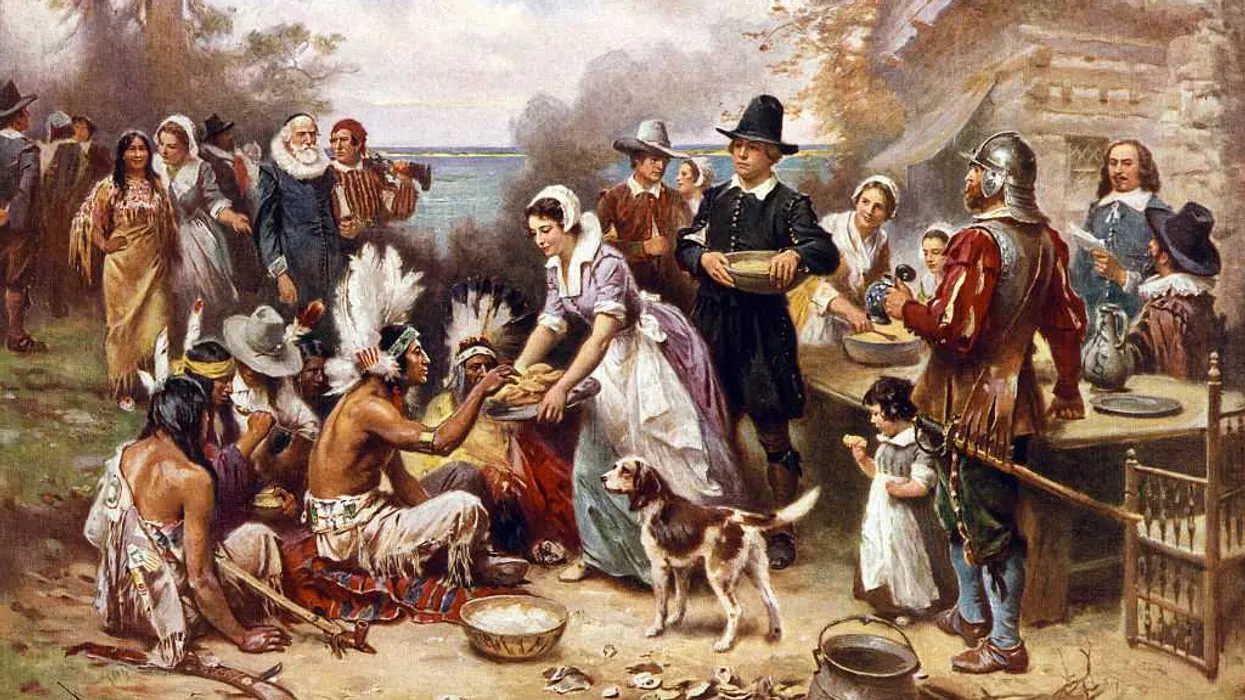
Is there any hope for this perpetually outraged leftist?
I’d like to think so. After all, I’ve written about opening your home to others — even perhaps strangers — on Thanksgiving. But Robert Jensen is a hard case.
Redistribute land and wealth? No wonder his fellow leftists would rather gorge on stuffing.
That’s because Jensen, who writes at AlterNet — the spiritual home of the fevered far left — wouldn’t be much fun at your Thanksgiving table. That’s because he says we need to “replace the feasting with fasting and create a National Day of Atonement to acknowledge the genocide of indigenous people that is central to the creation of the United States.”
Holiday haters
Jensen is one of those Thanksgiving haters. He’s been writing about this for years, popping up in November with dark sentiments about the “evils” of Thanksgiving.
But his irritation has grown exponentially in recent years, apparently because he hasn’t been able to convince his fellow leftists to give up their turkey and pumpkin pie. They’re just not feeling his “fast and atone” vibe. And who could blame them?
Some of them, in fact, have the unmitigated audacity to suggest that coming together on Thanksgiving can celebrate love and connection with family and friends.
But Jensen, who is more left than your garden-variety progressive, is just not having it.
“The moral response — that is, the response that would be consistent with the moral values around justice and equality that most of us claim to hold — would be a truth-and-reconciliation process that would not only correct the historical record but also redistribute land and wealth,” he wrote last year.
Redistribute land and wealth? No wonder his fellow leftists would rather gorge on stuffing. As much as they love to dream about wealth redistribution, they’re never referring to their own wealth, of course, and leftist struggle-sessions don’t really lend themselves to a festive atmosphere.
Last year, he wrote about how he teetered between these two (delightful!) choices:
We can go to the Thanksgiving gatherings put on by friends and family, determined to raise these issues and willing to take the risk of alienating those who want to enjoy the day without politics. Or we can refuse to go to such a gathering and make it known why we’re not attending, which means taking the risk of alienating those who want to enjoy the day without politics. … We must refuse to be polite when politeness means capitulation to lies.
Are you feeling sorry for Jensen’s family yet?
Imagine, if you will, slurping down your mashed potatoes and cranberry sauce to this rant: “In the white-supremacist and patriarchal society in which we live, operating within the parameters set by a greed-based capitalist system. … What political activity can we engage in to keep alive this kind of critique until a time when social conditions might make a truly progressive politics possible?”
Much to his family’s relief, Jensen ultimately chose to sit home by himself and contemplate additional dark thoughts involving “genocidal Europeans.”
But he’s mad that his people dare to define the holiday as an opportunity to rest, enjoy loved ones, and eat a delicious meal.
“We don’t define holidays individually — the idea of a holiday is rooted in its collective, shared meaning,” he wrote. “When the dominant culture defines a holiday in a certain fashion, one can’t pretend to redefine it in private.”
(I can think of a few things rooted in a collective, shared meaning that the left has redefined in private — and then tried to shove down our throats. But I digress.)
RELATED: This Truthsgiving, I’m thankful for European settlement
 Bettmann/Contributor/Getty Images
Jensen reports that he also has the option of participating in a public event that resists Thanksgiving. However, on that topic, last year he confessed, “I’m not aware of (an anti-Thanksgiving event) happening in my community, and because of commitments to other political projects, I didn’t feel I could organize an effective event in time for this Thanksgiving Day.”
He’s been whining about this since at least 2017, so I’m not sure how he ran out of time to “organize an effective event.” Oh, that’s right: “Commitments to other political projects.”
Do these people ever unclench and be human, or is it always “political projects” time?
What Jensen’s missing
We all know that the Native peoples in America were not treated wonderfully as American history unfolded. But things weren’t all sunshine and rainbows before European arrivals, either. Tribes regularly warred against and slaughtered each other, taking and retaking territory and resources.
What Thanksgiving commemorates, however, is really something remarkable.
Consider this sequence of events:
- In a village of the Wampanoag tribe, a young boy named Squanto grew up, was kidnapped by a European sea captain who sold him into slavery in Spain, and was eventually released due to some kindly monks. He made his way to England and onto a boat sailing back to the New World, where he found his village had been wiped out by some sort of disease.
- Shortly thereafter, the pilgrims — who’d been aiming for Manhattan island — were blown off course and ended up landing basically at that same abandoned village, finding land already cleared, food stores, and fresh water sources.
- A few months after their arrival, Squanto returned. He had learned English, so he was able to communicate with the Pilgrims, and he had been introduced to Christianity, so he understood them. He set out to help, teaching them to plant crops and helping them negotiate agreements with Chief Massasoit.
- Even with all the help, about half of the original Pilgrims died due to the harsh conditions. Leader William Bradford recognized Squanto, his skills, and his welcome were all a gift from God without which none of the Pilgrims might have survived.
- The Wampanoag also benefited from their relationship with the Pilgrims, which held off attacks by the Narragansett and others.
The inclination to celebrate that first fall harvest sprung from profound gratitude for the food, Squanto, and for God guiding them to the one point on the continent where they would encounter an English-speaking Native and build a peaceful and productive relationship.
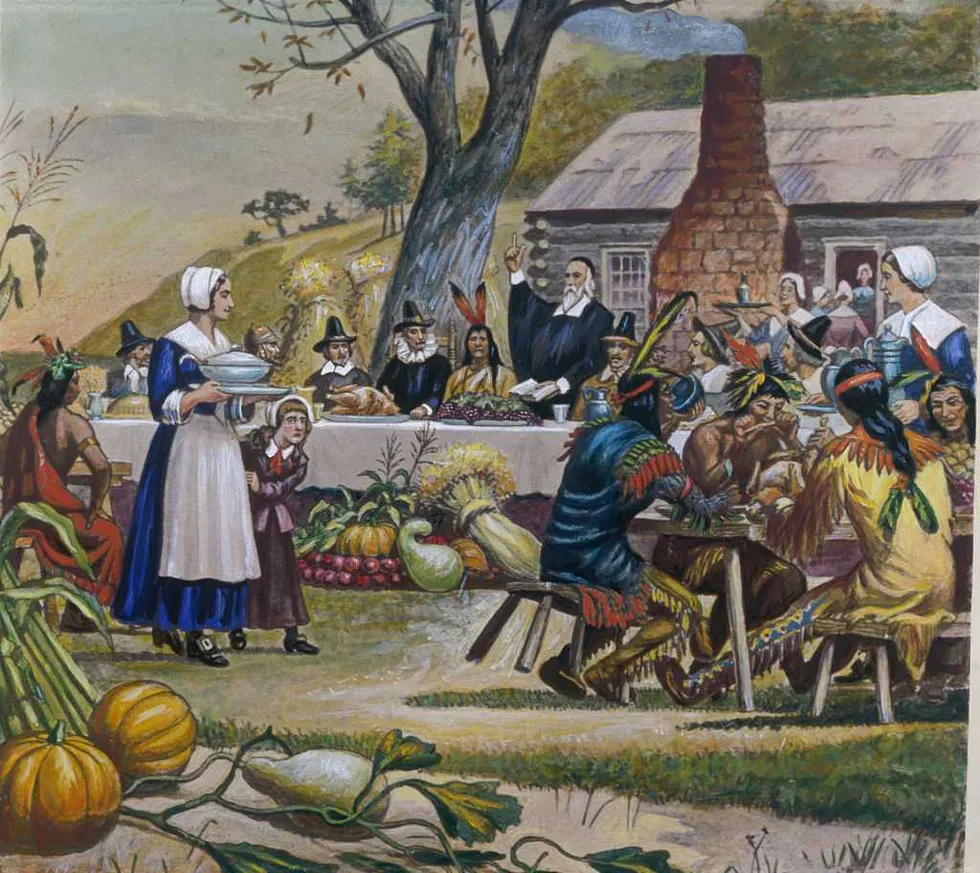
Ninety Indians joined the 53 remaining Pilgrims for the three-day event, which included feasting and shooting games. And it is that history that informed President Lincoln’s decision, many years later, to institute the holiday of Thanksgiving. It honors the pivotal role of the first Pilgrims, the lifesaving role of the Wampanoag, and the societal benefit of a day devoted to gratitude.
So, Robert Jensen, I sincerely hope you might consider that if white Europeans and brown Natives could feast together, you might be able to sit with your family and enjoy some turkey and pie too.
Happy Thanksgiving to all!
Leftist heresy: This Bible pitch sounds holy — until you spot the socialist trick

“Nothing is free.” I can still hear my dad saying this whenever I excitedly told him I got something for “free.” I would argue, “But it was free for me,” and he would reply, “Yes — because someone else paid for it.”
That is exactly how many of the 40 million Americans hooked on food stamps and government assistance think. It feels “free,” but it is paid for by hardworking taxpayers — like yours truly. And a government that can feed you can also starve you.
On paper, socialism looks compassionate — until you remember history and human nature.
In the wake of the New York mayoral election, socialism is trending again. Zohran Mamdani is just the latest pawn to make it look flashy and appealing.
Even worse, progressive Christians have jumped on the bandwagon, insisting that socialism is biblical and pointing to Acts 2 as their proof text. They say, “We need to feed the hungry,” “We need to provide for the homeless,” “We need to sell what we have so others have more.” These are admirable sentiments. But they are often advocated by people who rarely offer up their own property or pocketbooks, though they are eager to demand yours.
But who is the “we” in Acts 2?
The answer is simple: the church — not the government.
Acts 2 took place during Pentecost, when Jerusalem was crowded with Jewish pilgrims from across the empire. After thousands came to faith, many stayed longer than expected, creating urgent, unusual needs. In response, believers shared what they had. Acts 2:44-45 says Christians “had everything in common” and “were selling their possessions” and distributing the proceeds “as any had need.”
A few important clarifications:
- These were Christians, not government officials.
- Their giving was voluntary, not legislated.
- Their generosity was rooted in personal sacrifice, not state coercion.
- This was a temporary response to a specific moment, not an economic model for nations.
The early church practiced radical generosity because the situation demanded it — not because God or scripture command state-run redistribution. It was compassion from the heart, not a political system.
Socialism starts and ends with a deadly sin
Socialism is inherently immoral because it is built on envy — one of the seven deadly sins. Envy is a resentful desire for what someone else has. Scripture warns against it repeatedly because it is rooted in covetousness: “Do not covet.” Proverbs says envy “rots the bones.” Galatians tells us not to provoke or envy one another. It is part of the “acts of the flesh,” something to root out of our lives entirely — not something to build public policy around.
Socialism claims it reduces inequality by redistributing resources “fairly.” In practice, that means taking from those who earn and giving to those who don’t, with the government deciding how every penny is spent. The poor become dependent, the productive get punished, and the state grows stronger.
On the NYC campaign trail, Mamdani promised a buffet of freebies — free child care, free bus rides, rent control, city-run grocery stores. Margaret Thatcher famously and pointedly said, “The problem with socialism is that eventually you run out of other people’s money.”
Economist Thomas Sowell put it even more bluntly: “What do you call it when someone steals money secretly? Theft. What do you call it when someone takes money by force? Robbery. What do you call it when politicians take someone else’s money and give it to people likely to vote for them? Social justice.”
That is how Mamdani won and why the fantasy of socialism keeps selling. There’s a reason the mousetrap always has “free” cheese.
Interestingly enough, Mamdani also claims to be in favor of feminism and woke policies at the same time — but these contradict with his Muslim faith entirely. His ideas end up at stark odds with Christian values and the dominant moral language of modern progressives alike.
As believers, we must reject his ideas altogether and fight for what is true and good for human flourishing.
Socialism sounds compassionate — but it’s not
On paper, socialism looks compassionate. Everyone gets something “free,” and everyone is supposedly happier. It can even sound like something Jesus would endorse — until you remember history and human nature.
The Bible promotes voluntary generosity, not government-run redistribution. From “You shall not steal” (Exodus 20:15) to Paul’s reminder that giving should never be “under compulsion” (2 Corinthians 9:7), scripture keeps ownership and charity in the realm of personal moral choice. With socialism, religious liberty — living out your faith convictions — goes out the window completely.
Every nation that has embraced socialism — from the Soviet Union to Venezuela — has collapsed into shortages, inflation, and hunger. Power consolidates at the top, innovation dies, dependence grows, and people lose freedom, dignity, and hope.
RELATED: How one ancient sin empowers wokeness, socialism, and cancel culture
 bauhaus1000/iStock/Getty Images
Human nature hasn’t changed, and it will not change any time soon. No one wants to build a business through blood, sweat, and tears only to watch the government seize most of the earnings and waste them. The more you make, the more the state takes.
Arthur Brooks’ research in his book “Who Really Cares” shows conservatives give about 30% more to charity than liberals — even though liberals earn slightly more. Conservatives volunteer more, give blood more often, and donate more time.
Why? Because voluntary, faith-driven generosity is far more effective than state-mandated redistribution.
Socialism is born from envy, mandated by force, and finished by famine. It has never worked, and it will not magically work now. Socialism in practice is like being a zoo animal: fed and controlled, but never free. Liberty lets you roam, build, create, and live with dignity.
I will choose freedom over control every single time.
The Bible doesn’t endorse socialism — and neither should we
Scripture calls believers to voluntary generosity and selflessness. It never once advocates for government coercion or its reckless policies. And America’s heritage of Christian-informed self-governance affirms personal responsibility and limited government.
That’s why the Bible doesn’t endorse socialism, and that’s why Mamdani’s state-centered vision should concern anyone who values Christian freedom and America’s founding principles.
Government has a role, and the church has a role. They are not the same. And because politics deals with morality, Christians must be engaged — especially when socialism resurfaces dressed up as compassion.
My dad was right: Nothing is free. Not then, not now, not ever. Someone always pays for it.
Abrahamic myth: How Islam rebranded the God of the Bible

One of the great canards of the post-9/11 world — promoted by theists and nontheists, conservatives and leftists, Democrats and Republicans alike — is that there are three Abrahamic faiths: Judaism, Christianity, and Islam.
But is that really true? If the three faiths worship the same God and preach His word, then there should be clear and compelling evidence of interconnection and aligned essential doctrines.
God’s sacred lineage
Abraham was God’s first patriarch, his descendants were God’s chosen people, and the Lord God guided them — at great cost and peril — to the promised land.
Why is there the need to graft on to this historically and logically robust faith history the tale of Muhammad, which is supported only by legend and perhaps shards of archeological data?
The Jews, meanwhile, were the people through whom God sent His son, Jesus Christ, the messiah. Jesus was a holy, just, virtuous, believing Jew, and what He taught springs directly from the Old Testament. His ministry was ultimately a futile effort to convince His ethnic brothers to follow Him as their redeemer.
Jesus was betrayed by His own people and crucified by the Romans. His death, in substitutive atonement for the sins of humanity, was followed by His resurrection, and the risen Christ tasked His apostles to spread His word beyond the Jews to the gentiles, thus laying the foundation for Christianity, a descriptive moniker that came into common use around the end of the first century A.D.
Biblical genealogy and history are intricate and logical. Like all genealogy and history of the ancient world, they have gaps (which do not diminish their spiritual authority), and a great deal of both spring from oral tradition, which was eventually codified.
The fact that biblical genealogy and history are written in such painstaking detail in both the Old and New Testaments give them each spiritual and chronological heft, as does the fact that scholars have recovered thousands of manuscript copies and fragments totaling hundreds of thousands of pages.
Legend, not lineage
This brings us to the issue of whether Islam is really an Abrahamic faith.
Abraham was father of Ishmael, by his slave Hagar, who was banished from Abraham’s household by Abraham’s wife, Sarah, even though she facilitated their union. God promised Hagar that Ishmael would be a great man and the father of many nations. Ishmael’s life and sons are detailed in Genesis 25 and then again in 1 Chronicles 1. Then he and his sons are never spoken of again.
The book of Genesis, written by Moses, likely dates to around 1200 B.C., even though its final form was not completed until centuries later. This means that the story of Abram, who becomes Abraham, is even older than that because it would have been told to Moses as oral history. So Abraham may have lived as long ago as 2000 B.C.
Yet Muhammad, the prophet of Islam who is supposedly descended from Ishmael, was not born until 570 A.D., which creates a time gap of more than 2,500 years. And for this span of more than two millennia, there are no documents that directly connect Muhammad to Abraham or Ishmael. There is only Islamic oral tradition or legend (known as Hadith), nearly all of which were produced a century or more after Muhammad’s death in 632 A.D.
Conversely, there is no doubt about the connection of the Old and New Testaments. They tell a continuous, coherent, logical, prophetically rich, and frequently archaeologically confirmed story of the journey of the Israelites to the promised land and the life and death of Jesus.
Why, then, is there the need to graft on to this historically and logically robust faith history the tale of Muhammad, which is supported only by legend and perhaps shards of archeological data?
Biblical appropriation
Even though there is no written genealogy from Ishmael to Muhammad, there is significant biblical appropriation in the Quran. In fact, plagiarism might be a better word.
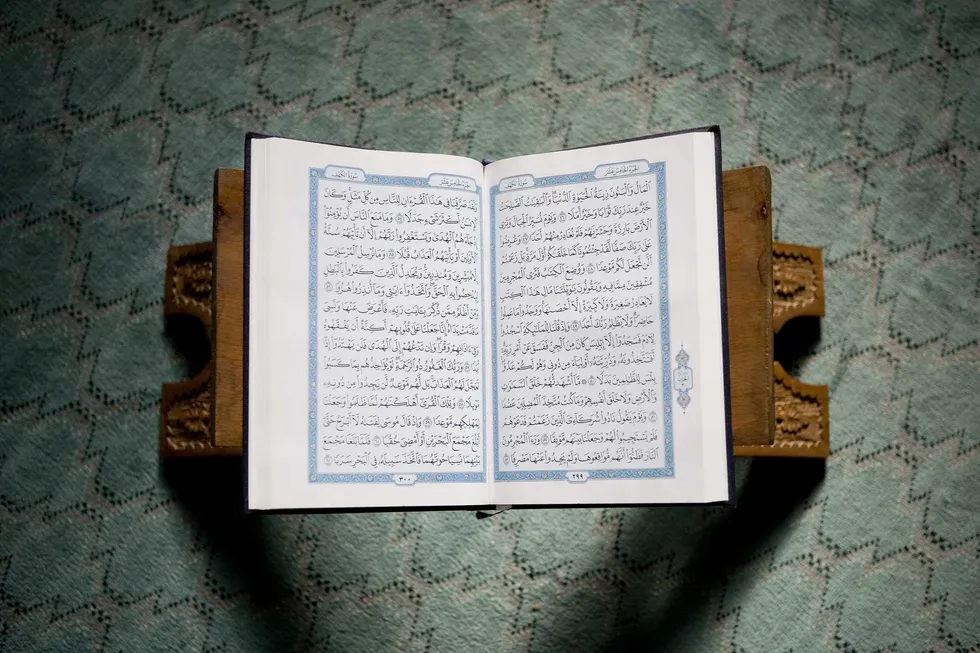
For example, Allah created the heavens and the earth in six days (Surah 7:54; for the Quranic novitiates, the Quran is organized by the length of each Surah [chapter], from the longest, called the Opener to the shortest 114th, Mankind). Abraham’s name first appears in Surah 2. In total, Abraham’s name appears 69 times in the Quran; Jesus appears 25 times, Mary 34 times, and Moses 136 times. In 3:67, the Quran states that “Abraham was not a Jew, nor was he a Christian, but he was a Muslim hanif (montheist), and he was not one of the idolators.”
RELATED: Why progressives want to destroy Christianity — but spare Islam
 ozgurdonmaz/iStock/Getty Images Plus
While Muhammad was quite open to biblical appropriation of names, he was not so keen on Christian doctrine: Muslims deny the Trinity (“do not say Three”; 4:171) and the crucifixion (“they did not kill him nor crucify him”; 4:157). The denial of the crucifixion leads to an implicit denial of the resurrection; if Jesus was not crucified, then He could not have been resurrected, but He was called to heaven by Allah himself (4:158).
The Quran calls Jesus “messiah” and righteous, but simultaneously denies that He is the son of God (“The Messiah, the son of Mary, was no more than a messenger, messengers passed away before him”; 5:75). In fact, in these things, the Muslims have much more in common with Jews than either group has with Christians.
Ironically, this trio of denials of core Christian beliefs puts Muslims in league with Martin Luther King Jr., who denied the virgin birth, which Muslims accept, but they reject Allah’s paternity of Jesus (see 3:45-47, 9:30, 6:100, and 112:3 for examples).
Muhammad writes that man does not have free will (2:6 and 2:7, among many others); Allah decides and animates all things (3:47 and 40:68). Allah will decide what both believers and nonbelievers do (16:93) and what will happen to them (24:40). Even nonbelievers who wish to believe will not be allowed to do so unless permitted by Allah (10:100).
Muslims are commanded to defeat nonbelievers in jihad (8:39 and 9:5); those who fight and die go to paradise, as do those who fight and live (4:74). Nonbelievers are to be treated as second-class citizens and pay tribute unless they convert, or they may be killed (9:29). Jews and Christians are regarded, respectively, as those who have earned Allah’s anger and those who have gone astray (1:6).
In the Bible, acts of sexual immorality are identified as an abomination to the Lord, right from the beginning of the Old Testament. Deuteronomy 22:5 says, “The woman shall not wear that which pertaineth to a man, neither shall a man put on a woman’s garment: for all that do so are an abomination unto the Lord thy God”; and Leviticus 18:6-20 describes the Lord’s abhorrence for the sin of incest. Paul’s epistles showcase his scorn for sexual anarchy.
By contrast, Muslim men may marry Jewish or Christian women after the women convert, but sex with a believing slave girl is preferable in the meantime (2:221). Muslim men are also told that they may marry multiple women (i.e., polygamy), and they have no obligation to treat them equally (4:3). The “houris,” or wide-eyed, voluptuous women of paradise, await all believers (Surahs 44, 55, 56, and 78; the much-ballyhooed 72 virgins are not Quranic, they are from a Hadith of Muhammad).
The overall impression of the God of the Bible is that He is a holy and just God, whose moral boundaries and demands set exceedingly high standards of conduct, and Jews of the Old Testament repeatedly fail to hit their marks. Their failures allowed God to show Himself as merciful and loving because He relents in His anger and forgives His people, effectively giving them the chance to start again.
Different gods
It is true that the Quran also refers to Allah in this manner repeatedly. But that is just part and parcel of the appropriation.
The Old Testament’s story of God’s love for, and strife with, His chosen people over their conduct repeats many times because God’s communication through His prophets ultimately proves ineffective at bringing about the lasting behavioral and devotional change that He demands. The God of the Bible never gives up, however, because He loves His children and seeks their betterment only for their own good, a framing of morality that they simply cannot endure because it requires patience, reverence, and discipline.
In the New Testament, God decides to confront His people face-to-face, live among them as a man, and teach them by looking them in the eye. So He sends His son, Jesus Christ, who is eternal and has borne witness to the entire chronology of creation, to live a perfect and sinless life, teach the lessons of the Old Testament, and entreat His people — the first-century Jews — to follow Him in pursuit of salvation and eternal life.
Despite all the travails, challenges, and even violence of the Bible, it is an uplifting story of love, trust, hope, and faith that ends in glory.
The same cannot be said of the Quran, in which an omnipotent god views his people as automatons commanded to do his will. Some verses abrogate others, and there really is no story told but just an endless series of dos and don’ts that end either in hell or paradise with wide-eyed houris.
Ask the people of Minnesota and Michigan and France and the United Kingdom how that’s working out.
Given the lack of a documentary interconnection, the doctrinal discrepancies between the two faiths as expressed in their central holy books raise this critical question: How is it spiritually conceivable that the two books represent the work of the same God?
Would the God who never gives up on His people and venerates marriage and family be the same God who commands men to marry unbelieving women only after they convert and have relations with slave girls while they wait? Would the God who empowers humans with free will and petitions them to follow Him to heaven by living lives of righteousness and virtue be the same God who commands the deaths of nonbelievers, specifically Christians and Jews (4:89), simply because of their unbelief? Would the God who sacrifices His own son on a Roman cross be the same God who appropriates the names, events, and stories of the Bible and relabels them to make them His own in a new book?
The Quran, like a bad Hollywood production, simply takes the biblical plots and characters and changes the name of God from “I AM” to Allah. Adam, Aaron, David, Elijah, Isaac, Job, Jonah, Joseph, Lot, Noah, Solomon, Zechariah, the Psalms, Gabriel, Michael, Noah’s ark, and even the Ark of the Covenant (2:248) all make cameo appearances.
Most importantly, would the God who wants peace and fights wars only against those who seek to eradicate His chosen people (such as the Amorites, Philistines, Canaanites, Hittites, Jebusites, and Perizzites) so that His people can live freely under His law be the same God who commands jihad and the imposition of sharia law, both of which seek to coerce conversion or kill those who will not convert?
Ask the people of Minnesota and Michigan and France and the United Kingdom how that’s working out.
Fruit reveals truth
To say that the God of the Bible is spiritually and doctrinally the same as Allah of the Quran beggars logic, ignores history, and requires that you willfully disregard the written word in each book.
The canard that Islam is an Abrahamic faith is a way of facilitating a connection between evil and goodness for political purposes in order to provide the evil with the fig leaf of acceptance by affiliation rather than by word and deed.
The God of the Bible, and those who follow His word, produced the freest, safest, cleanest, most generous, and most prosperous nations in human history. Islam, on the other hand, has produced — as the late Samuel P. Huntington wrote in his tour de force “Clash of Civilizations” — a cadre of nations that are never simultaneously at peace with all their neighbors and within their own borders.
That was true when he wrote it in 1996, and it is still true today.
Maybe the holy war now being waged between Islam and what remains of a weak-kneed and addle-brained Christendom is why Jesus says in both Matthew and Revelation that He comes with a sword to separate those who deny from those who follow Him.
When you consider whether it is at all likely that Islam is Abrahamic, remember what the redeemer says in Matthew 7:16-20: “Ye shall know them by their fruits. Do men gather grapes of thorns, or figs of thistles? Even so every good tree bringeth forth good fruit; but a corrupt tree bringeth forth evil fruit. A good tree cannot bring forth evil fruit, neither can a corrupt tree bring forth good fruit. Every tree that bringeth not forth good fruit is hewn down, and cast into the fire. Wherefore by their fruits ye shall know them.”
That is all you need to know to stop saying — and believing — that Islam is an Abrahamic faith.
What’s happening in India demands every Christian’s attention — and Trump’s action
President Trump’s recent warning to Nigeria over the mass killing of Christians was both overdue and necessary.
At long last, Washington acknowledged what much of the West preferred to ignore — that believers are being butchered for their faith while bureaucrats issue statements and move on to the next photo op. Trump’s threat to strike Nigeria if the slaughter continues signaled a rare thing in modern politics: moral clarity.
Every church burned in India is a warning: Faith without freedom becomes folklore.
Now it’s time for that same clarity to be turned toward another nation, one that calls itself the world’s largest democracy and one that America counts among its closest allies — India.
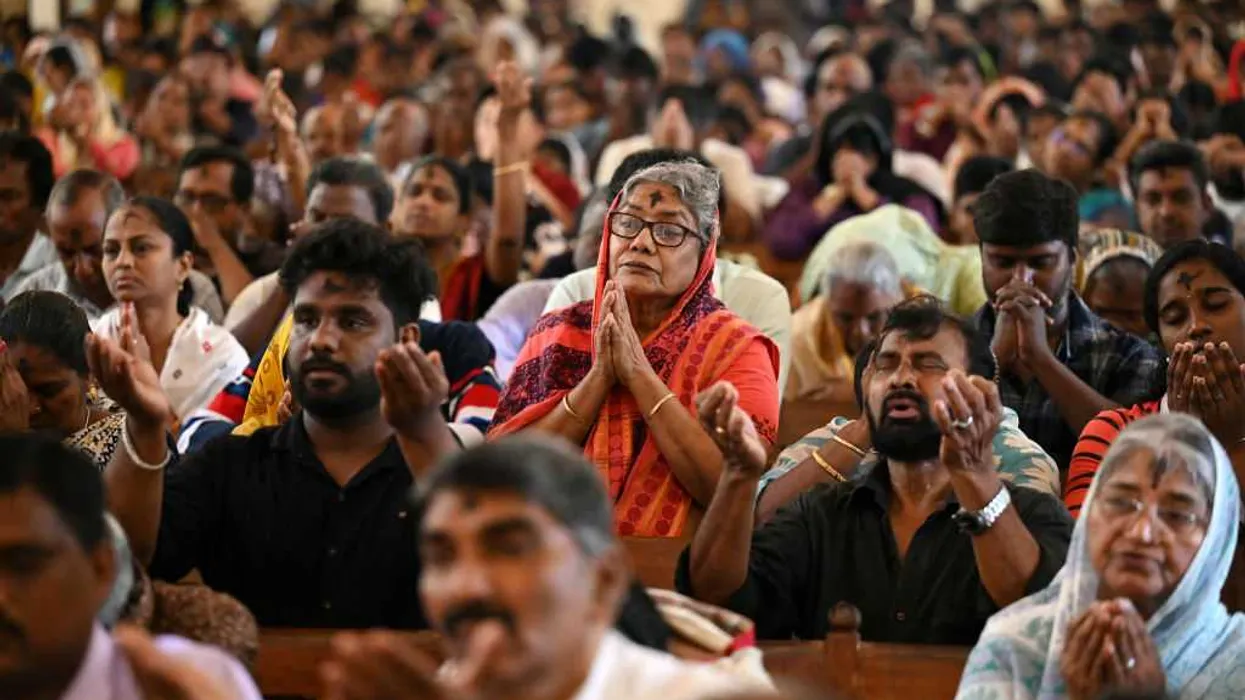
New data from the United Christian Forum reveals a troubling trend. Attacks on Christians in India have surged by more than 500% since Prime Minister Narendra Modi’s Bharatiya Janata Party came to power in 2014. Over the course of a single decade, reported incidents climbed from 139 to 834. Nearly 5,000 individuals, families, and churches have been caught in the crossfire.
Yet these grim numbers tell only part of the story.
Behind the statistics are pastors dragged from pulpits and beaten, churches reduced to ash, and people hunted like animals simply for choosing the Lord Almighty over the golden idols of their tormentors. What was once unthinkable — open persecution of Christians in the land of Mother Teresa — has now become routine.
Twelve of India’s 28 states now enforce so-called “anti-conversion” laws that criminalize anyone accused of bringing others to Christ.
In practice, these laws are less about conversion than coercion. They empower mobs and police alike to harass Christian minorities on suspicion alone. A man caught carrying a Bible can be accused of proselytizing. A prayer meeting can be framed as a plot.
The cruelty is not confined to law but seeps into everyday life.
In the heartland states of Uttar Pradesh and Chhattisgarh, Christian villagers have been driven out of their homes, denied burial rights, and told to renounce their faith or face starvation. Dalit and tribal Christians — the poorest of India’s poor — endure the worst of it. They are excluded from government welfare programs, denied housing, and forced into reconversion ceremonies designed to humiliate.
The Hindu nationalists behind these acts are not the flag-waving patriots America knows. They are absolute savages who have more in common with Islamist extremists than with any conservative movement in the West. No evil is too depraved for these fanatics in saffron robes. These are men capable of gang-raping elderly nuns in the name of purity. Their mouths recite prayers even as their hands commit sin.
Yet through all this, Washington has remained curiously quiet. India, after all, is an ally — a key counterweight to China, a trading partner, a member of the Quad alliance. And allies, we’re told, must not be offended. India receives tens of millions in U.S. foreign assistance each year, yet continues to slide deeper into majoritarian extremism.
RELATED: Bill Maher’s shocking defense of Christians — and what it reveals
 Debajyoti Chakraborty/NurPhoto via Getty Images
The relationship has become a study in contradiction: America exports democracy while subsidizing the suppression of it.
Trump’s stance toward Nigeria was bold because it rejected the idea that diplomacy must always defer to decorum. He recognized that moral authority is not something declared but something earned and easily lost. The same logic applies to India. If America’s partnership with New Delhi is to mean anything, it must rest on shared principles — not selective blindness.
There is a tragic irony in watching the world’s oldest democracy bankroll the world’s largest, while both ignore their founding creeds. Trump is uniquely positioned to change that. The president has shown a willingness to name the unnameable and confront regimes that others tiptoe around. His threat to Nigeria rattled the corridors of Abuja and forced the international community to pay attention.
A similar message to New Delhi — that America’s friendship cannot be a blank check for intolerance — would carry enormous weight.
To speak out would not be an act of hostility but of honesty. True allies do not flatter; they challenge. India’s leaders must be reminded that religious freedom is not a Western import but a universal right, and any nation that denies it will pay the heaviest of prices. If India wishes to stand shoulder to shoulder with the free world, it must first show it belongs there.
For too long, the West has treated persecution as someone else’s problem. But every church burned in India is a warning: Faith without freedom becomes folklore. The indifference of powerful nations emboldens tyrants and teaches them that human rights are negotiable.
The question now is whether America still believes in the principles it preaches — and whether Trump will demand that its allies do the same.
Because faith, like freedom, dies in stages — first ignored, then excused, and then erased. The erasure has already begun in India. What’s needed now is not another summit or statement, but a voice loud enough to pierce the silence. President Trump has that voice, the rare kind that can still move mountains. I, for one, hope he uses it.
How Joe Rogan stumbled into defending Christianity — and exposed atheist nonsense

Joe Rogan is undoubtedly the most popular podcaster in the world, hosting intriguing and expansive conversations about topics ranging from politics to sports — and everything in between. Rogan’s influence over the culture cannot be overstated.
That’s why his recent comments about Jesus, the Bible, and church are so notable.
‘I’m sticking with Jesus on that one. Jesus makes more sense. People have come back to life.’
Before this year, many had long assumed Rogan was a firm agnostic based on various on-air proclamations and statements. But 2025 seemed to signify what can only be described as a spiritual shift in the host’s life.
Specifically, Rogan’s recent statements about Christianity aren’t merely pointed and effective; they actively dismantle and challenge some of the most absurd atheist arguments against the Christian faith, with Rogan’s responses to Jesus, the Big Bang, and other related issues raising eyebrows.
Intrigue over his spiritual journey kicked into high gear in May when Christian apologist Wesley Huff, who appeared on “The Joe Rogan Experience” in January, revealed that Rogan had started attending church on a “consistent” basis.
Not long after this stunning news, Rogan delivered remarks that went mega-viral when he openly bolstered belief in Jesus’ resurrection and casted doubt on the Big Bang theory.
“It’s funny, because people will be incredulous about the resurrection of Jesus Christ, but yet they’re convinced that the entire universe was smaller than the head of a pin and for no reason that anybody’s adequately explained to me — that makes sense — instantaneously became everything? OK,” Rogan told fellow podcaster Cody Tucker, noting that the Big Bang isn’t as credible as some believe.
RELATED: Like, subscribe, and spread the good news: Joe Rogan helps gospel go viral
Rogan quoted late ethnobotanist Terence McKenna, who reportedly once made notable comments about the debate over faith and science — comments with which Rogan agreed. Ultimately, when juxtaposing Christ’s story with science’s claims about creation, the podcast host said there’s a clear winner.
“That’s McKenna’s great line … the difference between science and religion is that science only asks you for one miracle … the Big Bang,” Rogan said.
“I’m sticking with Jesus on that one. Jesus makes more sense. People have come back to life.”
These comments were just the beginning, though, because Rogan again dove into similar issues on another recent episode of his show. In fact, he addressed his church attendance and said he sees incredible benefits from being present inside houses of worship.
“It’s a bunch of people that are going to try to make their lives better. They’re trying to be a better person,” Rogan said.
“I mean, for me — at least the place that I go to — they read and analyze passages in the Bible. I’m really interested in what these people were trying to say, because I don’t think it’s nothing.”
It’s this latter quote that’s most notable, because Rogan was speaking to the essential issues of the Christian faith — the questions core to the debate over biblical truth. Is scripture real or filled with fables? Are the stories we read in the Bible rooted in eternal truth — or are they mere allegories and fictitious sentiments?
While Rogan said “atheists and secular people” will go out of their way to dismiss the Bible, the mega-popular podcaster offered a checkmate of sorts, asserting that there’s more happening in the pages of the New and Old Testaments than these critics are willing to recognize.
“I hear that among self-professed intelligent people, like, ‘It’s a fairy tale.’ I don’t know that’s true. I think there’s more to it,” he said. “I think it’s history, but I think it’s a confusing history. It’s a confusing history because it was a long time ago, and it’s people telling things in an oral tradition and writing things down in a language that you don’t understand, in the context of a culture that you don’t understand.”
And he wasn’t done there. Rogan went on to herald Christianity as the “most fascinating” of all religions, noting that Jesus’ life, ministry, crucifixion, and resurrection are all hallmarks that differentiate the faith.
“Christianity in particular is the most fascinating to me, because there’s this one person that everybody agrees existed that, somehow or another, had the best plan for how human beings should interact with each other and behave,” he said.
“He didn’t even protest,” Rogan said. “[He] died on the cross, supposedly for our sins. It’s a fascinating story. What does it represent, though? That’s the real thing. What was that? What happened? Who was Jesus Christ, if it was a human being? What was that? That’s wild.”
RELATED: Is Joe Rogan’s podcast becoming a platform for Christian truth?
Ponder the fact that the most popular podcaster on Earth is seeking, asking important questions — and offering compelling arguments to push back on so much of the atheistic nonsense that has dominated our discourse.
From the media to Hollywood, we have endured decades of ludicrous absurdity, with many folks forcing down our throats secular humanism and anti-Christian folly. And now an unlikely hero — a podcaster not previously known for faith chops — has emerged and is taking the world along for his personal journey.
My only hope is that we all start to pray for Rogan’s faith, life, and spiritual growth. His platform is massive, and his foray into the Christian faith — if it persists — could be key to helping further shift young people and older generations to move closer to the Lord.
Artificial intelligence just wrote a No. 1 country song. Now what?

The No. 1 country song in America right now was not written in Nashville or Texas or even L.A. It came from code. “Walk My Walk,” the AI-generated single by the AI artist Breaking Rust, hit the top spot on Billboard’s Country Digital Song Sales chart, and if you listen to it without knowing that fact, you would swear a real singer lived the pain he is describing.
Except there is no “he.” There is no lived experience. There is no soul behind the voice dominating the country music charts.
If a machine can imitate the soul, then what is the soul?
I will admit it: I enjoy some AI music. Some of it is very good. And that leaves us with a question that is no longer science fiction. If a machine can fake being human this well, what does it mean to be human?
A new world of artificial experience
This is not just about one song. We are walking straight into a technological moment that will reshape everyday life.
Elon Musk said recently that we may not even have phones in five years. Instead, we will carry a small device that listens, anticipates, and creates — a personal AI agent that knows what we want to hear before we ask. It will make the music, the news, the podcasts, the stories. We already live in digital bubbles. Soon, those bubbles might become our own private worlds.
If an algorithm can write a hit country song about hardship and perseverance without a shred of actual experience, then the deeper question becomes unavoidable: If a machine can imitate the soul, then what is the soul?
What machines can never do
A machine can produce, and soon it may produce better than we can. It can calculate faster than any human mind. It can rearrange the notes and words of a thousand human songs into something that sounds real enough to fool millions.
But it cannot care. It cannot love. It cannot choose right and wrong. It cannot forgive because it cannot be hurt. It cannot stand between a child and danger. It cannot walk through sorrow.
A machine can imitate the sound of suffering. It cannot suffer.
The difference is the soul. The divine spark. The thing God breathed into man that no code will ever have. Only humans can take pain and let it grow into compassion. Only humans can take fear and turn it into courage. Only humans can rebuild their lives after losing everything. Only humans hear the whisper inside, the divine voice that says, “Live for something greater.”
We are building artificial minds. We are not building artificial life.
Questions that define us
And as these artificial minds grow sharper, as their tools become more convincing, the right response is not panic. It is to ask the oldest and most important questions.
Who am I? Why am I here? What is the meaning of freedom? What is worth defending? What is worth sacrificing for?
That answer is not found in a lab or a server rack. It is found in that mysterious place inside each of us where reason meets faith, where suffering becomes wisdom, where God reminds us we are more than flesh and more than thought. We are not accidents. We are not circuits. We are not replaceable.
RELATED: AI can fake a face — but not a soul
 Seong Joon Cho/Bloomberg via Getty Images
The miracle machines can never copy
Being human is not about what we can produce. Machines will outproduce us. That is not the question. Being human is about what we can choose. We can choose to love even when it costs us something. We can choose to sacrifice when it is not easy. We can choose to tell the truth when the world rewards lies. We can choose to stand when everyone else bows. We can create because something inside us will not rest until we do.
An AI content generator can borrow our melodies, echo our stories, and dress itself up like a human soul, but it cannot carry grief across a lifetime. It cannot forgive an enemy. It cannot experience wonder. It cannot look at a broken world and say, “I am going to build again.”
The age of machines is rising. And if we do not know who we are, we will shrink. But if we use this moment to remember what makes us human, it will help us to become better, because the one thing no algorithm will ever recreate is the miracle that we exist at all — the miracle of the human soul.
Want more from Glenn Beck? Get Glenn’s FREE email newsletter with his latest insights, top stories, show prep, and more delivered to your inbox.
‘It was me and God every night’: Hunter was lost in the wilderness for nearly 3 weeks — until God told him ‘let’s go walking’

If you’ve ever been lost in the wilderness, even for a few moments, the sudden realization that you have no idea where you are — or how to get back on track — can be terrifying.
Ron Dailey had to endure that awful feeling for nearly three weeks.
‘Nobody really knew where I was.’
Dailey, 65, had packed for a half-day solo hunting trip on Oct. 13 in the Sierra National Forest, KCBS-TV reported, adding that the area is a dense wilderness in central California near Fresno.
However, a wrong turn would extend his trip by quite a bit.
“I went down this hill. I’m going, ‘Oh, God, this ain’t good,'” Dailey recalled to the station in regard to the moment he knew he was lost. “So I turned around and tried to get out. I couldn’t get out.”
A storm hit that evening and left two feet of snow on top of his broken-down truck and all around him, Dailey recalled to KCBS, adding that he thought, “Oh, man, I’m in trouble.”
His family contacted the Fresno County Sheriff’s Office when he didn’t return as planned, and a massive search was under way from the air and on land, the station said.
KCBS said the rescue effort eventually stretched across multiple counties and required responders to look for Dailey in rugged terrain.
Soon Dailey’s survival instincts kicked in, the station said, adding that he had 14 bottles of water and about 900 calories’ worth of food, all of which he tried to ration for as long as possible.
But eventually his food and water ran out, and Dailey recalled to KCBS that he “didn’t know if rescue was gonna come” because “nobody really knew where I was.”
Well, he did have a most important companion, it turns out.
“It was me and God every night,” Dailey told the station in regard to how prayer and his Christian faith helped him when things looked bleakest.
He shared with KCBS that soon “God woke me up at 6:45 Saturday morning. He goes, ‘Ron, get your boots on. Let’s go walking.'”
With that, Dailey abandoned his truck and estimated that he walked about 10 to 12 miles through the wilderness, the station said, stopping and sitting down often due to the altitude. He reportedly fell several times and lost his phone.
KCBS said finally three rescuers appeared.
“The Christian community just pulled together and kept praying and praying and praying,” Dailey recounted to the station. “They wouldn’t let me die. Neither would God.”
Like Blaze News? Bypass the censors, sign up for our newsletters, and get stories like this direct to your inbox. Sign up here!
Dear Christian: God didn’t call you to be a ‘beautiful loser’
Many Christians aim too low. We mistake humility for passivity and meekness with mediocrity, thinking God wants us to suppress all ambition. In doing so, we turn losing into a kind of twisted Christian virtue. We call it humility, but really, it’s just unbelief.
God never called His people to be beautiful losers. He called us to reign with Christ.
To seek glory, honor, and immortality is to seek what God Himself promises to the faithful.
The Bible’s vision of humanity is larger and more dignified than the self-loathing — the false humility that passes for spirituality today. The Christian life was never meant to be small. Redeemed men and women are not required to limp through life. Rather, He made us for glory.
Consider Paul’s words in Romans 2:6-8: “He will render to each one according to his works: to those who by patience in well-doing seek for glory and honor and immortality, he will give eternal life.”
For a long time, I’d come to this verse in my Bible reading plan, and it struck me as odd. Paul can’t be saying we are saved by seeking glory and honor, since the whole book of Romans teaches the opposite. We are saved by grace, not works. So what is Paul saying?
Here’s my answer in a nutshell that I’ll develop below:
God originally created man to pursue glory, honor, and immortality through faithful obedience and exercising dominion over creation. Since Adam sinned, he “fell short” of this glory. But Christ, the second Adam, succeeded where Adam failed and restored man to his original purpose. Therefore, redeemed Christians are now free to pursue glory and honor by faith, in the power of the Holy Spirit, exercising godly dominion for the glory of God.
Adam’s lost glory
To understand Paul’s statement in Romans 2:6-10, let’s go back to the Garden of Eden. Genesis 2 teaches that there were two trees in the garden: (1) the tree of life and (2) the tree of the knowledge of good and evil. Adam was permitted to eat from the first tree but forbidden to eat from the second.
When Adam sinned, the verdict was exile. “[God] drove out the man, and at the east of the garden of Eden he placed the cherubim and a flaming sword that turned every way to guard the way to the tree of life” (Genesis 3:24).
The trees represented two possible destinies: glory or death. Had Adam persevered in obedience, he would have eaten from the tree of life and entered into immortality. Instead, he reached for forbidden knowledge and fell under the curse of death.
Though Adam was created in innocence, he was not yet as glorious as he could have become. God gave him a gloriously ambitious task to “be fruitful and multiply and fill the earth and subdue it and take dominion” (Genesis 1:28). That’s a global ambition. Adam’s task was to take the wild and untamed world outside of Eden and bring it under subjection to him. In other words, God created Adam with an eschatology — a purpose, telos, or end — that he might rise from innocence to glory through faithful obedience.
To fulfill God’s command, Adam would need to develop various skills he wasn’t created with. He would have needed to learn to plant gardens, name animals, lead a wife, and raise children. Those latent potentialities would have been drawn out of him through experience over time.
In other words, though Adam was morally innocent, he was not yet as glorious as he would have become had he been faithful to God’s commands. He could have attained glory by becoming a more skilled and excellent man in the pursuit of glorious goals. In so doing, Adam would have grown intellectually, physically, spiritually.
Christ succeeded where Adam failed. And the result of Christ’s obedience was glory.
In other words, innocence was the starting line, glory was the finish line.
With this in mind, notice Paul’s famous description of sin as not merely “doing bad things” but falling short of the glory of God (Romans 3:23). That’s important. Sin is more than merely breaking the rules; it is the forfeiture of glory. Because of Adam’s sin, he was no longer able to attain the glory God made him for. He “fell short of the glory of God.” And humanity has been falling short ever since.
Christ, the second Adam, attains the glory of God
But the story doesn’t end in failure. Scripture presents Christ as the “last Adam” who succeeded where the first Adam failed. In His human nature, Christ sinlessly retraced Adam’s path.
The author of Hebrews (quoting Psalm 8) draws this out explicitly:
What is man, that you are mindful of him,
or the son of man, that you care for him?
You made him for a little while lower than the angels;
you have crowned him with glory and honor,
putting everything in subjection under his feet. (Hebrews 2:6-8)
Notice Hebrews 2 and Romans 2 both use the same word pair: “glory” and “honor.” The author or Hebrews 2 is citing Psalm 8, which is a commentary on Genesis 1–2. In other words, these texts tie together the creation of man, the image of God, and the dominion mandate.
Hebrews 2 also connects the creation of Adam with the incarnation of Christ, who was likewise crowned with glory and honor. And through His suffering and death, Christ brought “many sons to glory” (Hebrews 2:10).
Thus, Christ succeeded where Adam failed. And the result of Christ’s obedience was glory. Jesus said it Himself: “Was it not necessary that the Christ should suffer these things and enter into his glory?” (Luke 24:26).
Therefore, Jesus hit the reset button on the human story. Adam’s sin broke the circuit of glory, but Christ reconnected it. Jesus secured the glory that Adam lost and offers it freely to His people. He restores humanity to its intended place as rulers over creation, crowned with glory and honor, who must once again revisit the dominion mandate given to Adam.
Thus, Christ completed the redemption arc of humanity. The fullest Christian life will not be marked by mediocrity but glory. And our savior will reward his faithful servants who pursue it. Through Christ, obedience is glorious again.
Redeemed humanity restored to the pursuit of glory
This brings us back to Romans 2:6-7. When Paul says that God “will render to each one according to his works,” he isn’t teaching salvation by merit. He’s describing the reward of faith — the fruit of a life transformed by grace. Those who “seek for glory and honor and immortality” are not grasping for self-exaltation; they’re following the path of Christ, the second Adam, who entered glory through obedience.
Christians are to do all things to the glory of God (1 Corinthians 10:31) while also hoping in glory as our inheritance (Romans 5:2). Those united to Him by faith are once again free to pursue what Adam forfeited.
God is ambitious. The creation mandate is ambitious (Genesis 1:28). The great commission is ambitious (Matthew 28:18-20). These ambitions are global in scale and and can only be accomplished by Spirit-filled men and women who dare attempt great things for God. Thus, redeemed Christians are likewise made to pursue great and glorious ambitions.
Christians who, therefore, think small, equating humility with mediocrity, are settling for less than what God made them for. God intends His people to exercise dominion under Christ’s authority — to build, teach, create, and govern. To seek glory, honor, and immortality is to seek what God Himself promises to the faithful.
Glory is not a zero-sum game
Perhaps you may find it surprising to hear that when we obey God, giving God the glory, there is also a glory that overflows back to us. But it does. God’s glory is not a zero-sum game.
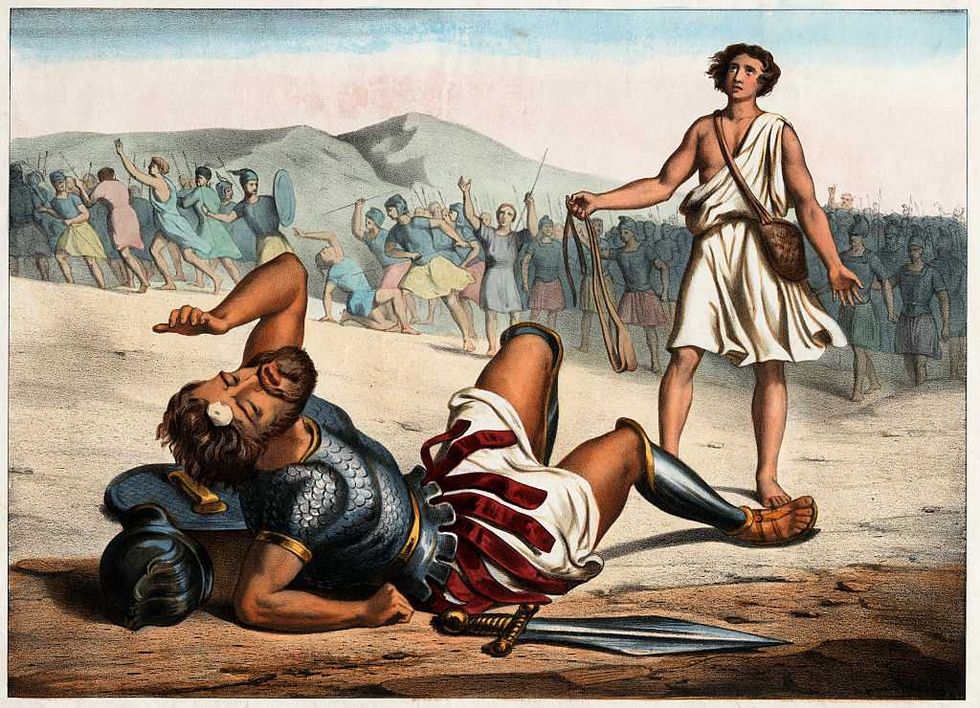
Take David’s victory over Goliath, for example. Who gets the glory for that? That’s actually a trick question. David could have stayed home that day, tending his sheep, playing it safe, and keeping his hands clean. If he’d stayed home, he would have remained innocent, but he would not have received glory.
RELATED: How ‘loser theology’ is poisoning the church
 Stefano Bianchetti/Corbis via Getty Images
Innocence isn’t the same as glory. One can remain innocent while doing nothing. Glory requires risk, faith, and obedience. When David stepped onto that battlefield, he was seizing the opportunity to magnify God through courage. That’s why we know his name. King David is on the Mount Rushmore of the Christian faith because he didn’t stay home. We know his name because he courageously rushed into battle.
In the defeat of Goliath, God gets the glory, but David also shares in it. That’s because God’s glory is not a zero-sum game — it is expansive. The more we glorify God, the more His glory spills over onto those who take courageous action by faith.
When some Christians feel satisfaction for succeeding at a great task, they might feel a little guilty for enjoying it. They might wonder if it’s pride or selfish ambition. That’s certainly possible, but it’s also possible that they’re merely enjoying an echo of glory in their achievement.
Rather than allowing the fear of pride to smother the glory we’re meant to enjoy, it is better to pursue glory while repenting of any pride that we see arising within us. Better to repent of sin while pursuing great things than to bury your talents and avoid the risk.
Greater ambition, greater glory
This matters because glory can be a powerful motivator for faithful Christians to pursue ambitious goals. The greater the ambition, the greater the glory when it is accomplished.
Put another way, glory scales with ambition. The kid who wins a backyard football game may feel a taste of glory, but the man who wins a Super Bowl ring experiences it in full. This same pattern applies to life in God’s kingdom: the greater the goal, the greater the glory. Glory is out on the battlefield, not at home on your couch.
There’s glory in raising faithful children, mastering your craft, building a business that blesses others, and serving others with excellence. Christians should be the most competent, disciplined, and creative people in the world. Why shouldn’t we be? We are indwelled by the Holy Spirit, sent on a divine mission, and commanded to take dominion. That means aiming high — not low.
Aim higher
Since many Christians don’t think this way, they end up aiming too low. They pray, go to church, pay a tithe, read their Bible, and stay out of trouble, thinking that’s the fullness of the Christian life. None of those things are wrong, but they’re not glorious either.
Innocence is where the journey begins, but glory is where we should end up.
So if there’s a promotion offered at work, go for it. If you’ve got a business idea, build it. If you’re presented with a leadership opportunity, take it. Godly Christians should make the best business owners and bosses in the world, should they not?
Pursue excellence in your vocation such that you will be a blessing to others. That’s what practical dominion taking looks like.
God has given you gifts and opportunities. The question is: What will you do with them? Will you aim low out of false humility? Or will you seek glory, by faith?
We were never meant to limp through life as losers or apologize for our successes. God crowned us with glory and honor and set us loose in His world. So don’t smother your ambition under the guise of humility. God doesn’t call us to be beautiful losers. He called us to reign with Christ. So aim higher. Pursue greatness for the glory of God. And when you succeed, give Him the glory and enjoy the reciprocal glory He delights to share with you.
May your pursuit of glory lead you upward, outward, expanding, and fruitful.
This essay was adapted from an article published at Michael Clary’s Substack.
Did science just accidentally stumble upon what Christians already knew?

A new study titled “Architecture of Near-Death Experience Spaces” has caught the attention of both the empirics and the eternalists, because it’s not often that a study about dying reads like a map to heaven.
The researchers asked participants who had clinically died and been resuscitated not to describe their near-death experiences in words, but to draw them. What emerged were recurring shapes — cones, ellipses, radiant fields — across people from entirely different cultures.
As the apostle Paul wrote, ‘Now we see through a glass, darkly.’ And science, for once, seems to glimpse the flicker of eternity.
But here’s the kicker: These weren’t the random doodles of oxygen-starved brains. They were geometric symphonies, ordered and elegant. It was as if consciousness, freed from the flesh, had glimpsed the very scaffolding of creation itself.
For a Christian, this is profound. Scripture has long told us that creation is not chaos but design. “The heavens declare the glory of God,” wrote the psalmist (Psalm 19:1), and here, perhaps, the dying do, too. When the heart stops and the veil lifts, what appears before the eyes of the departing may not be fantasy but revelation — a structure that feels deliberate, like architecture drawn by divine hands.
Dr. Jeffrey Long has spent decades collecting such glimpses. An oncologist by trade and founder of the Near-Death Experience Research Foundation, Long has catalogued over 5,000 accounts from people who claim to have died and returned. His findings echo the new study’s quiet suggestion: There’s order here.
Across cultures, creeds, and continents, the same themes recur.
Consciousness separates from the body. A light appears — intelligent, loving, unthreatening. A panoramic life review follows, often described as instantaneous yet complete. Time dissolves and peace floods in. And then, inevitably, a choice or command to return.
These aren’t vague platitudes. They are astonishingly consistent. Whether the subject was Christian, atheist, or vaguely spiritual, the pattern is the same.
RELATED: Science’s God-denying narrative just got crushed again
 Pobytov/iStock/Getty Images Plus
Long’s data also reveals what happens after the return. Many report their faith deepening not from glimpses of pearly gates, but from meeting something that made sense on a cosmic scale. Others who had never believed before find themselves suddenly convinced that life does not end in nothingness. Across thousands of testimonies, moral clarity re-emerges like a melody.
Long told me his work has been called everything from pseudoscience to prophecy. But to him, the evidence points to something beyond the brain. When the same story emerges from a Buddhist in Nepal and a Baptist in Tennessee, argument starts to feel like denial.
When I reached out for comment about the link between near-death experiences and religious faith, Long directed me to his archive of testimonies — hundreds of raw, personal accounts from people who have stood at the edge of eternity and come back changed. They speak of a presence no doctrine can fully capture and a peace that science could never explain.
It’s the same paradox Christ left us with: The kingdom of heaven, near enough to touch, yet utterly beyond our comprehension.
Long shared with me four short lines from his archive, chosen because they capture what even theology struggles to say.
- “They said the energy of love is a good reason to return,” wrote Galadriel K, who described her experience with a calm certainty that makes disbelief feel naive.
- “It’s an unconditional love. I know Him. I met Him. … I met Jesus,” said Sharlene S, her words somewhere between testimony and awe.
- “When I got close enough to the Light, I felt unconditional love and time stopped,” recalled Judy G, as if describing an emotion too large for language.
- And then there was Charles T, whose final line needs no interpretation: “I knew what the source of that Light was. … It was Jesus.”
There’s something disarmingly simple in those statements — no grand theories, no intellectual gymnastics. Just awe. They testify to a presence that makes earthly distinctions fade. All melt away before the presence that burns through every pretense.
Critics will, of course, roll their eyes. They’ll talk about cerebral starvation, neural fireworks, the brain’s desperate attempt to comfort itself as it shuts down. But these explanations sound increasingly like the dying gasps of materialism. If consciousness were merely chemical, it shouldn’t behave so coherently at the brink of breakdown. It shouldn’t script the same story in so many minds.
There’s a dark humor in watching science stumble, wide-eyed, into what the faithful have always known. The modern world has spent centuries insisting that heaven is a myth, the soul a silly superstition, and death nothing but a switch flipped off.
In an age when every mystery is monetized and every miracle gets fact-checked by faith-phobic bureaucrats, it’s oddly comforting to know there are still places where no human instrument can reach.
Yet now, with the help of MRI machines and EEG scans, researchers are rediscovering the same truths that Sunday-school children sing. Progress, it seems, has come full-circle — proof that even unbelief can only wander so far before bumping into God.
To the Christian reader, these findings are not a challenge but a confirmation. The consistency of these visions, their moral coherence, their geometrical appeal — all resonate with a faith that has always held the visible world to be only the shadow of the invisible.
As the apostle Paul wrote, “Now we see through a glass, darkly” (1 Corinthians 13:12). And science, for once, seems to glimpse the flicker of eternity.
Of course, it would be wrong to make doctrine out of data. Faith is built in pews, not in peer reviews. But it’s just as foolish to ignore what so many have seen. In an age when every mystery is monetized and every miracle gets fact-checked by faith-phobic bureaucrats, it’s oddly comforting to know there are still places — perhaps the oldest place of all — where no human instrument can reach.
In that space between pulse and paradise, geometry gives way to grace. People describe radiant fields. But what they really mean is radiance itself — love, light, life. The shapes may differ, but the direction is always the same: toward something higher, brighter, unending.
Maybe that’s what the dying have been trying to tell us all along: that death is not the end of knowledge but the beginning of understanding. And no matter how mighty our machines or how certain our reason, humanity — from Maine to Manila — keeps sketching its diagrams of eternity: cones, ellipses, celestial plains.
Each line is a breath from beyond, proof that what we call death is only design, still unfolding.





