

Category: Blaze Media
‘He’s a guy who likes to get butt-kissed’: Whoopi Goldberg spirals over Trump yet again
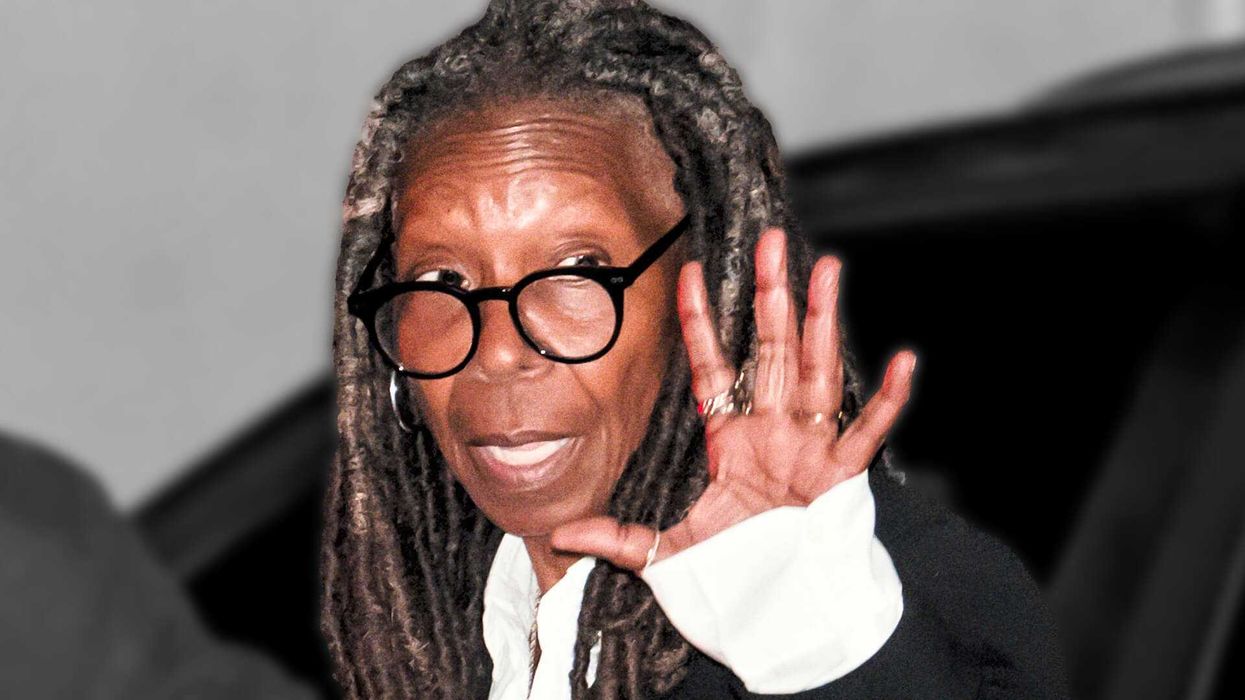
The women of “The View” appear to be “grasping at straws” when it comes to their hatred of Donald Trump — and their latest rant about the president has only made that crystal clear.
“His personal stuff, I could care less,” Goldberg began, before asking, “I want to know, what are you doing for us?”
“The president for everybody, but you haven’t been the president for anybody. You’ve been the president just for you,” she added.
“Well, the crypto guys, the people in prison he’s pardoned,” co-host Ana Navarro chimed in.
“But even the people he’s pardoning, he’s not connected to them. He said he was our president. He’s not our president,” Goldberg interjected.
“He’s a guy who likes to get butt-kissed. That’s what he is,” she added, to applause from the audience.
BlazeTV host Pat Gray, co-host Jeff Fisher, and executive producer Keith Malinak aren’t shocked by anything the women on “The View” say anymore.
“‘The people he’s pardoning, they’re not connected to him. What is he doing for us’ — he just pardoned that Democrat lawmaker, and then that guy turned around and said, ‘Yeah, I’m running,’” Malinak says.
“‘Yeah, thanks for pardoning me,’” Fisher mocks. “‘And you know what? I’m going to run for office as a Democrat.’”
“They can’t find a way to position that in a negative way. He just pardoned a Democrat, and so they’re grasping at any straw they possibly can to make it a negative,” Gray adds.
Want more from Pat Gray?
To enjoy more of Pat’s biting analysis and signature wit as he restores common sense to a senseless world, subscribe to BlazeTV — the largest multi-platform network of voices who love America, defend the Constitution, and live the American dream.
Dozens of teenagers loot 7-Eleven in brazen flash-mob robbery — and post video on social media

Police are trying to identify dozens of teenagers who looted a 7-Eleven convenience store in downtown Los Angeles in broad daylight.
The clerk of the store hit the panic alarm Saturday to alert police after someone walked into the store and pointed a gun at him. That’s when a mob of teens started stealing items from the business on Beverly Boulevard.
‘They feel like they can get away with anything — and from the looks of it, they can.’
Video posted on social media showed the laughing teens happily ransacking the store.
One of the teens can be heard boasting on the video: “Bro, it’s worth it because it ain’t got my face on it.”
The teen flash mobs have targeted several convenience stores in California in numerous incidents in recent years, and they often post videos of their crimes on social media.
“Nobody respects anything or anyone,” said Erik Albizures, a resident of L.A., to KTTV-TV. “They feel like they can get away with anything — and from the looks of it, they can.”
KTTV reported that no one had been arrested yet, despite numerous surveillance cameras capturing video at the intersection.
“How do we get this to stop? I don’t even know,” said Aaliyah Robinson, another resident. “Kids don’t listen in general, but maybe if parents start teaching their kids to be more respectful.”
RELATED: Security video shows deputy walk in on 4 thugs robbing 7-Eleven in California
At least one resident actually tried to say economic pressures forced the teens into looting.
“They probably don’t have the money for food,” Malcolm McBride said. “If you go up that block, there are so many homeless people. It’s a systemic issue, and I don’t think California is doing a good job at that. I’d start there.”
Like Blaze News? Bypass the censors, sign up for our newsletters, and get stories like this direct to your inbox. Sign up here!
Liz Warren hustles Trump with a housing bill from hell

What is it about the National Defense Authorization Act that makes it a dumping ground for every dumb liberal pet project?
First the Trump administration pushed an AI data-center amnesty that would have stripped states of authority over massive, power-hungry facilities. Then lawmakers tried to slip in Sen. Elizabeth Warren’s housing bill, a package built to subsidize Section 8 tenants and builders and to fuel the very forces driving the current housing bubble. After a backlash, both provisions came out of the NDAA. Now congressional leaders plan to pass the Massachusetts Democrat’s housing bill on its own.
The real crisis comes from government debt and the inflation it fuels. This is not a shortage of lumber or land. It is a monetary chokehold created by government policy.
Earlier this year, Senate Banking Committee Chairman Tim Scott (R-S.C.) worked with Warren to move S. 2651, an omnibus housing package that expands every federal program Trump previously vowed to cut. They attached the legislation to the Senate’s NDAA, then lobbied House conservatives to adopt it in their version of the defense bill. At the last minute, House leaders stripped the language. The House Financial Services Committee now plans to mark up the bill next week.
Here’s the trouble: The bill misdiagnoses the housing crisis. It treats high prices as a supply shortage instead of a government-fueled asset bubble and inflationary pricing distortion.
The result is predictable. Its 40 provisions would expand Section 8, loan subsidies, “affordable housing” grants, and even looser mortgage programs for people priced out of the market. Every one of these items pours accelerant on the factors that drove the 2008 bubble and the post-COVID spike.
Government subsidies for overbuilding and for buyers who cannot afford homes created the crisis. Yet like a dog returning to its vomit, Scott, the president, and Senate Democrats are endorsing Warren’s 2020 campaign platform to revive the same model. The bill promises builders and activist groups federal cash in exchange for regulatory concessions. The trade-off is disastrous.
Section 202 creates a new federal grant program to fund local housing projects in designated zones — a warmed-over version of the community-engineering schemes Obama’s Department of Housing and Urban Development pushed a decade ago.
Meantime, Section 209 establishes a $200 million yearly fund at HUD to award “innovative housing reforms” to localities that reshape zoning to favor dense, subsidized units.
Conservatives would call these incentives an invitation to replicate failed urban policies in red suburbs. The bill rewards grifting nonprofits and community organizers who treat federal housing programs as political infrastructure.
At the same time, the administration is pushing rules that limit red-state zoning authority to clear the way for data-center construction while promoting Section 8 expansion with new incentives and zoning guidance. It revives, in effect, Obama’s Affirmatively Furthering Fair Housing regime — the same racial-gerrymandering tool Trump killed in his first term. Supporting the Scott-Warren bill would revive it in practice.
Worse, the bill rests on a false premise. America doesn’t have a housing shortage. According to Redfin, as of October sellers outnumbered buyers by 36.8% — about 529,000 more sellers — the largest gap since 2013. Census data shows about 148 million housing units for roughly 134 million households, a surplus of around 14 million units. When Trump took office, the vacancy count stood near 11 million, yet prices were far more affordable.
The real crisis comes from government debt and the inflation it fuels. Construction costs surged with inflation. Interest rates spiked to service that debt, creating an interest-rate cliff that locked millions of homeowners into sub-3% mortgages. They cannot sell without doubling their monthly costs. High rates froze the existing inventory in place. This is not a shortage of lumber or land. It is a monetary chokehold created by government policy.
RELATED: Why the kids are not all right — and Boomers still pretend nothing’s wrong
 Photo by Andrew Lichtenstein/Corbis via Getty Images
Federal housing policy adds another layer. Fannie Mae and Freddie Mac long prioritized “access to credit” over price stability. By guaranteeing high-risk loans and encouraging low down payments, they allow buyers to bid more than their incomes justify. Subsidized credit lifts prices for sellers, not buyers.
S. 2651 makes the problem worse by expanding the Community Development Block Grant and similar programs, encouraging activist groups and corporate developers to overbuild units no one can afford without subsidies. That process pushes prices upward and strengthens corporate buy-ups of suburban neighborhoods.
The administration previously acknowledged these distortions. In Trump’s FY 2021 budget, the Office of Management and Budget proposed eliminating CDBG and the HOME Investment Partnerships Program, arguing that states and localities were better positioned to address affordability challenges. This new bill reverses that logic entirely.
The Federal Reserve’s rate whiplash — a decade of near-zero borrowing costs followed by sudden hikes — froze supply by trapping owners inside artificially cheap mortgages. Washington’s policies created the gridlock. The inventory exists. Monetary policy quarantined it.
What the administration needs to do is allow prices to fall back toward alignment with median incomes. That adjustment would restore affordability without new federal intervention. Instead, the FHFA is pushing lower credit-score requirements for subsidized mortgages. That mistake will repeat the pattern of enticing families into overpriced homes they cannot sustain.
Housing policy should stop trying to prop up inflated prices. The market must correct. A federal “solution” built around 40 expansionary programs will intensify the crisis, not solve it. Doing nothing would spur more affordability than this bipartisan blunder.
Christian students are pushing back — and universities are cracking
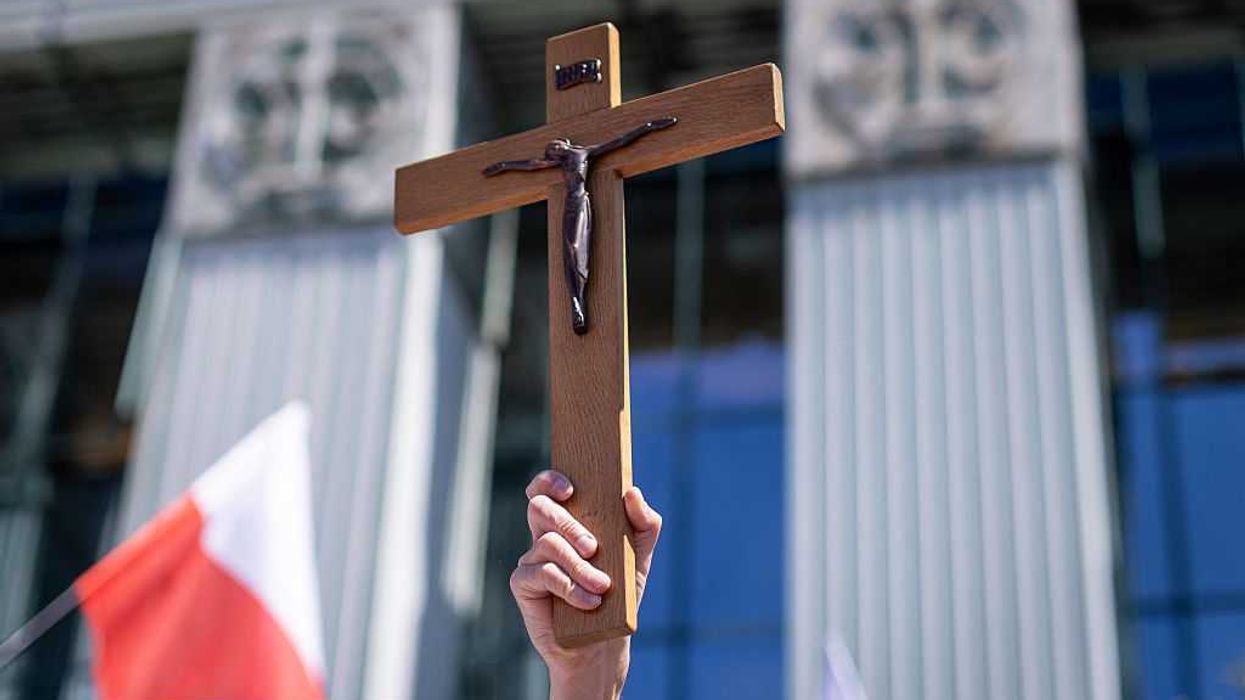
As one of the last conservative Christians serving as a tenured philosophy professor at a public university, I’ve had a front-row seat to the intellectual circus that critical theory and intersectionality have unleashed on higher education. I call it out on X and Substack. Professors from ASU’s Barrett Honors College and English Department have attacked me for doing so, calling me a “joke” and a “sloppy thinker.” This is the abuse anyone receives for defending God’s word.
But something new — and encouraging — is happening.
Christian students are speaking up. They are filing complaints. They openly quote Scripture in their assignments. And in this case, the university backed down.
Students are calling it out, too.
Last week at the University of Oklahoma, two instructors were removed for blatant viewpoint discrimination against a Christian student. If even 5% of cases like this see daylight, the DEI structure will start to crack within the academic year. If the polls are right, 97% of faculty identify as left or far left. What we see now — open disdain for Scripture — is not an anomaly. It’s the visible edge of a worldview that has captured entire campuses.
Beneath the surface sits the full intersectional framework, built on one central assumption: Christianity is the axle around which oppression supposedly turns.
The assignment that exposed the bias
The student’s psychology assignment was simple: a 650-word response to a study about gender norms and bullying among middle-schoolers.
She wrote: “Society pushing the lie that there are multiple genders and everyone should be whatever they want to be is demonic and severely harms American youth.”
She grounded her argument in Genesis, explained God’s creation of male and female, and correctly defined ezer kenegdo as “a helper equal to man.”
In short, she used: Scripture, theology, linguistic analysis, and a historical ethical framework. That is a well-reasoned paper in the humanities. Except when the worldview is Christian.
The instructor’s response?
“Your reaction paper contradicts itself, uses personal ideology over empirical evidence, and is at times offensive.”
And then the tell: “Every major psychological, medical, pediatric, and psychiatric association acknowledges that sex and gender is neither binary nor fixed.”
This is false. No serious biology text claims human sex is nonbinary. Disorders of development exist, but disorders do not replace design.
The deeper problem stood out like a vegan at a Texas barbecue: The Bible does not count as evidence. Even if the rubric justified deductions, dismissing Scripture as “personal ideology” exposed the bias.
Quote Judith Butler or Michel Foucault, and the academy nods solemnly. Quote the Bible, and you lose points.
The modern university’s dogma is simple: The Bible is never admissible. Everything else is.
Christians have known this for decades and quietly self-censored to protect their grades and academic futures. Which raises the question: How did we arrive here?
How we got here
Hostility toward Christianity did not appear overnight. It grew slowly through deliberate gatekeeping. Hiring committees screened out conservatives, shaping departments where 90%-97% of faculty became ideological clones. Administrators learned to view biblical faith as bigotry. DEI offices began to enforce viewpoint discrimination while denying it.
Fair hiring does not produce a 97% monoculture. That is ideological capture.
Christians allowed it because they confused niceness with faithfulness. Niceness — a word that never appears in Scripture — is fear disguised as virtue. It keeps people quiet so they can stay liked.
The left used a strategy straight from Marx, who took it straight from the enemy (“devil,” meaning accuser): Accuse Christians of oppression; rewrite history so the West is defined by its sins, never its virtues; demonize Scripture and its adherents; and weaponize shame to silence dissent.
It worked — for a time. The spell is breaking.
No neutrality
Many Christians assumed universities were neutral. They aren’t. They never were.
Every institution aligns with one of two cities: “the City of God” and “the City of Man.”
The City of Man controls the universities. This is not hyperbole. Romans 1 describes it plainly.
Those who reject God do not become neutral observers. They become evangelists for a rival religion. That rival religion has doctrines:
- The Bible is oppressive.
- Christianity is harmful.
- Gender is unlimited.
- Identity is self-created.
- The highest good is “authenticity.”
- The greatest sin is disagreement.
A new orthodoxy rules the campus, and the Oklahoma student violated it — praise God that she did.
Something has changed
Christian students are not taking the abuse quietly any more. They are speaking up. They are filing complaints. They are quoting Scripture openly in their assignments. And in this case, the university backed down. The instructors were removed.
Even on a left-dominated campus, viewpoint discrimination remains illegal — even if DEI treats it as sacred ritual.
If this continues, the monopoly may begin to break — maybe even by spring break.
RELATED: Why the kids are not all right — and Boomers still pretend nothing’s wrong
 Photo by Andrew Lichtenstein/Corbis via Getty Images
What you can do
As someone inside the system, here is my advice.
Follow those speaking publicly. We are few, but we are here — and we are not silent.
Equip your children. They will face hostility. They will be mocked. They will be graded down unless they can respond intelligently. Ask pointed questions on campus tours. Get administrators on record renouncing DEI discrimination — then hold them to it.
Consider alternatives. Trade schools, Christian colleges, apprenticeships, online programs — all viable. Many offer a serious education without forcing students through gender theory with Judith Butler 101. Seek professors who teach the great works with a biblical foundation.
Speak boldly. The gospel is not a whisper. “For I am not ashamed of the gospel,” the Apostle Paul writes in Romans, “for it is the power of God for salvation to everyone who believes.”
Christian students are rediscovering that courage. It is long past time the rest of us did, too.
Teenager sues high school after tribute to Charlie Kirk was called vandalism

Officials at a North Carolina high school are being accused of violating a student’s constitutional rights over a tribute to Charlie Kirk that was called vandalism.
Gabby Stout told Fox News Digital that she called the school in September and asked if she could paint the patriotic tribute on the school’s “spirit rock.” The junior said officials at Ardrey Kell High School had authorized the tribute as long as it didn’t include political speech or vulgarity.
‘I was very intimidated and scared, as I had no idea what I did wrong or that I could be getting in trouble.’
Stout said she and two friends painted a heart on the large stone and added the messages, “Freedom 1776,” as well as, “Live Like Kirk — John 11:25.”
The school responded by painting over the rock and accusing Stout of vandalizing the rock. School officials also said they contacted law enforcement and an investigation was under way.
“If students were responsible for the vandalism, they may be disciplined,” reads a statement from the principal.
Stout said she was shocked by the school’s actions.
“I was completely shocked,” Stout said to Fox News Digital. “I was very intimidated and scared, as I had no idea what I did wrong or that I could be getting in trouble for simply sharing and expressing my views and beliefs.”
The school later announced that it was not an act of vandalism, Stout would face no disciplinary action, and there had not been a law enforcement investigation.
Stout said that she has faced health issues from the ostracization, alienation, and stress over the accusations. She claims to have received hateful messages that included, “Die like Kirk.”
The lawsuit was filed by Alliance Defending Freedom on behalf of Stout’s parents and accuses the school of violating her constitutional rights. They point out that the school had allowed other political statements before the Kirk tribute, including one for the “Black Lives Matter” movement.
“So they’ll facilitate that kind of left-wing student expression and not just facilitate it, but praise the students who participated,” ADF senior counsel Travis Barham said. “But let Gabby express a conservative or Christian view on the spirit rock, and criminal charges fly.”
RELATED: Liberals spew hatred against moment of silence for Charlie Kirk on Thursday Night Football
The lawsuit says she was targeted because of her beliefs.
“I don’t think it was fair what happened to me because of my beliefs or my views, which are religious and conservative,” she said. “This has never happened to another group that the school district or school has agreed with. I thought that I was going to get in trouble for sharing my views and my beliefs.”
The board declined to comment to Fox News Digital on the lawsuit.
Like Blaze News? Bypass the censors, sign up for our newsletters, and get stories like this direct to your inbox. Sign up here!
Felon previously convicted for assault accused of swinging stick with metal screw on the end, bashing elderly woman in face

A 42-year-old male violently attacked an elderly woman in downtown Seattle last week, Seattle Police said.
Just before noon Friday, a number of citizens reported witnessing a male swinging a wooden stick with a metal screw at the end of it along 3rd Avenue and James Street, officials said.
‘He’ll be out in no time to strike again thanks to the Lunatic Leftists running Seattle and Washington State.’
Moments later, the male approached a woman waiting at the crosswalk at 3rd and James and swung the stick like a baseball bat, intentionally striking the woman in the face from behind, officials said.
With that, the victim fell backward to the ground with “a laceration that was bleeding heavily,” officials said, citing the police report.
Numerous bystanders came to the victim’s aid and called 911, officials said.
The Seattle Fire Department treated the 75-year-old woman for serious facial injuries, and paramedics transported her to Harborview Medical Center, where she underwent emergency surgery, officials said.
Even though the suspect walked away from the scene, an analyst with the Real Time Crime Center located the suspect and told officers where he was, officials said.
Within five minutes of the assault, nearby deputies with the King County Sheriff’s Office found the suspect and detained him without incident, officials said.
Deputies transferred the suspect to Seattle police custody, officials said, adding that the suspect was arrested after Real Time Crime Center video of the attack was reviewed.
Officers booked him into the King County Jail for assault in the first degree, officials said, adding that police recovered the weapon as evidence.
Officials added that the suspect had been given a “Violent Person” caution and is a felon previously convicted for assault.
Commenters under KIRO-TV’s video report about the incident don’t appear to be holding out much hope that justice will prevail:
- “He’ll be out in no time to strike again thanks to the Lunatic Leftists running Seattle and Washington State,” one commenter wrote.
- “What’s new,” another commenter wondered, adding that “it’s a third-world sewage dump.”
- “Shocking,” another commenter added, with tongue firmly in cheek. “Failed policies don’t work no matter how you feel about them.”
Like Blaze News? Bypass the censors, sign up for our newsletters, and get stories like this direct to your inbox. Sign up here!

The Spectator P.M. Ep. 175: Interpreting Gavin Newsom’s Weird Sitting Posture
Gavin Newsom’s appearance at the New York Time’s DealBook Summit was met with mockery, as the public made fun of…
Heinz Rises From Bankruptcy to an American Icon
One hundred and fifty years ago, a small business in Pittsburgh filed for bankruptcy protection. The H.J. Heinz Company was…
The Spectator P.M. Ep. 176: Pantone’s Color of the Year — White — Angers the Woke Left
Pantone crowned “Cloud Dancer,” a shade of white, as the color of the year. The decision aroused absolute outrage on…
We Are Not Depression Proof
Old age. Terrifying. Really scary. An invariably lethal disease. Not just sometimes. Invariably. And I used to think it was…





