Category: Blaze Media
DOJ pardon attorney doubts validity of Biden autopen pardons as nullification campaign picks up steam

The campaign to throw out the Biden-era pardons for Anthony Fauci, retired Gen. Mark Milley, members of the Biden clan, former members of the House Jan. 6 select committee, and other controversial figures appears to be gaining momentum — and the Office of the Pardon Attorney made clear this week that it’s onboard.
The House Oversight Committee alleged in its damning 100-page report on Tuesday that senior Biden staffers not only worked desperately to conceal the former president’s rapid mental deterioration but usurped his authority with the help of the presidential autopen — a machine used to affix Biden’s signature to a host of controversial executive actions and pardons.
‘In theory, a court invalidation could result in restoration of penalties.’
“As President Biden was losing command of himself throughout his time in office, his executive actions — especially pardons, of which there are many — cannot all be deemed his own,” said the report. “The authority to grant pardons is not provided to the president’s inner circle. Nor can it be delegated to particular staff when a president’s competency is in question.”
Committee Chairman James Comer (R-Ky.) concluded that unauthorized executive actions signed by autopen were “null and void,” then asked Attorney General Pam Bondi to review the validity of all executive actions taken during Biden’s time in office.
Bondi confirmed on Tuesday that a review of the autopen use for pardons during the Biden era is underway.
Ed Martin, the U.S. pardon attorney at the DOJ, suggested in a letter on Monday to Comer that his investigation into the matter has turned up “disturbing findings” such that his office “cannot support the validity and ongoing legal effect of pardons and commutations issued during the Biden administration without further examination.”
In the letter obtained by CNN, Martin suggested that Biden’s admission to the New York Times that he “did not individually approve each name for the categorical pardons that applied to large numbers of people” by itself “seems to raise serious questions of whether those commutations are valid.”
RELATED: Biden freed killers with a pen he didn’t even hold
 Photo by Tasos Katopodis/Getty Images
Martin indicated that doubt over the validity of the commutations is further compounded by the suggestion in former Associate Deputy Attorney General Bradley Weinsheimer’s communications with the Biden White House that the autopenned commutations issued on Jan. 17 in the former president’s name were legally flawed.
The pardon attorney raised other “defects” concerning the pardon process, particularly in the final weeks of the administration.
“My office cannot support the validity of AutoPen pardons for individuals such as Anthony Fauci, Adam Schiff, Mark Milley, and many more without further examination and fact-finding,” wrote Martin. “In my tenure here, I have not seen any evidence supporting the theory that President Biden was personally aware and authorized these AutoPen’d pardons.”
Martin, who alluded to a court ultimately weighing in on the validity of the pardons, told Comer, “If these pardons or commutations are challenged in any way, I recognize serious difficulties in defending them.”
The Oversight Committee similarly foreshadowed a court voiding the pardons in its report, stating that “the Constitution is clear: ‘The President shall … have Power to grant Reprieves and Pardons for Offences against the United States.'”
The committee further quoted from a recent essay by constitutional scholar Philip Hamburger, a professor at Columbia Law School, which concluded, “The history confirms that the Constitution’s location of the pardon power is significant. The president must make the decisions, and the courts can hold pardons void if the decisions are made by others.”
While the nullification campaign’s success in the courts could spell disaster for Fauci, Milley, and others, some scholars have cast doubt on the likelihood of that outcome.
When asked whether the pardonees’ convictions and legal vulnerabilities would be fully restored should their pardons be ruled invalid, Jeremy Paul, a professor of law at Northeastern University School of Law, told Blaze News, “In theory, a court invalidation could result in restoration of penalties. I see this as extremely unlikely.”
“If the DOJ attempted to impose punishment upon the affected individuals, the individuals would raise the pardons as a defense in federal court,” continued Paul. “Lower courts would issue rulings. The case could end up in the Supreme Court but that Court would not be required to hear the case.”
Paul expressed doubt about whether the pardons could be invalidated in the first place, stating, “Unless evidence emerges that DOJ officials granted pardons in express opposition to President Biden’s wishes, which seems highly unlikely, I cannot see any basis on which pardons could be deemed invalid.”
Bernadette Meyler, a Stanford Law School professor, suggested to CNN that one way to go about trying to void a pardon would be for Attorney General Bondi to “sue for a declaratory judgment that the pardons were invalid because of some form of impropriety in the signing of them, or in the giving of the pardon.”
Blaze News has reached out to the Office of the Pardon Attorney for comment.
Like Blaze News? Bypass the censors, sign up for our newsletters, and get stories like this direct to your inbox. Sign up here!
States Need To Stop AI Chatbots From Warping 70 Percent Of American Teens (And Counting)

 Our nation is in desperate need of legislation that protects children from the dangerous interactions of exploitative AI companion chatbots.
Live By The Media, Die By The Media

 Karine Jean-Pierre, like everyone in the Biden administration, allowed the media to use her. They’re still being used, but she’s finding out that it comes with a price.
Here Are 8 Creepy Ways Biden’s Handlers Tried To Hide His Mental Decline To Keep A Grip On Power

 Anyone connected to the scheme to hide Biden’s mental decline should never be appointed or elected to a federal position again.
Cybernetics promised a merger of human and computer. Then why do we feel so out of the loop?

It began in the crucible of a world at war. The word cybernetics was coined in 1948 by the MIT mathematician Norbert Wiener, a man wrestling with the urgent problem of how to make a machine shoot down another machine. He reached back to the ancient Greek for kubernétes, the steersman, the one who guides and corrects. Plato had used it as a metaphor for governing a polis. Wiener used it to describe a new science of self-governing systems, of control and communication in the animal and the machine. The core idea was feedback, a circular flow of information that allows a system to sense its own performance and steer itself toward a goal.
The idea was not about mechanics but about behavior. The focus shifted from what things are to what they do. A thermostat maintaining the temperature of a room, a human body maintaining homeostasis, a pilot correcting the flight path of an airplane; all were, in this new light, functionally the same. They were all steersmen. The conciseness of the concept was seductive, its implications unsettling. It suggested a universal logic humming beneath the surface of both wired circuits and living tissue, blurring the line between the made and the born.
You shape the algorithm, and the algorithm shapes you.
The primordial cybernetic device was James Watt’s centrifugal governor, that elegant pirouette of spinning weights that tamed the steam engine in 1788. As the engine raced, the rotating balls swung wide, closing a valve to slow it; as the engine slowed, they fell, opening the valve again. It was a perfect, self-contained conversation.
But it was the Second World War that gave birth to the theory. Human reflexes were no longer fast enough for the new calculus of aerial combat. Wiener and his colleagues were tasked with solving the “air defense problem,” which was really a problem of prediction. They treated the enemy pilot, the gun, and the radar as a single, closed-loop system, each reacting to the other in a lethal dance. By the war’s end, as one analyst starkly put it, autonomous machines were shooting down other autonomous machines in the “first battle of the robots.”
In the Cold War that followed, cybernetics became a tool of ideological contest. In the West, it was the logic of the military-industrial complex, of corporate automation and the game theory of nuclear deterrence humming away in the computers at Project RAND. It promised optimization and control.
Yet the idea proved too fluid to be contained. While men in uniform were designing command-and-control networks, Stewart Brand was on the West Coast, publishing the Whole Earth Catalog. He filled its pages with cybernetic theory, reimagining it not as a tool for top-down control but for bottom-up, self-regulating communities. The catalog itself was a feedback loop, constantly updated by its readers. For a generation of commune-dwellers and future Silicon Valley pioneers, cybernetics was the grammar of personal liberation and ecological harmony. Computers, Brand wrote in Rolling Stone, were “coming to the people.”
RELATED: ‘They want to spy on you’: Military tech CEO explains why AI companies don’t want you going offline
 Photo by Matt Cardy
The Soviets, meanwhile, followed a more jagged path. Initially denouncing cybernetics as a “bourgeois pseudoscience,” they performed a complete reversal after Stalin’s death. Here was a science, they realized, that could perfect the planned economy. Visionaries like Anatoly Kitov and Victor Glushkov dreamed of a vast, nationwide computer network called OGAS, an electronic nervous system that would link every factory to a central hub in Moscow. It was an ambitious plan for “electronic socialism,” a rational, data-driven alternative to the brute-force dictates of the past. The system, they hoped, would offer a technocratic antidote to personal tyranny. OGAS was never fully built, stalled by bureaucracy and technical limits, but the dream itself was telling. Both superpowers saw in the feedback loop a reflection of their own ambitions: one for market efficiency, the other for state perfection.
Perhaps the most popular incarnation of the cybernetic dream was Project Cybersyn in Salvador Allende’s Chile. From 1971 to 1973, the British cybernetician Stafford Beer designed a nerve center for the Chilean economy. In a futuristic operations room that looked like a set from “Star Trek,” managers sat in molded white chairs, surrounded by screens displaying real-time production data fed from factories across the country via a network of telex machines. It was an attempt to steer a national economy in real-time, to keep it in a “dynamic equilibrium” against the shocks of strikes and embargoes. Cybersyn was a short-lived project, ending with the 1973 coup, but it remains a powerful symbol of the cybernetic ideal: a society as a single, responsive, controllable system.
The feedback loop was not confined to the physical world. It began to shape our fictions, which in turn shaped our reality. William Gibson, who knew famously little about computers, coined the word “cyberspace” in his 1984 novel “Neuromancer.” The vision was so compelling it seemed to will itself into existence, providing the language and the imaginative blueprint for a generation of technologists building the early internet and virtual reality. Neal Stephenson’s 1992 novel “Snow Crash” gave us the “metaverse” and the “avatar,” terms that have since migrated from fiction to corporate strategy. Cyberpunk literature provided the prototypes for the world we now inhabit.
Today, the word “cybernetics” feels archaic, a relic of a retro-futurist past. Yet its principles are more deeply embedded in our lives than Wiener could have imagined. We are all entangled in cybernetic loops. The social media algorithms that monitor our clicks to refine their feeds, which in turn shape our behavior, are feedback systems of astonishing power and intimacy. You shape the algorithm, and the algorithm shapes you. A self-driving car navigating city traffic is a cybernetic organism, constantly sensing, processing, and acting. Our smart homes and wearable devices are nodes in a network of perpetual, low-grade feedback.
We have built a world of steersmen, of systems that regulate themselves. The question that lingers is the one Wiener implicitly asked from the beginning. In a world of automated, self-correcting systems, who, or what, is charting the course?
Hegseth announces more lethal boat strikes to eradicate drug traffickers

The Trump administration performed strikes in international waters in the eastern Pacific on Monday to stop several boats carrying illegal narcotics, according to Secretary of War Pete Hegseth.
‘We will track them, we will network them, and then, we will hunt and kill them.’
He announced on Tuesday the results of “three lethal kinetic strikes on four vessels,” claiming that they were operated by “Designated Terrorist Organizations.”
In January, President Donald Trump designated international cartels as foreign terrorist organizations for flooding the U.S. with “deadly drugs, violent criminals, and vicious gangs.”
Monday’s strikes killed 14 narco-terrorists, Hegseth said. No U.S. forces were harmed.
“Eight male narco-terrorists were aboard the vessels during the first strike. Four male narco-terrorists were aboard the vessel during the second strike. Three male narco-terrorists were aboard the vessel during the third strike,” he explained. “The Department has spent over TWO DECADES defending other homelands. Now, we’re defending our own. These narco-terrorists have killed more Americans than Al-Qaeda, and they will be treated the same. We will track them, we will network them, and then, we will hunt and kill them.”
Hegseth noted that there was one survivor.
“Regarding the survivor, USSOUTHCOM immediately initiated Search and Rescue (SAR) standard protocols; Mexican SAR authorities accepted the case and assumed responsibility for coordinating the rescue,” he added.
RELATED: ‘We will stop you cold’: Trump announces successful strike against ‘narcoterrorist’ vessel
 Pete Hegseth. Photo by Andrew Harnik/Getty Images
Mexican President Claudia Sheinbaum on Tuesday condemned the most recent strikes.
“We do not agree with these attacks, with how they are carried out,” Sheinbaum stated. “We want all international treaties to be complied with.”
RELATED: Trump’s Caribbean ‘drug wars’ are forging a new Monroe Doctrine
 Photographer: Will Oliver/EPA/Bloomberg via Getty Images
A separate strike was carried out at President Donald Trump’s direction in the Caribbean Sea last week against a vessel reportedly operated by Tren de Aragua.
“The vessel was known by our intelligence to be involved in illicit narcotics smuggling, was transiting along a known narco-trafficking route, and carrying narcotics,” Hegseth stated on Friday. “Six male narco-terrorists were aboard the vessel during the strike, which was conducted in international waters — and was the first strike at night. All six terrorists were killed, and no U.S. forces were harmed in this strike.”
The U.S. has performed more than a dozen strikes since September. At least 57 people have been killed, according to the Associated Press.
Like Blaze News? Bypass the censors, sign up for our newsletters, and get stories like this direct to your inbox. Sign up here!
Liberals, heavy porn users more open to having an AI friend, new study shows

A small but significant percentage of Americans say they are open to having a friendship with artificial intelligence, while some are even open to romance with AI.
The figures come from a new study by the Institute for Family Studies and YouGov, which surveyed American adults under 40 years old. Their data revealed that while very few young Americans are already friends with some sort of AI, about 10 times that amount are open to it.
‘It signals how loneliness and weakened human connection are driving some young adults.’
Just 1% of Americans under 40 who were surveyed said they were already friends with an AI. However, a staggering 10% said they are open to the idea. With 2,000 participants surveyed, that’s 200 people who said they might be friends with a computer program.
Liberals said they were more open to the idea of befriending AI (or are already in such a friendship) than conservatives were, to the tune of 14% of liberals vs. 9% of conservatives.
The idea of being in a “romantic” relationship with AI, not just a friendship, again produced some troubling — or scientifically relevant — responses.
When it comes to young adults who are not married or “cohabitating,” 7% said they are open to the idea of being in a romantic partnership with AI.
At the same time, a larger percentage of young adults think that AI has the potential to replace real-life romantic relationships; that number sits at a whopping 25%, or 500 respondents.
There exists a large crossover with frequent pornography users, as the more frequently one says they consume online porn, the more likely they are to be open to having an AI as a romantic partner, or are already in such a relationship.
Only 5% of those who said they never consume porn, or do so “a few times a year,” said they were open to an AI romantic partner.
That number goes up to 9% for those who watch porn between once or twice a month and several times per week. For those who watch online porn daily, the number was 11%.
Overall, young adults who are heavy porn users were the group most open to having an AI girlfriend or boyfriend, in addition to being the most open to an AI friendship.
RELATED: The laws freaked-out AI founders want won’t save us from tech slavery if we reject Christ’s message
 Graphic courtesy Institute for Family Studies
“Roughly one in 10 young Americans say they’re open to an AI friendship — but that should concern us,” Dr. Wendy Wang of the Institute for Family Studies told Blaze News.
“It signals how loneliness and weakened human connection are driving some young adults to seek emotional comfort from machines rather than people,” she added.
Another interesting statistic to take home from the survey was the fact that young women were more likely than men to perceive AI as a threat in general, with 28% agreeing with the idea vs. 23% of men. Women are also less excited about AI’s effect on society; just 11% of women were excited vs. 20% of men.
Like Blaze News? Bypass the censors, sign up for our newsletters, and get stories like this direct to your inbox. Sign up here!
Bill Gates quietly retires climate terror as AI takes the throne

For decades, Americans have been told that climate change is an imminent apocalypse — the existential threat that justifies every intrusion into our lives, from banning gas stoves to rationing energy to tracking personal “carbon scores.”
Microsoft co-founder Bill Gates helped lead that charge. He warned repeatedly that the “climate disaster” would be the greatest crisis humanity would ever face. He invested billions in green technology and demanded the world reach net-zero emissions by 2050 “to avoid catastrophe.”
The global contest is no longer over barrels and pipelines — it is over who gets to flip the digital switch.
Now, suddenly, he wants everyone to relax: Climate change “will not lead to humanity’s demise” after all.
Gates was making less of a scientific statement and more of a strategic pivot. When elites retire a crisis, it’s never because the threat is gone — it’s because a better one has replaced it. And something else has indeed arrived — something the ruling class finds more useful than fear of the weather.
The same day Gates downshifted the doomsday rhetoric, Amazon announced it would pay warehouse workers $30 an hour — while laying off 30,000 people because artificial intelligence will soon do their jobs.
Climate panic was the warm-up. AI control is the main event.
The new currency of power
The world once revolved around oil and gas. Today, it revolves around the electricity demanded by server farms, the chips that power machine learning, and the data that can be used to manipulate or silence entire populations. The global contest is no longer over barrels and pipelines — it is over who gets to flip the digital switch. Whoever controls energy now controls information. And whoever controls information controls civilization.
Climate alarmism gave elites a pretext to centralize power over energy. Artificial intelligence gives them a mechanism to centralize power over people. The future battles will not be about carbon — they will be about control.
Two futures — both ending in tyranny
Americans are already being pushed into what look like two opposing movements, but both leave the individual powerless.
The first is the technocratic empire being constructed in the name of innovation. In its vision, human work will be replaced by machines, and digital permissions will subsume personal autonomy.
Government and corporations merge into a single authority. Your identity, finances, medical decisions, and speech rights become access points monitored by biometric scanners and enforced by automated gatekeepers. Every step, purchase, and opinion is tracked under the noble banner of “efficiency.”
The second is the green de-growth utopia being marketed as “compassion.” In this vision, prosperity itself becomes immoral. You will own less because “the planet” requires it. Elites will redesign cities so life cannot extend beyond a 15-minute walking radius, restrict movement to save the Earth, and ration resources to curb “excess.” It promises community and simplicity, but ultimately delivers enforced scarcity. Freedom withers when surviving becomes a collective permission rather than an individual right.
Both futures demand that citizens become manageable — either automated out of society or tightly regulated within it. The ruling class will embrace whichever version gives them the most leverage in any given moment.
Climate panic was losing its grip. AI dependency — and the obedience it creates — is far more potent.
The forgotten way
A third path exists, but it is the one today’s elites fear most: the path laid out in our Constitution. The founders built a system that assumes human beings are not subjects to be monitored or managed, but moral agents equipped by God with rights no government — and no algorithm — can override.
RELATED: How Bill Gates and friends turned global health into a profit machine — at your expense
 AvigatorPhotographer via iStock/Getty Images
That idea remains the most “disruptive technology” in history. It shattered the belief that people need kings or experts or global committees telling them how to live. No wonder elites want it erased.
Soon, you will be told you must choose: Live in a world run by machines or in a world stripped down for planetary salvation. Digital tyranny or rationed equality. Innovation without liberty or simplicity without dignity.
Both are traps.
The only way
The only future worth choosing is the one grounded in ordered liberty — where prosperity and progress exist alongside moral responsibility and personal freedom and human beings are treated as image-bearers of God — not climate liabilities, not data profiles, not replaceable hardware components.
Bill Gates can change his tune. The media can change the script. But the agenda remains the same.
They no longer want to save the planet. They want to run it, and they expect you to obey.
Analysis: FBI’s Jan. 6 pipe bomb update omits key evidence, withholds video

An 8 ½-minute FBI video on the Jan. 6 pipe bombs, released last week, omits key new evidence, relies on likely manipulated, low-quality footage, and excludes crucial hours of security video that could clarify the most persistent questions that surround the languishing investigation.
The bureau released the video to revive public interest in a case that has gone unsolved for nearly five years. Its timing comes just two weeks after a video sleuth briefed congressional investigators, alleging serious flaws in the FBI’s account of the pipe bombs. Despite those claims — including apparent video manipulation and ignored public tips — the bureau has stuck to its original story.
‘You releasing that info made it impossible for them to even float that excuse.’
The new footage also offers no hint that the FBI considered publicly acknowledging another theory: that the pipe bombs were part of a poorly timed training exercise. FBI sources told Blaze News weeks ago about rumors the bureau had been preparing to report that several federal agencies took part in a training exercise that diverted police resources from the Capitol as thousands of protesters breached its barricades at 12:53 p.m.
Those same sources said that once word of this alleged new theory leaked, the FBI abandoned it. The latest video reflects that retreat, repeating the same facts and framing first presented in 2021.
RELATED: FBI sent 55 agents to the Capitol Jan. 6, none for ‘crowd control,’ former Chief Steven Sund says
“The 7th floor guys were pissed at you for going public with the ‘undisclosed training event’ scenario as a potential cover-up,” a source close to the FBI Washington Field Office told Blaze News. “I’m told you releasing that info made it impossible for them to even float that excuse after you picked it apart.”
Another FBI source previously told Blaze News that the bureau floated the idea that several federal agencies were involved in the pipe-bomb plot and cover-up. The FBI did not respond to a request for comment.
New low-quality video
The FBI released snippets of new video of the alleged pipe-bomb suspect from the night of Jan. 5, 2021. That footage, of similar low quality as previously released video evidence, is edited in such a way that it excludes showing a U.S. Capitol Police squad SUV pull up directly across the street from where the suspect stood at 8:15 p.m.
The omissions come despite an independent video investigator telling Blaze News he has been feeding his findings to an FBI special agent at the Washington Field Office since late March. It is not clear what, if anything, the FBI has done with the extensive research done by an individual known on X as Armitas. He has asked Blaze News not to use his real name for security reasons.
Armitas’ report to Congress says video footage released by the FBI of the hoodie-wearing suspect was digitally altered. Software was used to crop the image area and reduce the video frame rate, he said.
RELATED: FBI Jan. 6 report sets off a firestorm: Why did it take 56 months to disclose 274 agents at Capitol?
 Some of the video of the alleged Jan. 6 pipe bomber released by the FBI was low quality. FBI
The FBI says an individual of unknown sex wearing a gray hooded sweatshirt, jeans, black gloves, and rare Nike Air Max Speed Turf sneakers planted pipe bombs at the Democratic National Committee and a short time later along the rear wall of the Capitol Hill Club not far from the Republican National Committee building.
The FBI and the Metropolitan Police Department continue to offer a $500,000 reward for evidence that leads to an arrest in the case.
Aside from some short segments of new footage, the FBI update video is nearly identical to one released Jan. 2, 2021. It comes after Armitas submitted 26 pages of findings to the new House Select Subcommittee to Investigate the Remaining Questions Surrounding Jan. 6 — and months after he said he began sharing those details with an FBI special agent.
Sources told Blaze News that reducing the frame rate on video makes it very difficult to perform a forensic analysis of the bomber’s gait, or manner of walking. Gait-analysis could help narrow the list of suspects or lead investigators toward a person of interest.
Congressional Black Caucus a target?
The FBI video’s animated map of the suspect’s travels glosses over an apparent stop the person made at a bush on the north side of the Congressional Black Caucus Institute, 413 New Jersey Ave. Southeast. It appears, based on the bomber’s behavior, that the CBCI was the original target of the first pipe bomb, Armitas said.
The FBI video said the suspect “pauses near the corner of D Street,” but it failed to mention anything about the suspect seemingly attempting to place the device under the bush at the CBCI.
Video from Capitol Police CCTV Camera 795 showed the suspect walking north on New Jersey Avenue, then turning left into an alley next to the Black Caucus Institute building at about 7:47 p.m. The suspect spent more than a minute near the bush — first bent over and then sitting down in front of the shrub, video shows. The individual appeared to lean into the bush while seated, then got up and continued west down the alley.
A short time later, the alleged bomber came back up the alley past the bush toward New Jersey Avenue, then raced back into the alley as if he or she forgot something. The suspect then returned to New Jersey Avenue at 7:50 p.m. and walked south for a block before turning right onto Ivy Street Southeast toward the DNC, video showed.
Armitas posited that a piece of the pipe bomb broke off while the suspect was attempting to plant it at the CBCI. A construction worker appeared to notice the broken component at 1 p.m. on Jan. 6. The worker can be seen pausing to peer under the bush and then continuing down the alley.
 The alleged Jan. 6 pipe bomber (left) stops and sits down at a bush next to the Congressional Black Caucus Institute the night of Jan. 5, 2021. A Capitol Police countersurveillance officer (right) peers at something under the same bush just minutes before he discovered the pipe bomb at the nearby Democratic National Committee on Jan. 6. U.S. Capitol Police CCTV
A two-man team of U.S. Capitol Police countersurveillance agents walked west up the alley at 1:02 p.m., stopped to chat for about 30 seconds, then returned down the alley. One of the officers noticed something under the bush, then leaned in for a closer look just before 1:03 p.m. The officers walked back to the nearby DNC, where one of them discovered the pipe bomb under a bush next to a park bench at 1:05 p.m.
Two buildings were constructed immediately north of the Congressional Black Caucus Institute building in the nearly five years since Jan. 6, so the alley and the bush are no longer there, according to street view images from Google Maps and Apple Maps.
Congressional dormitory, police lights
One of the new video clips released by the FBI shows the suspect walking east along C Street about 8:15 p.m. The video cuts off just before the suspect stops in the front garden of the C Street Center, 133 C St. Southeast. The building has long served as a dormitory or rooming house for members of Congress and staff.
Armitas said it appears the suspect was attempting to place the pipe bomb in the bushes in front of 133 C Street but may have been interrupted by a Capitol Police squad car that turned onto C Street from the east with its emergency lights on.
The squad car pulled over a dark-colored Jeep that minutes earlier had driven down C Street, turned left onto First, made a U-turn, and then drove down D Street, turned left onto Second and left again onto C Street. It appears the squad engaged its emergency lights just as the Jeep turned onto C Street, video showed.
There is no mention in any of the FBI materials across 58 months of a Capitol Police squad car parking directly across C Street from where the alleged would-be bomber stood at 8:15 p.m.
RELATED: GOP-run Jan. 6 subcommittee goes after trove of data deleted by Pelosi-appointed Jan. 6 committee
 The pipe bomb suspect (above left) walking west on C Street toward Rumsey Court, stopping in front of a congressional rooming house (upper right), possibly looking to place a pipe bomb on Jan. 5, 2021. Capitol Police squad cars (below) with lights engaged were across the street as the suspect walked down the court to plant the bomb. FBI/@Armitas/U.S. Capitol Police CCTV
The bright blue-and-red emergency lights from the squad car reflected off of the suspect’s gray sweatshirt as he or she walked down into Rumsey Court from C Street, Capitol Police CCTV video shows.
Interestingly, the Capitol Police squad car was the same one the suspect appeared to wave to minutes earlier as the police vehicle drove south on First Street and the suspect walked north past the front of the Capitol Hill Club.
A second Capitol Police car turned onto C Street from the west at 8:18 p.m., did a Y-turn and pulled in behind the first squad. Both officers approached the Jeep with flashlights on. They wrapped up the traffic stop at 8:30. The suspect by then had escaped Rumsey Court and apparently disappeared.
Escape through hidden gate
Armitas said he tracked the suspect’s exit from Rumsey Court through a garden on the property of St. Peter’s Church on Capitol Hill and onto Second Street Southeast. The FBI’s video does not include this detail, stating instead that the suspect was “last seen” at 8:18 p.m. heading east on Rumsey Court.
The fence between Rumsey Court and the St. Peter’s garden did not have an obvious gate. It appeared as a contiguous fence across the property, Armitas said. So the suspect would have had to know how and where the hidden gate could be unlatched to access the St. Peter’s garden and make the escape onto Second Street, he said.
Blaze News has twice inspected the gate. Without familiarity with the property, it is nearly impossible to recognize the existence of the gate or find a hidden latch.
Bomb retrieval, missing video
Armitas theorized that the DNC bomb assembly was broken by the suspect during the attempt to drop the device next to the CBCI building. So the device the suspect set at the base of a park bench next to the DNC could have needed repair, he said.
Also, the suspect appeared to place the pipe bomb with the short end — where a 60-minute kitchen timer was attached — sticking out toward the sidewalk. When the pipe bomb was discovered at 1:05 p.m. on Jan. 6, the long end was sticking out with the egg timer pointed into the bushes, he said. Both facts would indicate the device was removed and later replaced, Armitas said.
RELATED: Bobby Powell gave his last breath working to expose Jan. 6 corruption
 The pipe-bomb suspect places the device in the bushes outside the Democratic National Committee headquarters at 7:54 p.m. Jan. 5, 2021, the FBI says. FBI
Those assertions and others could be proven or disproven if the FBI would release the DNC security video for Jan. 6. Several key Capitol Police security cameras were turned away from the DNC at crucial times on Jan. 6.
So the DNC’s security cameras appear to have the only footage that can answer questions about the Secret Service’s security sweep of the DNC building the morning of Jan. 6. They also hold the answer to whether the bomb was present while bomb-sniffing dogs did a sweep of parts of the building exterior.
Depending what the DNC video shows, the pipe bomb was either missed by the Secret Service and still sitting under the bench as Vice President-elect Kamala Harris pulled into the DNC garage around 11:30 a.m. on Jan. 6, or the bomb was re-placed under the bench while Harris was inside the building.
Like Blaze News? Bypass the censors, sign up for our newsletters, and get stories like this direct to your inbox. Sign up here!
Zohran Mamdani’s Soviet dream for New York City
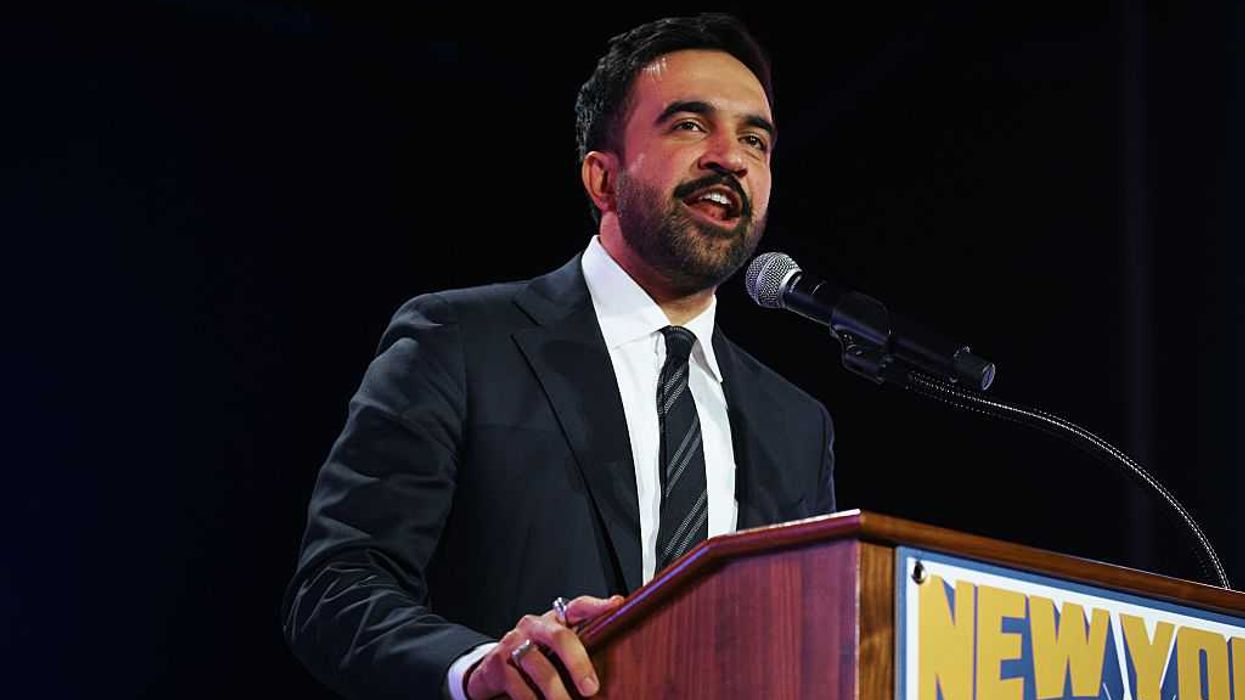
At a packed rally in Queens on Sunday, New York mayoral candidate Zohran Mamdani reinforced his far-left vision for remaking America’s largest city.
Among his proposals: government-run grocery stores, free public transportation, 200,000 government-built apartments, universal childcare, and a rent freeze for the city’s one million rent-stabilized apartments.
Only a socialist could argue that taking away people’s property rights and centralizing power enhances individual freedom.
The price tag for Mamdani’s most ambitious ideas comes to nearly $7 billion a year — more than the city’s entire police budget.
Mamdani, a self-described democratic socialist, shared the stage with Sen. Bernie Sanders (I-Vt.) and Rep. Alexandria Ocasio-Cortez (D-N.Y.), two of the country’s best-known socialist stars. Both praised Mamdani as the future of progressive politics.
Like Sanders and Ocasio-Cortez, Mamdani claims he can fund his agenda by taxing the rich and targeting corporations. He wants to raise the top corporate tax rate from 7.25% to 11.5% and increase the city’s income tax by two percentage points for anyone earning $1 million or more.
Those ideas have energized his base and helped him surge in the polls. Yet his lead is not secure. Critics from both parties warn that Mamdani’s high-tax, high-spending platform would drive wealthy residents and businesses out of New York, worsening the city’s economic and fiscal problems.
But Mamdani’s biggest obstacle isn’t fiscal — it’s philosophical.
Even in deep-blue New York, voters hesitate to hand power to a democratic socialist. Socialism’s record is clear: It limits freedom, crushes economies, and breeds instability.
To ease those fears, Mamdani’s campaign has begun to reframe socialism as a path to freedom rather than its enemy. At his rally over the weekend, he told the crowd: “No New Yorker should ever be priced out of anything they need to survive. … It is government’s job to deliver that dignity.” Then he added, “Dignity, my friends, is another way of saying freedom.”
In Mamdani’s view, freedom comes from the state guaranteeing life’s essentials — food, housing, transportation, childcare. To provide those things, government must seize and redistribute private wealth. Mamdani calls this process “delivering dignity,” which he equates with liberty itself.
That logic turns freedom on its head. Only a socialist could argue that taking away people’s property rights and centralizing power enhances individual freedom.
This rhetorical sleight of hand is not new. It’s straight from the socialist and communist propaganda of the 20th century.
Article 39 of the 1936 Soviet Constitution claimed that socialism “ensures enlargement of the rights and freedoms of citizens.” Fidel Castro’s 1976 Cuban Constitution promised “the freedom and full dignity of man” through a state guarantee of social services.
Even Joseph Stalin cloaked authoritarianism in the language of freedom. In a 1936 interview, he insisted that socialism was built “for the sake of real personal liberty,” arguing that “real liberty can exist only where there is no unemployment and poverty.”
Intentionally or not, Mamdani’s speeches echo those same lines. And he’s far from the first democratic socialist to do so. Julius Nyerere in Tanzania, Olof Palme in Sweden, and Aneurin Bevan in Britain all used similar arguments to justify state expansion in the name of “freedom.”
RELATED: Why Zohran Mamdani will be ‘one of the most catastrophic mayors ever’
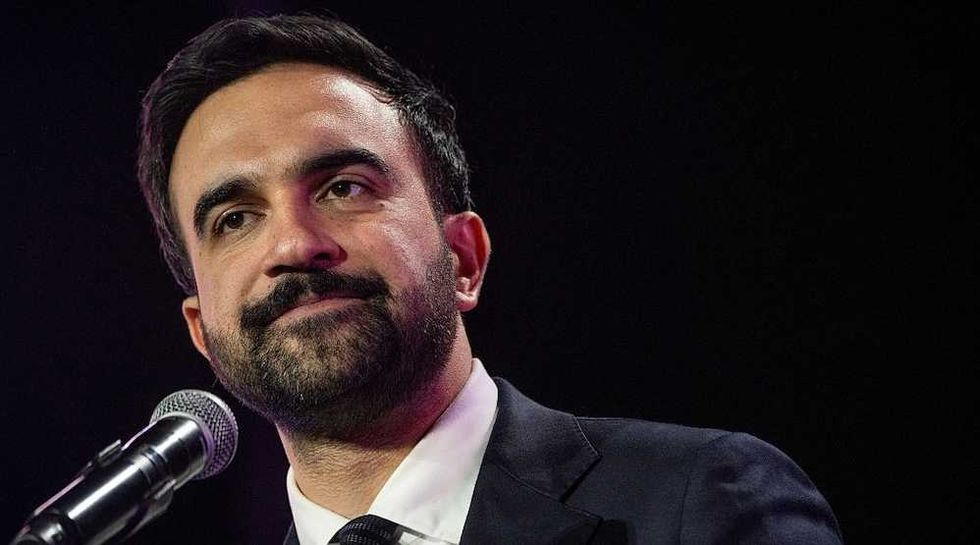 Photo by Victor J. Blue/Bloomberg via Getty Images via Getty Images
That’s no coincidence. Mamdani is a student of socialist history, and his rhetoric mirrors the Marxist premise that true liberty requires the abolition of private property. In his 1844 essay “Private Property and Communism,” Karl Marx wrote, “The abolition of private property is therefore the complete emancipation of all human senses and qualities.”
Every socialist movement since has repeated that creed, always promising “real freedom” while consolidating control over wealth, work, and speech.
History shows what those promises yield: less freedom, not more. The more government collectivizes decision-making, the less room individuals have to think, speak, or prosper.
New York City has enormous problems, but reviving the century’s old, failed ideas of socialism won’t solve them. If anything, they’ll accelerate decline.
The city’s revival depends on the principles that built it into a global capital in the first place — limited government, free markets, low taxes, and the liberty to rise through one’s own effort.
If Mamdani truly wants to bring dignity and freedom to New Yorkers, he should reject the hollow slogans of socialism and embrace the real promise of liberty that made America — and New York — great.