Category: Vr
Is Zuckerberg’s Metaverse ending? Meta decimates staff, sours on VR.
Mark Zuckerberg’s Metaverse may not be the next big thing after all.
It hasn’t been that long since the Metaverse was the place to be, with celebrities like Snoop Dogg saying he would start a new record label and social media giants the Nelk Boys promising fans exclusive experiences.
Several sources are reporting that Reality Labs, Meta’s division that works on virtual reality headsets, smart glasses, and wristbands, is dumping around 10% of its workforce.
‘About 80% of users are reportedly under the age of 16 years old.’
The New York Times reports this could amount to somewhere around 1,000-1,500 employees and “disproportionately” affect those who work on the Metaverse and virtual-reality-based social media networking. Bloomberg’s report echoed similar numbers and said Meta is cutting back on virtual reality investments. A Meta spokesperson told Return the Bloomberg report is accurate.
CEO Zuckerberg may no longer think his prized avatar world is the future. He reportedly wants money reallocated from VR goggles and the Metaverse toward his wearables division, to push smart glasses and wristband computing.
For example, Meta is famously partnered with Ray-Ban glasses for video recording and AI integration into the user’s point of view.
RELATED: Zuckerberg names ex-White House deputy Meta’s new president — and Trump LOVES it
It is difficult to gauge the active users in the Metaverse. In 2022, the internet was rife with stories of barren online wastelands such as Decentraland and Sandbox’s $1.3 billion disaster that was garnering fewer than 1,000 daily active users.
As Blaze News reported in December, Meta had recently revealed it spent $77 billion on its overall VR strategy that included Meta Quest hardware (headsets) and Meta Horizon, its Metaverse social platform.
“We said last month that we were shifting some of our investment from Metaverse toward wearables,” a Meta spokesperson told Return. “This is part of that effort, and we plan to reinvest the savings to support the growth of wearables this year.”
Current estimates have the active user count for the Metaverse, overall, at somewhere between 400 and 600 million. About 80% of users are reportedly under the age of 16 years old, and half of all users are under 13.
Last year, the company said it had significant growth in sales for its VR headsets and increased payment volume on its platform by 12%. This came with a 10% overall increase in monthly time spent on its media apps, Meta’s VP of Metaverse content, Samantha Ryan, wrote in 2024.
RELATED: Charlie Kirk murder online role play banned from Grand Theft Auto: ‘Tasteless, unacceptable’
Still, Zuckerberg has made it clear that the company is shifting toward its wearable technology and AI, including what it takes to power it.
With plans to build new massive data centers, Zuckerberg has promised to deliver “personal superintelligence,” confirming in recent remarks that the company will continue to “invest in and finance Meta’s AI and infrastructure.”
The company says it will focus on experiences with mobile phones for the Metaverse, instead of VR headsets.
Like Blaze News? Bypass the censors, sign up for our newsletters, and get stories like this direct to your inbox. Sign up here!
2025 is so over and so is virtual reality
Mark Zuckerberg, in a 2021 presentation that seemed less a business strategy than a fever dream, rebranded his company from Facebook to Meta. He was selling a future in which we would inhabit a digital utopia, a place where the friction of the physical world, the traffic, the decay, the awkward silences, would be smoothed over by the order of code.
It was a grand vision, one that presumed that the right combination of capital and engineering can solve the human condition.
However, Meta is now quietly retreating from its all-in bet, one of the most expensive experiments in business history.
It was a $60 billion attempt to fix a reality we still prefer to the simulation.
The premise was always seductive, in the way that the shadows on the wall of Plato’s cave were seductive: a world that promised to be more pleasurable, more malleable than reality. But the metaverse, as it began to take shape, was less a hyperreal paradise than a clumsy imposition. To enter this new world, one had to strap a computer to one’s face, a set of electronic “ski goggles” that isolated the wearer, blinded him to his surroundings, and demanded a total surrender of attention. The Quest traded the ease of the smartphone, which slides effortlessly into our pockets, for a device that induced sweat, fatigue, and the vague nausea of motion-to-photon delays.
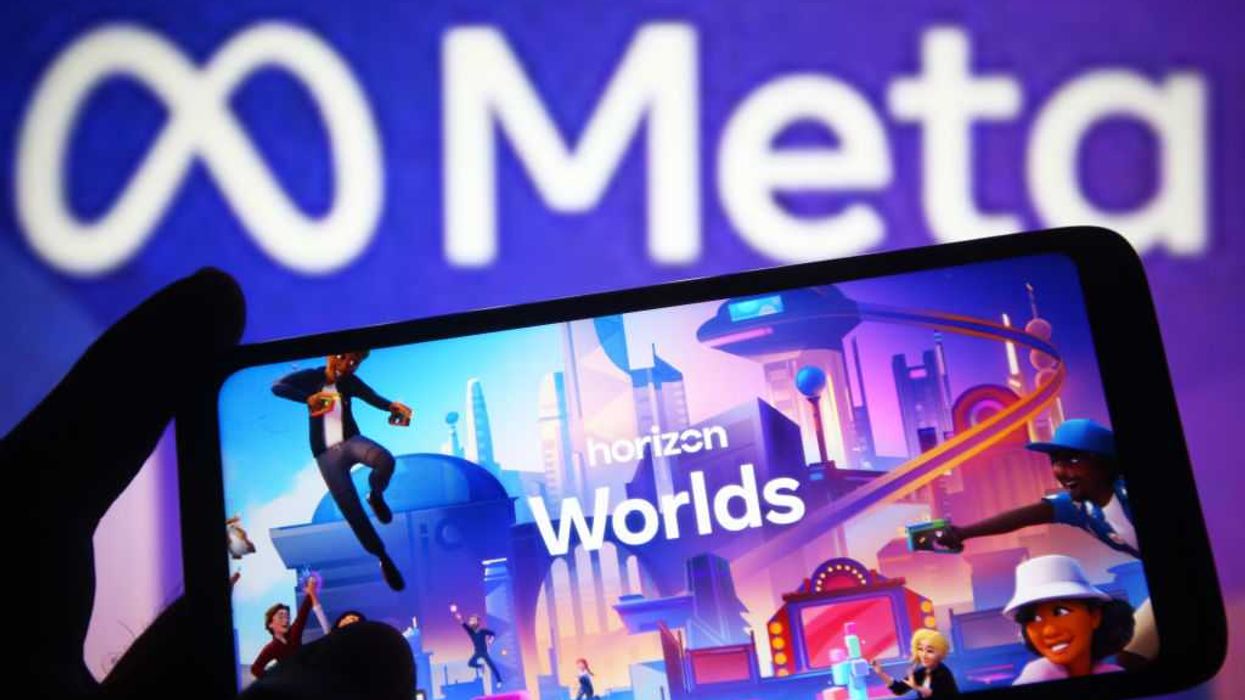
Horizon Worlds, Meta’s flagship social platform, was intended to be the bustling town square of the new digital age. Instead, it became a study in desolation. By the fall of 2022, the platform struggled to retain 200,000 monthly users, a number that seems almost tragic when weighed against the tens of billions of dollars poured into its creation. Those who did visit found a landscape populated by legless, floating torsos, cartoon avatars that managed to be both childish and uncanny. It was a ghost town, a place where the silence was amplified by the vast, empty digital architecture.
This failure was not without precedent. In the 1990s, Nintendo’s Virtual Boy promised a similar revolution and delivered only headaches and monochrome red graphics, selling fewer than 800,000 units before vanishing into the landfill of bad ideas. In the early 2000s, Second Life was briefly the darling of pundits, who prophesied we would all soon be working and shopping in its pixelated aisles; by 2010, it had faded into a niche curiosity. The pattern is clear: The cultural imagination is enticed by the idea of VR, but the human animal balks at its practice.
There is a stubborn materiality to our existence that the architects of the metaverse failed to overcome. We are embodied beings. We like the warmth of a hand, the smell of rain, the ability to glance at a screen and then look away. The metaverse demanded we leave the physical world behind, a proposition that felt increasingly dystopian.
RELATED: Inside Zuckerberg’s losing metaverse bet
 David Paul Morris/Bloomberg via Getty Images
Marshall McLuhan warned that a medium pushed to its extreme can “implode” into something else, and the metaverse seemed to hit that breaking point, an implosion in which the medium devoured its own appeal. The users did not want to be immersed in a corporate-controlled simulacrum; they wanted convenience. They wanted the blue bubble of a text message, not a virtual meeting in a boardroom rendered in low-polygon graphics.
The retreat, when it came, was swift and brutal, in the way corporate corrections often are. By 2023, a metaverse winter had set in. Disney shuttered its division; Microsoft sunset its social VR platform. The world became captivated by a new technology: generative AI. Suddenly the conversation was not about new worlds but about automated intelligence that could write our emails and paint our pictures. Meta, reading the tea leaves and the plummeting engagement metrics, pivoted. The irrational exuberance for VR gave way to sober retrenchment.
The financial markets, at times the coldest arbiters of value, cheered the death of the dream. When news broke in late 2025 that Meta would cut Reality Labs’ budget and lay off staff, its stock jumped, adding nearly $70 billion in value overnight. It was a signal that the experiment was over. The Great White Whale of tech had once again slipped away, leaving the innovators holding the harpoon, exhausted.
John Carmack, the legendary game developer who tried to steer Meta’s VR ship before resigning in frustration, noted that the company had “a ridiculous amount of people and resources” but constantly “self-sabotaged.” The metaverse was not killed by a lack of technology; the Quest 3 is a marvel of engineering. It died from a lack of human necessity. It was a $60 billion attempt to fix a reality that, for all its flaws, we still prefer to the simulation.
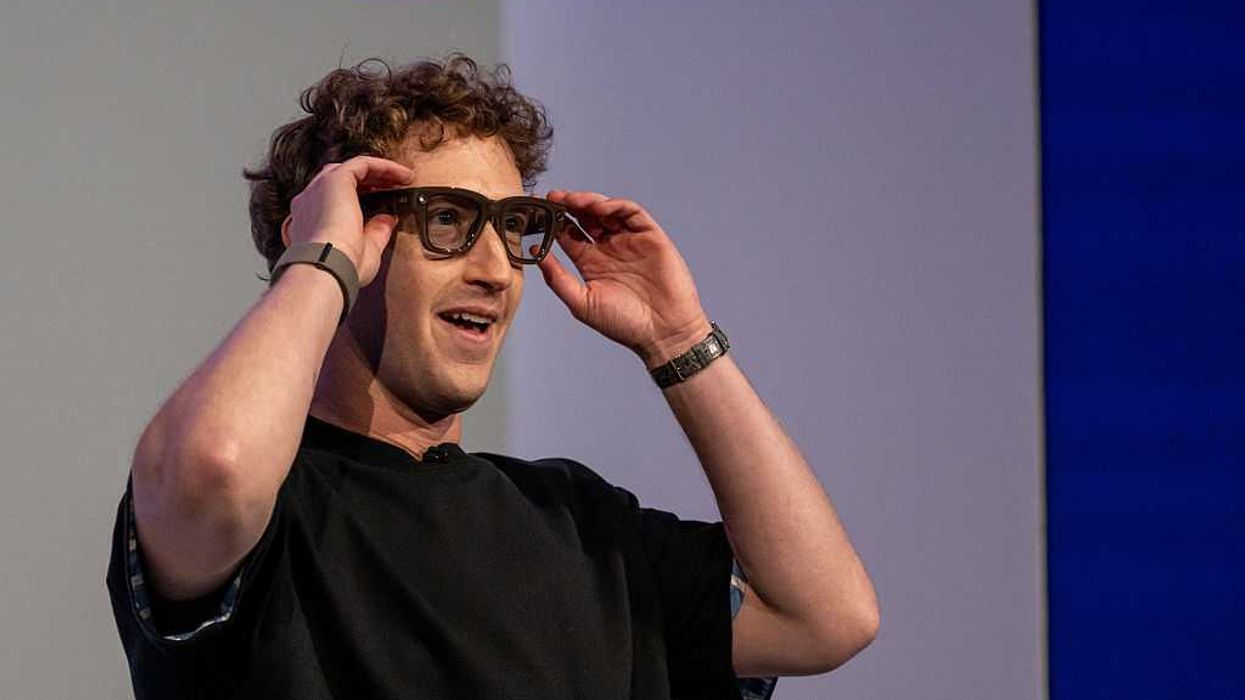
The retreat is less a defeat than a recalibration. Meta is now looking toward “smart glasses,” wearables that overlay the digital onto the real rather than replacing it. The form factor concedes the stubborn fact that we want to remain in the world. The dream of the metaverse, that hyperreal paradise where models replace the real, has been deferred. We have chosen to keep the goggles off, to live for now, in Baudrillard’s words, in the desert of the real.