Category: Entertainment
‘Bell’-buster: Joy Reid tries to cancel classic Christmas ‘Jingle’

“Truth. Justice. Whatever.”
Hollywood’s disdain for America is official with the poster tagline for this summer’s “Supergirl.”
‘I don’t care for Owen Wilson, and I don’t care for Matthew Lillard.’
How the industry embraced the problematic “girl” part of the name is a debate for another day. Just know that Hollywood hasn’t been cozy with the classic Superman slogan, “Truth, justice, and the American way,” for some time. The 2006 Brandon Routh reboot infamously ditched that last part, as did this year’s James Gunn version.
Now to show us that this Supergirl can’t even, the phrase is purposely imploded. And to be fair, the results come off better here, if only because the newest Supergirl is a rebel without a cause (or home planet).
Those offended by ditching “the American way” may be more outraged by the accompanying trailer. It looks as gloopy as this past summer’s “Superman” reboot, but with half the gravitas and action.
Prediction: Superhero fatigue goes nuclear in 2026 …
Jay Zzzzzz
Slackers never grow up. They just stay in their parents’ basements indefinitely.
That isn’t true for Jay and Silent Bob. The slacker heroes from Kevin Smith’s imagination refuse to call it a career. They’ve appeared in two features as the key attractions and several Smith movies like the “Clerks” franchise and “Mallrats.”
Now Smith is warning us there’s a third Jay and Silent Bob film in the works. “Jay and Silent Bob: Store Wars” will start production next year. But will anybody show up?
“Jay and Silent Bob Reboot” made under $5 million in 2019. Smith’s last film, “The 4:30 Movie,” didn’t earn enough for BoxOfficeMojo to include its figures.
Smith may have come of age during the ‘90s via “Clerks” and “Chasing Amy,” but his devoted flock has done nothing but shrink since then. Bigly.
Smith, 55, and co-star Jason Mewes, 51, may seem too old to keep cracking pot jokes, but Smith deserves credit for finding enough cash in his sofa to keep his franchise afloat …
Pulp Friction
Quentin Tarantino can’t get criticism out of his system.
The former video store clerk was set to make “The Movie Critic” his 10th and final film, but he got cold feet and went back to the proverbial drawing board. Since then, he’s been criticizing … everything, including specific movie stars.
That’s an unofficial no-no in celebrity circles, but Tarantino is out of you-know-whats apparently.
The director recently slammed actor Paul Dano (“The Batman,” “Love and Mercy”), dubbing the actor “weak sauce” and worse, as part of that now-infamous “Bret Easton Ellis Podcast” interview.
Hollywood stars rallied around Dano, saying he was far better than what the mercurial director dubbed him. Tarantino also shredded two more stars as part of that conversation.
“I don’t care for Owen Wilson, and I don’t care for Matthew Lillard.”
Wilson has yet to publicly respond, but Lillard did just that at a recent Comic-Con-style event, the GalaxyCon in Columbus, Ohio.
“Eh, whatever. Who gives a s**t,” Lillard said before revealing that he actually does give a bleep.
“It hurts your feelings. It f**king sucks,” he said. “And you wouldn’t say that to Tom Cruise. You wouldn’t say that to somebody who’s a top-line actor in Hollywood.”
So far, Lillard’s former co-star Scooby Doo has no comment …
RELATED: These are the definitive recordings of 35 favorite Christmas carols: Don’t argue, just listen
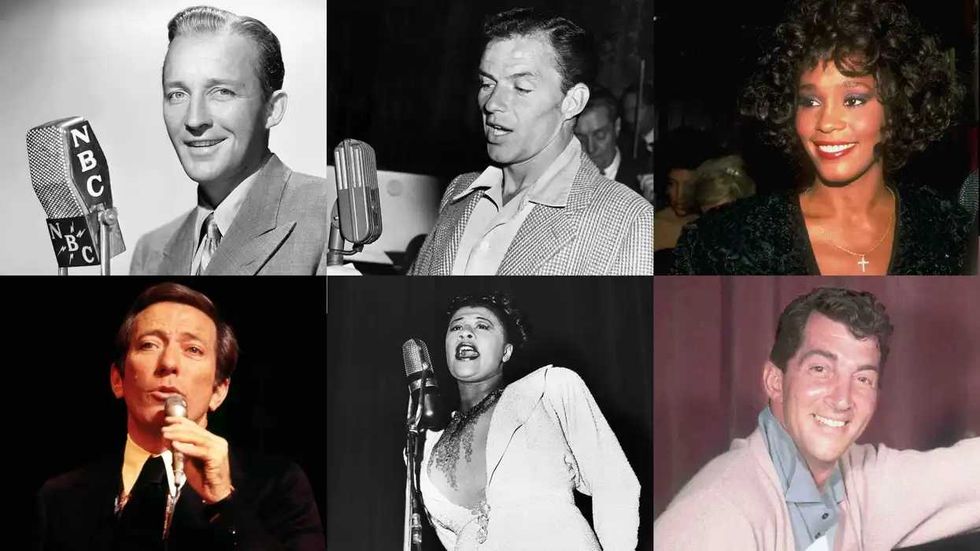 Photo credits, clockwise from top left: NBCU Photo Bank/NBCUniversal via Getty Images via Getty Images; Hulton-Deutsch Collection/CORBIS/Corbis via Getty Images; Robin Platzer/The LIFE Images Collection via Getty Images/Getty Images; Silver Screen Collection/Getty Images; George Rinhart/Corbis via Getty Images; David Redfern/Redferns
‘Jingle’ jerk
The war on “Baby, It’s Cold Outside” is over, and the good guys won. The song continues to play every Christmas season despite a woke attempt to cancel it. The less problematic “remake” by John Legend and Kelly Clarkson was quickly forgotten.
Now former MSNBC host Joy Reid is declaring war on … “Jingle Bells.” And you’ll never guess why. Just kidding.
The song’s writer, James Lord Pierpont, allegedly penned the ditty for racially charged reasons, according to Reid. To her credit, if anyone knows about racially charged topics, it’s a former TV personality who sees racism around every corner.
To her, Elvis Presley’s nickname, “The King,” is racist.
She used a Massachusetts plaque as her “proof” of the song’s racial components, along with Pierpont’s days fighting for the Confederacy. The song’s lyrics appear as benign then as they do now.
Maybe she could record her own version of the song, a la Legend and Clarkson, and watch it follow eight-track tapes, pagers, and MSNBC into the dustbin of history.
Dinesh D’Souza’s new documentary faces anti-Zionism head-on
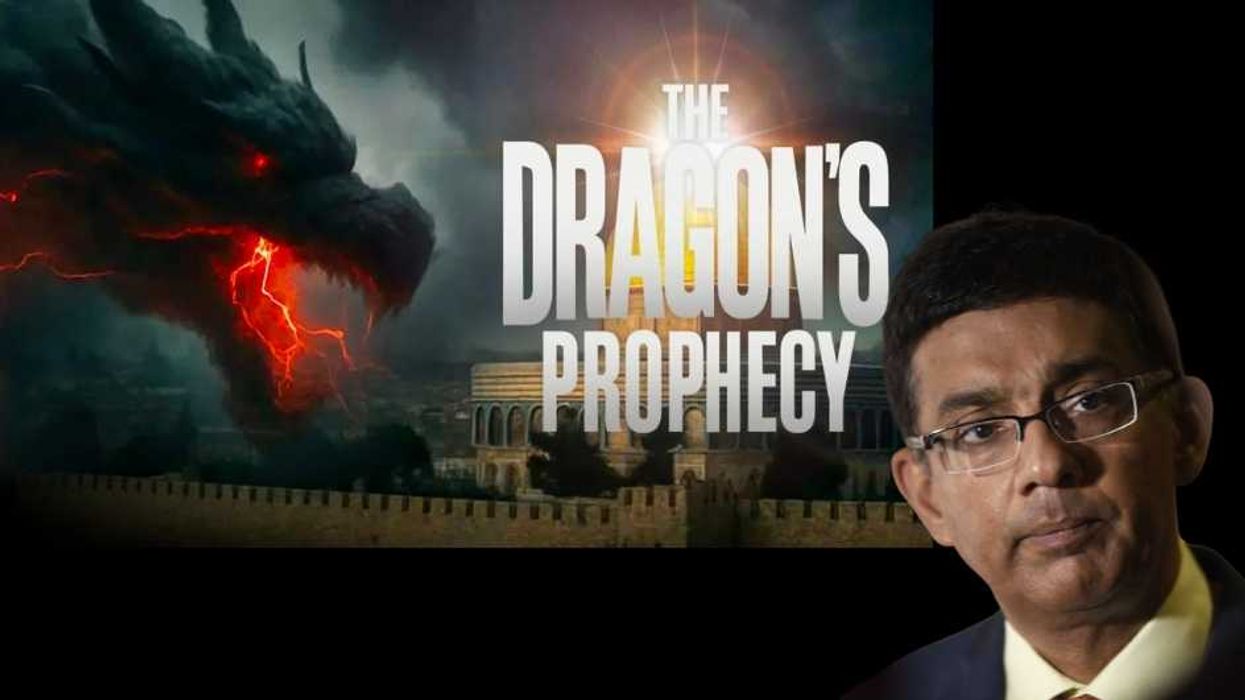
I must admit to having a complicated relationship with Dinesh D’Souza’s documentaries.
As much as I have enjoyed several of them, I find that they falter in a few ways: They often lack staying power, offering little incentive to return to them after the moment has passed; they are too self-referential — filtering every issue through D’Souza’s own perspective; and they are preoccupied with energizing sympathetic audiences rather than persuading skeptical ones.
Where the film is likely to receive its fiercest pushback is on the subject of eschatology — the theology of the end times.
This last flaw is especially frustrating. Catering to the conservative base is easy, but with D’Souza’s resources and backing, his films could be far sharper — and far more enduring — if they focused on timeless themes rather than re-litigating the 2020 election or attacking whoever happens to be running for president that year.
Chasing the ‘Dragon’
It was with this in mind that I went into D’Souza’s newest effort, “The Dragon’s Prophecy.” A loose adaptation of the Jonathan Cahn book of the same name, the Angel Studios production examines the fallout of the October 7 terrorist attacks and the subsequent two-year war between Israel and Hamas (which effectively ended with a ceasefire on October 10).
Sharpness, at least, is not a problem this time. The film arrives at a harrowing moment. Tucker Carlson is condemning “Christian Zionism” as heresy; New York City has just elected a mayor who wants to arrest the prime minister of Israel; and bipartisan resentment toward American Jews hasn’t been this pronounced since Pat Buchanan implicitly blamed them for supporting the Gulf War.
Anti-Zionism — and its adjacent anti-Semitism — is enjoying a fashionable resurgence, while support for the Israeli government sits at an all-time low.
D’Souza confronts these trends head-on. He calls out Carlson — as well as the far-left bloc of House Democrats known as “the Squad” — by name, even integrating footage from Carlson’s combative June interview with Ted Cruz. The result is a forthright defense of Israel, one that bluntly characterizes Hamas as rapists, murderers, and terrorists — and depicts the group’s atrocities in unflinching detail, including phone calls in which militants boast to their parents about their killings.
Intentional shock
It’s a grisly watch. The film includes insurgents shooting dogs and civilians, and it lingers on the aftermath of violence. But the shock is intentional. As Ambassador Mike Huckabee tells D’Souza, the war is “an eternal battle between good and evil,” with Israel on the side of the angels and Hamas aligned with “the Dragon.”
Amid this devastation, D’Souza wanders the Holy Land and laments that Israel is a place where “nothing is ever solved or resolved,” a region with “no solutions and no idea what the problems even are.” Yet his moral clarity never wavers. He even calls the construction of the Islamic Dome of the Rock on the Temple Mount “the true colonialism.”
His mission is to locate meaning in the conflict. To that end, he speaks with Jewish victims, archeologists uncovering evidence of ancient Israelite history, and Prime Minister Benjamin Netanyahu, who uses the occasion to swat at his American critics and to praise Donald Trump.
Disputed dispensation
Where the film is likely to receive its fiercest pushback is on the subject of eschatology — the theology of the end times.
Because D’Souza’s target audience is predominantly Christian, the most vocal critics may be anti-dispensationalists, whose views have become increasingly common among Catholics and mainline Protestants. They correctly note that dispensationalism is a 19th-century American theological development and that the popular notion of a “rapture” is relatively recent.
As the Protestant theologian Brian Mattson writes, “In the grand historical sweep of Christian theology, Dispensationalism is a new arrival.” He explains that its architects argued that salvation unfolds across distinct dispensations, meaning that God’s promises to Israel remain intact for ethnic Jews even as the New Testament opens salvation to Gentiles. “God has two separate ‘tracks’ for the salvation of humanity,” he writes. Thus the national promises to Israel persist in perpetuity.
This is the framework behind the “Left Behind” franchise — 16 books and five films — and it places the modern state of Israel at the center of Revelation in a way that traditional Christian readings do not.
There are legitimate biblical critiques of dispensationalism, just as there are bad-faith motives for attacking it. Mattson notes that many Gen Z “America First” Catholic converts now regard Israel as an unnecessary “foreign entanglement,” while others deploy “heresy” language as a thin veil for anti-Semitism.
RELATED: Haunting play ‘October 7’ lets Hamas terror survivors speak
 Phelim McAleer
End-times evidence
Still, D’Souza’s film is thoroughly dispensationalist. Israel’s present turmoil is portrayed as evidence that the end times are near, that evil is intensifying, and that God is making Himself more visible through signs and miracles. The fate of Israel, in this reading, is inseparable from the fate of the world.
The film’s second half is a series of interviews with Israeli archeologists who discuss evidence for figures like King David and Pontius Pilate, treating their discoveries as confirmations of Scripture. When combined with commentary from a Messianic Jew such as Jonathan Cahn, the Israeli-Gaza conflict becomes a mystical drama between cosmic good and cosmic evil.
That argument rests on a contested theological system. However one responds to the film’s defense of Israel, it must be filtered through the angular lenses of American dispensationalism — a hurdle many viewers may be unwilling to clear.
Centrist appeal
There are smaller criticisms as well: The film appears to lean heavily on AI-generated imagery, which raises its own questions about execution. But in the main, the film is preaching to the broad American center — those who support Israel without belonging to either extreme.
Despite these theological quirks, the film ultimately does something I have long wished D’Souza’s documentaries would do: It speaks clearly and with conviction about an issue that possesses lasting moral weight.
Israel will remain a defining struggle for decades. October 7 is only one chapter of that broader conflict. In taking it on, D’Souza presents a moral argument to a conservative audience that is increasingly drifting from him. Whether one agrees with his conclusions or not, he is operating on the level of enduring questions of faith rather than the transitory skirmishes of electoral politics. For once, he isn’t simply preaching to the choir.
Culture’s great subversion machine has broken down at last
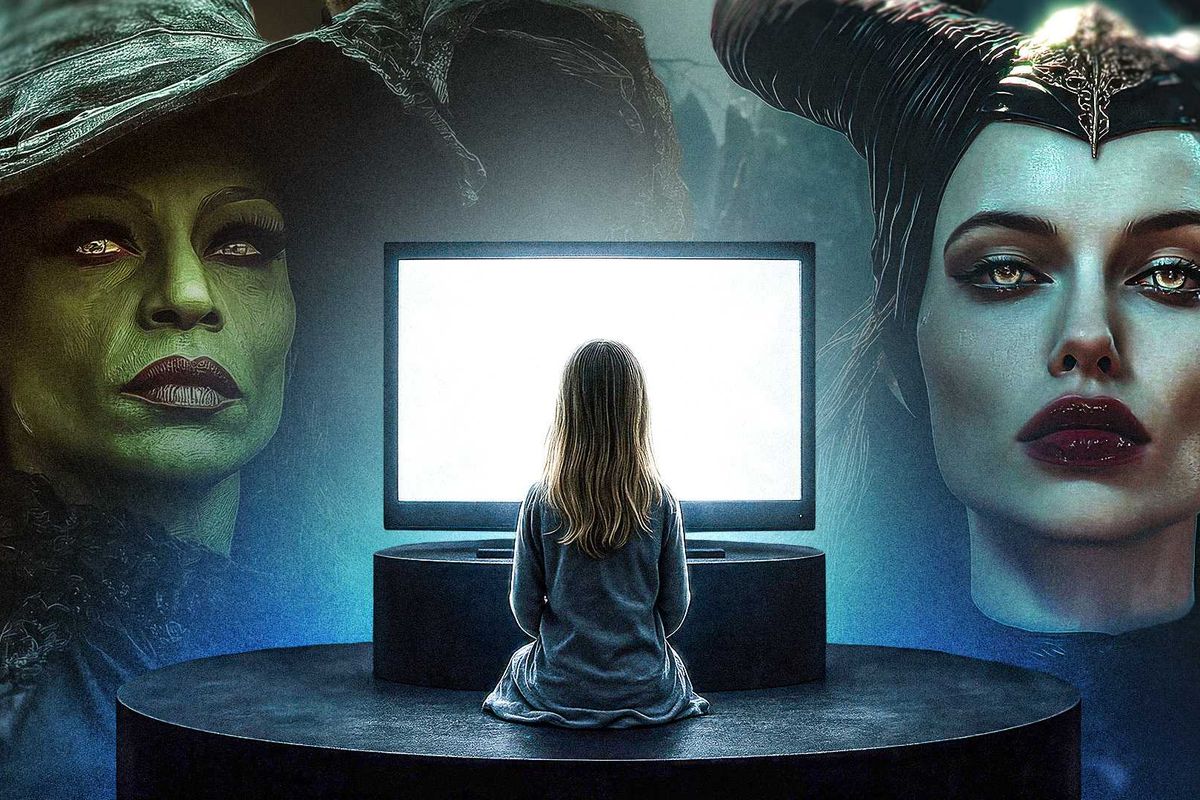
Netflix just announced its next animated children’s film, “Steps,” a Cinderella inversion in which the evil stepsisters are the real heroes. Shocking, I know. The platform is also releasing “Queen of Coal,” a film about a “transgender woman” overcoming the patriarchy in his small Argentinian town.
Reports of the demise of wokeness were premature. Its adherents remain committed to pushing it across every domain of society. What’s notable is how boring it has all become. Deconstruction has been the default mode of modern culture, but it is running out of things to deconstruct. The transgression has lost its power as the taboo fades, and in that exhaustion, something new — perhaps something true — stirs.
The revolution brought destruction, but its exhaustion brings new possibilities.
Some call Friedrich Nietzsche the first postmodernist for announcing that “God is dead.” Whether he was a precursor or ground zero, the genealogy of the movement clearly flows from his work. You can argue about whether he unleashed several horrors into the world or merely acknowledged their arrival, but Nietzsche at least understood the seriousness of his claim. He understood that having the blood of God on your hands was not a clever academic parlor trick — it was monstrous.
With the creator of the universe declared dead, modern man felt free to dismantle the order that once bound him. The sacred bonds of hierarchy were shattered. Postmodernism launched its assault on the good, the beautiful, and the true. And breaking sacred bonds releases immense energy. The leftist revolution that consumed the West drank deeply from it.
The church, the community, the family, marriage, gender roles, gender itself — each time the left destroyed one of these natural structures, it seized the power trapped inside and wielded it against its enemies.
Deconstruction reaches its natural end
But deconstruction has a natural end point. Transgression requires something sacred to violate. As I have written before, you eventually reach the point where there is nothing left to transgress.
When every movie, show, novel, game, and song “subverts” the traditional Christian norm, the subversion becomes the norm. That’s why these Netflix offerings feel so lifeless: They all follow the same trajectory toward the same inversion.
Fifty years ago, critics complained that stories were predictable because the squeaky-clean hero always triumphed. Today they are predictable because the villain is always a misunderstood victim of bigotry who deserves to win. The inversion isn’t clever or subversive. It’s the boring status quo.
The death of who?
So what happens when postmodernism has inverted every hierarchy, mocked every sacred symbol, and squeezed the last drop of power out of attacking Christianity?
The philosopher Alexander Dugin offers a compelling answer. If modernity was the death of God, the end of postmodernism is the exhaustion of subversive secular culture. At that point, new possibilities appear. Instead of proclaiming that “God is dead,” people start asking, “The death of who?” The old order fades so completely that secular man forgets what he was rebelling against.
Meanwhile, the promise of becoming like gods and remaking the world in our own image begins to sour. We see the consequences of rejecting the good, the beautiful, and the true — and find them unbearable.
A postmodern moral wasteland
Postmodern man has lived his entire life in a world re-engineered from the top down by “experts.” When he cast God from His throne, man imagined he would shape the world through his own individual will. But the modern secular man discovers instead a moral wasteland. He finds that he is captive not to his own liberated self, but to darker forces once held at bay by the divine order he dismantled.
He no longer remembers what that order looked like — or why he rebelled against it. And in that moment, the opportunity to rediscover the spiritual returns.
RELATED: We’re not a republic in crisis. We’re an empire in denial.
 Blaze Media Illustration
The revolution brought destruction, but its exhaustion brings new possibilities. People have forgotten the object of their rebellion, and now they look at the miserable world secular man has made. They crave something more.
Order, duty, faith, meaning. These begin to look far more promising than the ugly, pointless chaos modern man created for himself. People once again thirst for a world where the good guy wins and God reigns.
God never died — modernity did
The truth is that God never died. Christ died and rose again. Modern man tried to replace the divine with science and reason, but the Lord is the source of reason itself. He cannot be dethroned by His own creations.
As deconstruction loses its revolutionary energy and becomes stale, the desire to re-embrace sacred order returns. J.R.R. Tolkien captured this when he wrote: “Evil cannot create anything new. It can only spoil and destroy what good forces invented or created.” Eventually evil runs out of things to spoil. A barren, thirsty culture begins searching for the living water only divine truth can provide.
Ready for revival
Modern culture is bankrupt, and everyone feels it. The attempts at transgression now read as hollow conformity to a corrupted system. We are not the masters of our own world or our own truth — and thank God for that.
We do not have to live in the nihilistic abyss we created. The natural order waits just beneath the surface, ready to re-emerge in a cultural revival.
The creative future will not come from a relativistic Hollywood clinging to the corpse of deconstruction. It will come from those willing to embrace the transcendent — from those who understand that the world is held together not by our will to power, but by the truth and beauty of our Creator.
Something to Hold Against Donald Trump
In many ways, Trump is outperforming the expectations many of us had for his second term. Things are going reasonably…
Do we love the ‘Wicked’ movies because we hate innocence?

As I watched Jon M. Chu’s “Wicked: For Good” last week, I kept thinking about another, very different filmmaker: David Lynch.
Specifically, the Lynch that emerges from Alexandre Philippe’s excellent 2022 documentary “Lynch/Oz,” wherein we discover just how deeply the infamously surreal filmmaker was influenced by one of cinema’s sweetest fantasy films: the original “Wizard of Oz.”
In the era of #WitchTok … a story like ‘Wicked’ has built-in appeal.
Philippe’s film includes footage from a 2001 Q and A in which Lynch confirms the extent of his devotion: “There is not a day that goes by that I don’t think about ‘The Wizard of Oz.'”
The logic of fairyland
And that shouldn’t be surprising given how much it shows up in his work. From Glinda the Good Witch making an appearance in “Wild at Heart,” to the hazy, dreamlike depiction of suburbia in “Blue Velvet,” his films exist in a dual state between the realm of fairyland and the underworld.
Indeed, Lynch doesn’t reject either. In proper Buddhist fashion, these two forces exist in balance, equally potent and true. There is both good and evil in his world. Neither negates the other’s existence. And when darkness spills over into the light, it may be tragic, but it is also just another part of the world. Like Dorothy, his protagonists find themselves walking deeper into unknown territory. The protagonists of his films truly “aren’t in Kansas anymore.”
“The Wizard of Oz” is potent because it captures the logic of fairyland better than almost any film ever made. Channeling the fairy stories of J.R.R. Tolkien, Lewis Carroll, and George MacDonald, it transports the mind to a realm that is more real than real, where even the most dire intrusion of evil can be set right according to simple moral rules.
As G.K. Chesterton famously puts it:
Fairy tales do not give the child his first idea of bogey. What fairy tales give the child is his first clear idea of the possible defeat of bogey. The baby has known the dragon intimately ever since he had an imagination. What the fairy tale provides for him is a St. George to kill the dragon.
Wicked good
“Wicked” and its new sequel reject this comforting clarity for something altogether more “adult” and ambiguous. Instead of presenting good and evil as objective realities that can be discerned and defeated, the films show how political authorities manipulate those labels to scapegoat some and exalt others.
They do so by swapping the original’s heroes and villains. The Wonderful Wizard is a cruel tyrant. Glinda is foppish and self-obsessed. Dorothy is the unwitting tool of a corrupt regime. And Elphaba — the so-called Wicked Witch — is reimagined as a sympathetic underdog with a tragic backstory, a manufactured villain invented to keep Oz unified in ire and hatred.
Elphaba exudes a whiff of Milton’s Lucifer — an eternal rebel in a tragic quest to upend the moral order. But unlike “Paradise Lost,” “Wicked” presents rebellion against its all-powerful father figure not as a tragic self-deception, but as a justified response to systemic cruelty.
Witch way?
“Wicked: For Good” takes the ideas of its predecessor even further than mere rebellion. If “Wicked: Part One” is about awakening to the world’s realities and becoming radicalized by them, “Wicked: For Good” is about the cost of selling out — the temptation to compromise with a corrupt system and the soul-crushing despair that follows.
This is where the irony of the film’s title, “Wicked: For Good” comes in. Once a person sees the world for what it truly is, they can’t go back without compromising themselves. They’ve “changed for good.” They’ve awakened and can’t return to sleep.
It’s worth considering why the “Wicked” franchise is so wildly popular. Gregory Maguire’s original 1995 novel has sold 5 million copies. The 2003 stage show it inspired won three Tony Awards and recently became the fourth longest-running Broadway musical ever. And the first film grossed $759 million last winter, with the sequel poised to make even more money.
Perhaps it is no coincidence that this outsize success comes at a time when Wicca and paganism have grown into mainstream cultural forces. In the era of #WitchTok, in which self-proclaimed witches hex politicians and garner billions of views on social media, a story like “Wicked” has built-in appeal. It offers glamorous spell-casting and a romantic tale of resistance to authority.
RELATED: ‘Etsy witches’ reportedly placed curses on Charlie Kirk days before assassination
 Photo by The Salt Lake Tribune / Contributor via Getty Images
A bittersweet moral
The temptation of witchcraft is one that always hovers over our enlightened and rationalistic society. Particularly for young women, witchcraft offers a specific form of autonomy and power — over body, spirit, and fate — that patriarchal societies often deny. Many view witchcraft as progressive and empowering; “witchy vibes” have become a badge of identity.
Thus the unsettling imagery of Robert Eggers’ 2015 film “The Witch” comes into focus: A satanic coven kidnaps and kills a Puritan baby, seduces a teenage girl, and gains the power to unsubtly “defy gravity” through a deal with the devil.
“Wicked” is all about this power to transcend. Even as its protagonist grows despairing in the second film and abandons her political quest for the freedom of the wastelands, the film presupposes that it is better to resist or escape a corrupt system than submit to it.
Ultimately, the two films leave their audience with a bittersweet moral: Society is dependent on scapegoats. The Platonic noble lie upon which all societies rest cannot be escaped — but it can be redirected. A new civic myth can be founded that avoids sacrificing the vulnerable and overthrows the demagogues atop Mount Olympus. And the witches play the central role in overturning the world of Oz. Their rebellion sets it free.
But because the films blur the clear, objective distinction between good and evil — even while acknowledging that real evil exists — the characters in “Wicked” often drift in moral grayness, defining themselves mainly in relation to power. The world becomes overbearing, radicalizing, and morally unstable.
Sad truth
This is far afield from the vision of Oz presented in the 1939 film, the one David Lynch venerated as vital to his understanding of the world. But it reflects how modern storytellers often grapple with Oz. Almost every sequel or spin-off struggles to recapture the sincerity of the original. The 1985 sequel “Return to Oz” reimagined the land with a dark-fantasy twist. 2013’s “Oz the Great and Powerful” comes closest to the original tone but centers on fraudulence and trickery.
“Wicked,” too, falls in line with the modern tendency to subvert and complicate traditional stories of good versus evil. “Frozen,” “The Shape of Water,” “Game of Thrones,” and “Star Wars: The Last Jedi” all explore morally conflicted worlds where bravery is futile or where Miltonian rebellion is celebrated.
Of course, seeing the stories of our childhood with a jaundiced adult eye can be quite entertaining; it’s perfectly understandable why even those not in covens love these films. They are well-made, well-performed, and especially irresistible to former theater kids (I am one).
Their popularity isn’t inherently bad either. They are perfectly fine in isolation. It is only when we contrast them with the clarity and beauty of the original — and place them within the context of our society — that a sad truth emerges: Finding fairyland is hard. Most of us prefer to live in the Lynchian underworld.
SHORT N’ SWEET: White House Drops Curt Response After Carpenter Complains About ICE Using Song

The White House came out swinging Tuesday after pop star Sabrina Carpenter accused the administration of hijacking her music for an ICE video, calling the move “evil and disgusting.
I thought I was too old to fall in love again — until two chords proved me wrong
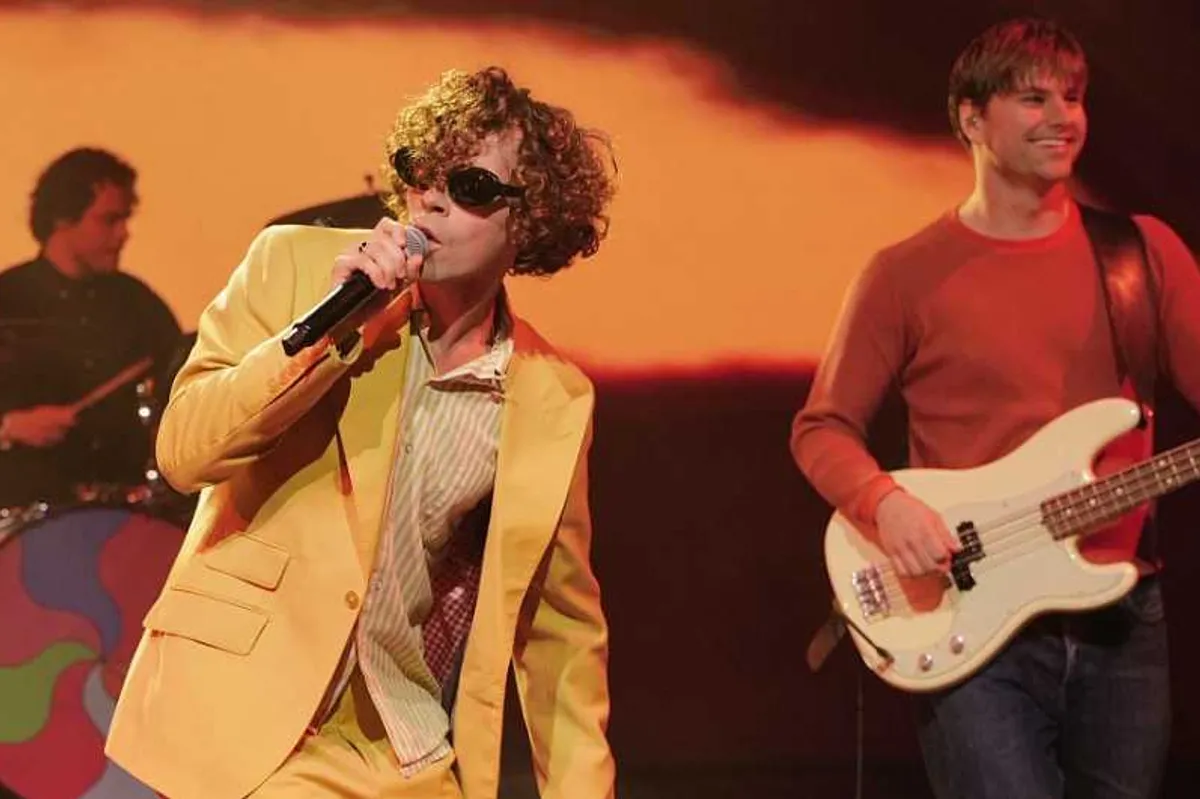
I have a new favorite band. I know that sounds weird. I’m not a teenager. I’m a grown adult man.
I was in my car when I first heard the song “Jupiter” on the alternative music station. It began with a distinctive guitar part, two chords played in a simple rhythmic pattern.
An actual band is too much like a gang. Or a terrorist group. Four white guys roaming around the country in a van? We better have the FBI look into that.
It was super catchy. Very simple. Nice groove. It didn’t sound like anything else on the radio. The band is called Almost Monday.
Smoothed and removed
I downloaded “Jupiter” and put it on a playlist. It stood out, even among some classic songs. I found myself humming it during my day. And then needing to listen to it when I got home.
A month or two later, another new song by Almost Monday came out, “Can’t Slow Down.” It had a similar repetitive guitar riff. But in this song, there was a great bass part as well.
Both songs had a slick quality. Super produced. Really clean and effortless.
I think of music like that as “not letting you in.” You, the listener, are experiencing music so smooth and polished, you can’t imagine actual people playing it.
You can’t picture the band members. They’re projecting a wall of glossy perfection. And you can’t see through it.
*******
I downloaded “Can’t Slow Down” and put that on a playlist. But it sounded best on my car radio while I was driving. Fortunately, it was on heavy rotation, and I drive a lot. So I heard it constantly.
“Jupiter” was still playing continuously as well. The two songs were like a one-two punch. By July, it seemed Almost Monday was the breakout band of the summer.
“Jupiter” and “Can’t Slow Down” were definitely my “summer songs.” And probably a lot of other people’s as well.
It was almost like Almost Monday had become my new favorite band.
Trends to the end
I haven’t had a favorite band in a long time. I didn’t even think I was capable of having a favorite band again, to be honest. I mean, I still listen to the radio. I still follow the trends in music.
I enjoyed the “yacht rock” trend from a couple of years ago. But that was more of a joke. But even joke-trends can produce good music.
If I were a music critic, I would describe Almost Monday as “post-yacht rock, California pop.” Smooth, catchy melodies. Clever lyrics. No politics, no depressing thoughts. A strong Southern California vibe (the band is from San Diego).
*******
Looking back, my first favorite bands were Led Zeppelin and Aerosmith. That was in high school. In college, it was Echo and the Bunnymen. When I lived in San Francisco after college, it was the Smiths.
All these bands became like close friends to me. I would miss them if I didn’t hear them at least once a day. I needed my fix.
When I got into my 30s, I became more of a general fan. That was when grunge happened. I liked all those bands, but none really stood out as my favorite.
After grunge, there were many music groups I liked. Radiohead. Interpol. Elliott Smith. Sufjan Stevens’ “Carrie & Lowell” album. But I wouldn’t say any of these were “my favorite band.”
The trouble with happiness
One thing I should say: I don’t usually enjoy music like Almost Monday. I was never into that carefree, happy-sunshine, California vibe. I typically like heavier, moodier stuff.
But maybe because the tone of society is so dark and fraught right now, the lightness of their music feels almost revolutionary. How dare they be so easy-going. So outwardly cheerful. Who do they think they are?
Also, they’re a bunch of white guys. Which is not exactly in fashion. Shouldn’t they have some women and some racial diversity in their group?
And even being “a band” seems retrograde and reactionary. Current pop music is about individual stars. Chappell Roan. Benson Boone. Sabrina Carpenter. Bad Bunny.
These are individual “artists” with specific marketing concepts and replaceable musicians.
An actual band is too much like a gang. Or a terrorist group. Four white guys roaming around the country in a van? We better have the FBI look into that.
*******
All summer I listened to “Can’t Slow Down” and “Jupiter,” multiple times a day. But I’d still never actually seen the group. I didn’t feel a need to.
But then one night, I had the TV on, and I heard Jimmy Kimmel introduce the group on his show. I hurried over to the TV and turned up the sound.
They played “Can’t Slow Down.” They were super simple in their stage presentation. Just four guys. Singer, bass, drums, guitar.
They had no amps, I noticed. There was almost nothing on the stage. The guitarist played that one simple repeating progression.
They were super chill. The singer moved around a little. The guitarist and bassist just played. The drummer drummed. They didn’t let you in.
Really, it was fantastic. But would America appreciate their understated cool? Their simplicity? Their Zen-like reserve?
They’d had two smash-hit singles on alternative radio that summer. But what did that mean in the music biz? Was “alternative music” still a big market? Do young people even listen to music anymore? How do bands make money nowadays?
RELATED: Where have all the rock bands gone?
 Jeff Kravitz/Getty Images
I’ll see you in September
In September, I rode a ferry up to Alaska. This was not a cruise. It was a ferry, with dogs and trucks and locals. It took three days. There was no TV on board, nothing much to do.
That’s when I realized how close I felt to Almost Monday. I would hang around on deck for a couple of hours, then go back to my bunk and listen to “Jupiter” and “Can’t Slow Down.”
I dug up some of their other songs that I’d downloaded. Now I had time to listen to these closely and develop new favorites.
It was fun because in my mind these were “summer songs,” but every hour we steamed north on the ferry, it got colder.
Summer was not fading away over a month or two, like usual. It was fading hour by hour.
So I binged on the summer sounds of Almost Monday, as the skies grew dark and people on deck started wearing down parkas.
*******
A favorite band is like a best friend. It is the first person you want to talk to in the morning. And the last person you want to hear from before you go to bed. During the day, you don’t need to be in constant contact, but you’re relieved when you’re in their presence again.
*******
Now I’m back in Portland. It’s wet and cold, but I still listen to Almost Monday every day.
I hope they make it big. Or big enough to never have to get normal jobs.
That’s all I ever wish for, for my fellow creatives: I hope they make some money. I never wish for them wild success or huge fame. That can be bad for a person.
But I do want them to make enough money that they can be artists for the rest of their lives. And not have to worry about paying their rent.
In music, sometimes all it takes is to write a couple great songs (and own the publishing rights). I know Almost Monday has already accomplished that. So hopefully the rest is gravy.
The Spectator P.M. Ep. 171: Meghan Markle Demands to Be Called by Her Title Everywhere
Anyone expecting Meghan Markle’s presence is formally greeted by someone announcing her as “Meghan, Duchess of Sussex.” A recent interview…
Louis CK’s ‘Ingram’: Skilled comic spews self-indulgent self-abuse
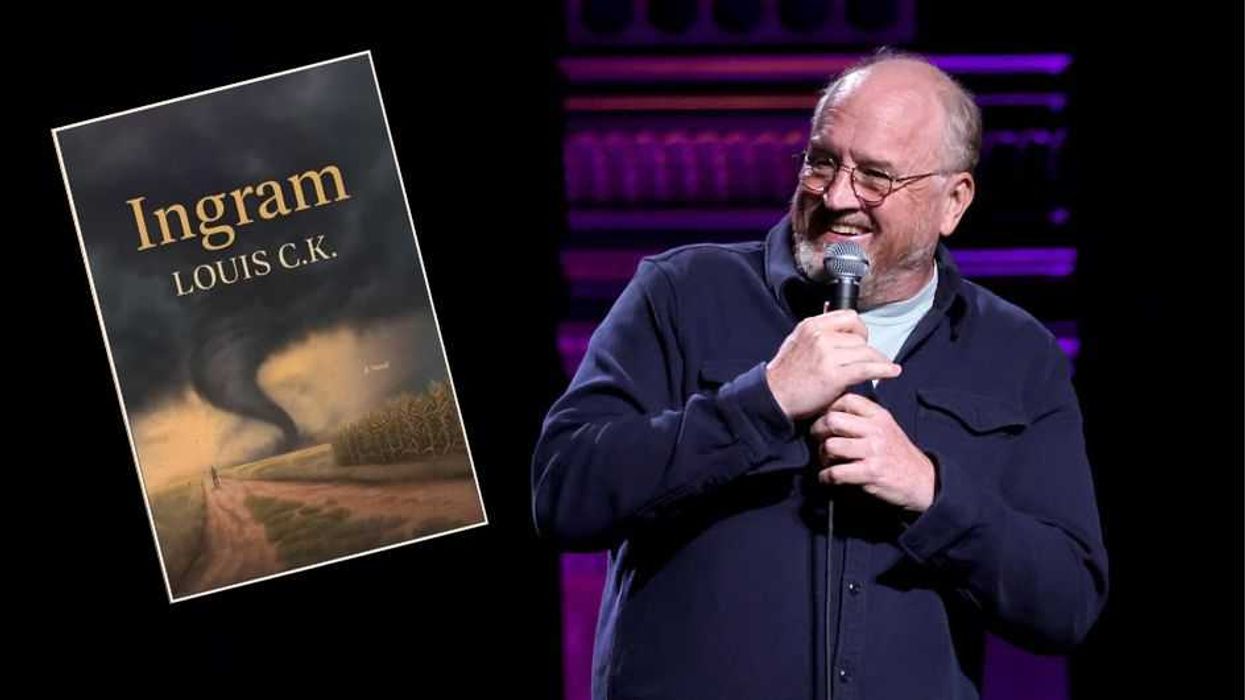
For more than two centuries, the great American novel has tempted writers who dreamed of capturing the country’s soul between two covers.
From Melville’s “Moby-Dick” to Fitzgerald’s “The Great Gatsby,” from Faulkner’s haunted South to Steinbeck’s dust-caked plains, these novels shaped the way Americans saw themselves. Even in decline, the form still attracted giants. Updike, Roth, Morrison — writers who made words shine and sentences sing. Each tried to show what it means to be American: to dream, to stumble, and to start again.
To compound matters, ‘Ingram’ isn’t just a story of exploration, but also one of self-exploration, in the most literal and least appealing sense.
Now comes comedian, filmmaker, and repentant sex pest Louis C.K. to try his hand at what turns out to be … a not-great American novel. In truth, it’s awful.
Road to nowhere
“Ingram” reads like a road map to nowhere — meandering, bloated, and grammatically reckless. The prose wanders as if written under anesthesia. Sentences stretch, then sag. The paragraphs arrive in puddles, not lines. There’s an energy in C.K.’s comedy — a kind of desperate honesty — that, on stage, electrifies. But on the page, that same honesty slips into self-indulgence. The book is less “On the Road” and more off the rails.
To be clear, I love his comedy. I’ve seen him live and will see him again in the new year. He remains one of the most gifted observers of human absurdity alive — a man who can mine a half-eaten slice of pizza for existential truth. But this is not about comedy. This is about writing. And C.K. cannot write. The pacing, the architecture, the restraint — none of it is there.
Rough draft
The story unfolds in a version of rural Texas that seems to exist only in C.K.’s imagination, a land of dull prospects and even duller minds. At its center is Ingram, a poor, half-feral boy raised in poverty and pushed out into the world by a mother who tells him she has nothing left to offer. His education consists of hardship and hearsay. He treats running water like sorcery and basic plumbing like black magic. C.K. calls it “a young drifter’s coming of age in an indifferent world,” but it reads more like rough stand-up notes bound by mistake.
The writing is atrocious. Vast portions of the book read like this:
I couldn’t see my eyes, but I knew what was on my throat was a hand by the way it was warm and tightening and quivering like you could feel the thinking inside each finger, which were so long and thick that one of them pressed hard against the whole side of my face.
Or this:
I sat up, rubbing my aching neck til my breath came back regular, and I crawled out the tent flap myself, finding the world around me lit by the sun, which, just rising, was still low enough in the sky to throw its light down there under the great road, which was once again roaring and shaking above me.
Sentences stretch on like prison terms, suffocated by their own syntax, gasping for punctuation. The dialogue is somehow worse. Ingram’s conversations with the drifters and degenerates he meets on his journey stumble from cliché to confusion, the rhythm of speech giving way to nonsensical babble.
RELATED: Bill Maher and Bill Burr agree Louis CK should be welcomed back in Hollywood
 Photo by Ronald Martinez/Getty Images
A gripping tale
To compound matters, “Ingram,” isn’t just a story of exploration, but also one of self-exploration, in the most literal and least appealing sense. There’s a staggering amount of masturbation. C.K. doesn’t so much write about shame as relive it, page after sticky page. His public fall from grace plays out again and again, only now under the pretense of art. It’s less confession than repetition — self-absolution by way of self-abuse, and somehow still not funny.
Any comparisons to writers like Bukowski or Barry Hannah are little more than wishful thinking. Bukowski was grimy, but in a graceful way. He wrote filth with style, turning hangovers into hymns.
Hannah’s madness had a tune to it, strange but unmistakably his own. Even Hunter S. Thompson, at his most incoherent, had velocity. His sentences tore through the page, drug-fueled but deliberate.
C.K.’s writing has none of that. He tries to channel Americana — the heat, the highways, the hard men who dream of escape — but his clumsy prose ensures the only thing channeled is confusion. As C.K. recently told Bill Maher, he did no research for the book, and that much is evident from the first page. His characters talk like they were written by a man who’s only seen Texas through “No Country for Old Men.”
Don’t quit your day job
In the history of American letters, many great writers have fallen. Hemingway drank himself into oblivion; Mailer stabbed his wife; Capote drowned in his own decadence. But their sentences still stood. Their craft was the redemption. With “Ingram,” C.K. has no such refuge. The book exposes the limits of confession as art — that point where self-exposure turns into self-immolation. It could have been great; instead, it’s the very opposite. The only thing it proves is that writing and performing are different callings. Comedy forgives indiscipline. Literature doesn’t.
The great American novel has survived worse assaults — from bored professors, from self-serious minimalists, from MFA factories that mistake verbosity for vision. But rarely has it been dragged so low by someone so convinced of his brilliance. There’s perverse poetry in it, though. A man who was caught with his pants down now delivers a novel that never pulls them back up.