

Category: Congress
Shutdown Over, Trump Saves Thanksgiving
WASHINGTON — The government shutdown that never should have happened is over. Voters should be furious with most Democrats, and…
Kennedy Heir and House Candidate Jack Schlossberg Performed Nazi Salute in Since-Deleted Swipe at Elon Musk
Jack Schlossberg, a Kennedy family scion and Democratic primary candidate for New York’s 12th Congressional District, performed a Nazi salute in a since-deleted Instagram video reviewed by the Washington Free Beacon.
The post Kennedy Heir and House Candidate Jack Schlossberg Performed Nazi Salute in Since-Deleted Swipe at Elon Musk appeared first on .
The Case for the Filibuster: A Check on Zeitgeist Impulses
Bob Capano makes an earnest and considerate point in his recent essay, “Trump’s Right: Nuke the Filibuster,” that the Senate…
Hakeem Jeffries, Progressive Dems Rage Against Deal To End Shutdown
Hakeem Jeffries, Progressive Dems Rage Against Proposed Deal To End Shutdown
‘Warfighter’ son of a popular Michigan sheriff is now gunning for Congress

The son of a longtime Michigan sheriff has officially tossed his hat in the ring for Congress.
On Thursday, Captain Mike Bouchard, son of Oakland County Sheriff Mike Bouchard, announced that he will be running as a Republican for the 10th District seat in Michigan currently occupied by Rep. John James (R), who is now running for governor.
“My family taught me that service isn’t a slogan; it’s a duty,” Captain Bouchard said in a press release. “I’ve worn the uniform of our nation and faced America’s enemies abroad. Now I’m ready to fight for our people here at home — to keep our families safe, our jobs local, and help make our country strong again.”
Captain Bouchard, a paratrooper and Bronze Star recipient who just returned home after serving a nine-month tour in Iraq with the Michigan Army National Guard, claims he wants to continue serving his state and his country.
‘Michigan built the tools that won wars. Now we’ll rebuild the economy that wins the future.’
“Warfighters don’t quit. We adapt, overcome, and keep moving toward the objective. That’s the mindset I’ll bring to Congress — mission focus, no excuses, and zero tolerance for failure. The people of Michigan deserve a warfighter in Washington who understands the mission and has the backbone to get the job done,” his statement continued.
In the press announcement about his candidacy, Captain Bouchard repeatedly referred to President Donald Trump, indicating that he intends to run on a MAGA-type platform. He has already identified public safety, caring for veterans, and the restoration of American manufacturing as his primary issues.
“Michigan built the tools that won wars. Now we’ll rebuild the economy that wins the future. President Trump is putting America First, and our economy will reap the rewards,” he said.
Captain Bouchard has long had the support of his father, Sheriff Bouchard, who spent nearly a decade in the Michigan legislature as a Republican before becoming sheriff of the state’s wealthiest and second-most populous county in 1999.
The sheriff told Blaze News back in September that his son is an “amazing person” who is “very qualified” to represent Michigan in Washington, D.C. “He feels very strongly about serving this country, and I think the next step in his mind would be to serve in a different capacity where his experience and knowledge could help.”
“He’s just wanting to make a difference.”
Other notable Michiganders besides his father who urged Captain Bouchard to run for the congressional seat include rock legend Ted Nugent; former Michigan Gov. John Engler (R) and his wife; former state Attorney General Bill Schuette; Macomb County Prosecutor Pete Lucido; and Macomb County Treasurer Larry Rocca.
RELATED: ‘Defund the police’ dying out, but cop-hatred from Dems, media still going strong
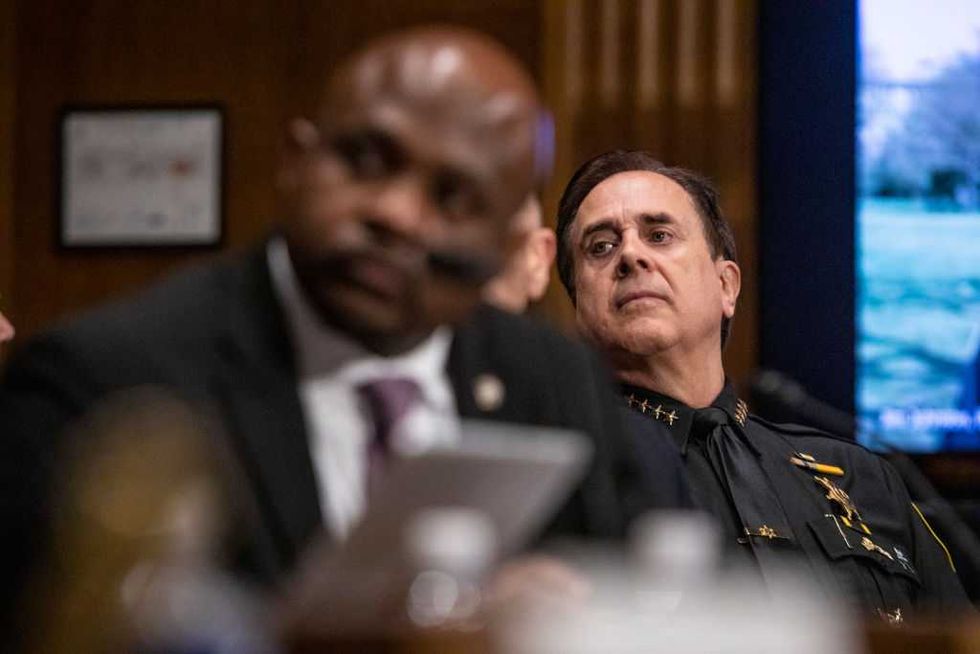 Photo by Anna Rose Layden/Getty Images
In response to a request for comment about Captain Bouchard, a spokesperson for Rep. James previously told Blaze News, “Given the current dynamics and potential candidates in Michigan’s 10th District, John’s confident [Republicans] will hold the seat.”
While James won the seat in a squeaker in 2022 and then won re-election with relative ease in 2024, the 10th District is by no means a Republican stronghold, spanning most of Macomb County, a blue-collar area often considered a bellwether in presidential elections.
Other Republicans who have expressed interest in running for the 10th Congressional District include state Rep. Joe Aragona and former Oakland County GOP Chairman Rocky Raczkowski, the Detroit News reported in July. Assistant prosecutor Robert Lulgjuraj of Sterling Heights announced his candidacy in August.
The Democrat primary race for the seat is full as well, as former special victims prosecutor Christina Hines, former state Rep. Tim Greimel, attorney Eric Chung, and U.S. Army veteran Alex Hawkins have all announced their candidacy.
Like Blaze News? Bypass the censors, sign up for our newsletters, and get stories like this direct to your inbox. Sign up here!
Abigail Spanberger Wins Virginia’s Gubernatorial Race After Bruising Campaign
Former Virginia congresswoman Abigail Spanberger (D.) secured victory over lieutenant governor Winsome Earle-Sears (R.) in the Old Dominion’s gubernatorial race. The result, though expected, came at a cost for Spanberger, who struggled to answer questions on transgender issues and faced criticism late in the race for standing by her party’s disgraced attorney general nominee, Jay Jones.
The post Abigail Spanberger Wins Virginia’s Gubernatorial Race After Bruising Campaign appeared first on .
Fearmongering over Medicare hides the real fix seniors need

Democrats are casting the shutdown showdown as a battle over health care costs, tapping into widespread anxiety over the cost of health care, especially among those enrolled in Medicare. For them, it’s politics. But for millions of American seniors, the worry is real — not just a convenient talking point.
Recent polling shows 58% of Medicare recipients 65 and over are concerned about future health care costs, and half are worried a major health situation could result in either debt or bankruptcy.
If left unchanged, Medicare will be unable to pay full benefits by 2036.
While medical debt is a growing concern among Medicare recipients, the staggering size of the federal debt — largely driven by Medicare spending — is a ticking time bomb Congress can no longer ignore. As one of the largest federal spending programs, Medicare consisted of a jarring $874 billion out of the $6.75 trillion federal budget (about 13 cents of every dollar spent in FY2024).
While Medicare receives some funding from premiums paid by enrollees, the single largest source of revenue comes from the federal government’s general fund. If left unchanged, Medicare will be unable to pay full benefits by 2036.
Medicare Advantage toes the line
Fortunately, policy solutions exist that can help both seniors and taxpayers.
Medicare Advantage merges public financing with private delivery under accountability. The government pays a fixed amount per enrollee to private plans, calibrated by benchmarks and quality measures. Plans that achieve higher star ratings — which were just released for 2026 by the Centers for Medicare and Medicaid Services earlier this month — receive bonus payments. Meanwhile, poor performers lose ground.
This structure introduces incentives for efficiency and quality that are lacking in traditional Medicare. Yet, successive years of cuts to how Medicare Advantage plans are reimbursed have forced several major insurers to announce they’re withdrawing from certain Medicare Advantage markets next year.
Companies like UnitedHealth, Humana, Aetna, as well as regional plans such as UCare (serving Minnesota and parts of Wisconsin) and Blue Cross Blue Shield of Vermont, are withdrawing from select Medicare Advantage counties across the country, citing rising costs. Seniors are using more medical services than expected, driving up claims, while federal reimbursement rates are being cut. Added regulatory and administrative burdens (such as expanded reporting requirements and prior authorization rules) further limit insurers. Together, these pressures make participation unsustainable in some markets.
If unchanged, more insurers will leave Medicare Advantage, and options for seniors will continue to shrink. Meanwhile, Medicare costs are growing much faster than private health care spending.
In 2023, traditional Medicare spent $15,689 per enrollee, more than double the private sector amount. This is a result of the traditional fee-for-service model, which pays providers per treatment instead of per patient, rewarding volume over outcomes, encouraging unnecessary care, and driving up costs.
Conversely, Medicare Advantage’s structure encourages prevention and coordination. To attract enrollees, Medicare Advantage offers supplemental benefits such as vision, dental, hearing, wellness programs, transportation, and over‑the‑counter benefits. Many Medicare Advantage plans now include these extras at little or no additional cost. That flexibility helps tailor benefits to beneficiary needs.
Better treatment, lower costs
When allowed to work, Medicare Advantage delivers higher satisfaction, lower costs, and greater access to coverage than traditional Medicare. One Harvard study found that seniors enrolled in Medicare Advantage had better health outcomes than seniors on traditional Medicare. A National Institutes of Health review of hundreds of studies found that Medicare Advantage provided significantly better quality of care and health outcomes than traditional Medicare by a factor of four to one. Another NIH study found that across 48 studies, Medicare Advantage enrollees received more preventative care and had fewer hospitalizations and emergency visits, shorter stays, and lower total spending.
The financial and quality advantages are clear. One study comparing expected out‑of‑pocket costs in Medicare Advantage versus traditional Medicare found that from 2014 to 2019, projected costs were 18% to 24% lower under Medicare Advantage. For seniors on fixed incomes — that is significant.
RELATED: Democrats deny shutdown is about health care for illegal aliens — then one admits the truth
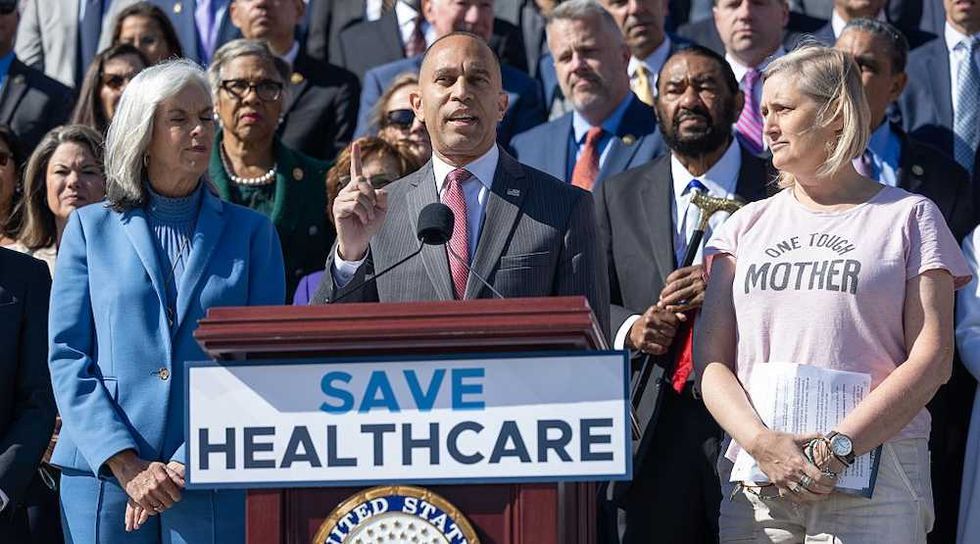 Photo by Nathan Posner/Anadolu via Getty Images
Seniors get it. This year, the majority of Medicare beneficiaries are enrolled in Medicare Advantage plans. Over the last two decades, enrollment in Medicare Advantage has skyrocketed. Unsurprisingly, polling shows 93% of Medicare Advantage enrollees were satisfied or very satisfied with their coverage, and 94% would recommend it to their family and friends. The Congressional Budget Office now projects that by 2034, Medicare Advantage could account for nearly two-thirds of all Medicare beneficiaries.
The model for the future
Medicare Advantage provides the model for quality, affordable health care for seniors that aligns with what they prefer. Reducing regulatory burdens and barriers within the insurance market will provide Medicare Advantage plans greater flexibility and even entice those insurers leaving the Medicare Advantage market to reconsider.
Medicare cannot continue as purely fee‑for‑service without reform — neither for the medical and financial health of Americans, nor for the sake of the federal budget. The current fiscal challenges plaguing the federal budget demand models that can bend the cost curve while improving quality. Medicare Advantage is not a cure-all, but it is among the most promising tools in the toolbox.
Josh Hawley Is Making The Wrong Argument For More Food Stamp Welfare
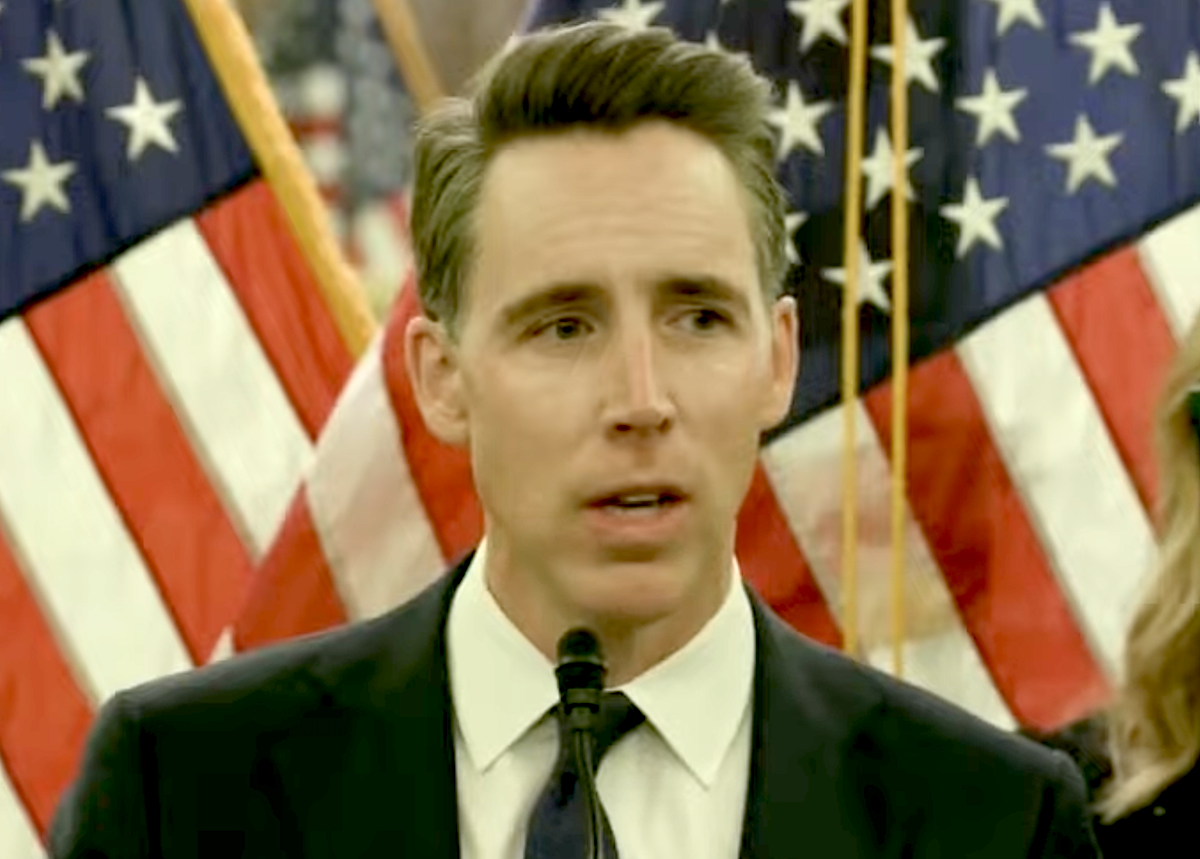
 Hawley needs to explain why it’s imperative that we turn the welfare hose back on without including measures to prevent taxpayer-funded ‘assistance’ going to anyone but the most desperate.
Trump can’t call it ‘mission accomplished’ yet

With a divided Congress and the clock likely running out on GOP control, President Trump’s decision to forgo a second budget reconciliation bill is puzzling. Reconciliation is the only tool available to pass major priorities without a filibuster. So why refuse another chance to make the America First agenda permanent?
At a recent meeting with Senate Republicans, Trump told lawmakers, “We don’t need to pass any more bills. We got everything” in the big, beautiful bill earlier this year. “We got the largest tax cuts in history. We got the extension of the Trump tax cuts. We got all of these things.”
The first Trump presidency showed what executive courage can do. The second must prove what lasting law can achieve.
Really? That answer ignores reality. Tax cuts were never the full measure of the Trump revolution. The movement promised structural reform — from securing the border to dismantling bureaucracies. Limiting the victory to tax relief leaves unfinished the hard work of codifying executive policies into law before the next Democrat in the White House wipes them out with the stroke of a pen.
Biden’s first weeks in office in 2021 proved how fragile executive action can be. Nearly every Trump-era reform — on immigration, energy, education, and national security — vanished within days. The same will happen again if core policies remain tied to presidential discretion instead of actual statutes.
Immigration is the clearest example. Trump moved the country in the right direction, but many key policies remain blocked by courts or enjoined indefinitely. These include:
• Ending birthright citizenship for children of illegal immigrants,
• Defunding sanctuary cities,
• Cutting federal assistance for noncitizens,
• Requiring states to verify lawful status for benefits under the Personal Responsibility and Work Opportunity Reconciliation Act,
• Expanding expedited removal of gang members under the Alien Enemies Act,
• Authorizing ICE arrests at state courthouses,
• Deporting pro-Hamas foreign students,
• Returning unaccompanied minors to Central America,
• Suspending refugee resettlement, and
• Ending “temporary” protected status for long-term illegal residents.
Each of these reforms can and should be codified through legislation. Courts can’t enjoin what Congress writes into law.
The same applies beyond immigration. Critical Trump policies remain trapped or reversible, including:
• Abolishing the Department of Education,
• Keeping male inmates out of female prisons,
• Blocking federal funding for hospitals that perform gender “transitions” on minors,
• Removing Federal Reserve governor Lisa Cook, and
• Requiring proof of citizenship to vote and restricting mail-in ballots in federal elections.
All of these measures would fulfill campaign promises. All of them will vanish the instant Democrats reclaim the White House — unless Republicans act now to make them permanent.
RELATED: While the lights are off, let’s rewire the government
 Photo by Celal Gunes/Anadolu via Getty Images
Meanwhile, the economic front remains unsettled. Inflation continues to crush families, and Washington’s spending addiction keeps prices high. Health care remains broken, with no Republican alternative to stop Democrats from reinstating Biden’s Obamacare subsidies. The challenges are mounting, not receding.
The reconciliation process exists precisely for moments like this. It allows a governing majority to bypass the filibuster and pass budget-related priorities with a simple majority — the same procedure Democrats used twice under Biden to jam through massive spending and climate legislation. Refusing to use it again would be an act of political negligence.
Trump has accomplished much, but claiming “mission accomplished” now risks repeating the failures of his first term — executive orders that were erased within weeks and policies undone overnight.
The task ahead is to legislate the revolution. Codify the border. Dismantle bureaucratic strongholds. Rein in judicial activism. Secure election integrity. Cement economic reform.
The first Trump presidency showed what executive courage can do. The second must prove what lasting law can achieve. If Trump wants his achievements to outlive his term, he must act now — not by declaring victory, but by legislating it.
Inside Jasmine Crockett’s Secret Stock Portfolio and Failed Attempts To Become a Marijuana Magnate

Rep. Jasmine Crockett (D., Texas) owned stocks in at least 25 companies that she did not disclose to the public during her first congressional run in 2022, even though she’d quietly admitted to the holdings the previous year as a Texas state legislator. Crockett also didn’t reveal the stock holdings once she got to Washington in 2023.
The post Inside Jasmine Crockett’s Secret Stock Portfolio and Failed Attempts To Become a Marijuana Magnate appeared first on .





