

Category: India
Indian students score $200K ‘food racism’ payout from UC Boulder

A 35-year-old Indian student says he was told that curry stinks, but sandwiches do not.
Aditya Prakash and his fiancée, Urmi Bhattacheryya, won a settlement of $200,000 from the University of Colorado Boulder in a story dripping with progressivism.
‘My food is my pride, and notions about what smells good or bad to someone are culturally determined.’
The BBC described the ordeal as a case of “food racism” while outlet Indian Express said Prakash was the “target of racism” over his microwaved food.
Ate crime
The couple reportedly claimed they faced a series of “microaggressions and retaliatory actions” after a staff member at the university — who was British, according to the BBC — complained about the “smell” of the food Prakash had in the microwave.
The staffer allegedly said the food was giving off a “pungent” odor and informed Prakash there was a rule against heating foods that have strong odors. Prakash reportedly claimed there was no such rule publicly stated and said, “It’s just food. I’m heating and leaving.”
The Indian also said he later inquired what foods were considered pungent. He was allegedly told that smelly foods included curry but not sandwiches.
In a pickle
The couple claimed they soon lost their research funding and teaching roles, and a lawsuit followed. Prakash claimed it was not about money, though.
“It was about making a point — that there are consequences to discriminating against Indians for their ‘Indianness,'” he said.
RELATED: Illegal alien truckers with California licenses accused of hauling $7M in cocaine across state lines
 Photo by John Greim/LightRocket via Getty Images
Prakash also claimed he was a victim of “systemic racism” because his department “refused to grant” his Master’s degree.
“That’s when we decided to seek legal recourse,” he said.
The May 2025 lawsuit alleged discriminatory treatment and a “pattern of escalating retaliation” but was settled with the university that September. The terms reportedly include giving the students their degrees while denying all liabilities and banning them from studying or working at the school in the future.
Paneer miss
The dish at the center of the controversy is called palak paneer, which, according to cooking website Hooked on Heat, contains some strong ingredients.
The main parts of the dish include spinach and paneer, a soft white cheese considered to be the Indian version of cottage cheese. Also added to the dish are onion, ginger, garlic, chili powder, garam masala (Indian spices), and more.
Prakash reportedly argued that his food only stinks according to some people.
“My food is my pride, and notions about what smells good or bad to someone are culturally determined,” he posited.
Cruciferous context
A counterargument he allegedly faced was that even broccoli is not allowed to be heated because of its odor, but Prakash claimed that “context matters,” before adding, “How many groups of people do you know who face racism because they eat broccoli?”
His fiancée says that President Trump’s re-election has caused a “narrowing of empathy” toward foreigners.
“Institutions talk a lot about inclusion, but there is less patience for discomfort, especially if that discomfort comes from immigrants or people of colour,” she claimed.
Currying favor
The university told BBC that while it cannot comment on the specifics of the claims due to privacy laws, it is “committed to fostering an inclusive environment for all students, faculty and staff regardless of national origin, religion, culture and other classes protected under U.S. laws and by university policies.”
“When these allegations arose in 2023, we took them seriously and adhered to established, robust processes to address them, as we do with all claims of discrimination and harassment,” the school continued. “We reached an agreement with the students in September [2025] and deny any liability in this case.”
The couple has reportedly not since returned to the United States, with Prakash saying he is willing to start over.
“If this case can send out a message that this (‘food racism’) cannot be practiced with impunity, that we, as Indians, will fight back, that would be the real victory,” he said, per Indian Express.
Like Blaze News? Bypass the censors, sign up for our newsletters, and get stories like this direct to your inbox. Sign up here!
Global warming powered an empire that dwarfed the Vikings

Popular culture loves its image of Norsemen shivering in fur pelts, raiding British monasteries, and braving the icy North Atlantic. Yet while Vikings struggled to survive on the thawing margins of Greenland, a far richer and more formidable maritime power flourished thousands of miles away in the tropical warmth of southern India.
That power was the Chola Empire.
A modern golden age remains within reach — provided we do not cripple ourselves with fear of the very conditions that have so often underwritten human prosperity.
At its height between 985 and 1044 A.D., the Cholas projected force on a scale that made Viking longships look like backyard skirmishers. Their ships were technological marvels — floating fortresses capable of transporting cavalry, infantry, and weeks of provisions across vast distances.
The Cholas mounted a major naval expedition against the Srivijaya Empire, a dominant maritime power based in what is now Indonesia and the Malay Peninsula. This was an amphibious assault conducted thousands of miles from home ports, a logistical achievement comparable to modern naval operations. The Cholas toppled rulers, secured the vital Malacca Strait, and guaranteed safe passage for merchant guilds trading from the Middle East to China.
On land, they maintained a standing army that included thousands of war elephants.
Their wealth also found expression in stone. The Great Living Chola Temples — now recognized as UNESCO World Heritage sites — stretch across southern India and neighboring islands. Built without modern machinery, these monumental structures relied on elephants to haul massive stones from distances of up to 60 miles.
Chola society possessed abundant labor, food, and wealth. The question is why.
What enabled a civilization to generate the immense caloric and economic surplus required to build stone monuments and launch armadas across the Indian Ocean? A large part of the answer lies in climate — specifically, global warming.
The rise of the Chola Empire coincided with the Medieval Warm Period, which lasted roughly from 900 to 1300 A.D. This relationship between warmth and human flourishing is inconvenient for the modern climate-industrial narrative, which treats rising temperatures as an unqualified catastrophe.
Warmth strengthens tropical monsoons, the lifeblood of agrarian economies like the Cholas’. Recent scientific research confirms that fluctuations in the Indian summer monsoon shaped agricultural output and the rise and fall of major dynasties. Indian civilization flourished during the Roman Warm Period, fractured during the Dark Ages Cold Period, and reached new heights under the Cholas during the Medieval Warm Period.
The Chola Empire was sustained by the very kind of warming modern activists describe as an “existential threat.”
RELATED: ‘Green Antoinettes’ live large, preach small
 ajijchan via iStock/Getty Images
In the Cauvery Delta — the empire’s heartland — this favorable climate transformed the region into the “Rice Bowl of the South.” Three harvests a year became common. Granaries overflowed. Revenues surged.
That surplus freed labor from subsistence farming and redirected it toward imperial ambition. Chola trade guilds thrived, exporting textiles, spices, and grain to the Chinese Song Dynasty — another civilization that prospered during this warm epoch.
Today, we find ourselves in another warming phase, emerging from the depths of the Little Ice Age that ended in the mid-19th century. Global crop yields have repeatedly reached record highs. India has re-emerged as a major grain exporter. The planet is experiencing a measurable “greening” effect as higher atmospheric carbon dioxide levels fertilize plants and warmer temperatures expand cultivable land.
Yet, we are told to feel guilty.
Coal, oil, and natural gas — fuels that protect humanity from the elements and power modern economies — are vilified. Environmental extremists implicitly argue for a colder world, despite the historical record showing that colder periods brought famine, disease, and social collapse.
The Chola Empire stands as a reminder of what human ingenuity can achieve when the climate cooperates. Its ships sailed on prosperity sustained by warmth. Its temples rose from a society rich in calories and confidence. Its civilization commanded respect across continents.
We face a similar opportunity today. A modern golden age remains within reach — provided we do not cripple ourselves with fear of the very conditions that have so often underwritten human prosperity.
Foreigners Scheme To Keep Their H-1Bs As Trump Admin Throttles Cheap Labor Pipeline
‘Cancelled my flight’
What’s happening in India demands every Christian’s attention — and Trump’s action
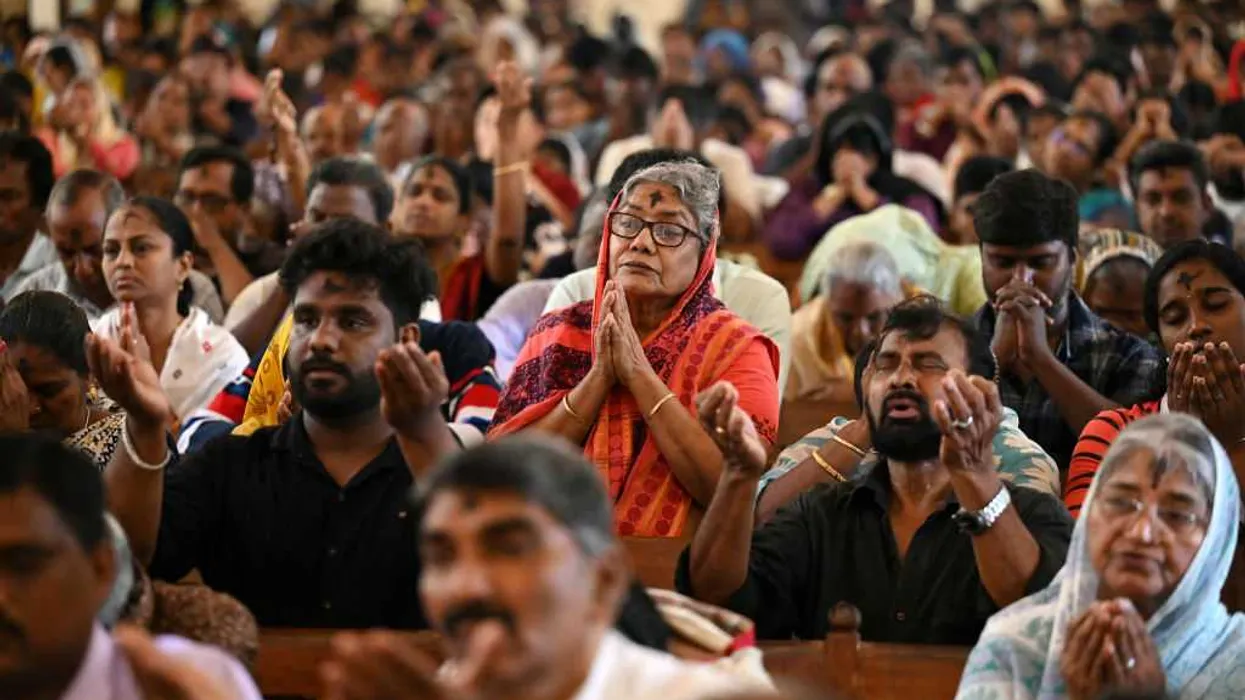
President Trump’s recent warning to Nigeria over the mass killing of Christians was both overdue and necessary.
At long last, Washington acknowledged what much of the West preferred to ignore — that believers are being butchered for their faith while bureaucrats issue statements and move on to the next photo op. Trump’s threat to strike Nigeria if the slaughter continues signaled a rare thing in modern politics: moral clarity.
Every church burned in India is a warning: Faith without freedom becomes folklore.
Now it’s time for that same clarity to be turned toward another nation, one that calls itself the world’s largest democracy and one that America counts among its closest allies — India.
New data from the United Christian Forum reveals a troubling trend. Attacks on Christians in India have surged by more than 500% since Prime Minister Narendra Modi’s Bharatiya Janata Party came to power in 2014. Over the course of a single decade, reported incidents climbed from 139 to 834. Nearly 5,000 individuals, families, and churches have been caught in the crossfire.
Yet these grim numbers tell only part of the story.
Behind the statistics are pastors dragged from pulpits and beaten, churches reduced to ash, and people hunted like animals simply for choosing the Lord Almighty over the golden idols of their tormentors. What was once unthinkable — open persecution of Christians in the land of Mother Teresa — has now become routine.
Twelve of India’s 28 states now enforce so-called “anti-conversion” laws that criminalize anyone accused of bringing others to Christ.
In practice, these laws are less about conversion than coercion. They empower mobs and police alike to harass Christian minorities on suspicion alone. A man caught carrying a Bible can be accused of proselytizing. A prayer meeting can be framed as a plot.
The cruelty is not confined to law but seeps into everyday life.
In the heartland states of Uttar Pradesh and Chhattisgarh, Christian villagers have been driven out of their homes, denied burial rights, and told to renounce their faith or face starvation. Dalit and tribal Christians — the poorest of India’s poor — endure the worst of it. They are excluded from government welfare programs, denied housing, and forced into reconversion ceremonies designed to humiliate.
The Hindu nationalists behind these acts are not the flag-waving patriots America knows. They are absolute savages who have more in common with Islamist extremists than with any conservative movement in the West. No evil is too depraved for these fanatics in saffron robes. These are men capable of gang-raping elderly nuns in the name of purity. Their mouths recite prayers even as their hands commit sin.
Yet through all this, Washington has remained curiously quiet. India, after all, is an ally — a key counterweight to China, a trading partner, a member of the Quad alliance. And allies, we’re told, must not be offended. India receives tens of millions in U.S. foreign assistance each year, yet continues to slide deeper into majoritarian extremism.
RELATED: Bill Maher’s shocking defense of Christians — and what it reveals
 Debajyoti Chakraborty/NurPhoto via Getty Images
The relationship has become a study in contradiction: America exports democracy while subsidizing the suppression of it.
Trump’s stance toward Nigeria was bold because it rejected the idea that diplomacy must always defer to decorum. He recognized that moral authority is not something declared but something earned and easily lost. The same logic applies to India. If America’s partnership with New Delhi is to mean anything, it must rest on shared principles — not selective blindness.
There is a tragic irony in watching the world’s oldest democracy bankroll the world’s largest, while both ignore their founding creeds. Trump is uniquely positioned to change that. The president has shown a willingness to name the unnameable and confront regimes that others tiptoe around. His threat to Nigeria rattled the corridors of Abuja and forced the international community to pay attention.
A similar message to New Delhi — that America’s friendship cannot be a blank check for intolerance — would carry enormous weight.
To speak out would not be an act of hostility but of honesty. True allies do not flatter; they challenge. India’s leaders must be reminded that religious freedom is not a Western import but a universal right, and any nation that denies it will pay the heaviest of prices. If India wishes to stand shoulder to shoulder with the free world, it must first show it belongs there.
For too long, the West has treated persecution as someone else’s problem. But every church burned in India is a warning: Faith without freedom becomes folklore. The indifference of powerful nations emboldens tyrants and teaches them that human rights are negotiable.
The question now is whether America still believes in the principles it preaches — and whether Trump will demand that its allies do the same.
Because faith, like freedom, dies in stages — first ignored, then excused, and then erased. The erasure has already begun in India. What’s needed now is not another summit or statement, but a voice loud enough to pierce the silence. President Trump has that voice, the rare kind that can still move mountains. I, for one, hope he uses it.
America didn’t lose its tech edge — globalist CEOs gave it away
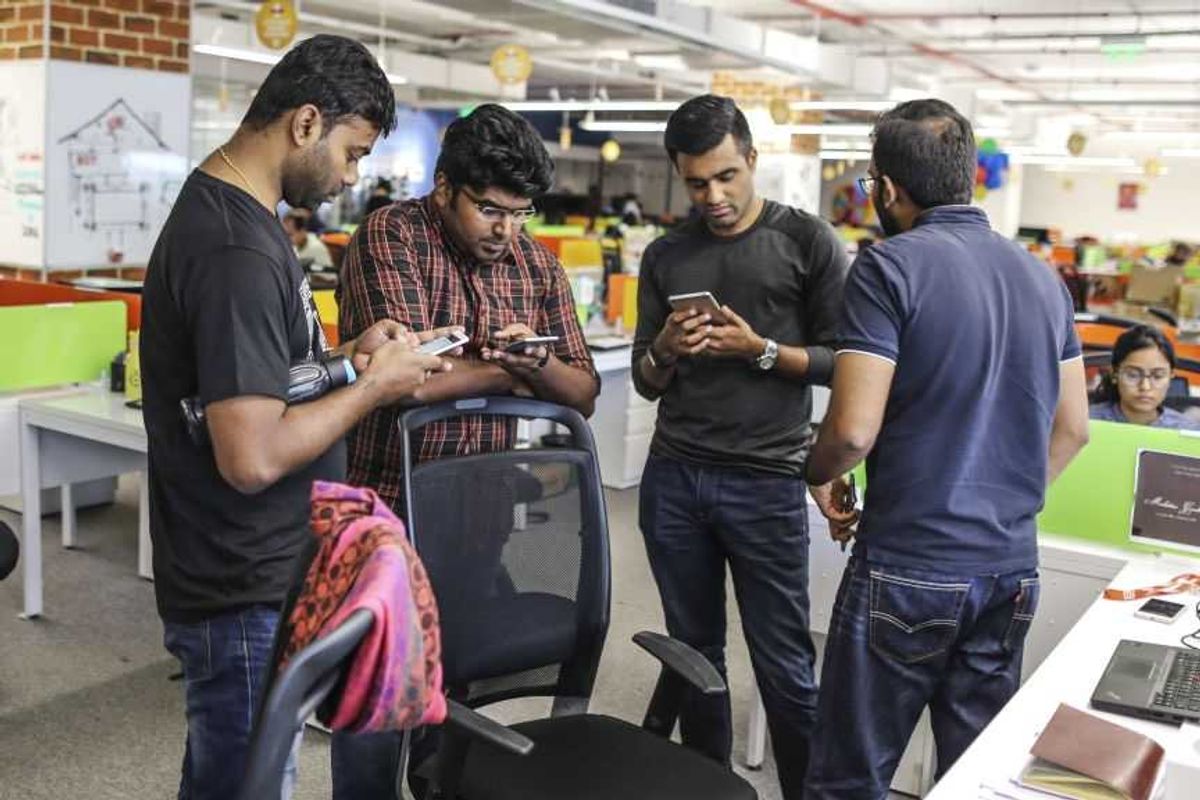
Everything you interact with is now built by people who don’t understand you, and your kids are pushed out of the job market.
From the front lines of corporate tech, I can confirm what many Americans already suspect: The H-1B program has produced a workplace disaster. It has compromised security. It has degraded the quality of everyday software. Worst of all, it has crushed the job prospects of American workers.
We don’t need to accept a corporate-designed future in which our industries no longer employ us and the products no longer serve us.
I’ve spent more than a decade inside corporate tech. In that time — especially after COVID — the number of Americans on my left and right has steadily dropped. Meanwhile, offshore offices multiply and more foreign workers arrive under visas. And they’re not doing low-stakes tasks. They’re building internal portals for insurance companies, managing databases that store your medical records, and writing the code behind your bank and utility apps.
Look at the results. Your bank’s mobile app crawls. Basic online bill-pay feels like an endurance test. Everyday American services — airlines, grocery chains, utilities — deploy software that barely works. The root cause sits in boardrooms across the Fortune 500: fire Americans, import cheaper labor, and call it efficiency. Why pay an American engineer $150,000 when an H-1B worker costs $100,000 and can be deported for missing an unrealistic goal?
Here’s the pattern I’ve watched repeat across company after company.
An H-1B hire climbs the ladder to director or vice president. He earns that rise largely by finding “inefficiencies,” which usually means firing Americans. He then pushes leadership to open more H-1B slots or to contract with a “consulting firm” staffed almost entirely from abroad.
Executives applaud because the invoices are low and the offshore teams rarely say no to any request, no matter how impossible. And when the savings look good enough, leadership shutters the American division altogether and replaces it with an “innovation center” in Bangalore. Look at the savings!
The American worker who survives this gets a grim reward: meetings at 6 a.m. to accommodate India Standard Time, an office filled with co-workers who share neither language nor culture, an org chart dominated by unfamiliar and unpronounceable names, and a career path with no upward mobility. And that’s if the worker is fortunate enough to have a job at all. Bleak.
The numbers paint an even darker picture. According to the Cengage Group’s 2025 Employability Report, only 41% of 2024 college graduates found full-time work related to their fields. In 2025, that number fell to 30%. Some analysts blame AI, but the claim doesn’t survive contact with reality. A recent MIT report found that despite $30-$40 billion in corporate spending on AI tools, 95% of organizations show no return on that investment — even though nearly half of office workers already use AI in some form.
RELATED: The H-1B system is broken. Here’s how to fix it.
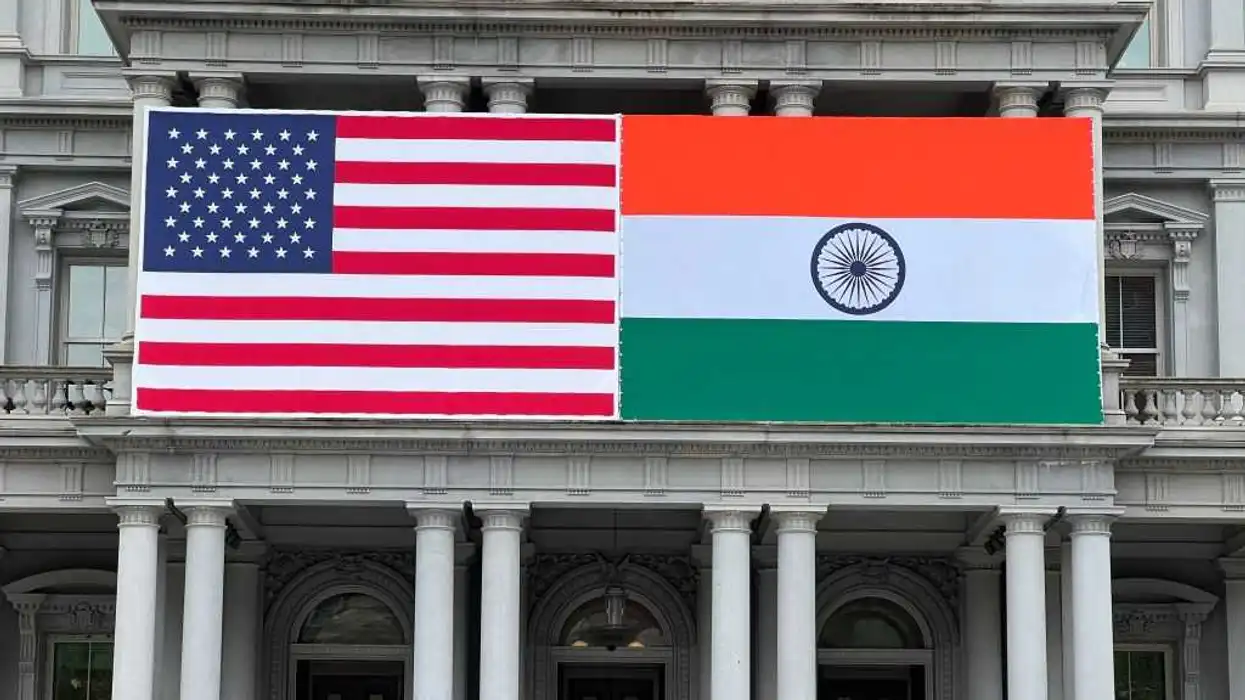 Photo by DANIEL SLIM/AFP via Getty Images
If AI were truly replacing white-collar workers at scale, why did these same corporations ask the federal government to approve 141,207 H-1B visas in 2024?
The truth is simpler: Importing cheaper, compliant labor remains the easiest way for corporate leadership to cut costs, pad bonuses, and build bigger homes in Southlake — while American workers pay the price.
America is not obligated to subsidize its own replacement. We don’t need to accept a corporate-designed future in which our industries no longer employ us and the products no longer serve us. The American middle class built the modern technology economy. It should not be pushed aside so that executives can chase savings that hollow out the country one layoff at a time.
Enough.
Apple rolls out digital ID, says users get ‘privacy and security’
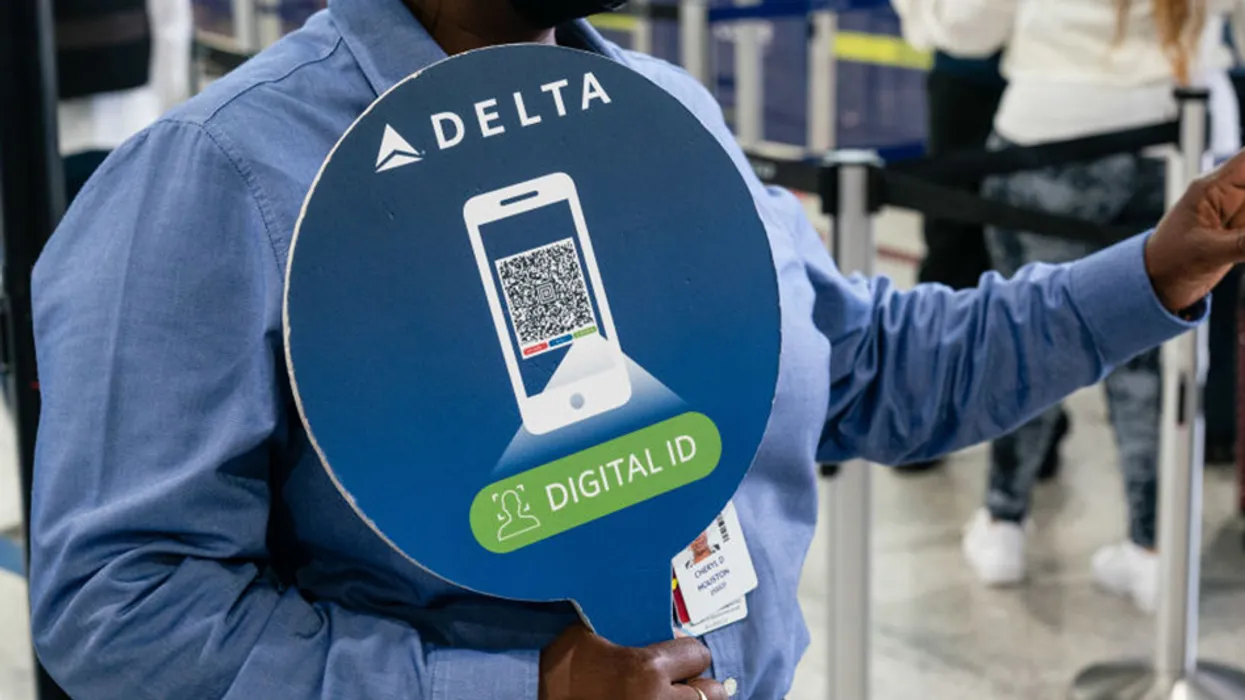
Digital identification is the latest frontier in privacy and data protection, according to its newest purveyor.
Apple rolled out support for digital ID in its Apple Wallet this week, boasting that users can provide a plethora of personal data in order to add their digital identifiers to their phones.
‘Biometric authentication using Face ID and Touch ID helps make sure that only you can view and use your Digital ID.’
In order to be eligible for the privilege of digital ID, Apple requires users to have the following:
- an iPhone 11 or newer or an Apple Watch Series 6 or newer.
- the latest software version.
- an Apple account with two-factor authentication turned on.
- a valid U.S. passport.
- a device with the region set to the United States.
If meeting the prerequisites, users must scan their passports into their phones, in addition to providing another live photo.
The photo and information must then be authenticated with Face ID or Touch ID.
Digital ID users can present their e-documents at TSA checkpoints for boarding domestic flights and at select businesses, Apple wrote in a blog post.
RELATED: UK government makes digital ID mandatory to get a job: ‘Safer, fairer and more secure’
TSA lists digital ID as being supported in at least 16 different states for domestic air travel, as well as Puerto Rico. Apple ID particularly is eligible in most participating states, including Arizona, California, Colorado, Georgia, Hawaii, Iowa, Maryland, Montana, New Mexico, and Ohio.
States like Arkansas, Louisiana, New York, and Virginia only support a state-sponsored digital ID.
“Digital ID in Apple Wallet takes advantage of the privacy and security features already built into iPhone and Apple Watch to help protect against tampering and theft,” Apple claimed.
“Your Digital ID data is encrypted. Apple can’t see when and where you use your Digital ID, and biometric authentication using Face ID and Touch ID helps make sure that only you can view and use your Digital ID,” the company added.
The justification for digital ID on the grounds of increased privacy and security mirrors reasoning used by the U.K. government during its recent introduction of mandatory digital ID for its citizens.
RELATED: Can anyone save America from European-style digital ID?
 Photo Illustration by Thomas Trutschel/Photothek via Getty Images
“This government will make a new, free-of-charge digital ID mandatory for the right to work by the end of this parliament. Let me spell that out: You will not be able to work in the United Kingdom if you do not have digital ID,” U.K. Prime Minister Keir Starmer announced in September.
The leader stated that the digital ID would help crack down on illegal employment and immigration, before adding a moral justification to his argument.
“Because decent, pragmatic, fair-minded people, they want us to tackle the issues that they see around them. And, of course, the truth is we won’t solve our problems if we don’t also take on the root causes.”
As Blaze News previously reported, the digital ID movement seemingly started in the U.K. around 2004. At that time, the BBC published a report criticizing the government and the IDs as a “badly thought out” means of fighting organized crime and terrorism.
Since then, the idea has long been perpetuated by the World Economic Forum, the yearly gathering of government officials and international businessmen who discuss global policy and reform.
The WEF published “A Blueprint for Digital Identity” in 2016, citing the Aadhaar program, a government ID from India. The initiative was meant to “increase social and financial inclusion” for Indians. The Unique Identification Authority of India holds a database of user information “such as name, date of birth, and biometrics data that may include a photograph, fingerprint, iris scan, or other information.”
Over 1 billion Indians have enrolled in the program for the 12-digit identity number.
In 2023, the WEF promoted a report on reimagining digital ID.
Like Blaze News? Bypass the censors, sign up for our newsletters, and get stories like this direct to your inbox. Sign up here!
The H-1B system is broken. Here’s how to fix it.
Imagine spending four years studying to become an engineer or computer scientist, believing a STEM degree would guarantee success, only to graduate jobless.
That isn’t a hypothetical. It’s the reality facing thousands of young Americans. According to the Federal Reserve Bank of New York, graduates in physics, computer engineering, and computer science now face some of the highest unemployment rates of any field.
American workers have lost out on jobs given to visa holders and have been forced to work for lower wages, creating a race to the bottom for companies to treat workers as widgets.
America’s flawed H-1B visa system is a major reason why. Established under the Immigration Act of 1990, the H-1B program was intended to let companies hire exceptional foreign specialists only when no qualified Americans were available.
It no longer serves that purpose. Today the H-1B has become the nation’s largest temporary work visa program, with nearly 600,000 foreign workers and 50,000 participating companies. In 2022, the 30 biggest H-1B employers hired more than 34,000 new visa workers while cutting roughly 85,000 existing jobs.
Companies claim they can’t find American STEM talent, yet the numbers tell a different story. In 2023, roughly 134,000 Americans and green card holders earned computer science degrees. That same year, the federal government issued work permits to 110,000 foreign guest workers in computer-related jobs.
In some STEM fields, up to half of new American graduates can’t find work. Tens of thousands of qualified workers remain unemployed while their government floods the market with cheaper, compliant labor.
How companies game the system
The law requires H-1B workers to be paid the same as Americans, but reality tells another story. In 2019, 60% of H-1B positions paid below the median wage for comparable U.S. workers. The visa lottery treats low-paying jobs and high-paying jobs the same, incentivizing companies to pursue cheap labor.
Even the statutory cap on H-1B visas doesn’t stop abuse. A loophole known as Optional Practical Training lets foreign students work in the United States for up to a year after graduation, or three years if they hold a STEM degree.
OPT isn’t authorized by law. It has no cap, no wage floor, and no accountability. Worse, it acts as a corporate subsidy because employers don’t pay payroll taxes on any of the half million foreign workers now in the country under this program.
Time for a real fix
Even the architects of the H-1B system admit it’s broken. Former Connecticut Rep. Bruce Morrison, a Democrat who helped design the visa in 1990, told “60 Minutes” in 2017 that “the H-1B has been hijacked as the main highway to bring people from abroad and displace Americans.”
To build on that effort, I’ve reintroduced the American Tech Workforce Act, which attacks the problem on three fronts.
RELATED: Trump admin announces major H-1B visa abuse investigation, but critics want more
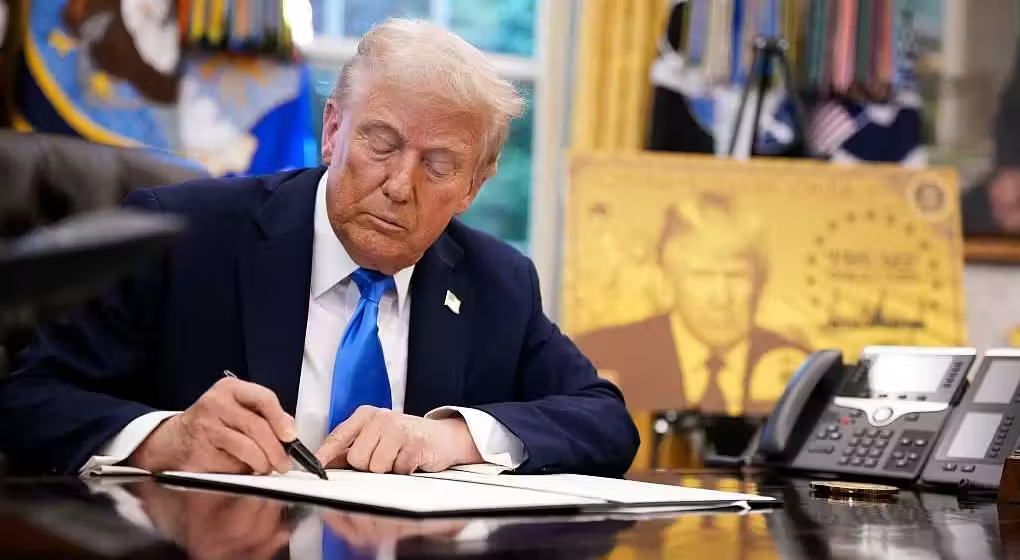 Photo by Andrew Harnik / Contributor via Getty Images
First, it raises the wage floor. Companies that truly need foreign specialists should pay them the same as top American workers, ending the incentive to undercut domestic wages.
Second, it closes the OPT loophole. Foreign students shouldn’t have a back door to replace American graduates. The jobs belong to the people who earned them here.
Finally, my bill would shut down staffing scams. Third-party agencies flood the H-1B lottery with low-quality applications to drive down wages. My bill blocks those schemes and creates a true marketplace where visas go to the highest bidders — boosting both fairness and economic value.
According to the Institute for Progress, these reforms would strengthen the economy by $1.1 trillion over the next decade.
Putting Americans first
The current system rewards corporate exploitation and punishes American ambition. Workers lose jobs, wages stagnate, and graduates who followed every rule are told to wait in line behind foreign contractors. Discrimination based on national origin is already illegal, yet Washington’s visa policies effectively endorse it.
President Trump’s executive order, combined with the American Tech Workforce Act, offers a rare opportunity to restore sanity to the system. We can defend innovation while defending American workers — the people who built this country and still drive its future.
The next generation deserves more than broken promises and outsourced dreams. They deserve a fair shot to work, build, and thrive in the nation they call home.
How H-1B hires broke USAA’s bond with veterans
The United Services Automobile Association is one of the most venerable names in banking and insurance, a company that prides itself on its service to members of the military and their families. In recent years, however, USAA has run into serious financial trouble due to a combination of mismanagement, fashionable diversity, equity, and inclusion policies, and the firm’s increasing reliance on incompetent and untrustworthy H-1B workers, most of whom are from India.
A significant number of current and former USAA employees have come forward to discuss what they describe as a toxic workplace culture, which has led to an alarming number of employee suicides, and the company’s outsourcing of critical functions to H-1Bs and Indian consultancies, putting at risk the financial data of its customers, which include high-ranking members of the U.S. armed forces.
What began as a cost-cutting strategy in the early 2000s now threatens the stability of an institution long trusted by veterans.
Insiders granted anonymity to avoid retaliation say USAA’s decline began in the 2000s under then-CEO Robert G. Davis, who outsourced IT and other core functions to H-1B contracting firms such as Tata Consultancy Services. Those firms imposed contracts requiring USAA to maintain minimum staffing levels, creating chronic overstaffing. Idle contractors were reportedly assigned “busywork” to meet quotas, with conference rooms converted into laptop farms where workers sat “packed like sardines.”
One insider described the result as “incredibly incompetent” operations. Projects that U.S.-based employees could complete on time were instead handed to H-1B contractors who often lacked the necessary skills and required retraining.
From cost-cutting to collapse
At the same time, USAA repeatedly laid off American staff and replaced them with foreign workers, driving labor costs higher and eroding institutional knowledge. Davis retired abruptly in 2007, but his successors continued his policies, expanding USAA’s offshore footprint with new IT centers in Guadalajara, Mexico, and Chennai, India.
Insiders say H-1B contractors at USAA often lack basic programming skills, compounding inefficiency. In one case, a credit card processing problem baffled contractors for six months until the company brought back a retired American employee, who solved the problem in a matter of days. The constant visa turnover worsens the issue. Skilled H-1Bs leave after six years, draining institutional knowledge. Turnover is even higher at USAA’s Guadalajara facility, where Indian employees reportedly fear cartel violence.
Bureaucratic bloat magnifies these problems. Each team has dual directors, and many systems rely on outdated software. That dysfunction has drawn scrutiny from federal regulators, who fined USAA for failed audits and violations of anti-money-laundering laws. Those failures forced the company to sell off divisions, including real estate, and pushed USAA into persistent losses through much of the decade.
Customers have also felt the effects. Many complain that poorly trained H-1B staff struggle to handle basic service requests. One customer said resolving a fraud alert took hours — and that he now contacts USAA’s top executives directly to get results.
Security risks and cultural decay
USAA’s growing dependence on H-1B contractors and overseas labor has created potential security and compliance risks, according to multiple insiders. The company has outsourced anti-money laundering work to Tata Consultancy Services, which reportedly performs much of that work in India. As a result, the personal financial data of U.S. service members and veterans may be stored or processed abroad.
USAA also shares customer data — including names, addresses, and birth dates — with LexisNexis, with no option for customers to opt out. One customer said he only discovered this practice after receiving a notice in the mail.
RELATED: The visa that ate America’s tech jobs
 subodhsathe via iStock/Getty Images
Inside the company, these policies have coincided with a marked decline in morale. Mass layoffs of veteran employees have preceded at least three suicides, including one who shot himself in a company parking lot. A former director described intervening to stop another potential suicide. Tensions intensified during the COVID-19 pandemic, when USAA defied Texas Republican Gov. Greg Abbott’s executive order banning vaccine mandates.
Employees describe a sharp cultural shift away from USAA’s traditional military ethos toward a mishmash of corporate diversity programming. The company has hosted Diwali celebrations and mandatory DEI events while facing allegations of religious discrimination against Christian employees. One former employee has taken a case to arbitration. Internal surveys reportedly show employee satisfaction at just 33%.
An institution on the brink
Analysts say the company’s reliance on foreign labor and internal instability have eroded its reputation for customer service and financial stewardship. What began as a cost-cutting strategy in the early 2000s now threatens the stability of an institution long trusted by veterans.
Whether USAA can recover will depend on its ability to restore confidence — both among employees and the members it was established to serve.
Editor’s note: The headline and subheadline of this article have been edited after publication.





