

Category: Opinion
AI can fake a face — but not a soul

The New York Times recently profiled Scott Jacqmein, an actor from Dallas who sold his likeness to TikTok for $750 and a free trip to the Bay Area. He hasn’t landed any TV shows, movies, or commercials, but his AI-generated likeness has — a virtual version of Jacqmein is now “acting” in countless ads on TikTok. As the Times put it, Jacqmein “fields one or two texts a week from acquaintances and friends who are pretty sure they have seen him pitching a peculiar range of businesses on TikTok.”
Now, Jacqmein “has regrets.” But why? He consented to sell his likeness. His image isn’t being used illegally. He wanted to act, and now — at least digitally — he’s acting. His regrets seem less about ethics and more about economics.
The more perfect the imitation, the greater the lie. What people crave isn’t flawless illusion — it’s authenticity.
Times reporter Sapna Maheshwari suggests as much. Her story centers on the lack of royalties and legal protections for people like Jacqmein.
She also raises moral concerns, citing examples where digital avatars were used to promote objectionable products or deliver offensive messages. In one case, Jacqmein’s AI double pitched a “male performance supplement.” In another, a TikTok employee allegedly unleashed AI avatars reciting passages from Hitler’s “Mein Kampf.” TikTok removed the tool that made the videos possible after CNN brought the story to light.
When faces become property
These incidents blur into a larger problem — the same one raised by deepfakes. In recent months, digital impostors have mimicked public figures from Bishop Robert Barron to the pope. The Vatican itself has had to denounce fake homilies generated in the likeness of Leo XIV. Such fabrications can mislead, defame, or humiliate.
But the deepest problem with digital avatars isn’t that they deceive. It’s that they aren’t real.
Even if Jacqmein were paid handsomely and religious figures embraced synthetic preaching as legitimate evangelism, something about the whole enterprise would remain wrong. Selling one’s likeness is a transaction of the soul. It’s unsettling because it treats what’s uniquely human — voice, gesture, and presence — as property to be cloned and sold.
When a person licenses his “digital twin,” he doesn’t just part with data. He commodifies identity itself. The actor’s expressions, tone, and mannerisms become a bundle of intellectual property. Someone else owns them now.
That’s why audiences instinctively recoil at watching AI puppets masquerade and mimic people. Even if the illusion is technically impressive, it feels hollow. A digital replica can’t evoke the same moral or emotional response as a real human being.
Selling the soul
This isn’t a new theme in art or philosophy. In a classic “Simpsons” episode, Bart sells his soul to his pal Milhouse for $5 and soon feels hollow, haunted by nightmares, convinced he’s lost something essential. The joke carries a metaphysical truth: When we surrender what defines us as human — even symbolically — we suffer a real loss.
For those who believe in an immortal soul, as Jesuit philosopher Robert Spitzer argues in “Science at the Doorstep to God,” this loss is more than psychological. To sell one’s likeness is to treat the image of the divine within as a market commodity. The transaction might seem trivial — a harmless digital contract — but the symbolism runs deep.
Oscar Wilde captured this inversion of morality in “The Picture of Dorian Gray.” His protagonist stays eternally young while his portrait, the mirror of his soul, decays. In our digital age, the roles are reversed: The AI avatar remains young and flawless while the human model ages, forgotten and spiritually diminished.
Jacqmein can’t destroy his portrait. It’s contractually owned by someone else. If he wants to stop his digital self from hawking supplements or energy drinks, he’ll need lawyers — and he’ll probably lose. He’s condemned to watch his AI double enjoy a flourishing career while he struggles to pay rent. The scenario reads like a lost episode of “Black Mirror” — a man trapped in a parody of his own success. (In fact, “The Waldo Moment” and “Hang the DJ” come close to this.)
RELATED: Cybernetics promised a merger of human and computer. Then why do we feel so out of the loop?
 Photo by imaginima via Getty Images
The moral exit
The conventional answer to this dilemma is regulation: copyright reforms, consent standards, watermarking requirements. But the real solution begins with refusal. Actors shouldn’t sell their avatars. Consumers shouldn’t support platforms that replace people with synthetic ghosts.
If TikTok and other media giants populate their feeds with digital clones, users should boycott them and demand “fair-trade human content.” Just as conscientious shoppers insist on buying ethically sourced goods, viewers should insist on art and advertising made by living, breathing humans.
Tech evangelists argue that AI avatars will soon become indistinguishable from the people they’re modeled on. But that misses the point. The more perfect the imitation, the greater the lie. What people crave isn’t flawless illusion — it’s authenticity. They want to see imperfection, effort, and presence. They want to see life.
If we surrender that, we’ll lose something far more valuable than any acting career or TikTok deal. We’ll lose the very thing that makes us human.
Artificial intelligence is not your friend

Half of Americans say they are lonely and isolated — and artificial intelligence is stepping into the void.
Sam Altman recently announced that OpenAI will soon provide erotica for lonely adults. Mark Zuckerberg envisions a future in which solitary people enjoy AI friends. According to the Harvard Business Review, the top uses for large language models are therapy and companionship.
Lonely people don’t need better algorithms. We need better friends — and the courage to be one.
It’s easy to see why this is happening. AI is always available, endlessly patient, and unfailingly agreeable. Millions now pour their secrets into silicon confidants, comforted by algorithms that respond with affirmation and tact.
But what masquerades as friendship is, in fact, a dangerous substitute. AI therapy and friendship burrow us deeper into ourselves when what we most need is to reach out to others.
As Jordan Peterson once observed, “Obsessive concern with the self is indistinguishable from misery.” That is the trap of AI companionship.
Hall of mirrors
AI echoes back your concerns, frames its answers around your cues, and never asks anything of you. At times, it may surprise you with information, but the conversation still runs along tracks you have laid. In that sense, every exchange with AI is solipsistic — a hall of mirrors that flatters the self but never challenges it.
It can’t grow with you to become more generous, honorable, just, or patient. Ultimately, every interaction with AI cultivates a narrow self-centeredness that only increases loneliness and unhappiness.
Even when self-reflection is necessary, AI falls short. It cannot read your emotions, adjust its tone, or provide physical comfort. It can’t inspire courage, sit beside you in silence, or offer forgiveness. A chatbot can only mimic what it has never known.
Most damaging of all, it can’t truly empathize. No matter what words it generates, it has never suffered loss, borne responsibility, or accepted love. Deep down, you know it doesn’t really understand you.
With AI, you can talk all you want. But you will never be heard.
Humans need love, not algorithms
Humans are social animals. We long for love and recognition from other humans. The desire for friendship is natural. But people are looking where no real friend can be found.
Aristotle taught that genuine friendship is ordered toward a common good and requires presence, sacrifice, and accountability. Unlike friendships of utility or pleasure — which dissolve when benefit or amusement fades — true friendship endures, because it calls each person to become better than they are.
Today, the word “friend” is often cheapened to a mere social-media connection, making Aristotelian friendship — rooted in virtue and sacrifice — feel almost foreign. Yet it comes alive in ancient texts, which show the heights that true friendship can inspire.
Real friendships are rooted in ideals older than machines and formed through shared struggles and selfless giving.
In Homer’s “Iliad,” Achilles and Patroclus shared an unbreakable bond forged in childhood and through battle. When Patroclus was killed, Achilles’ rage and grief changed the course of the Trojan War and of history. The Bible describes the friendship of Jonathan and David, whose devotion to one another, to their people, and to God transcended ambition and even family ties: “The soul of Jonathan was knit with the soul of David.”
These friendships were not one-sided projections. They were built upon shared experiences and selflessness that artificial intelligence can never offer.
Each time we choose the easy route of AI companionship over the hard reality of human relationships, we render ourselves less available and less able to achieve the true friendship our ancestors enjoyed.
Recovering genuine friendship requires forming people who are capable of being friends. People must be taught how to speak, listen, and seek truth together — something our current educational system has largely forgotten.
Classical education offers a remedy, reviving these habits of human connection by immersing students in the great moral and philosophical conversations of the past. Unlike modern classrooms, where students passively absorb information, classical seminars require them to wrestle together over what matters most: love in Plato’s “Symposium,” restlessness in Augustine’s “Confessions,” loss in Virgil’s “Aeneid,” or reconciliation in Shakespeare’s “King Lear.”
These dialogues force students to listen carefully, speak honestly, and allow truth — not ego — to guide the exchange. They remind us that friendship is not built on convenience but on mutual searching, where each participant must give as well as receive.
Reclaiming humanity
In a world tempted by the frictionless ease of talking to machines, classical education restores human encounters. Seminars cultivate the courage to confront discomfort, admit error, and grapple with ideas that challenge our assumptions — a rehearsal for the moral and social demands of real friendship.
RELATED: MIT professor’s 4 critical steps to stop AI from hijacking humanity
 Photo by Yuichiro Chino via Getty Images
Is classroom practice enough for friendship? No. But it plants the seeds. Habits of conversation, humility, and shared pursuit of truth prepare students to form real friendships through self-sacrifice outside the classroom: to cook for an exhausted co-worker, to answer the late-night call for help, to lovingly tell another he or she is wrong, to simply be present while someone grieves.
It’s difficult to form friendships in the modern world, where people are isolated in their homes, occupied by screens, and vexed by distractions and schedules. Technology tempts us with the illusion of effortless companionship — someone who is always where you are, whenever you want to talk. Like all fantasies, it can be pleasant for a time. But it’s not real.
Real friendships are rooted in ideals older than machines and formed through shared struggles and selfless giving.
Lonely people don’t need better algorithms. We need better friends — and the courage to be one.
Editor’s note: This article was published originally in the American Mind.
Why Mars is America’s next strategic imperative

Space is the defining strategic frontier of the 21st century. America’s space leadership depends on harnessing the private sector to create wealth and focusing the public sector on limited yet critical security and scientific objectives.
While achieving supremacy in cislunar space (the region between Earth and the moon, including the moon’s surface) must be our immediate aim, it lacks the strategic coherence to sustain American leadership over the long term.
America’s commercial space sector provides the capability and incentives to make Mars exploration both symbolically and economically rewarding.
We need long-term goals to define success and clarify tradeoffs. A manned mission to Mars can do both.
China and Russia, our near-peer competitors in space, pose serious challenges. Beijing openly pursues dominance in the Earth-moon system while accelerating toward Mars, with an ambitious sample return mission scheduled for 2028. Russia maintains formidable military capabilities in space, alongside proven Mars science achievements.
If our authoritarian rivals prevail, the world’s free nations may find their ability to access and use space significantly curtailed.
This is why the United States needs a unifying long-term vision that focuses and directs near-term commercial, military, and scientific objectives. We must also research and develop technologies for sustained living in space. A smart Mars strategy provides the needed framework, creating the technological roadmap and institutional durability to win the cislunar competition and position America for permanent space premiership.
Unleash the private sector
America’s commercial space revolution offers a compelling model for space exploration that our competitors cannot match. Most obviously, market forces have been essential for reducing launch costs. SpaceX has already demonstrated that private initiative can outpace government bureaucracies, slashing launch costs from $18,000 per kilogram during the Space Shuttle era to roughly $2,700 for today’s reusable Falcon 9.
A healthy ecosystem of suppliers, including Blue Origin, proves this success isn’t limited to one company. Cheaper launches mean increased launch cadence, which is necessary to keep space habitats provisioned. This is a prerequisite for conducting the research and tests for a journey to Mars.
China’s approach offers an instructive contrast. While Beijing tolerates private sector participation, it ultimately remains under state control. This creates strategic coherence but sacrifices the agility and inventiveness that drive transformative breakthroughs.
Chinese private space companies operate as tools of the state. Precisely because the Chinese Communist Party subordinates the information-generating and incentive-aligning features of markets, they will never enjoy the full benefits of space commerce.
Preparing for Mars missions will yield new technologies with dual-use applications. On-orbit refueling, advanced life support systems, radiation shielding, nuclear propulsion, and autonomous manufacturing capabilities developed for Mars will flow back into energy production, medical devices, artificial intelligence, and advanced manufacturing here on Earth. It will also bolster military preparedness through advancements in basic and applied sciences. All this redounds to national security by increasing the resilience of our space assets.
These developments promise substantial job creation across skill and education levels. While Mars missions certainly demand high-tech expertise and advanced degrees, they also require skilled technicians, machinists, and assembly specialists. Going to Mars will help revitalize America’s industrial base while broadly distributing economic prosperity.
Winning the long game
While a single Mars mission could take 30 months or longer, a Mars program will likely span decades, requiring support from multiple Congresses and presidential administrations.
Avoiding the start-stop cycles that have plagued space programs — from Apollo to Constellation — requires building institutional and political durability at the outset. The foundation must be bipartisan, framing Mars leadership as a matter of national security and economic competitiveness.
Bold endeavors define our national character. Amid social and political fragmentation, undertaking something even greater than a moonshot is an opportunity for national solidarity.
Private-sector anchoring creates a robust foundation. Expanding milestone-based public-private partnerships ties American industry to Mars logistics and operations. When companies and workers nationwide have a stake in space exploration, political support becomes geographically broad and resilient across electoral cycles. Ultimately, mission success offers the best defense against annual appropriations turbulence.
The federal government’s role must remain limited and focused. Agencies should help finance foundational research and development through mission-oriented programs. Public-private agreements should be structured to maximize flexibility. Renting services rather than purchasing equipment ought to be the government’s default approach.
We must also maintain a predictable regulatory environment that protects property rights and resists bureaucratic mission creep. The government’s comparative advantage is setting long-term national objectives and coordinating industry on best practices. While public values channeled through the political process set our destination, private initiative and the profit motive serve as our most powerful engine.
Leveraging alliances
Integration with existing programs maximizes efficiency. The groundwork for future Mars missions should complement, not duplicate, the Space Force’s cislunar operations and NASA’s Artemis lunar architecture. On the international stage, the U.S. should leverage its alliances while ensuring American leadership in setting exploration norms through frameworks such as the Artemis Accords.
Building on our success with the Artemis Accords, we should actively pursue partnerships with the European Union and Japan. We should also deepen space ties with India, which may induce it to align with the free world instead of Russia and China. History has shown our allies will help shoulder the burdens of freedom if America has the courage to lead.
Strategic signaling to allies and competitors augments the framework. A stable, legislated Mars roadmap reassures international partners while deterring rivals, ensuring program continuity.
To the Red Planet!
Mars represents the next great test of American resolve. Bold endeavors define our national character. Amid social and political fragmentation, undertaking something even greater than a moonshot is an opportunity for national solidarity.
The strategic necessity is clear, the economic logic is compelling, and the technological pathway is feasible. What Mars demands now is the political will to harness America’s asymmetric advantages for humanity’s greatest adventure.
RELATED: China is on the brink of beating us back to the moon
 Photo by Yang Guanyu/Xinhua via Getty Images
Getting to Mars requires the fortitude to sustain multiyear missions alongside the business discipline to achieve them cost-effectively. America’s commercial space sector provides the capability and incentives to make Mars exploration both symbolically and economically rewarding. Situating our cislunar activities within a Mars plan makes the payoffs even clearer. The moon and Mars are complements, not substitutes.
The choice before us is to either lead a free, rules-based expansion of human civilization beyond Earth or cede the final frontier to authoritarianism. If we fail, we relegate ourselves to the status of a nation in decline. We cannot accept red flags on the Red Planet.
Editor’s note: This article was published originally in the American Mind.
Zohran Mamdani’s Soviet dream for New York City
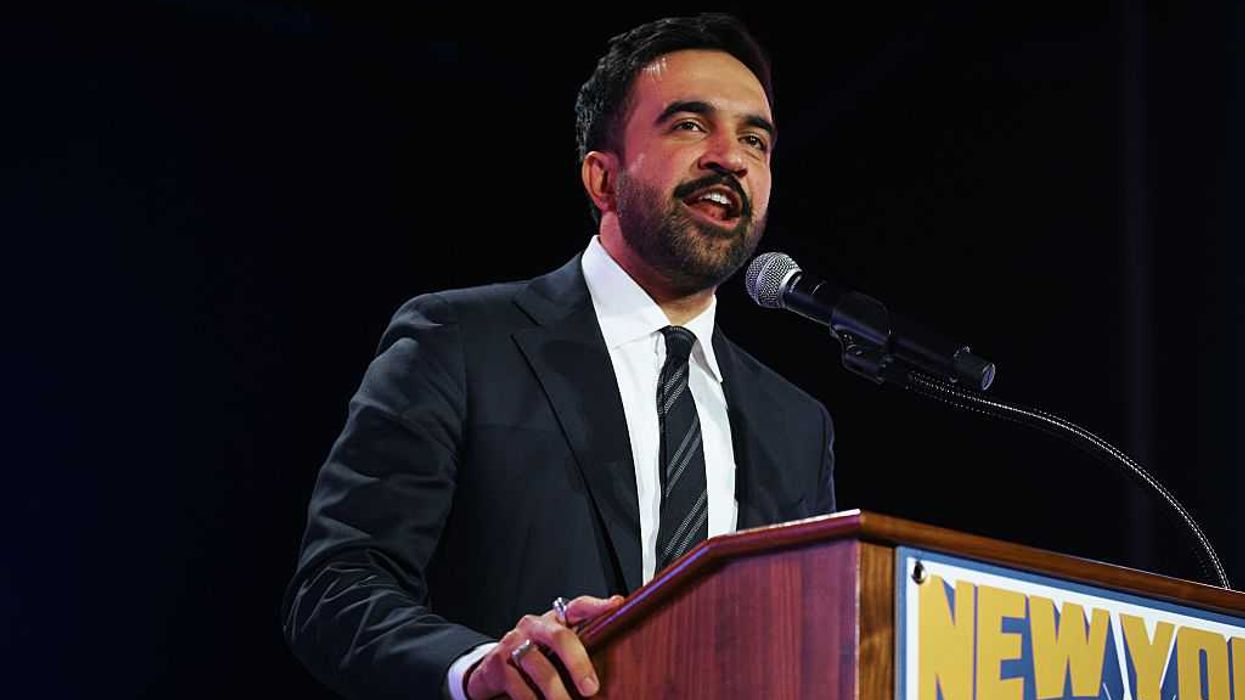
At a packed rally in Queens on Sunday, New York mayoral candidate Zohran Mamdani reinforced his far-left vision for remaking America’s largest city.
Among his proposals: government-run grocery stores, free public transportation, 200,000 government-built apartments, universal childcare, and a rent freeze for the city’s one million rent-stabilized apartments.
Only a socialist could argue that taking away people’s property rights and centralizing power enhances individual freedom.
The price tag for Mamdani’s most ambitious ideas comes to nearly $7 billion a year — more than the city’s entire police budget.
Mamdani, a self-described democratic socialist, shared the stage with Sen. Bernie Sanders (I-Vt.) and Rep. Alexandria Ocasio-Cortez (D-N.Y.), two of the country’s best-known socialist stars. Both praised Mamdani as the future of progressive politics.
Like Sanders and Ocasio-Cortez, Mamdani claims he can fund his agenda by taxing the rich and targeting corporations. He wants to raise the top corporate tax rate from 7.25% to 11.5% and increase the city’s income tax by two percentage points for anyone earning $1 million or more.
Those ideas have energized his base and helped him surge in the polls. Yet his lead is not secure. Critics from both parties warn that Mamdani’s high-tax, high-spending platform would drive wealthy residents and businesses out of New York, worsening the city’s economic and fiscal problems.
But Mamdani’s biggest obstacle isn’t fiscal — it’s philosophical.
Even in deep-blue New York, voters hesitate to hand power to a democratic socialist. Socialism’s record is clear: It limits freedom, crushes economies, and breeds instability.
To ease those fears, Mamdani’s campaign has begun to reframe socialism as a path to freedom rather than its enemy. At his rally over the weekend, he told the crowd: “No New Yorker should ever be priced out of anything they need to survive. … It is government’s job to deliver that dignity.” Then he added, “Dignity, my friends, is another way of saying freedom.”
In Mamdani’s view, freedom comes from the state guaranteeing life’s essentials — food, housing, transportation, childcare. To provide those things, government must seize and redistribute private wealth. Mamdani calls this process “delivering dignity,” which he equates with liberty itself.
That logic turns freedom on its head. Only a socialist could argue that taking away people’s property rights and centralizing power enhances individual freedom.
This rhetorical sleight of hand is not new. It’s straight from the socialist and communist propaganda of the 20th century.
Article 39 of the 1936 Soviet Constitution claimed that socialism “ensures enlargement of the rights and freedoms of citizens.” Fidel Castro’s 1976 Cuban Constitution promised “the freedom and full dignity of man” through a state guarantee of social services.
Even Joseph Stalin cloaked authoritarianism in the language of freedom. In a 1936 interview, he insisted that socialism was built “for the sake of real personal liberty,” arguing that “real liberty can exist only where there is no unemployment and poverty.”
Intentionally or not, Mamdani’s speeches echo those same lines. And he’s far from the first democratic socialist to do so. Julius Nyerere in Tanzania, Olof Palme in Sweden, and Aneurin Bevan in Britain all used similar arguments to justify state expansion in the name of “freedom.”
RELATED: Why Zohran Mamdani will be ‘one of the most catastrophic mayors ever’
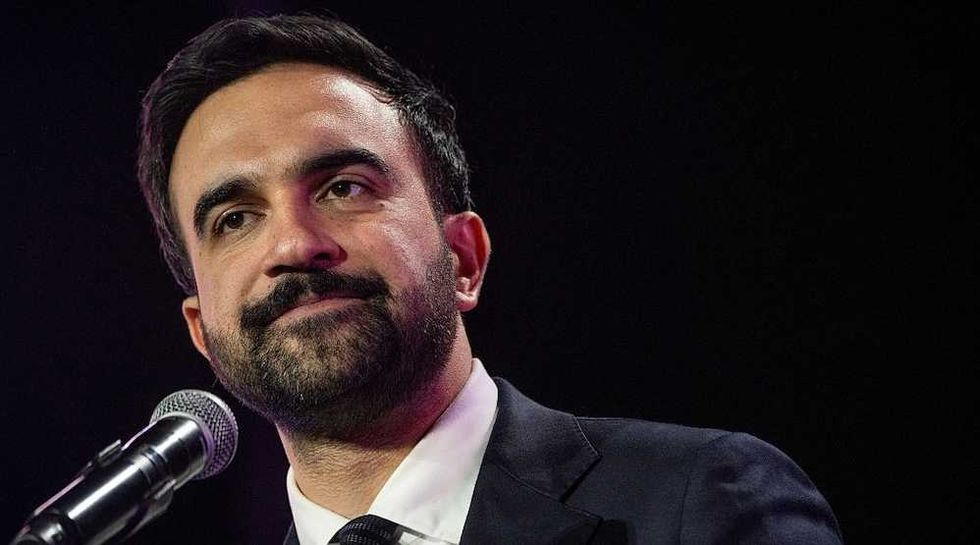 Photo by Victor J. Blue/Bloomberg via Getty Images via Getty Images
That’s no coincidence. Mamdani is a student of socialist history, and his rhetoric mirrors the Marxist premise that true liberty requires the abolition of private property. In his 1844 essay “Private Property and Communism,” Karl Marx wrote, “The abolition of private property is therefore the complete emancipation of all human senses and qualities.”
Every socialist movement since has repeated that creed, always promising “real freedom” while consolidating control over wealth, work, and speech.
History shows what those promises yield: less freedom, not more. The more government collectivizes decision-making, the less room individuals have to think, speak, or prosper.
New York City has enormous problems, but reviving the century’s old, failed ideas of socialism won’t solve them. If anything, they’ll accelerate decline.
The city’s revival depends on the principles that built it into a global capital in the first place — limited government, free markets, low taxes, and the liberty to rise through one’s own effort.
If Mamdani truly wants to bring dignity and freedom to New Yorkers, he should reject the hollow slogans of socialism and embrace the real promise of liberty that made America — and New York — great.
Ballots by Prime: Democracy’s dangerous next-day delivery

When 250 state ballots arrive in your Amazon order, faith in election security gets harder to defend. Yet that’s exactly what happened to a woman in Newburgh, Maine, who opened her package of household items to find five bundles of 50 official Maine referendum ballots.
Adding to the irony, the ballots were for Question 1 — a measure asking voters whether to tighten absentee ballot rules and require photo ID. The woman did the right thing and called authorities. But what if she hadn’t?
How can citizens trust the vote when ballots appear as shipping mistakes?
Now under investigation, the bizarre mix-up raises urgent questions. Who had access to the ballots? Were chain-of-custody rules violated? How many more ballots might be “out for delivery”?
For years, skeptics of election fraud have claimed concerns about ballot integrity are overblown. Yet events like this prove the opposite: The system is riddled with vulnerabilities. When official ballots wind up in an Amazon box, the process is beyond merely “flawed” — it’s broken.
Election officials and lawmakers must confront an uncomfortable truth: The safeguards meant to protect our democracy aren’t working. Anyone arguing against stronger voter ID laws should look to Newburgh. How can citizens trust the vote when ballots appear as shipping mistakes?
This isn’t a partisan issue. It’s a test of whether Americans still believe their votes matter. A democracy depends on a transparent, verifiable process — from printing to counting. When that chain breaks, confidence collapses.
Newburgh should be a wake-up call. Every ballot must be tracked, every voter verified, every election beyond reproach. Reassurances and press conferences won’t cut it. Citizens deserve a voting system that’s airtight, accountable, and secure. Anything less insults the republic.
Commonsense reforms aren’t complicated. Require a government-issued photo ID to vote — the same standard used to board a plane, buy a beer, or enter a federal building. For mail-in ballots, require proof of identity both when requesting and returning a ballot. Without that, the system leaks from every seam.
RELATED: Honor system? More like fraud system
 Photo by Moor Studio via Getty Images
When ballots get rerouted into cardboard boxes unnoticed, the integrity of democracy itself comes into question. It signals a culture that prizes convenience over vigilance, treating ballots like junk mail instead of sacred instruments of self-government.
Democracy doesn’t collapse in secret; it erodes in daylight while people look away. That’s why reform must be bold, not bureaucratic. States need top-to-bottom reviews of how ballots are printed, stored, distributed, and tracked — and consequences for failures.
If democracy is worth defending, ballots are worth protecting. Anything less, and we’ve already surrendered what makes the vote sacred.
Trucks destroy roads, but railroads — yes, rail! — can save taxpayers billions

Anyone who drives America’s highways knows the story: potholes, cracked pavement, and endless construction zones. States pour billions of tax dollars into road maintenance every year, yet the pavement always seems to crumble faster than it can be repaired. What most motorists don’t realize is that heavy trucks cause much of the damage — and pay almost nothing to fix it.
Federal estimates show that a single fully loaded 18-wheeler can inflict as much pavement damage as nearly 10,000 passenger cars. Fuel taxes and highway user fees from trucking companies cover only a small fraction of the destruction they cause. Taxpayers pick up the rest, footing the bill for constant repaving, bridge work, and the cycle of crumbling roads.
Every additional ton of freight shifted to rail represents pavement preserved and taxpayer dollars saved.
Trucking keeps the economy moving, and freight rail, shipping, and trucking together form the backbone of America’s supply chain. But shifting more freight to rail makes sense. The rail network is self-maintained by the companies that use it, and trains move goods more safely and efficiently than trucks. The more freight we move by rail, the less damage we’ll have to repair on the nation’s roads.
A merger serving Americans
The recently proposed merger of Union Pacific and Norfolk Southern offers an opportunity to improve both our roads and our supply chains simultaneously. By creating a more efficient coast-to-coast rail network, the merger would allow railroads to capture more freight that currently travels by truck — relieving taxpayers of billions of dollars in hidden subsidies for road repair.
Merging Union Pacific’s vast western network with Norfolk Southern’s eastern lines would create the nation’s first true transcontinental railroad — from the Pacific to the Atlantic. For shippers, that means single-line pricing instead of juggling multiple operators to move goods from point A to point B.
It also means faster delivery, fewer interchanges, and lower costs.
Railroads, unlike trucking companies, build and maintain their own infrastructure. Every mile of track, every bridge, and every switching yard comes from private capital, not public funds.
When freight moves from trucks to trains, taxpayers win twice: less highway damage to repair and more freight handled by a system that pays its own way.
The savings aren’t theoretical. Heavy trucks cause roughly 40% of the wear on America’s roads while accounting for only about 10% of total miles driven.
A North Carolina Department of Transportation study found that trucks with four or more axles underpay for road damage by anywhere from 37% to 92%. State budgets from Texas to Pennsylvania tell the same story: Highway repair costs soar while trucking fees barely make a dent.
Every ton of freight shifted to rail means less pavement destroyed and more tax dollars saved.
False cries of monopoly
Naturally, critics of the merger will cry “monopoly,” as they always do when industries consolidate. But that misses the real competitive landscape. In addition to competing with other railroads, rail competes vigorously with trucks, which dominate American freight today.
Trucks control roughly 70% of domestic freight volume — subsidized in part by taxpayer-funded roads. Allowing railroads to offer a stronger alternative isn’t anti-competitive — on the contrary, it’s pro-market. It creates stronger competition for taxpayer-subsidized trucking.
RELATED: DOT withholds $40M from blue state for flouting English requirements for truckers
 Photo by Eric Lee/Bloomberg via Getty Images
At its heart, this merger is a test of whether the Trump administration trusts the free market to deliver solutions. Union Pacific and Norfolk Southern are not asking taxpayers to fund their merger. They are not asking for subsidies, grants, or carve-outs. They are investing their own capital to create a system that reduces public costs, strengthens supply chains, and keeps America competitive.
If policymakers are serious about preserving America’s battered roads, as well as strengthening our supply chain infrastructure, the choice is obvious. Let the free market work, and let railroads take more freight off the highways.
If it’s ‘worse than Watergate,’ then why the media blackout?

In a sense, this is old news. In December 2021, CNN reported that the House’s January 6 committee had subpoenaed phone records of more than 100 people.
But that was mostly Trump officials, including White House Chief of Staff Mark Meadows. No surprise there. After all, the January 6 Select Committee was empaneled for the specific purpose of turning President Donald Trump into a criminal for supposedly aiding and abetting the Jan. 6, 2021, breach of the Capitol.
It is well past time for the Republican Congress to fulfill its promise to hold accountable those who weaponized the federal government against Trump and his allies.
But when this story resurfaced earlier this month, there was something new, too. For one thing, the scope of the investigation was almost unbelievable — it turns out those subpoenaed phone records consisted of a staggering 30 million lines of phone data.
And when the select committee’s investigation went nowhere, one of the members — GOP malcontent and former Rep. Adam Kinzinger (Ill.) — informed the FBI about the phone data in Dec. 2023 when it was becoming apparent that Trump was the favorite to win the Republican nomination in 2024.
Greater than Watergate
More revelatory than the numbers of the phone records hauled in by the J6 committee was the news that the FBI had gone after these same records — and possibly more — in an effort to target Trump and his conservative allies. Not only did the agency have its eyes on Trump, it also went after nine Republican members of Congress — eight senators and a stray congressman, in an obvious effort to sweep up accomplices in the coup that never was.
Whether the FBI obtained the same phone records as the J6 committee is unclear. Kinzinger’s tip may have been moot, because an FBI memo released by Sen. Chuck Grassley (R-Iowa) shows that by September 2023, the agency had already “conducted preliminary … analysis” on the call data of several members of Congress, including Sens. Lindsey Graham (R-S.C.), Bill Hagerty (R-Tenn.), Ron Johnson (R-Wis.), and Marsha Blackburn (R-Tenn.).
According to CNN, “The FBI, as part of special counsel Jack Smith’s Jan. 6 investigation, used court orders in 2023 to obtain the phone records of nine GOP lawmakers.” These were not actual phone calls or text messages, but rather information about who called or texted whom and when.
Grassley posted the memo to his X account, with the message:
This document shows the Biden FBI spied on 8 of my Republican Senate colleagues during its Arctic Frost investigation into “election conspiracy.” Arctic Frost later became Jack Smith’s elector case against Trump.
He concluded, in all caps: “BIDEN FBI WEAPONIZATION = WORSE THAN WATERGATE.”
Which raises the question: Why did the story turn out to be a one-day wonder? Here we have the discovery of a partisan investigation seeking to uncover dirt on fellow members of Congress (if the records did indeed start with the J6 committee), or at the very least a rogue element of the executive branch targeting political enemies in the legislative branch.
As Johnson said:
They’re casting this net, this fishing expedition against members of the Senate and the House. There is no predicate. There’s no reason for this other than a fishing expedition, which, again, should outrage and shock every American.
Once again, a member of Congress implied that we are witness to a political scandal (one of many in the Biden administration) that is among the worst in our history. Yet when you do a Google search for stories related to phone toll records being subpoenaed by either the J6 committee or the FBI, virtually nothing comes up beyond Oct. 7, the day after Grassley released the memo.
Crickets …
A few news outlets reported in the following days that FBI Director Kash Patel had fired agents involved in the Arctic Frost investigation. In addition, scattered reports surfaced on Hagerty questioning why Verizon released his phone records without informing him.
Verizon told Fox News Digital:
Federal law requires companies like Verizon to respond to grand jury subpoenas. We received a valid subpoena and a court order to keep it confidential. We weren’t told why the information was requested or what the investigation was about.
Grassley and Johnson followed up with their own letter to Verizon and three other telecommunication companies demanding to be supplied with the same data that was provided to the FBI or special counsel Jack Smith. In addition, the senators expressed their belief that the records should have been privileged because they concerned the official constitutional duties of certifying the 2020 presidential election.
It seems like a real story — one that deserves the full attention of the press — but where are the special investigation teams at the New York Times and the Washington Post? What have you heard about this story on CBS, NBC, and ABC newscasts? Very little if anything. Certainly nothing in comparison to the coverage provided to Watergate.
Most recently, Rep. Jim Jordan (R-Ohio), who chairs the House Judiciary Committee, sent a letter to Smith demanding a transcribed interview and documents along with communications related to his investigation of Trump. Well and good, but that interview will be conducted in secret, as were the interviews of Smith’s subordinates — one of whom, according to Jordan, “invoked the Fifth Amendment approximately 75 times.”
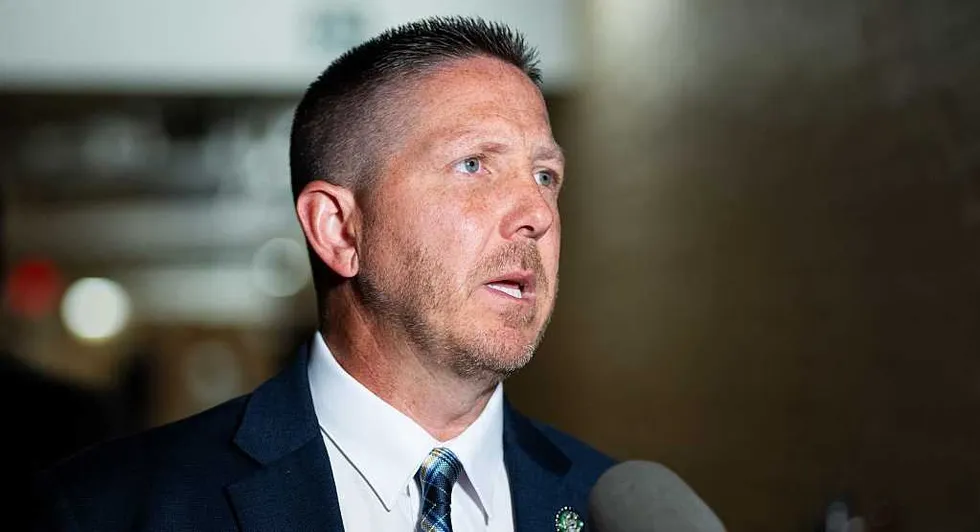 Photo by Bill Clark/CQ-Roll Call Inc. via Getty Images
Time for Congress to step up
It is well past time for the Republican Congress to fulfill its promise to hold accountable those who weaponized the federal government against Trump and his allies. Press releases and secret interviews won’t do the job. We need public televised hearings, with witnesses ranging from members of the J6 committee, including Kinzinger, former Rep. Liz Cheney (R-Wyo.), and now-Sen. Adam Schiff (D-Calif.), to former FBI Director Christopher Wray and Jack Smith.
Would the legacy media networks cover it? Probably not, because as we all know by now, those outfits are still after Trump’s scalp, and they will only seek to discredit Jordan and the other congressional investigators who want to know the truth. That doesn’t mean Republicans should give up.
Watergate started as a one-day story about a botched break-in. But even without Woodward and Bernstein, the famous team of reporters from the Washington Post, the story would never have been kept quiet unless Senate Democrats and congressmen didn’t do their job.
Now it’s time for Jordan, Grassley, and Patel to do theirs.
Editor’s note: This article was originally published by RealClearPolitics and made available via RealClearWire.
America can’t call itself great if it forgets its caregivers
America loves to celebrate those who stand tall. Our founding ideals are built around independence, and we even set aside a holiday to honor it. We cheer for pioneers, entrepreneurs, and innovators who rise by their own strength. Read moreThe archbishop who drove the gospel out of EnglandBut a nation’s greatness is not measured by





