

Category: Trump
Judicial Watch Sues for Secret Service Records on Code Pink Disruption at President Trump Dinner
(Washington, DC) – Judicial Watch announced today it filed a Freedom of Information Act (FOIA) lawsuit for U.S. Secret Service communications records related to Code Pink protesters who disrupted a dinner held by President Donald Trump at a restaurant in Washington, DC, on September 9, 2025 (Judicial Watch v. U.S. Department of Homeland Security (No. […]
The post Judicial Watch Sues for Secret Service Records on Code Pink Disruption at President Trump Dinner appeared first on Judicial Watch.
Led by Non-Binary Fed Worker Lawsuit Accuses Trump of Discrimination for Ending Govt. DEI Programs
Spearheaded by a woman who identifies as “non-binary,” a group of federal employees who worked in specially created government Diversity, Equity, and Inclusion (DEI) departments under the Biden administration are suing President Trump for ending the wasteful and exclusionary programs and firing them. The former government workers claim they were unlawfully dismissed because the president […]
The post Led by Non-Binary Fed Worker Lawsuit Accuses Trump of Discrimination for Ending Govt. DEI Programs appeared first on Judicial Watch.
Economists Complain About Trump’s New Inflation Figures
It isn’t the data they don’t like — it’s the results — lower inflation and higher real wages. The “affordability…
Gratitude AND fiscal concerns: Glenn Beck breaks down Trump’s warrior dividend for service members
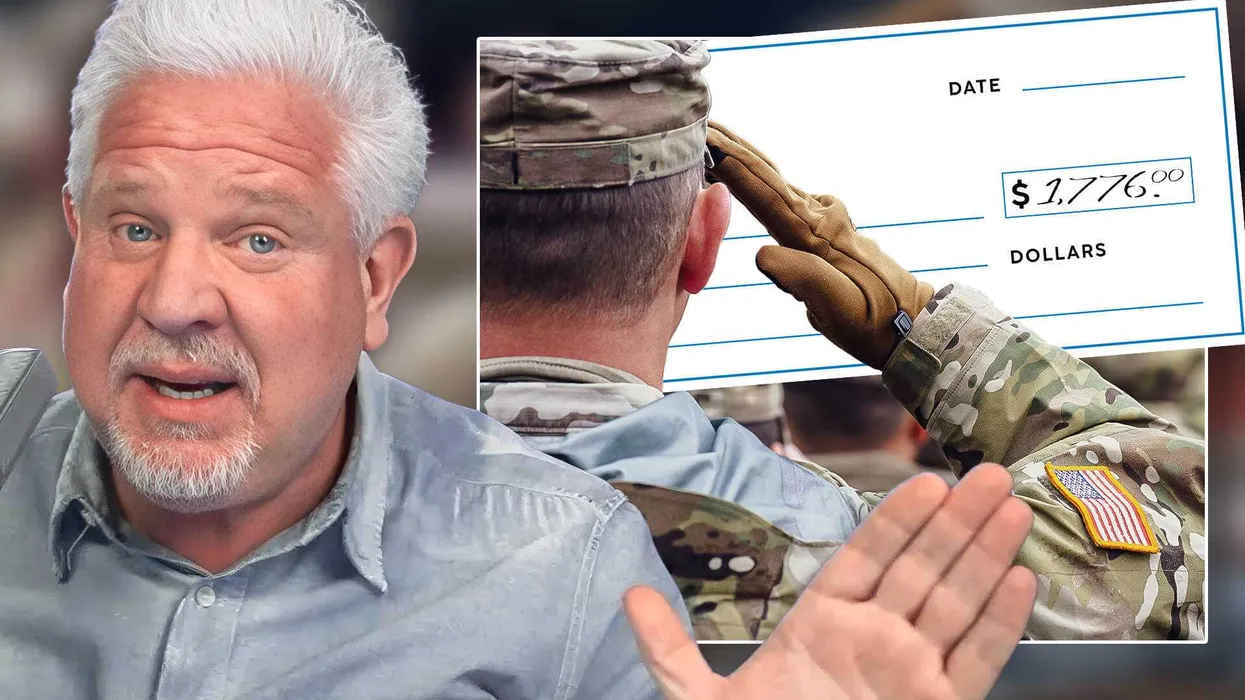
In his address to the nation on Wednesday night, President Trump announced that he’s issuing a “warrior dividend” to approximately 1.45 million eligible U.S. military service members as a thank-you for their sacrifice and service. The one-time payment of $1,776 — a symbol of America’s founding — is set to arrive before Christmas.
Reactions to the announcement have been varied. Many service members and military families have welcomed the timely $1,776 bonus, with some veterans expressing cautious optimism. Critics, both on Capitol Hill and in media outlets, have raised concerns about the repurposing of congressional appropriations originally meant for military housing allowances.
Glenn Beck has mixed feelings too.
“I don’t like when the government hands out money, but … if anybody can use it, it’s the military,” he says.
“$1,700 is a huge amount for most people in the military. … We don’t do enough for our military, and so it’s the best kind of, I don’t know, stimulus package I’ve ever seen,” he adds.
Glenn’s co-host Stu Burguiere shares the sentiment that our military members are beyond deserving; however, he can’t ignore the fact that this is “money that we don’t actually have.”
“The argument is with tariffs that we have enough, but of course that pays only for a slight amount of our deficit,” he says.
The second issue Stu has is that according to the U.S. Constitution’s Appropriations Clause (Article I, Section 9), Congress has exclusive power over spending. Even one-time bonuses like the warrior dividend typically require explicit congressional authorization.
“Congress doesn’t even pay attention to [that clause] anymore. They don’t seem to care,” Glenn says.
However, there is another upside to these warrior dividends, he says. Besides the fact that they help America’s most deserving population, the money will also stimulate the economy.
“I can guarantee you, they’re going to get it, and they’re going to use it on their family for Christmas, which will stimulate the economy so much,” Glenn says.
To hear more of the conversation, watch the video above.
Want more from Glenn Beck?
To enjoy more of Glenn’s masterful storytelling, thought-provoking analysis, and uncanny ability to make sense of the chaos, subscribe to BlazeTV — the largest multi-platform network of voices who love America, defend the Constitution, and live the American dream.
Trump can fix a hidden public safety failure
During President Trump’s first term, he signed the First Step Act — the most comprehensive criminal justice reform bill in decades — into law. He now has a chance to take a “second step” by rightsizing federal supervision of people on probation — an often overlooked public safety gap — with the introduction of the Safer Supervision Act.
I worked with the president and many bipartisan leaders to pass the First Step Act. I have also been on supervision and spend time with law enforcement leaders across the country. The Safe Supervision Act will empower our federal probation officers and judges to devote previous supervision resources to the people most likely to commit more crimes.
The Safer Supervision Act is the smart, responsible way to make our communities safer — and it is a great ‘second step’ for President Trump.
Currently the federal system for supervised release — the period of monitoring that follows incarceration — is structured in a way that actively undermines this goal. By overwhelming federal probation officers with low-risk individuals, the current system diverts attention and resources away from the true threats.
Due to the sprawling, largely automatic application of supervised release, our federal system currently monitors more than 110,000 individuals. This policy forces federal probation officers to spread their time dangerously thin.
When officers must dedicate precious time and limited resources to tracking individuals who have already demonstrated a low risk of re-offending, they are left with insufficient bandwidth to provide the oversight and intervention required by high-risk, violent offenders.
The bipartisan Safer Supervision Act is a targeted piece of legislation that corrects this dangerous imbalance. It is a genuine public safety bill that has earned the strong endorsement of the Federal Law Enforcement Officers Association, Major Cities Chiefs Association, and the National District Attorneys Association, among others. This bill’s promise is simple: More efficient use of law enforcement resources will reduce repeat crimes.
The core mechanism of the act is the restoration of individualized assessment. Under the current system, supervision is imposed in virtually every case. The Safer Supervision Act requires courts to conduct an individualized risk assessment before imposing supervision.
By reserving supervised release for cases that genuinely warrant it, this change moves toward a gold standard of effective supervision endorsed by professional associations such as the American Probation and Parole Association.
The strongest supervision model ensures that intensive supervision and rehabilitation efforts are directed to the highest-risk areas. The bill would allow federal law enforcement to operate as true risk managers, directing resources where they can have the most effect on those who pose the greatest public threat.
RELATED: Mexico has cartel armies. Blue America has cartel politics.
 Photo by HERIKA MARTINEZ/AFP via Getty Images
The bill helps break the cycle of recidivism by providing a strong incentive for successful rehabilitation. For low-risk individuals who have served their time and demonstrated good conduct, unnecessarily prolonged supervision terms become a counterproductive barrier. They inhibit successful re-entry by making it difficult to find stable employment and housing, which paradoxically increases the likelihood that the individual will re-offend.
The Safer Supervision Act establishes a process for early termination of supervision for individuals who have served half their term (or two-thirds for violent offenses) and have maintained good behavior. By giving people a clear finish line and rewarding sustained compliance, it dramatically increases the incentive for positive life changes. A successfully terminated supervision term means one less individual returning to crime, thereby enhancing the overall safety of their neighborhood.
Finally the act shows intelligence in addressing substance-use violations, treating them as opportunities for intervention rather than instant triggers for renewed incarceration. The bill creates an extremely narrow carve-out, giving judges discretion for minor offenses.
Under current law, mandatory re-imprisonment is required for these minor violations, often derailing successful rehabilitation and costing taxpayers significantly. The Safer Supervision Act empowers judges to prioritize treatment, counseling, and swift rehabilitation over immediate, expensive, and ineffective re-incarceration.
The support for the Safer Supervision Act is the most bipartisan coalition we have seen since the First Step Act. It is endorsed by police chiefs and prosecutors who understand the operational realities of crime and by fiscal conservatives demanding accountability for federal spending.
By adopting this bill, Congress can deliver a modern, evidence-based supervision system that ensures limited resources go to our highest-risk individuals, minimizes government waste, and delivers lasting public safety improvements.
The Safer Supervision Act is the smart, responsible way to make our communities safer — and it is a great “second step” for President Trump.
101-year-old WWII vet cheers on Trump in fiery patriotic speech: ‘Godd**mit, put a uniform on me — I’ll go tomorrow’

A 101-year-old World War II veteran delivered a passionate speech about his love for America and President Donald Trump’s leadership during an event at Mar-a-Lago this week.
On Tuesday, America’s Future hosted the Second Annual Champions for America Celebration Gala to honor and recognize individuals “whose lives reflect courage, sacrifice, and unwavering commitment to faith, freedom, and service.”
‘This was a reminder of who we are.’
Navy veteran and Bronze Star of Valor recipient William “Bill” Dillon, who served from 1942 to 1947, shared powerful remarks with the audience.
“There’s nobody in the godd**n world who cares more for this nation than this guy that you’re looking at,” Dillon stated. “And I think Trump is not only the president of the United States; he is the president of the world.”
Dillon complimented Trump for his “fantastic job” negotiating on behalf of the country.
“I’m 101, going on 102. Godd**mit, put a uniform on me — I’ll go tomorrow!” Dillon declared.
RELATED: The families behind our veterans deserve more than once-a-year thanks
 Photo by Chip Somodevilla/Getty Images
Matt Van Swol, a former nuclear scientist at the Department of Energy, stated that he had the honor of meeting Dillon at the event.
“Bill said that he has lived under 22 American presidents and that President Trump is his favorite. … Truly a special person,” Van Swol said.
“A World War II veteran, Bronze Star of Valor recipient, submariner, and aerospace pioneer, Bill delivered an energetic, passionate speech that reminded everyone what real courage looks like. From serving aboard the USS Sailfish to helping build America’s early space program, his life reflects sacrifice, resolve, and love of country,” America’s Future said, referring to Dillon. “This was a reminder of who we are.”
RELATED: Stories Behind the Stars: On a mission to honor every American who died in WWII
 Bill Dillon. Photo by Rodin Eckenroth/Getty Images for Associated Television International
America’s Future highlighted remarks from actor Isaiah Washington, human biologist Gary Brecka, author Angela Stanton-King, and General Charlie Flynn.
The organization referred to the event as an “unforgettable evening.”
“Tonight, America’s Future gathered to honor courage, faith, and conviction. Bringing together voices and leaders who refuse to stay silent when the stakes are high. From powerful remarks to heartfelt moments of recognition, this was a night that reminded us what America stands for and why the fight for her future matters,” the organization wrote.
Like Blaze News? Bypass the censors, sign up for our newsletters, and get stories like this direct to your inbox. Sign up here!
Judicial Watch sues DOJ for Jack Smith emails regarding his investigation into Donald Trump
From Just the News: The conservative watchdog group Judicial Watch announced Thursday that it has filed a Freedom of Information Act lawsuit against the Justice Department, seeking emails from former Special Counsel Jack Smith over his investigation into President Donald Trump. The lawsuit, which was filed last month but publicly announced Thursday, is seeking Smith’s emails with […]
The post Judicial Watch sues DOJ for Jack Smith emails regarding his investigation into Donald Trump appeared first on Judicial Watch.
Trump promises ‘very serious retaliation’ after ‘ISIS attack’ that killed 2 US Army soldiers, 1 US interpreter in Syria
President Donald Trump promised “very serious retaliation” after an “ISIS attack” that killed two U.S. Army soldiers and one U.S. interpreter interpreter Saturday in Syria.
Fox News reported that a lone Islamic State gunman carried out the ambush, which also left three others wounded. Secretary of War Pete Hegseth said that “the savage who perpetrated this attack was killed by partner forces.”
‘Let it be known, if you target Americans — anywhere in the world — you will spend the rest of your brief, anxious life knowing the United States will hunt you, find you, and ruthlessly kill you.’
“We mourn the loss of three Great American Patriots in Syria, two soldiers, and one Civilian Interpreter,” Trump wrote on Truth Social, according to the cable news network. “Likewise, we pray for the three injured soldiers who, it has just been confirmed, are doing well. This was an ISIS attack against the U.S., and Syria, in a very dangerous part of Syria, that is not fully controlled by them.”
Trump added that “the President of Syria, Ahmed al-Sharaa, is extremely angry and disturbed by this attack. There will be very serious retaliation,” Fox News noted.
Trump also said Saturday to reporters outside the White House that “this was an ISIS attack on us and Syria. And again, we mourn the loss, and we pray for them and their parents and their loved ones,” the cable news network reported.
Hegseth added on X: “Let it be known, if you target Americans — anywhere in the world — you will spend the rest of your brief, anxious life knowing the United States will hunt you, find you, and ruthlessly kill you.”
Chief Pentagon spokesman Sean Parnell said on X that the attack in the town of Palmyra “occurred as the soldiers were conducting a key leader engagement. Their mission was in support of ongoing counter-ISIS/counter-terrorism operations in the region. The soldiers’ names, as well as identifying information about their units, are being withheld until 24 hours after the next of kin notification. This attack is currently under active investigation.”
RELATED: Trump warns Israel about interference in Syria after deadly raid, airstrikes
The cable news network added that there are about 900 U.S. troops in Syria.
More from Fox News:
The U.S. had eight bases in Syria to keep an eye on ISIS since the U.S. military went in to prevent the terrorist group from setting up a caliphate in 2014, although three of those bases have since been closed down or turned over to the Syrian Democratic Forces.
On Monday, tens of thousands of Syrians flooded the streets of Damascus to mark the first anniversary of the Assad regime’s collapse.
Those celebrations came a year after former Syrian dictator Bashar al-Assad fled the capital as rebel forces swept through the country in a lightning offensive that ended five decades of Assad family rule and opened a new chapter in Syrian history.
The Associated Press reported that Saturday’s attack on U.S. troops was the first to cause fatalities since Assad’s fall.
Like Blaze News? Bypass the censors, sign up for our newsletters, and get stories like this direct to your inbox. Sign up here!
Trump’s Gaza plan exposes the truth behind the genocide libel
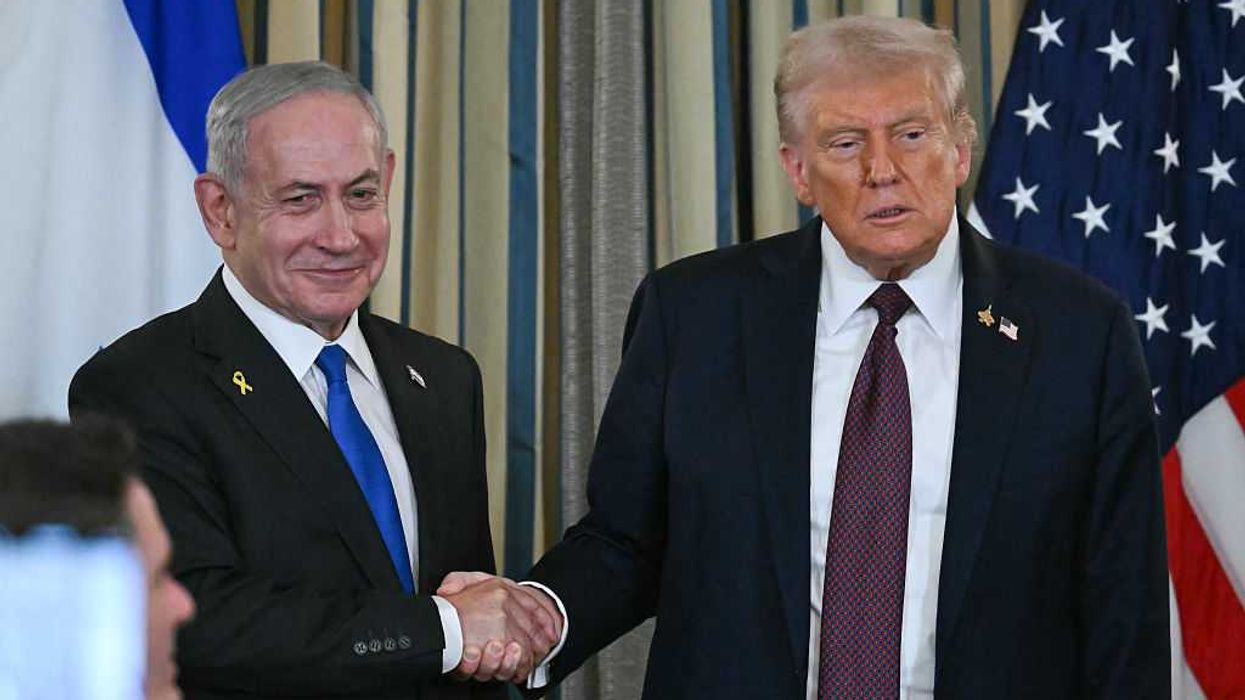
More than two months have passed since President Trump unveiled his Comprehensive Plan to End the Gaza Conflict — arguably the most consequential Middle East peace initiative in decades.
Foreign policy insiders predicted failure. Yet since October 10, the plan has held through volatility and uncertainty, confounding critics of the president, Israel, and Prime Minister Benjamin Netanyahu.
Israel deserves a fulsome defense from everyone committed to law, order, and truth.
The plan has done more than reduce the fighting. It has underscored Israel’s actual aims from the start: Eliminate Hamas, free the hostages, and ensure that Gaza never again serves as a launchpad for mass murder — not destroy the Palestinian people.
Still, the “genocide” libel endures. It may be the most destructive falsehood leveled against Jews in modern history.
Less than three months after the October 7, 2023, terror attacks, South Africa — a country collapsing under corruption and poverty — accused Israel of genocide at the International Court of Justice. That case continues, with a final ruling unlikely before 2028.
Meanwhile the libel spreads. Radical activists, anti-Western NGOs captured by ideological agendas, pseudo-intellectual academics, and hollow institutions such as the International Association of Genocide Scholars push it relentlessly.
IAGS illustrates the problem. It requires nothing more than a $30 fee to join. The group has been flooded with frivolous “members,” including Adolf Hitler, Darth Vader, and Emperor Palpatine, along with a host of non-experts. Yet major media outlets still treat its anti-Israel resolutions as credible, impartial assessments of genocide — the gravest crime in human history.
This campaign demands a serious response. Legal experts and clear-minded observers should dismantle the genocide libel once and for all. The arguments are so straightforward that only bad faith can obscure them.
After the October 7 massacre — which, proportionally, represented the loss of roughly 50,000 American lives — Israel acted in self-defense against an enemy openly committed to exterminating every Jew in the country. Calling Israel genocidal in this context is not simply wrong. It inverts reality and rewards Hamas.
Israel also facilitated massive humanitarian aid to Palestinians throughout the war — more than 2 million tons since the fighting began. That record alone destroys the claim of genocidal intent. No nation at war has ever delivered aid on that scale to a population governed by its enemy.
RELATED: Hamas floods the feeds to sway clueless Westerners
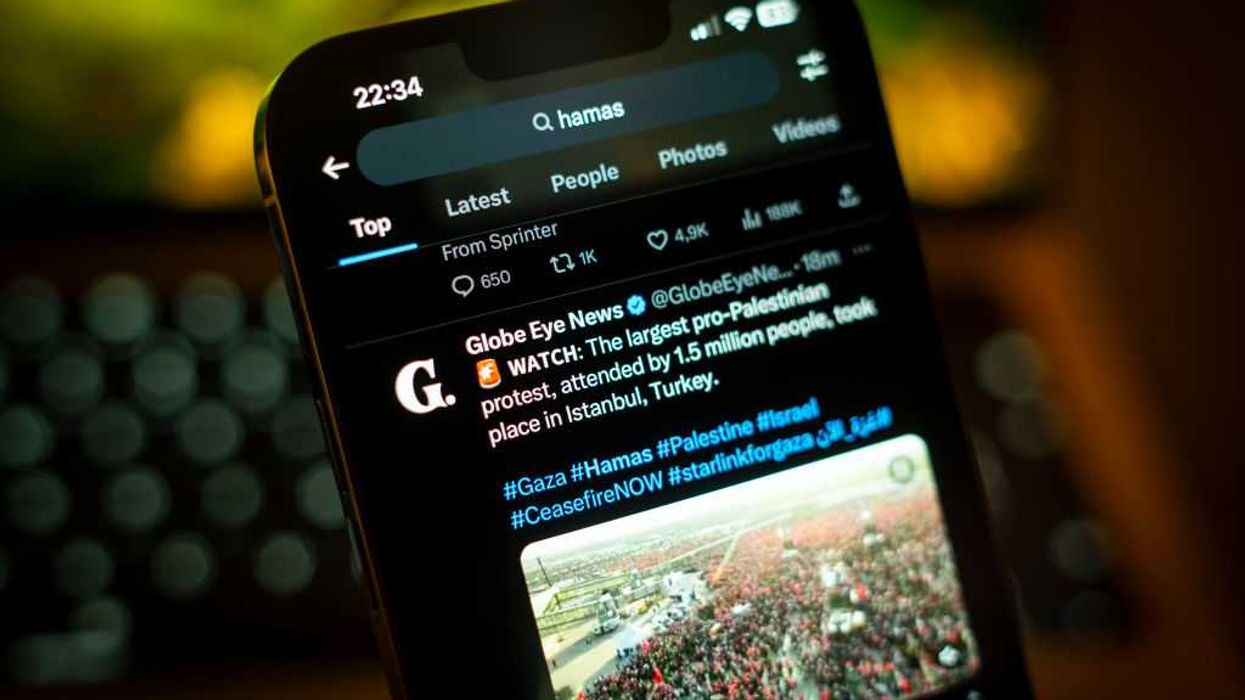 Photo by Jaap Arriens/NurPhoto via Getty Images
Israeli forces have fought with precision to reduce civilian casualties while targeting Hamas operatives. The challenge has been immense. Hamas hides behind civilians, embeds fighters in hospitals and schools, and uses civilian infrastructure as shields. Even so, Israel repeatedly issued advance warnings of airstrikes and troop movements to limit harm. Genocidal regimes do the opposite: They hunt civilians and slaughter them deliberately. Gaza has seen none of that conduct from Israel.
The International Court of Justice should weigh these facts carefully when it rules in the South Africa-Israel case. Israel’s position is strong, which explains why radical actors want to rewrite the rules of genocide to fit their narrative.
The Genocide Convention remains a respected, almost sacred document. It should guide the final judgment. Attempts to stretch or dilute it through political lawfare threaten justice itself.
For now, Israel deserves a fulsome defense from everyone committed to law, order, and truth. The future of international law, counterterrorism strategy, and the conduct of modern warfare may hinge on how the world judges Israel’s actions. The stakes could not be higher.
Inside President Trump’s new ‘America First’ national security strategy
With the first year of the second Trump administration coming to a close, Present Donald Trump has articulated a new national security strategy that will “build upon” his substantial achievements thus far.
On Friday, the Trump administration published a document that lays out the National Security Strategy to put America first going forward.
‘In everything we do, we are putting America First.’
The 33-page document highlights President Trump’s successes and frames his time in office as a correction of failed policies from past administrations and conventional wisdom.
RELATED: University of Minnesota faces backlash over project that seeks to cure the ‘Whiteness Pandemic’
 Photo by Chip Somodevilla/Getty Images
Looking to the future, the document asks a simple question: what should the United States want?
It goes on to highlight the core tenets of what the Trump administration will work to achieve, including the “survival and safety” of U.S. citizens, control over our borders and freedom from “destructive propaganda and influence operations,” a strong military, economy, energy grid, and a “robust industrial base.”
The document goes into more detail and lists other wants of the country, but it also issues a reimagining of “soft power” entails: “‘Soft power’ that serves America’s true national interest is effective only if we believe in our country’s inherent greatness and decency.”
In our dealings with the world, the strategy reiterates its desire to control the Western Hemisphere without foreign incursions and to have unimpeded strategic access in the hemisphere, thus asserting a “Trump Corollary” to the Monroe Doctrine.
In addition, the strategy highlights the desire to avoid “forever wars,” maintain primacy in the tech sector, and to restore a Europe, it says, that is in danger of “civilizational erasure” thanks to institutions which have “undermined political liberty and sovereignty.”
“We want Europe to remain European, to regain its civilizational self-confidence, and to abandon its failed focus on regulatory suffocation.”
The strategy also highlighted that Europe’s principal alliance with the United States, NATO, is not guaranteed perpetually if the character of the nations change through rampant immigration from the third-world.
The document says it is “plausible” that certain NATO countries will be “non-European” in the next few decades, which could mean that they will view the United States and themselves differently than those who signed the charter.
Crucially, President Trump writes: “In everything we do, we are putting America first. … In the years ahead, we will continue to develop every dimension of our national strength–and we will make America safer, richer, freer, greater, and more powerful than ever before.”
Like Blaze News? Bypass the censors, sign up for our newsletters, and get stories like this direct to your inbox. Sign up here!





