Category: Trump
Big Tech CEOs should leave policy to the politicians

President Donald Trump’s latest comments on semiconductor exports sounded almost conciliatory — until they weren’t. Speaking recently on “60 Minutes,” the president said he would let Nvidia “deal with China” but drew a bright red line: Beijing could buy chips, just not the “most advanced” ones. The message was calibrated for maximum effect: permissive enough to please markets, hawkish enough to claim toughness. Nvidia’s stock jumped immediately — but China did not get what it wanted.
Days later, in a Financial Times interview, Nvidia’s CEO, Jensen Huang, warned that if the U.S. blocked his company from selling more of its advanced chips to China, it would “lose” the AI race. The argument was astonishing in its candor: Cut us off, Beijing wins.
As grateful as America should be for breathtaking innovations, an irreconcilable tension exists between national interest and fiduciary duty.
The comparison between a president sounding measured and a CEO trying to sound indispensable captures a dangerous inversion of power. Nvidia has become more than America’s most valuable company. It’s attempting to become its policymaker, shaping the boundaries of what Washington thinks possible in its competition with China.
To understand how one company reached that position, it helps to revisit what happened in Washington just days before Trump met Xi Jinping in South Korea.
Nvidia called it a GPU Technology Conference. Yet the event felt less like a developer’s conference and more like a tech-bro-meets-MAGA jamboree: free swag and a booming video hymn to American genius — from Thomas Edison to Donald J. Trump. Huang, leather jacket gleaming, strode out like a preacher to proclaim that the age of reindustrialization had arrived.
The D.C. version of GTC was not the San Jose GTC tech insiders have come to know. For the first time, Nvidia brought a full-blown edition of its developers’ confab to the capital, a strategic choice. The company does not merely want to sit at the table where policy is made — it wants to own it.
After hours of Super Bowl-style buildup — financiers whispering, tech CEOs hinting — attendees were herded into a dimly lit hall, where Huang unveiled a cascade of partnerships. The headline act that made sleeves roll up on both the policy bench and the brokerage floor was the Vera Rubin Superchip, billed as made in America and spoken of with the gravity reserved for national monuments.
It’s a dazzling feat of engineering: silicon that can be waved before a crowd as proof that America can still design, assemble, and scale. Expected to debut next year, the chip is music to policy wonks’ ears, a gleaming symbol of reindustrialization, and perhaps a psychological hedge against the fragility of Taiwan. For investors, it’s manna. As robots increasingly take charge, building chips in the U.S. will keep the supply chain close to home and safeguard companies against the whims of geopolitics.
Then, with the applause fading, an undercurrent of tension lingered, one that perhaps only the wonks could fully register. After that opening montage, capped by Jensen’s almost rhetorical question, “Was that video amazing?” the subtext became harder to ignore. And when he closed his remarks by thanking the audience “for your service and for making America great again,” it was impossible not to think of what the financiers were murmuring on the next stage over.
“Nvidia will — or should — ship more GPUs to China.” “Jensen’s flying straight to Korea after GTC to meet Trump.” “A deal’s coming.”
Those were among the refrains traded by figures like Cantor Fitzgerald’s C.J. Muse and Altimeter Capital’s Brad Gerstner. All this, of course, is contrary to the prevailing consensus among China-watchers that the notion of rendering Beijing dependent on Nvidia’s chips is fantasy. Cultivating indigenous capability by acquiring American technology by legal or illicit means has long been Beijing’s modus operandi.
Huang knows this. Still, his company has long worked to blunt export controls and push China-specific versions of its flagship Blackwell chip, the so-called B20. It’s a familiar playbook: First came the H100, then its “export-compliant” cousins, the H800 and H20. Each time, Washington tightens the rules; each time, Nvidia finds a workaround. But this must stop.
RELATED: Big Tech’s AI boom hits voters hard — and Democrats pounce
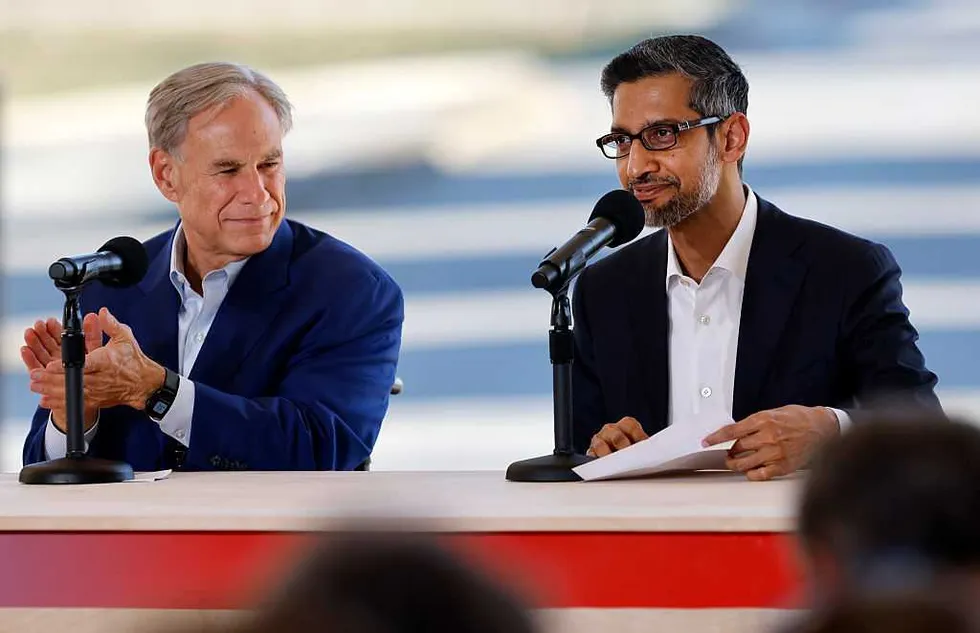 Photo by Ron Jenkins/Getty Images
The dilemma is simple but corrosive. As grateful as America should be for breathtaking innovations, an irreconcilable tension exists between national interest and fiduciary duty. Huang may sound bullish on “betting on America,” but the reality is starker: If his company could power the AI revolutions of both superpowers at once, it would add trillions to its market cap. He is pragmatic and coldly arithmetic. Build the best chips, profit from ubiquity. You don’t get where he is without knowing your math.
At GTC, I saw the divide play out in miniature. As Altimeter’s Brad Gerstner floated the idea that “logic is on the side of letting Nvidia compete with China,” I turned to a biotech researcher. Blunt and unamused, he said: “Bulls**t.” He went on to explain that, in his field especially, China’s ascent has been a wholesale rejection of the “make China dependent” fantasy. He wasn’t wrong: Under Xi Jinping, the Made in China 2025 agenda has rendered such dependency theories delusional.
Huang tries to thread the needle gracefully, extolling U.S. manufacturing while signaling an embrace of Chinese developers. As an American, it’s hard not to be charmed by his all-American chip. As a realist, however, one leaves with questions no press release can answer. In a way, the release of this patriot-approved superchip was meant to suggest, “See, now we can sell some Blackwells to China.” As charmed as one can be, the answer is still no.
One could have told the Roosevelt administration that cutting Germany off from nuclear materials would stifle innovation. Yet we did exactly that during the Manhattan Project. And we won. It may not sound like it, but this is the same choice we face today — only this race has even greater implications for the future of civilization.
The goal can’t be attempting to trap Beijing in “dependency.” The stakes are too high. The most prudent approach is to focus on surpassing them in innovation while closing loopholes that let Beijing do what it has mastered: Learn from us, then try to replace us.
Jensen Huang has every right to fight for his company’s profits. But foreign policy shouldn’t run on a corporate playbook. The U.S. needs innovators — not influencers — setting the terms of technological rivalry.
Editor’s note: A version of article appeared originally at the American Mind.
Elton John reveals what would make Trump ‘one of the greatest presidents in history’
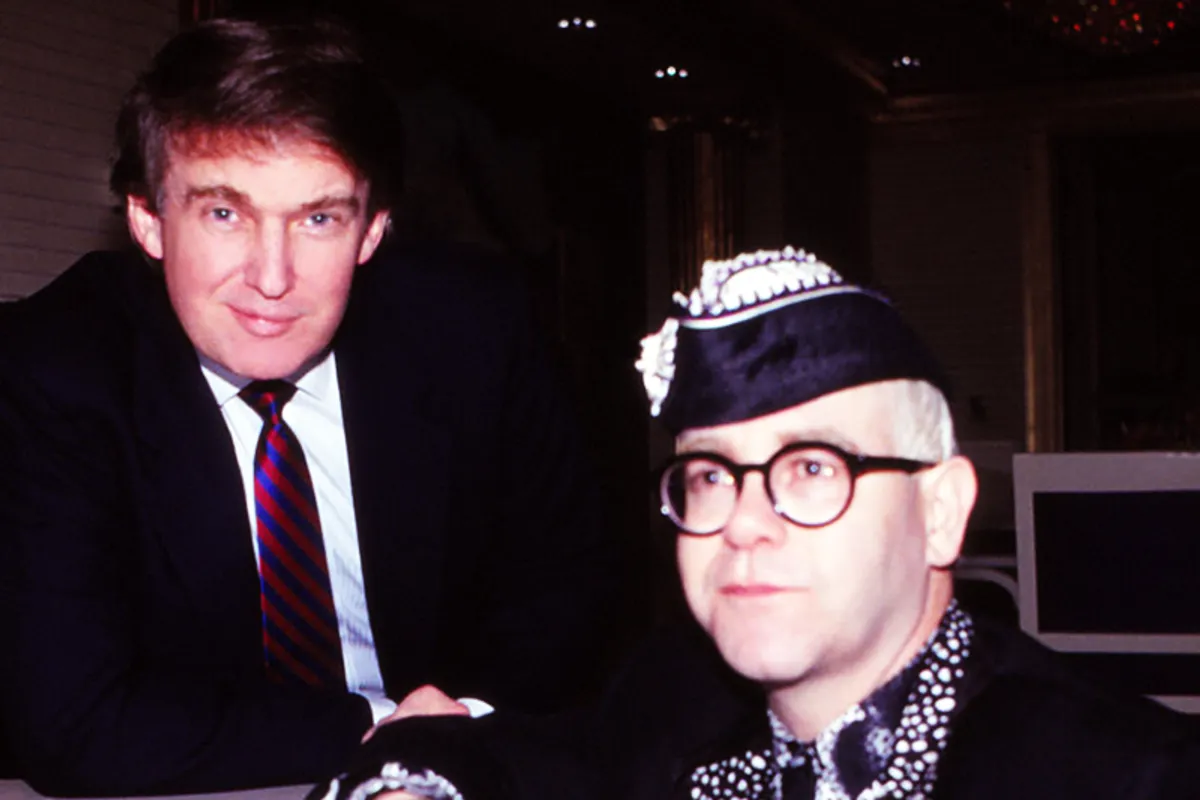
Elton John has recently praised President Donald Trump for his foreign policy work but stopped short of saying he was one of the nation’s greatest presidents.
Instead, the beloved musician explained what could cement Trump as one of the greatest American presidents ever to sit in the Oval Office.
Last year, John called it “brilliant” when Trump labeled North Korean Supreme Leader Kim Jong Un “Rocket Man” in reference to one of John’s songs, but the singer faced backlash over allegedly endorsing Trump for the 2024 presidential election.
‘If he wants to go down as one of the greatest presidents in history…’
John later clarified his position in an Instagram post, saying he was “simply acknowledging the fact that Trump has long been a fan” of John’s music and that “historically he’s been very kind” to him.
Fast-forward to an interview with Variety published Tuesday, and the 78-year-old is still not shy about giving the president credit where it is due. Moreover, John praised Republicans who have shown interest in his work to find a cure for AIDS.
“The bipartisan thing makes common sense. To see us come so far with the medical and scientific advances, and to think this is the only disease that can be completely cured in one’s lifetime,” John explained.
“President Trump has maybe solved the peace problem. If he wants to go down as one of the greatest presidents in history … if he ended AIDS, that would really be a feather in his cap.”
RELATED: Trump called Kim Jong Un ‘Rocket Man’— and Elton John ‘thought it was brilliant’
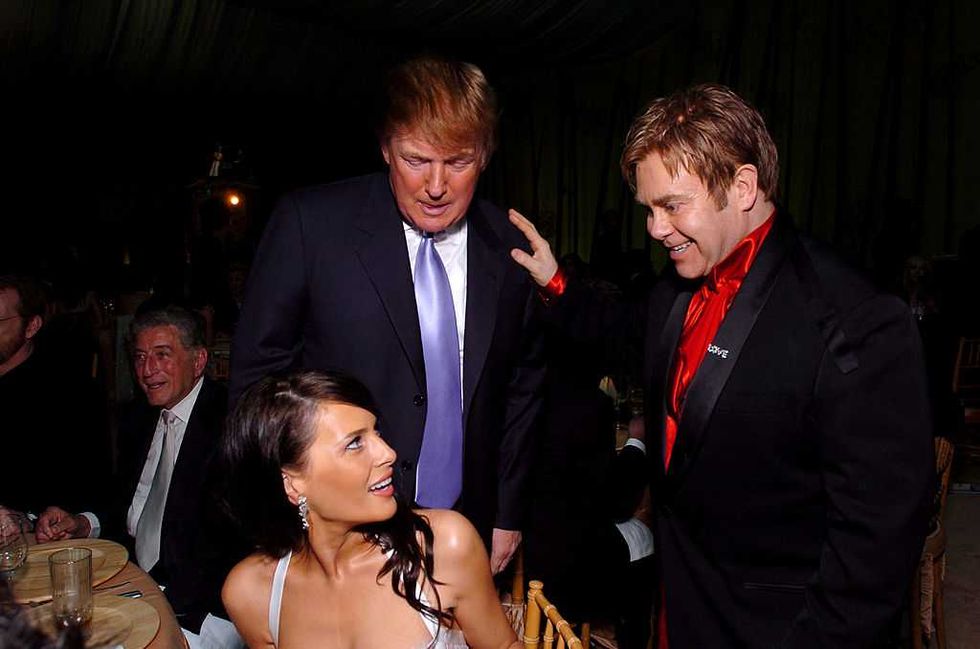 2004: Melania Knauss, Donald Trump and Sir Elton John during 12th Annual Elton John AIDS Foundation Oscar Party Co-hosted by In Style – Inside at Pearl in West Hollywood, California, United States. Photo by Dimitrios Kambouris/WireImage
Sir Elton spoke more generally on Trump’s peacemaking progress overseas, expressing hope that the “big war” between Israel and Palestine will be “settled” soon.
He then referred to AIDS as “another war” that is being prevented from ending because governments won’t allow medicine to get to the people who need it.
“There are crimes against millions of other people that are happening because of governments and stigma and hate,” John remarked to Variety. “It’s so frustrating when you have the medicine, you have prep, you have the antiretrovirals. We can stop the spread of AIDS, if people just got off their backsides and treated human beings in a Christian kind of way.”
RELATED: Trump admin leaves Elon Musk’s Grok, xAI off massive list of AI tech partners
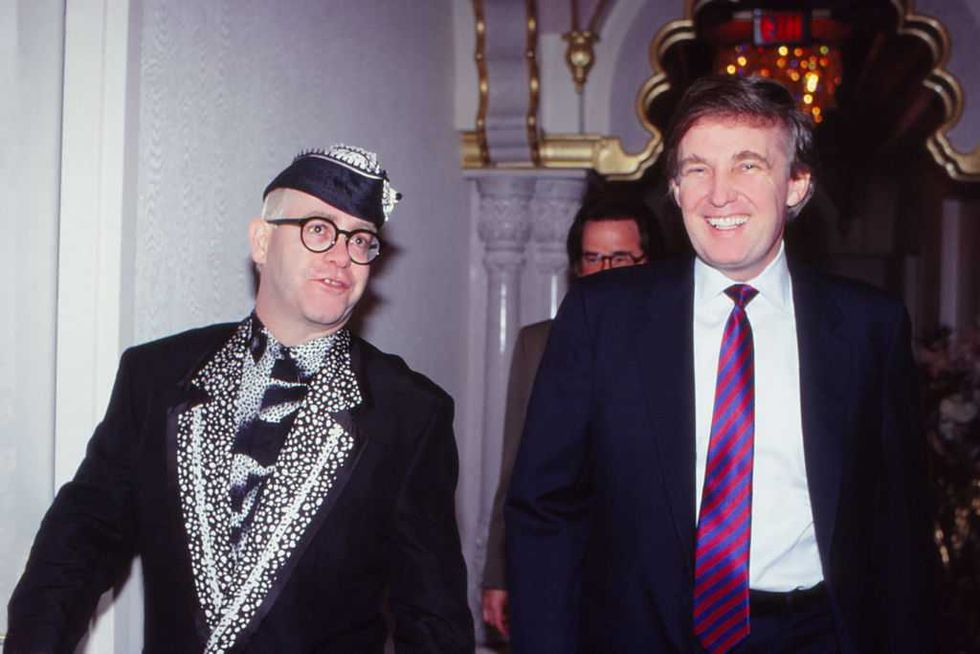 Donald Trump and Elton John walking together at the Taj Mahal Casino Hotel in Atlantic City, New Jersey May 19 1990. Photo by Jeffrey Asher/ Getty Images
During his first administration, Trump launched an initiative called Ending the HIV Epidemic in the U.S. and announced it during the 2019 State of the Union address.
“In recent years, we have made remarkable progress in the fight against HIV and AIDS. Scientific breakthroughs have brought a once-distant dream within reach,” Trump said in February 2019.
The president said the goal of the program was to eliminate the HIV epidemic in the United States within the next 10 years.
“We have made incredible strides. Incredible. Together, we will defeat AIDS in America and beyond,” he added.
Like Blaze News? Bypass the censors, sign up for our newsletters, and get stories like this direct to your inbox. Sign up here!
Trump to ‘permanently pause’ migration from third-world backwaters in wake of National Guard member’s grisly murder
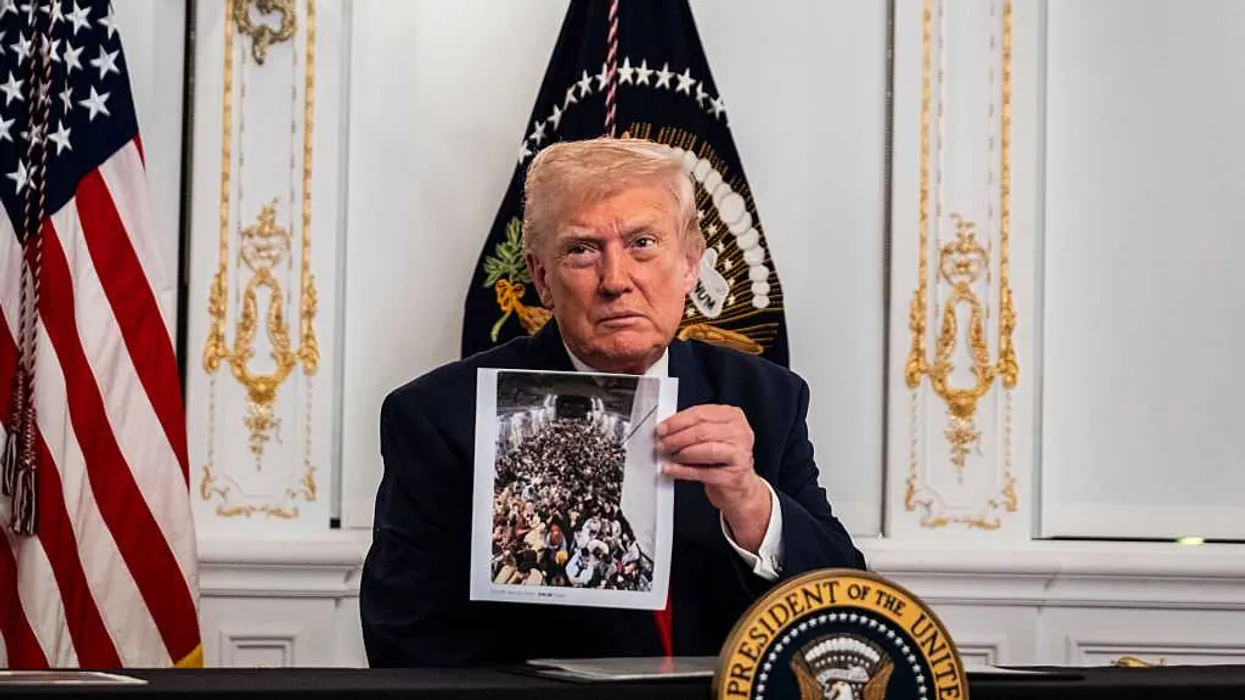
The Department of Homeland Security confirmed earlier this week that it was initiating a review of the hundreds of thousands of refugees imported by the Biden administration, citing evidence that many of the migrants were rushed into the homeland without adequate vetting.
While activists clutched pearls over the Trump administration’s new initiative to ensure that Americans today aren’t further endangered by decisions made by the previous administration, a 29-year-old man whom Homeland Security Secretary Kristi Noem confirmed was among the horde of migrants admitted from Afghanistan in 2021 allegedly drove across the U.S. and gunned down two members of the National Guard.
‘The seriously retarded Governor of Minnesota, Tim Walz, does nothing, either through fear, incompetence, or both.’
After the death of one of the victims, 20-year-old Army Spc. Sarah Beckstrom, U.S. Citizenship and Immigration Services indicated that it had halted the processing of all immigration requests pertaining to those Afghans previously brought into the U.S. “pending further review of security and vetting protocols.”
President Donald Trump made clear, however, that he intended to go far behind just pausing immigration requests, announcing that he will cut off the flow of migrants to the U.S. from third-world backwaters, seek to remove all noncitizens presently squatting in the homeland who are not presently making a positive contribution, and denaturalize those radicals who threaten American peace.
The president noted in a Truth Social post on Thursday evening that the country has been “divided, disrupted, carved up, murdered, beaten, mugged, and laughed at, along with certain other foolish countries throughout the World, for being ‘Politically Correct,’ and just plain STUPID, when it comes to Immigration.”
Trump suggested further that the foreign population — Current Population Survey data indicates that as of January 2025, the foreign-born or immigrant population was 53.3 million, 15.8% of the total — is not only heavily reliant on U.S. taxpayer-funded benefits but greatly contributing to “social dysfunction in America” as manifest in “failed schools, high crime, urban decay, overcrowded hospitals, housing shortages, and large deficits.”
RELATED: SHOCK: Trump administration finds Biden policies let in terrorists, including ISIS plotters
 Photo by Drew ANGERER / AFP via Getty Images
The president pointed to the Gopher State for evidence of the “refugee burden,” noting that “hundreds of thousands of refugees from Somalia are completely taking over the once great State of Minnesota.”
Trump added:
Somalian gangs are roving the streets looking for “prey” as our wonderful people stay locked in their apartments and houses hoping against hope that they will be left alone. The seriously retarded Governor of Minnesota, Tim Walz, does nothing, either through fear, incompetence, or both, while the worst “Congressman/woman” in our Country, Ilhan Omar, always wrapped in her swaddling hijab, and who probably came into the U.S.A. illegally in that you are not allowed to marry your brother, does nothing but hatefully complain about our Country, its Constitution, and how “badly” she is treated, when her place of origin is a decadent, backward, and crime ridden nation, which is essentially not even a country for lack of Government, Military, Police, schools, etc.
Trump announced last week that he was terminating the Temporary Protected Status designation for Somalia following a report by BlazeTV host Christopher Rufo and investigative reporter Ryan Thorpe on the alleged fraud perpetrated by numerous members of the Somali community in Minnesota as well as on the alleged direction of stolen Minnesota Medicaid and welfare funds by members of the Somali community to terrorists abroad.
‘Only REVERSE MIGRATION can fully cure this situation.’
Minnesota Rep. Omar, who claimed last year that the “U.S government will do what [Somali-Americans] tell the U.S. government to do,” vowed in response to help members of her community avoid status revocation and removal.
Trump, however, emphasized in his Thanksgiving message that he is deadly serious about seeing America unyoked of its imported problems.
“I will permanently pause migration from all Third World Countries to allow the U.S. system to fully recover, terminate all of the millions of Biden illegal admissions, including those signed by Sleepy Joe Biden’s Autopen, and remove anyone who is not a net asset to the United States, or is incapable of loving our Country, end all Federal benefits and subsidies to noncitizens of our Country, denaturalize migrants who undermine domestic tranquility, and deport any Foreign National who is a public charge, security risk, or non-compatible with Western Civilization,” wrote the president.
“Only REVERSE MIGRATION can fully cure this situation,” wrote Trump. “HAPPY THANKSGIVING TO ALL, except those that hate, steal, murder, and destroy everything that America stands for — You won’t be here for long!”
Joe Edlow, the director of U.S. Citizenship and Immigration Services, noted Thursday in a post on X that at the direction of the president, he has “directed a full scale, rigorous reexamination of every Green Card for every alien from every country of concern.”
When asked for clarification, USCIS stated the countries of concern are those listed in Trump’s June 4 proclamation, namely: Afghanistan, Burma, Chad, Republic of the Congo, Equatorial Guinea, Eritrea, Haiti, Iran, Libya, Somalia, Sudan, Yemen, Burundi, Cuba, Laos, Sierra Leone, Togo, Turkmenistan, and Venezuela.
Like Blaze News? Bypass the censors, sign up for our newsletters, and get stories like this direct to your inbox. Sign up here!
Reports of Woke’s Death Are Greatly Exaggerated
Woke is Dead: How Common Sense Triumphed in an Age of Total Madness By Piers Morgan Harper Collins, 310 pages,…
Fascism for Dummies
It’s time for a new installment in the For Dummies series. Since the 1980s, these best-selling, concise, step-by-step reference manuals…
Log into this Gmail clone to read all the Jeffrey Epstein emails as if you were Epstein himself
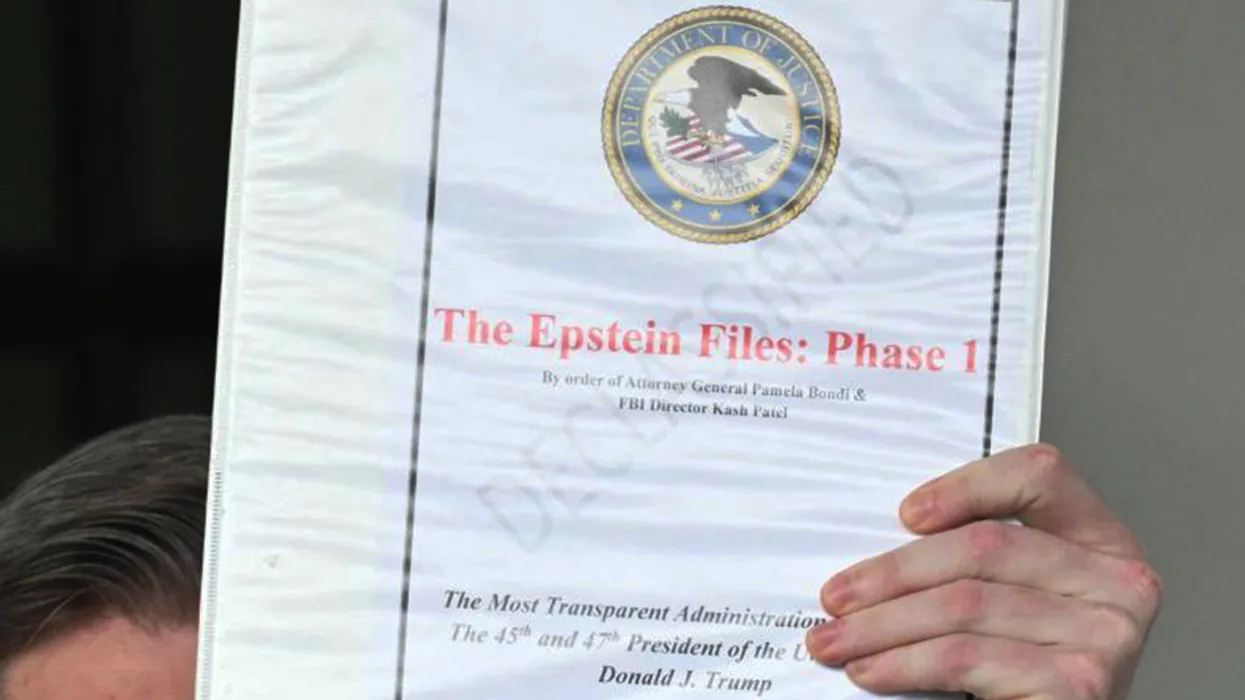
A programmer has made it possible to read Jeffrey Epstein’s infamous emails from his point of view.
The computer whiz, going by the name Riley Walz, has a history of creating unique webpages and even created a fake 2020 Republican candidate.
‘You’re logged in as Epstein and can see his emails.’
Walz is assumed to be in his early 20s given that he was described by CNN as a high school student from Upstate New York in February 2020.
The youngster’s website features several links to obscure but clever programs he has created, like a fast-food price comparison index and a random video viewer that shuffles between YouTube videos uploaded between 2009 and 2012 from iPhones using their default file names.
For his latest endeavor, Walz, along with another young man named Luke Igel, created Jmail.world. While it is not clear what the “J” stands for in this case, the website is a Gmail inbox clone that lets users operate a replica version of Epstein’s Gmail account.
“We cloned Gmail, except you’re logged in as Epstein and can see his emails,” Walz plainly wrote on X.
RELATED: Epstein files backfire as Democrats get pulled into their own trap
The inbox includes the last message Epstein received at his “jeevacation@gmail.com” address, which was a July 14, 2019, note from Quora Digest.
Interestingly enough, the email included popular stories at the time, like “Why do you think the reason behind Trump abruptly canceling Pence’s New Hampshire trip?” and “Why is Trump’s trade war the wrong way to compete with China?”
Under a list of sidebar contacts, names like Ghislaine Maxwell, his confidant, activist Noam Chomsky, and attorney Alan Dershowitz are listed.
The emails also include numerous exchanges of articles and news clippings between Epstein and longtime Trump ally Steve Bannon. The dates range between February 2018 and April 2019.
RELATED: How GOP leadership can turn a midterm gift into a total disaster
 Photo by SAUL LOEB/AFP via Getty Images
Emails between Epstein and Maxwell — who went by “Gxax” at times — ranged in nature, but included parody emails with Maxwell pretending to pen a message from Israeli Prime Minister Benjamin Netanyahu asking President Obama to rescind his citizenship.
“Dear President Obama:
I am writing today with a somewhat unusual request. First and foremost, I am asking that you return America to its August 20th, 1959 borders so that Hawaii is no longer a state and you are no longer a citizen,” the email read.
Others showed Maxwell telling Epstein she would “have to distance myself from you in [a] statement.”
“And they need me to say I was not aware of massage w/andrew in my house,” it added.
Finally, readers can also view the emails that Democrats have widely circulated in an attempt to implicate President Trump, including a message where Epstein tells Maxwell that Trump “spent hours” at his house. Democrats redacted Virginia Giuffre’s name, a victim of Epstein’s that had previously noted that she never witnessed Trump do anything inappropriate.
In other emails to author Michael Wolff, Epstein said Trump “never got a massage.”
Like Blaze News? Bypass the censors, sign up for our newsletters, and get stories like this direct to your inbox. Sign up here!
Six Democrats and One Trump Equal Trump Exhaustion Syndrome
WASHINGTON — Six elected beltway Democrats with backgrounds in the military or intelligence are stirring the pot with a video…
Is a tariff a tax?
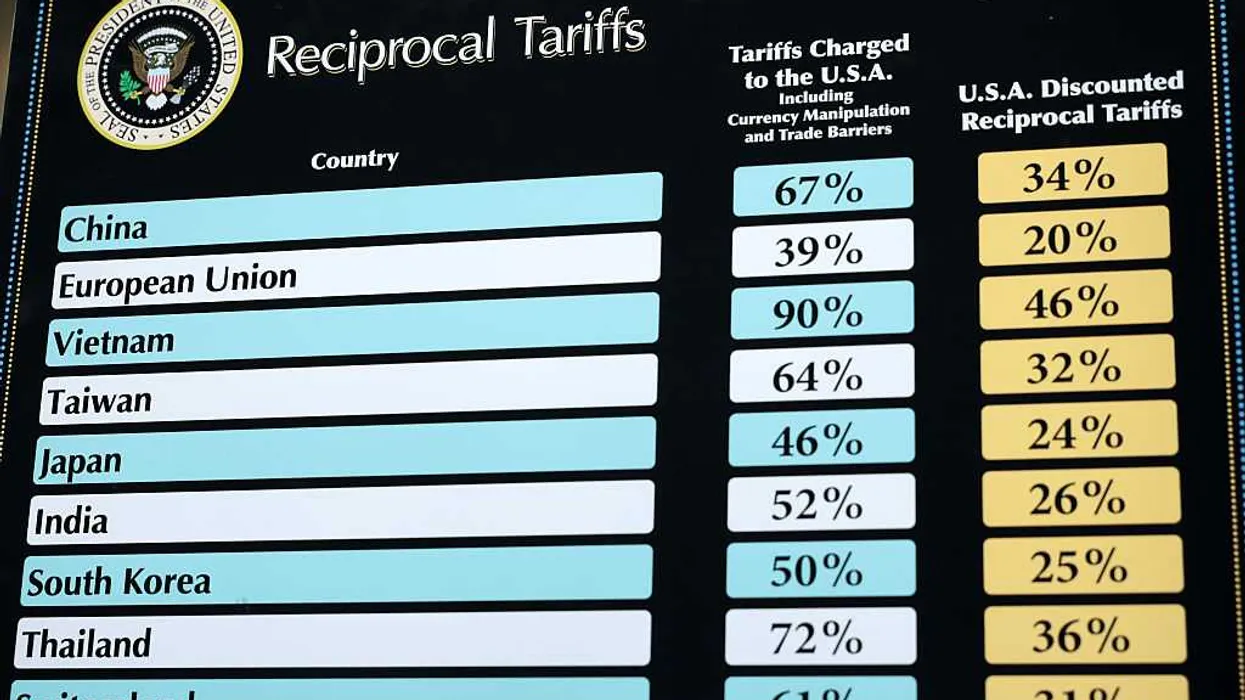
Is a tariff a tax? Many Americans have forgotten that this question, which has been in the news more or less all year, was fundamental to the American Revolution. And among American Patriots, or Whigs, meaning those who supported the colonists’ claims against Parliament, there was almost universal consensus that they were different things, constitutionally speaking.
Throughout the Imperial Crisis of 1763 to 1776, the consensus among the colonists was that Parliament had the right to regulate trade in the British Empire but had no right to tax the colonists. And they recognized that a regulation of trade might take the form of a duty imposed upon, for example, molasses imported from French colonies to favor molasses imported from British colonies.
The founding generation believed in the separation of powers.
In the colonists’ view, the Sugar Act of 1764 was an unconstitutional innovation. The Act was quite explicit, stating at the top that it was passed for the purpose of “applying the produce of such duties, and of the duties to arise by virtue of the said act, towards defraying the expences of defending, protecting, and securing the said colonies and plantations.” It was the first trade act to do that.
Townshend’s overreach
The Stamp Act of 1765, and the reaction to it, made the protest against the 1764 Sugar Act less conspicuous. The result of the actions taken against the Stamp Act was that many in Parliament did not grasp the American argument against the Sugar Act. Hence, Parliament passed the Townshend Acts in 1767, imposing duties on lead, glass, paper, paint, and tea to raise revenue. When the colonists complained, many in Parliament accused the colonists of moving the goalposts.
The charge was not accurate, but it did reflect what they believed. And, like many today, many members of Parliament were unable to grasp the difference between a duty imposed for the purpose of trade regulation and a duty imposed for the purpose of raising revenue.
The most famous criticism of the Townshend Acts, and the most popular writing of the era until Thomas Paine published “Common Sense” in January 1776, was John Dickinson’s “Letters from a Farmer in Pennsylvania.” In the second letter, Dickinson made the consensus Patriot argument logically, clearly, and eloquently.
There is another late act of parliament, which appears to me to be unconstitutional, and as destructive to the liberty of these colonies, as that mentioned in my last letter; that is, the act for granting the duties on paper, glass, etc.
The parliament unquestionably possesses a legal authority to regulate the trade of Great Britain, and all her colonies. Such an authority is essential to the relation between a mother country and her colonies; and necessary for the common good of all …
I have looked over every statute relating to these colonies, from their first settlement to this time; and I find every one of them founded on this principle, till the Stamp Act administration.* All before, are calculated to regulate trade, and preserve or promote a mutually beneficial intercourse between the several constituent parts of the empire. … The raising of a revenue thereby was never intended. … Never did the British parliament, till the period above mentioned, think of imposing duties in America for the purpose of raising a revenue. …
Here we may observe an authority expressly claimed and exerted to impose duties on these colonies; not for the regulation of trade; not for the preservation or promotion of a mutually beneficial intercourse between the several constituent parts of the empire, heretofore the sole objects of parliamentary institutions; but for the single purpose of levying money upon us.
This I call an innovation; and a most dangerous innovation.* It may perhaps be objected, that Great Britain has a right to lay what duties she pleases upon her exports.
That so many people today don’t seem to understand this distinction is a sign that the American bar seems to have gone Tory. The founding generation’s way of thinking about tariffs, and perhaps law in general, is in danger of being rendered foreign to our public policy discussion, perhaps even to constitutional discussion, even among people who mistakenly think of themselves as originalists.
This way of thinking, of course, says little about the current case, as the purpose of the law itself must be understood in light of the thinking of the men who passed it. But it is also true that the way of thinking that Dickinson represented, and which was broadly shared in the founding generation, might have something to say here.
Delegation’s limits
The founding generation believed in the separation of powers. The founders recognized, as “The Federalist” notes, that in practice the powers will inevitably overlap and sometimes clash. But they did operate within a way of legal and constitutional thinking that took it as a given that in order to guard the separation of powers, any delegation of legislative powers to the executive had to be limited and focused.
There is a difference between a reasonable and an unreasonable delegation of powers, just as there is between a tax and a regulation of trade, even if, in both cases, money is raised at customs houses. The kind of delegation the Trump administration is asserting in this case is difficult, perhaps impossible, to reconcile with the practice of separation of powers. Congress has no right to abdicate its obligation to set trade policy via legislation.
RELATED: Read it and weep: Tariffs work, and the numbers prove it
 Photo by Spencer Platt/Getty Images
The Trump administration’s assertion that it has the right to set tariffs worldwide, claiming unlimited emergency power based on a law designed to delegate to the president a narrow emergency power, resembles the kind of expansive, arbitrary interpretation that the founders’ legal heroes fought.
In the 1630s, King Charles claimed the right to collect “ship money” throughout England. By tradition, the king had the right to raise money, without Parliament’s consent, in port towns in time of war, or if war was imminent.
King Charles asserted a living constitution interpretation: Given modern circumstances, he claimed a general right to raise taxes if a war emergency was imminent. Dickinson mentioned the case in the first Farmer’s Letters, suggesting there was a connection between the logic of the one argument and the other.
Our difficulty recognizing the limits of the nondelegation doctrine — and our confusion about the difference between a duty imposed to raise revenue and one imposed to regulate trade — shows how much work remains if we want to understand the Constitution as the framers did. That understanding requires grappling with the ideas about human nature, government, and law that justified ratification in the first place and that still anchor our constitutional order.
Editor’s note: This article was originally published by RealClearPolitics and made available via RealClearWire.
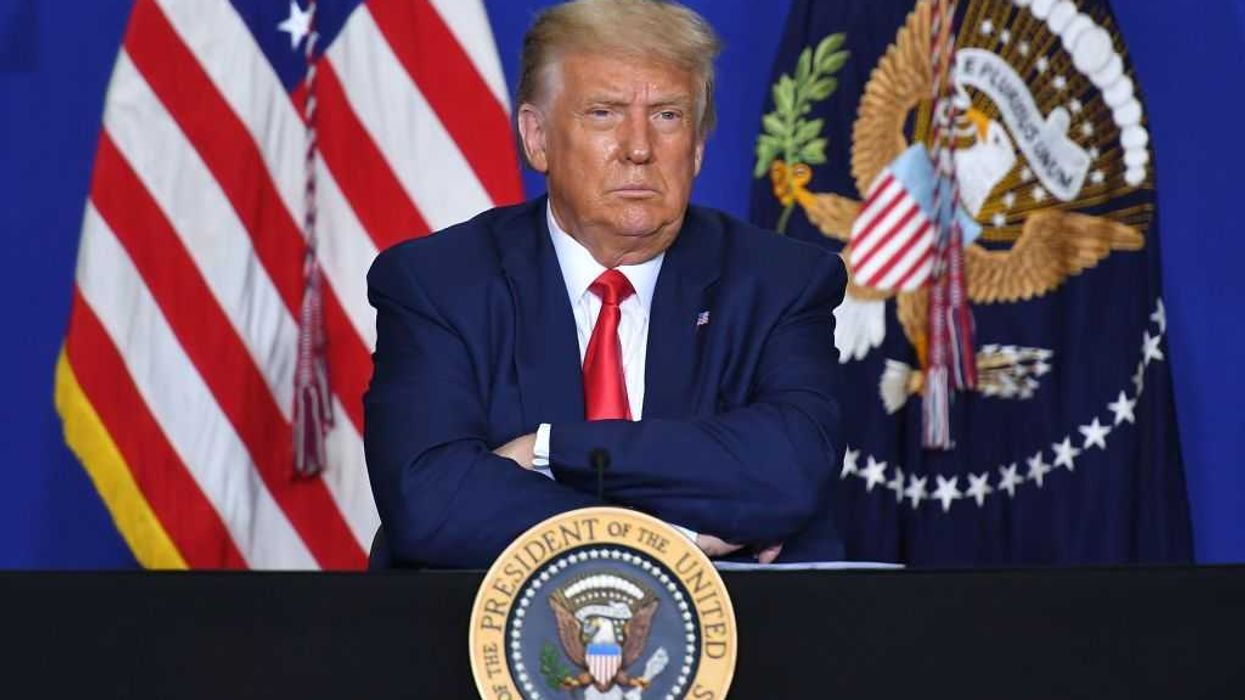
‘SEDITIOUS BEHAVIOR’: Trump demands arrest of ‘traitor’ Democrat congressmen for ‘dangerous’ video
In a video shared earlier in the week, six Democrat veterans in Congress urged members of the military and the intelligence community to “refuse illegal orders” from the Trump administration, though without specifying which orders were deemed illegal.
On Thursday morning, President Donald Trump posted a string of responses to the viral video.
‘SEDITIOUS BEHAVIOR, punishable by DEATH!’
In a Truth Social post, Trump said, “It’s called SEDITIOUS BEHAVIOR AT THE HIGHEST LEVEL. Each one of these traitors to our Country should be ARRESTED AND PUT ON TRIAL. Their words cannot be allowed to stand — We won’t have a Country anymore!!!”
RELATED: ‘Rebellion’? Democrat lawmakers urge federal agents to resist Trump agenda in cringe video
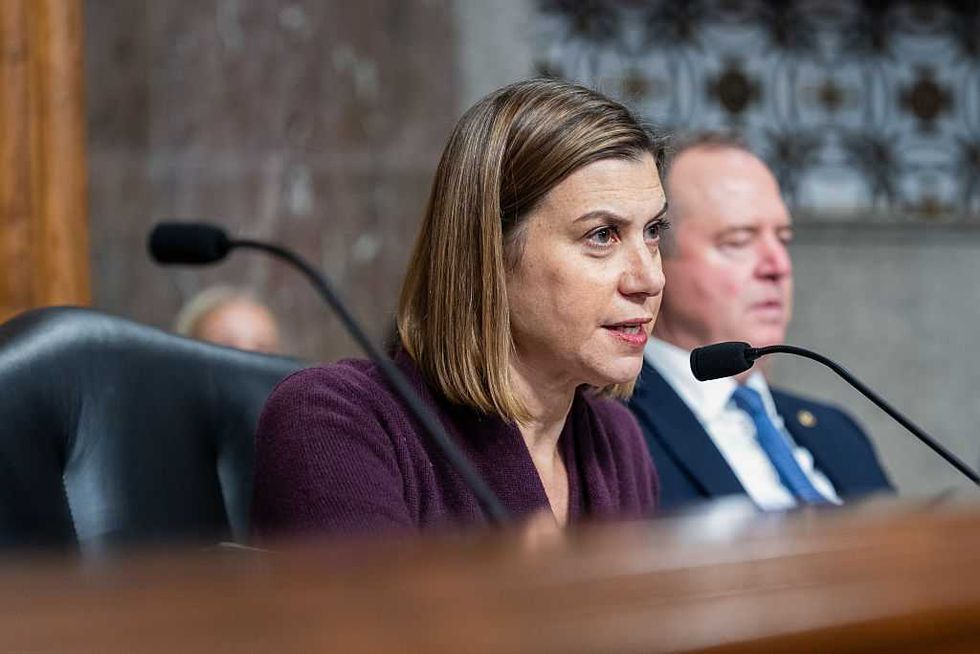 Senator Elissa Slotkin (D-Mich.)Photographer: Eric Lee/Bloomberg via Getty Images
“An example MUST BE SET,” he added in the same post.
In a second post, Trump reiterated his call for accountability: “This is really bad, and Dangerous to our Country. Their words cannot be allowed to stand. SEDITIOUS BEHAVIOR FROM TRAITORS!!! LOCK THEM UP???”
Senator Elissa Slotkin (D-Mich.), Senator Mark Kelly (D-Ariz.), Rep. Chris Deluzio (D-Pa.), Rep. Maggie Goodlander (D-N.H.), Rep. Chrissy Houlahan (D-Pa.), and Rep. Jason Crow (D-Colo.) delivered the incendiary message.
In the video, the Democrats urged military and intelligence members to resist the Trump administration, telling them “we have your back”: “Americans trust their military. But that trust is at risk. This administration is pitting our uniformed military and intelligence community professionals against American citizens.”
“You MUST refuse illegal orders,” the video warned.
“SEDITIOUS BEHAVIOR, punishable by DEATH!” Trump said in another Truth Social post later on Thursday morning.
“It is insurrection — plainly, directly, without question. … It’s a general call for rebellion from the CIA and the armed services of the United States by Democrat lawmakers. … It shows what a dangerous moment we’re in,” White House deputy chief of staff for policy and homeland security adviser Stephen Miller said on Wednesday.
The video posted by Senator Elissa Slotkin reached 12 million views by Thursday morning.
Like Blaze News? Bypass the censors, sign up for our newsletters, and get stories like this direct to your inbox. Sign up here!
Trump and Elon want TRUTH online. AI feeds on bias. So what’s the fix?

The Trump administration has unveiled a broad action plan for AI (America’s AI Action Plan). The general vibe is one of treating AI like a business, aiming to sell the AI stack worldwide and generate a lock-in for American technology. “Winning,” in this context, is primarily economic. The plan also includes the sorely needed idea of modernizing the electrical grid, a growing concern due to rising electricity demands from data centers. While any extra business is welcome in a heavily indebted nation, the section on the political objectivity of AI is both too brief and misunderstands the root cause of political bias in AI and its role in the culture war.
The plan uses the term “objective” and implies that a lack of objectivity is entirely the fault of the developer, for example:
Update Federal procurement guidelines to ensure that the government only contracts with frontier large language model (LLM) developers who ensure that their systems are objective and free from top-down ideological bias.
The fear that AIs might tip the scales of the culture war away from traditional values and toward leftism is real. Try asking ChatGPT, Claude, or even DeepSeek about climate change, where COVID came from, or USAID.
Training data is heavily skewed toward being generated during the ‘woke tyranny’ era of the internet.
This desire for objectivity of AI may come from a good place, but it fundamentally misconstrues how AIs are built. AI in general and LLMs in particular are a combination of data and algorithms, which further break down into network architecture and training methods. Network architecture is frequently based on stacking transformer or attention layers, though it can be modified with concepts like “mixture of experts.” Training methods are varied and include pre-training, data cleaning, weight initialization, tokenization, and techniques for altering the learning rate. They also include post-training methods, where the base model is modified to conform to a metric other than the accuracy of predicting the next token.
Many have complained that post-training methods like Reinforcement Learning from Human Feedback introduce political bias into models at the cost of accuracy, causing them to avoid controversial topics or spout opinions approved by the companies — opinions usually farther to the left than those of the average user. “Jailbreaking” models to avoid such restrictions was once a common pastime, but it is becoming harder, as corporate safety measures, sometimes as complex as entirely new models, scan both the input to and output from the underlying base model.
As a result of this battle between RLHF and jailbreakers, an idea has emerged that these post-training methods and safety features are how liberal bias gets into the models. The belief is that if we simply removed these, the models would display their true objective nature. Unfortunately for both the Trump administration and the future of America, this is only partially correct. Developers can indeed make a model less objective and more biased in a leftward direction under the guise of safety. However, it is very hard to make models that are more objective.
The problem is data
According to Google AI Mode vs. Traditional Search & Other LLMs, the top domains cited in LLMs are: Reddit (40%), YouTube (26%), Wikipedia (23%), Google (23%), Yelp (21%), Facebook (20%), and Amazon (19%).
This seems to imply a lot of the outside-fact data in AIs comes from Reddit. Spending trillions of dollars to create an “eternal Redditor” isn’t going to cure cancer. At best, it might create a “cure cancer cheerleader” who hypes up every advance and forgets about it two weeks later. One can only do so much in the algorithm layer to counteract the frame of mind of the average Redditor. In this sense, the political slant of LLMs is less due to the biases of developers and corporations (although they do exist) and more due to the biases of the training data, which is heavily skewed toward being generated during the “woke tyranny” era of the internet.
In this way, the AI bias problem is not about removing bias to reveal a magic objective base layer. Rather, it is about creating a human-generated and curated set of true facts that can then be used by LLMs. Using legislation to remove the methods by which left-leaning developers push AIs into their political corner is a great idea, but it is far from sufficient. Getting humans to generate truthful data is extremely important.
The pipeline to create truthful data likely needs at least four steps.
1. Raw data generation of detailed tables and statistics (usually done by agencies or large enterprises).
2. Mathematically informed analysis of this data (usually done by scientists).
3. Distillation of scientific studies for educated non-experts (in theory done by journalists, but in practice rarely done at all).
4. Social distribution via either permanent (wiki) or temporary (X) channels.
This problem of truthful data plus commentary for AI training is a government, philanthropic, and business problem.
RELATED: Threads is now bigger than X, and that’s terrible for free speech
 Photo by Lionel BONAVENTURE/AFP/Getty Images
I can imagine an idealized scenario in which all these problems are solved by harmonious action in all three directions. The government can help the first portion by forcing agencies to be more transparent with their data, putting it into both human-readable and computer-friendly formats. That means more CSVs, plain text, and hyperlinks and fewer citations, PDFs, and fancy graphics with hard-to-find data. FBI crime statistics, immigration statistics, breakdowns of government spending, the outputs of government-conducted research, minute-by-minute election data, and GDP statistics are fundamentally pillars of truth and are almost always politically helpful to the broader right.
In an ideal world, the distillation of raw data into causal models would be done by a team of highly paid scientists via a nonprofit or a government contract. This work is too complex to be left to the crowd, and its benefits are too distributed to be easily captured by the market.
The journalistic portion of combining papers into an elite consensus could be done similarly to today: with high-quality, subscription-based magazines. While such businesses can be profitable, for this content to integrate with AI, the AI companies themselves need to properly license the data and share revenue.
The last step seems to be mostly working today, as it would be done by influencers paid via ad revenue shares or similar engagement-based metrics. Creating permanent, rather than disappearing, data (à la Wikipedia) is a time-intensive and thankless task that will likely need paid editors in the future to keep the quality bar high.
Freedom doesn’t always boost truth
However, we do not live in an ideal world. The epistemic landscape has vastly improved since Elon Musk’s purchase of Twitter. At the very least, truth-seeking accounts don’t have to deal with as much arbitrary censorship. Even other media have made token statements claiming they will censor less, even as some AI “safety” features are ramped up to a much higher setting than social media censorship ever was.
The challenge with X and other media is that tech companies generally favor technocratic solutions over direct payment for pro-social content. There seems to be a widespread belief in a marketplace of ideas: the idea that without censorship (or with only some person’s favorite censorship), truthful ideas will win over false ones. This likely contains an element of truth, but the peculiarities of each algorithm may favor only certain types of truthful content.
“X is the new media” is a commonly spoken refrain. Yet both anonymous and public accounts on X are implicitly burdened with tasks as varied and complex as gathering election data, creating long think pieces, and the consistent repetition of slogans reinforcing a key message. All for a chance of a few Elon bucks. They are doing this while competing with stolen-valor thirst traps from overseas accounts. Obviously, most are not that motivated and stick to pithy and simple content rather than intellectually grounded think pieces. The broader “right” is still needlessly ceding intellectual and data-creation ground to the left, despite occasional victories in defunding anti-civilizational NGOs and taking control of key platforms.
The other issue experienced by data creators across the political spectrum is the reliance on unpaid volunteers. As the economic belt inevitably tightens and productive people have less spare time, the supply of quality free data will worsen. It will also worsen as both platforms and users feel rightful indignation at their data being “stolen” by AI companies making huge profits, thus moving content into gatekept platforms like Discord. While X is unlikely to go back to the “left,” its quality can certainly fall farther.
Even Redditors and Wikipedia contributors provide fairly complex, if generally biased, data that powers the entire AI ecosystem. Also for free. A community of unpaid volunteers working to spread useful information sounds lovely in principle. However, in addition to the decay in quality, these kinds of “business models” are generally very easy to disrupt with minor infusions of outside money, if it just means paying a full-time person to post. If you are not paying to generate politically powerful content, someone else is always happy to.
The other dream of tech companies is to use AI to “re-create” the entirety of the pipeline. We have heard so much drivel about “solving cancer” and “solving science.” While speeding up human progress by automating simple tasks is certainly going to work and is already working, the dream of full replacement will remain a dream, largely because of “model collapse,” the situation where AIs degrade in quality when they are trained on data generated by themselves. Companies occasionally hype up “no data/zero-knowledge/synthetic data” training, but a big example from 10 years ago, “RL from random play,” which worked for chess and Go, went nowhere in games as complex as Starcraft.
So where does truth come from?
This brings us to the recent example of Grokipedia. Perusing it gives one a sense that we have taken a step in the right direction, with an improved ability to summarize key historical events and medical controversies. However, a number of articles are lifted directly from Wikipedia, which risks drawing the wrong lesson. Grokipedia can’t “replace” Wikipedia in the long term because Grok’s own summarization is dependent on it.
Like many of Elon Musk’s ventures, Grokipedia is two steps forward, one step back. The forward steps are a customer-facing Wikipedia that seems to be of higher quality and a good example of AI-generated long-form content that is not mere slop, achieved by automating the tedious, formulaic steps of summarization. The backward step is a lack of understanding of what the ecosystem looks like without Wikipedia. Many of Grokipedia’s articles are lifted directly from Wikipedia, suggesting that if Wikipedia disappears, it will be very hard to keep neutral articles properly updated.
Even the current version suffers from a “chicken and egg” source-of-truth problem. If no AI has the real facts about the COVID vaccine and categorically rejects data about its safety or lack thereof, then Grokipedia will not be accurate on this topic unless a fairly highly paid editor researches and writes the true story. As mentioned, model collapse is likely to result from feeding too much of Grokipedia to Grok itself (and other AIs), leading to degradation of quality and truthfulness. Relying on unpaid volunteers to suggest edits creates a very easy vector for paid NGOs to influence the encyclopedia.
The simple conclusion is that to be good training data for future AIs, the next source of truth must be written by people. If we want to scale this process and employ a number of trustworthy researchers, Grokipedia by itself is very unlikely to make money and will probably forever be a money-losing business. It would likely be both a better business and a better source of truth if, instead of being written by AI to be read by people, it was written by people to be read by AI.
Eventually, the domain of truth needs to be carefully managed, curated, and updated by a legitimate organization that, while not technically part of the government, would be endorsed by it. Perhaps a nonprofit NGO — except good and actually helping humanity. The idea of “the Foundation” or “Antiversity,” is not new, but our over-reliance on AI to do the heavy lifting is. Such an institution, or a series of them, would need to be bootstrapped by people willing to invest in our epistemic future for the very long term.