

Category: The American Spectator
Sovereignty First
President Trump’s first year in office has seen an almost unprecedented whirlwind of presidential executive actions. Not since the administration…
Regime Modification in Caracas
After the capture of Maduro, the Trump administration appears to be pursuing a concept of regime modification rather than total…
The Road to Prosperity
Editor’s note: the following is an excerpt of a talk delivered by the author at the 15th Constructal Law Conference,…
College of Cardinals To Meet Annually Under Pope Leo XIV
Pope Leo XIV has summoned a second consistory of the College of Cardinals, scheduled for late June. According to Vatican…
Iranian Regime Escalates Crackdown on Protesters, Slaughtering Hundreds as Trump Weighs Military Action

The Iranian regime slaughtered upwards of 500 protesters over the weekend, marking one of the bloodiest crackdowns in the Islamic Republic’s history, as President Donald Trump weighs a range of military options that reportedly include precision strikes on regime assets and cyber warfare.
The post Iranian Regime Escalates Crackdown on Protesters, Slaughtering Hundreds as Trump Weighs Military Action appeared first on .
The Obamacare subsidy fight exposes who Washington really serves
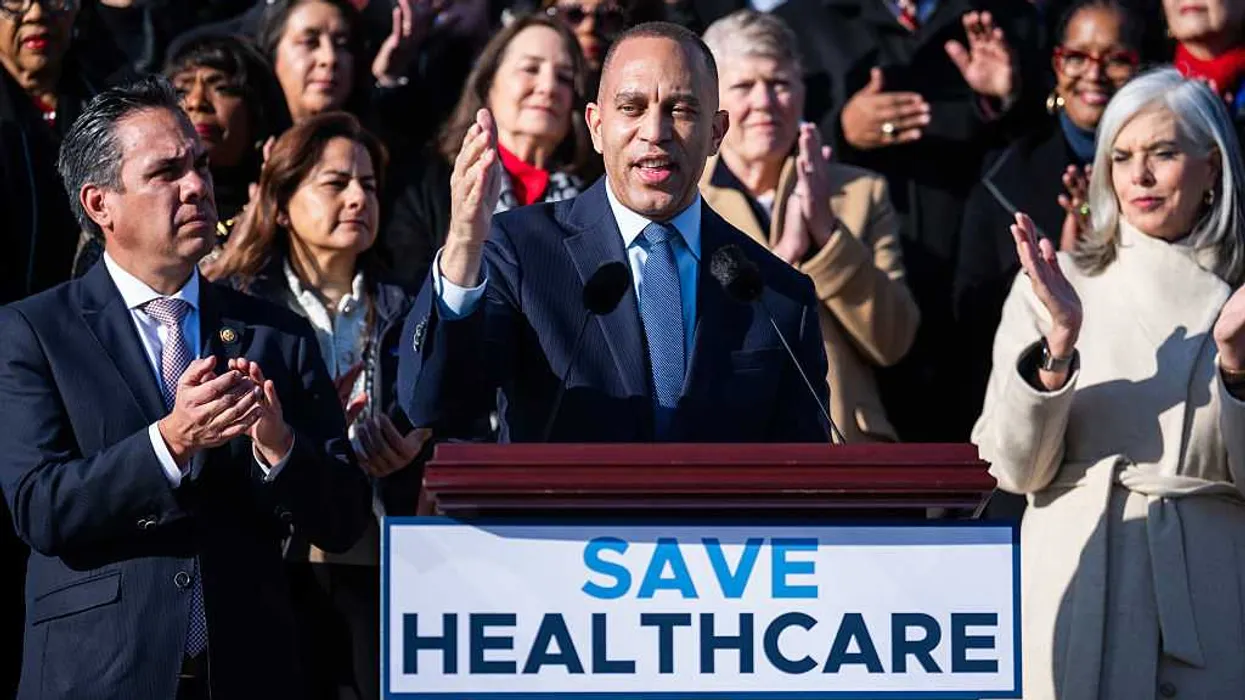
The failure of both Democrat and Republican plans to extend or partially replace enhanced Obamacare subsidies offers a clear lesson: Escaping an entitlement trap almost never happens.
Yes, the House of Representatives on Thursday voted to extend the COVID-era Affordable Care Act subsidies that expired at the end of 2025. Seventeen Republicans even joined a unanimous Democratic Caucus in voting for the extension. But Senate Majority Leader John Thune (R-S.D.) said Republicans have “no appetite” for an extension — at least not without reforms.
Republicans remain an impediment to the necessary reforms and are working hand in hand with Democrats to bring on economic collapse. Time is not on our side.
The reality is, once government creates a welfare entitlement, logic and sustainability exit the conversation. Politicians do not debate whether to grow the program. They argue only over how much to increase spending and how to disguise the costs. That pattern now governs the fight over enhanced Obamacare subsidies.
Why the premise never gets challenged
When the Senate rejected a nearly identical bill in December, the Wall Street Journal reported that Congress faces “no clear path for aiding millions of Americans facing soaring Affordable Care Act insurance costs next year.”
The Journal’s framing accepts the entitlement premise without question. It treats “aiding millions” as morally self-evident while ignoring the coercion necessary to fund that aid. Government assistance does not materialize from thin air. It transfers responsibility, money, and risk from one group of Americans to another.
Once imposed, that transfer only grows.
Both rejected plans would have sent more taxpayer money to insurers than the ACA already guarantees. With no deal in sight, the Journal observed last month that hope for extending the subsidies is fading. That assessment may be accurate politically, but an extension does not deserve hope. It deserves scrutiny.
How entitlement politics works
Democrats want Republicans to extend an expansion they never voted for of a program they never supported. Republicans respond by proposing modest adjustments to reduce political damage without challenging the underlying structure.
Rep. Max L. Miller (R-Ohio), who voted for the bill, summarized the dilemma perfectly. “I just want to make this abundantly clear: This is a Democratic piece of legislation. It is absolutely horrific. Now, it is the best alternative to what we have at the moment.”
That is how entitlement traps operate.
For decades, big-government advocates have followed a reliable strategy. They create a benefit for a defined group, allow costs to spiral, then dare the opposition to take something away from a newly entrenched constituency. When the moment arrives, those who claim to favor limited government retreat or propose cosmetic reforms that leave the core system untouched.
That dynamic explains why the country remains locked into the socialist ratchet, the uniparty routine, and a political class that acts as tax collector for an ever-expanding welfare state.
RELATED: Democrat senator makes stunning admission about Obamacare failures
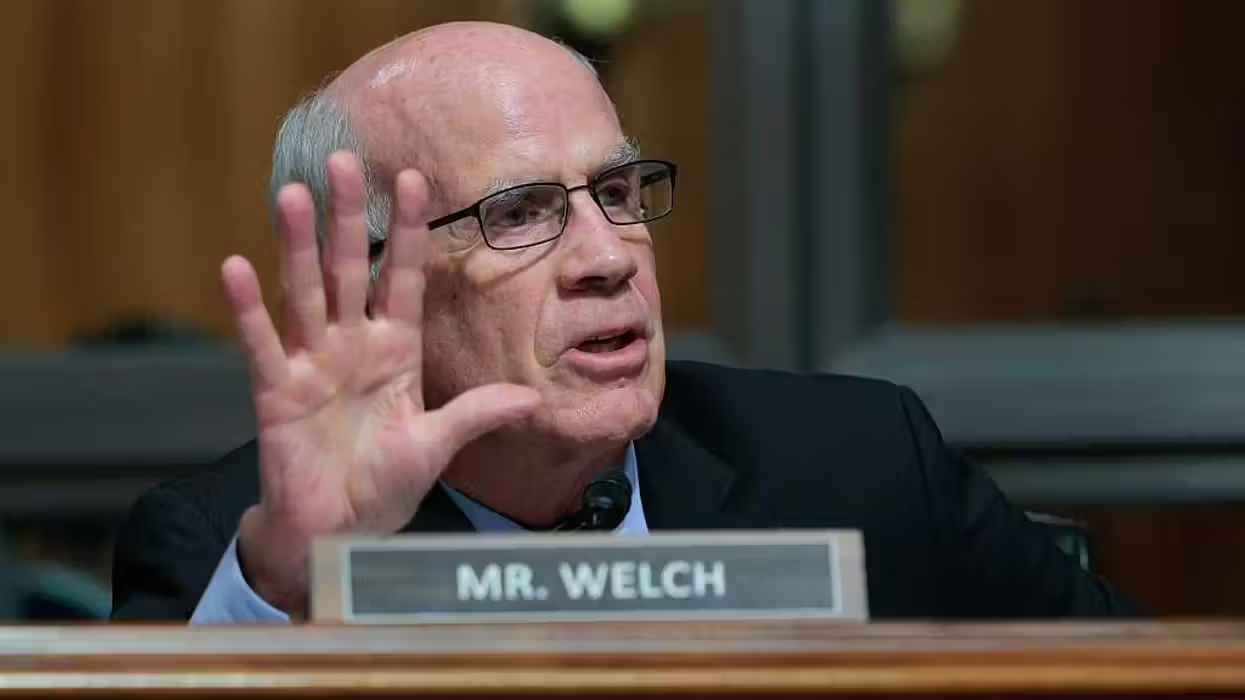 Photo by Chip Somodevilla/Getty Images
Trapped voters, trapped taxpayers
Entitlements squeeze the nation from both sides. They trap recipients by discouraging work and mobility, and they trap taxpayers by locking future governments into permanent obligations.
The Affordable Care Act stands as one of the most powerful modern examples of this system. The law forced millions into government-regulated insurance markets while guaranteeing insurers a growing pool of subsidized customers. The result was predictable: higher costs, deeper dependency, and a massive political constituency invested in permanent expansion.
Not a single Republican voted for the ACA. They understood what the law would do. Democrats passed it anyway, and it worked exactly as designed.
Who Obamacare was really built to serve
As Connor O’Keeffe has argued at Mises Wire, federal health care policy has long served industry interests. Government interventions channel money toward providers, pharmaceutical companies, and insurers under the guise of helping patients.
Obamacare accelerated that process by mandating coverage and expanding what insurers must provide, driving demand and cost growth in tandem. Once people rely on government assistance to afford insurance, any reduction becomes politically unthinkable.
Republicans now scramble to avoid electoral consequences. House Speaker Mike Johnson says the GOP will advance health care proposals without extending subsidies, yet many lawmakers privately admit that only an extension prevents immediate pain ahead of the 2026 midterms.
That admission exposes the trap. Spending limits become cruel. Taxpayer costs disappear from the conversation. Only the next premium increase matters.
Why conservatives keep losing
History explains where this leads. Entitlement debates almost always end with higher spending. Political power depends on payments to voters. Reducing benefits means losing elections.
Progressives act decisively when in power. Conservatives obsess over procedure and restraint, even as the administrative state grows unchecked.
Last week alone offered two examples. The House overturned President Trump’s March 2025 executive order blocking collective bargaining for over a million federal employees, with 20 Republicans joining Democrats. Even Franklin Roosevelt opposed public-sector unions. Modern conservatives could not summon the resolve to block them.
On the same day, Indiana Republicans declined to redraw their congressional map despite the risk of losing the House and triggering impeachment proceedings against Trump. They clung to unwritten norms while their opponents prepared to exploit the outcome.
RELATED: If conservatives will not defend capitalism, who will?
 Leontura via iStock/Getty Images
This pattern defines conservative failure. Republicans manage decline. They preserve a decaying system rather than reverse it.
Donald Trump broke from that habit. A former Democrat, he understands power. Win elections, then act. Trump restored a political energy absent on the right for decades.
His approach to entitlements focuses on restraining growth outside Social Security while expanding private-sector freedom to increase economic output. The goal is not austerity. It is to shrink government’s share of the economy by growing everything else faster.
Reform or collapse
That strategy may succeed or fail. It remains the only alternative to collapse. Without reform, federal spending and debt will overwhelm the system within a decade, possibly sooner. Borrowing costs will explode. Inflation will surge. Control will vanish.
The United States approached that danger under unified Democrat control and Joe Biden’s autopen in 2021 and 2022. Voters halted the slide by electing Republican majorities and returning Trump to the White House.
Trump failed to drain the swamp in his first term, largely because congressional Republicans refused to legislate when they had the chance. In his second term, he has advanced reforms through executive action. Congress has responded with delay and timidity.
The country will escape the entitlement trap one way or another. Reform can arrive through disciplined growth and economic expansion, or through collapse driven by massive overspending.
With their conservative approach to governance, Republicans remain an impediment to the necessary reforms and are working hand in hand with Democrats to bring on that collapse. Time is not on our side.
How do you solve a problem like Wikipedia?

Wikipedia has recently come under the microscope. I take some credit for this, as a co-founder of Wikipedia and a longtime vocal critic of the knowledge platform.
In September, I nailed (virtually) “Nine Theses About Wikipedia” to the digital door of Wikipedia and started a round of interviews about it, beginning with Tucker Carlson. This prompted Elon Musk to announce Grokipedia’s impending launch the very next day. And a national conversation evolved from there, with left- and right-leaning voices complaining about the platform’s direction or my critique of it.
As long as Wikipedia remains open, it is entirely possible for those who think differently to get involved.
As its 25th anniversary approaches, Wikipedia clearly needs reform. Not only does the platform have a long history of left-wing bias, but the purveyors of that bias — administrators, everyday editors, and others — stubbornly cling to their warped worldview and vilify those who dare to contest it.
The “Nine Theses” are the project’s first-ever thoroughgoing reform proposal. Among the ideas:
- Allow multiple, competing articles per topic.
- Stop ideological blacklisting of sources.
- Restore the original neutrality policy.
- Reveal the identities of the most powerful managers.
- End unfair, indefinite blocking.
- Adopt a formal legislative process.
Such ideas were bound to be a hard sell on Wikipedia. It has become institutionally ossified.
Nevertheless, I was delighted that the discussion of the theses has been robust, without much further prodding from me. Following the launch, Jimmy Wales actually stepped into the fray on the so-called talk page of an article called “Gaza genocide,” chiding the participants for violating Wikipedia’s neutrality policy. I chimed in as well. But the criticism was thrown back in our faces.
This brings me to the deeper problem: Wikipedia is stuck in its ways. How can it possibly be reformed when so many of its contributors like the bias, the anonymous leadership, the ease of blocking ideological foes, and other aspects of dysfunction? Reform seems impossible.
Yet there is one realistic way that we can make progress toward reform.
Above all else, those who care should get involved in Wikipedia. The total number of people who are really active on Wikipedia is surprisingly small. The number editing 100 times in any given month is in the low thousands, and this does not amount to that much time — perhaps one or two hours per week. Those who treat it as a part-time or full-time job — and so have real day-to-day influence — number in the hundreds.
In interviews, I have been urging the outcasts to converge on Wikipedia. You might think this is code for saying that conservatives and libertarians should try to stage a coup, but that is not so. Hindus and Israelis, among others, have also complained of being left out in recent years. The problem is an entrenched ruling class. As long as Wikipedia remains open, it is entirely possible for those who think differently to get involved.
RELATED: Wikipedia editors are trying to scrub the record clean of Iryna Zarutska’s slaughter by violent thug
 Photo by Peter Zay/Anadolu via Getty Images
If you are a conservative or libertarian who is concerned about the slanted framing of Charlie Kirk’s assassination, get involved. If you are a classical liberal who is alarmed by the anti-Semitism within Wikipedia — like Florida Democrat Debbie Wasserman Schultz — it is time to make your presence felt. Wherever you may fall on the ideological spectrum, I call on good-faith citizens to become engaged editors who take productive discourse seriously, rather than scapegoating “the other side.”
Even a dozen new editors could make a difference, let alone hundreds or thousands who might be reading this column. Given that Wikipedia attracts billions of readers, in addition to featuring prominently in Google Search, Google Gemini, and elsewhere, improving the platform will strengthen our collective access to high-quality information across the board. It will bring us closer to truth.
So how do we solve the Wikipedia problem? With you, me, and all of us — individual action at scale.
Editor’s note: This article was originally published by RealClearPolitics and made available via RealClearWire.
‘A giant step back’: Liberals rage against red meat after new food pyramid guidelines release

Eating real food is not quite that simple, and might even constitute “bowing to Big Meat,” depending on who you ask.
After Health and Human Services Secretary Robert F. Kennedy Jr. and his department dropped the new federal dietary guidelines — which have been historically referred to as the food pyramid — the recommendation of eating “real food,” including red meat and full-fat dairy, was seen as an attack by many in the dietary sphere.
‘Beef is responsible for 20 times more greenhouse gas emissions per gram of protein than beans.’
The new guidelines emphasized protein (from meat and vegetables), dairy, fruit, and some grains as part of a healthy diet. While some cleverly accused HHS of copying a popular “South Park” scene where scientists simply “flip the pyramid” to solve America’s health crisis, others decided to criticize the guidelines for promoting animal meat intake.
Meat puppets
MS Now, formerly MSNBC, argued that Americans already eat too much meat and claimed that most meat consumed in the country “is already fake.” This was argued by citing an article that claimed selective breeding of cows and chickens constitutes altering “genetic makeup.”
The Physicians Committee for Responsible Medicine spoke out against the new federal guidelines too. The group reportedly criticized the promotion of meat and dairy products, labeling the foods as “principal drivers of cardiovascular disease, diabetes and obesity.”
 Photo by EMMANUEL DUNAND/AFP via Getty Images
I scream
Food Navigator USA took a slightly different approach and claimed the shift in dietary advice was the HHS “bowing to Big Meat” and the dairy industry.
The outlet cited the president of the Physicians Committee for Responsible Medicine, Neal Barnard, who said the guidelines “unjustly condemned processed foods.”
An article from Truthout cited vegan dietitian Ashley Kitchens who unironically claimed the food pyramid was being flipped upside down, calling it “complete ignorance” to encourage more meat and dairy consumption.
“It’s a giant step back from decades of evidence-based nutrition research and science,” Kitchens said.
Butter face
The Center for Science in the Public Interest echoed similar sentiments and said the dietary advice from Kennedy’s HHS is “harmful” for emphasizing “animal protein, butter, and full-fat dairy.”
It is “guidance that undermines both the saturated fat limit” and previous dietary advice to emphasize “plant-based proteins.”
RELATED: RFK Jr. steals the show after hilarious quacking ringtone interrupts White House briefing
 Photo by Martin Pope/SOPA Images/LightRocket via Getty Images
Furthermore, Vox called the apparent attitude of the HHS toward vegan diets “hostile and stigmatizing,” while Stanford nutrition expert Christopher Gardner said the promotion of red meat goes against “decades and decades of evidence and research.”
Climate kooks
Lastly, a perhaps predictable approach was taken by Bloomberg, who criticized the guidelines for prioritizing animal products because of how their production affects climate.
“Beef is responsible for 20 times more greenhouse gas emissions per gram of protein than beans, peas and lentils,” the outlet wrote.
This consensus against animal protein from dietary conglomerates in coalition with left-wing news outlets is sure to fuel the widespread belief that the powers that be are pushing toward a world without the luxury of beef.
This is typically argued from an ideological and political standpoint by groups like the World Economic Forum, for example, in articles like “Why eating less meat is the best way to tackle climate change,” “Why you should be eating less meat,” and “You will be eating replacement meats within 20 years. Here’s why.”
Like Blaze News? Bypass the censors, sign up for our newsletters, and get stories like this direct to your inbox. Sign up here!





