

Category: The American Spectator

Was 2024 the Hottest Year on Record?
We are often reminded that 2024 was the hottest year on record and that 2023 was the second hottest. The…
When a Bishop Forbids Kneeling
Catholic priests in the Diocese of Charlotte, in North Carolina, are asking the Vatican to possibly intervene as their bishop…
‘Gross’: WEF elites push for fake, lab-grown meat
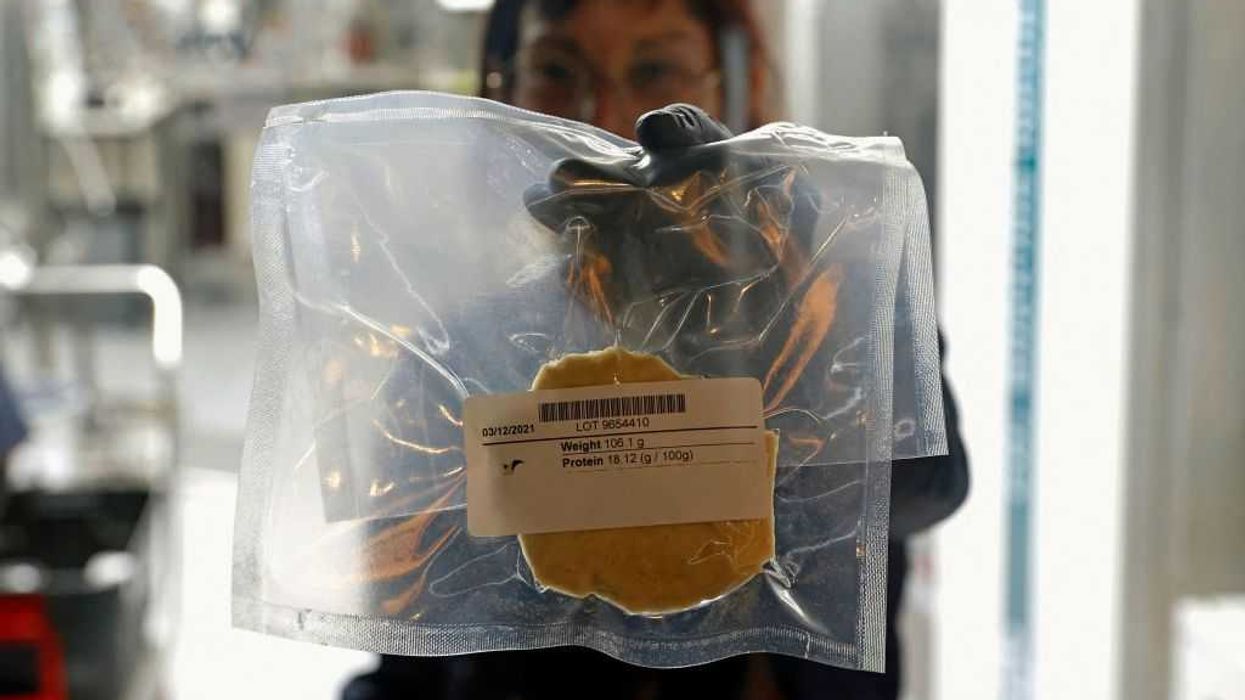
Social media users reacted to elites discussing the consumption of lab-grown meat products during the World Economic Forum Annual Meeting in Davos, Switzerland, this week.
A video clip circulated on social media on Thursday of Andrea Illy, an Italian businessman and chairman of the coffee company Illycaffè, pushing for the adoption of tech foods.
‘This, I know, it’s kind of a cultural revolution.’
Sam Kass, a former White House chef and senior policy adviser for nutrition under former President Barack Obama, said, “A lot of what we’re starting to see are these replacements for these core foods. I’ve tasted a bunch of, you know, ‘future coffee, fake coffee.’ How do you see that application?”
Kass asked for Illy’s opinion on the matter, noting that, while the technology of cultivated food is “smart” and “interesting,” “from a values perspective” and as a chef, he does not want to see a future “where we’re starting to drink coffee from a factory as opposed to from a tree.”
Illy responded, “There is a terrible cultural resistance from [the] consumer to accept tech foods. But in my opinion, they represent the way forward.”
“We know from statistics … that 70% of the ecological footprint of agriculture is due to animal proteins,” Illy continued.
RELATED: Say no to synthetic: America needs real meat, not lab slop
 Andrea Illy. Photo by Robin Marchant/Getty Images for illy caffe
He argued that the “excessive consumption” of meat “is the first cause of noncommunicable diseases,” which he claimed is “the number one health problem in the Western society.”
Illy suggested reducing meat consumption to a “healthy” level, while considering “the environmental impact.”
“Why should I use animals when I can cultivate meat and get only the best part of it?” Illy questioned.
RELATED: Bugs for thee, beef for me: How big business monopolizes meat
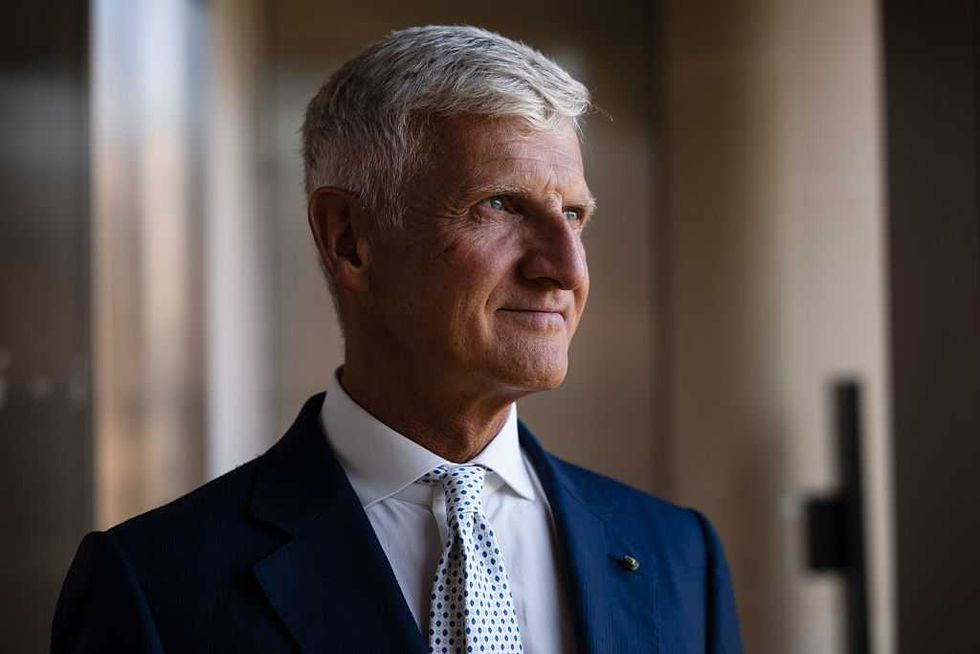 Andrea Illy. Photographer: Jose Sarmento Matos/Bloomberg via Getty Images
“This, I know, it’s kind of a cultural revolution,” he added, estimating that it would take decades to get people to adopt lab-grown meat as the new norm.
The WEF website boasts the adoption of cultivated meat. The organization explains that lab-grown meat begins with “extracting stem cells from a small sample of animal tissue” and placing those stem cells in a bioreactor. The WEF claims that cultivated meats offer “a multitude of benefits,” including reduced environmental impacts, lower resource use, elimination of the need to slaughter animals, and elimination of antibiotic use.
X users in the comments seemed less than enthusiastic about tech foods.
“They will eat steaks from the finest beef. Everyone else cancer cells cultivated in a laboratory,” one user wrote.
“Gross,” another stated.
“WEF is full of demons,” a third wrote.
Like Blaze News? Bypass the censors, sign up for our newsletters, and get stories like this direct to your inbox. Sign up here!
What’s Greenland to us?

The late, great Angelo Codevilla had a way of cutting through the fog of foreign policy.
In the Claremont Review of Books in 2019, he asked, “What’s Russia to us?” He didn’t ask because he had any special admiration for Russia. He asked because Washington had turned Russia into a utility: a convenient villain that justified budgets, scolded dissent, and kept the governing class in charge. Codevilla’s point was simple but brutal. Strategy begins with interests. Interests require discrimination. Most of what passes for “grand strategy” amounts to habit and vanity.
Greenland touches national defense. Greenland touches Arctic geography. Greenland touches the supply chain for advanced systems. Those facts don’t bend around Davos etiquette.
That question — his question — fits the Greenland uproar better than any of the Davos hand-wringing last week.
European leaders want this story to be about Trump’s manners and apparent recklessness. They want it to be about “norms,” about “tone,” about the precious feelings of the alliance. They want Americans to believe the true scandal lies in a U.S. president speaking too plainly or belligerently.
Trump did speak plainly. In Davos on Wednesday, he pushed for “immediate negotiations” to acquire Greenland and ruled out the use of military force. He also floated a “framework” tied to Arctic security after meeting NATO’s secretary general, while walking back tariff threats that had rattled allies and markets.
Fine. Trump being Trump shouldn’t surprise anyone.
But Europe’s reaction should surprise people, because it revealed how unserious the continent has become — even about something as serious as Greenland.
Instead of handling business like adults — hard bargaining among allies over a piece of real estate that actually matters — European capitals staged indignation, offered lectures, and then produced the usual substitute for seriousness: a symbolic “show of force” meant for domestic consumption.
The numbers tell the laughable story. Sweden sent three officers. Norway sent two. Finland sent two liaison officers. The Netherlands sent one naval officer. The U.K. sent one officer. France sent around 15 mountain specialists. Germany sent a reconnaissance team of 13. Denmark led with about 100 troops. Reuters called it “modest.” That word was kind.
But that’s the European governing class in a nutshell for you: Perform alarm, then perform resolve, then declare victory over a crisis they helped manufacture.
All of this theater tried to sell one idea: Greenland needs protection from the United States.
Preposterous.
Greenland matters because it helps defend the United States. Pituffik Space Base — some Americans may still know it as Thule — sits where U.S. forces can track threats coming over the pole. The Arctic doesn’t care about European speeches. Missiles don’t fly around Greenland out of respect for allied etiquette. Geography dictates capability, and Greenland sits where the map says it sits.
RELATED: Pressed on Greenland, Trump tells Davos the US has weapons he ‘can’t even talk about’
 Photo by Fabrice COFFRINI/AFP via Getty Images
Europe’s commissioners understand that. They just hate saying it out loud because it reminds them of the arrangement they prefer to obscure: America provides the real security; Europe provides the indignant boo-hoo commentary.
The Greenland tantrum exposed another reality that should make America’s sensible policy planners sweat, assuming they still exist: The industrial foundations of power have become strategic again, and the West has behaved like an empire that forgot how to build.
Rare-earths sound like an investor pitch until you remember where they go. Modern weapons systems and advanced electronics depend on them. We need minerals you have likely never heard of — neodymium, dysprosium, samarium, and yttrium — to keep our F-35s flying and our missiles precision-guided.
But the supply chain runs through the part nobody wants to talk about: processing and refining. China dominates that bottleneck — especially the heavy rare-earth elements that sit in the highest-end systems. One major estimate put China’s share of global heavy rare-earth processing at more than 90%. That’s a massive national security hole.
Greenland matters because it offers a way out — not a magic wand, but an exit. Greenland holds serious mineral potential. That potential shifts the long-term strategic balance only if development happens.
Greenland’s own politics have made development tricky. In 2021, Greenland reinstated a uranium ban that effectively froze the Kvanefjeld project, one of the world’s most significant rare-earth deposits, because uranium appears alongside rare-earth ore and triggers the political and regulatory trip wires that make major mining projects difficult to sustain.
Greenland’s voters have every right to weigh environmental costs. Strategy still counts consequences. But the practical result of the ban didn’t restrain Beijing. It protected Beijing’s advantage.
The Europeans, of course, love a green virtue-signal that imposes no serious cost on Europe. Through it all, however, the continent remains dependent on America’s military might, dependent on Chinese processing, and increasingly dependent on slogans to conceal both.
So yes — Trump’s aggressive posture creates complications. Acquisition talk puts Denmark in a public box and turns what should be an alliance negotiation into a freak show. It hands European leaders a stage they don’t deserve and an excuse to treat American interests as a moral problem.
RELATED: Trump announces ‘framework’ of ‘great’ deal with NATO on Greenland
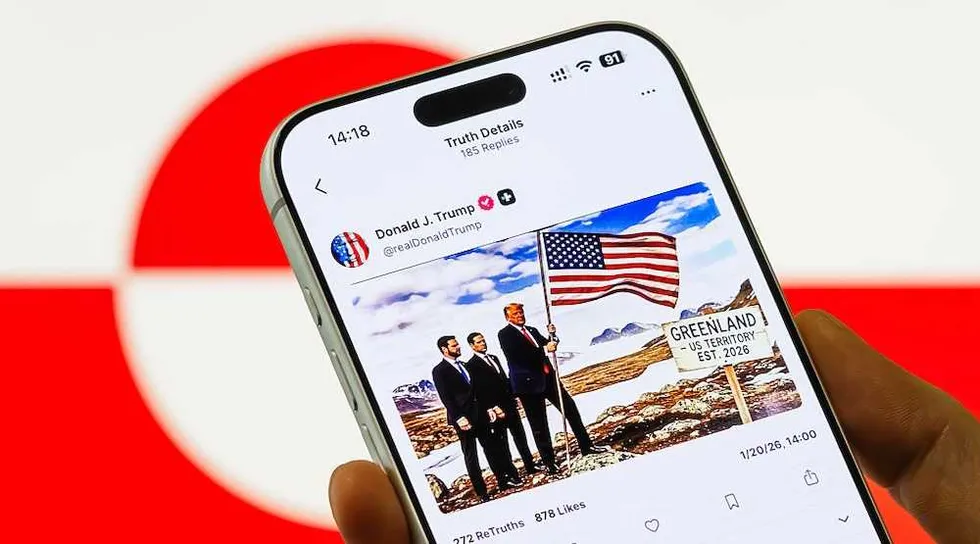 Photo illustration by Cheng Xin/Getty Images
But Europe’s leaders made fools of themselves by trying to address a strategic reality through choreography. A reconnaissance team, a few liaison officers, and a weekend of headlines don’t secure Greenland against anyone. Their “show of force” invited contempt, not respect.
Codevilla’s 2019 essay mocked the way our establishment inflates foreign threats to discipline the home front. The Greenland episode shows a mirror image: European elites inflating a U.S. negotiating push into a crisis because they can’t handle an America that talks like a serious country.
Greenland touches our national defense. Greenland touches Arctic geography. Greenland touches the supply chain for advanced systems. Those facts don’t bend around Davos etiquette.
So use Codevilla’s test. Strip away the moral fog. Rank interests and act like the answers matter.
What’s Greenland to us?
A hell of a lot.
The Soviet Defector Who Did the Most Damage

During the past 30 years, extraordinary material released from American and Russian archives has enormously expanded our understanding about Soviet espionage directed at the United States and its allies during the 20th century. The Venona decryptions were the product of American decoding of KGB messages. The Vassiliev Notebooks were based on documents the KGB provided to a researcher as part of a negotiated book deal. The only material provided by a genuine spy was the Mitrokhin material, several thousand pages of notes made surreptitiously by a KGB archivist. While British historian Christopher Andrew collaborated with Vasili Mitrokhin to write two books based on his notes, Mitrokhin himself has not received the attention he merits. Venona and Vassiliev exposed a great deal about Soviet espionage from the 1930s and ’40s. Mitrokhin’s information covered more recent operations and did far more damage to Soviet intelligence than any other defector.
The post The Soviet Defector Who Did the Most Damage appeared first on .
To Accept the Things I Cannot Change

Menstrual cycles are not an illness, and medicating them as if they are—suppressing the body’s natural hormonal rhythms—clashes with what was once left-wing skepticism of corporate influence in medicine, while conveniently profiting Big Pharma. This should not be a controversial or political claim. And yet, as the New York Times recently noted, it has become one—and a conservative one at that.
The post To Accept the Things I Cannot Change appeared first on .
Medicine’s Descent Into Madness
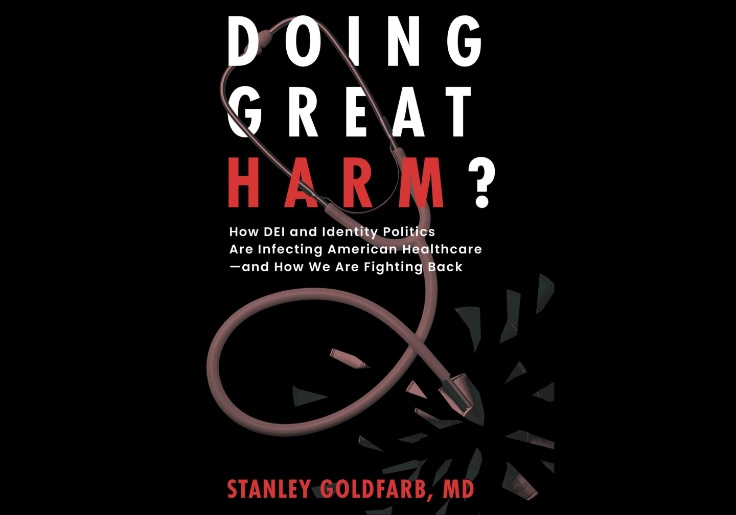
The Minnesota chapter of White Coats for Black Lives, a medical student group, greeted the October 7, 2023, Hamas-led terrorist attack on Israel by saying that Palestinians should “free themselves from their oppressors by any means necessary.”
The post Medicine’s Descent Into Madness appeared first on .

‘Like Do We Have a Game Plan To Turn This Around?’: Inside ‘Gen Z for Crockett,’ the Group Chat Where Jasmine Crockett’s Most Committed Supporters Are Questioning Her Strategy
Left-wing Texas Senate candidate Jasmine Crockett has collaborated with a group of her youngest and most enthusiastic supporters, Gen Z for Crockett, in flashy campaign videos and fundraising appeals. Inside Gen Z for Crockett’s group chat, however, members aren’t so convinced by Crockett’s campaign, spending much of their time complaining that Crockett appears directionless with no clear policy positions or core message.
The post ‘Like Do We Have a Game Plan To Turn This Around?’: Inside ‘Gen Z for Crockett,’ the Group Chat Where Jasmine Crockett’s Most Committed Supporters Are Questioning Her Strategy appeared first on .
The Nobel Prize Trump Didn’t Earn
“Vanity made the Revolution; liberty was only a pretext,” is a quote widely attributed to Napoleon Bonaparte — and germane…





