Category: Book reviews
The Fall and Rise of Bowie
It’s easy to start a fight between David Bowie fans: Simply ask them to name his best album. Thanks to Bowie’s rare combination of talent and industriousness, a case could easily be made for at least half a dozen of his 26 studio records, each boasting a unique sound. How can anyone compare The Rise and Fall of Ziggy Stardust and the Spiders from Mars to Scary Monsters?
The post The Fall and Rise of Bowie appeared first on .
A Novel Way to Approach Death
Everyone loves Julian Barnes. I don’t know of any other novelist who has been praised by both David Bowie and Angela Merkel. He has also been praised by Philip Larkin, Graham Greene, and John Updike, even if Updike referred to him as “an English television critic,” which Barnes was at the time. (Updike was reviewing […]
The post A Novel Way to Approach Death appeared first on .
From Desecration to Consecration
In this compact, highly readable book treating issues about which he has also written elsewhere, Carl Trueman examines how it is that, at least on his telling, our world has become one in which limits are no longer meaningful moral boundaries but, rather, obstacles to be overcome. What we have lost, he says, is the sense that every human being is made in the image of God. But it is not as if this belief has just slipped away gradually, no longer making sense in a disenchanted world. Trueman’s claim is stronger. Our culture now takes delight in surpassing and setting aside old limits that were thought to characterize our humanity. The problem is not disenchantment but desecration—the transgressing of older moral limits.
The post From Desecration to Consecration appeared first on .
Letter to the Editor: Who’s Censoring Whom?
Nicholas Clairmont’s review of Jacob Siegel’s The Information State: Politics in the Age of Total Control (“Tyranny Through Technology,” March 29, 2026) calls it “careful and specific” and “unimpeachably sourced.” I am one of the book’s caricatured villains and I want to address the sourcing and specificity directly.
The post Letter to the Editor: Who’s Censoring Whom? appeared first on .
Membership Has Its Privileges
London Clubland: A Companion for the Curious, by historian Seth Alexander Thévoz, is the rare book that manages to be both reverent and sly: an impeccably researched directory of London’s private members’ clubs that understands, at a cellular level, which of these places want to be mythologized and which would rather die than be written about at all. The former are treated gently, the latter mercilessly. My favorite section, “What They Probably Don’t Want You to Know,” skewers this distinction perfectly, offering quiet mockery for the clubs desperate to be talked about—Soho House, for instance, which has built an entire business model on insisting it is still misunderstood—while maintaining gentlemanly discretion around those that still prize silence over clout.
The post Membership Has Its Privileges appeared first on .
China Is Stealing Our Tech. And It’s Partly Our Fault.
In recent years, there has been growing concern that the United States and China might find themselves in a war over Taiwan. Such worries overlook an important fact: Washington and Beijing are already at war. But as David Shedd and Andrew Badger document in their new book, The Great Heist: China’s Epic Campaign to Steal America’s Secrets, only one side has been acting like it.
The post China Is Stealing Our Tech. And It’s Partly Our Fault. appeared first on .
Kicking and Screaming Against America and Israel
In the 1970s, after the Six-Day War had time to sink in, an impressive number of Western academics, journalists, politicians, diplomats, spooks, and especially oil executives gave Israel a centripetal eminence in the Middle East that neither its population, geography, faith, wealth, nor even military accomplishments merited. Thirteen hundred years of Islamic history over 3.8 million square miles started getting boiled down to onerous and acrimonious conversations about the contemporary bloody wrestling matches between Jews and Arabs on less than 11,000 square miles of the eastern Mediterranean littoral. Modern Middle Eastern studies, where certainly the most passionate if not the most accomplished students gravitated, became battlefields where anti-Zionist sentiments usually proved triumphant.
The post Kicking and Screaming Against America and Israel appeared first on .
The Soviet Defector Who Did the Most Damage
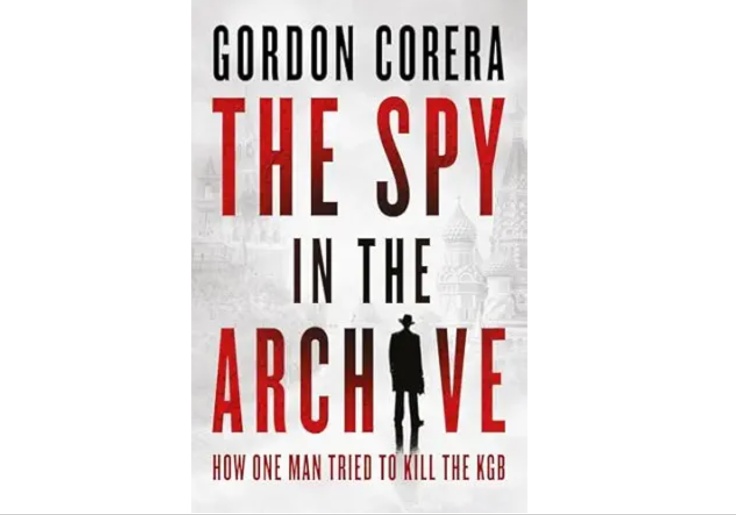
During the past 30 years, extraordinary material released from American and Russian archives has enormously expanded our understanding about Soviet espionage directed at the United States and its allies during the 20th century. The Venona decryptions were the product of American decoding of KGB messages. The Vassiliev Notebooks were based on documents the KGB provided to a researcher as part of a negotiated book deal. The only material provided by a genuine spy was the Mitrokhin material, several thousand pages of notes made surreptitiously by a KGB archivist. While British historian Christopher Andrew collaborated with Vasili Mitrokhin to write two books based on his notes, Mitrokhin himself has not received the attention he merits. Venona and Vassiliev exposed a great deal about Soviet espionage from the 1930s and ’40s. Mitrokhin’s information covered more recent operations and did far more damage to Soviet intelligence than any other defector.
The post The Soviet Defector Who Did the Most Damage appeared first on .
Medicine’s Descent Into Madness
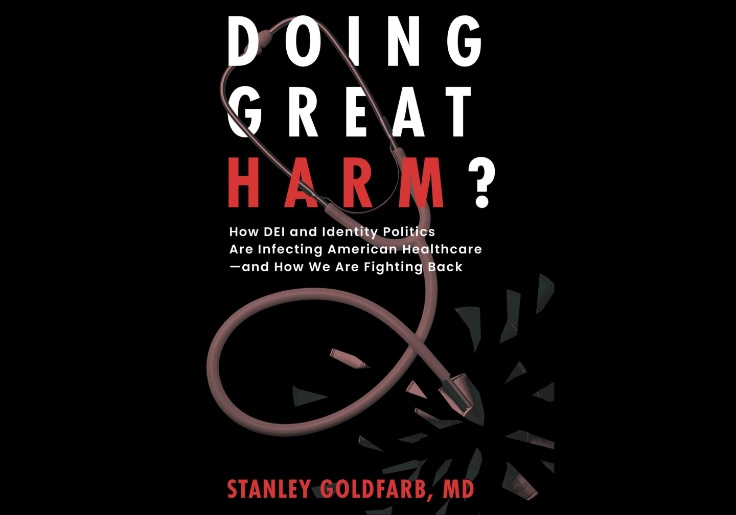
The Minnesota chapter of White Coats for Black Lives, a medical student group, greeted the October 7, 2023, Hamas-led terrorist attack on Israel by saying that Palestinians should “free themselves from their oppressors by any means necessary.”
The post Medicine’s Descent Into Madness appeared first on .
A Founding Document Finds Its Principles

Akhil Reed Amar’s Born Equal: Remaking America’s Constitution, 1840–1920 covers a period of American history that most of us learned as a series of familiar episodes: the crisis of the 1850s, the Civil War, Reconstruction’s rise and fall, the boom of the late 19th century, and the reforms of the Progressive Era. In the standard telling, the Constitution is the province of officials in the federal government—amended in dramatic fashion after the war, interpreted by courts in a mostly linear fashion, grappled over by men with names like Clay and Calhoun until the Progressives came along to say they no longer had any interest in it. (In my family we joke that there were no presidents or Supreme Court decisions between the end of Reconstruction and the rise of Teddy Roosevelt—our high-school and college U.S. history curricula pivoted hard to economic history for those three decades.) The business of the American people was business; obsession over constitutional text and foundational promises belonged to a small cadre of elites until it went underground and reappeared at the nation’s bicentennial.
The post A Founding Document Finds Its Principles appeared first on .