

Category: Culture
You can’t be 50 in Hollywood
I had been living in New York for several years, writing young adult novels. But I wanted to move to Los Angeles. I needed a change of scenery, and I wanted to try screenwriting.
A friend connected me to a guy who had spent several years in L.A. pursuing film and TV writing. I called the guy and told him my plan.
The hair dye felt like it was burning my scalp. After I rinsed it out, my whole head glowed. Did it make me look younger? I guess it did. But it also made me look like a clown.
He said: “How old are you?”
I said 49.
He said, “That’s too old. You can’t be 50 in Hollywood. You’ll need to lie about your age.”
Then he asked me if I had gray hair. I said I did. He said I would need to dye it.
I said, “But George Clooney has gray hair. Doesn’t it look distinguished?”
He said I would definitely want to dye it. “Everyone dyes their hair in L.A. Get a good hairdresser.”
*******
He continued relating his experiences. He listed the dangers of Hollywood. They steal your ideas. They lie. They pretend to be your friend. I would need a good lawyer, and a manager, and an agent.
Most of this I already knew. But the “you can’t be 50 in Hollywood” part: I hadn’t heard that before.
Reelin’ In the Years
After we hung up, I thought about the age problem. I had already “adjusted” my age once while I was writing young adult novels.
I did this after attending a book festival, where I saw that all the other young adult authors were generally in their 20s and 30s. I was at least a decade older than most of them.
So I shaved five years off my Facebook age. Just in case anybody looked. And then I did the same thing when I filled out the publicity questionnaires for my publisher.
But the age problem got worse when I arrived in L.A. The first screenwriter I met with was 24 and looked like he was in high school. When I got home from that meeting, I went on Facebook and shaved three more years off my birthday.
When I did this, a little notice popped up, informing me that this would be the last time I would be allowed to change my birthday on Facebook.
So now, I was 41 according to Facebook, 44 according to my New York publisher, and 49 according to my driver’s license and the IRS.
This was a lot to keep track of. It made for some awkward moments on first dates.
Gray matters
It didn’t take long to realize that in Hollywood — where lying is considered “self-care” — what people really judged you on was your looks.
So then I considered my appearance. My hair was pretty gray. Should I try dyeing it?
I went to Ralphs and bought a box of Clairol Nice’n Easy hair dye. I went for espresso brown, which seemed closest to my original hair color.
I set up shop in my bathroom. I put on the gloves and followed the instructions on the box, mixing the chemicals and smearing them onto my head. It was a messy business.
The hair dye felt like it was burning my scalp. After I rinsed it out, my whole head glowed. Did it make me look younger? I guess it did. But it also made me look like a clown.
*******
I flew back to New York soon after, and a female friend immediately noticed the change. She said: “It’s true what they say; you look 10 years younger!”
That was nice to hear. But I was alarmed that she noticed it instantly. From 50 feet away.
Another friend didn’t believe me when I told her it was dyed. She had to look closer and touch it until she saw that I was telling the truth.
I was still trying to get used to it myself. Every time I saw my reflection, I startled myself. Who’s that guy with the dye job?
RELATED: The left wants to ‘reclaim’ the American flag; did they run out of lighter fluid?
 Blake Nelson
Pro tips
Back in L.A., I spotted a sign in a hair salon near my apartment: “Dye and Haircut $80.” Maybe this was the solution: getting your hair dyed by a professional.
I would like to say this was a luxurious, pampering experience. It was not. The hairdresser roughed me up pretty good. And then I had to sit there for 40 minutes, in sight of people walking by the window, with a giant plastic covering over me and my thinning hair wrapped in tin foil.
And then, after all that, it looked no different from the Clairol dye job I had given myself for $9.99!
*******
Still, I stuck with it, re-dyeing it every six weeks — like it said on the box — for most of a year.
During this time, I kept a watchful eye out for other men with dyed hair. I was definitely not alone. At the beach, you would see aging “surfer dads” with dyed blonde hair and a skateboard under their arms. It wasn’t a terrible look. As long as you wore Vans and board shorts.
And of course, men who were on TV or acted in movies always dyed their hair. I’d see these men everywhere. Or I’d see guests on late-night talk shows who looked like they had just had it done an hour before. Their hair had that blurry, fresh-dye glow.
I became skilled at spotting dye jobs on either sex. I hadn’t realized how many women dyed their hair: basically all of them, after about 30.
The good news was that nobody thought less of a man for dyeing his hair. This was Los Angeles. Dyeing your hair meant you had a job.
All is vanity
This wasn’t the case on the East Coast. New York City was the land of the silver fox. Being a well-dressed, gray-haired, 50-year-old male was highly desirable. It meant you were rich!
In fact, it was in New York that a couple of female friends intervened and informed me that the hair-dye thing wasn’t working. I looked better being gray.
After that, my vanity took over, and when I returned to L.A., I shaved my head and released myself back into middle age.
Once I let myself go gray again, another Los Angeles acquaintance told me she thought I looked much better. She said the dye job made me look untrustworthy, like a used-car salesman.
*******
So that was a relief. But the real relief didn’t come until many years later, when I retired from writing and went back home to Portland and returned to total normalcy.
In retirement, I didn’t have to be young; I didn’t have to be cool. I could just be an old, gray-haired person like everybody else.
Though on Facebook — thanks to its birthday-changing restrictions — I remain a slightly younger and livelier version of myself.
’28 Years Later: The Bone Temple’ brings new life to horror franchise
Like the post-apocalyptic Britain of the “28 Days Later” franchise, Hollywood has become a wasteland, teeming with the stripped-down, lethally efficient shells of once-vital creations. Nostalgia-driven reboots swarm the multiplex, satisfying audience cravings for familiarity and studio appetites for certainty — even as they leave the surrounding creative landscape increasingly barren.
This year’s “28 Years Later” could just as easily have been another of these living-dead productions. While previous installment “28 Weeks Later” (2007) — made with nominal participation from the original creative team — delivered competent scares, it hardly cried out for a follow-up.
The movie is littered with British cultural references — decontextualized and repurposed by survivors struggling to find meaning in a world they no longer understand.
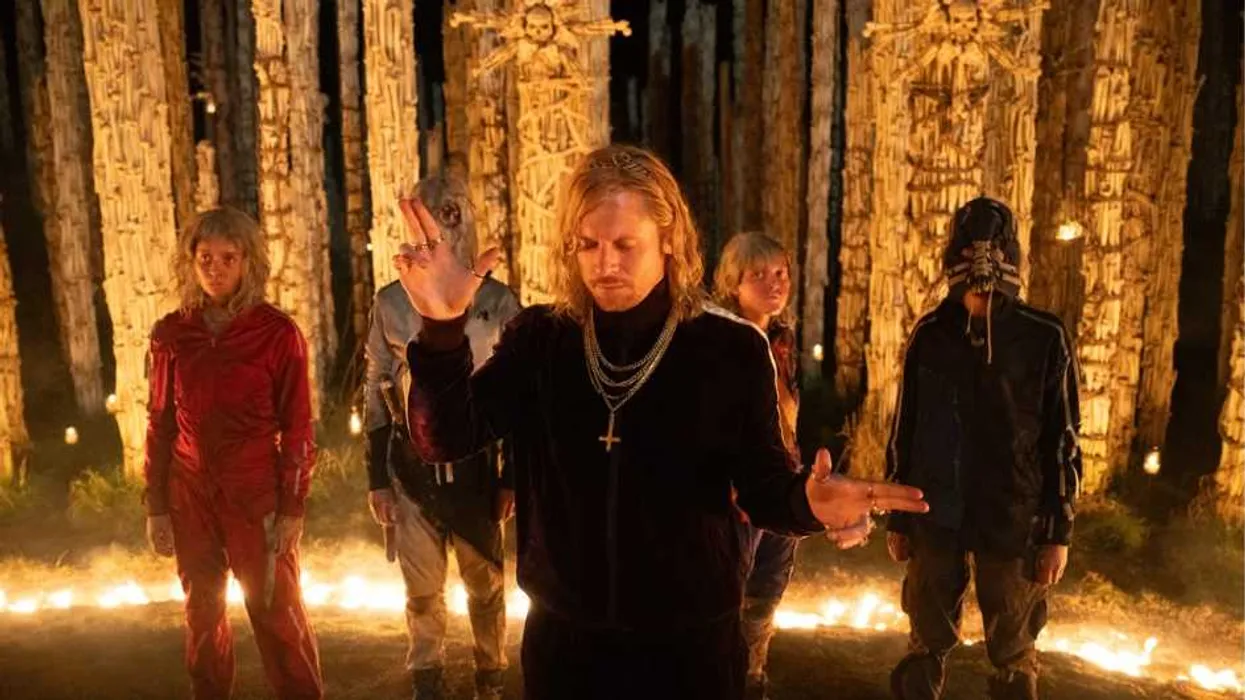
But the return of director Danny Boyle and writer Alex Garland proved worth the wait. “28 Years Later” demonstrated that this universe could still surprise, ending with a tantalizingly bizarre coda in which our hero Spike is rescued by Sir Lord Jimmy Crystal (Jack O’Connell) and his blonde-wigged, track-suited minions. Clearly the infected are not the only menace stalking the British countryside.
Charity cases
“28 Years Later: The Bone Temple” picks up right after this moment, confirming our suspicions that Spike’s troubles have just begun. After a gruesome kind of initiation, Spike is forcibly enlisted as one the “Jimmys,” who turn out to be a gang of satanic killers. Led by Jimmy Crystal, who believes himself to be the son of “Old Nick,” they prowl the land inflicting gruesome ritualized violence — which they call “charity” — on those unfortunate enough to meet them.
While Garland returns as screenwriter, Boyle (who stays on as producer) cedes the director’s chair to Nia DaCosta, whose striking use of lingering close-ups and tightly framed compositions inject the film with a raw, anarchic energy. The result is a legacy sequel that both pays homage to its origins and reimagines them — one that weaves graphic violence together with incisive observations on culture, faith, and survival in a world irreversibly altered by catastrophe.
Doctor Sleep
Many of those observations come straight from the kindly and philosophical Dr. Ian Kelson (Ralph Fiennes), an eccentric recluse who provided shelter for runaway Spike and his dying mother in “28 Years Later.” In this grisly sequel, the iodine-covered, blowdart-wielding former physician is searching for a cure to the rage virus, using an infected “alpha” zombie — whom he names Samson — as his pet project.
He also continues work on the titular bone temple, a memorial to the outbreak’s victims, until his optimism and ingenuity is tested by the new and horrifying human adversary we met in the beginning.
While Boyle’s 2002 film focused on urban chaos, this installment widens its lens, exploring the virus’ impact across the countryside while delving into deeper philosophical terrain. Beneath the skin-flaying, stabbings, “Mortal Kombat”-style spine removals, and Iron Maiden needle drops lies a poignant meditation on a once-beautiful country sliding into social and spiritual decay.
This is England
DaCosta, an American director, deftly preserves the distinctly English identity of the original films. The movie is littered with British cultural references — decontextualized and repurposed by survivors struggling to find meaning in a world they no longer understand.
The Jimmys, with their blonde wigs, tracksuits, and gold jewelry, are intentionally modeled after Jimmy Savile, one of Britain’s most notorious sex offenders. In this universe — where society collapsed in 2002, years before Savile’s real-world crimes were exposed — the cult reveres him as a benevolent, almost mythical figure. Their so-called acts of “charity” grotesquely invert Savile’s public image of philanthropy, turning it into a rationale for cruelty and sadism.
The dynamic between Sir Jimmy and Kelson is magnetic. O’Connell and Fiennes deliver outstanding performances, moving seamlessly between surrealism and melancholy. Some of the film’s most compelling moments occur when these two simply share the screen in conversation.
Sir Jimmy and Kelson represent competing philosophies of survival. In desperate times, humanity creates belief systems — sometimes as tools of power, sometimes as mechanisms of self-preservation. Through these two figures, Garland weaves a thoughtful exploration of evil, faith, and meaning.
RELATED: ‘28 Years Later’: Brutal, bewildering, and unabashedly British
 Tim P. Whitby/Getty Images
Feral faith
Religious symbolism runs throughout the film. The Jimmys repurpose Savile’s catchphrase “Howzat!” as a ritual chant — stripped of its original meaning and reconstituted as a signifier of violence. Kelson, meanwhile, assumes the role of a secular creator. His humanist liturgy centers on music and literature, which function as sacred texts connecting him to the past and preserving his sanity.
Samson’s transformation becomes an allegory for rebirth: emerging from the hell of infection into renewal. Where the biblical Adam becomes aware of his nakedness after eating from the tree of knowledge, Samson’s recovery inspires modesty as he clothes himself with memories of his return. It is the Fall in reverse — self-awareness as ascension, rebirth without grace.
“The Bone Temple” manages to inject genuine life into a franchise nearly 25 years old. I may regret saying this, but I am genuinely curious to see where the story goes next — especially with Boyle returning to direct the third and final installment. The film’s closing scene teases the return of a familiar face, and John Murphy’s fuzzed-out guitar theme suggests that hope remains, for both the survivors and the fans.
How Americans can prepare for the worst — before it’s too late
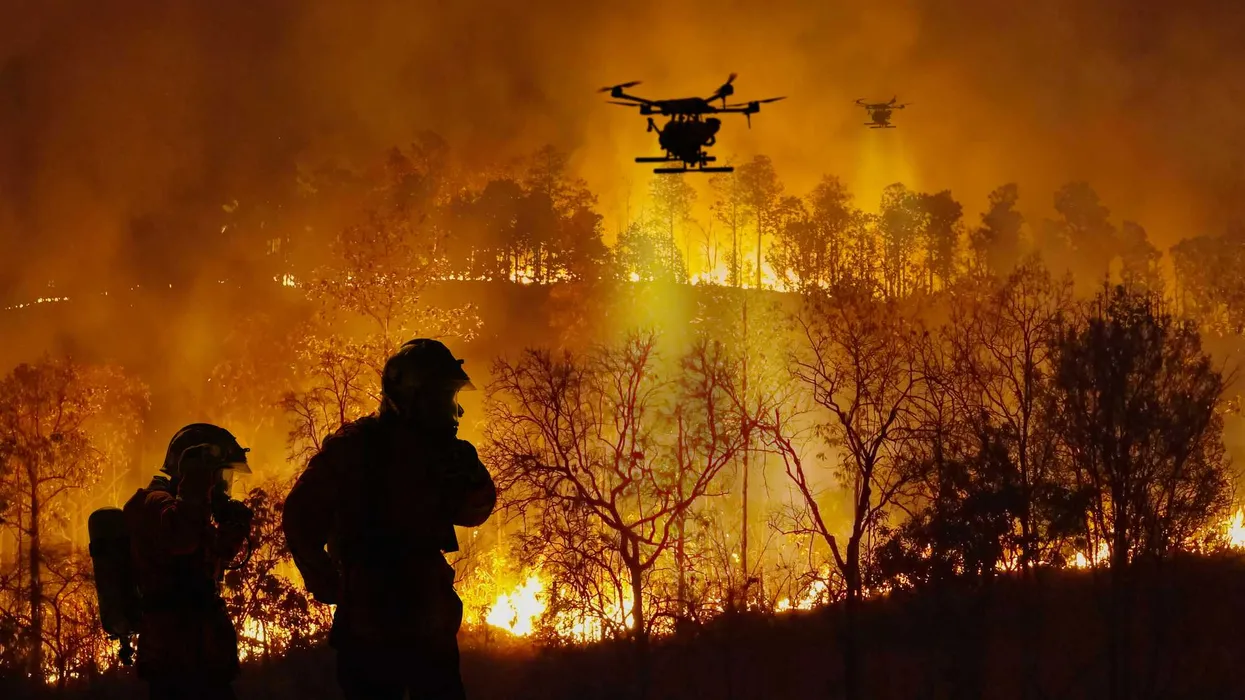
Imagine standing in a war-torn city overseas, as I have on numerous deployments, walking through communities shattered not just by bombs and sectarian conflict, but by the follow-on failure of basic systems — water, power, food, even the educational system.
It’s a stark reminder that resilience isn’t abstract; it’s the difference between chaos and recovery. Back home, over 20 million Americans reported in 2023 that they could last at home for a month or more without publicly provided water, power, or transportation, a rate more than double that reported in 2017.
This trend is not occurring because of government guidance, but rather because of a perceived fear of government failure. Across the world, civil defense and national preparedness are surging in discussions, extending beyond disasters or war to encompass health, economics, energy, and the social, spiritual, and built environments of our communities.
Civilians have an active role to play and should not passively wait for government salvation.
The core question remains: Are we truly resilient?
Identifying gaps
In 2019, Quinton Lucie, a former attorney for the Federal Emergency Management Agency, wrote a blistering academic piece in Homeland Security Affairs. He argued that America no longer has the institutional experience or framework required for civil defense, a large pillar in overall national resiliency. In his words, the U.S. “lacks a comprehensive strategy and supporting programs to support and defend the population of the United States during times of war.” Retired Air Force General Glen D. VanHerck, the former commander of the North American Aerospace Defense Command and U.S. Northern Command, recently commented that America needs to be able to “take a punch in the nose … and get back up and come out swinging” regardless of whether the attack came in the cyber realm or something conventional.
An all-inclusive plan is not optional. Presidential Executive Order 12656 mandates whole-of-government responsibilities for various national security emergencies. Article Three of the 1949 North Atlantic Treaty, which created NATO, stipulates resilience, focusing on continuity of government, essential services for citizens, and military support. Implicitly, it calls on individuals to step up too — not just for war, but for natural disasters, economic slumps, or grid failures.
While non-binding, the 2020 NATO NSHQ Comprehensive Defence Handbook states that “resilience is the foundation atop the whole-of-society bedrock” and “is built through civil preparedness and is achieved by continually preparing for, mitigating, and adapting to potential risks well before a crisis.” The challenge is that civil preparedness requires this whole-of-society approach, not just a whole-of-government one. That is, we can’t have a strong nation without strong individuals and communities.
Facing perils head-on
What other perils might we confront? Food security is a prime example. During the U.S. government shutdown, food banks near bases experienced a 30%-75% surge from military families. This comes at a time when 42 million Americans are on food stamps and Secretary of War Pete Hegseth and Secretary of Health and Human Services Robert F. Kennedy Jr. push for a healthier fighting force and populace. Globally, a February 2025 report by the U.K.’s National Preparedness Commission indicated that civil food resilience is highly vulnerable to myriad shocks to the status quo and that the populace was underprepared.
RELATED: Minneapolis ICE protesters are BEGGING for civil war — and we need to take them seriously
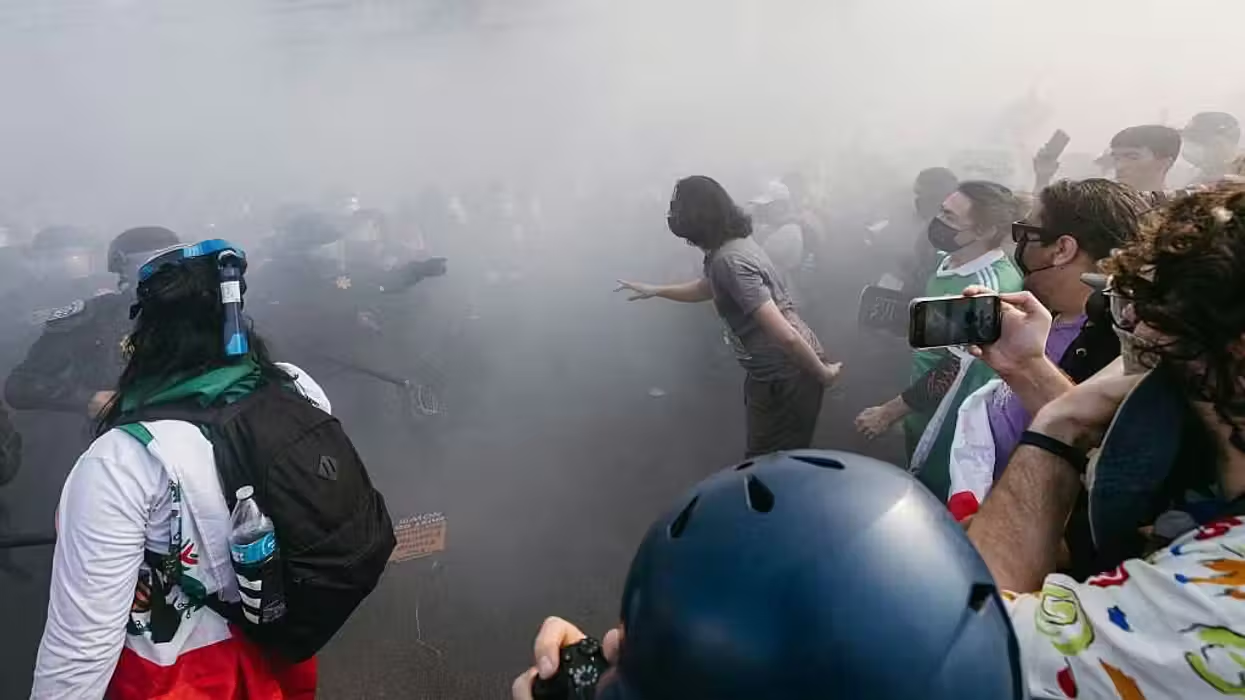 Photo by DAVID PASHAEE/Middle East Images/AFP via Getty Images
Utilities failures like water and electricity are another concern. In October 2025, the former top general of the National Security Agency warned of China’s aggressive targeting of U.S. critical infrastructure. This aligns with China’s “Three Warfares” strategy, which seeks to manipulate or weaken adversaries via public opinion warfare, psychological warfare, and legal warfare. China’s gray-zone activities against the U.S. also include synthetic narcotics like fentanyl and online actions to deepen political fissures.
Leaders are not sitting still. President Trump supports reshoring manufacturing capacity in the U.S. Onshoring and friend-shoring are hot topics among various industries, given rare-earth metal availability, tariffs, and general uncertainty. The U.S. Army is bolstering energy resilience, planning nuclear small modular reactors on nine bases by late 2028 and reclaiming a “right to repair” in contracts.
Big business is also in on the action. Jamie Dimon, CEO of JPMorganChase recently announced a $1.5 trillion plan for a more resilient domestic economy, seeing it as an issue of national security. With two Federal Reserve rate cuts in 2025 potentially fueling inflation, hedge fund billionaire Ray Dalio advises 15% portfolio allocation to gold. Even Jan Sramek of California Forever is investing hundreds of millions to build a resilient city near San Francisco. Resilience, clearly, permeates every facet of life.
Resilience is global
This is not unique to the English-speaking world. Latvia, a small Baltic state bordering Russia and Russia’s ally Belarus, exemplifies a whole-of-society approach. The nation’s 2020 State Defense Concept — currently in execution — is comprehensive in its approach, both to potential perils and responsibilities. Accidents, pandemics, war, severe weather, and cyberthreats all require a citizenry-to-parliament strategy. The church plays a major role, as does physical fitness, patriotism, and education, which is why state defense is now compulsory in Latvian schools.
Germany is getting back into the bunker business and has earmarked €10 billion through 2029 for civil protection. Many Polish citizens do not see their governments doing enough and are taking matters into their own hands by building bunkers and attempting — unfortunately without much success — to establish neighborhood civil defense groups.
What resilient citizens can do
What should we take from this? First, preparedness is neither fringe nor irrational. It is a global movement involving politicians, billionaires, and everyday people. Second, there is no one-size-fits-all solution. Resilience spans the full human spectrum: social, physical, intellectual, emotional, and spiritual components, as I outline in my book “Resilient Citizens” through frameworks like the five archetypes (from Homesteaders to the Faithful) that show diverse, adaptable paths. Third, civilians have an active role to play and should not passively wait for government salvation. Tiered responsibility requires each echelon — from state to citizen — to play their parts, own up to their agency and responsibility, and act. Will you?
Trump not worried about Canada’s China-centric ‘new world order’

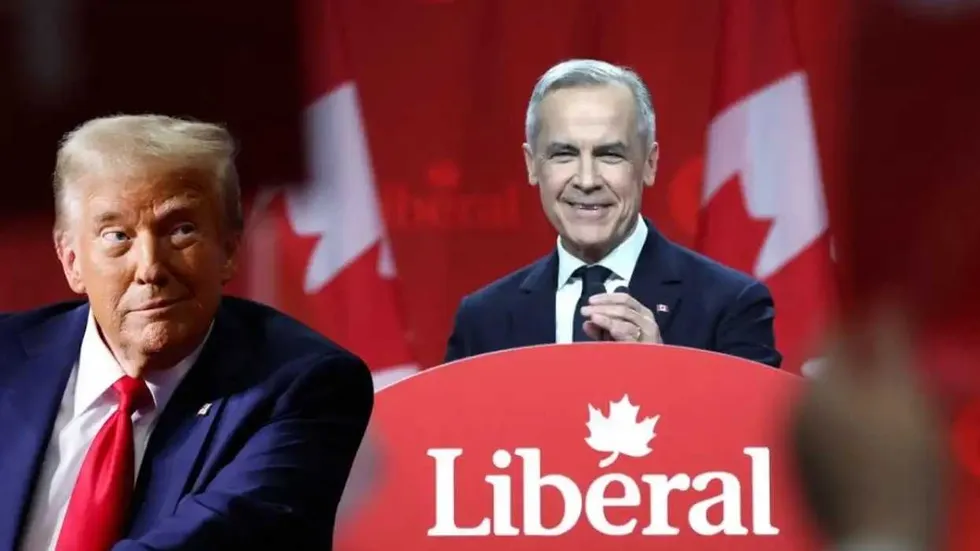
Try explaining this one: President Donald Trump’s relaxed — almost insouciant — response to news that Canadian Prime Minister Mark Carney pledged allegiance to a China-centered “new world order.”
Why did Trump appear to shrug off Carney’s insistence that Canada’s future lies more with China than with the United States?
Carney’s favorable assessment of China’s role in climate and green finance is not an isolated remark.
Perhaps it has something to do with Greenland and Canada being viewed as components of Trump’s broader Western Hemisphere security plan.
Cue the black helicopters
Not long ago, “new world order” belonged firmly in the vocabulary of conspiracy theorists. But in Beijing last week, Carney elevated the phrase into an official Liberal talking point.
So what did Carney say? Plenty.
Mine is the first visit of a Canadian prime minister to China in nearly a decade. The world has changed much since that last visit, and I believe the progress that we have made in the partnership sets us up well for the new world order.
Trump did not respond immediately. Instead, he waited until the end of the news day last Friday before offering his reaction.
“That’s what he should be doing, and it’s a good thing for him to sign a trade deal. If you can get a deal with China, you should do that,” Trump said.
Not the response many expected from a president who has urged countries in the Western Hemisphere to distance themselves from Beijing.
World order word salad
Pressed on what he meant by a “new world order,” Carney responded with his characteristic blend of abstraction and deflection.
So the question is, what gets built in that place? How much of a patchwork is it? How much is it just on a bilateral basis? Or where do like-minded countries in certain areas? So like-minded countries, just to be clear, doesn’t mean you agree on everything. So aspects, for example, on digital trade or agricultural trade, climate finance as another area to move into areas of geo-strategy, geo-security, you will have different coalitions that are formed. So what this partnership does is in areas, for example, of clean energy, conventional energy, agriculture, as we were just talking about, and financial services, which we have talked less about, but the evolution of the global financial system.
Trump’s nonchalance was not shared by conservative commentators, who sharply criticized Carney’s remarks.
Alex Jones, for one, described Carney as “a Klaus Schwab acolyte” and warned: “You are about to see the globalist prime minister of Canada pledge allegiance to the communist dictator in China, Xi Jinping.”
RELATED: What does Trump see in Canada’s pro-China prime minister?
 Chip Somodevilla/Dave Chan/Getty Images
China guy
So far, Carney’s new world order with China has produced a trade agreement allowing up to 49,000 electric vehicles to be imported into Canada annually at a reduced tariff of 6.1%. In return, China is expected to lower tariffs on Canadian agricultural exports — most notably canola oil, a key cash crop for Canadian farmers — to roughly 15%.
But there is nothing new about Carney’s deference to China.
After leaving the Bank of England in 2020, Carney became vice chairman of the board of Bloomberg L.P., the privately held financial data and media company founded by Michael Bloomberg. During the same period, he also served as co-chair of the U.N.-backed Glasgow Financial Alliance for Net Zero, working alongside Bloomberg in his separate capacity as the United Nations’ Special Envoy on Climate Ambition and Solutions.
In that capacity, Carney consistently praised the alleged environmental stewardship of China, somehow locating a deep commitment to fighting climate change in a country that continues to power its economy with coal-fired plants.
Take Carney’s March 2024 visit to China, during which he told a reporter for the Chinese business outlet 21st Century Business Herald (English translation via Google Translate):
China has made a huge contribution to the fight against climate change, not only in terms of its massive investment in clean technologies and exporting them to other countries, but also in actively developing the financial system needed for the green transition.
Yuan to grow on
Carney’s favorable assessment of China’s role in climate and green finance is not an isolated remark. It aligns with a broader argument he has advanced in recent years: that global economic leadership should become more multipolar, with China playing a larger role alongside — rather than beneath — U.S. dominance.
That worldview extends to currency and finance. At the 2019 Jackson Hole Economic Symposium, Carney argued that the world should reduce its dependence on the U.S. dollar by exploring a new “synthetic hegemonic currency,” a framework designed to dilute the dominance of any single national currency.
Carney did not explicitly call for the Chinese yuan to replace the U.S. dollar outright. But his proposal would, by design, weaken the centrality of the dollar and expand the influence of non-U.S. currencies and financial systems.
Trump, for his part, has twice endorsed Carney during Canadian federal elections. Their relationship — particularly during Oval Office meetings — has been described as friendly, though it may be better understood as Trump indulging a leader he views as temporary.
Why does Trump consistently give Carney a pass?
Perhaps because Trump sees Carney less as a lasting architect of global order than as a passing phenomenon — unlikely to impede the president’s broader aim of reinforcing American economic primacy, regardless of how warmly Carney speaks of China’s place in the world.
WARNING: Nicotine may cause focus, motivation, and joie de vivre (which is why they hate it)
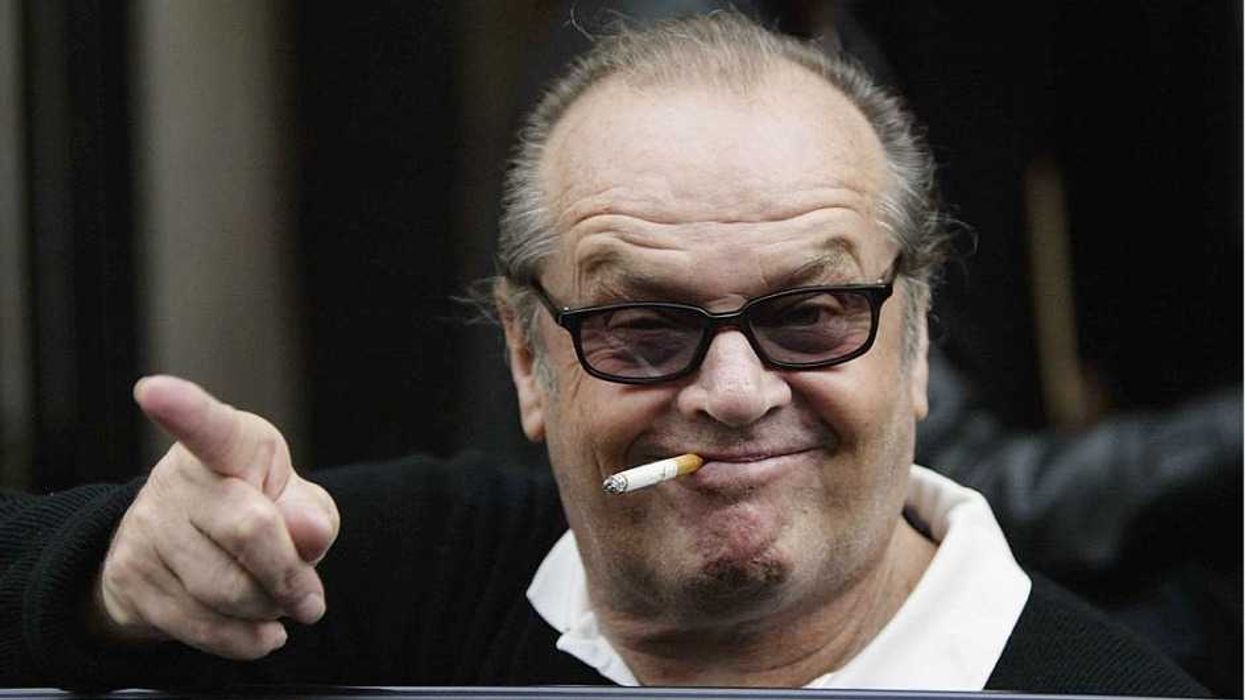
According to Salon, nicotine use is apparently the preserve of stupid men, right up there with weight lifting and a fondness for firearms.
This is how you know a substance is having a moment. When something offers even a modest benefit — focus, alertness, a slight edge — it attracts not curiosity but alarm. The kind usually reserved for the stuff that will actually kill you: heroin, fentanyl, toxic masculinity.
Nicotine is not cigarettes. This distinction matters, though it is treated as apostasy in contemporary wellness discourse. Nicotine, isolated and controlled, has been studied for decades. In small doses, it produces a measurable cognitive lift: sharper attention, faster reaction time, improved working memory.
That isn’t influencer folklore. Far from it. It’s why exhausted academics used it to push through marking and deadlines, why surgeons relied on it during long overnight shifts, and why soldiers carried it in environments where fatigue killed faster than bullets — long before Salon’s feeble attempt to dismiss it as a “scam.”
I use Zyn regularly. It helps me concentrate. That’s the entire story. I don’t feel enlightened. I don’t feel transformed. I don’t feel the urge to start a movement. And, crucially, I don’t feel compelled to use the product in any anatomically creative fashion.
Tucker Carlson, a former Zyn user turned rival nicotine entrepreneur, recently aimed a jab at his old brand, joking that its devotees have abandoned the instructions altogether in favor of a more southern route of administration.
I can’t speak for others. I can only report that I place the pouch exactly where the instructions suggest, write my sentences, and get on with my day. If a shadow subculture of rogue pouch experimentation exists, it has somehow escaped my notice.
Backside-bracing humor aside, the Salon piece really zeroes in on Carlson, quoting him at length and treating his remarks with a gravity usually reserved for Senate hearings.
Carlson has described nicotine as “super important,” arguing that the country has grown sadder and less healthy since it was discouraged and that its return coincides with people seeming, on balance, happier — though it is not entirely clear which people he has been interacting with, given that most Americans currently look one minor inconvenience away from spontaneous combustion.
He has also referred to it — again, with comic exaggeration — as a “life-enhancing, God-given chemical” that can make you “feel better than you’ve ever felt.”
The language is clearly playful, designed to provoke rather than persuade. But exaggeration doesn’t automatically mean error. Mild stimulation can brighten mood and restore alertness, particularly in a culture permanently exhausted by poor sleep and low-grade stress.
In a culture serious about public health, nicotine would barely rate a mention. We’d be too busy going after the sugar cartels poisoning the body politic with obesity and diabetes or the doctors throwing drugs at problems better addressed in the confession booth.
Instead, nicotine is singled out not because it is uniquely hazardous, but because it violates the aesthetic rules of modern wellness as defined by smug, affluent, urban commentators who have never missed a meal or a night’s sleep. To them, nicotine belongs to the wrong people — MAGA rubes, rednecks, bumpkins — rather than credentialed strivers in co-working spaces.
Nicotine stimulates rather than soothes. It activates rather than dulls. It may even nudge testosterone upward, however modestly. And for that social transgression alone, it is treated not as imperfect, but as suspect.
Well, it’s time to push back. Think of nicotine as coffee’s scruffier cousin. Coffee is embraced because it has been ritualized, monetized, and moralized into submission — latte art, loyalty cards, sanctioned dependence. Nicotine, by contrast, still carries the faint scent of agency. It has not been fully tamed, branded, or absolved by consensus. You use it because you want to function better, not because it comes with a yoga mat and a manifesto.
The real scandal is not that influencers exaggerate nicotine’s benefits. Influencers exaggerate everything. They once convinced millions that celery juice could heal trauma. The scandal is that nicotine provokes panic precisely because it works, within limits, for some people.
It requires no subscription or expert guidance. It is relatively cheap, widely available, and stubbornly unimpressed by credentialed gatekeepers. That alone makes it dangerous in a wellness economy built on scarcity, jargon, and endless scams. A substance that delivers a small, practical benefit without demanding anything in return beyond a few dollars isn’t easily controlled — and so it must be pathologized rather than tolerated.
None of this requires indulging the more unhinged claims now circulating online. Nicotine doesn’t cure herpes. It doesn’t raise IQ. It can’t turn a fat, lazy slob into a Navy SEAL. Anyone selling it as a miracle deserves mockery.
But pretending nicotine is uniquely dangerous while applauding sugar binges, SSRIs handed out like breath mints, and total screen immersion is selective hysteria. It’s moral panic dressed up as concern, aimed squarely at the wrong target.
Nicotine is not a lifestyle. It is not an identity, but a tool. Used deliberately, occasionally, it can help certain people think more clearly for a short stretch of time. That is all. The insistence on treating it as either a demonic poison or a sacred molecule is the same mistake from opposite ends of the spectrum.
Let the haters hate. I, like Carlson, will continue to use nicotine. I’ll stick with Zyn, use it occasionally, and — this seems important to clarify — continue to administer it exactly as instructed.
A Founding Document Finds Its Principles

Akhil Reed Amar’s Born Equal: Remaking America’s Constitution, 1840–1920 covers a period of American history that most of us learned as a series of familiar episodes: the crisis of the 1850s, the Civil War, Reconstruction’s rise and fall, the boom of the late 19th century, and the reforms of the Progressive Era. In the standard telling, the Constitution is the province of officials in the federal government—amended in dramatic fashion after the war, interpreted by courts in a mostly linear fashion, grappled over by men with names like Clay and Calhoun until the Progressives came along to say they no longer had any interest in it. (In my family we joke that there were no presidents or Supreme Court decisions between the end of Reconstruction and the rise of Teddy Roosevelt—our high-school and college U.S. history curricula pivoted hard to economic history for those three decades.) The business of the American people was business; obsession over constitutional text and foundational promises belonged to a small cadre of elites until it went underground and reappeared at the nation’s bicentennial.
The post A Founding Document Finds Its Principles appeared first on .
Witness to the Great Unsettling
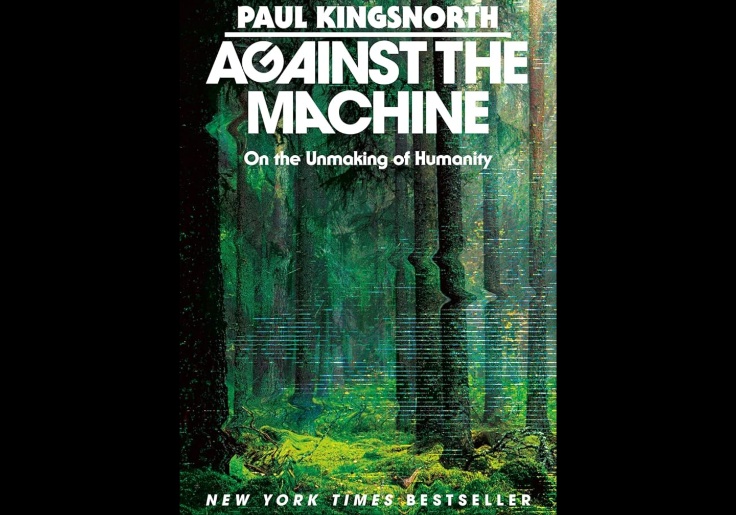
The poet Marianne Moore is credited with describing what poets do as “the art of creating imaginary gardens with real toads in them.” Perhaps that is why it has taken a poet, Paul Kingsnorth, an Englishman who now lives in Ireland, to craft a compelling portrait not of a toad in an imaginary garden, but of the relentless march of the machine in the human world. In Against the Machine: On the Unmaking of Humanity, Kingsnorth offers a fresh take on an old question: How can we know when the technologies we have built to serve us instead end up enslaving us? Or, what happens when the toad destroys the garden?
The post Witness to the Great Unsettling appeared first on .
Country Singer Jeffrey Steele’s New Song Gives ‘A Voice’ To The Forgotten American

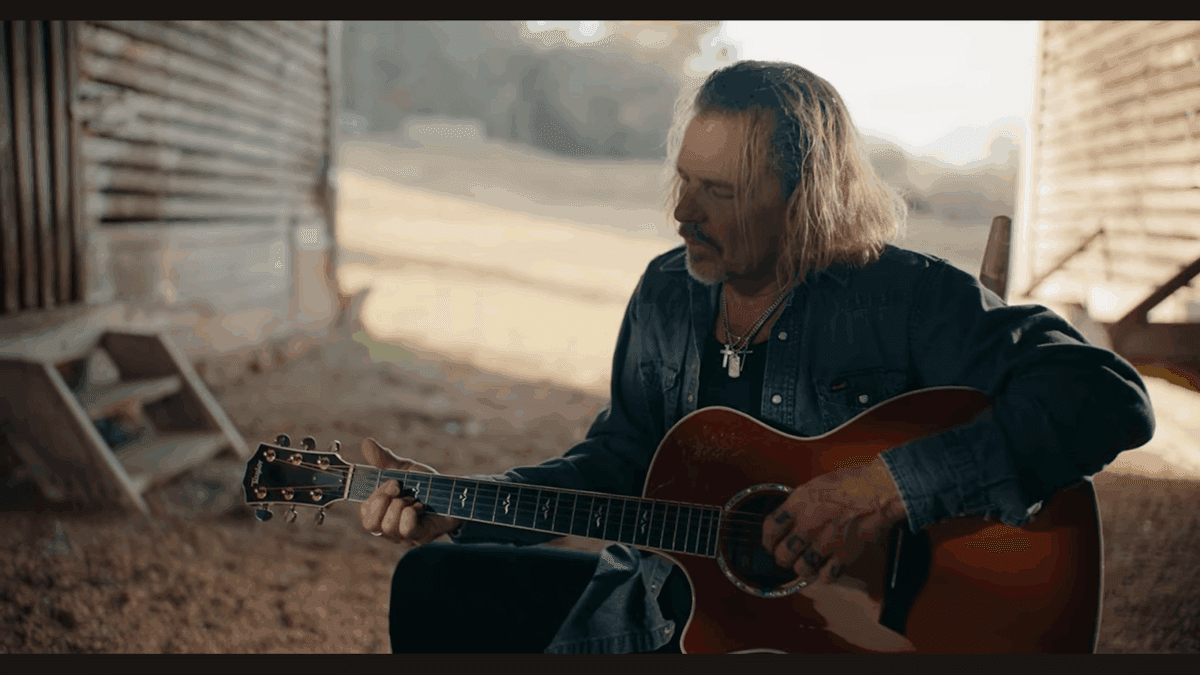 ‘I hope this song becomes a voice not only for people speaking up for others and themselves, but for these young kids and these young artists,’ Steele told The Federalist.
Orthodox saint meets Chicago gang life in gritty crime flick ‘Moses the Black’
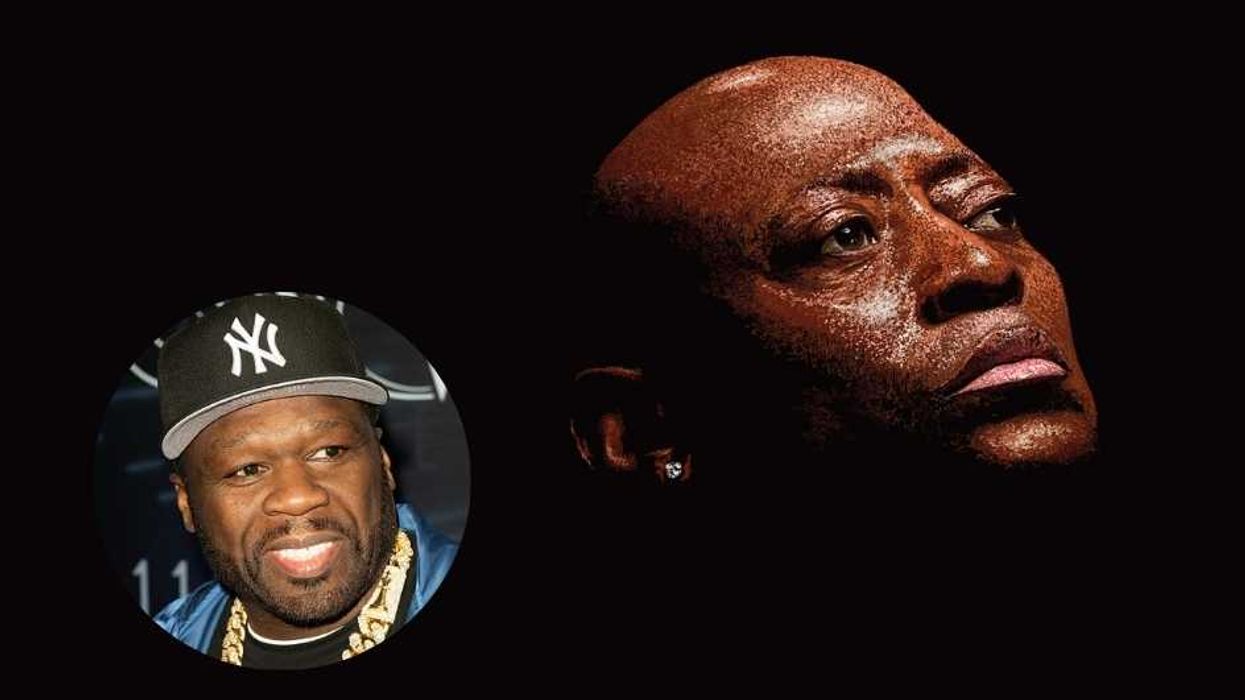
50 Cent is going from sin to sanctity.
Hot on the heels of his recent Netflix documentary on the debauched downfall of hip-hop mogul Sean “Diddy” Combs, the rapper turned producer is set to release an urban crime drama inspired by the life of fourth-century Ethiopian monk Moses the Black.
Even in our compromised state, saints remain scandalous and alluring precisely because they cut against our deepest desires and despair.
Fans of Fox Nation’s “Martin Scorsese Presents: The Saints” will remember the violent bandit turned desert-dwelling ascetic as one of the series’ most fascinating subjects. Officially recognized by Pope Leo XIII in 1887, the former slave has long been venerated as the patron saint of nonviolence and is widely praised as a symbol of the power of peace and repentance.
Out for blood
“Moses the Black,” a loose retelling of that story set against the backdrop of modern-day Chicago, follows Malik (Omar Epps), a gang leader fresh out of prison and seeking to avenge his murdered friend.
Complicating his quest his is grandmother, an Orthodox Christian who gives him an icon of St. Moses, whom she describes as a “saint who was also a gang member.” Haunted by frustration, loss, and a lifetime of sins, Malik starts having visions of the saint, who warns him that the bloody path he has embarked upon is one he will regret.
“Moses” — which also features hip-hop notables Wiz Khalifa and Quavo — makes for an interesting companion piece to director Yelena Popovic’s previous outing, 2021 St. Nektarios biopic “Man of God.” Where that film depicts sanctity as something preserved through obedience and suffering, “Moses” imagines it reclaimed from disorder.
Mean streets
Malik navigates an inner city filled with dealers and enforcers locked into violent criminal lives, casually killing rivals or shooting up funerals over petty grudges. These sequences are among the film’s darkest and do not soften their portrayal of brutality or drug use.
“Moses” is clearly a personal project for the platinum-selling artist born Curtis Jackson, whose own background mirrors Malik’s. Raised by a single mother in Jamaica, Queens — herself a drug dealer who was murdered when he was 8 — Jackson entered the drug trade at a young age. After barely surviving an attack by a rival in 2000, Jackson released his debut “Get Rich or Die Tryin'” in 2003.
Although that album cemented Jackson’s association with the violence and materialism of gangsta rap, its cover found him wearing a jewel-encrusted cross necklace. The tension between survival and transformation is one Jackson understands firsthand.
As he has said:
I believe in God. I didn’t survive being shot nine times for nothing. I didn’t claw my way out of the ‘hood just ’cause it was something to do. I know I’ve got a purpose, a reason for being on this planet. I don’t think I’ve done everything I’m supposed to do yet. But I do know this: I ain’t going nowhere ’til I’ve done it all.
Redemption song
There is something unsettling and compelling about the lives of saints. Even in our compromised state, they remain scandalous and alluring precisely because they cut against our deepest desires and despair. The film’s greatest strength is its depiction of how Catholics and Orthodox Christians turn to saints during moments of trial, seeking models of repentance and change — models Malik strains toward but does not easily inhabit.
RELATED: Blaze News original: 6 more pro-Trump rappers
 Steven Ferdman/GC Images/Getty Images
The film’s ambitions, however, exceed its budget. Extensive handheld camerawork — whether a stylistic or budgetary choice — sits uneasily beside green-screen flashbacks and CGI-heavy desert scenes. The rough Chicago footage clashes with these elements, and the film might have benefited from a tighter focus on Malik’s interior struggle. Exaggerated performances from the supporting cast further push many scenes into melodrama.
Despite its “faith-based” trappings, “Moses the Black” is emphatically not a family film. It includes graphic violence, coarse language, and crude sexual innuendo, narrowing its audience to those inclined to receive its warning. Still, its central claim — that mercy extends even to the gravest sinners — lands with force in a culture starved for hope.
“Moses the Black” will be released through Fathom Entertainment on January 30.
FACTION NEWS: The day the media taught me it’s always wrong to be right
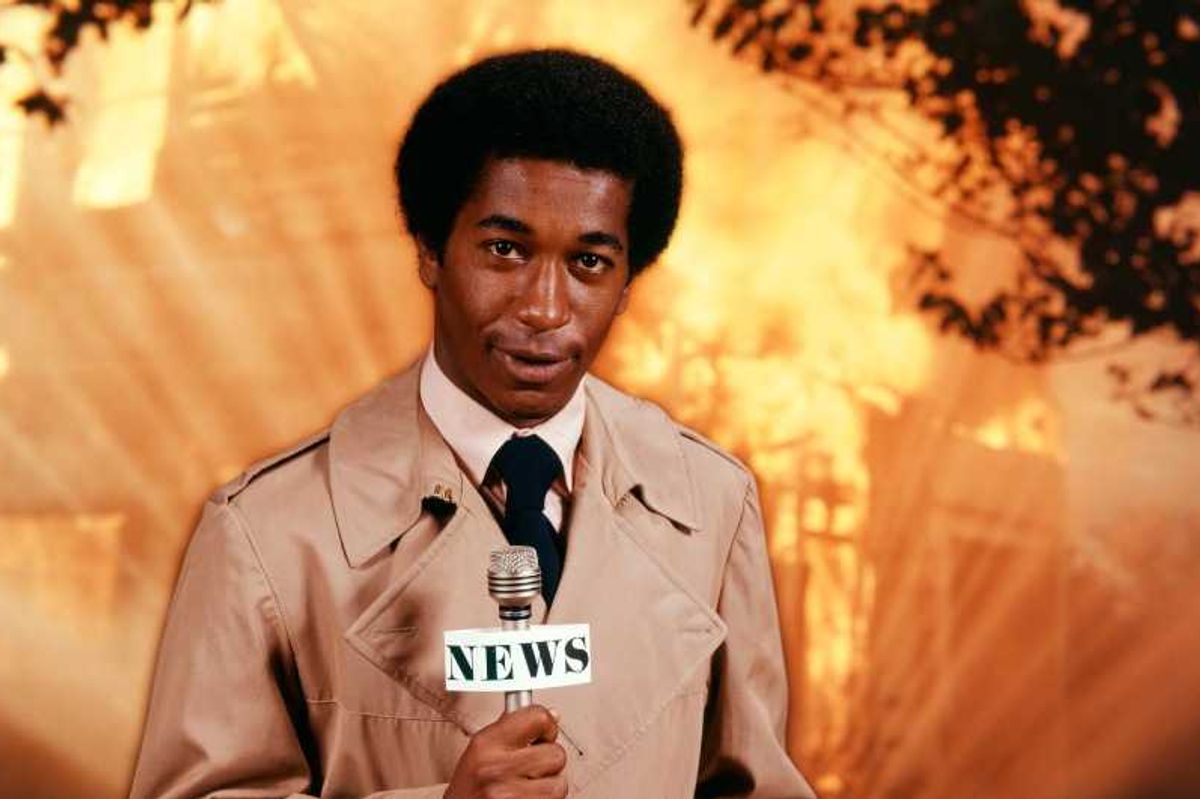
My first experience with an activist journalist came in 2019. I had traveled to Oregon’s state capitol in support of a small group of Republican state legislators. They had refused to appear for a vote, to prevent the Democrats from passing a hotly contested education bill.
This was a strategy the Republicans had used before. Oregon is a solid blue, Democrat-run state. Often, the only tool the Republicans had to stop a bad bill was to leave town and thus deny the legislature their quorum (the necessary number of legislators needed to vote).
Did she really hate Republicans so much, she couldn’t contain her rage for the 10 seconds she was required to listen to my answer? She was a professional news reporter.
So that’s what they did. The Democrats were up to their usual money-wasting, ideology-pushing ways. So the Republicans went AWOL.
Breaking the ice
Our busload of Republican volunteers — about 20 of us — unloaded at the state capitol.
There was media everywhere. The day before, the Democrats had threatened to send the state police after the rogue legislators and drag them back to the capitol building.
To this, one of our more salty, cowboy hat-wearing legislators responded: “Send bachelors and come heavily armed.”
This was about as colorful as politics got here in Oregon.
So that’s why we were there. To show the public that those renegade Republicans had the support of their constituents.
We’d been told to look presentable and interact with the media if possible. I was wearing glasses, a sweater, and a button-down shirt. I looked like a school teacher or maybe a writer (which I am) or one of those retirees who volunteers for things (which I also am).
We gathered in the crowded capitol building. There were reporters and camera crews scattered throughout. I felt like I should break the ice and go talk to one.
I spotted a TV crew from the Portland Fox affiliate. The reporter was dressed up, hair and makeup camera-ready. She was probably 45 years old. She appeared to be a seasoned, professional reporter.
So I walked over to her and said: “Do you guys need to interview a Republican? Do you want a quote?”
“Yeah, sure,” she answered.
Spirited debate
At this point, I was still very new to politics. To me, it still seemed like a game. Like a friendly competition. But that’s what I liked about it. I enjoyed being part of a team and engaging in spirited debate with the other team.
But I also believed in fair play and maintaining a sense of humor. That was my take on the present situation. It was funny. The outlaw Republican cowboys versus the non-binary, they/them Democratic elites? This was a great story!
Which was why it was getting so much attention. And why the capitol was packed with people. Even the national news was covering it.
Seethe the day
The cameraman lifted his camera onto his shoulder. I straightened my sweater and brushed my hair back with my hand.
The reporter asked if I was ready, and I nodded. They turned on the camera.
In her professional voice, the reporter asked me if the Republicans’ leaving town was the proper way to debate an education bill.
She pointed the microphone at me, and I answered, “They’re totally outnumbered. But most people agree with them. So I do think it’s an appropriate strategy.” Or something like that.
That was it. A couple sentences. Clean and simple. She was going to need a quote from someone on the Republican side, so I gave her one.
Not only that, I knew to look at her and not the camera as I spoke. To actually listen to her question before I answered. So it would look good on TV.
But that was the problem. When I looked into her face, she was glaring at me. She had this look in her eyes. It was a look I was not prepared for. I’m not sure I’ve ever actually seen someone look at me like that.
It was a look of total hatred. Like burning, seething hatred. And it was leveled at me! And I was being cheerful and nice. I was helping her out!
Hate on the hour
That look on her face was disturbing. Once they turned the camera off, I just walked away.
What was this woman’s problem? Did she really hate Republicans so much, she couldn’t contain her rage for the 10 seconds she was required to listen to my answer? She was a professional news reporter. She was 45 years old!
If it were some 22-year-old who just graduated from “activist” journalism school, I could understand. But this was a grown woman. Had she never done this before?
Hey, lady: You’re not supposed to HATE people for having an opposing opinion. I DID YOU A FAVOR!
RELATED: ‘Subhuman ghouls’: People, WaPo trash Scott Adams hours after his death
 Photo by Bob Riha Jr./Getty Images
‘Love’ wins
So now, several years have passed, and I see this same phenomenon almost every night on my local news. Not necessarily seething hatred. But something similar. Specifically: the constant messaging that any conservative position, on any issue, is — of course — totally evil. And that the left is always morally correct.
That’s what I saw in the eyes of that local Fox reporter. A total lack of perspective. A soulless fanaticism. She was like a “hate robot” with one mission: the annihilation of people like me!
Unfortunately, this behavior is commonplace now. The division continues to get worse. I don’t know what the solution is, except to point out that hating people, at this intensity level, can’t be good for your health. If you’re hating and seething, you’re probably hurting yourself more than anyone else.





