

Category: Culture
Clothing should be fun

I do a lot of things for work. I take photos, I take videos, I write stories, I write columns, I write about style, and I write about life.
I also help guys dress better. Officially it’s called style advising, but down to brass tacks, it means me helping guys get clothes they are happy with. Helping them get rid of the junk that sits in their closet that they never wear and get into clothes that make them look, and feel, their best.
Exercising creative control in the physical space feels good in a way that’s deeper than exercising the same kind of creativity in the digital space.
It’s one of the most rewarding things I do. I know lots of guys dismiss the importance of clothes, but they do so at their peril. Our clothes really do have a huge impact on our psychological state. They can make us pretty unhappy or pretty happy.
Ready to wear
Does that make us “superficial”? No. It’s an acknowledgment of the fact that what we wear represents who we are to others —and to ourselves. If you aren’t happy with how you present yourself, you aren’t going to be happy with yourself. It’s that simple.
So I take personal satisfaction from watching a guy transform his wardrobe over the course of a year or two. What’s particularly satisfying is observing how his attitude toward clothing changes as he overhauls his closet.
The process usually starts with a pragmatic interest in not looking like a slob. Achieving a baseline presentability eliminates any negative attention slovenly dress attracts. From that point he may start to notice that looking a little more “put together” actually attracts positive attention. And once he starts to experience the fruits of dressing decently in public, he’s ready to start enjoying his clothes.
This means he’s comfortable and confident enough that he no longer sees dressing himself as a test to get “right,” but as an opportunity for personal expression and creativity. Clothes finally become what they’re meant to be: fun.
Or as a client deep into his own wardrobe revamp recently told me, “I’m just blown away by how fun this stuff can get.”
What a difference in attitude and mindset. A realization like that is generally a sign that a certain kind of psychological transformation has been completed.
RELATED: Corduroys: The perfect winter trousers
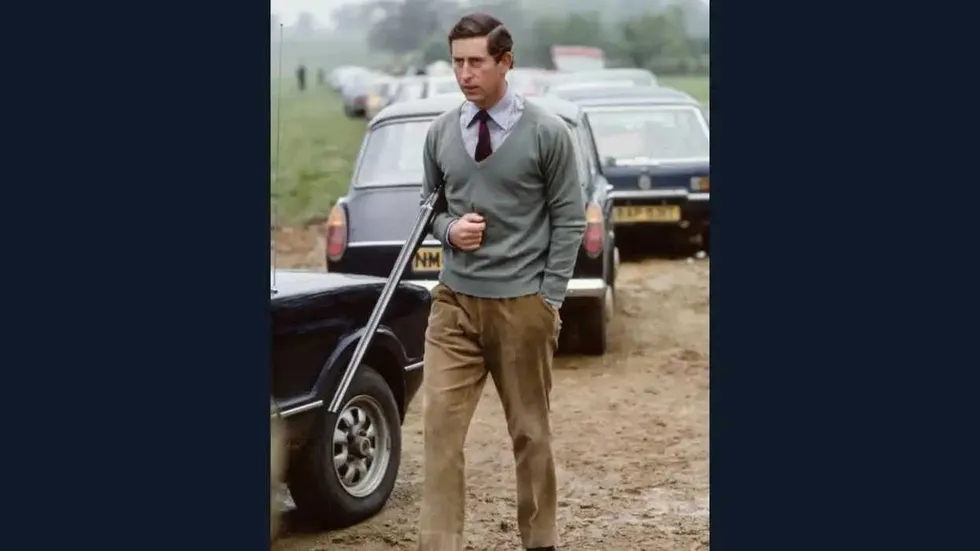
Making the man
I’m aware that the word “fun” may connote something shallow or frivolous — and in some respects clothing can be both. But the pleasure we derive from clothing also derives from its deeper meaning: the way it reinforces the eternal forms of man and woman, emphasizes our dignity as human beings made in the image of God, and reflects our culture, values, and even religious beliefs.
Remember the pastel cars of the 1950s? It’s hard to believe it, but there was a time when when cars weren’t only black, gray, or white. There was a time when cars were fun. Well, it’s the same thing with clothes. If you really look at the stuff the guys were wearing back in those old movies, they were actually having much more fun than the guy who wears dark jeans, a black T-shirt, and a gray hoodie in 2025. Coming to the final realization that clothes should be fun is actually a kind of returning to tradition.
Creative control
The thoughtfully designed, personal interior of your home feels more welcoming than an airport terminal. A carefully cultivated garden is more beautiful than an expanse of artificial turf. And a well-fitting and harmonious combination of shirt, jacket, and trousers is more flattering than a prison-like monochrome sweatsuit.
There’s also a peculiar psychological benefit to embracing clothes as a domain of fun. Exercising creative control in the physical space feels good in a way that’s deeper than exercising the same kind of creativity it in the digital space.
In our screen-dominant era, the experience of joyfully controlling your personal environment is humanizing and refreshing. It’s good to like how you look and know that you are the one responsible for it. It feels like we are actually doing something rather than just moving pixels around.
Of course, it goes without saying that not all fun is good fun. We know that’s true about all sorts of stuff in life. Many a bad decision sure was fun at the time. So it goes with the temporary thrill of donning stupid neon graphic T-shirts, grotesque Crocs, alien-green sweatpants printed with pizza motifs.
Many men today begin their style journey as overgrown children who have enjoyed this “bad” kind of fun for most of their lives: the dumb T-shirts and the stupid shoes. But then they decide to grow up, and after working through their wardrobe, they come to understand that these classic clothes are not just good for the soul or society. They are fun, and they are the right kind of fun, the kind of fun that edifies and enriches us.
It’s the testosterone, stupid!
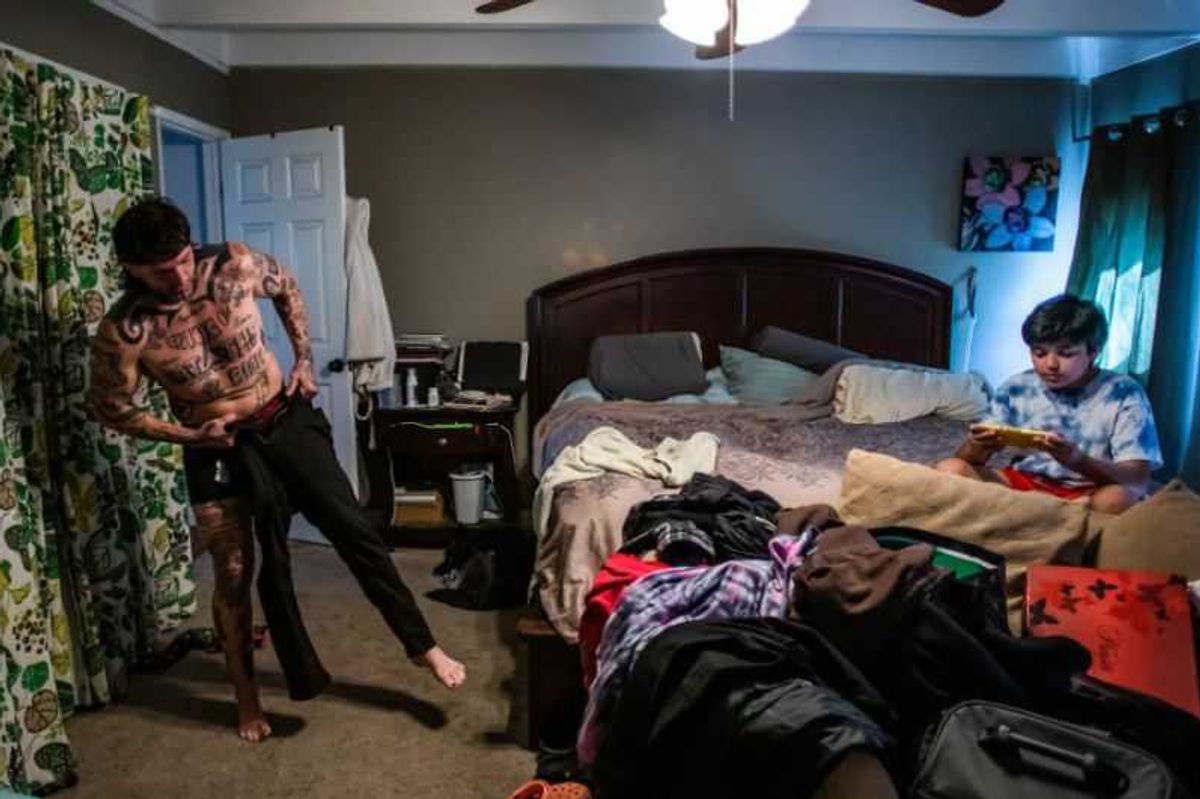
It was with great interest that I read Matthew Gasda’s latest essay, on the state of men in 2025, “Masculinity at the End of History.”
Gasda has a lot of things to say that are germane to my new book, “The Last Men: Liberalism and the Death of Masculinity” (out December 16), not least of all whether America — and indeed the Western world as a whole — exhibits what could be called a “crisis of masculinity” in the first place.
We have reams of data showing what can only be described as a civilizational decline in testosterone levels, a decline that may have no parallel in history.
There are plenty of observers — writers, social scientists, journalists, politicians, celebrity psychologists — who think so.
A crisis in need of a crisis
Gasda disagrees. In fact, he believes the absence of a crisis is precisely what’s ailing America’s young men. Men need crises in order to be men. Without crises, their mettle isn’t tested, they have no higher aspirations to direct themselves toward, and so they fall into a listless state, an aimless state, a kind of suspended adolescence.
Porn. Pot. Video games. Social media. Processed food. Logging on and dropping out. We all know what it looks like.
“Masculinity is desperate for a crisis,” Gasda writes in the opening paragraphs of his essay.
It is docile, unsure, and formless. At most, it is at the germinal phase of crisis, lacking a catalytic agent to propel it to its full-blown state, which at least can be registered and reckoned with. After all, crisis implies that something is happening, that something is at stake. The uncatalyzed proto-crisis, or the noncrisis, of American masculinity is repressed, unexpressed, yet omnipresent.
It’s a typical literary switcheroo — Gasda is a playwright, after all — but he’s not wrong. Nor is he the first to say that what men really need is a crisis — read: something extraordinary — to give full form to their potential.
Declaring ‘war’
Back in 1910, the pragmatist philosopher William James, brother of the novelist Henry, wrote an essay called “The Moral Equivalent of War.” A committed socialist and pacifist, James nevertheless regretted the march of progress and with it the (apparent) decline of war, because he recognized war’s power to form young men and inculcate in them the highest possible virtues. War teaches men to subordinate themselves and their needs to those of the collective, to pursue a higher goal, and, if need be, to give their lives for it. War teaches men courage, service, self-sacrifice, stoicism, and patriotism, and all of these things are necessary for a properly functioning nation in peace.
But war is also a terrible, terrible thing — and it was rapidly becoming much worse, though just how much worse James could not have foreseen. What we need, James argues, is a “moral equivalent” of war, a substitute that could teach men the same lessons without the enormous destructive cost.
James’ proposal is quite clever: Rather than a war against each other, we need a war with nature. Young men should be enlisted into a national struggle to conquer and tame nature and to revolutionize the means of production. Send boys off to build railroads and skyscrapers and ships, and they’ll return as men, ready to lead families and the nation.
Manufacturing manhood
This isn’t too different, actually, from what Gasda advocates in his new essay, when he says a national project in which all or many men could participate might be a great spur to masculine revival.
If the objective of America in the years ahead is to reclaim global leadership in industrial production, that is, in the making of things in the real-world economy, as opposed to just in the realm of bits and pixels, then new avenues for masculine exertion, discipline, creativity, and camaraderie may arise from such a project.
There’s much to like in Gasda’s essay and much to agree with. He’s right about how the breakdown of communities and the loss of tradition have hindered the transmission of masculine ideals across the generations. He’s right about the need for rites of passage to confer status on men. Countless anthropological studies have shown the crucial role, in virtually every kind of society except our own, of tests of courage and fortitude at key moments in life, and psychologists have demonstrated how pain and trauma bond people together and provide a sense of shared identity.
He’s also right to argue that Americans must “historicize” masculinity. That is, they must understand its peculiar focus on strenuous exertion and relentless self-making in its particular historical context: a masculine ideal developed in conflict with a frontier, both the physical frontier of western expansion and the social and moral frontiers of a new national identity.
And he’s right, obviously, that we live in an age that’s fundamentally hostile to expressions of masculinity and that we can’t simply return to the past and past ideals, as so many simple-minded critics of the modern world, especially on social media, seem to believe.
That’s all to the good. But there are also serious problems.
No country for men
For one thing, it’s not clear just how much American men really could get behind a drive to, in Gasda’s words, “reclaim global leadership in industrial production.”
If America does return to industrial pre-eminence, most if not nearly all manufacturing is going to be high-tech and automated — hardly the kind of gigantic Soviet five-year plan that could simply swallow up millions of men and give them jobs in factories or even give them jobs at all.
It’s not just manufacturing that is on the verge of making human labor largely a thing of the past. Whole swaths of industry and even white-collar fields are undergoing the same revolutionary changes. Librarians and lawyers and proofreaders and doctors will be replaced by AI and large language models too.
The testosterone decline
A far graver problem, from my perspective, is that like the vast majority of the so-called “crisis of masculinity” literature that he derides, Gasda fails to take seriously, or even acknowledge, the biological changes that are throwing men’s masculinity into doubt — in particular, a headlong decline in testosterone, the master male hormone that’s responsible for making men men and not women.
Testosterone is not just responsible for sexual differentiation — for the physical characteristics that define boys, beginning in the womb and proceeding through infancy and the teenage years into adulthood — but it also governs male mood, motivation, libido, and even things like political attitudes.
Although we should be careful not to say testosterone determines political views, social psychology experiments reveal that a testosterone boost will make a man more likely to defend his position even when he’s outnumbered by people who disagree with him; it will make him more likely to continue fighting against a much stronger opponent; it will make him more accepting of hierarchy and inequality; it will make him more generous to his in-group — his own people — and more aggressive toward his out-group — potential enemies.
In short, testosterone and its effects are complex, but they work in ways that obviously tend toward behavior we associate with traditional masculinity. The less of it men have, the less masculine they become, as a basic rule.
Aggressively overlooked
Open a best-selling book like Richard Reeves’ “Of Boys and Men,” head to the index, and look for “testosterone,” and you’ll find a poverty of references. Reeves talks about testosterone for just a few pages, but only to dispel the notion that boys “are their hormones,” meaning boys aren’t doomed to be aggressive because they have more testosterone (pop science’s “aggression hormone”) than girls. That’s it. Apparently, biology just isn’t important when we’re talking about the serious problems with men today.
It’s a strange oversight. We have reams of data showing what can only be described as a civilizational decline in testosterone levels, a decline that may have no parallel in history. We know what this decline entails, and if we don’t, we really should try to find out.
RELATED: All-natural tallow: Everything your skin needs — without the hormone disruptors
 North Idaho Tallow Company
Compelling evidence
The first real herald of a civilizational decline in testosterone levels was the Massachusetts Male Aging Study, a gold-standard double-blind controlled study of men in the Boston area. The study took place over a period of around 20 years, from the end of the 1980s to the early 2000s. Men of all ages were selected at random and given a battery of tests at regular intervals. When the testosterone data was finally analyzed in 2007, it showed testosterone levels were declining year over year at a rate of about 1%.
That might not sound like much, but over a period of 20 years, that’s 20%, or one-fifth. On a longer timeline, say 50 years, that’s half of all testosterone — gone.
Researchers in other countries, including Finland and Israel, wanted to see whether the same trend was happening in their countries. In Finland, where male reproductive parameters are generally better than in the U.S., the researchers believed the Boston trend would not be replicated. Guess what? The trend was actually worse, and the researchers showed it was taking place over a much longer period of time. The results of the MMAS were replicated in Israel, too, and in other American studies.
Quantifying maleness
It’s hard to quantify exactly how many men have low testosterone, in large part because nobody agrees on exactly how little testosterone counts as low. Ask one doctor and he’ll give you one figure; another will tell you it’s half or double that amount.
Symptomology is generally the best way to go looking for low testosterone, and what we see, everywhere we turn, is men who look and behave like they have low testosterone.
In Japan today, there are millions of hikikomori, or extreme social recluses — young men who simply refuse to participate in society. They hide themselves away at home, often with their parents, and play video games, eat junk food, and just “rot,” to use a current term.
At least one expert believes there may be as many as 10 million hikikomori, in a nation of 120 million people — that’s one in 12 people. Unsurprisingly — to me at least — research has shown young Japanese men are at significantly greater risk of becoming hikikomori if they have low testosterone.
America has its hikikomori too, although they aren’t called that. Maybe as many as 6 million, by some estimates.
Some of them congregate in special subforums on the website Reddit, like r/lowT, where they discuss what it’s like to be a man with low testosterone: how they have no motivation, no libido, can’t sleep, can’t get an erection, are developing gynecomastia — man boobs — and are overweight and anxious all the time.
Many of these men also describe the miraculous effects of increasing their testosterone, more often than not through a doctor’s prescription of testosterone in gel or injectable form.
Spermageddon?
What’s even more worrying about this decline is that it’s part and parcel of a broader decline in reproductive health parameters among men.
This isn’t a surprise: If men’s testes aren’t functioning properly and producing enough testosterone, they’re unlikely to be producing enough of other important things either. Sperm counts and sperm quality — a measure of sperm’s ability to swim properly and do their job — are declining so rapidly that one expert, Professor Shanna Swan, is predicting a “spermageddon” scenario, in which humans are unable to reproduce by natural means.
Swan made this the subject of a 2021 book, “Count Down.” Simply by extrapolating the data for sperm-count decline, Swan has shown that by around 2050, the median man will have a sperm count of zero. One half of all men will produce no sperm at all, and the rest will produce so few that they might as well produce none, because they won’t be able to get a woman pregnant, try as they might.
What’s causing these changes? It’s lots of different things, a whole range of lifestyle factors — lack of exercise, smoking, bad diets, poor sleep, stress — but also widespread exposure to harmful chemicals known as “endocrine disruptors,” for their negative effects on the body’s hormonal (endocrine) system.
From low-T to trans
When I say endocrine disruptors are everywhere, I mean it: They’re in the food, the air, the water, the clothes we wear, our bedding and furniture, the deodorants and fragrances we put on our bodies, the little scented trees we put in our cars, anything that’s made from plastic.
A significant proportion of these harmful chemicals directly or indirectly mimic the effects of the hormone estrogen, interfering with the body’s crucial hormonal balance (more testosterone and less estrogen for men, the opposite for women). This is a nightmare for both sexes. As well as reducing testosterone and fertility in men, exposure to endocrine disruptors can lead to genital abnormalities, weight gain, and metabolic issues and even certain kinds of cancer.
New research has linked exposure to endocrine disruptors during gestation to transgenderism. French boys exposed to the chemical diethylstilbestrol, which used to be given to mothers at risk of miscarriage, had a massively increased risk — perhaps as much as a hundredfold — of undergoing gender transition later in life. On paper, it was always plausible that exposure to endocrine disruptors should be linked to gender dysphoria, but since transgenderism is such a toxic issue politically, there’s been little desire, until now, to pursue research into the link.
In a very real sense, then, not only have we created a society where masculinity is ridiculed, dragged through the mud, and denounced as retrograde, we’ve also created one where the biological constituents of masculinity, its very building blocks, are under direct attack at the same time. It’s a complicated problem, and it’s viciously circular. Biology and society exist in feedback loops, with negative effects reinforcing each other, deepening the spiraling decline.
While Gasda, like William James before him, may be right that men need a crisis to bring out the best in them, the very real danger today is that when one finally comes, men won’t have the energy or enthusiasm or desire to put down the controller, stand up, and answer its call. And if that really is the case, testosterone — the lack of it — will be to blame.
The Last Time New York Hit Rock Bottom
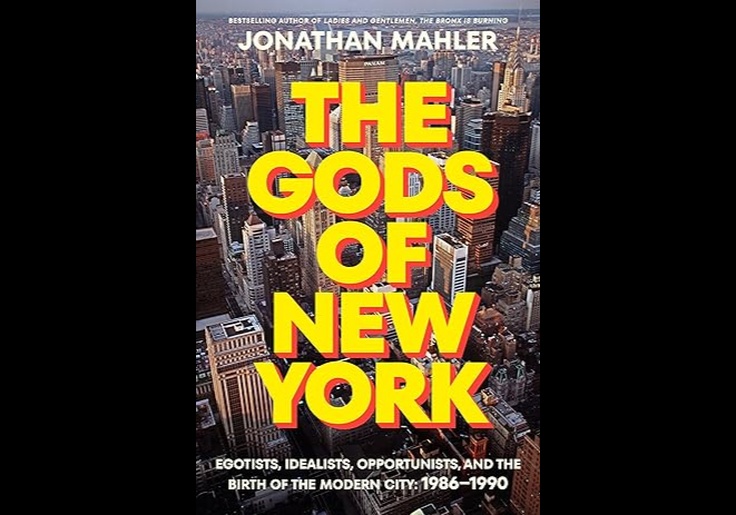
Jonathan Mahler’s first book, the 2005 Ladies and Gentlemen, the Bronx Is Burning, was a work of historical journalism that re-created the summer and fall of 1977. Mahler interweaved the story of the New York Yankees World Series-winning season with the chaotic events in the city that year, including the Son of Sam murders, the massive city-wide blackout that summer, and the free-for-all mayoral election that featured Ed Koch, Mario Cuomo, and Bella Abzug.
The post The Last Time New York Hit Rock Bottom appeared first on .
A Book So Bad It Shattered Liberals’ Faith in DEI
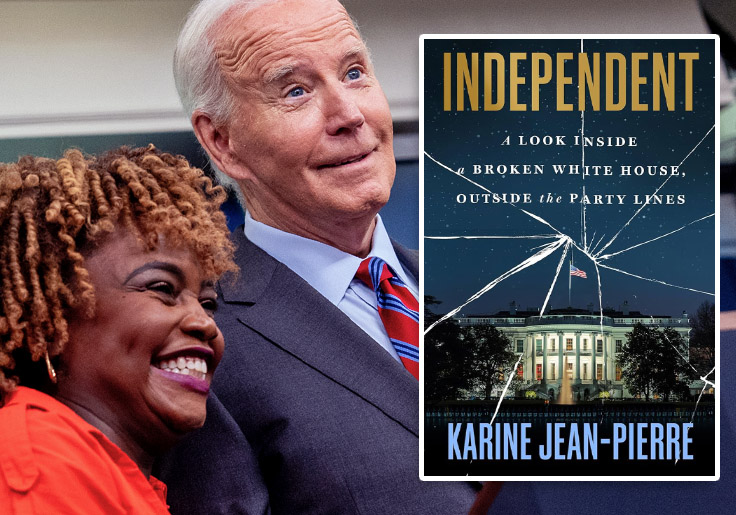
Karine Jean-Pierre can’t stop making history. Earlier this year, the former White House press secretary became the highest-ranking openly queer, French-born black woman with a hyphenated surname to publicly renounce the Democratic Party for being mean to Joe Biden. She is the only black female lesbian immigrant to publish a book about her time in the Biden administration. It is the worst political memoir ever written in the history of the English language.
The post A Book So Bad It Shattered Liberals’ Faith in DEI appeared first on .
Last Exit Before Superstardom
Bruce Springsteen writes happy music with sad lyrics. The exceptions to this are the two 1980s albums that sandwiched his happiest record of all. Born in the U.S.A., which came out in 1984, was preceded by Nebraska, from 1982, and Tunnel of Love, from 1987. Tunnel of Love is more than sad. It sounds like tricyclic antidepressants set to music: minor chords and moany lyrics in a padded cell of synths and numbly metronomic drum programming. Nebraska is also more than sad. It is tragic, and bare and raw where Tunnel of Love is overstuffed and dull.
The post Last Exit Before Superstardom appeared first on .
John Leguizamo’s ‘The Other Americans’ puts art before activism

“Do you know John?”
Yeah, LinkedIn. I know John Leguizamo.
 LinkedIn
There is no way John Leguizamo knows me, but following the professional networking platform’s suggestion, I went ahead and sent an invitation to the actor/producer to connect.
I grew up in Queens; my family has a butcher shop in Spanish Harlem. If you think Latinos are so united, see what happens when you call a Puerto Rican a Mexican.
I haven’t kept up with Leguizamo’s career. The only times I see him pop up now is when he’s complaining about the lack of Latino representation in show business. In fact, when it comes to complaining about representation, John Leguizamo is overrepresented.
‘Liquor Store Gunman’
I read in Variety that early on in his career, Leguizamo “felt humiliated” playing the role of “Liquor Store Gunman” in Mike Nichols’ “Regarding Henry” (1991).
“I shoot this white guy [Harrison Ford],” Leguizamo explains. “It was like, ‘Oh my God, I’m perpetuating what they want to see,’ which is negative Latino images.”
It’s interesting that Leguizamo felt humiliated playing a Latino stereotype in “Regarding Henry” but managed to put that humiliation aside a couple years later to play a Latino stereotype in “Carlito’s Way.” To be fair: Latino gangster Benny Blanco from the Bronx is a far more memorable character than Liquor Store Gunman. (What kind of last name is “Gunman” anyway? It ain’t Latin.)
When not at the mercy of other screenwriters and casting agents for roles, Leguizamo, a one-man-show-making machine, made a career out of performing his own Latino characters — which are not all necessarily negative images but certainly stereotypical in many respects. I mean, this is the same artist who made “Freak,” “House of Buggin’,” and “John Leguizamo’s Spic-O-Rama,” which is not to be confused with generic Spic-O-Rama.
In an interview with “NBC Nightly News,” Leguizamo declares, “We’re almost 20% of the population, I want 20% of the executives, 20% of the stories, 20% of the principal leads, then I’ll be quiet.”
Regarding ‘us’
By “we,” of course he means Latinos — which includes me (even though, again, John doesn’t know me).
I doubt a perfectly equitable distribution of roles in show business along ethnic lines will quiet Leguizamo though. Even a world where an Al Pacino can’t swoop in to capture the leading Cuban and Puerto Rican roles will shut Leguizamo up.
Notice Leguizamo isn’t making this appeal for equity when it comes to other industries. Can you picture John Leguizamo showing up to a farm or construction site, demanding fewer Latinos — legal or undocumented — because they’re overrepresented?
So in the year 2025, we’re about 20% of the population, but looking back at the “Regarding Henry” year of 1991 — can you imagine if that were the movie that defined 1991! — Latinos were only about 9% of the population.
In the year of Benny Blanco from the Bronx, 1993, it jumped to about 9.5%. The further you go back, the fewer Latinos there are in the United States. To expect to see yourself represented when there are so few of you out there is quite something. Narcissistic, you might call it. Perfect for a talent like Leguizamo — who has made a lot of work for and about himself. Albeit a lot of good, original, entertaining, and funny work, I must say.
Hate-watch interrupted
Which brings me to his new play, “The Other Americans,” at the Public Theater — which I only heard about because of Leguizamo’s media appearances that come across like he’s on a grievance tour.
So from a marketing standpoint, the Colombian American’s promotional shtick worked. I bought a ticket — but to hate-watch his play.
I don’t like going into a show expecting it to suck — let alone wanting it to suck. I tried to shake those intentions as best as I could. One thing I made sure not to do before the show was to read Leguizamo’s “note from the playwright” that’s printed in the playbill. I don’t know if it really made a difference, because once I stepped into the Anspacher Theater at the Public Theater, he’d won me over.
I had a seat center-stage in the second row. The set looked like an authentic house in Forest Hills, Queens, with a fenced-in backyard and even an above-ground pool that the neighbors could see from their second-story windows. If the Jeffersons had been Latinos, this is what moving on up from Jackson Heights would look like.
The change in neighborhoods is a punch line, as is the pool. One of the first arguments in the play is whether the above-ground pool is a real pool or not, because real pools are in-ground, you know. Yes, an above-ground is kind of trashy, but it still holds water.
RELATED: Bill & Ted share absurdist adventure in new ‘Waiting for Godot’
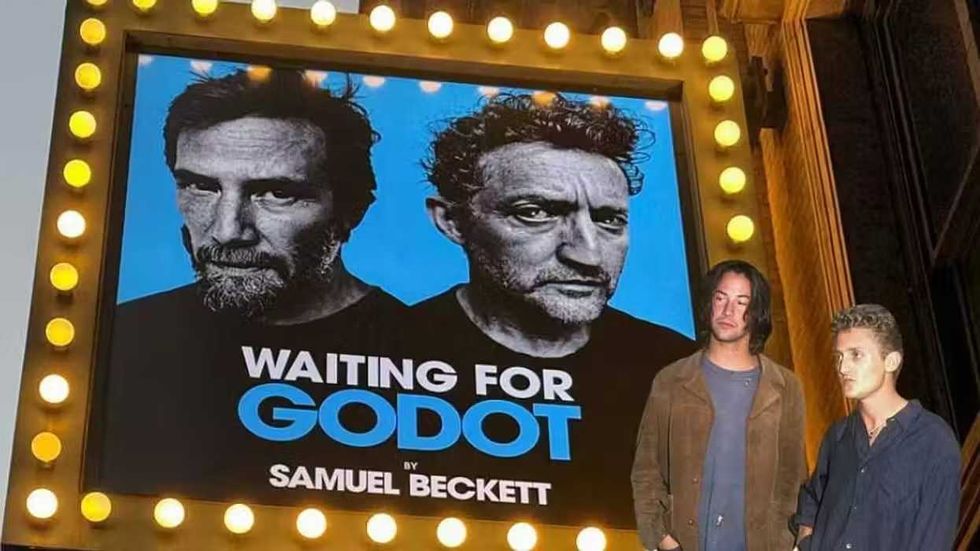 Bruce Glikas/Michael Ochs Archives/Getty Images
Crowd-pleaser
Leguizamo plays Nelson Castro, a Colombian American laundromat owner, and from his first entrance onto the stage, I’m all in, whether it’s watching him mix a drink or listening to him curse into his cell phone — in English and Spanish. When his wife, Patti (played by actress Luna Lauren Velez), arrives, they’re soon dancing, like a stereotypical Latin couple. The audience loves it.
It feels like I’m on the set of a mult-cam sitcom. The live audience laughs, oohs and aahs. At one point in the play, an audience member caps one of Patti’s lines with what I think was a, “You go, girl!”
I remember Leguizamo saying he was out to create “a new type of American drama” — but what we’re presented with at first is something I could see running on network TV. They’d have to clean up the language and cut back on the Spanglish, but even the plot is perfect pilot material.
Complicated portrayal
Nelson and Patti are preparing for their daughter Toni’s wedding as well as the return of their son, Nick, who’s been gone for some time. Mami’s so nervous she keeps burning the sofrito!
During one of their dance passes in the living room, I notice a run in Patti’s stocking. That image — whether the wardrobe department meant for it to be there or not — has stuck with me.
It turns out their son is coming home after being hospitalized for a nervous breakdown — which his therapist attributes to his family not addressing the trauma he experienced when he was brutally beaten by a group of white boys his last year of high school.
The attack happened at one of his family’s ’mats. The perpetrators even tried to stuff him into one of the washing machines “to wash the brown off of him.” (I guess the racist white boys succeeded? Because the actor who plays Nick, Trey Santiago-Hudson, is rather pale-skinned.)
Nick is in pain and while Nelson wants a do-over with him, the Latin father is not equipped to deal with it. Imagine asking your son who was just released from a mental institution what he has to be anxious about?
It’s in these moments where Leguizamo really shines. He plays such a great dick! Although I don’t think “shines” is the right word for a performance that has so much darkness to it. Nelson is not just a flawed man — in many respects, he’s a wicked man.
The plot to “The Other Americans” is so well-crafted that I don’t want to risk revealing too much, but in one exchange, a family member compares Nelson to Sisyphus of Greek mythology. It’s a setup to a perfect sitcom punch line, where Nelson assumes it must be a real Greek guy from Astoria. But while Nelson shares some traits with Sisyphus, I think he’s even more like Tantalus.
Who’s ‘we’?
In his note from the playwright, John Leguizamo writes:
I wanted to write a play about race, and I wanted it to be complicated. I didn’t want it to be a morality play, but rather I wanted to show life as we Latino people experience it. We don’t always see the microaggressions, or the systemic road blocks in effect. Even though there’s a subtle tokenism at work around us, we often witness the macroaggressions: those obvious, in-your-face type moments. We Latinos experience racism through poverty, the schools in which we are allowed to enroll, and the geographical areas in which we are packed. In New York City, we are equal to the white population, yet you never see us on the cover of newspapers and magazines.
There’s more to his note, but I think this bit above is worth addressing. Firstly, this “we” stuff has got to go. Latinos are not a monolith. I grew up in Queens; my family has a butcher shop in Spanish Harlem. If you think Latinos are so united, see what happens when you call a Puerto Rican a Mexican.
Secondly, in the play Nelson is the one who blames “the system” (which is synonymous with racism) for his lot in life — for example, the failure of his laundromats. “The toxicity of the American dream” is another way I’ve seen it described. But as Nelson’s secrets are revealed, what becomes clear is that he, a tragic figure, is the one responsible for his and his family’s downfall.
The system — if there is one — has actually been very good to the Castros. Just like in real life, the system has been very good to Leguizamo.
With “The Other Americans,” Leguizamo fails to make his political statement but succeeds in making a powerful piece of art. ¡Bravo, hermano! Please accept my invitation on LinkedIn.
Horror show: ‘The View’ too scary for conservatives, boasts Behar
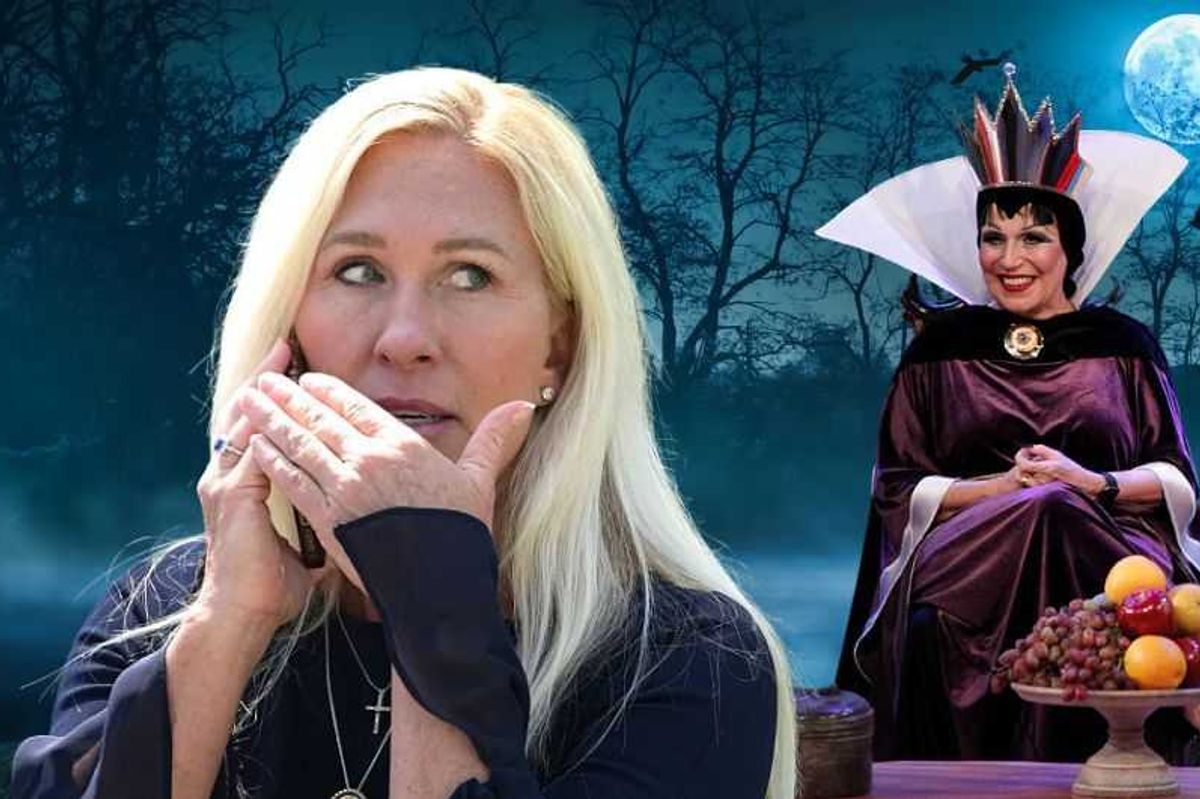
Talk about a booby prize.
Rep. Marjorie Taylor Greene (R-Ga.) recently declared war on the GOP on several fronts, and instead of a trophy or plaque, she’ll get the honor of matching wits with those doyennes of derangement on “The View” next week.
The ever-present smile. The blazing hypocrisy. The fact that ‘Escape from New York’ is getting an all-too real sequel starting ASAP.
Apparently, Taylor Greene’s recent ideological about-face makes her the perfect conservative foil on a show that tends to veer — if not careen — left.
Co-host Joy Behar recently griped that the show can’t book right-leaning guests because, “They’re scared of us.”
Sure, Joy. Just like I’m “scared” of the 8-year-old Minecraft zombies who’ll be knocking on my door for Kit-Kats tonight.
Here’s a trick to make “The View” more compelling — stop treating guests who don’t agree with you like fun-size Snickers bars. It’s OK to have more than one.
Pretty payday
Julia Roberts is a genius. Or at least, her agent is.
The Oscar winner isn’t as active in Hollywood as in her box office heyday, but she still convinced a movie studio to pay her $20 million for her to star in “After the Hunt.”
The Me Too-themed drama cast Roberts as a professor torn between a trusted colleague (Andrew Garfield) and a bright student (Ayo Edebiri), who claims said colleague sexually assaulted her.
The film has made just $9 million worldwide and is already fading after two weeks of release. The budget? A reported $80 million, including that hefty price tag for the erstwhile “Pretty Woman.”
Paying 1995 rates in 2025 — when even the most beloved Oscar-winner can’t guarantee butts in seats? Well, Hollywood is the land of make-believe.
Billion-dollar baby
You first, Billie.
Androgynous crooner Billie Eilish is taking a bold stand against billionaires. The “Bad Guy” singer addressed a room full of rich, powerful people to accept an “innovator” award from the Wall Street Journal Magazine. Said room included mega billionaire Mark Zuckerberg, apparently.
She used the moment to lecture the ultra rich.
“Love you all, but there’s a few people in here that have a lot more money than me. … If you’re a billionaire, why are you a billionaire? No hate, but yeah, give your money away, shorties.”
Set aside the economic ignorance, the body shaming, and the fact that she’s a millionaire many times over. She just cut a gargantuan check to help defeat, check notes, “climate justice.” Why not just go full Joker and set a mountain of cash on fire? At least she could write a song about it …
RELATED: ‘The Naked Gun’ remake is laugh-out-loud funny? Surely, you can’t be serious
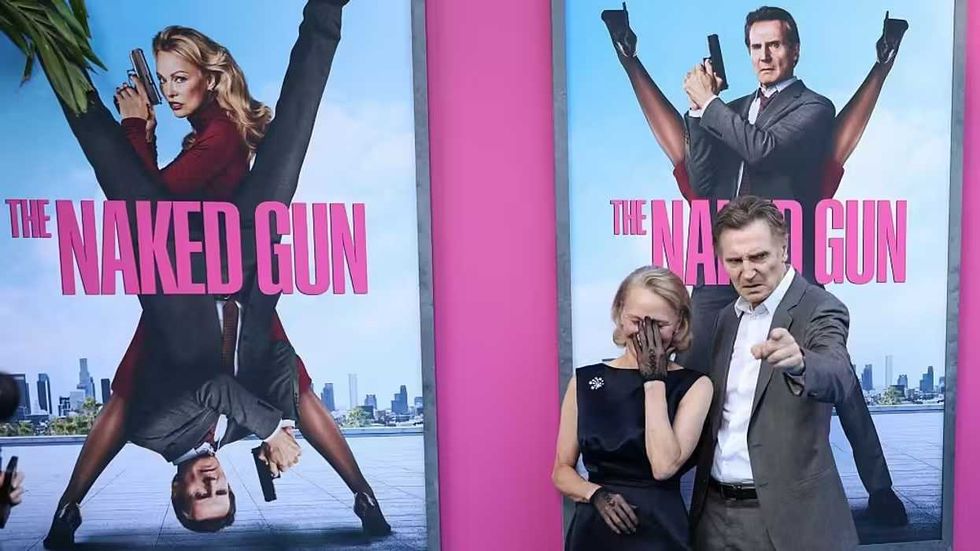
Don’t mess with the Zohran
There’s nothing funny about the rise of Zohran Mamdani.
The future New York City mayor is a terror apologist, an anti-Israel zealot, and an economic illiterate. There’s more, but you get the picture. Still, political satirists should have a field day with Mamdani on so many levels.
The ever-present smile. The blazing hypocrisy. The fact that “Escape from New York” is getting an all-too real sequel starting ASAP.
Instead, comedians are standing down. Anyone shocked? A new study by Newsbusters shows that late-night comics are targeting everyone else in the crowded New York mayoral race save Mamdani.
“Only three out of 63 jokes were about the socialist front-runner,” the site tallied. And that doesn’t count comedian turned shill Jon Stewart comparing Mamdani to Jackie Robinson …
Kim K’s moonshot
Reality stars say the darndest things.
It’s easy to poke fun at Kim Kardashian for her choice in suitors. That Kanye West pairing didn’t end well, did it?
Still, Ms. Kim is a savvy business person who transformed a sordid sex tape into a reality show empire. Just don’t ask her to teach a history class anytime soon.
Kardashian is co-starring with actress Sarah Paulson on the TV show “All’s Fair,” and apparently the two are quite chatty behind the scenes. Kardashian loves sharing her conspiracy theories with her co-star, including her belief that America never landed on the moon.
She pointed to a clip of Buzz Aldrin mishearing a question as part of her “proof.” In her defense, maybe she’s trying to recruit Candace Owens to her next reality show gig …
‘Fack’ all
Comedy is truly on the comeback trail.
The woke mind virus is fading. Roasts are back in vogue. The recent “Naked Gun” reboot was funnier than anyone expected. Now, a new trailer for a “Downton Abbey” spoof looks like the year’s brightest surprise.
“Fackham Hall,” hitting theaters December 5, packs more laughs in its two-minute running time than some mainstream comedies. The physical shtick is priceless, and the oh, so stuffy “Downton Abbey” vibe begs for a good satirical swatting.
At this rate, even Jimmy Kimmel might make us laugh before 2025 ends.
Places To Visit In D.C. Unaffected By The Government Shutdown

 If you’re at a loss for what to do in Washington during the shutdown, or if you’re looking for off-the-beaten-path places to visit once the government reopens, check out this list.
‘Last Days’ brings empathy to doomed Sentinel Island missionary’s story
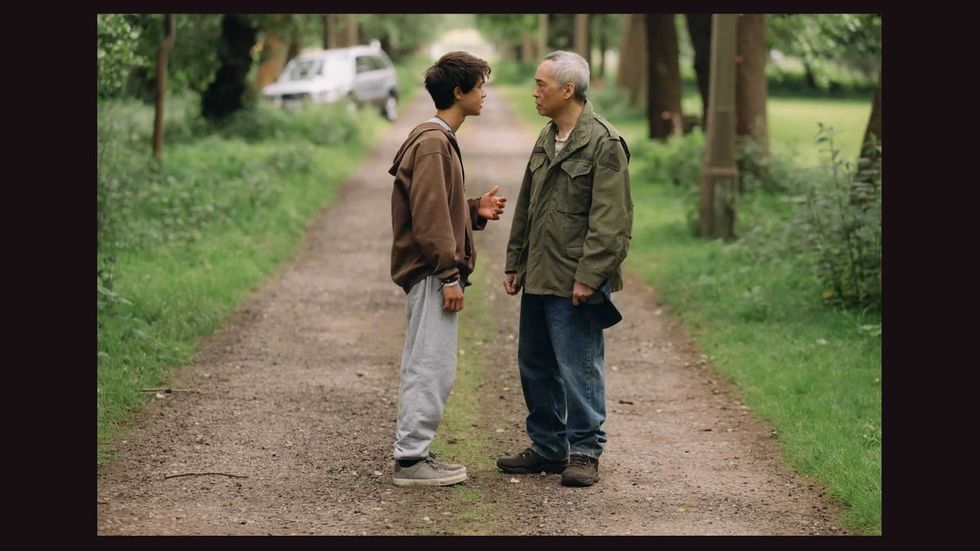
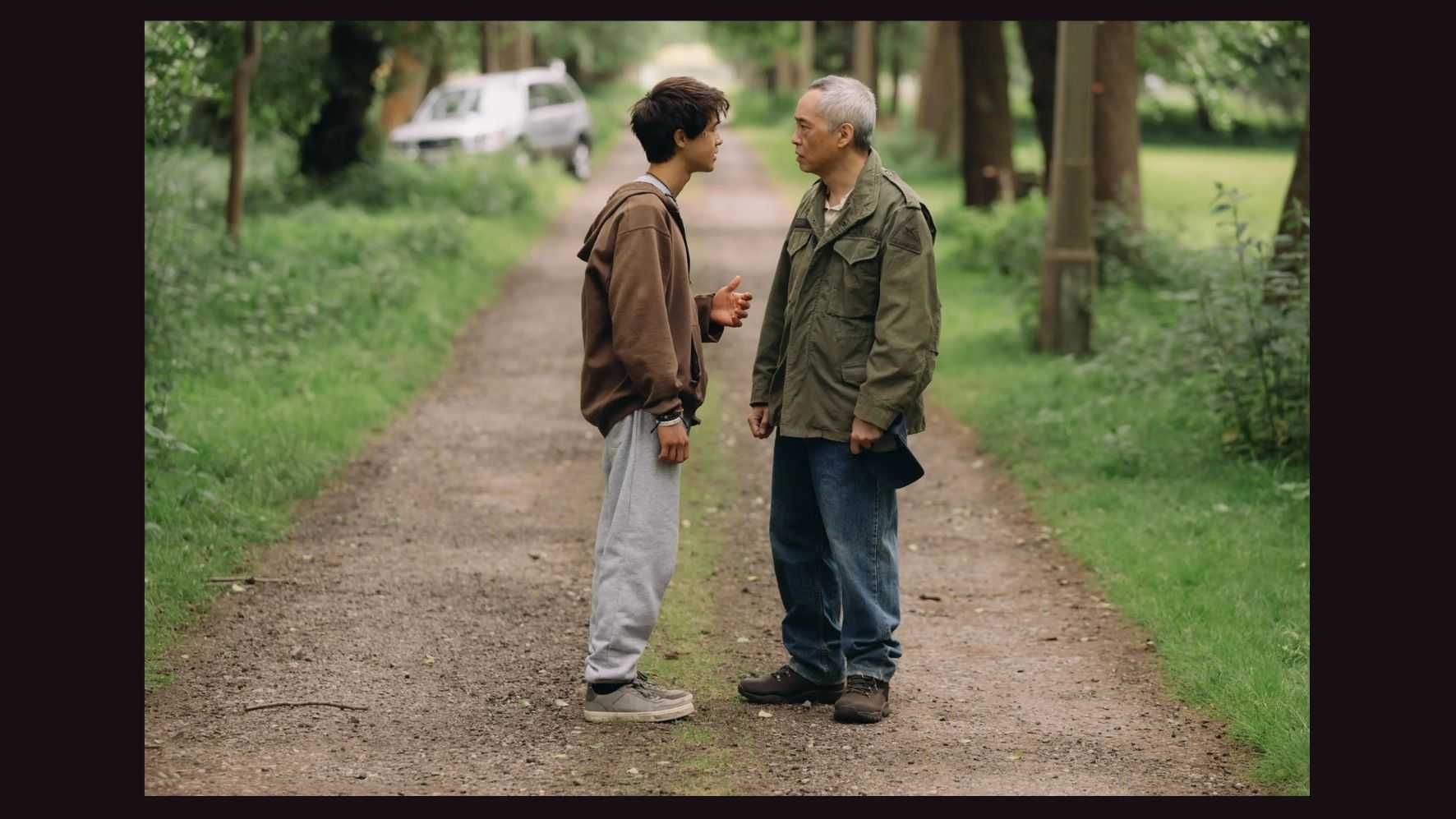
It would be easy to demonize John Allen Chau, the Christian missionary who died while trying to bring the Bible to a remote tribe. The 26-year-old could have introduced new diseases to the North Sentinel Island community, causing serious harm. He also vowed to invade a community that craves isolation above all.
Now imagine a Hollywood film capturing Chau’s short, dramatic life. The industry isn’t known for sympathetic close-ups on faith, to be generous.
‘Whenever we go into places where we’re not comfortable, the first thing is, “I have to impose my point of view. Here’s my worldview.”‘
Yet veteran director Justin Lin (“Star Trek Beyond,” the “Fast & Furious” franchise) took a less expected path in bringing the young man’s life to theaters.
 Justin Lin. Photo: Giles Keyte
Quick to judge
“Last Days” stars Sky Yang as John, a determined Christian who vowed to do something remarkable with his life. He risked everything to travel to the North Sentinel Island, hoping to share Jesus Christ’s message.
The story ended tragically, but Lin’s film portrays Chau as a kind-hearted lad whose complicated life led him to his fate. Lin isn’t a Christian, but he treated the material with care and empathy. That wasn’t his first reaction.
“It’s very easy to judge and dismiss. That’s what I did when the story broke,” Lin told Align of the initial news reports, the kind of “hot take” that swiftly decried Chau’s fateful decision. “It didn’t sit well with me that I was so quick to judge and dismiss him.”
A father’s story
An Outside Magazine feature on Chau’s life had a powerful effect on the filmmaker. The story shared Chau’s father’s perspective on his late son, among other details.
That rocked Lin.
“I have a teenage son. As a parent, I know exactly what he was going through, how you’re trying to impart your wisdom, make sure they’re not going through any hardships,” he said. “What I learned from that article was that if you do it on your timeline, and your son is not ready, you just miss each other.”
The project didn’t involve fast cars or intergalactic travel, but the change of pace spoke to the veteran filmmaker.
“I really wanted to try something different,” added Lin, even if he wouldn’t have the kind of blockbuster budget at his back.
“It’s going to be a run-and-gun, small crew,” he imagined before reading more from the real Chau’s diary. “In John’s writing, he was clearly inspired by adventure novels and Hollywood films. … I’m going to honor that and be the signpost for our film. … It’s an intimate story, but it has to feel like a big Hollywood film.”
He called in some professional favors to give the film a Tinsel Town sheen that otherwise might not have been feasible.
RELATED: Pistol-packing rabbi targets anti-Semitism in action flick ‘Guns & Moses’
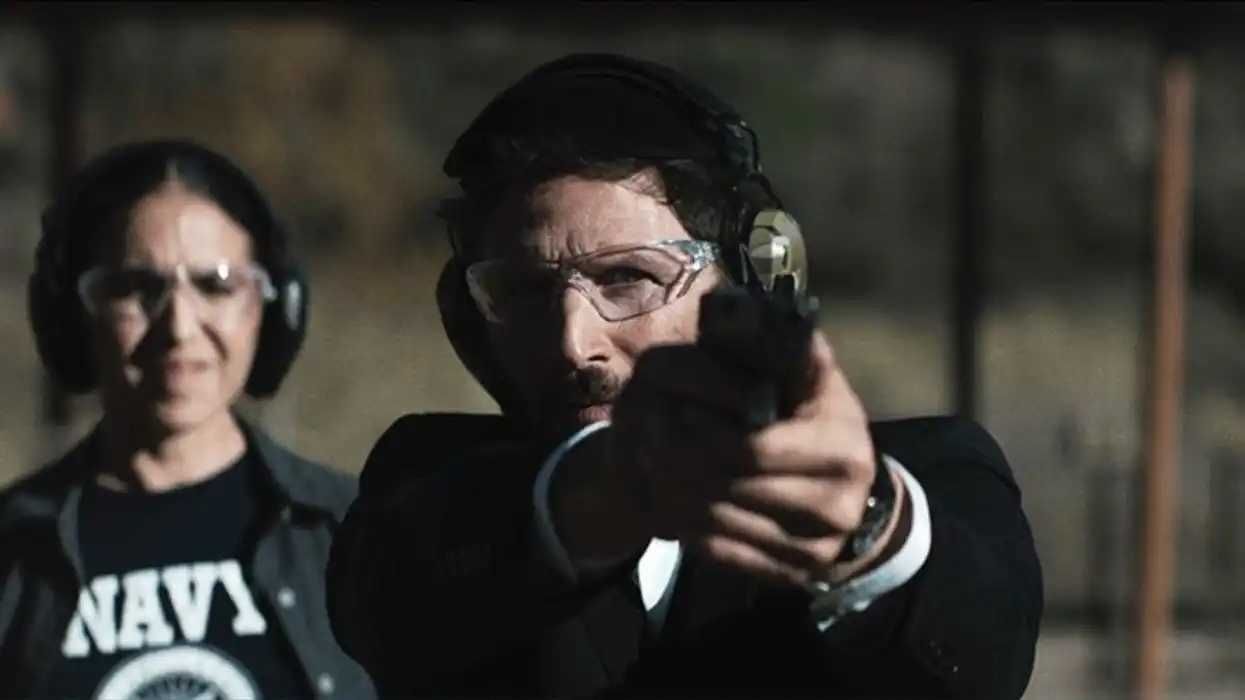 Still courtesy Pictures from the Fringe
Fresh perspectives
Lin approached Chau’s faith delicately, while acknowledging the dubious decisions he made along the way. A mid-film romance ends unexpectedly, for example, allowing for fresh perspectives on Chau’s quest.
That balance came via an extensive effort on the director’s part.
“Whenever we go into places where we’re not comfortable, the first thing is, ‘I have to impose my point of view. Here’s my worldview.’ I made that commitment early on to say, ‘No,’” he said. “Taking three years of my life [for this film] … was to connect with his humanity.”
More with less
“Last Days” looks as lush as a $100+ million film, the kind that Lin routinely delivers. He didn’t have those resources nor an A-list cast to bring John Chau’s life to the big screen. Yang is a minor revelation, while Ken Leung’s turn as the young man’s father is heartbreaking.
Lin has a knack for doing more with less.
“I made a credit card movie for $250,000, and that movie opened the door and gave me all these opportunities,” said Lin of “Better Luck Tomorrow,” his 2002 breakthrough made by maxing out his personal credit limit. The film earned $3.8 million theatrically, a tidy sum given the budget. Hollywood swiftly came calling.
“Last Days” may have an indie sensibility, but Lin still felt the pressure to “nudge” the film in certain directions. The real Chau refused to be “boxed in” by society, yet the film industry tried to do just that with the film.
“Can you make this a Christian movie?” he recalled of the behind-the-scenes chatter about “Last Days.” … I didn’t understand or even appreciate that kind of nudge. … ‘If you really wanna be marketable, you should do more of this.’ Those conversations for me ended very quickly.”
“That is a challenge with independent films … the temptation. … ‘If I give you all this money, can you cast my son?’ Those are all choices you encounter,” he said.
Lin will find himself on more familiar ground with the upcoming “BRZRKR,” based on the Boom! Studios comic book co-created by Keanu Reeves. The “John Wick” star served as an angel investor in “Last Days.”
“I didn’t grow up wanting to make action movies, but I ended up enjoying the process,” he admitted.
The public got a sneak peek at “Last Days” during the Sundance Film Festival earlier this year, months before its Oct. 24 theatrical rollout. The post-screening Q and A left him hopeful he had accomplished what he had set out to do with the film.
“Five minutes in, they could find a common bridge in [the film],” Lin recalled. “We need that now more than ever.”
Can Baseball Get Better Without Getting Boring?
Major League Baseball has been in crisis for nearly as long as it has existed. Just 16 years after the American and National Leagues merged, a game-fixing scandal threw the national pastime’s integrity into question and (perhaps incorrectly) cost one of the game’s greats both the rest of his career and a plaque in Cooperstown.





