Category: Culture
‘Bell’-buster: Joy Reid tries to cancel classic Christmas ‘Jingle’

“Truth. Justice. Whatever.”
Hollywood’s disdain for America is official with the poster tagline for this summer’s “Supergirl.”
‘I don’t care for Owen Wilson, and I don’t care for Matthew Lillard.’
How the industry embraced the problematic “girl” part of the name is a debate for another day. Just know that Hollywood hasn’t been cozy with the classic Superman slogan, “Truth, justice, and the American way,” for some time. The 2006 Brandon Routh reboot infamously ditched that last part, as did this year’s James Gunn version.
Now to show us that this Supergirl can’t even, the phrase is purposely imploded. And to be fair, the results come off better here, if only because the newest Supergirl is a rebel without a cause (or home planet).
Those offended by ditching “the American way” may be more outraged by the accompanying trailer. It looks as gloopy as this past summer’s “Superman” reboot, but with half the gravitas and action.
Prediction: Superhero fatigue goes nuclear in 2026 …
Jay Zzzzzz
Slackers never grow up. They just stay in their parents’ basements indefinitely.
That isn’t true for Jay and Silent Bob. The slacker heroes from Kevin Smith’s imagination refuse to call it a career. They’ve appeared in two features as the key attractions and several Smith movies like the “Clerks” franchise and “Mallrats.”
Now Smith is warning us there’s a third Jay and Silent Bob film in the works. “Jay and Silent Bob: Store Wars” will start production next year. But will anybody show up?
“Jay and Silent Bob Reboot” made under $5 million in 2019. Smith’s last film, “The 4:30 Movie,” didn’t earn enough for BoxOfficeMojo to include its figures.
Smith may have come of age during the ‘90s via “Clerks” and “Chasing Amy,” but his devoted flock has done nothing but shrink since then. Bigly.
Smith, 55, and co-star Jason Mewes, 51, may seem too old to keep cracking pot jokes, but Smith deserves credit for finding enough cash in his sofa to keep his franchise afloat …
Pulp Friction
Quentin Tarantino can’t get criticism out of his system.
The former video store clerk was set to make “The Movie Critic” his 10th and final film, but he got cold feet and went back to the proverbial drawing board. Since then, he’s been criticizing … everything, including specific movie stars.
That’s an unofficial no-no in celebrity circles, but Tarantino is out of you-know-whats apparently.
The director recently slammed actor Paul Dano (“The Batman,” “Love and Mercy”), dubbing the actor “weak sauce” and worse, as part of that now-infamous “Bret Easton Ellis Podcast” interview.
Hollywood stars rallied around Dano, saying he was far better than what the mercurial director dubbed him. Tarantino also shredded two more stars as part of that conversation.
“I don’t care for Owen Wilson, and I don’t care for Matthew Lillard.”
Wilson has yet to publicly respond, but Lillard did just that at a recent Comic-Con-style event, the GalaxyCon in Columbus, Ohio.
“Eh, whatever. Who gives a s**t,” Lillard said before revealing that he actually does give a bleep.
“It hurts your feelings. It f**king sucks,” he said. “And you wouldn’t say that to Tom Cruise. You wouldn’t say that to somebody who’s a top-line actor in Hollywood.”
So far, Lillard’s former co-star Scooby Doo has no comment …
RELATED: These are the definitive recordings of 35 favorite Christmas carols: Don’t argue, just listen
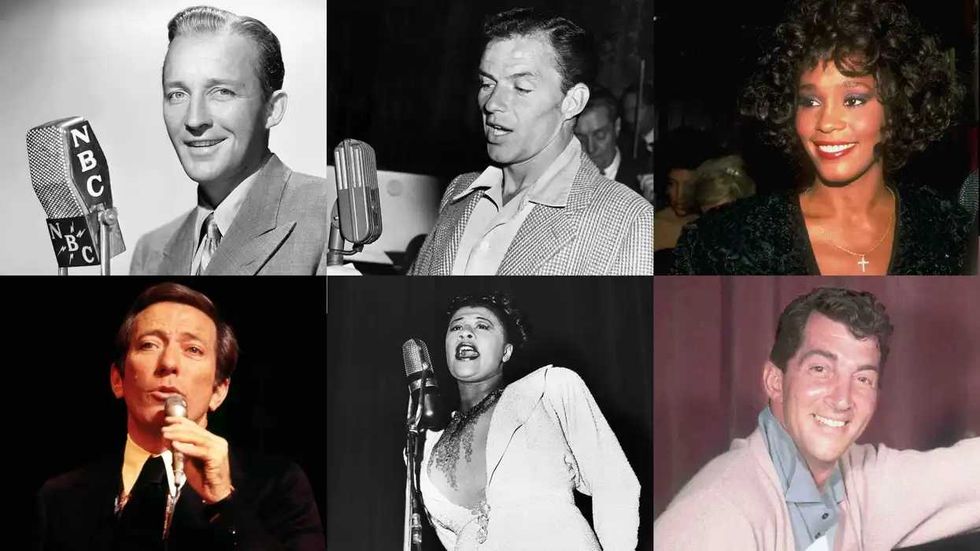 Photo credits, clockwise from top left: NBCU Photo Bank/NBCUniversal via Getty Images via Getty Images; Hulton-Deutsch Collection/CORBIS/Corbis via Getty Images; Robin Platzer/The LIFE Images Collection via Getty Images/Getty Images; Silver Screen Collection/Getty Images; George Rinhart/Corbis via Getty Images; David Redfern/Redferns
‘Jingle’ jerk
The war on “Baby, It’s Cold Outside” is over, and the good guys won. The song continues to play every Christmas season despite a woke attempt to cancel it. The less problematic “remake” by John Legend and Kelly Clarkson was quickly forgotten.
Now former MSNBC host Joy Reid is declaring war on … “Jingle Bells.” And you’ll never guess why. Just kidding.
The song’s writer, James Lord Pierpont, allegedly penned the ditty for racially charged reasons, according to Reid. To her credit, if anyone knows about racially charged topics, it’s a former TV personality who sees racism around every corner.
To her, Elvis Presley’s nickname, “The King,” is racist.
She used a Massachusetts plaque as her “proof” of the song’s racial components, along with Pierpont’s days fighting for the Confederacy. The song’s lyrics appear as benign then as they do now.
Maybe she could record her own version of the song, a la Legend and Clarkson, and watch it follow eight-track tapes, pagers, and MSNBC into the dustbin of history.
ADF: Employees Can’t Be Forced To Lie About Pronouns At Work

 Employees don’t have to insist on calling people by pronouns they don’t like. But they don’t have to say something they know is not true.
Nearly Half Of Netflix Kids’ Shows Expose Children To LGBT Propaganda: Report

 While Netflix and Warner Bros. lock horns over a possible merger, some parents are worried it will expand the LGBT messaging seen in nearly half of Netflix’s children’s programming to other programs that would come under its umbrella. Children’s programming is a powerful tool for changing culture by speaking directly to children. By age four, […]
Our Man in Amman

Uneasy lies the head that wears the crown that was invented by the British and then funded by the Americans. Constantly lies the head of state who claims to protect the Palestinians while cooperating with the Mossad. Abdullah II is the fourth king of Jordan, the state that Winston Churchill lopped off the Palestine Mandate in 1921 with, he said, “the stroke of the pen one Sunday afternoon in Cairo.” The plan, as proposed by Lawrence of Arabia in 1918, was to install the three sons of Hussein, the Sharif of Mecca, as the Hashemite emirs, Britain’s proxies in the states it was carving out of Ottoman territory. Abdullah is the last Hashemite standing. He has a pronounced facial tic.
The post Our Man in Amman appeared first on .
Getting Intimate With Updike
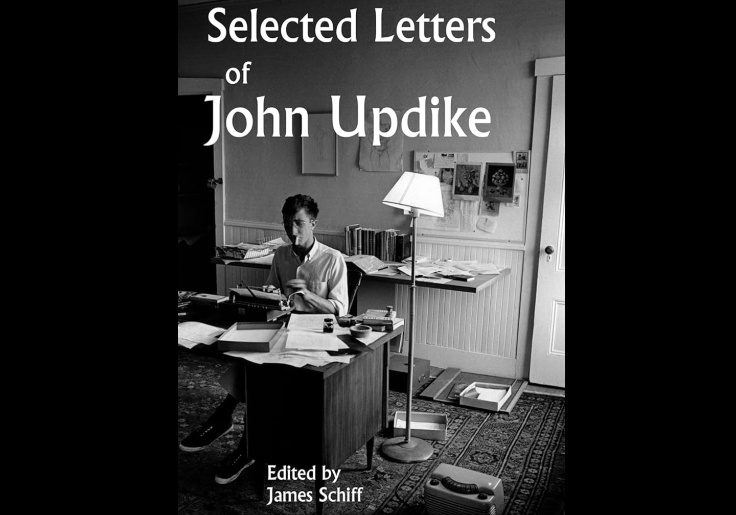
Here’s a nice illustration of the personal and professional range of John Updike, the novelist, poet, essayist, critic, and short story writer who rose to singular fame (appearing twice on the cover of Time magazine, then the ultimate mark of celebrity) in the second half of the 20th century. During the year 1960, he volunteered to teach Sunday school at his local church. Meanwhile, he was fighting his publisher’s lawyers, who worried that the sex scenes in his latest novel, Rabbit, Run, were explicit enough to violate U.S. obscenity laws, which were still a thing.
The post Getting Intimate With Updike appeared first on .
Tribe Mentality
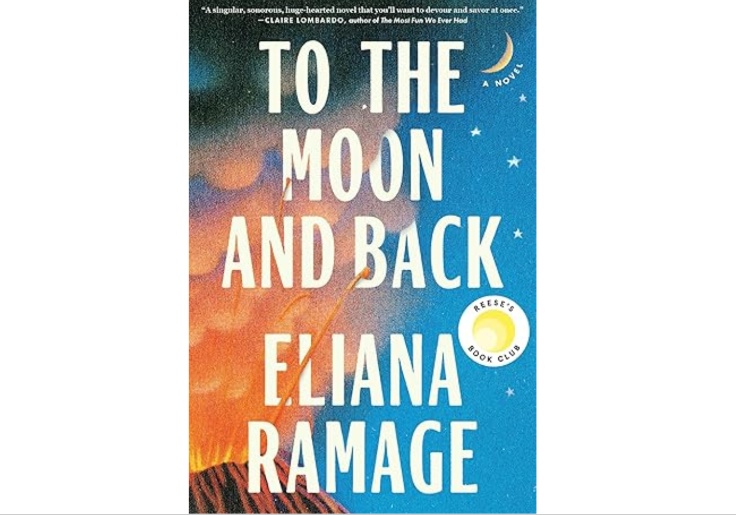
The past few years have seen the almost unprecedented intrusion of politics into chick lit. It seems no novel about the life of wives or mothers can be complete without the occasional diatribe about systemic racism or Donald Trump or the genocide launched against transgendered people. For someone who is looking for a little escapism, the proverbial beach read is no longer a place to find it. But just as these authors are clearly under the sway of their political environment—or at least virtue signaling to show that they don’t just care about romance or drama in the PTA—they are also influencing the political environment as well. And they can use the broader audience they attract to plant information about niche ideological hobby horses.
The post Tribe Mentality appeared first on .
Do we love the ‘Wicked’ movies because we hate innocence?
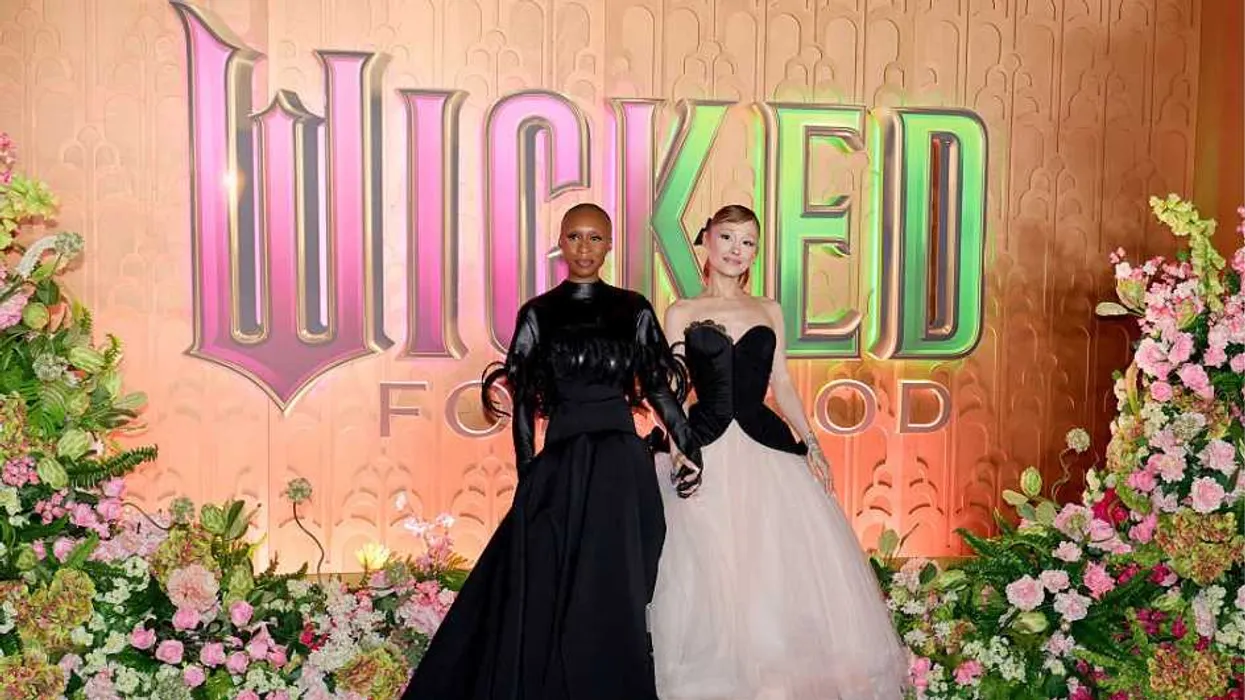
As I watched Jon M. Chu’s “Wicked: For Good” last week, I kept thinking about another, very different filmmaker: David Lynch.
Specifically, the Lynch that emerges from Alexandre Philippe’s excellent 2022 documentary “Lynch/Oz,” wherein we discover just how deeply the infamously surreal filmmaker was influenced by one of cinema’s sweetest fantasy films: the original “Wizard of Oz.”
In the era of #WitchTok … a story like ‘Wicked’ has built-in appeal.
Philippe’s film includes footage from a 2001 Q and A in which Lynch confirms the extent of his devotion: “There is not a day that goes by that I don’t think about ‘The Wizard of Oz.'”
The logic of fairyland
And that shouldn’t be surprising given how much it shows up in his work. From Glinda the Good Witch making an appearance in “Wild at Heart,” to the hazy, dreamlike depiction of suburbia in “Blue Velvet,” his films exist in a dual state between the realm of fairyland and the underworld.
Indeed, Lynch doesn’t reject either. In proper Buddhist fashion, these two forces exist in balance, equally potent and true. There is both good and evil in his world. Neither negates the other’s existence. And when darkness spills over into the light, it may be tragic, but it is also just another part of the world. Like Dorothy, his protagonists find themselves walking deeper into unknown territory. The protagonists of his films truly “aren’t in Kansas anymore.”
“The Wizard of Oz” is potent because it captures the logic of fairyland better than almost any film ever made. Channeling the fairy stories of J.R.R. Tolkien, Lewis Carroll, and George MacDonald, it transports the mind to a realm that is more real than real, where even the most dire intrusion of evil can be set right according to simple moral rules.
As G.K. Chesterton famously puts it:
Fairy tales do not give the child his first idea of bogey. What fairy tales give the child is his first clear idea of the possible defeat of bogey. The baby has known the dragon intimately ever since he had an imagination. What the fairy tale provides for him is a St. George to kill the dragon.
Wicked good
“Wicked” and its new sequel reject this comforting clarity for something altogether more “adult” and ambiguous. Instead of presenting good and evil as objective realities that can be discerned and defeated, the films show how political authorities manipulate those labels to scapegoat some and exalt others.
They do so by swapping the original’s heroes and villains. The Wonderful Wizard is a cruel tyrant. Glinda is foppish and self-obsessed. Dorothy is the unwitting tool of a corrupt regime. And Elphaba — the so-called Wicked Witch — is reimagined as a sympathetic underdog with a tragic backstory, a manufactured villain invented to keep Oz unified in ire and hatred.
Elphaba exudes a whiff of Milton’s Lucifer — an eternal rebel in a tragic quest to upend the moral order. But unlike “Paradise Lost,” “Wicked” presents rebellion against its all-powerful father figure not as a tragic self-deception, but as a justified response to systemic cruelty.
Witch way?
“Wicked: For Good” takes the ideas of its predecessor even further than mere rebellion. If “Wicked: Part One” is about awakening to the world’s realities and becoming radicalized by them, “Wicked: For Good” is about the cost of selling out — the temptation to compromise with a corrupt system and the soul-crushing despair that follows.
This is where the irony of the film’s title, “Wicked: For Good” comes in. Once a person sees the world for what it truly is, they can’t go back without compromising themselves. They’ve “changed for good.” They’ve awakened and can’t return to sleep.
It’s worth considering why the “Wicked” franchise is so wildly popular. Gregory Maguire’s original 1995 novel has sold 5 million copies. The 2003 stage show it inspired won three Tony Awards and recently became the fourth longest-running Broadway musical ever. And the first film grossed $759 million last winter, with the sequel poised to make even more money.
Perhaps it is no coincidence that this outsize success comes at a time when Wicca and paganism have grown into mainstream cultural forces. In the era of #WitchTok, in which self-proclaimed witches hex politicians and garner billions of views on social media, a story like “Wicked” has built-in appeal. It offers glamorous spell-casting and a romantic tale of resistance to authority.
RELATED: ‘Etsy witches’ reportedly placed curses on Charlie Kirk days before assassination
 Photo by The Salt Lake Tribune / Contributor via Getty Images
A bittersweet moral
The temptation of witchcraft is one that always hovers over our enlightened and rationalistic society. Particularly for young women, witchcraft offers a specific form of autonomy and power — over body, spirit, and fate — that patriarchal societies often deny. Many view witchcraft as progressive and empowering; “witchy vibes” have become a badge of identity.
Thus the unsettling imagery of Robert Eggers’ 2015 film “The Witch” comes into focus: A satanic coven kidnaps and kills a Puritan baby, seduces a teenage girl, and gains the power to unsubtly “defy gravity” through a deal with the devil.
“Wicked” is all about this power to transcend. Even as its protagonist grows despairing in the second film and abandons her political quest for the freedom of the wastelands, the film presupposes that it is better to resist or escape a corrupt system than submit to it.
Ultimately, the two films leave their audience with a bittersweet moral: Society is dependent on scapegoats. The Platonic noble lie upon which all societies rest cannot be escaped — but it can be redirected. A new civic myth can be founded that avoids sacrificing the vulnerable and overthrows the demagogues atop Mount Olympus. And the witches play the central role in overturning the world of Oz. Their rebellion sets it free.
But because the films blur the clear, objective distinction between good and evil — even while acknowledging that real evil exists — the characters in “Wicked” often drift in moral grayness, defining themselves mainly in relation to power. The world becomes overbearing, radicalizing, and morally unstable.
Sad truth
This is far afield from the vision of Oz presented in the 1939 film, the one David Lynch venerated as vital to his understanding of the world. But it reflects how modern storytellers often grapple with Oz. Almost every sequel or spin-off struggles to recapture the sincerity of the original. The 1985 sequel “Return to Oz” reimagined the land with a dark-fantasy twist. 2013’s “Oz the Great and Powerful” comes closest to the original tone but centers on fraudulence and trickery.
“Wicked,” too, falls in line with the modern tendency to subvert and complicate traditional stories of good versus evil. “Frozen,” “The Shape of Water,” “Game of Thrones,” and “Star Wars: The Last Jedi” all explore morally conflicted worlds where bravery is futile or where Miltonian rebellion is celebrated.
Of course, seeing the stories of our childhood with a jaundiced adult eye can be quite entertaining; it’s perfectly understandable why even those not in covens love these films. They are well-made, well-performed, and especially irresistible to former theater kids (I am one).
Their popularity isn’t inherently bad either. They are perfectly fine in isolation. It is only when we contrast them with the clarity and beauty of the original — and place them within the context of our society — that a sad truth emerges: Finding fairyland is hard. Most of us prefer to live in the Lynchian underworld.
Rejoice, Jared Leto fans! Time to fall asleep on your couch watching ‘Tron: Ares’

This week, “Tron: Ares,” the blockbuster that wasn’t, makes its final bid for profitability — hitting the streaming services, complete with a bonus deleted scene. As Hollywood continues its messy quest to restore its lost glory, what better time for a postmortem?
“Tron: Ares” tells us much. This trilogy-completing movie should have been a layup. With the film, Disney had a great existing piece of intellectual property and a time that could not have been better for a sequel. You can’t go a day on the internet without hearing about AI, surveillance, data centers, hacking, and other topics that the “Tron” universe is uniquely qualified to address.
I need to defend Jared Leto for a second.
The question was: Could Disney pull off a sequel to a pair of movies released in 1982 and 2010 while delivering a quality film that made compelling points on the future of Big Tech and the ever-changing interplay between AI and humanity? The Disney modus operandi is usually to serve up a disappointing experience of woke talking points, lazy writing, and uninspired filmmaking. “Tron: Ares” offered the studio the chance to buck that trend.
The centerpiece of the “Tron” universe is a digital world called the Grid. For the uninitiated, this alternate world, existing inside computer systems, appears as a neon-lit, mirror-smooth alternative to our own. Computer programs inhabit humanoid forms and live in strict, hierarchical societies.
Its well-crafted lore merits a catch-up. In the original “Tron” movie (1982), brilliant programmer Kevin Flynn is attempting to hack into the system of his former employer, ENCOM, to prove that another employee, Ed Dillinger, plagiarized Flynn’s work to get ahead at the company. Flynn ends up getting transported onto the Grid via particle laser and battles the Master Control Program that is attempting to influence the real world. He is successful, proves that Dillinger plagiarized his work, and ends up as CEO of ENCOM. The franchise gets its title from a program named Tron, which fights alongside Flynn.
In “Tron: Legacy” (2010), Kevin Flynn expands his Grid and ends up getting stuck there, vanishing from the real world. His son Sam has inherited control of ENCOM, now a top tech company, but refuses to step into a leadership role. He goes looking for his father and ends up having his own adventure on the Grid, working alongside his father to outwit Clu, the program that betrayed his father and took control of the Grid. His father sacrifices himself to allow Sam to escape back to the real world along with Quorra, a female “isomorphic algorithm.” That is, a computer program manifested onto the Grid without any human contribution. Sam and Quorra end the film setting out to make the world a better place with the grid technology.
High concept, low plot
Here’s where the slapdash takes over from the archetypal. “Tron: Ares” picks up 15 years later with a healthy dose of the now-classic Disney bait and switch. Forget Sam, Quorra, Tron, or any of the popular characters from the previous installments. Sam, in a “somehow, Palpatine returned”-level move, has “left ENCOM for personal reasons.” Instead, we are introduced to his replacement: Eve Kim (Greta Lee). The bait and switch, along with other now-classic Disney tropes, is present throughout the film, but more on that later.
Let’s break down the plot. (Warning: inevitable spoilers below.)
RELATED: Bad performance or bad politics? A list of the most hated actors
 Photo by Jean Catuffe/GC Images
There are two massive tech companies: ENCOM Technologies, now run by Eve Kim, and Dillinger Systems, run by Julian Dillinger, the grandson of Ed Dillinger from the first movie. These companies have figured out how to use particle lasers to bring things from the Grid into the real world. They basically just 3D-print tanks, ships, trees, people, anything at all, using nothing but electricity. How does that actually work? Never mentioned.
These Grid creations only last 29 minutes before disintegrating into dust and reappearing on the Grid. Eve Kim is determined to solve this problem by finding the permanence code, which Kevin Flynn supposedly hid somewhere. She holes up in Flynn’s old hideout in Alaska and starts looking for it while her male assistant, Seth Flores (Arturo Castro), sits around eating breakfast burritos and complaining that she doesn’t pay enough attention to him. Meanwhile, Dillinger Systems is presenting its new Master Control Program, Ares (Jared Leto). Julian Dillinger leaves out the fact that Ares only lasts 29 minutes, for which he is reprimanded by his mother (Gillian Anderson), who provides the conscience and competence at Dillinger.
Eve finds the permanence code and successfully tests it, then gets a call from ENCOM’s necessarily diverse CTO Ajay Singh (Hasan Minhaj). He tells Eve that Dillinger has hacked ENCOM’s server and caused all sorts of damage. Basically, Julian learned that Eve has the permanence code, and he wants to get his toxic white hands on it.
The rest of the movie is a series of action scenes strung together by the bare bones of a story. Ares is sent into the real world to get the code from Eve. He comes close, forcing her to destroy the flash drive, but fails when he hits his 29-minute shot clock. Eve is then transported onto the Grid when another Dillinger agent shoots her with a particle gun. Once there, the code can be extracted from her now-digital mind. This process would kill her, but Julian orders Ares to proceed. Ares, who has shown signs of straying from his programming, goes rogue and helps her to escape, asking for the permanence code in return so that he can live in the real world. Eve agrees, and the rest of the movie is basically them running around trying to get the code (remember, Eve destroyed the drive, so now they have to find it again) before Dillinger’s new MCP, Athena (Jodie Turner-Smith), catches them.
They end up finding a way to access it on Kevin Flynn’s old computer and send Ares onto the original Grid from the first “Tron” movie. Once there, he meets Kevin Flynn, or rather some sort of aspect or memory of him — it is never made clear — and gets the permanence code after Flynn determines that he is suitably curious (or something) enough to become human. Meanwhile, Athena is determined to catch Eve and brings a few Grid vehicles into the real world for a rather underwhelming final battle.
Things wrap up when Ares arrives back in the real world just in time to save Eve, while Ajay and Seth hack the Dillinger mainframe and shut it down, disabling Athena, whose sympathetic death scene feels like a DEI box-check. The film concludes with Eve using the permanence code to lead ENCOM in transforming various industries and Ares wandering the world under cover, learning how to live among humans.
The good, the bad, and the utterly predictable
There are three main takeaways from this film, but first I need to defend Jared Leto for a second. I know there are plenty of reasons, professional and otherwise, for people to dislike Leto, and I’m not necessarily disagreeing with them. However, I thought his performance in this film was quite good. The physical choices he makes in portraying his AI character add a subtle, uncanny-valley aspect to Ares. The best part of the performance, though, is the vocal work. Leto manages to give a digital quality to Ares’ speech without resorting to crude robotic tones. He uses careful pitch and tone changes and curates his pauses to give the effect of an LLM responding to a prompt, without losing the organic quality of human voice and speech. It is very well done, and the delivery works perfectly with the dialogue written for his character.
I’ve seen a lot of complaints about the acting in “Tron: Ares,” and some of it is warranted. However, as is so often the case, people are blaming the actors when a large part of the problem is bad dialogue. Seriously, you try turning the line “I don’t like sand; it’s coarse and rough and irritating, and it gets everywhere. Not like here. Here everything is soft and smooth” into an earnest, romantic phrase. The acting in “Tron: Ares” is mostly fine, and in Leto’s case, it is very impressive. Sure, it’s not all amazing, but the dialogue is clearly the bigger issue. The exception is the portion written for Ares. I suppose feeding prompts into ChatGPT actually worked in that case.
Another issue is the Disney tropes that permeate the film. They didn’t bother me that much because they are so worn out at this point. There is, of course, the IP bait and switch, in which a studio baits an audience with a familiar IP, character, etc. and then switches it out for a DEI replacement. Throwing out the entire Flynn family and replacing them with a diverse CEO girlboss is the relevant example here. If you’re still falling for this move in A.D. 2025, let me just say, as a longtime “Star Wars” fan, you wouldn’t last an hour in the asylum where they raised me.
Like any modern Disney movie, “Ares” adheres to what we might call the CCCC: color and chromosome competence correlation. Eve is a woman of color and therefore exceedingly competent and driven. Her Hispanic assistant, Seth, is light enough to be belittled for his manhood, but diverse enough to be portrayed as a competent force for good. Ajay, the CTO, is an Indian man. His complexion is darker than Seth’s, making him more competent. The film makes certain we know it is Ajay who actually manages to get into the Dillinger mainframe. However, being Indian means he is not dark enough to be excluded from male penalties. Therefore, he gets a personality that is Kash Patel turned tech bro, and part of his competence and drive are outsourced to his female assistant, Erin.
The CCCC applies across the moral spectrum. Julian Dillinger might be an evil tech villain, but he is also a white man and cannot, therefore, be competent or have real authority. These qualities are supplied by his mother, Elisabeth. Athena, the program who takes over as the Dillinger MCP, is played by a black woman (get it — Black Athena?) and is therefore competent and driven. Her failure is not her fault, but the result of Ajay truth-nuking the Dillinger Grid. In “Ares,” these tropes were too worn out to be troubling; they were just boring. I’m tired of being able to predict films after a passing glance at the principal characters.
Like the tropes, the film’s treatment of AI is just boring. The “Tron” universe is full of interesting AI potential, but “Ares” doesn’t go for any of them. The permanence code, which is a double helix as opposed to regular binary code (maybe I’m just a tech neophyte, but I thought that was cool), is never explained or explored. There is no real attempt to look at what the 3D-printed Grid creations actually are and what makes them work. If you can digitize a person’s mind by bringing him onto the Grid, that opens up all kinds of fascinating possibilities. “Ares” does not explore any of these paths. Rather, it goes for the same old “what if AI started becoming human” line that is pretty worn out at this point. Gareth Edwards’ “The Creator” did the whole “you should empathize with AI when it acts human” routine much better, but it isn’t very convincing in that film, either. In “Tron: Ares,” the wasted potential just makes the result more frustrating, which brings us to the final point and the biggest issue I have with the film.
At the end of the day, “Tron: Ares” is slop. It is content conceived and designed to be just that and nothing more. AI could have written this film, which might be by design (in which case, my apologies, Jesse Wigutow, I was not familiar with your game), but I don’t think so. It is not just the lack of explanations or the fact that anyone with an IQ above room temperature could predict the entire film after 10 minutes. Everything in this film feels like it was cut and pasted from a general template for “popular high-budget sci-fi movie.”
Who will take these missed opportunities?
So what went wrong? Well, leaving aside the obvious “don’t be woke” talking point, the main issue was misunderstanding the sort of IP the filmmakers were dealing with. At its core, “Tron” is a story about computers, not just a sci-fi universe of shiny alternate realities. Ignoring this fact robs “Ares” of the necessary thematic continuity for any good sequel. Instead, the film relies on cheap nostalgia and throwaway references, refusing to use the unique set of tools it has to tell a compelling story.
To take just one example, the ability to digitize the human mind — that alone offers a more compelling and relevant story. If you can digitize the human person, storing people on the grid, what does that say about the human soul? What does it mean for surveillance, incarceration, and memory? In a time of privacy concerns and AI data-farm controversies, a computer server with the ability to store, alter, or destroy human consciousness — not to mention the capacity for independent evolution and generation — sets up a whole list of compelling questions, themes, and plot points.
If you want to understand what I’m getting at, compare the soundtrack — an album by Nine Inch Nails that sounds more like GPT — to the “Tron: Legacy” soundtrack by Daft Punk, a now-legendary, pitch-perfect expression of the computer/reality synthesis that the franchise just couldn’t live up to.
The soundtrack isn’t the only place where “Tron: Ares” is a downgrade from “Legacy.” So let me offer some advice: If you find yourself looking to stream an AI-themed sci-fi movie, just watch “Tron: Legacy.” It’s not perfect, but the soundtrack is great, the CGI holds up well, and the writing and acting actually bear the mark of real human beings.
I thought I was too old to fall in love again — until two chords proved me wrong
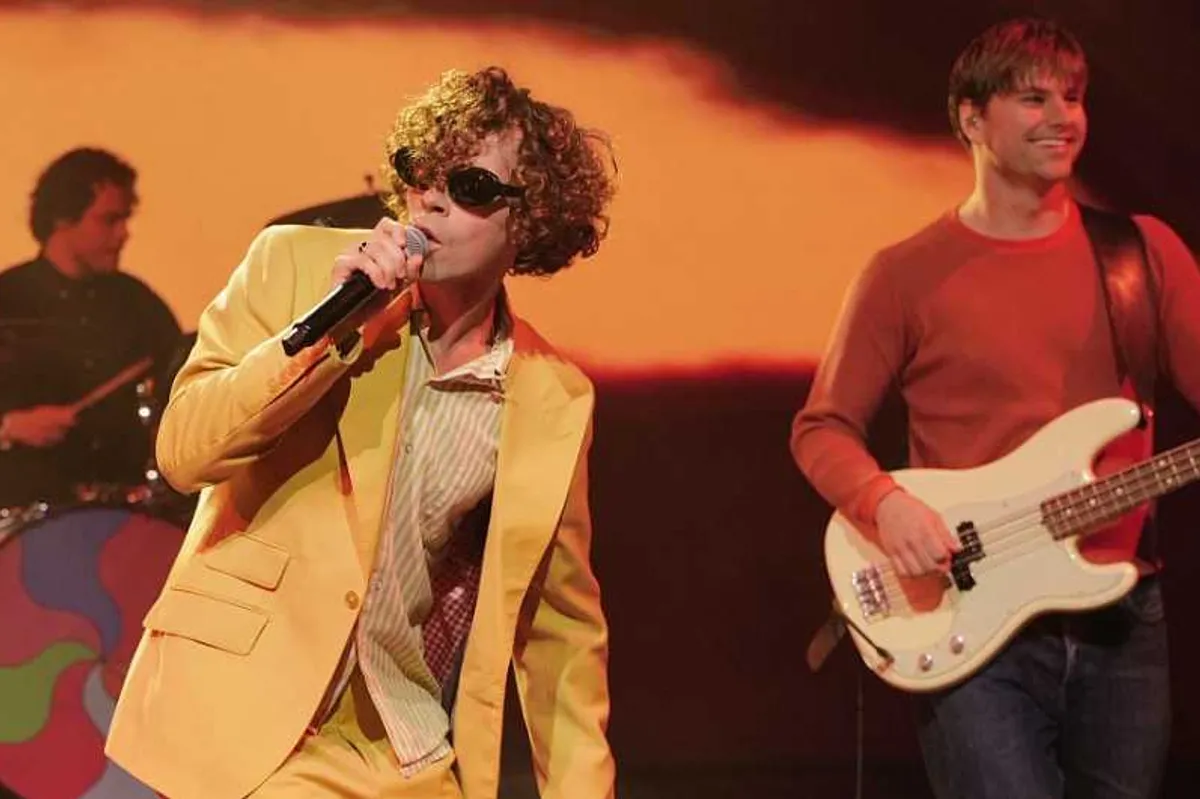
I have a new favorite band. I know that sounds weird. I’m not a teenager. I’m a grown adult man.
I was in my car when I first heard the song “Jupiter” on the alternative music station. It began with a distinctive guitar part, two chords played in a simple rhythmic pattern.
An actual band is too much like a gang. Or a terrorist group. Four white guys roaming around the country in a van? We better have the FBI look into that.
It was super catchy. Very simple. Nice groove. It didn’t sound like anything else on the radio. The band is called Almost Monday.
Smoothed and removed
I downloaded “Jupiter” and put it on a playlist. It stood out, even among some classic songs. I found myself humming it during my day. And then needing to listen to it when I got home.
A month or two later, another new song by Almost Monday came out, “Can’t Slow Down.” It had a similar repetitive guitar riff. But in this song, there was a great bass part as well.
Both songs had a slick quality. Super produced. Really clean and effortless.
I think of music like that as “not letting you in.” You, the listener, are experiencing music so smooth and polished, you can’t imagine actual people playing it.
You can’t picture the band members. They’re projecting a wall of glossy perfection. And you can’t see through it.
*******
I downloaded “Can’t Slow Down” and put that on a playlist. But it sounded best on my car radio while I was driving. Fortunately, it was on heavy rotation, and I drive a lot. So I heard it constantly.
“Jupiter” was still playing continuously as well. The two songs were like a one-two punch. By July, it seemed Almost Monday was the breakout band of the summer.
“Jupiter” and “Can’t Slow Down” were definitely my “summer songs.” And probably a lot of other people’s as well.
It was almost like Almost Monday had become my new favorite band.
Trends to the end
I haven’t had a favorite band in a long time. I didn’t even think I was capable of having a favorite band again, to be honest. I mean, I still listen to the radio. I still follow the trends in music.
I enjoyed the “yacht rock” trend from a couple of years ago. But that was more of a joke. But even joke-trends can produce good music.
If I were a music critic, I would describe Almost Monday as “post-yacht rock, California pop.” Smooth, catchy melodies. Clever lyrics. No politics, no depressing thoughts. A strong Southern California vibe (the band is from San Diego).
*******
Looking back, my first favorite bands were Led Zeppelin and Aerosmith. That was in high school. In college, it was Echo and the Bunnymen. When I lived in San Francisco after college, it was the Smiths.
All these bands became like close friends to me. I would miss them if I didn’t hear them at least once a day. I needed my fix.
When I got into my 30s, I became more of a general fan. That was when grunge happened. I liked all those bands, but none really stood out as my favorite.
After grunge, there were many music groups I liked. Radiohead. Interpol. Elliott Smith. Sufjan Stevens’ “Carrie & Lowell” album. But I wouldn’t say any of these were “my favorite band.”
The trouble with happiness
One thing I should say: I don’t usually enjoy music like Almost Monday. I was never into that carefree, happy-sunshine, California vibe. I typically like heavier, moodier stuff.
But maybe because the tone of society is so dark and fraught right now, the lightness of their music feels almost revolutionary. How dare they be so easy-going. So outwardly cheerful. Who do they think they are?
Also, they’re a bunch of white guys. Which is not exactly in fashion. Shouldn’t they have some women and some racial diversity in their group?
And even being “a band” seems retrograde and reactionary. Current pop music is about individual stars. Chappell Roan. Benson Boone. Sabrina Carpenter. Bad Bunny.
These are individual “artists” with specific marketing concepts and replaceable musicians.
An actual band is too much like a gang. Or a terrorist group. Four white guys roaming around the country in a van? We better have the FBI look into that.
*******
All summer I listened to “Can’t Slow Down” and “Jupiter,” multiple times a day. But I’d still never actually seen the group. I didn’t feel a need to.
But then one night, I had the TV on, and I heard Jimmy Kimmel introduce the group on his show. I hurried over to the TV and turned up the sound.
They played “Can’t Slow Down.” They were super simple in their stage presentation. Just four guys. Singer, bass, drums, guitar.
They had no amps, I noticed. There was almost nothing on the stage. The guitarist played that one simple repeating progression.
They were super chill. The singer moved around a little. The guitarist and bassist just played. The drummer drummed. They didn’t let you in.
Really, it was fantastic. But would America appreciate their understated cool? Their simplicity? Their Zen-like reserve?
They’d had two smash-hit singles on alternative radio that summer. But what did that mean in the music biz? Was “alternative music” still a big market? Do young people even listen to music anymore? How do bands make money nowadays?
RELATED: Where have all the rock bands gone?
 Jeff Kravitz/Getty Images
I’ll see you in September
In September, I rode a ferry up to Alaska. This was not a cruise. It was a ferry, with dogs and trucks and locals. It took three days. There was no TV on board, nothing much to do.
That’s when I realized how close I felt to Almost Monday. I would hang around on deck for a couple of hours, then go back to my bunk and listen to “Jupiter” and “Can’t Slow Down.”
I dug up some of their other songs that I’d downloaded. Now I had time to listen to these closely and develop new favorites.
It was fun because in my mind these were “summer songs,” but every hour we steamed north on the ferry, it got colder.
Summer was not fading away over a month or two, like usual. It was fading hour by hour.
So I binged on the summer sounds of Almost Monday, as the skies grew dark and people on deck started wearing down parkas.
*******
A favorite band is like a best friend. It is the first person you want to talk to in the morning. And the last person you want to hear from before you go to bed. During the day, you don’t need to be in constant contact, but you’re relieved when you’re in their presence again.
*******
Now I’m back in Portland. It’s wet and cold, but I still listen to Almost Monday every day.
I hope they make it big. Or big enough to never have to get normal jobs.
That’s all I ever wish for, for my fellow creatives: I hope they make some money. I never wish for them wild success or huge fame. That can be bad for a person.
But I do want them to make enough money that they can be artists for the rest of their lives. And not have to worry about paying their rent.
In music, sometimes all it takes is to write a couple great songs (and own the publishing rights). I know Almost Monday has already accomplished that. So hopefully the rest is gravy.
A Kinder, Gentler Feminism
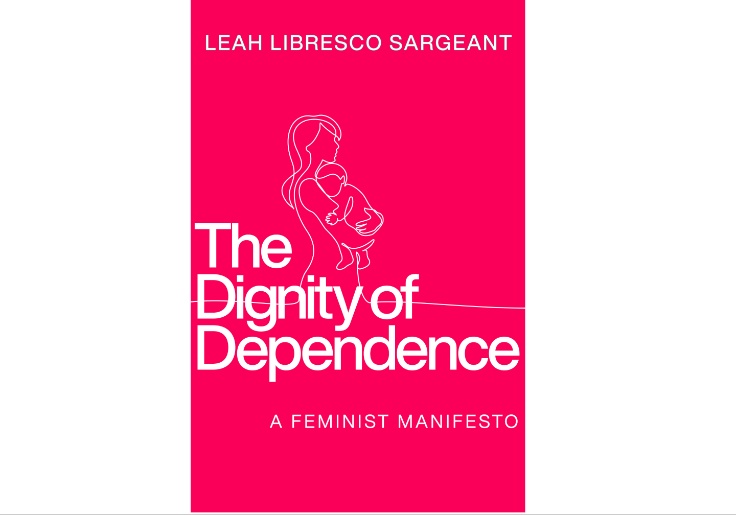
Leah Libresco Sargeant’s latest book, The Dignity of Dependence, carries with it the subtitle: “A Feminist Manifesto.” Where that word may conjure a certain harshness, however, Sargeant’s book illustrates something much more gentle: a humane vision of the givenness of womanhood.
The post A Kinder, Gentler Feminism appeared first on .