

Category: The Washington Free Beacon
NPR Interviews Son of Former Iranian Foreign Minister on Iran Protests, Presents Him as ‘Son of Iranian Parents’
As reports began to emerge in mid-January detailing the extent of the brutality of the Iranian regime’s crackdown on protesters, NPR’s Morning Edition aired an interview with a guest, introduced as a Johns Hopkins professor and the “son of Iranian parents,” who offered a first-person account.
The post NPR Interviews Son of Former Iranian Foreign Minister on Iran Protests, Presents Him as ‘Son of Iranian Parents’ appeared first on .
Business as Usual on Pennsylvania Ave
To anyone who doesn’t live under a rock, things seem chaotic right now. Just in the last month, Venezuelan dictator…
What Georgia’s Film Tax Credits and Trump–Biden Tariffs Have in Common
Industrial policy is failing, and not just in Washington. Across America, officials promise to engineer the right economic outcomes by…
Mr. Softee’s America
On the eve of 2026’s snowmageddon last weekend, reaction crossed every segment of society. By Saturday, churches were closing. You…
New ‘Melania’ documentary blends unprecedented access with subtle, profound message
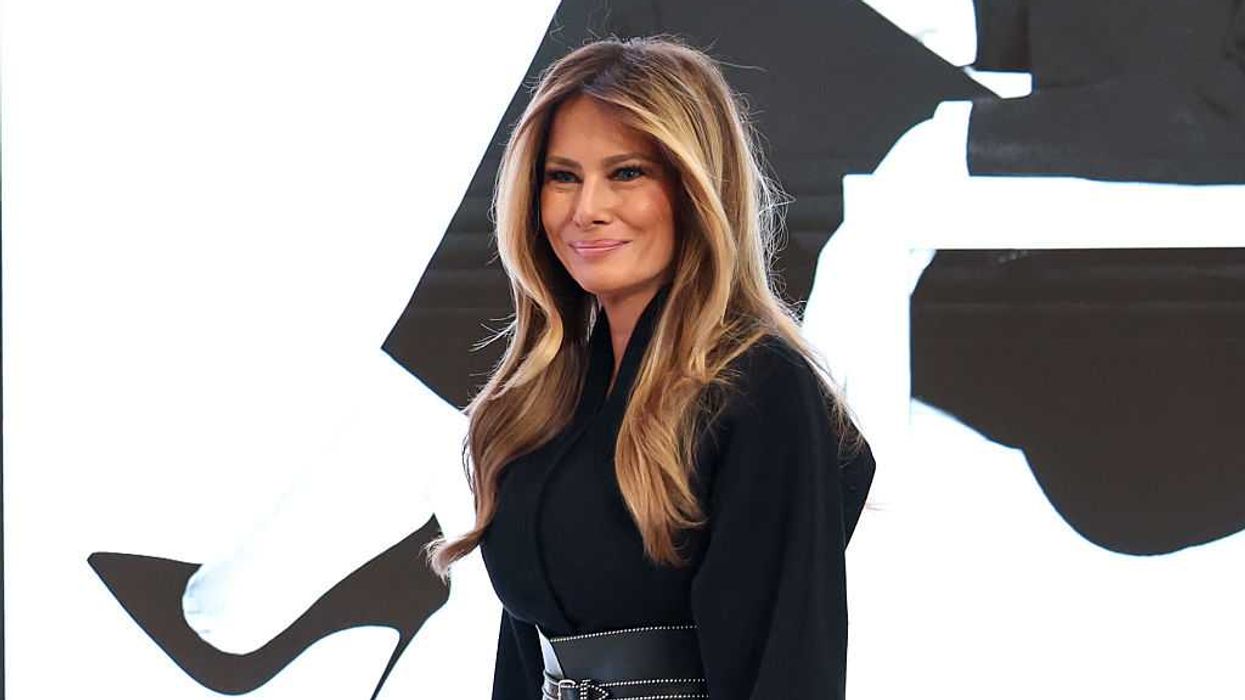
There are films that chronicle history, and then there are films that expose the private architecture behind it. “Melania,” the historic new feature film, belongs to the latter category. It is not a campaign film or a political gloss. It is a deeply human account of transition, responsibility, and resolve, told during the most compressed and emotionally demanding stretch of Melania Trump’s life, as she prepared to assume her second term as first lady of the United States.
The film shows the complexity of moving from private life back into one of the most scrutinized public roles in the world.
The film focuses on a narrow but consequential window from January 1 through January 20, 2025, a period that is usually flattened into ceremony and symbolism. Instead, “Melania” lingers in the quiet moments that precede power. It shows a woman balancing the private obligations of motherhood and family with the public demands of leadership. Navigating grief within her own family while preparing to re-enter a national spotlight that rarely affords empathy.
What distinguishes the film immediately is its intimacy. The camera follows Melania Trump through the ordinary and the extraordinary: checking in on her son, caring for her father after the loss of his wife, and preparing to return to public life after years away from the East Wing. These scenes are not dramatized. They are observed. The result is a portrayal that feels restrained, grounded, and unmistakably human.
“Melania” also offers access that has never before been granted to a media project. Viewers are brought into high-level meetings with the Secret Service, detailed White House walk-throughs, and internal discussions about staffing, security, and protocol. The level of access surpasses any prior film or documentary involving the modern presidency, and it does so without compromising the seriousness of the subject.
The film captures the lingering tension in Washington following the failed Kamala Harris presidential campaign. Without editorializing, it documents the complicated interpersonal dynamics and unspoken friction that accompany transitions of power. These moments are subtle, conveyed through body language and silence rather than confrontation, lending the film an unusual credibility.
International diplomacy threads its way into the story as well, most notably through an appearance by Queen Rania of Jordan. Their interaction reflects Melania Trump’s long-standing engagement with global humanitarian issues and underscores the often unseen role first ladies play in shaping state relationships
At its core, “Melania” is about transition. It chronicles how Melania Trump rebuilt her East Wing operation from scratch, assembling a team and setting a tone that was disciplined and intentional. The film shows the complexity of moving from private life back into one of the most scrutinized public roles in the world.
That same precision defined how the film itself came to life.
From the moment the project was introduced to the entertainment industry, it triggered a highly competitive bidding war. Netflix, MGM, Disney, and Paramount all pursued the project intensely, recognizing the rarity of the access and the global interest surrounding Melania Trump’s return to the White House.
Navigating that landscape was Marc Beckman, who has served as Melania Trump’s senior adviser for 25 years. For decades, he has worked closely with her to secure major commercial deals, advance humanitarian initiatives, and shape her public voice. His understanding of media, culture, and negotiation proved critical in steering the project through a crowded field without compromising its integrity.
Beckman brought a long-term, cross-sector perspective to the process. His experience executing campaigns for major global brands and institutions gave him the leverage and insight necessary to evaluate the various competing offers. Together, Beckman and Melania Trump prioritized control, authenticity, and global reach over spectacle.
RELATED: Matt Damon: Netflix dumbs down movies for attention-impaired phone addicts
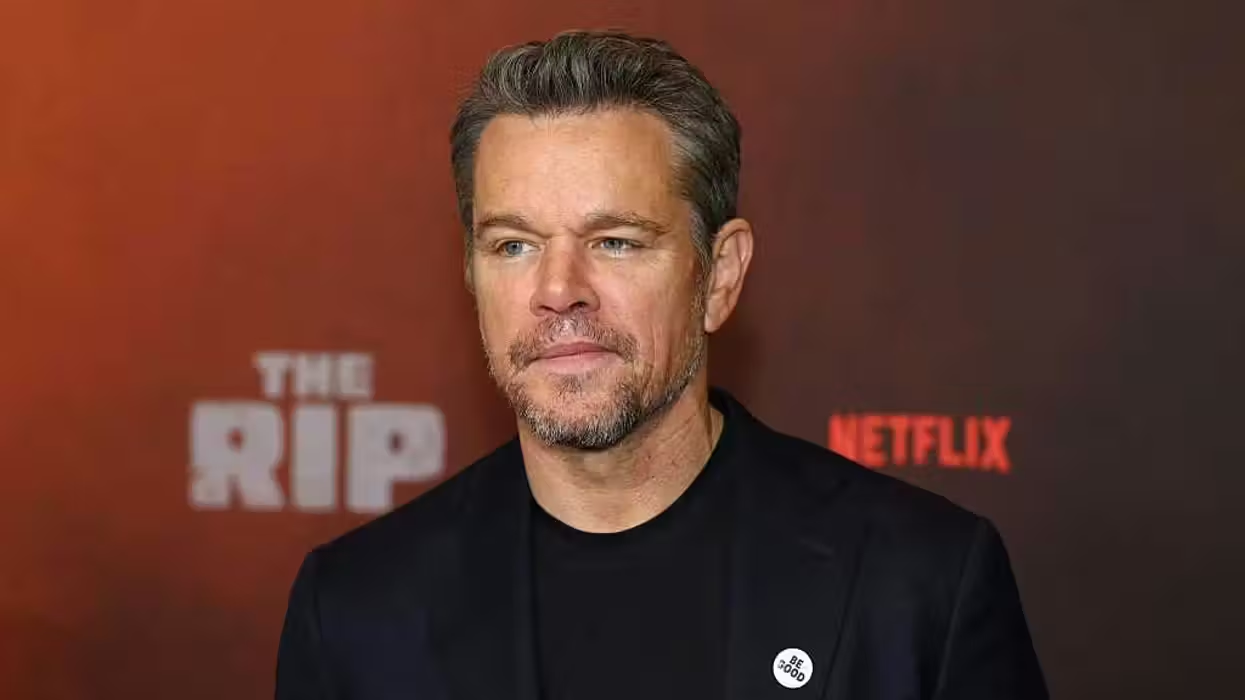 Photo by Arturo Holmes/WireImage
Ultimately, Amazon was selected as the studio partner. The deal was not the result of any back-channel negotiations involving Donald Trump or Jeff Bezos. It was a strategic choice by a first lady determined to protect her story and ensure that it reached a worldwide audience on her terms.
While “Melania” remains focused on the human dimensions of leadership, it arrives at a time when the first lady has increasingly asserted herself as a force within the East Wing. Her recent efforts to encourage America’s children to pursue curiosity and ambition, including through responsible engagement with emerging technologies like AI, reflect the broader leadership philosophy that underpins the film.
A two-part docuseries, set for release this summer, will expand on the filmmaking process itself, offering behind-the-scenes insight into how unprecedented access was negotiated and maintained and how a project of this magnitude was executed without losing its soul.
In an era of political noise and cultural oversaturation, “Melania” stands apart. It is quiet without being passive and powerful without being performative. More than a film, it is a record of how leadership looks before the world is watching — and why that unseen work matters.
QAnon is dead, but the paranoia lives on in Palantir panic
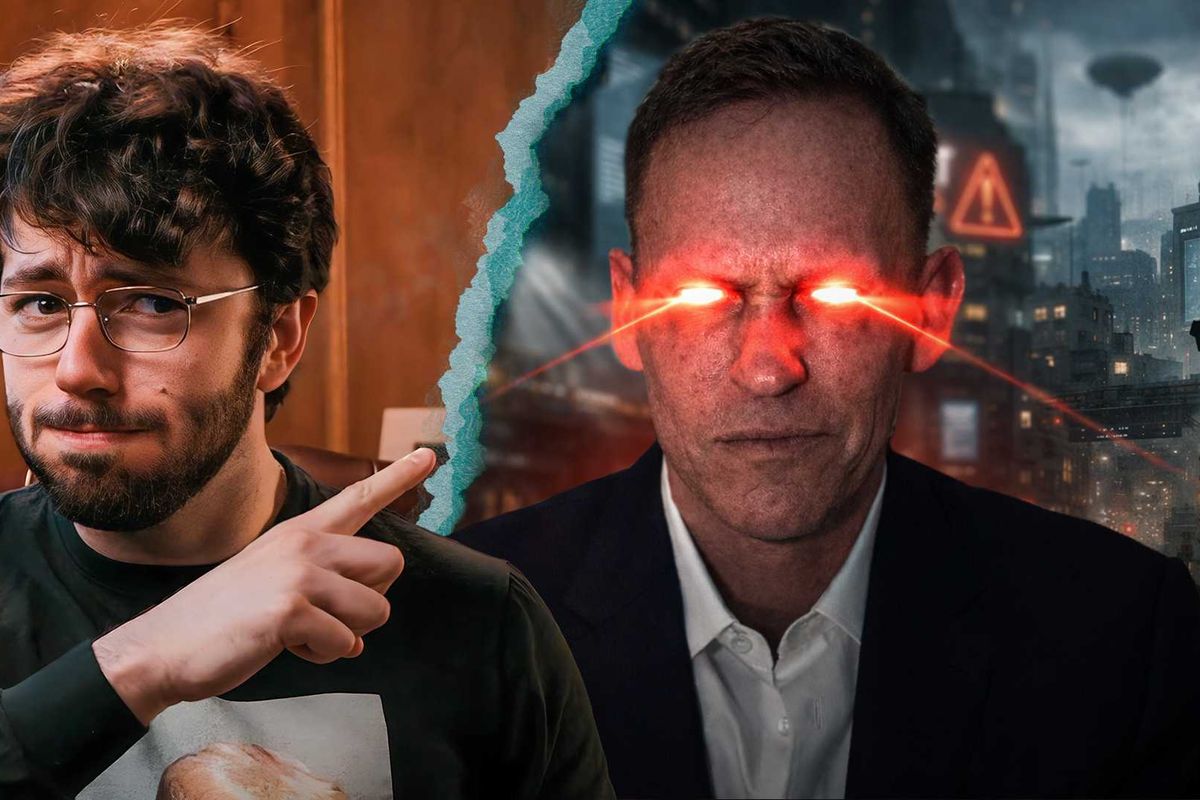
QAnon — the right-wing conspiracy theory claiming that Donald Trump was secretly battling an evil elitist cabal that puppeteers the world — may be in history’s ash heap, but the kind of fanatical, evidence-light thinking that birthed it is still alive and well, says BlazeTV host John Doyle.
Now that cryptic Q messages are a relic of the past, those who hunger for hype and theatrics are sinking their teeth into another paranoia-driven fantasy, this time revolving around Peter Thiel and Palantir — a powerful data analytics and surveillance software company that helps governments and large corporations analyze massive datasets to detect patterns, predict threats, and make decisions.
“According to the people who tend to like this idea … Palantir is essentially part of a vast global conspiracy to deprive Americans, specifically American patriots, of their rights, and that is somehow supposed to benefit Israel,” says Doyle.
People who take this bait usually end up setting their crosshairs on Vice President JD Vance. Thiel hired Vance at his venture firm Mithril Capital after meeting him at Yale, financially backed Vance’s own venture capital firm, Narya Capital, and donated $15 million to his successful 2022 Ohio Senate campaign.
Many well-meaning fringe believers, hardened by years of being hated by America’s “most powerful and prestigious institutions,” says Doyle, hear this and denounce Vance as a controlled political figure installed by Thiel to advance a shadowy agenda of surveillance, authoritarian tech dominance, and anti-democratic control through Palantir’s government contracts.
“On paper, dude, I don’t know. It strikes me as a very sort of typical, like, mentor-mentee kind of relationship,” Doyle counters.
But more importantly, “look at the fruits of this [relationship], though,” he adds. “JD Vance is a senator in Ohio. JD Vance now is the vice president of the United States. He’s doing fantastic work. Things are going very well for us, due in large part to JD Vance.”
Doyle cautions against falling into the right’s anti-Palantir/Thiel conspiracism, as it is ultimately a tactic employed by “people who stumbled into right-wing politics but are themselves spiritually leftists” to sabotage JD Vance’s potential 2028 presidential run by painting him as tool tied to “Big Tech” overlords like Thiel.
Further, he rejects the superstition that Palantir — named after the seeing stones in J.R.R. Tolkien’s “The Lord of the Rings” — amounts to Thiel confessing plans to wield his AI-powered company as a real-world Sauron.
“I am gonna have to disappoint you a little bit by telling you that [Palantir] does not actually give you telepathic powers. Instead what it actually offers is a little bit more mundane, a little bit less romantic. It’s just, like, software platforms that allow clients to make sense of pre-existing data,” says Doyle.
That said, Palantir is indeed working with “intelligence agencies, militaries, some of the world’s largest corporations.”
“It’s pretty clear that Palantir, whatever it does, is operating at the highest levels of society. Much of the U.S. government is running on Palantir software. Maybe we should pay a little bit more attention to that. Fair enough,” Doyle acknowledges.
Even still, it’s unwise to join the anti-Palantir/Thiel crowd for the explicit reason that it was started by leftists who hate anyone and anything considered right-wing.
“Amusingly, it is the fact that several of Palantir’s founders are outspokenly right-wing that the anti-Palantir narratives were spread in the first place. This was not from some kind of principled opposition. … Literally just because Palantir is run by guys who are sympathetic and enthusiastic about right-wing ideas,” says Doyle.
“All [Palantir] does is give you the ability to make sense of your own data,” he declares. If it was doing anything more than that — say, “stealing its clients’ data” — then almost certainly we would know about it due to the sheer number of people on both the left and pseudo-right who are chomping at the bit to dismantle Palantir.
“If that’s happening, there’s no evidence for it,” Doyle asserts. “And by the way, if the federal government wanted to send your data to Mossad — which, for the record, I really don’t think that’s what’s going on — it doesn’t need Palantir to do that. It would just simply do that.”
To hear more of Doyle’s analysis, watch the full episode above.
Want more from John Doyle?
To enjoy more of the truth about America and join the fight to restore a country that has been betrayed by its own leaders, subscribe to BlazeTV — the largest multi-platform network of voices who love America, defend the Constitution, and live the American dream.
How Hollywood tries to masculinize femininity — and makes everyone miserable

We are told, repeatedly, that woke is dead. Piers Morgan even wrote a book about it, so it must be true. Right?
Wrong.
Strength, by Hollywood’s current definition, must weigh a little over 100 pounds and look perpetually annoyed.
If in doubt, please watch the trailer for “Apex,” due for release in April. With it comes Hollywood’s most exhausted fantasy yet: the indestructible badass woman who outruns youth, outpunches men twice her size, and shrugs off biology like it’s a clerical error.
Mission: Implausible
This time, it’s a 50-year-old Charlize Theron sprinting through the Australian wilderness and scaling cliffs as if she’s Tom Cruise circa “Mission: Impossible 2.” Gravity is optional. Muscle mass is negotiable. Aging, it seems, is strictly forbidden.
We’ve seen this act so many times that it barely registers any more. Swap the title card, rotate the backdrop, keep the same choreography. A lone woman wronged by men. A past trauma. An axe to grind, sometimes literally. Six-foot brutes wait their turn to be neutralized. The music swells. The credits roll. And with them go the eyeballs of nearly every viewer still capable of respecting basic reality.
The point is not that women can’t be strong. Of course they can. Strength is not the issue. Hollywood’s definition of it is. Somewhere along the way, empowerment became synonymous with women cosplaying male action heroes, only with fight scenes that insult Newton and scripts that insult the audience. A petite actress body-checking men built like refrigerators — then calling disbelief misogyny — is not progress.
What makes “Apex” more revealing than irritating is how nakedly it exposes the broader frame. This isn’t about one film or one actress. It’s the result of a steady drip: years of female-driven nonsense poured into every genre until it became the genre. The same beats. The same postures. The same lectures delivered at gunpoint.
Form fatale
Hollywood has always run on formula. Nothing new there. It followed money, copied hits, and abandoned failures without sentimentality. But the formula answered to the audience. If people didn’t buy tickets, the trend was over.
Now the industry treats audience resistance not as feedback, but as something to be corrected — like a behavioral problem that needs retraining. Failure is no longer evidence that the formula is broken. It is treated as proof that the audience is.
Studios like to pretend this is audience demand. It isn’t. It’s institutional inertia. Executives terrified of being accused of regression keep recycling the same safe lie: If the movie fails, the audience is at fault. If it succeeds modestly, it’s a cultural victory.
It’s a system that makes the arrival of the new “Supergirl” later this year entirely predictable. Not because audiences asked for it. Not because there was pent-up demand. Not because anyone ever thought, yes, this is what’s missing. It is arriving because this is what the industry now produces by reflex.
The irony is hard to miss. The original “Supergirl” debuted in 1984, the same year Orwell warned us about systems that repeat lies until they feel inevitable. That film was a commercial and critical dud, quickly forgotten for good reason.
Four decades later, Hollywood appears determined to rerun the experiment, convinced that time, tone, and audience memory can all be overwritten. Don’t expect to be entertained. Expect scowls and sermons in spandex. Strength, by Hollywood’s current definition, must weigh a little over 100 pounds and look perpetually annoyed.
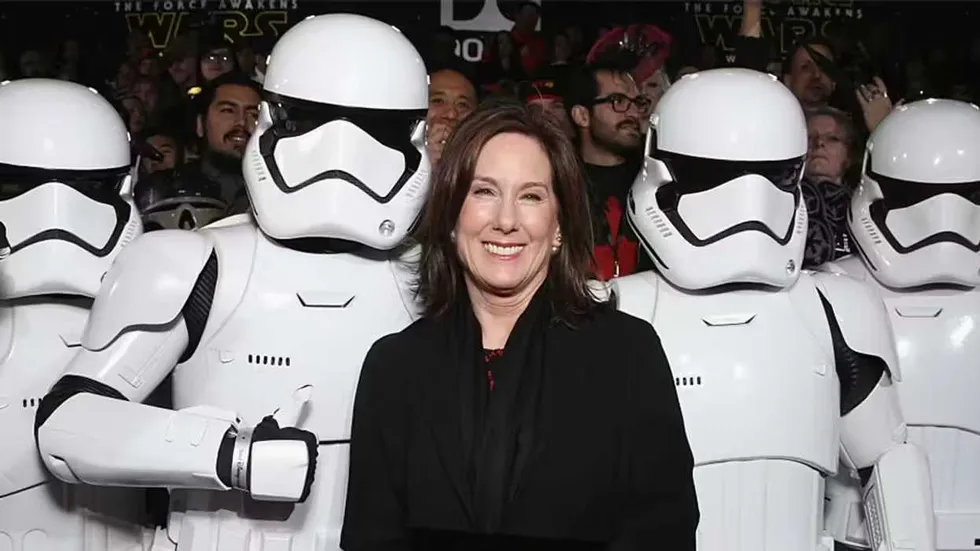
RELATED: FEMPIRE STRIKES BACK: Kathleen Kennedy leaves ‘Star Wars’; is it too soon for fans to celebrate?
Down for the count
We saw the results late last year. The box-office face-plant of “Christy,” the biopic of boxer Christy Martin, made the point brutally clear. Despite opening in more than 2,000 theaters, it scraped together just $1.3 million — one of the worst wide releases on record.
The film stars Sydney Sweeney, an American beauty inexplicably styled like a discount Rocky Balboa. Producers assumed her star power would draw crowds, then forgot why anyone — especially male viewers — watches her in the first place. It isn’t to see her absorb jabs, hooks, and uppercuts like a human heavy bag. It’s when she leans into what she actually is: feminine, magnetic, sexy. No one is buying a ticket to watch a gorgeous woman get beaten senseless.
This is the quiet truth studios refuse to say out loud: Men and women are not the same, and they do not want the same things on screen. Audiences happily watched Liam Neeson bulldoze Europe in “Taken.” They turned up in droves to see Keanu Reeves turn the death of a dog into a four-film genocide in “John Wick.” Nothing motivates a man like canine-related trauma and unlimited ammunition. Those films worked because they leaned into male fantasy without apology.
Equalizer rights?
What audiences don’t want is that same template awkwardly stapled onto a completely different body and sold as innovation. Denzel Washington was excellent in “The Equalizer” — cold, credible, and infinitely cool.
The TV reboot took that precision and desecrated it by turning the role into unintentional slapstick. A morbidly obese Queen Latifah as a silent, unstoppable angel of death is pure absurdity. This is a woman who struggles to climb a single flight of stairs, yet viewers are expected to believe she’s capable of stalking, subduing, and dispatching trained men without breaking a sweat.
Which brings us back to “Apex.” What makes the film accidentally hilarious isn’t Charlize Theron running through the bush. It’s the industry sprinting right behind her, desperately chasing a fantasy that stopped selling years ago. The humor comes from the sincerity. From the absolute faith that this time — finally — it will land.
And it will land. Just not gracefully. More like a Boeing falling out of the sky. Twisted metal, scorched wreckage, and stunned executives wandering around asking what went wrong.
And from that wreckage, there will be no reckoning. No pause. No course correction. Just a quick trip back to the studio lot to greenlight the next movie nobody requested and that everyone will forget.





