Category: Gay adoption
‘There is no mama’: How a viral video accidentally exposed the true cost of gay adoption
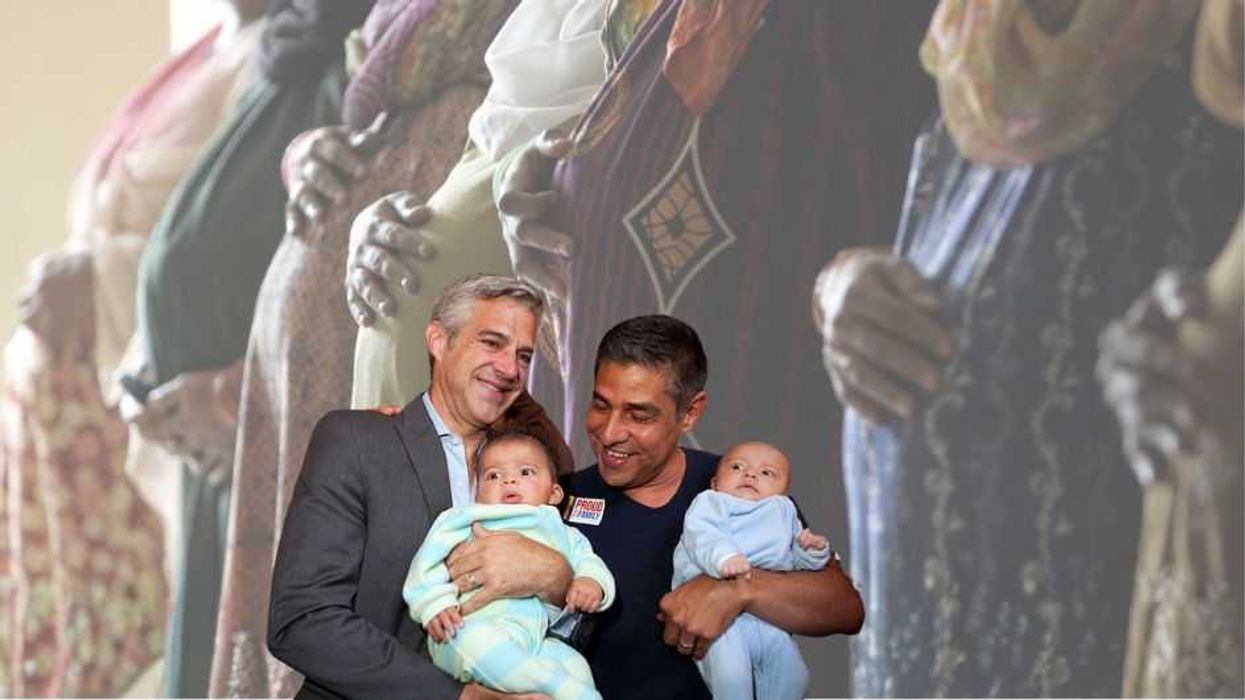
“Baby has 2 dads… chose neither,” reads the caption on the video recently posted by gay country star Shane McAnally. In it, McAnally’s husband, Michael Baum, asks the couple’s baby son, “Who do you want, Dada or Pop?”
When the boy calls out for “mama,” the two men laugh. “There is no mama,” says Baum, as the baby begins to cry.
Commercial surrogacy is a booming global industry. By 2032, the market is projected to exceed $120 billion.
Backlash to the clip was swift. To many viewers, there was nothing funny about the baby’s confusion; instead it was cruel and deeply disturbing.
Considering the costs
McAnally and Baum no doubt meant this as a lighthearted parenting moment, and not long ago, that’s probably how it would have been received. But the reaction to the video suggests that today, a decade into our nation’s legal, cultural, and technological push to reshape the family, more people are beginning to consider the costs of that transformation — most poignantly, the cost to the babies born via surrogacy and sold to same-sex couples, forever cut off from their biological mother or father by design.
Many of us have been raising the alarm about this for years, despite being dismissed as “homophobes” and “bigots.” To those just joining us, welcome. Below are a few concrete steps we can take to help these most innocent of victims.
1. Overturn Obergefell v. Hodges
Since the beginning of civilization, marriage has been understood as a union between a man and a woman, one that is inherently ordered toward procreation and family life, grounded in sexual complementarity, and oriented toward permanence and exclusivity.
It is only recently in human history that we have sought to question this assumption — first through the sexual revolution’s legal and cultural devaluation of marriage, and then through the Supreme Court’s legalization of same-sex marriage in Obergefell v. Hodges.
Now that we have, studies have made it all the more obvious that we were right the first time: Children need a mother and father.
Research using the massive Future of Families and Child Wellbeing Study dataset finds that children in single-parent and co-habiting homes fare worse overall on multiple outcomes, including rates of abuse.
Moreover, studies show that children raised by same-sex couples are significantly more likely to struggle emotionally, socially, and academically.
Traditional marriage is ideal for children — and for society. If we hope to restore it, the first step must be to overturn Obergefell v. Hodges
2. Ban commercial surrogacy
Surrogacy turns the creation of human life into a commercial transaction — a transaction that offers the children being bought and sold few legal protections.
It separates children from their biological mothers by design and often treats both women and children as means to an end rather than individuals with inherent dignity.
In commercial surrogacy arrangements, contracts often dictate the terms of pregnancy, birth, and custody — including how disputes over the child will be handled. Many agreements include provisions requiring the surrogate to follow the intended parents’ wishes in cases of fetal abnormality or multiple embryos, sometimes including abortion or “selective reduction.”
No surrogate can literally be forced to undergo an abortion. But in practice, the pressure can be significant. Refusing such a request may mean breaching the contract, losing compensation, facing legal action, or being drawn into prolonged custody disputes. In some documented cases, payments have been withheld or additional financial incentives offered to encourage compliance.
This creates a troubling dynamic: While the surrogate retains formal bodily autonomy, the structure of the agreement can place her under intense legal and financial pressure at precisely the moment a moral decision arises. The child, meanwhile, is treated less as a person with inherent claims and more as the subject of a negotiated outcome.
That tension — between autonomy in theory and pressure in practice — is one of the least examined ethical problems in modern surrogacy.
The silence is hardly surprising. Commercial surrogacy is a booming global industry. By 2032, the market is projected to exceed $120 billion.
Nonetheless, countries including France and Germany have summoned the political will to prohibit or heavily restrict surrogacy. The United States should follow suit. If we are serious about protecting children, we cannot allow a system that commodifies them before they are even born.
 Blaze Media Illustration
3. Establish children’s legal right to a mother and father
Both the weakening of marriage and the rise of surrogacy can ultimately be traced to the same development: the tendency to prioritize adult desires over children’s needs.
As Katy Faust, founder and president of children’s advocacy group Them Before Us, points out, the “adult practicality” promised by gay marriage comes at the expense of children: “When marriage makes husbands and wives legally optional, mothers and fathers become legally optional, too.”
We all know intuitively that children have a right to be raised by their biological mother and father whenever possible. We must now codify this right into law, reshaping adoption and reproductive policy to favor the child, not the adults seeking a child.
This means we should prioritize placement with married mother-father households in adoption and foster care, ending policies that intentionally create motherless or fatherless homes — and risk reducing children to lifestyle accessories or status symbols We should require courts to consider long-term child outcomes, not just adult eligibility.
Unique roles
My heart broke watching the young boy in McAnally’s video cry out for his mother, someone he will likely never know. As a mother to both a toddler boy and a baby girl, I see firsthand the beautiful and distinct ways my husband and I meet different needs in our children’s lives. It’s easy to say, in theory, that kids need a mom and a dad. But it’s entirely different to witness, day in and day out, how deeply they rely on both of us in unique ways.
There are moments when my children come to me for comfort, gentleness, and reassurance, things that come entirely naturally to me. And there are other moments when they look to their father for strength, play, challenge, and a different kind of guidance that only he can provide.
Neither role is interchangeable. Both are essential. How many more children must suffer before we restore mothers and fathers as the foundation of family life?