

Category: Lifestyle
Understanding gas tax hikes — and how your state is affected
As 2026 begins, fuel taxes are shifting across the country — and many drivers won’t notice until they fill up. Some states are adjusting rates by a cent or less, while others are imposing major increases or overhauling how fuel is taxed altogether. Much of it is happening quietly through automatic systems that rarely make headlines.
Fuel taxes rarely dominate headlines, but they remain one of the most direct ways government policy intersects with everyday life. Unlike income or property taxes, fuel taxes are paid in small increments, embedded into a necessity for most Americans. That makes them politically sensitive, economically significant, and easy to overlook — until prices jump.
The broader question is whether fuel taxes remain a sustainable way to fund transportation in an era of increasing vehicle efficiency.
Over the past year, more than a dozen states adjusted their fuel tax systems. Some increased rates to shore up transportation budgets strained by inflation and aging infrastructure. Others reduced taxes to ease costs for consumers and commercial operators. As 2026 begins, another wave of changes is rolling out, driven largely by automatic formulas rather than new legislative votes.
The result is a patchwork of increases, decreases, pauses, and structural overhauls that reflect broader debates about infrastructure, accountability, and the future of road funding.
Small changes — for now
Several states are seeing modest adjustments as of January 1. Florida, Georgia, Minnesota, and North Carolina are implementing small increases of about 1 cent or less per gallon. New York, Utah, and Vermont are seeing slight decreases, also under a penny.
These changes are not the product of last-minute political deals. Instead, they stem from automatic adjustment mechanisms written into state law, often tied to inflation, fuel prices, or construction costs.
Nebraska, Pennsylvania, and West Virginia also allow automatic adjustments, but their fuel tax rates remain unchanged at the start of 2026. That stability does not mean those states are immune from future increases — only that the formulas did not trigger a change this cycle.
Automatic adjustments are becoming more common because they provide predictable revenue without forcing lawmakers to cast politically risky votes. Critics argue they reduce accountability and disconnect tax increases from voter oversight. Supporters counter that they keep transportation funding aligned with real-world costs, especially as materials and labor become more expensive.
While these small changes may barely register for individual drivers, larger shifts in several states deserve closer attention.
Michigan’s major overhaul
Michigan is implementing the most significant fuel tax change taking effect this year. Governor Gretchen Whitmer (D) signed a nearly $2 billion transportation funding package into law that fundamentally changes how fuel is taxed in the state.
Currently, Michigan drivers pay a 31-cent-per-gallon state excise tax on fuel, along with a 6% state sales tax on gasoline and diesel. The problem with that structure is where the money goes. Much of the sales tax revenue flows into the state’s general fund rather than being dedicated to roads and bridges.
Under the new law, the sales tax on fuel is eliminated and replaced with a higher fuel excise tax. The goal is to ensure that all fuel tax revenue is dedicated to transportation projects, aligning with Michigan’s constitutional requirement that fuel taxes be used for infrastructure.
The tradeoff is cost. As of January 1, the fuel excise tax jumps from 31 cents to 52.4 cents per gallon. For drivers, that represents a substantial increase at the pump, even as state leaders argue the new system is more transparent and constitutionally sound.
Supporters say the change corrects a long-standing mismatch between how fuel is taxed and how the money is spent. Critics counter that drivers are still paying significantly more, regardless of how the tax is labeled, at a time when vehicle ownership costs are already rising.
RELATED: America First energy policy is paying off at the pump
New Jersey’s variable approach
New Jersey is also raising fuel taxes under a law passed in 2024 that allows annual increases through 2029 to meet transportation funding targets. The state uses a layered tax structure that combines a petroleum products gross receipts tax with a fixed motor fuels excise tax.
As of January 1, the petroleum tax on gasoline rises by 4.2 cents, from 34.4 cents to 38.6 cents per gallon. When combined with the fixed 10.5-cent motor fuels tax, the total state gasoline tax reaches 49.1 cents per gallon. Diesel taxes rise by the same amount on the petroleum side, bringing the total diesel tax to 56.1 cents per gallon when paired with its fixed excise tax.
New Jersey’s approach reflects a broader trend toward variable fuel taxes designed to stabilize transportation funding. By tying part of the tax to revenue targets or fuel prices, the state aims to avoid sudden funding shortfalls. The downside, particularly for commuters and commercial operators, is reduced predictability at the pump.
Oregon hits pause
Oregon tells a different story. A scheduled 6-cent gas tax increase set to take effect January 1 has been put on hold.
Lawmakers approved the increase during a special session, raising the gas tax from 40 cents to 46 cents per gallon as part of a broader transportation funding package. After Governor Tina Kotek (D) signed the bill into law, opponents launched a statewide petition drive to delay the increase until voters could weigh in.
Organizers gathered nearly 200,000 signatures — enough to force the state to pause the tax hike until the November 2026 election. As a result, the gas tax increase is suspended, along with planned hikes to passenger vehicle registration and title fees. Other elements of the transportation package will still move forward, including a change that applies the motor vehicle fuel tax to diesel.
Oregon’s situation highlights the growing tension between legislative action and direct democracy when it comes to fuel taxes. Even when increases are framed as infrastructure investments, fuel costs remain politically sensitive, and voters are increasingly willing to push back.
The rise of automatic fuel taxes
Behind these headline changes lies a complex web of automatic adjustment systems that now shape fuel taxes in roughly half the country. According to the National Conference of State Legislatures, 25 states use some form of variable fuel tax rate.
These systems vary widely. Some states set fuel taxes as a percentage of the wholesale price. Others combine a flat excise tax with a price-based component. Many tie adjustments to inflation, using measures such as the Consumer Price Index or highway construction cost indexes.
Timing also varies. Indiana updates its fuel sales tax monthly. Vermont adjusts quarterly. Nebraska recalculates every six months. Several states, including Alabama and Rhode Island, make changes every two years.
Annual updates are the most common and occur in states such as California, Florida, Georgia, Michigan, Minnesota, New Jersey, New York, North Carolina, Pennsylvania, and Washington.
For policymakers, these mechanisms offer a way to keep transportation funding solvent without reopening contentious debates year after year. For drivers, they can feel like stealth tax increases — predictable, recurring, and largely disconnected from economic conditions at the household level.
Are fuel taxes still sustainable?
The broader question is whether fuel taxes remain a sustainable way to fund transportation in an era of increasing vehicle efficiency. As cars travel farther on less fuel, states collect less revenue per mile driven, even as infrastructure costs continue to rise.
That gap is driving experimentation with mileage-based user fees, higher registration costs, and targeted fees for specific vehicle types. Despite those efforts, fuel taxes remain the backbone of transportation funding — and recent changes suggest states are not ready to let go of them.
For consumers, the short-term impact is straightforward. In some states, filling up will cost a bit more. In others, it may cost slightly less or stay the same. Over time, however, the cumulative effect of these policies reaches far beyond individual drivers, influencing shipping costs, retail prices, and household budgets.
Fuel taxes may be collected a few cents at a time, but they represent billions of dollars and fundamental choices about how roads are built, maintained, and paid for. As 2026 begins, drivers would be wise to pay attention. What looks like a small adjustment today often signals a much larger shift tomorrow.
Modern life isn’t so bad (even if my furnace is out again)
Every year, at the coldest time of the year, our furnace goes out. I’ve written about it before, I’m writing about it now, and I’m sure I’ll write about it again. Benjamin Franklin said, “In this world, nothing is certain except death and taxes.” I say, “In this world, nothing is certain except winter — and our furnace breaking.”
Lately I’ve been thinking a lot about modernity: not just as an era, but as a way of life, and as a particular relationship we have with technology and the natural world. Winter has a way of provoking those thoughts. It’s unforgiving outside and warm inside, and that contrast shapes not only our environment but our state of mind. Winter invites introspection whether we ask for it or not.
You don’t actually want to go back to 1198 or 1598. At most, you want to go back to 1998 — before things took such a strange turn.
It also reminds us of something more basic: Winter wants to kill us.
Cold truth
Without insulated homes, reliable transportation, and warm clothing, many of us simply wouldn’t make it. Maybe that isn’t true everywhere. It’s not true in places with mild winters. But it is true here, where the temperature tonight is expected to dip to ten below zero. In places like this, modernity doesn’t just make life comfortable — it makes it possible.
That’s easy to forget. I turn the thermostat up and the furnace obeys. I want it to be 67 degrees, and it becomes 67 degrees. No delay, no doubt. I can count on warmth in the same way I count on the sun rising tomorrow — until I can’t. Then the house turns cold, the basement office becomes unusable, space heaters migrate upstairs, and our seemingly invincible HVAC world collapses all at once. Annoyance quickly turns into perspective.
The furnace, of course, is only one small example. This isn’t really about heating systems or cold weather; it’s about how easily we take the blessings of the modern world for granted.
RELATED: Why does our furnace go out every winter? (and other burning questions)
 Heritage Images/Getty Images
No thanks
We all do it. Whatever we have now quickly becomes the baseline. We stop remembering what life was like without it. You see this with people who move to America from poorer parts of the world. After a decade, they are often just as accustomed to convenience as those born into it. You might expect memories of hardship to linger, but they rarely do. Perhaps death once sat closer to daily life, even in developed societies, and kept gratitude sharper. Perhaps something else has changed. Either way, ingratitude seems to come naturally to us now.
Medicine is a clear example. How many of us would be dead without modern medical care? Many. Imagine surgery without anesthesia. Imagine life without optometry or dentistry. It’s not a romantic picture.
The same goes for something as mundane as mail. People love to complain about the USPS, but in much of the world, a functioning postal system barely exists. I know someone who lived in Africa building embassies for the U.S. government, and he told me that local mail simply wasn’t usable. Here we send letters, order books, ship packages, and trust that they will arrive — and that if they don’t, someone will make it right. That trust is a modern miracle we barely notice.
Horse power
Or consider transportation. We can wax poetic about the romance of horse-drawn travel, but the truth is, we would hate it. It might charm us for a day or two, but before long, we’d be desperate to return to cars, trains, ferries, and planes. Modern speed isn’t just convenient — it reshapes what a human life can contain.
Lately I see a lot of anger directed at modernity itself. Some of it is understandable. There are technological and medical “advances” that drift away from the good and toward the destructive. That frustration is real, and I feel it too. But rejecting the modern world wholesale is neither wise nor serious. You don’t actually want to go back to 1198 or 1598. At most, you want to go back to 1998 — before things took such a strange turn.
Our task, then, isn’t to flee modernity, but to refine it. We cannot escape it — and we shouldn’t want to. The better path is gratitude without naivety: thankful for the blessings, alert to the dangers, and willing to curb excess without denying reality. If we do that, we may yet manage to build not just a modern world, but a good one.
Why the FBI ditched Chevy Suburbans for BMW SUVs
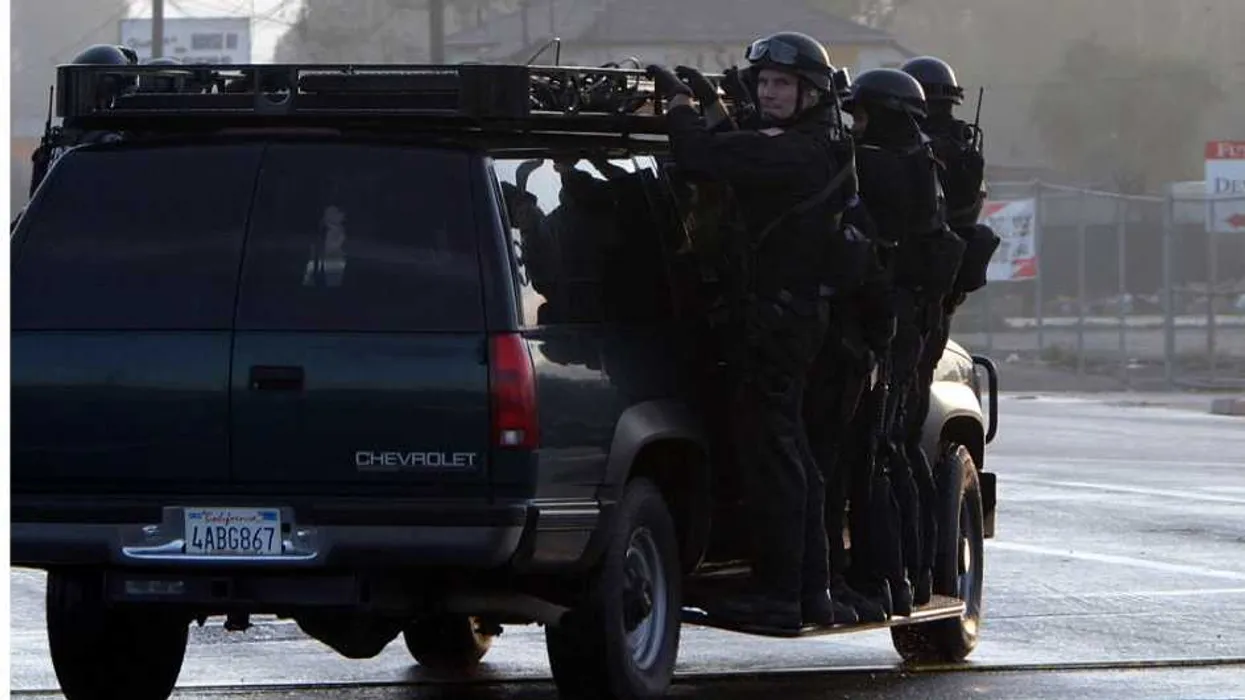
The FBI is abandoning General Motors.
For generations, the black Chevrolet Suburban has been a rolling symbol of federal authority. Its size, shape, and presence are instantly recognizable — whether pulling up to a courthouse, idling outside a hotel, or leading a motorcade through city streets. That familiarity, however, is precisely why the FBI’s recent decision to move away from armored Suburbans in favor of BMW X5 Protection SUVs deserves a closer look. Despite the political noise surrounding the change, the rationale behind it is not ideological. It is practical.
While BMW is a German brand, all BMW X-series SUVs — including the X5 — are manufactured at the company’s Spartanburg, South Carolina, plant.
Under FBI Director Kash Patel, the bureau has reportedly ordered a fleet of armored BMW X5 Protection SUVs to replace the Chevrolet and GMC models traditionally used for executive transport. The reasons cited by the FBI are straightforward: The BMWs cost significantly less, attract less attention, and are built in the United States. Taken together, those factors point to a procurement decision driven by economics and operational efficiency — not symbolism or brand preference.
Frugal fleet
According to FBI spokesperson Ben Williamson, vehicle fleet decisions are routinely reviewed based on security needs, usage patterns, and budget considerations. In this case, the BMW X5 Protection was selected after comparing costs and capabilities with other armored options. Williamson said the move could save taxpayers millions of dollars by choosing a less expensive vehicle while still meeting the bureau’s protection requirements.
The cost differences are hard to ignore. Government-spec Chevrolet Suburban Shield vehicles produced by GM Defense have been reported to cost anywhere from roughly $600,000 to as much as $3.6 million, depending on armor level, drivetrain configuration, and mission-specific equipment. Even conservative estimates put a new armored Suburban at around $480,000 per vehicle. By contrast, the BMW X5 Protection VR6 is generally priced between $200,000 and $300,000 — less than half the cost of many armored Chevrolet and GMC alternatives.
When multiplied across an entire fleet, those numbers add up quickly. Savings of $200,000 or more per vehicle matter for an agency under constant pressure to justify spending. From a taxpayer perspective, the question is simple: If the required level of ballistic protection can be achieved for significantly less money, why wouldn’t the FBI pursue that option?
The BMW X5 Protection VR6 is not a standard luxury SUV fitted with aftermarket armor. It is engineered from the factory with integrated ballistic protection designed to meet VR6 standards, including resistance to high-powered rifle fire and explosive threats. These vehicles are already in service with governments and diplomatic protection units around the world, including the U.S. State Department, which uses armored BMWs to protect American diplomats in high-risk regions. This is a proven platform, not an experiment.
Stealth mode
Cost, however, is only part of the story. The FBI has also indicated that the BMWs are less conspicuous than traditional government vehicles. That claim may seem counterintuitive until one considers how closely the Suburban is associated with federal authority. A line of black Suburbans with dark glass immediately signals government transport. Their presence often draws attention.
The BMW X5, even in armored form, blends more easily into traffic — particularly in urban and suburban areas where luxury SUVs are common. It does not carry the same visual shorthand of authority. From a security standpoint, reducing predictability and visibility can be an advantage. A vehicle that does not immediately announce its purpose may attract less attention and lower risk in certain situations.
Critics argue that the publicity surrounding the purchase undermines any claim of stealth, and that may be true in the short term. Over time, however, the novelty fades. What remains is a vehicle that looks like countless others on the road, rather than one that announces its role at a glance.
RELATED: A federal ‘kill switch’ for your car is coming — and neither Democrats nor Republicans will stop it
 United Archives/Andrew Harnik/Getty Images
American-made
Another point often lost in the debate is where these vehicles are built. While BMW is a German brand, all BMW X-series SUVs — including the X5 — are manufactured at the company’s Spartanburg, South Carolina, plant. It is BMW’s largest production facility worldwide and one of the most significant automotive exporters in the United States by value. The armored X5s used by the FBI are built by American workers on American soil.
That reality complicates claims that the FBI is abandoning American manufacturing. Both the Chevrolet Suburban and the BMW X5 are products of U.S. factories, assembled by U.S. labor, and supported by domestic supply chains. The distinction lies not in where the vehicles are built, but in how much they cost and how effectively they meet the agency’s needs.
Government fleets have always been guided by pragmatism. Federal agencies regularly reassess equipment based on performance, cost, and evolving threats. The FBI’s decision fits squarely within that tradition.
The emotional attachment to the Suburban is understandable. Introduced in 1935 as the Carryall Suburban, it is the longest-running nameplate in American automotive history and has served military, law enforcement, and civilian roles for nearly a century. But symbols come at a price, and in this case that price appears to have climbed sharply.
Time will tell
Imagining a single Suburban costing as much as $3.6 million is enough to give any budget analyst pause. Even at the lower end of reported figures, the cost difference between an armored Suburban and an armored BMW X5 is substantial. In an era of heightened scrutiny over federal spending, paying more than double for a vehicle that may also be more conspicuous is difficult to justify.
That does not mean the BMW choice is without trade-offs. Long-term maintenance costs, parts availability, and service complexity will ultimately determine whether the savings persist over the full life cycle of the vehicles. German engineering can be expensive to maintain, but heavily armored Suburbans are also highly specialized machines with their own costly upkeep requirements. The true comparison will emerge over time.
What is clear now is that the decision is rooted in cost control and operational considerations — not political signaling. The FBI did not choose BMW to make a statement. It chose BMW because the vehicles were cheaper, less visually obvious, and built domestically.
For taxpayers, the takeaway is straightforward. If a federal agency can meet its security needs while spending significantly less money, that is not a controversy. It is what responsible stewardship is supposed to look like. The badge on the grille may spark debate, but the math behind the decision tells a far more practical story.
Massachusetts on track to set mileage limits for drivers
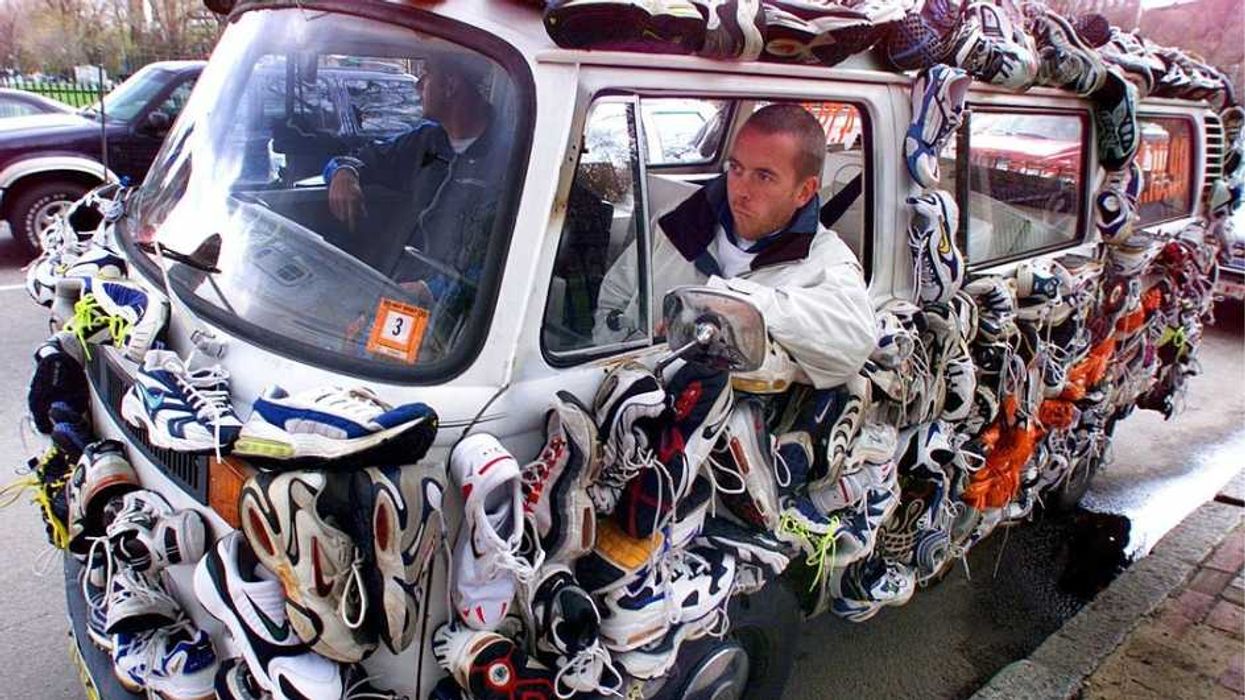
A bill advancing through the Massachusetts Senate would make reducing how much people drive an explicit goal of state transportation policy. It is called the Freedom to Move Act.
The bill, SB 2246, does not impose mileage caps on individual drivers. There is no odometer check, no per-driver limit, and no new fines or taxes written into the legislation. Instead it directs the state to set targets for reducing total vehicle miles traveled statewide — targets that would be incorporated into transportation planning, infrastructure investment, and long-term emissions policy.
When reducing driving becomes a formal state objective, personal mobility inevitably becomes something to be managed.
Transportation is the largest source of greenhouse gas emissions in Massachusetts, as it is in many states. From that perspective, lawmakers argue the bill simply aligns transportation policy with existing climate mandates. The state already has legally binding emissions reduction goals, and supporters say those goals cannot be met without addressing how much people drive. SB 2246, they argue, is about planning — not punishment — and about expanding alternatives rather than restricting choices.
Planning … or punishment?
The bill also establishes advisory councils and requires state agencies, including the Massachusetts Department of Transportation, to factor VMT reduction into project development and funding decisions. In theory, this means greater emphasis on public transit, transit-oriented development, walking and biking infrastructure, and land-use policies designed to shorten commutes. Supporters emphasize that the legislation does not ban cars, restrict ownership, or mandate lifestyle changes. It simply provides a framework for offering residents more options.
The practical implications, however, deserve closer scrutiny — especially outside the state’s urban core. In greater Boston, where transit access is relatively dense, reducing car trips may be feasible for some commuters. In suburban and rural areas, the reality is very different. Many residents drive long distances to work because there are no viable alternatives. Families juggle school, child care, medical appointments, sports, and jobs across multiple towns. Small businesses rely on vehicles for deliveries, service calls, and daily operations. For these drivers, “driving less” is not a preference — it’s a constraint imposed by geography.
Future restrictions
Critics also worry that while SB 2246 does not cap individual mileage today, it lays the groundwork for future restrictions. Once statewide VMT reduction targets are established, pressure will mount to meet them. That pressure could influence everything from road funding and parking availability to congestion pricing, zoning decisions, and the collection of driving data. Even without explicit mandates, policy signals matter. When reducing driving becomes a formal state objective, personal mobility inevitably becomes something to be managed.
There is also the issue of trust and execution. Massachusetts has struggled for years to maintain and modernize its public transportation system. The MBTA’s well-documented reliability problems have eroded confidence among riders and taxpayers alike. Promising expanded transit options while existing systems remain fragile leaves many residents skeptical that alternatives to driving will arrive quickly — or equitably.
RELATED: EPA to California: Don’t mess with America’s trucks
 Bob Riha, Jr./Getty Images
National trend
From a broader policy standpoint, SB 2246 reflects a national trend. States and cities across the country are experimenting with VMT reduction as a climate strategy, encouraged by federal guidance and funding priorities. The premise is that cleaner vehicles alone are not enough and that total driving must decline to meet emissions targets. Whether that assumption holds as vehicle technology evolves — including hybrids, plug-in hybrids, and increasingly efficient internal combustion engines — remains an open question.
Supporters argue that thoughtful planning now can prevent more disruptive measures later. By gradually reshaping transportation and development patterns, they believe emissions can be reduced without dramatic lifestyle changes. Opponents counter that history suggests incremental planning often leads to more intrusive policies — especially when initial targets prove difficult to meet.
What makes SB 2246 significant is not what it does immediately, but what it signals about the future of transportation policy. It reframes driving not simply as a personal choice or economic necessity, but as a behavior the state has an interest in reducing.
As the bill moves to the Senate Ways and Means Committee, lawmakers will have to weigh climate goals against economic realities, regional disparities, and personal freedom.
Massachusetts residents should pay close attention. SB 2246 may not tell you how many miles you can drive today — but it helps define who gets to decide how transportation works tomorrow.
Do you follow a diluted Jesus — or the full-strength one?
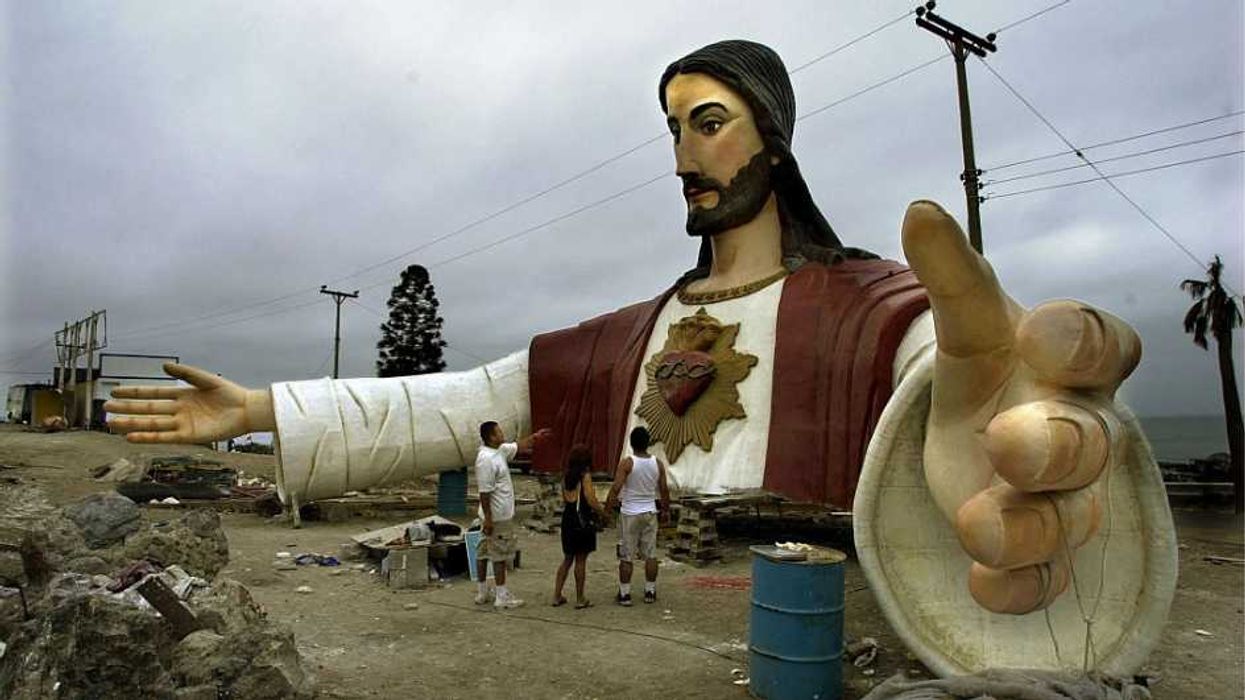
One of the most revealing features of modern Christianity — across Catholic, Protestant, and nondenominational churches alike — is how Jesus is so often presented: gentle, affirming, and above all reassuring. He is described primarily as the “Prince of Peace,” a title that appears only once in scripture (Isaiah 9:6), or reduced to a generalized ethic of niceness often summarized as “Jesus is love.”
The problem is not that these ideas are false. It is that they are radically incomplete.
Jesus prays for His followers, not for the world as such. He commands love of neighbor, but He never pretends that truth and allegiance are optional.
Scripture presents God as merciful, gracious, and abundant in goodness and truth (Exodus 34:6), but the same passage insists that He “will by no means clear the guilty.” Love, in the biblical sense, is inseparable from justice.
When Jesus commands His disciples to love one another, the apostle Paul clarifies what this means: to fulfill the law and do no harm to one’s neighbor (Romans 13:8-10). Love is not affirmation of wrongdoing; it is obedience to God’s moral order.
This distinction was not always obvious to me.
Scriptural reckoning
For much of my life, I was a Christian in name only — attending church, absorbing familiar slogans, and assuming that the moral core of Christianity consisted of kindness paired with a firm prohibition against judgment or righteous anger. That changed four years ago when I began reading scripture seriously, first through a Jewish translation of the Old Testament and later through a King James Study Bible in weekly study with a close friend.
We made a simple but demanding commitment: start at Genesis and read every verse, in order, without skipping the difficult passages. We are now in Matthew 6. This approach differs sharply from curated reading plans that promise familiarity with the Bible while quietly filtering out the parts that unsettle modern sensibilities.
Reading scripture this way forces a reckoning.
Anger management
Consider Matthew 5:22, where Jesus warns against being angry with one’s brother “without cause” — a qualifying phrase absent from many modern translations. That distinction matters. Without it, the verse suggests that all anger is sinful. With it, scripture acknowledges a truth borne out repeatedly: Anger can be justifiable, but it must be governed.
Jesus Himself demonstrates this. He overturns tables in the Temple (Matthew 21:12). He rebukes religious leaders sharply. He experiences betrayal, grief, and indignation — yet never loses control. The lesson is not emotional suppression, but moral discipline.
Reading the King James Bible makes these tensions impossible to ignore. Its language is austere and elevated, but more importantly, it preserves a view of humanity that allows for courage, judgment, and resolve alongside mercy. This stands in contrast to many modern ecclesial presentations of Christ, which portray Him almost exclusively as a comforting presence whose primary concern is emotional reassurance.
RELATED: The day I preached Christ in jail — and everything changed
 menonsstocks/Getty Images Plus
No more Mr. Nice Guy
But Jesus explicitly rejects this reduction. In Matthew 5:17-20, He states plainly that He did not come to abolish the law or the prophets, but to fulfill them. The New Testament does not replace the Old; it completes it. The Old Testament establishes the moral and civilizational framework. The New Testament builds the interpersonal life of faith upon it.
Jesus is eternal (John 8:58), one with the Father and the Spirit (John 14). He is not absent from the demanding and often terrifying episodes of Israel’s history. The same Christ who calls sinners to repentance is present when God judges nations, disciplines His people, and establishes His covenant through struggle and sacrifice.
This continuity matters because it exposes the weakness of a Christianity that treats faith primarily as therapy. Churches shaped around likability and marketability inevitably soften doctrine. Hard truths drive people away; reassurance fills seats. The result is a faith that speaks endlessly about peace while avoiding the cost of discipleship.
A pastor at my church recently put it well: It is better to hold a narrow theology — one that insists scripture means what it says — and to extend fellowship generously to those who submit to it, than to hold a broad theology that can be made to say anything and therefore demands nothing. Jesus prays for His followers, not for the world as such (John 17). He commands love of neighbor, but He never pretends that truth and allegiance are optional.
This is why Jesus’ own words about conflict are so often ignored. In Luke 22:36, He tells His disciples to prepare themselves, even to the point of acquiring swords. The passage is complex and easily abused, but its presence alone undermines the notion that Jesus preached passive moral disarmament. Scripture consistently portrays a God who calls His people to vigilance, readiness, and courage — spiritual first, but never abstracted from the real world.
Cross before comfort
Many of Jesus’ parables involve kings, landowners, or rulers — figures of authority, stewardship, and judgment. The Parable of the Ten Minas in Luke 19 is especially unsettling. There Jesus depicts a king rejected by his people, fully aware of their hatred, and describes the fate rebellion would merit if this were a worldly kingdom. The point is not to license violence, but to make unmistakably clear that rejection of Christ is not morally neutral.
Modern Christianity often flinches at this clarity. It prefers a Jesus who reassures rather than commands, who affirms rather than judges. But scripture presents something sterner and more demanding. Jesus does not seek universal approval. He seeks faithfulness. He does not promise comfort. He promises a cross.
As the late Voddie Baucham frequently observed, the cross is not a symbol of tolerance; it is a declaration of war against sin.
The question Christianity ultimately poses is not whether Jesus is kind — He is — but whether He is Lord. And if He is, discipleship is not a matter of sentiment, but allegiance.
How Hollywood tries to masculinize femininity — and makes everyone miserable

We are told, repeatedly, that woke is dead. Piers Morgan even wrote a book about it, so it must be true. Right?
Wrong.
Strength, by Hollywood’s current definition, must weigh a little over 100 pounds and look perpetually annoyed.
If in doubt, please watch the trailer for “Apex,” due for release in April. With it comes Hollywood’s most exhausted fantasy yet: the indestructible badass woman who outruns youth, outpunches men twice her size, and shrugs off biology like it’s a clerical error.
Mission: Implausible
This time, it’s a 50-year-old Charlize Theron sprinting through the Australian wilderness and scaling cliffs as if she’s Tom Cruise circa “Mission: Impossible 2.” Gravity is optional. Muscle mass is negotiable. Aging, it seems, is strictly forbidden.
We’ve seen this act so many times that it barely registers any more. Swap the title card, rotate the backdrop, keep the same choreography. A lone woman wronged by men. A past trauma. An axe to grind, sometimes literally. Six-foot brutes wait their turn to be neutralized. The music swells. The credits roll. And with them go the eyeballs of nearly every viewer still capable of respecting basic reality.
The point is not that women can’t be strong. Of course they can. Strength is not the issue. Hollywood’s definition of it is. Somewhere along the way, empowerment became synonymous with women cosplaying male action heroes, only with fight scenes that insult Newton and scripts that insult the audience. A petite actress body-checking men built like refrigerators — then calling disbelief misogyny — is not progress.
What makes “Apex” more revealing than irritating is how nakedly it exposes the broader frame. This isn’t about one film or one actress. It’s the result of a steady drip: years of female-driven nonsense poured into every genre until it became the genre. The same beats. The same postures. The same lectures delivered at gunpoint.
Form fatale
Hollywood has always run on formula. Nothing new there. It followed money, copied hits, and abandoned failures without sentimentality. But the formula answered to the audience. If people didn’t buy tickets, the trend was over.
Now the industry treats audience resistance not as feedback, but as something to be corrected — like a behavioral problem that needs retraining. Failure is no longer evidence that the formula is broken. It is treated as proof that the audience is.
Studios like to pretend this is audience demand. It isn’t. It’s institutional inertia. Executives terrified of being accused of regression keep recycling the same safe lie: If the movie fails, the audience is at fault. If it succeeds modestly, it’s a cultural victory.
It’s a system that makes the arrival of the new “Supergirl” later this year entirely predictable. Not because audiences asked for it. Not because there was pent-up demand. Not because anyone ever thought, yes, this is what’s missing. It is arriving because this is what the industry now produces by reflex.
The irony is hard to miss. The original “Supergirl” debuted in 1984, the same year Orwell warned us about systems that repeat lies until they feel inevitable. That film was a commercial and critical dud, quickly forgotten for good reason.
Four decades later, Hollywood appears determined to rerun the experiment, convinced that time, tone, and audience memory can all be overwritten. Don’t expect to be entertained. Expect scowls and sermons in spandex. Strength, by Hollywood’s current definition, must weigh a little over 100 pounds and look perpetually annoyed.
RELATED: FEMPIRE STRIKES BACK: Kathleen Kennedy leaves ‘Star Wars’; is it too soon for fans to celebrate?

Down for the count
We saw the results late last year. The box-office face-plant of “Christy,” the biopic of boxer Christy Martin, made the point brutally clear. Despite opening in more than 2,000 theaters, it scraped together just $1.3 million — one of the worst wide releases on record.
The film stars Sydney Sweeney, an American beauty inexplicably styled like a discount Rocky Balboa. Producers assumed her star power would draw crowds, then forgot why anyone — especially male viewers — watches her in the first place. It isn’t to see her absorb jabs, hooks, and uppercuts like a human heavy bag. It’s when she leans into what she actually is: feminine, magnetic, sexy. No one is buying a ticket to watch a gorgeous woman get beaten senseless.
This is the quiet truth studios refuse to say out loud: Men and women are not the same, and they do not want the same things on screen. Audiences happily watched Liam Neeson bulldoze Europe in “Taken.” They turned up in droves to see Keanu Reeves turn the death of a dog into a four-film genocide in “John Wick.” Nothing motivates a man like canine-related trauma and unlimited ammunition. Those films worked because they leaned into male fantasy without apology.
Equalizer rights?
What audiences don’t want is that same template awkwardly stapled onto a completely different body and sold as innovation. Denzel Washington was excellent in “The Equalizer” — cold, credible, and infinitely cool.
The TV reboot took that precision and desecrated it by turning the role into unintentional slapstick. A morbidly obese Queen Latifah as a silent, unstoppable angel of death is pure absurdity. This is a woman who struggles to climb a single flight of stairs, yet viewers are expected to believe she’s capable of stalking, subduing, and dispatching trained men without breaking a sweat.
Which brings us back to “Apex.” What makes the film accidentally hilarious isn’t Charlize Theron running through the bush. It’s the industry sprinting right behind her, desperately chasing a fantasy that stopped selling years ago. The humor comes from the sincerity. From the absolute faith that this time — finally — it will land.
And it will land. Just not gracefully. More like a Boeing falling out of the sky. Twisted metal, scorched wreckage, and stunned executives wandering around asking what went wrong.
And from that wreckage, there will be no reckoning. No pause. No course correction. Just a quick trip back to the studio lot to greenlight the next movie nobody requested and that everyone will forget.
Hard times create strong men — at any age

I know this guy, Richard. He’s friends with a couple of different friends of mine. He’s in his late 40s. He’s had a successful microbrewery business going for many years.
Last year, I heard that his business was in trouble. And then, more recently, his wife filed for divorce. He is apparently having problems seeing his kids.
Maybe this is our new male initiation ritual. Getting crushed by family court. Losing your business to far-left politics. Being abandoned in your moment of need.
I saw him recently at a large gathering. He was in pretty bad shape. He was getting screwed at family court. He was blaming Trump for his business problems.
His blaming Trump was no surprise. Many otherwise intelligent people do that automatically here in Portland. Everything is Trump’s fault. I don’t really hold it against them. The propaganda is so thick here. And if you own a public-facing business, you probably have to go with the flow.
More likely, the true cause of his business problems is the economics of Portland. Taxes are up. Insurance is skyrocketing. Homeless people have invaded your neighborhood. Drug addicts are lighting your dumpster on fire.
Hitting bottom
So I was at this event, and I ended up in a small group with Richard and a couple of other guys. I could see that he was upset. He looked terrible.
I could relate to his situation. I had gone through a similar compound disaster when my father died, right in the middle of my own divorce.
So I had felt that pain. But I didn’t have kids. Which probably makes Richard’s situation much worse.
Eventually, the other guys wandered off, and I found myself giving Richard a little pep talk. I told him what happened to me and explained how at the time, I tried to think of it as a test.
I thought to myself: How often in life will I have to face two life-changing crises, coming from two different directions, at the same time?
I tried to think of my situation as a challenge, a rare opportunity to test my mettle, as I faced a mountain of emotional stressors and practical problems.
I couldn’t tell if he was buying it. And I didn’t know him that well. So I left it at that.
The soft life
But in the days after, I thought more about Richard’s situation.
He was a solidly upper-middle-class guy. His parents were well off. He went to a good college. He was a successful businessman and a respected member of the local microbrew scene. His brewery had prospered for years, before Portland took its current downturn.
He had really had an easy time of it, all things considered. So really, my idea that this was a “rare opportunity” was not far off. His current problems were easily the worst thing that ever happened to him. And they were all happening at once!
This also might have been a good time to try to red-pill him on local politics. Bro, Trump isn’t the reason you can’t run a business in Portland. But he wasn’t going to change on that.
But the “test” thing. That was still a valid point. Richard had never been hit this hard. And like a lot of men, he wasn’t ready for it. He had lived a relatively soft life.
RELATED: The American dream lives where people still choose to build
 CS0523183 via iStock/Getty Images
Into the wilderness
People have been saying for years that part of the problem with American men is they don’t have any form of initiation ritual.
There’s no rigorous coming-of-age process. We have no “rites of passage.”
You can live your whole life and never have to endure any true hardship or serious deprivation.
Other cultures make a point of creating those “rites of passage.” Growing up in the West, I heard about young Native American men going on “vision quests.” They ventured into the wilderness by themselves, with no food and no protection from the elements or predatory animals.
In this way, they proved themselves worthy of their people, both physically and mentally. They were pushed to the limits of their endurance.
This was not only a physical ordeal, but a chance for spiritual growth as well. Becoming a man was not just about strength and skill; it was about humility and understanding your responsibilities within your tribe.
Once you had experienced the difficulties of fending for yourself, you would forever appreciate the security of life within a stable and healthy community.
The new vision quest
I thought about Richard’s predicament, which is now fairly common in America. What was happening to him was happening to men all the time.
Maybe this is our new male initiation ritual. Getting crushed by family court. Losing your business to far-left politics. Being abandoned in your moment of need by your own social class, because they’re progressive Democrats as well.
That’s how I would think of it if I were him. What else are you going to do? Cry to your lawyer? Complain about Trump? Whine to your Kamala-voting buddies?
Or are you going to grieve your losses, accept your situation, and then respond with a new resolve, a new clarity of mind, and perhaps a stiffer spine?
I mean, I feel for the guy. He’s going through hell. But these kinds of men have got to stop crying and focus on what is really going on around them.
Think of your present difficulties as the rite of passage you should have experienced when you were 14. Think of them as your overdue vision quest. You’re in the wilderness now. You have only yourself to depend on.
A federal ‘kill switch’ for your car is coming — and neither Democrats nor Republicans will stop it

The federal government is moving closer to giving your car the authority to decide whether you are allowed to drive — without a warrant, without due process, and with no guaranteed way to reverse the decision once it is made.
And it is happening not because of one party alone, but because Congress, across party lines, has failed to stop it.
This is not about defending drunk driving. It is about stopping a government overreach that treats every driver as a suspect.
No accident
It’s no accident that all this happened quietly. It was written into law under the Biden administration’s 2021 Infrastructure Investment and Jobs Act, buried deep in Section 24220 — a provision few lawmakers publicly debated, but one that now threatens to fundamentally alter the relationship between Americans and their vehicles.
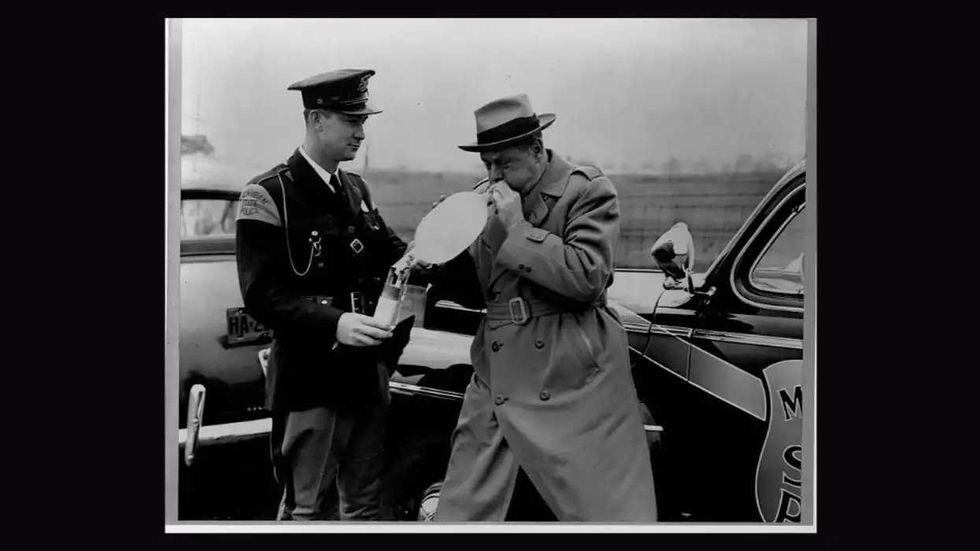
Section 24220 directs the National Highway Traffic Safety Administration to mandate “advanced drunk and impaired driving prevention technology” in all new passenger vehicles. In plain terms, it requires systems that continuously monitor drivers and can prevent a vehicle from operating if impairment is suspected. No breath test is required. No police officer is involved. The judgment is made by software.
Once flagged, a vehicle may refuse to start or restrict operation. Here is the most troubling part: Federal law provides no clear process for getting out of that lockout. There is no required appeal. No mandated reset timeline. No human review. Drivers can find themselves trapped in what critics have begun calling “kill switch jail,” with no guaranteed path to restore access to their own car.
This is not targeted enforcement. It applies to every driver, every time, regardless of driving history.
That alone should raise constitutional alarms.
Proven approach
Drunk driving laws already exist — and they work. Ignition interlock devices have long been required for convicted offenders, and there are 31 approved interlock systems currently in use nationwide. Those systems require a breath sample and are imposed only after due process. Section 24220 discards that proven, targeted approach and instead subjects all drivers to pre-emptive punishment, including those who do not drink at all.
To comply with the mandate, automakers may choose from a range of technologies: driver-facing cameras that track eye movement and head position; software that analyzes steering, braking, and lane-keeping behavior; or touch-based alcohol sensors embedded in the steering wheel or start button. None of these systems determine guilt. They calculate probability — and then deny access.
False positives are inevitable. Fatigue, prescription medications, medical conditions such as diabetes or neurological disorders, and even stress can trigger impairment alerts. Shift workers, caregivers, parents, and first responders are especially vulnerable. When the system is wrong, the consequences are immediate — and the driver has no guaranteed recourse.
Pre-emptive denial
This is not a passive safety feature like an airbag. It is a government-mandated, pre-emptive denial of mobility enforced by an algorithm.
Despite growing concern, Congress has chosen not to stop the mandate, with Democrats largely supporting continued funding and a number of Republicans also voting to keep the program intact.
In January 2026, the House voted on an amendment offered by Republican Representative Thomas Massie of Kentucky that would have blocked funding for NHTSA’s implementation of Section 24220. That amendment failed, allowing the mandate to continue moving toward full enforcement.
Supporters argue the technology does not allow government agents or police to remotely shut down vehicles. While that may be technically true today, the mandate still requires continuous driver monitoring. Once that hardware becomes standard across the national vehicle fleet, expanding its use becomes a political decision — not a technical limitation.
RELATED: Dystopian future as misguided safety push sends drivers to ‘kill switch jail’
 Library of Congress/Getty Images
Privacy risks
Privacy and cybersecurity risks only deepen the concern. Any system capable of denying vehicle operation must meet extraordinarily high standards of accuracy and security. Those standards have not been proven at national scale. A malfunctioning or compromised system could strand drivers during extreme weather, medical emergencies, or in remote locations.
Cost is another unavoidable consequence. Vehicles are already becoming unaffordable for many Americans. Adding cameras, sensors, software, and compliance infrastructure will only accelerate price increases and reduce consumer choice. Drivers who want simpler, more reliable vehicles will have fewer options — because mandates do not allow opting out.
Proponents often compare this mandate to seatbelts or airbags. That analogy fails. Seatbelts do not prevent you from driving. Airbags deploy after an accident. This system intervenes before any wrongdoing occurs, based on assumptions rather than certainty, and enforces compliance by denying access altogether.
This is not about defending drunk driving. It is about stopping a government overreach that treats every driver as a suspect and hands control of personal mobility to software.
If Americans want to prevent this future, Section 24220 must be defunded — before “kill switch jail” becomes the default setting for the next generation of cars.
The following are the Republican members who voted against the amendment to block funding for NHTSA’s implementation of Section 24220:
Mark Amodei (Nev.-02)
French Hill (Ark.-02)
Max Miller (Ohio-07)
Don Bacon (Neb.-02)
Jeff Hurd (Colo.-03)
Mariannette Miller-Meeks (Iowa-01)
Stephanie Bice (Okla.-05)
Brian Jack (Ga.-03)
Blake Moore (Utah-01)
Gus Bilirakis (Fla.-12)
John James (Mich.-10)
Tim Moore (N.C.-14)
Mike Bost (Ill.-12)
David Joyce (Ohio-14)
James Moylan (Guam-A.L.)
Ken Calvert (Calif.-41)
Thomas Kean Jr. (N.J.-07)
Greg Murphy (N.C.-03)
John Carter (Texas-31)
Mike Kelly (Penn.-16)
Dan Newhouse (Wash.-04)
Tom Cole (Okla.-04)
Jen Kiggans (Va.-02)
Zach Nunn (Iowa-03)
Mario Diaz-Balart (Fla.-26)
Kevin Kiley (Calif.-03)
Hal Rogers (Ky.-05)
Neal Dunn (Fla.-02)
Young Kim (Calif.-40)
Maria Elvira Salazar (Fla.-27)
Chuck Edwards (N.C.-11)
Kimberlyn King-Hinds (Northern Mariana Islands-A.L.)
Mike Simpson (Idaho-02)
Jake Ellzey (Texas-06)
Darin LaHood (Ill.-16)
Elise Stefanik (N.Y.-21)
Randy Feenstra (Iowa-04)
Nick LaLota (N.Y.-01)
Glenn “GT” Thompson (Penn.-15)
Randy Fine (Fla.-06)
Mike Lawler (N.Y.-17)
Mike Turner (Ohio-10)
Chuck Fleischmann (Tenn.-03)
Frank Lucas (Okla.-03)
David Valadao (Calif.-22)
Vince Fong (Calif.-20)
Nicole Malliotakis (N.Y.-11)
Derrick Van Orden (Wis.-03)
Brian Fitzpatrick (Penn.-01)
Celeste Maloy (Utah-02)
Rob Wittman (Va.-01)
Andrew Garbarino (N.Y.-02)
Brian Mast (Fla.-21)
Steve Womack (Ark.-03)
Carlos Gimenez (Fla.-28)
Dan Meuser (Penn.-09)
Ryan Zinke (Mont.-01)
A federal ‘kill switch’ for your car is coming — and neither Democrats nor Republicans will stop it
The federal government is moving closer to giving your car the authority to decide whether you are allowed to drive — without a warrant, without due process, and with no guaranteed way to reverse the decision once it is made.
And it is happening not because of one party alone, but because Congress, across party lines, has failed to stop it.
This is not about defending drunk driving. It is about stopping a government overreach that treats every driver as a suspect.
No accident
It’s no accident that all this happened quietly. It was written into law under the Biden administration’s 2021 Infrastructure Investment and Jobs Act, buried deep in Section 24220 — a provision few lawmakers publicly debated, but one that now threatens to fundamentally alter the relationship between Americans and their vehicles.
Section 24220 directs the National Highway Traffic Safety Administration to mandate “advanced drunk and impaired driving prevention technology” in all new passenger vehicles. In plain terms, it requires systems that continuously monitor drivers and can prevent a vehicle from operating if impairment is suspected. No breath test is required. No police officer is involved. The judgment is made by software.
Once flagged, a vehicle may refuse to start or restrict operation. Here is the most troubling part: Federal law provides no clear process for getting out of that lockout. There is no required appeal. No mandated reset timeline. No human review. Drivers can find themselves trapped in what critics have begun calling “kill switch jail,” with no guaranteed path to restore access to their own car.
This is not targeted enforcement. It applies to every driver, every time, regardless of driving history.
That alone should raise constitutional alarms.
Proven approach
Drunk driving laws already exist — and they work. Ignition interlock devices have long been required for convicted offenders, and there are 31 approved interlock systems currently in use nationwide. Those systems require a breath sample and are imposed only after due process. Section 24220 discards that proven, targeted approach and instead subjects all drivers to pre-emptive punishment, including those who do not drink at all.
To comply with the mandate, automakers may choose from a range of technologies: driver-facing cameras that track eye movement and head position; software that analyzes steering, braking, and lane-keeping behavior; or touch-based alcohol sensors embedded in the steering wheel or start button. None of these systems determine guilt. They calculate probability — and then deny access.
False positives are inevitable. Fatigue, prescription medications, medical conditions such as diabetes or neurological disorders, and even stress can trigger impairment alerts. Shift workers, caregivers, parents, and first responders are especially vulnerable. When the system is wrong, the consequences are immediate — and the driver has no guaranteed recourse.
Pre-emptive denial
This is not a passive safety feature like an airbag. It is a government-mandated, pre-emptive denial of mobility enforced by an algorithm.
Despite growing concern, Congress has chosen not to stop the mandate, with Democrats largely supporting continued funding and a number of Republicans also voting to keep the program intact.
In January 2026, the House voted on an amendment offered by Republican Representative Thomas Massie of Kentucky that would have blocked funding for NHTSA’s implementation of Section 24220. That amendment failed, allowing the mandate to continue moving toward full enforcement.
Supporters argue the technology does not allow government agents or police to remotely shut down vehicles. While that may be technically true today, the mandate still requires continuous driver monitoring. Once that hardware becomes standard across the national vehicle fleet, expanding its use becomes a political decision — not a technical limitation.
RELATED: Dystopian future as misguided safety push sends drivers to ‘kill switch jail’
Library of Congress/Getty Images
Privacy risks
Privacy and cybersecurity risks only deepen the concern. Any system capable of denying vehicle operation must meet extraordinarily high standards of accuracy and security. Those standards have not been proven at national scale. A malfunctioning or compromised system could strand drivers during extreme weather, medical emergencies, or in remote locations.
Cost is another unavoidable consequence. Vehicles are already becoming unaffordable for many Americans. Adding cameras, sensors, software, and compliance infrastructure will only accelerate price increases and reduce consumer choice. Drivers who want simpler, more reliable vehicles will have fewer options — because mandates do not allow opting out.
Proponents often compare this mandate to seatbelts or airbags. That analogy fails. Seatbelts do not prevent you from driving. Airbags deploy after an accident. This system intervenes before any wrongdoing occurs, based on assumptions rather than certainty, and enforces compliance by denying access altogether.
This is not about defending drunk driving. It is about stopping a government overreach that treats every driver as a suspect and hands control of personal mobility to software.
If Americans want to prevent this future, Section 24220 must be defunded — before “kill switch jail” becomes the default setting for the next generation of cars.
The following are the Republican members who voted against the amendment to block funding for NHTSA’s implementation of Section 24220:
Mark Amodei (Nev.-02)
French Hill (Ark.-02)
Max Miller (Ohio-07)
Don Bacon (Neb.-02)
Jeff Hurd (Colo.-03)
Mariannette Miller-Meeks (Iowa-01)
Stephanie Bice (Okla.-05)
Brian Jack (Ga.-03)
Blake Moore (Utah-01)
Gus Bilirakis (Fla.-12)
John James (Mich.-10)
Tim Moore (N.C.-14)
Mike Bost (Ill.-12)
David Joyce (Ohio-14)
James Moylan (Guam-A.L.)
Ken Calvert (Calif.-41)
Thomas Kean Jr. (N.J.-07)
Greg Murphy (N.C.-03)
John Carter (Texas-31)
Mike Kelly (Penn.-16)
Dan Newhouse (Wash.-04)
Tom Cole (Okla.-04)
Jen Kiggans (Va.-02)
Zach Nunn (Iowa-03)
Mario Diaz-Balart (Fla.-26)
Kevin Kiley (Calif.-03)
Hal Rogers (Ky.-05)
Neal Dunn (Fla.-02)
Young Kim (Calif.-40)
Maria Elvira Salazar (Fla.-27)
Chuck Edwards (N.C.-11)
Kimberlyn King-Hinds (Northern Mariana Islands-A.L.)
Mike Simpson (Idaho-02)
Jake Ellzey (Texas-06)
Darin LaHood (Ill.-16)
Elise Stefanik (N.Y.-21)
Randy Feenstra (Iowa-04)
Nick LaLota (N.Y.-01)
Glenn “GT” Thompson (Penn.-15)
Randy Fine (Fla.-06)
Mike Lawler (N.Y.-17)
Mike Turner (Ohio-10)
Chuck Fleischmann (Tenn.-03)
Frank Lucas (Okla.-03)
David Valadao (Calif.-22)
Vince Fong (Calif.-20)
Nicole Malliotakis (N.Y.-11)
Derrick Van Orden (Wis.-03)
Brian Fitzpatrick (Penn.-01)
Celeste Maloy (Utah-02)
Rob Wittman (Va.-01)
Andrew Garbarino (N.Y.-02)
Brian Mast (Fla.-21)
Steve Womack (Ark.-03)
Carlos Gimenez (Fla.-28)
Dan Meuser (Penn.-09)
Ryan Zinke (Mont.-01)
Why Canada’s Chinese EV bet is a big mistake

Canada’s decision to slash tariffs on Chinese electric vehicles is being sold as a pragmatic trade adjustment. In reality, it looks more like a self-inflicted wound to the country’s auto industry, workforce, and long-term economic sovereignty.
Lower prices today may come at the cost of lost manufacturing tomorrow — along with vehicles that struggle with quality and cold-weather reliability in a country where winter is not a minor inconvenience but a defining reality.
A vehicle that looks competitive on paper may tell a very different story after several Canadian winters.
Under an agreement announced earlier this month, Canada will allow up to 49,000 Chinese EVs into the country each year at a tariff of just 6.1%, down from the 100% rate imposed in 2024.
Officials emphasize that this represents less than 3% of the domestic market. But auto markets are shaped at the margins. Even a relatively small influx of aggressively priced vehicles can disrupt pricing, undercut domestic producers, and discourage future investment.
Under pressure
Canada’s auto sector is deeply integrated with the United States, with parts, vehicles, and labor flowing across the border daily. That system has supported hundreds of thousands of well-paying jobs for decades. Introducing low-cost Chinese imports into that ecosystem does not simply add consumer choice; it destabilizes a supply chain already under pressure from regulatory mandates, rising costs, and declining market share.
That pressure is already visible. The combined market share of General Motors, Ford, and Stellantis in Canada has fallen from nearly 50% to roughly 36%. These companies are not just brands on a dealership lot. They are employers, investors, and anchors for entire communities. When their market position erodes, the consequences ripple outward through plant closures, canceled expansion plans, and lost supplier contracts.
Cold comfort
Supporters argue that Chinese EVs will make electric vehicles more affordable, accelerating adoption and helping Canada meet emissions targets. But affordability without durability is a hollow promise. Many Chinese EVs entering global markets have yet to prove themselves in extreme climates. Cold weather is notoriously hard on batteries, reducing range, slowing charging times, and increasing mechanical stress — conditions Canadian winters deliver in abundance.
Reports from colder regions already using Chinese EVs raise concerns about performance degradation, software issues, and inconsistent build quality. Battery thermal management systems that perform adequately in mild climates can struggle in deep cold. Door handles freeze, sensors fail, and range estimates become unreliable. These are not minor inconveniences when temperatures plunge and drivers depend on their vehicles for safety as much as transportation.
Quality concerns extend beyond climate performance. Chinese automakers have made rapid progress, but speed has often come at the expense of long-term durability testing. Western manufacturers spend years validating vehicles under extreme conditions precisely because failure carries real consequences. A vehicle that looks competitive on paper may tell a very different story after several Canadian winters.
Cheap creep
There is also the question of what happens to Canada’s manufacturing base as these imports gain a foothold. History offers a clear lesson. When markets are flooded with low-cost vehicles produced under different labor standards and supported by state-backed industrial policy, domestic production suffers. Plants close, jobs disappear, and skills erode — losses that are extraordinarily difficult to reverse.
Europe offers a cautionary example. In the rush to meet climate targets, policymakers opened the door to inexpensive Chinese vehicles, only to see domestic automakers squeezed between regulatory costs and subsidized foreign competition. The result has been declining investment, layoffs, and growing concern about long-term competitiveness. Canada risks repeating that mistake but without Europe’s scale or leverage.
 Tom Williams/CQ-Roll Call, Inc via Getty Image
Spy game
The geopolitical implications cannot be ignored. Modern EVs are data-collecting machines, equipped with cameras, sensors, GPS tracking, and constant connectivity. U.S. officials have repeatedly warned that Chinese-built vehicles pose national security risks. Whether or not those fears are fully realized, perception matters. The United States has already signaled that Chinese EVs will not be allowed across its border, even temporarily.
That leaves Canadian consumers in a difficult position. A vehicle purchased legally in Canada could become a barrier to travel, commerce, or even family visits. The idea that a car could determine whether a driver can cross the world’s longest undefended border should give policymakers pause. Instead the Carney government appears willing to accept that risk as collateral damage.
Realism over resentment
Some Canadians, frustrated by U.S. tariffs and rhetoric, may view this pivot toward China as an act of defiance. But trade policy driven by resentment rather than realism rarely ends well. Replacing dependence on the United States with dependence on China does not restore sovereignty; it simply shifts leverage from one superpower to another, often with fewer shared values and less transparency.
President Donald Trump has made his position clear. He is open to Chinese companies building vehicles in North America if they invest in domestic factories and employ domestic workers. What he opposes are imports that bypass production, undermine jobs, and introduce security risks. Canada’s deal does nothing to address those concerns. Instead it places Canadian workers and consumers squarely in the crossfire.
The promise of cheaper EVs may sound appealing in the short term, but the long-term costs are becoming harder to ignore. Lost manufacturing jobs, weakened supply chains, unresolved quality and cold-weather issues, and strained relations with Canada’s largest trading partner are not abstract risks. They are predictable outcomes.
Canada built its auto industry through integration, investment, and a commitment to quality. Undermining that foundation for a limited influx of low-cost imports is not a strategy. It is a gamble — and one Canadian workers, manufacturers, and drivers are likely to lose.





