Category: Lifestyle
How Hollywood tries to masculinize femininity — and makes everyone miserable

We are told, repeatedly, that woke is dead. Piers Morgan even wrote a book about it, so it must be true. Right?
Wrong.
Strength, by Hollywood’s current definition, must weigh a little over 100 pounds and look perpetually annoyed.
If in doubt, please watch the trailer for “Apex,” due for release in April. With it comes Hollywood’s most exhausted fantasy yet: the indestructible badass woman who outruns youth, outpunches men twice her size, and shrugs off biology like it’s a clerical error.
Mission: Implausible
This time, it’s a 50-year-old Charlize Theron sprinting through the Australian wilderness and scaling cliffs as if she’s Tom Cruise circa “Mission: Impossible 2.” Gravity is optional. Muscle mass is negotiable. Aging, it seems, is strictly forbidden.
We’ve seen this act so many times that it barely registers any more. Swap the title card, rotate the backdrop, keep the same choreography. A lone woman wronged by men. A past trauma. An axe to grind, sometimes literally. Six-foot brutes wait their turn to be neutralized. The music swells. The credits roll. And with them go the eyeballs of nearly every viewer still capable of respecting basic reality.
The point is not that women can’t be strong. Of course they can. Strength is not the issue. Hollywood’s definition of it is. Somewhere along the way, empowerment became synonymous with women cosplaying male action heroes, only with fight scenes that insult Newton and scripts that insult the audience. A petite actress body-checking men built like refrigerators — then calling disbelief misogyny — is not progress.
What makes “Apex” more revealing than irritating is how nakedly it exposes the broader frame. This isn’t about one film or one actress. It’s the result of a steady drip: years of female-driven nonsense poured into every genre until it became the genre. The same beats. The same postures. The same lectures delivered at gunpoint.
Form fatale
Hollywood has always run on formula. Nothing new there. It followed money, copied hits, and abandoned failures without sentimentality. But the formula answered to the audience. If people didn’t buy tickets, the trend was over.
Now the industry treats audience resistance not as feedback, but as something to be corrected — like a behavioral problem that needs retraining. Failure is no longer evidence that the formula is broken. It is treated as proof that the audience is.
Studios like to pretend this is audience demand. It isn’t. It’s institutional inertia. Executives terrified of being accused of regression keep recycling the same safe lie: If the movie fails, the audience is at fault. If it succeeds modestly, it’s a cultural victory.
It’s a system that makes the arrival of the new “Supergirl” later this year entirely predictable. Not because audiences asked for it. Not because there was pent-up demand. Not because anyone ever thought, yes, this is what’s missing. It is arriving because this is what the industry now produces by reflex.
The irony is hard to miss. The original “Supergirl” debuted in 1984, the same year Orwell warned us about systems that repeat lies until they feel inevitable. That film was a commercial and critical dud, quickly forgotten for good reason.
Four decades later, Hollywood appears determined to rerun the experiment, convinced that time, tone, and audience memory can all be overwritten. Don’t expect to be entertained. Expect scowls and sermons in spandex. Strength, by Hollywood’s current definition, must weigh a little over 100 pounds and look perpetually annoyed.
RELATED: FEMPIRE STRIKES BACK: Kathleen Kennedy leaves ‘Star Wars’; is it too soon for fans to celebrate?

Down for the count
We saw the results late last year. The box-office face-plant of “Christy,” the biopic of boxer Christy Martin, made the point brutally clear. Despite opening in more than 2,000 theaters, it scraped together just $1.3 million — one of the worst wide releases on record.
The film stars Sydney Sweeney, an American beauty inexplicably styled like a discount Rocky Balboa. Producers assumed her star power would draw crowds, then forgot why anyone — especially male viewers — watches her in the first place. It isn’t to see her absorb jabs, hooks, and uppercuts like a human heavy bag. It’s when she leans into what she actually is: feminine, magnetic, sexy. No one is buying a ticket to watch a gorgeous woman get beaten senseless.
This is the quiet truth studios refuse to say out loud: Men and women are not the same, and they do not want the same things on screen. Audiences happily watched Liam Neeson bulldoze Europe in “Taken.” They turned up in droves to see Keanu Reeves turn the death of a dog into a four-film genocide in “John Wick.” Nothing motivates a man like canine-related trauma and unlimited ammunition. Those films worked because they leaned into male fantasy without apology.
Equalizer rights?
What audiences don’t want is that same template awkwardly stapled onto a completely different body and sold as innovation. Denzel Washington was excellent in “The Equalizer” — cold, credible, and infinitely cool.
The TV reboot took that precision and desecrated it by turning the role into unintentional slapstick. A morbidly obese Queen Latifah as a silent, unstoppable angel of death is pure absurdity. This is a woman who struggles to climb a single flight of stairs, yet viewers are expected to believe she’s capable of stalking, subduing, and dispatching trained men without breaking a sweat.
Which brings us back to “Apex.” What makes the film accidentally hilarious isn’t Charlize Theron running through the bush. It’s the industry sprinting right behind her, desperately chasing a fantasy that stopped selling years ago. The humor comes from the sincerity. From the absolute faith that this time — finally — it will land.
And it will land. Just not gracefully. More like a Boeing falling out of the sky. Twisted metal, scorched wreckage, and stunned executives wandering around asking what went wrong.
And from that wreckage, there will be no reckoning. No pause. No course correction. Just a quick trip back to the studio lot to greenlight the next movie nobody requested and that everyone will forget.
Hard times create strong men — at any age

I know this guy, Richard. He’s friends with a couple of different friends of mine. He’s in his late 40s. He’s had a successful microbrewery business going for many years.
Last year, I heard that his business was in trouble. And then, more recently, his wife filed for divorce. He is apparently having problems seeing his kids.
Maybe this is our new male initiation ritual. Getting crushed by family court. Losing your business to far-left politics. Being abandoned in your moment of need.
I saw him recently at a large gathering. He was in pretty bad shape. He was getting screwed at family court. He was blaming Trump for his business problems.
His blaming Trump was no surprise. Many otherwise intelligent people do that automatically here in Portland. Everything is Trump’s fault. I don’t really hold it against them. The propaganda is so thick here. And if you own a public-facing business, you probably have to go with the flow.
More likely, the true cause of his business problems is the economics of Portland. Taxes are up. Insurance is skyrocketing. Homeless people have invaded your neighborhood. Drug addicts are lighting your dumpster on fire.
Hitting bottom
So I was at this event, and I ended up in a small group with Richard and a couple of other guys. I could see that he was upset. He looked terrible.
I could relate to his situation. I had gone through a similar compound disaster when my father died, right in the middle of my own divorce.
So I had felt that pain. But I didn’t have kids. Which probably makes Richard’s situation much worse.
Eventually, the other guys wandered off, and I found myself giving Richard a little pep talk. I told him what happened to me and explained how at the time, I tried to think of it as a test.
I thought to myself: How often in life will I have to face two life-changing crises, coming from two different directions, at the same time?
I tried to think of my situation as a challenge, a rare opportunity to test my mettle, as I faced a mountain of emotional stressors and practical problems.
I couldn’t tell if he was buying it. And I didn’t know him that well. So I left it at that.
The soft life
But in the days after, I thought more about Richard’s situation.
He was a solidly upper-middle-class guy. His parents were well off. He went to a good college. He was a successful businessman and a respected member of the local microbrew scene. His brewery had prospered for years, before Portland took its current downturn.
He had really had an easy time of it, all things considered. So really, my idea that this was a “rare opportunity” was not far off. His current problems were easily the worst thing that ever happened to him. And they were all happening at once!
This also might have been a good time to try to red-pill him on local politics. Bro, Trump isn’t the reason you can’t run a business in Portland. But he wasn’t going to change on that.
But the “test” thing. That was still a valid point. Richard had never been hit this hard. And like a lot of men, he wasn’t ready for it. He had lived a relatively soft life.
RELATED: The American dream lives where people still choose to build
 CS0523183 via iStock/Getty Images
Into the wilderness
People have been saying for years that part of the problem with American men is they don’t have any form of initiation ritual.
There’s no rigorous coming-of-age process. We have no “rites of passage.”
You can live your whole life and never have to endure any true hardship or serious deprivation.
Other cultures make a point of creating those “rites of passage.” Growing up in the West, I heard about young Native American men going on “vision quests.” They ventured into the wilderness by themselves, with no food and no protection from the elements or predatory animals.
In this way, they proved themselves worthy of their people, both physically and mentally. They were pushed to the limits of their endurance.
This was not only a physical ordeal, but a chance for spiritual growth as well. Becoming a man was not just about strength and skill; it was about humility and understanding your responsibilities within your tribe.
Once you had experienced the difficulties of fending for yourself, you would forever appreciate the security of life within a stable and healthy community.
The new vision quest
I thought about Richard’s predicament, which is now fairly common in America. What was happening to him was happening to men all the time.
Maybe this is our new male initiation ritual. Getting crushed by family court. Losing your business to far-left politics. Being abandoned in your moment of need by your own social class, because they’re progressive Democrats as well.
That’s how I would think of it if I were him. What else are you going to do? Cry to your lawyer? Complain about Trump? Whine to your Kamala-voting buddies?
Or are you going to grieve your losses, accept your situation, and then respond with a new resolve, a new clarity of mind, and perhaps a stiffer spine?
I mean, I feel for the guy. He’s going through hell. But these kinds of men have got to stop crying and focus on what is really going on around them.
Think of your present difficulties as the rite of passage you should have experienced when you were 14. Think of them as your overdue vision quest. You’re in the wilderness now. You have only yourself to depend on.
A federal ‘kill switch’ for your car is coming — and neither Democrats nor Republicans will stop it

The federal government is moving closer to giving your car the authority to decide whether you are allowed to drive — without a warrant, without due process, and with no guaranteed way to reverse the decision once it is made.
And it is happening not because of one party alone, but because Congress, across party lines, has failed to stop it.
This is not about defending drunk driving. It is about stopping a government overreach that treats every driver as a suspect.
No accident
It’s no accident that all this happened quietly. It was written into law under the Biden administration’s 2021 Infrastructure Investment and Jobs Act, buried deep in Section 24220 — a provision few lawmakers publicly debated, but one that now threatens to fundamentally alter the relationship between Americans and their vehicles.
Section 24220 directs the National Highway Traffic Safety Administration to mandate “advanced drunk and impaired driving prevention technology” in all new passenger vehicles. In plain terms, it requires systems that continuously monitor drivers and can prevent a vehicle from operating if impairment is suspected. No breath test is required. No police officer is involved. The judgment is made by software.
Once flagged, a vehicle may refuse to start or restrict operation. Here is the most troubling part: Federal law provides no clear process for getting out of that lockout. There is no required appeal. No mandated reset timeline. No human review. Drivers can find themselves trapped in what critics have begun calling “kill switch jail,” with no guaranteed path to restore access to their own car.
This is not targeted enforcement. It applies to every driver, every time, regardless of driving history.
That alone should raise constitutional alarms.
Proven approach
Drunk driving laws already exist — and they work. Ignition interlock devices have long been required for convicted offenders, and there are 31 approved interlock systems currently in use nationwide. Those systems require a breath sample and are imposed only after due process. Section 24220 discards that proven, targeted approach and instead subjects all drivers to pre-emptive punishment, including those who do not drink at all.
To comply with the mandate, automakers may choose from a range of technologies: driver-facing cameras that track eye movement and head position; software that analyzes steering, braking, and lane-keeping behavior; or touch-based alcohol sensors embedded in the steering wheel or start button. None of these systems determine guilt. They calculate probability — and then deny access.
False positives are inevitable. Fatigue, prescription medications, medical conditions such as diabetes or neurological disorders, and even stress can trigger impairment alerts. Shift workers, caregivers, parents, and first responders are especially vulnerable. When the system is wrong, the consequences are immediate — and the driver has no guaranteed recourse.
Pre-emptive denial
This is not a passive safety feature like an airbag. It is a government-mandated, pre-emptive denial of mobility enforced by an algorithm.
Despite growing concern, Congress has chosen not to stop the mandate, with Democrats largely supporting continued funding and a number of Republicans also voting to keep the program intact.
In January 2026, the House voted on an amendment offered by Republican Representative Thomas Massie of Kentucky that would have blocked funding for NHTSA’s implementation of Section 24220. That amendment failed, allowing the mandate to continue moving toward full enforcement.
Supporters argue the technology does not allow government agents or police to remotely shut down vehicles. While that may be technically true today, the mandate still requires continuous driver monitoring. Once that hardware becomes standard across the national vehicle fleet, expanding its use becomes a political decision — not a technical limitation.
RELATED: Dystopian future as misguided safety push sends drivers to ‘kill switch jail’
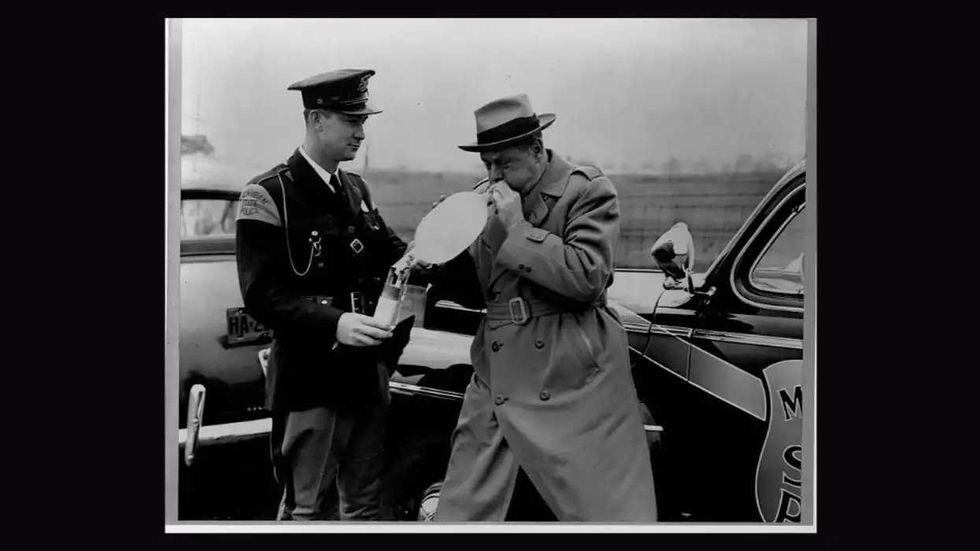 Library of Congress/Getty Images
Privacy risks
Privacy and cybersecurity risks only deepen the concern. Any system capable of denying vehicle operation must meet extraordinarily high standards of accuracy and security. Those standards have not been proven at national scale. A malfunctioning or compromised system could strand drivers during extreme weather, medical emergencies, or in remote locations.
Cost is another unavoidable consequence. Vehicles are already becoming unaffordable for many Americans. Adding cameras, sensors, software, and compliance infrastructure will only accelerate price increases and reduce consumer choice. Drivers who want simpler, more reliable vehicles will have fewer options — because mandates do not allow opting out.
Proponents often compare this mandate to seatbelts or airbags. That analogy fails. Seatbelts do not prevent you from driving. Airbags deploy after an accident. This system intervenes before any wrongdoing occurs, based on assumptions rather than certainty, and enforces compliance by denying access altogether.
This is not about defending drunk driving. It is about stopping a government overreach that treats every driver as a suspect and hands control of personal mobility to software.
If Americans want to prevent this future, Section 24220 must be defunded — before “kill switch jail” becomes the default setting for the next generation of cars.
The following are the Republican members who voted against the amendment to block funding for NHTSA’s implementation of Section 24220:
Mark Amodei (Nev.-02)
French Hill (Ark.-02)
Max Miller (Ohio-07)
Don Bacon (Neb.-02)
Jeff Hurd (Colo.-03)
Mariannette Miller-Meeks (Iowa-01)
Stephanie Bice (Okla.-05)
Brian Jack (Ga.-03)
Blake Moore (Utah-01)
Gus Bilirakis (Fla.-12)
John James (Mich.-10)
Tim Moore (N.C.-14)
Mike Bost (Ill.-12)
David Joyce (Ohio-14)
James Moylan (Guam-A.L.)
Ken Calvert (Calif.-41)
Thomas Kean Jr. (N.J.-07)
Greg Murphy (N.C.-03)
John Carter (Texas-31)
Mike Kelly (Penn.-16)
Dan Newhouse (Wash.-04)
Tom Cole (Okla.-04)
Jen Kiggans (Va.-02)
Zach Nunn (Iowa-03)
Mario Diaz-Balart (Fla.-26)
Kevin Kiley (Calif.-03)
Hal Rogers (Ky.-05)
Neal Dunn (Fla.-02)
Young Kim (Calif.-40)
Maria Elvira Salazar (Fla.-27)
Chuck Edwards (N.C.-11)
Kimberlyn King-Hinds (Northern Mariana Islands-A.L.)
Mike Simpson (Idaho-02)
Jake Ellzey (Texas-06)
Darin LaHood (Ill.-16)
Elise Stefanik (N.Y.-21)
Randy Feenstra (Iowa-04)
Nick LaLota (N.Y.-01)
Glenn “GT” Thompson (Penn.-15)
Randy Fine (Fla.-06)
Mike Lawler (N.Y.-17)
Mike Turner (Ohio-10)
Chuck Fleischmann (Tenn.-03)
Frank Lucas (Okla.-03)
David Valadao (Calif.-22)
Vince Fong (Calif.-20)
Nicole Malliotakis (N.Y.-11)
Derrick Van Orden (Wis.-03)
Brian Fitzpatrick (Penn.-01)
Celeste Maloy (Utah-02)
Rob Wittman (Va.-01)
Andrew Garbarino (N.Y.-02)
Brian Mast (Fla.-21)
Steve Womack (Ark.-03)
Carlos Gimenez (Fla.-28)
Dan Meuser (Penn.-09)
Ryan Zinke (Mont.-01)
A federal ‘kill switch’ for your car is coming — and neither Democrats nor Republicans will stop it
The federal government is moving closer to giving your car the authority to decide whether you are allowed to drive — without a warrant, without due process, and with no guaranteed way to reverse the decision once it is made.
And it is happening not because of one party alone, but because Congress, across party lines, has failed to stop it.
This is not about defending drunk driving. It is about stopping a government overreach that treats every driver as a suspect.
No accident
It’s no accident that all this happened quietly. It was written into law under the Biden administration’s 2021 Infrastructure Investment and Jobs Act, buried deep in Section 24220 — a provision few lawmakers publicly debated, but one that now threatens to fundamentally alter the relationship between Americans and their vehicles.
Section 24220 directs the National Highway Traffic Safety Administration to mandate “advanced drunk and impaired driving prevention technology” in all new passenger vehicles. In plain terms, it requires systems that continuously monitor drivers and can prevent a vehicle from operating if impairment is suspected. No breath test is required. No police officer is involved. The judgment is made by software.
Once flagged, a vehicle may refuse to start or restrict operation. Here is the most troubling part: Federal law provides no clear process for getting out of that lockout. There is no required appeal. No mandated reset timeline. No human review. Drivers can find themselves trapped in what critics have begun calling “kill switch jail,” with no guaranteed path to restore access to their own car.
This is not targeted enforcement. It applies to every driver, every time, regardless of driving history.
That alone should raise constitutional alarms.
Proven approach
Drunk driving laws already exist — and they work. Ignition interlock devices have long been required for convicted offenders, and there are 31 approved interlock systems currently in use nationwide. Those systems require a breath sample and are imposed only after due process. Section 24220 discards that proven, targeted approach and instead subjects all drivers to pre-emptive punishment, including those who do not drink at all.
To comply with the mandate, automakers may choose from a range of technologies: driver-facing cameras that track eye movement and head position; software that analyzes steering, braking, and lane-keeping behavior; or touch-based alcohol sensors embedded in the steering wheel or start button. None of these systems determine guilt. They calculate probability — and then deny access.
False positives are inevitable. Fatigue, prescription medications, medical conditions such as diabetes or neurological disorders, and even stress can trigger impairment alerts. Shift workers, caregivers, parents, and first responders are especially vulnerable. When the system is wrong, the consequences are immediate — and the driver has no guaranteed recourse.
Pre-emptive denial
This is not a passive safety feature like an airbag. It is a government-mandated, pre-emptive denial of mobility enforced by an algorithm.
Despite growing concern, Congress has chosen not to stop the mandate, with Democrats largely supporting continued funding and a number of Republicans also voting to keep the program intact.
In January 2026, the House voted on an amendment offered by Republican Representative Thomas Massie of Kentucky that would have blocked funding for NHTSA’s implementation of Section 24220. That amendment failed, allowing the mandate to continue moving toward full enforcement.
Supporters argue the technology does not allow government agents or police to remotely shut down vehicles. While that may be technically true today, the mandate still requires continuous driver monitoring. Once that hardware becomes standard across the national vehicle fleet, expanding its use becomes a political decision — not a technical limitation.
RELATED: Dystopian future as misguided safety push sends drivers to ‘kill switch jail’
Library of Congress/Getty Images
Privacy risks
Privacy and cybersecurity risks only deepen the concern. Any system capable of denying vehicle operation must meet extraordinarily high standards of accuracy and security. Those standards have not been proven at national scale. A malfunctioning or compromised system could strand drivers during extreme weather, medical emergencies, or in remote locations.
Cost is another unavoidable consequence. Vehicles are already becoming unaffordable for many Americans. Adding cameras, sensors, software, and compliance infrastructure will only accelerate price increases and reduce consumer choice. Drivers who want simpler, more reliable vehicles will have fewer options — because mandates do not allow opting out.
Proponents often compare this mandate to seatbelts or airbags. That analogy fails. Seatbelts do not prevent you from driving. Airbags deploy after an accident. This system intervenes before any wrongdoing occurs, based on assumptions rather than certainty, and enforces compliance by denying access altogether.
This is not about defending drunk driving. It is about stopping a government overreach that treats every driver as a suspect and hands control of personal mobility to software.
If Americans want to prevent this future, Section 24220 must be defunded — before “kill switch jail” becomes the default setting for the next generation of cars.
The following are the Republican members who voted against the amendment to block funding for NHTSA’s implementation of Section 24220:
Mark Amodei (Nev.-02)
French Hill (Ark.-02)
Max Miller (Ohio-07)
Don Bacon (Neb.-02)
Jeff Hurd (Colo.-03)
Mariannette Miller-Meeks (Iowa-01)
Stephanie Bice (Okla.-05)
Brian Jack (Ga.-03)
Blake Moore (Utah-01)
Gus Bilirakis (Fla.-12)
John James (Mich.-10)
Tim Moore (N.C.-14)
Mike Bost (Ill.-12)
David Joyce (Ohio-14)
James Moylan (Guam-A.L.)
Ken Calvert (Calif.-41)
Thomas Kean Jr. (N.J.-07)
Greg Murphy (N.C.-03)
John Carter (Texas-31)
Mike Kelly (Penn.-16)
Dan Newhouse (Wash.-04)
Tom Cole (Okla.-04)
Jen Kiggans (Va.-02)
Zach Nunn (Iowa-03)
Mario Diaz-Balart (Fla.-26)
Kevin Kiley (Calif.-03)
Hal Rogers (Ky.-05)
Neal Dunn (Fla.-02)
Young Kim (Calif.-40)
Maria Elvira Salazar (Fla.-27)
Chuck Edwards (N.C.-11)
Kimberlyn King-Hinds (Northern Mariana Islands-A.L.)
Mike Simpson (Idaho-02)
Jake Ellzey (Texas-06)
Darin LaHood (Ill.-16)
Elise Stefanik (N.Y.-21)
Randy Feenstra (Iowa-04)
Nick LaLota (N.Y.-01)
Glenn “GT” Thompson (Penn.-15)
Randy Fine (Fla.-06)
Mike Lawler (N.Y.-17)
Mike Turner (Ohio-10)
Chuck Fleischmann (Tenn.-03)
Frank Lucas (Okla.-03)
David Valadao (Calif.-22)
Vince Fong (Calif.-20)
Nicole Malliotakis (N.Y.-11)
Derrick Van Orden (Wis.-03)
Brian Fitzpatrick (Penn.-01)
Celeste Maloy (Utah-02)
Rob Wittman (Va.-01)
Andrew Garbarino (N.Y.-02)
Brian Mast (Fla.-21)
Steve Womack (Ark.-03)
Carlos Gimenez (Fla.-28)
Dan Meuser (Penn.-09)
Ryan Zinke (Mont.-01)
Why Canada’s Chinese EV bet is a big mistake

Canada’s decision to slash tariffs on Chinese electric vehicles is being sold as a pragmatic trade adjustment. In reality, it looks more like a self-inflicted wound to the country’s auto industry, workforce, and long-term economic sovereignty.
Lower prices today may come at the cost of lost manufacturing tomorrow — along with vehicles that struggle with quality and cold-weather reliability in a country where winter is not a minor inconvenience but a defining reality.
A vehicle that looks competitive on paper may tell a very different story after several Canadian winters.
Under an agreement announced earlier this month, Canada will allow up to 49,000 Chinese EVs into the country each year at a tariff of just 6.1%, down from the 100% rate imposed in 2024.
Officials emphasize that this represents less than 3% of the domestic market. But auto markets are shaped at the margins. Even a relatively small influx of aggressively priced vehicles can disrupt pricing, undercut domestic producers, and discourage future investment.
Under pressure
Canada’s auto sector is deeply integrated with the United States, with parts, vehicles, and labor flowing across the border daily. That system has supported hundreds of thousands of well-paying jobs for decades. Introducing low-cost Chinese imports into that ecosystem does not simply add consumer choice; it destabilizes a supply chain already under pressure from regulatory mandates, rising costs, and declining market share.
That pressure is already visible. The combined market share of General Motors, Ford, and Stellantis in Canada has fallen from nearly 50% to roughly 36%. These companies are not just brands on a dealership lot. They are employers, investors, and anchors for entire communities. When their market position erodes, the consequences ripple outward through plant closures, canceled expansion plans, and lost supplier contracts.
Cold comfort
Supporters argue that Chinese EVs will make electric vehicles more affordable, accelerating adoption and helping Canada meet emissions targets. But affordability without durability is a hollow promise. Many Chinese EVs entering global markets have yet to prove themselves in extreme climates. Cold weather is notoriously hard on batteries, reducing range, slowing charging times, and increasing mechanical stress — conditions Canadian winters deliver in abundance.
Reports from colder regions already using Chinese EVs raise concerns about performance degradation, software issues, and inconsistent build quality. Battery thermal management systems that perform adequately in mild climates can struggle in deep cold. Door handles freeze, sensors fail, and range estimates become unreliable. These are not minor inconveniences when temperatures plunge and drivers depend on their vehicles for safety as much as transportation.
Quality concerns extend beyond climate performance. Chinese automakers have made rapid progress, but speed has often come at the expense of long-term durability testing. Western manufacturers spend years validating vehicles under extreme conditions precisely because failure carries real consequences. A vehicle that looks competitive on paper may tell a very different story after several Canadian winters.
Cheap creep
There is also the question of what happens to Canada’s manufacturing base as these imports gain a foothold. History offers a clear lesson. When markets are flooded with low-cost vehicles produced under different labor standards and supported by state-backed industrial policy, domestic production suffers. Plants close, jobs disappear, and skills erode — losses that are extraordinarily difficult to reverse.
Europe offers a cautionary example. In the rush to meet climate targets, policymakers opened the door to inexpensive Chinese vehicles, only to see domestic automakers squeezed between regulatory costs and subsidized foreign competition. The result has been declining investment, layoffs, and growing concern about long-term competitiveness. Canada risks repeating that mistake but without Europe’s scale or leverage.
 Tom Williams/CQ-Roll Call, Inc via Getty Image
Spy game
The geopolitical implications cannot be ignored. Modern EVs are data-collecting machines, equipped with cameras, sensors, GPS tracking, and constant connectivity. U.S. officials have repeatedly warned that Chinese-built vehicles pose national security risks. Whether or not those fears are fully realized, perception matters. The United States has already signaled that Chinese EVs will not be allowed across its border, even temporarily.
That leaves Canadian consumers in a difficult position. A vehicle purchased legally in Canada could become a barrier to travel, commerce, or even family visits. The idea that a car could determine whether a driver can cross the world’s longest undefended border should give policymakers pause. Instead the Carney government appears willing to accept that risk as collateral damage.
Realism over resentment
Some Canadians, frustrated by U.S. tariffs and rhetoric, may view this pivot toward China as an act of defiance. But trade policy driven by resentment rather than realism rarely ends well. Replacing dependence on the United States with dependence on China does not restore sovereignty; it simply shifts leverage from one superpower to another, often with fewer shared values and less transparency.
President Donald Trump has made his position clear. He is open to Chinese companies building vehicles in North America if they invest in domestic factories and employ domestic workers. What he opposes are imports that bypass production, undermine jobs, and introduce security risks. Canada’s deal does nothing to address those concerns. Instead it places Canadian workers and consumers squarely in the crossfire.
The promise of cheaper EVs may sound appealing in the short term, but the long-term costs are becoming harder to ignore. Lost manufacturing jobs, weakened supply chains, unresolved quality and cold-weather issues, and strained relations with Canada’s largest trading partner are not abstract risks. They are predictable outcomes.
Canada built its auto industry through integration, investment, and a commitment to quality. Undermining that foundation for a limited influx of low-cost imports is not a strategy. It is a gamble — and one Canadian workers, manufacturers, and drivers are likely to lose.
Malcolm Muggeridge: Fashionable idealist turned sage against the machine

“The depravity of man is at once the most empirically verifiable reality and the most intellectually resisted fact.”
The name of the man who made this pronouncement may not mean much to many readers now. Yet the world he warned about has arrived all the same, whether his name is remembered or not.
When Malcolm Muggeridge — a British journalist and broadcaster who became a public figure in his own right — died in 1990, many of his fears still felt abstract. The moral strain was visible, but the structure was holding. Progress was spoken of with confidence, and freedom still sounded uncomplicated.
‘I never knew what joy was until I gave up pursuing happiness.’
Today, those assumptions lie in pieces. What he distrusted has hardened into dogma. What he questioned has become unquestionable. We are living amid the consequences of ideas he spent a lifetime probing.
Theory meets reality
Muggeridge was never dazzled by modern promises. He distrusted grand schemes that claimed to perfect humanity while refusing to reckon with human nature. That suspicion wasn’t a pose; it was learned. As a young man, he flirted with communism, drawn in by its certainty and its language of justice. Then he went to Moscow. There, theory met reality.
What he encountered was not liberation but deprivation. Hunger was rationalized as hope. Cruelty came wrapped in benevolent language. Compassion was loudly proclaimed and quietly absent. The experience cured him of fashionable idealism for life. It also taught him something harder to accept: Evil often enters history announcing itself as virtue, and the most dangerous lies are told with complete sincerity.
That lesson stayed with him. In an age once again thick with certainty, that insight feels uncomfortably current.
Pills and permissiveness
Yet Muggeridge’s critique extended beyond politics. At heart, he believed the modern crisis was spiritual. God had become an embarrassment, sin a diagnosis, and responsibility something to be displaced by grievance. Pleasure, once understood as a byproduct of order, was recast as life’s purpose. The result, he argued, wasn’t freedom but loss.
This realism shaped his opposition to the sexual revolution. Long before its consequences were obvious, he warned that freedom severed from restraint wouldn’t liberate people so much as hollow them out. He mocked the belief that pills and permissiveness would deliver happiness. What he anticipated instead was loneliness, instability, and a culture increasingly medicated against its own dissatisfaction.
Muggeridge also understood the media with unsettling clarity. As a journalist and broadcaster, he watched newsrooms trade substance for spectacle and truth for approval. When entertainment becomes the highest aim, he warned, reality soon becomes optional.
By the end of his career, Muggeridge had dismantled nearly every modern promise. Fame proved thin. Desire disappointed. Professional success brought no lasting peace. Skepticism could clear the ground, but it could not explain why nothing worked.
A skeptic stands down
When after more than a decade of exploring Christianity, Muggeridge finally entered the Catholic Church in 1982, the reaction among his peers was disbelief bordering on embarrassment. This was not the impulse of a sentimental seeker but of one of Britain’s most famous skeptics — a man who had mocked piety, distrusted enthusiasm, and made a career of puncturing illusions.
Friends assumed it was a late-life affectation, a theatrical flourish from an aging contrarian. Muggeridge himself knew better. He had not converted because Christianity felt safe or consoling, but because, after a lifetime of alternatives, it was the only account of reality that still made sense.
As he had written years before in “Jesus Rediscovered,” “I never knew what joy was until I gave up pursuing happiness.”
That sentence captures the logic of his conversion. Muggeridge did not arrive at faith through nostalgia or temperament. Christianity did not flatter him. It named pride, lust, and cruelty plainly, then offered grace without euphemism. It explained the world he had already seen — and himself within it.
RELATED: Chuck Colson: Nixon loyalist who found hope in true obedience
 Washington Post/Getty Images
Truth endures
His Catholicism was not an escape from seriousness but its culmination. He believed human beings flourish within limits, not without them; that desire requires direction; that pleasure without purpose corrodes. Christianity endured, he argued, not because it was comforting but because it was true.
After his conversion, Muggeridge did not soften. He sharpened. The satire retained its bite. The warnings grew more direct. But they were no longer merely critical. Skepticism had given way to clarity — not because he had abandoned reason, but because he had finally stopped pretending it was enough.
More than three decades after his death, Muggeridge’s voice sounds less like commentary than like counsel. The world he warned about has arrived. What remains is the stubborn relevance of faith grounded in reality — and the freedom that comes only when truth is faced, rather than fled.
EPA to California: Don’t mess with America’s trucks
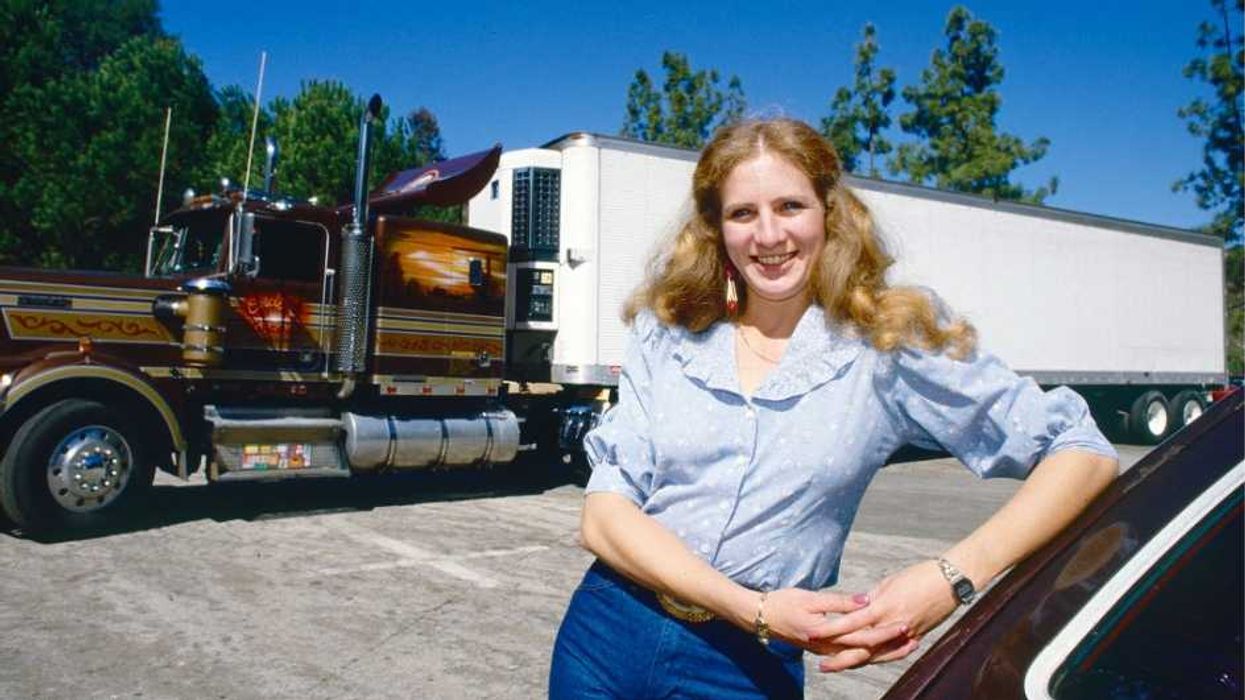
For decades, California has used its enormous market power to shape national vehicle policy, often pushing regulations far beyond its borders and into the daily lives of Americans who never voted for them. That long-running dynamic has now reached a critical moment.
The U.S. Environmental Protection Agency is moving to block California’s latest attempt to regulate heavy-duty trucks nationwide — a proposal first announced in 2025 but now entering a decisive phase of federal review.
California’s early emissions standards helped accelerate cleaner engines and better fuel systems. But leadership can turn into compulsion.
With final EPA action expected in 2026, the outcome will determine whether California can continue using its borders as a regulatory choke point for interstate trucking, or whether federal limits will finally be enforced.
Freight fright
At issue is California’s Heavy-Duty Inspection and Maintenance requirement, part of the state’s air-quality plan. The rule would apply not only to trucks registered in California, but to any heavy-duty vehicle operating within the state — including those registered elsewhere in the U.S. or even abroad. In practical terms, a truck hauling goods from Texas, Ohio, or Mexico could be forced to comply with California’s rules simply by crossing its borders.
The EPA has proposed disapproving that requirement, citing serious constitutional and statutory concerns.
This matters far beyond California. Heavy-duty trucks are the backbone of the American economy, moving food, fuel, medicine, building materials, and consumer goods across state lines every day.
Regulations that raise costs or restrict access for those vehicles ripple through supply chains and ultimately show up as higher prices at the checkout counter — including for online purchases. The EPA’s proposed action acknowledges that reality and draws a clear line between environmental policy and unlawful overreach.
Out of line
According to the agency, California’s proposal appears to violate the Commerce Clause of the U.S. Constitution, which prevents individual states from interfering with interstate trade. The Clean Air Act also requires state implementation plans to comply with federal law, and the EPA argues California’s approach fails that test. By attempting to regulate out-of-state and foreign-registered vehicles, California stepped into territory reserved for the federal government.
EPA Administrator Lee Zeldin has been blunt in explaining the agency’s position. California, he has argued, was never elected to govern the entire country, yet its regulatory ambitions — often justified in the name of climate policy — have imposed higher costs on Americans nationwide. Allowing one state to dictate trucking standards for the rest of the country undermines both federal law and economic stability.
Foreigners too
There is also a foreign-commerce issue that rarely gets discussed. California’s rule would apply to vehicles registered outside the United States, even though authority over foreign trade and international relations rests exclusively with the federal government. That alone raised red flags and reinforced the EPA’s conclusion that the state exceeded its legal authority.
This proposed disapproval is part of a broader federal effort to rein in California’s emissions authority. In 2025, the Department of Justice filed complaints against the California Air Resources Board, arguing that the state was effectively enforcing pre-empted federal standards through informal agreements with manufacturers. Together, these actions reflect growing concern in Washington that California has relied on market leverage rather than lawful authority to achieve national policy outcomes.
Waiver goodbye
Waivers are central to this conflict. For years, California received special permission under the Clean Air Act to set its own vehicle emissions standards, with other states allowed to follow its lead. Under the previous administration, the EPA granted waivers for California’s Advanced Clean Cars II, Advanced Clean Trucks, and Heavy-Duty Engine Omnibus NOx rules. Supporters framed them as environmental progress. Critics warned they would raise vehicle prices, limit consumer choice, strain the electric grid, and force changes the market was not ready to absorb — which is exactly what followed.
In June 2025, Congress overturned those waivers using the Congressional Review Act. That move sent a clear message: Vehicle standards should be national in scope, not dictated by a single state, regardless of its size or political influence. The EPA’s current review of California’s truck inspection rule builds directly on that message.
Supporters of California’s approach often point to the state’s historic role in improving air quality and advancing technology. That is true — up to a point. California’s early emissions standards helped accelerate cleaner engines and better fuel systems. But leadership can turn into compulsion, especially when it ignores regional differences, economic realities, and legal limits.
RELATED: Will Trump’s unconventional plan to stop the UN climate elites work?
 Chip Somodevilla/Getty Images
Recalibration
The heavy-duty truck sector makes this clear. Unlike passenger cars, trucks operate on thin margins and long replacement cycles. Fleet decisions are driven by reliability, infrastructure availability, and total cost of ownership. Mandating technologies before they are ready or widely supported does not accelerate progress; it creates higher costs and unintended consequences — especially when those mandates originate in a single state but affect national commerce.
The EPA’s move suggests that era may be nearing its end. By challenging California’s heavy-duty inspection requirement, the agency is asserting that environmental goals do not justify ignoring constitutional structure. Clean air matters — but so do the rule of law, economic practicality, and the free movement of goods across state lines.
The proposed disapproval remains open for public comment, after which the EPA is expected to take final action later this year. Whatever the outcome, the signal is unmistakable: Federal regulators are no longer willing to automatically defer to California when state ambition collides with national authority.
For truck drivers, fleet operators, manufacturers, and everyday consumers, this moment represents a recalibration. It reaffirms that vehicle regulation should be consistent nationwide — and that environmental policy works best when it respects both economic reality and the legal framework that holds the country together.
You can’t be 50 in Hollywood

I had been living in New York for several years, writing young adult novels. But I wanted to move to Los Angeles. I needed a change of scenery, and I wanted to try screenwriting.
A friend connected me to a guy who had spent several years in L.A. pursuing film and TV writing. I called the guy and told him my plan.
The hair dye felt like it was burning my scalp. After I rinsed it out, my whole head glowed. Did it make me look younger? I guess it did. But it also made me look like a clown.
He said: “How old are you?”
I said 49.
He said, “That’s too old. You can’t be 50 in Hollywood. You’ll need to lie about your age.”
Then he asked me if I had gray hair. I said I did. He said I would need to dye it.
I said, “But George Clooney has gray hair. Doesn’t it look distinguished?”
He said I would definitely want to dye it. “Everyone dyes their hair in L.A. Get a good hairdresser.”
*******
He continued relating his experiences. He listed the dangers of Hollywood. They steal your ideas. They lie. They pretend to be your friend. I would need a good lawyer, and a manager, and an agent.
Most of this I already knew. But the “you can’t be 50 in Hollywood” part: I hadn’t heard that before.
Reelin’ In the Years
After we hung up, I thought about the age problem. I had already “adjusted” my age once while I was writing young adult novels.
I did this after attending a book festival, where I saw that all the other young adult authors were generally in their 20s and 30s. I was at least a decade older than most of them.
So I shaved five years off my Facebook age. Just in case anybody looked. And then I did the same thing when I filled out the publicity questionnaires for my publisher.
But the age problem got worse when I arrived in L.A. The first screenwriter I met with was 24 and looked like he was in high school. When I got home from that meeting, I went on Facebook and shaved three more years off my birthday.
When I did this, a little notice popped up, informing me that this would be the last time I would be allowed to change my birthday on Facebook.
So now, I was 41 according to Facebook, 44 according to my New York publisher, and 49 according to my driver’s license and the IRS.
This was a lot to keep track of. It made for some awkward moments on first dates.
Gray matters
It didn’t take long to realize that in Hollywood — where lying is considered “self-care” — what people really judged you on was your looks.
So then I considered my appearance. My hair was pretty gray. Should I try dyeing it?
I went to Ralphs and bought a box of Clairol Nice’n Easy hair dye. I went for espresso brown, which seemed closest to my original hair color.
I set up shop in my bathroom. I put on the gloves and followed the instructions on the box, mixing the chemicals and smearing them onto my head. It was a messy business.
The hair dye felt like it was burning my scalp. After I rinsed it out, my whole head glowed. Did it make me look younger? I guess it did. But it also made me look like a clown.
*******
I flew back to New York soon after, and a female friend immediately noticed the change. She said: “It’s true what they say; you look 10 years younger!”
That was nice to hear. But I was alarmed that she noticed it instantly. From 50 feet away.
Another friend didn’t believe me when I told her it was dyed. She had to look closer and touch it until she saw that I was telling the truth.
I was still trying to get used to it myself. Every time I saw my reflection, I startled myself. Who’s that guy with the dye job?
RELATED: The left wants to ‘reclaim’ the American flag; did they run out of lighter fluid?
 Blake Nelson
Pro tips
Back in L.A., I spotted a sign in a hair salon near my apartment: “Dye and Haircut $80.” Maybe this was the solution: getting your hair dyed by a professional.
I would like to say this was a luxurious, pampering experience. It was not. The hairdresser roughed me up pretty good. And then I had to sit there for 40 minutes, in sight of people walking by the window, with a giant plastic covering over me and my thinning hair wrapped in tin foil.
And then, after all that, it looked no different from the Clairol dye job I had given myself for $9.99!
*******
Still, I stuck with it, re-dyeing it every six weeks — like it said on the box — for most of a year.
During this time, I kept a watchful eye out for other men with dyed hair. I was definitely not alone. At the beach, you would see aging “surfer dads” with dyed blonde hair and a skateboard under their arms. It wasn’t a terrible look. As long as you wore Vans and board shorts.
And of course, men who were on TV or acted in movies always dyed their hair. I’d see these men everywhere. Or I’d see guests on late-night talk shows who looked like they had just had it done an hour before. Their hair had that blurry, fresh-dye glow.
I became skilled at spotting dye jobs on either sex. I hadn’t realized how many women dyed their hair: basically all of them, after about 30.
The good news was that nobody thought less of a man for dyeing his hair. This was Los Angeles. Dyeing your hair meant you had a job.
All is vanity
This wasn’t the case on the East Coast. New York City was the land of the silver fox. Being a well-dressed, gray-haired, 50-year-old male was highly desirable. It meant you were rich!
In fact, it was in New York that a couple of female friends intervened and informed me that the hair-dye thing wasn’t working. I looked better being gray.
After that, my vanity took over, and when I returned to L.A., I shaved my head and released myself back into middle age.
Once I let myself go gray again, another Los Angeles acquaintance told me she thought I looked much better. She said the dye job made me look untrustworthy, like a used-car salesman.
*******
So that was a relief. But the real relief didn’t come until many years later, when I retired from writing and went back home to Portland and returned to total normalcy.
In retirement, I didn’t have to be young; I didn’t have to be cool. I could just be an old, gray-haired person like everybody else.
Though on Facebook — thanks to its birthday-changing restrictions — I remain a slightly younger and livelier version of myself.
Fishing with my dying father

On the North Norfolk coast, dawn is more sensory than visual.
Sea lavender and samphire engulf you before the bite of the wind reminds you of nature’s power. As the sun rises above the horizon, my father and I cross the salt marshes, the light revealing tidal creeks winding through the mudflats. This time, though, I know it is our last trip together.
In angling, the tippet is the thinnest section of line, the point most likely to fail.
Every step is taken with the knowledge that these rituals — these early mornings, the scent of salt and wildflowers, the quiet companionship — are being performed for the final time.
Silence as stewardship
This is not just a landscape but a stage on which the story of my family unfolds. Each tradition echoes those who came before and those still to come. This place, and these shared customs repeated year after year, have woven our family history together — each visit another stitch in a tapestry stretched across generations.
There is no better place for solitude than Stiffkey, an idyllic village nestled in the Norfolk countryside. For miles around, the only sounds are wood pigeons cooing in the trees and the distant thunder of the sea. It is still very early — five in the morning — when we break this peace with the rhythmic punch of a shovel digging into saturated sand. My father and I do not speak as we work. Ours is a silence filled with meaning, a language shaped by years of tradition and respect for the world around us.
The rhythm of these mornings — the shared labor, the quiet companionship — blurs the boundaries between past and present, between father and son, creating a continuous thread running through my memory. Growing up, my father and I mainly communicated through the tension of a fishing line. Our family has never been big on talking; we are like frayed strings, bound and spliced together by tradition.
In the modern world, silence between two men is often treated as a void to be filled with noise. But on this stretch of coastline, silence is a form of stewardship. To be quiet is to respect the natural world. To be quiet together is to acknowledge a bond that does not require speech.
Here time folds in on itself — my father’s footsteps merging with his father’s, and mine with both of theirs.
Stiffkey blues
My father brought us to Stiffkey every year for our family holiday. For decades, this was his parish. He moved through the shifting terrain with the confidence of a man who knew the tide’s schedule like the back of his hand.
This time, watching him navigate the narrow ravines in the soft morning light, I see not the man who first guided me to the water 20 years earlier but his shadow. His light has dimmed — but it is still bright enough to guide us.
The lessons of Stiffkey are as much about patience, respect, and inheritance as they are about fishing. Each action — from digging bait to laying lines — forms a thread in the fabric of our shared history.
Laying fishing lines is a skill. The tide’s timing and direction determine how the lines must be slanted to catch fish. Digging your own bait matters too; no competent angler wants to carry unnecessary weight from home.
You take only what you need, while respecting the land and sea. From an early age, this was the lesson my father taught me: We are merely guardians, entrusted with care until it is time to pass things on.
“The ragworms aren’t biting,” I would tell him. He would approach with his antalgic gait, quietly move my shovel a few feet, and say, softly but with conviction, “Dig between the holes — that’s where they live.” Ten minutes later, the plastic bucket would overflow.
These moments bridge generations, passing down not just skill but belonging. This was where my grandfather taught my father to fish. Decades later, my father stood here teaching me.
A disused sewage pipe stretches northward, its end disappearing beneath the waves of the North Sea, marked only by a lone orange buoy. With an upturned wooden rake slung over my shoulder, its worn teeth piercing an old onion sack, I would walk the length of the pipeline. I can still feel the chill of rusted metal beneath my bare feet and my father’s watchful eyes — stern yet generous — urging me on. Together we raked the mudflats for cockles, the famed “Stiffkey blues,” once plentiful, now sought like hidden treasure.
RELATED: How I rediscovered the virtue of citizenship on a remote Canadian island
 Buddy Mays/Getty Images
The cycle of care
Every sensory detail — the cold pipeline, the mudflats, the weight of the rake — anchors memory to place, making past and present inseparable.
Trust and love, learned in my father’s shadow, now guide me as I support him. The cycle of care turns gently but inexorably.
My father’s name is Peter. As his name suggests, he was always my rock — my moral guide — and I followed him with a child’s absolute confidence. Now the roles have quietly reversed. I lead; he leans on my shoulder.
The symbolism of the tippet — its fragility and strength — mirrors this transfer of responsibility. In angling, the tippet is the thinnest section of line, the point most likely to fail. As I watch my father struggle with the nylon — his hands, calloused by 50 years of labor, unable to tie the hook — it becomes clear that we are in the tippet phase of our relationship.
I take over, tying a grinner knot. He has taught me this a thousand times, but today feels different. As I pull the knot tight, I feel the weight of his legacy. He is handing over the keys to his kingdom.
The weight of a soul
At daybreak the following morning, we set off with the same excitement I once felt as a 5-year-old. His unspoken lesson had always been that disappointment should be met with patience. Then there it is: a solitary bass, glistening in the early sun. His hands tremble as he holds it up, smiling. On the walk back to the car, we laugh as seagulls swoop in, trying to steal our catch.
As our roles shifted, so did my understanding. Fishing became a meditation on acceptance, mortality, and shared silence. Fishing with a dying father reminds you that life is finite. It shows that the boundary between this world and the next is as thin as a fishing line — fragile, transparent, yet strong enough to bear the weight of a soul.
Even after loss, the rituals persist. Each return to Stiffkey is both goodbye and renewal. The year after his death, I returned to scatter his ashes. As the wind carried him out to sea, I understood that life’s true tippet strength is not measured by where it breaks but by what it can hold before it does.
Ozempic no replacement for willpower when it comes to weight loss

A new meta-study — a study of studies — reveals an inconvenient truth about weight loss itself: Willpower still matters. Manufacturers of GLP-1 injectables like Wegovy and Ozempic would prefer we forget that, since forgetting it is profitable.
The counter-claim — that diets and exercise are no match for our genes and environment — is one fat-positivity influencers have pushed for years. Now it has been eagerly adopted by companies like Novo Nordisk and Eli Lilly to market their new, lizard-venom-derived blockbuster drugs.
People who stop taking weight-loss drugs regain weight at an average rate of 0.4 kilograms per month — roughly 10 pounds per year.
Business is booming. One in eight American adults have taken a weight-loss drug at one time — and this is only the beginning. Uptake remains far below its theoretical ceiling: More than 70% of U.S. adults are overweight or obese, including roughly 40% who are clinically obese.
Shred-pilled?
What comes next is obvious. Adoption will surge as delivery methods improve, especially pills. People don’t like needles. Pills are much easier to swallow.
Just before Christmas, the Food and Drug Administration approved a pill version of Wegovy, imaginatively branded the Wegovy Pill. Pill versions of competing drugs, including Mounjaro, are expected to follow this year.
Some time ago, I predicted that a weight-loss drugmaker would become the largest company in the world within a decade. I made that prediction when Novo Nordisk — the Danish maker of Wegovy and Ozempic — became Europe’s most valuable company, with a market capitalization of roughly $570 billion, more than $200 billion greater than Denmark’s entire GDP. (It has since fallen a few spots.) I now refine that forecast: The pharmaceutical company that perfects the weight-loss pill — balancing results, side effects, and cost — will be the largest company on Earth.
There are already more than one billion obese people worldwide. There is no obvious reason why every one of them couldn’t be prescribed a daily pill.
RELATED: Fat chance! Obese immigrants make America sicker
 Gilles Mingasson/Getty Images
Chubby checkers
Which brings us back to the meta-study. One of the central unanswered questions surrounding these drugs is what happens when patients stop taking them. Does the weight stay off — or does it return?
In practice, many people don’t stay on them long. Roughly half of users discontinue weight-loss drugs within a year, most often citing cost and side effects, which can include severe gastrointestinal distress, vision problems, and — in rare cases — death.
What happens after discontinuation matters enormously. If the weight returns, many users will be forced to remain on these drugs indefinitely — possibly for decades — to avoid relapse. Pharmaceutical executives have generally been reluctant to acknowledge this implication, though some have done so candidly.
Habit-forming
The researchers behind the new meta-study asked a sharper question still: How does stopping weight-loss drugs compare with stopping traditional interventions like diet and exercise?
The answer is stark. People who stop taking weight-loss drugs regain weight at an average rate of 0.4 kilograms per month — roughly 10 pounds per year. That is four times faster than the weight regain seen in people who stop exercising and restricting calories.
Four times.
The explanation is not mysterious. Pills do not build habits. Diet and exercise do. With drugs, appetite suppression is outsourced to chemistry rather than cultivated through discipline. Remove the compound, and users are left with the same reserves of willpower they had before. Evidence so far suggests that changes to brain chemistry, hormone signaling, and metabolism fade along with the drug itself.
Even when people who diet and exercise relapse, the habits they developed tend to soften the fall. That counts for something.
None of this is to deny that weight-loss drugs can be a valuable tool. For many severely obese people, they may represent the only realistic chance of meaningful weight reduction. If we want to reduce the burden of chronic disease, drugs like Wegovy will have a role to play.
But their rise should not excuse the abandonment of harder truths. Sustainable weight loss still depends on choices, habits, and character — and on reshaping a food environment that makes bad choices effortless and good ones rare. Pharmaceuticals may assist that work. They cannot replace it.