

Category: Lifestyle
Do we love the ‘Wicked’ movies because we hate innocence?

As I watched Jon M. Chu’s “Wicked: For Good” last week, I kept thinking about another, very different filmmaker: David Lynch.
Specifically, the Lynch that emerges from Alexandre Philippe’s excellent 2022 documentary “Lynch/Oz,” wherein we discover just how deeply the infamously surreal filmmaker was influenced by one of cinema’s sweetest fantasy films: the original “Wizard of Oz.”
In the era of #WitchTok … a story like ‘Wicked’ has built-in appeal.
Philippe’s film includes footage from a 2001 Q and A in which Lynch confirms the extent of his devotion: “There is not a day that goes by that I don’t think about ‘The Wizard of Oz.'”
The logic of fairyland
And that shouldn’t be surprising given how much it shows up in his work. From Glinda the Good Witch making an appearance in “Wild at Heart,” to the hazy, dreamlike depiction of suburbia in “Blue Velvet,” his films exist in a dual state between the realm of fairyland and the underworld.
Indeed, Lynch doesn’t reject either. In proper Buddhist fashion, these two forces exist in balance, equally potent and true. There is both good and evil in his world. Neither negates the other’s existence. And when darkness spills over into the light, it may be tragic, but it is also just another part of the world. Like Dorothy, his protagonists find themselves walking deeper into unknown territory. The protagonists of his films truly “aren’t in Kansas anymore.”
“The Wizard of Oz” is potent because it captures the logic of fairyland better than almost any film ever made. Channeling the fairy stories of J.R.R. Tolkien, Lewis Carroll, and George MacDonald, it transports the mind to a realm that is more real than real, where even the most dire intrusion of evil can be set right according to simple moral rules.
As G.K. Chesterton famously puts it:
Fairy tales do not give the child his first idea of bogey. What fairy tales give the child is his first clear idea of the possible defeat of bogey. The baby has known the dragon intimately ever since he had an imagination. What the fairy tale provides for him is a St. George to kill the dragon.
Wicked good
“Wicked” and its new sequel reject this comforting clarity for something altogether more “adult” and ambiguous. Instead of presenting good and evil as objective realities that can be discerned and defeated, the films show how political authorities manipulate those labels to scapegoat some and exalt others.
They do so by swapping the original’s heroes and villains. The Wonderful Wizard is a cruel tyrant. Glinda is foppish and self-obsessed. Dorothy is the unwitting tool of a corrupt regime. And Elphaba — the so-called Wicked Witch — is reimagined as a sympathetic underdog with a tragic backstory, a manufactured villain invented to keep Oz unified in ire and hatred.
Elphaba exudes a whiff of Milton’s Lucifer — an eternal rebel in a tragic quest to upend the moral order. But unlike “Paradise Lost,” “Wicked” presents rebellion against its all-powerful father figure not as a tragic self-deception, but as a justified response to systemic cruelty.
Witch way?
“Wicked: For Good” takes the ideas of its predecessor even further than mere rebellion. If “Wicked: Part One” is about awakening to the world’s realities and becoming radicalized by them, “Wicked: For Good” is about the cost of selling out — the temptation to compromise with a corrupt system and the soul-crushing despair that follows.
This is where the irony of the film’s title, “Wicked: For Good” comes in. Once a person sees the world for what it truly is, they can’t go back without compromising themselves. They’ve “changed for good.” They’ve awakened and can’t return to sleep.
It’s worth considering why the “Wicked” franchise is so wildly popular. Gregory Maguire’s original 1995 novel has sold 5 million copies. The 2003 stage show it inspired won three Tony Awards and recently became the fourth longest-running Broadway musical ever. And the first film grossed $759 million last winter, with the sequel poised to make even more money.
Perhaps it is no coincidence that this outsize success comes at a time when Wicca and paganism have grown into mainstream cultural forces. In the era of #WitchTok, in which self-proclaimed witches hex politicians and garner billions of views on social media, a story like “Wicked” has built-in appeal. It offers glamorous spell-casting and a romantic tale of resistance to authority.
RELATED: ‘Etsy witches’ reportedly placed curses on Charlie Kirk days before assassination
 Photo by The Salt Lake Tribune / Contributor via Getty Images
A bittersweet moral
The temptation of witchcraft is one that always hovers over our enlightened and rationalistic society. Particularly for young women, witchcraft offers a specific form of autonomy and power — over body, spirit, and fate — that patriarchal societies often deny. Many view witchcraft as progressive and empowering; “witchy vibes” have become a badge of identity.
Thus the unsettling imagery of Robert Eggers’ 2015 film “The Witch” comes into focus: A satanic coven kidnaps and kills a Puritan baby, seduces a teenage girl, and gains the power to unsubtly “defy gravity” through a deal with the devil.
“Wicked” is all about this power to transcend. Even as its protagonist grows despairing in the second film and abandons her political quest for the freedom of the wastelands, the film presupposes that it is better to resist or escape a corrupt system than submit to it.
Ultimately, the two films leave their audience with a bittersweet moral: Society is dependent on scapegoats. The Platonic noble lie upon which all societies rest cannot be escaped — but it can be redirected. A new civic myth can be founded that avoids sacrificing the vulnerable and overthrows the demagogues atop Mount Olympus. And the witches play the central role in overturning the world of Oz. Their rebellion sets it free.
But because the films blur the clear, objective distinction between good and evil — even while acknowledging that real evil exists — the characters in “Wicked” often drift in moral grayness, defining themselves mainly in relation to power. The world becomes overbearing, radicalizing, and morally unstable.
Sad truth
This is far afield from the vision of Oz presented in the 1939 film, the one David Lynch venerated as vital to his understanding of the world. But it reflects how modern storytellers often grapple with Oz. Almost every sequel or spin-off struggles to recapture the sincerity of the original. The 1985 sequel “Return to Oz” reimagined the land with a dark-fantasy twist. 2013’s “Oz the Great and Powerful” comes closest to the original tone but centers on fraudulence and trickery.
“Wicked,” too, falls in line with the modern tendency to subvert and complicate traditional stories of good versus evil. “Frozen,” “The Shape of Water,” “Game of Thrones,” and “Star Wars: The Last Jedi” all explore morally conflicted worlds where bravery is futile or where Miltonian rebellion is celebrated.
Of course, seeing the stories of our childhood with a jaundiced adult eye can be quite entertaining; it’s perfectly understandable why even those not in covens love these films. They are well-made, well-performed, and especially irresistible to former theater kids (I am one).
Their popularity isn’t inherently bad either. They are perfectly fine in isolation. It is only when we contrast them with the clarity and beauty of the original — and place them within the context of our society — that a sad truth emerges: Finding fairyland is hard. Most of us prefer to live in the Lynchian underworld.
Flock Safety: Is any driver safe from its AI-powered surveillance?
Buckle up, America — because if you’re driving anywhere in this country, you’re already under surveillance.
I’m not talking about speed traps or red-light cameras. I’m talking about Flock Safety cameras, those sleek, solar-powered, AI-driven spies perched on poles in your neighborhood, outside your kid’s school, at the grocery store, and along every major road.
The Institute for Justice has filed a federal lawsuit arguing that Flock effectively builds detailed, warrantless movement profiles of ordinary people.
These cameras are not just reading your license plate. They’re building a digital DNA profile of your vehicle — make, model, color, dents, bumper stickers, roof racks, even temporary tags — and logging where you’ve been, when, and with whom you’ve traveled.
And guess who has 24/7 access? Your local police, HOAs, apartment complexes, and private businesses — all without a warrant, without your consent, and often without you even knowing they exist.
Worse than you think
I’ve been warning drivers for decades about government overreach, from cashless tolls to black-box data recorders. But Flock Safety? This is next-level.
Founded in 2017 in Atlanta, Flock has exploded into a $3.5 billion surveillance empire with over 900 employees and a single goal: blanket every city in America with cameras. As of 2024, it has already deployed 40,000 to 60,000 units across 42 states in more than 5,000 communities. That’s not a pilot program. That’s a national tracking grid.
Here’s how it works — and why it should terrify every freedom-loving American.
Pure surveillance tools
Flock’s Falcon and Sparrow cameras don’t enforce speed or traffic laws. They’re pure surveillance tools.
Mounted on utility poles, traffic signals, or private property, they use automated license plate recognition (ALPR) and Vehicle Fingerprint™ technology to capture high-resolution images of your vehicle’s rear, including the license plate with state, number, and expiration, plus the make, model, year, color, and unique identifiers like dents, decals, roof racks, spare tires, even paper plates. They record the time, date, and GPS location, using infrared imaging for 24/7 operation, even at 100 mph from 75 feet away.
The data is uploaded instantly via cellular networks to Flock’s cloud servers, stored for 30 days, and accessible through a web portal by any approved user. That includes police departments across state lines through Flock’s TALON investigative platform. Drive from Georgia to New York, and every Flock camera you pass logs your journey. No warrant needed in most states.
RELATED: Why states are quietly moving to restrict how much you drive
 F8 Imaging/Getty Images
Staggering scale
The scale is staggering. Milwaukee has 219 cameras with 100 more planned. Riverside County, California, uses 309 cameras to scan 27.5 million vehicles monthly. Norfolk, Virginia, has over 170 units. Raleigh, North Carolina, has 25 and counting.
Nationwide, Flock claims it logs over one billion vehicle scans per month. These cameras cost $2,500 per year per unit, are solar-powered with no wiring required, and can be installed in hours. HOAs love them, schools want them, police can’t get enough, and new units go up daily, often without public notice or approval.
Flock CEO Garrett Langley loves to brag about Flock’s crime-stopping potential. But what he doesn’t mention is that you’re tracked whether you’re a criminal or not.
No opting out
There’s no true opt-out for the public — every passing car is still scanned and logged — but some neighborhoods and agencies use Flock’s SafeList feature to avoid nuisance alerts. SafeList doesn’t exempt anyone from being recorded. It simply tells the system not to flag certain familiar plates (residents, staff, permitted vehicles) as suspicious. The camera still captures the vehicle, stores the image, and makes it searchable; it just won’t trigger an alert for those approved plates.
Flock cameras can photograph more than a license plate — sometimes the interior of a car, passengers, or bumper stickers — but this varies by angle and lighting, and the system is not designed to gather facial images.
Privacy nightmare
This is a privacy nightmare. The ACLU and Electronic Frontier Foundation call it mass surveillance. A small-town cop in Ohio can search your plate and see everywhere you’ve driven in Florida. Rogue officers have abused ALPR before, stalking exes, journalists, activists. Data breaches? Flock says its cloud is secure, but we’ve heard that before.
A 2024 Norfolk, Virginia, ruling initially held that Flock’s system amounted to a Fourth Amendment search requiring a warrant. But that decision was later reversed on appeal. Meanwhile, the Institute for Justice has filed a federal lawsuit arguing that Flock effectively builds detailed, warrantless movement profiles of ordinary people. If that case succeeds, it would be a true game-changer.
Yes, finding a kidnapped child or stolen car is good. But at what cost? This creates a chilling effect: Will you avoid a protest, a church, a gun shop, a clinic, knowing you’re being logged? This isn’t safety. This is control.
Fighting back
So what can you do right now? Start by finding the cameras — contact your police, city council, or HOA and ask where the Flock cameras are and who has access.
Demand transparency: Push for public hearings, warrant requirements, data deletion after 24 hours, and no sharing outside your jurisdiction. Support the fighters like the ACLU, EFF, and Institute for Justice. Spot the cameras yourself — look for black poles with tilted solar panels and a small camera box.
It’s time to post your opinions on X, call your reps, show up at meetings — let’s stop the surveillance.
Flock’s CEO dreams of a camera in every U.S. city. But liberty isn’t free, and it shouldn’t come with a tracking device.
Drop your thoughts below — I read every comment. Share this information with every driver you know. Because if we don’t fight now, soon there’ll be nowhere left to hide.
Giving Tuesday: 6 charities where your money makes a big difference

Today is Giving Tuesday — a day to think of those less fortunate, but also a reminder that charities want your money just as much as any for-profit brand, and many use the same polished tactics to get it.
The day itself is a sales pitch: created in 2012 as a feel-good counterweight to Black Friday and Cyber Monday, but quickly dominated by big nonprofits with big marketing budgets. As philanthropy-sector insider Dave Moss writes, it was launched not by beneficiaries but by “representatives of corporate America, the public relations sphere, and/or enormous, already well-funded nonprofits.”
Just a reminder that sometimes it’s the scrappiest, more ‘unfashionable’ charities where your money will go the farthest.
The Wounded Warrior Project has mastered the Giving Tuesday playbook with emotional storytelling. But a 2016 CBS News investigation revealed millions spent on lavish staff conferences and travel, with a Senate review later finding that the charity had inflated its program-spending numbers by counting fundraising and PR as “veteran programs.”
The ASPCA is another case where glossy branding masks inefficiency. Despite its huge Giving Tuesday paw print, watchdogs say only a small share of its massive fundraising reaches animals in need, despite what its infamously maudlin ads suggest. Very little is granted to local SPCAs — which many donors assume they’re supporting — while the national group spends tens of millions on advertising and pays its CEO close to a million dollars a year.
RELATED: ‘Gimme’ shelter: ASPCA, Humane Society live large on your donations, warns watchdog
 Michael Stewart/WireImage/Getty Images
Which is not to say you shouldn’t participate in Giving Tuesday. Just a reminder that sometimes it’s the scrappiest, more “unfashionable” charities where your money will go the farthest.
Here are six organizations doing the slow, unglamorous work of helping real American families, veterans, and workers.
1. The Ruth Institute
Mission: Promote and defend the traditional family; educate the public on marriage, sexual integrity, and the fallout of the sexual revolution.
The Ruth Institute isn’t shy about its worldview — or its conviction that a healthy society starts at home. If you want your donation to go toward shaping the cultural weather upstream of politics, this is the place.
Donate: https://ruthinstitute.org/donate/
2. Gary Sinise Foundation
Mission: Support America’s wounded veterans, Gold Star families, and first responders.
More than 30 years after playing wounded Vietnam vet Lieutenant Dan in “Forrest Gump,” Gary Sinise has quietly built one of the most trusted veterans’ charities in the country. Its work is extremely practical: specially adapted smart homes for wounded vets, emergency financial assistance, mental health support, community-building, and mobility programs. Few organizations deliver more hands-on, life-changing help.
Donate: https://www.garysinisefoundation.org/donate/
3. Farmer Veteran Coalition
Mission: Help veterans transition into careers in agriculture.
A perfect marriage of two underserved groups: rural America and former service members. FVC provides grants, training, equipment, and mentorship to vets who want to build careers in farming. It strengthens both individual livelihoods and America’s food supply.
Donate: https://farmvetco.org/donate/
4. Foundation for Rural Service
Mission: Strengthen the economic and social fabric of rural communities.
Millions of rural Americans get left out of every national conversation — and often out of basic services. FRS funds scholarships, rural broadband expansion, small-town revitalization, and educational programs.
Donate: https://www.frs.org/donate
5. Volunteers of America
Mission: Provide housing, addiction recovery, senior care, job training, and emergency services to vulnerable Americans.
One of the oldest faith-driven aid groups in America, VOA does the thankless work: shelters, recovery programs, support for disabled vets, senior care, and services for people re-entering society after incarceration. If you want your donation to translate quickly into beds, meals, care, and services, VOA is reliable.
Donate: https://www.voa.org/donate
6. mikeroweWORKS Foundation
Mission: Close the skills gap by supporting vocational training and America’s trades.
Mike Rowe has spent years reminding America that welders, electricians, plumbers, mechanics, and carpenters don’t just keep civilization running — they are civilization. His foundation’s Work Ethic Scholarship Program helps people pay for trade school, buy tools, and get certified. A great way to invest directly in rebuilding the country’s working-class backbone.
Turkey-hater’s delight: 6 historic Thanksgiving substitutes
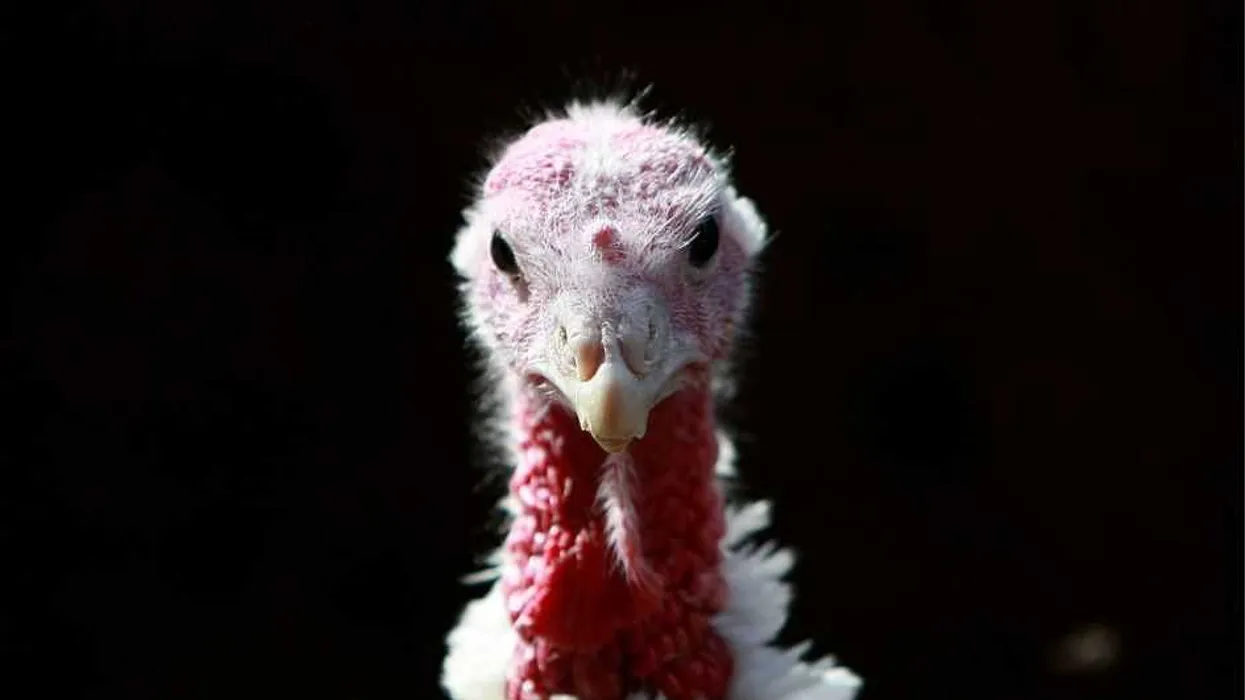
This Thanksgiving, consider the poor turkey. Is there any animal we consume with less gusto?
It has become something of annual tradition to denigrate the day’s traditional fare. Nearly 35% of Americans claim turkey is their least favorite part of the feast, according to one recent survey.
This vintage Better Homes and Gardens recipe is a bit of a cheat, as it does use turkey — although not in any form you’re likely to recognize
The internet just stokes the hatred. Every year the same tiresome “contrarian” opinions: “Stop pretending you like turkey. It’s no good on Thanksgiving, or any other day.”
Even celebrity chefs can’t resist punching down. “Turkey is wildly overrated,” says restaurateur David Chang.
“The only reason to cook the turkey is to get the gravy, and then you can just give the turkey away.”
We must admit that turkey-haters have a point. Yes, turkey meat can be dry and flavorless (although brining is a dependable way to avoid that). And yes, the tradition of eating turkey — and most Thanksgiving foods — was essentially created by advertising in the early 20th century. (College freshman home for fall break voice: “It’s all a scam by Big Cranberry!”)
While we’re content to stick with the standard flightless fowl, there were plenty of other contenders in the great battle for the Thanksgiving table. As a service, we provide the following recipes for anyone wanting to change it up.
1. Roast eel (1621)
Among the meats served at the first Thanksgiving in Plymouth would surely have been this vital freshwater food source. The 1622 promotional pamphlet for the Plymouth colony “Mourt’s Relation” describes how the Wampanoag native Tisquantum (better known as Squanto) taught the Pilgrims to catch the slippery, succulent treats.
Tisquantum went at noon to fish for Eels, at night he came home with as many as he could well lift in one hand, which our people were glad of, they were fat & sweet, he trod them out with his feet, and so caught them with his hands, without any other Instrument.
Here’s how they might have prepared it:
Ingredients
- 2 lbs cleaned freshwater eel
- Salt, splash of vinegar
- Sage or bay, butter
Instructions
- Soak eel 30 minutes in salt water and vinegar.
- Dry; rub with salt and herbs.
- Split a roasting stick down the middle, coil eel around stick.
- Roast over open fire 20-25 min.
- Baste with butter.
2. Roast swan (17th-18th centuries)
Long a favorite of European royals (peasants were forbidden to hunt them), swan was plentiful in the New World and was most likely one of the waterfowl consumed at the first Thanksgiving.
Here’s a recipe from Hannah Woolley’s “The Queen-like Closet,” (1670) a cookbook that later colonists would have had in their kitchens:
To bake a Swan.
Scald it and take out the bones, and parboil it, then season it very well with Pepper, Salt and Ginger, then lard it, and put it in a deep Coffin of Rye Paste with store of Butter, close it and bake it very well, and when it is baked, fill up the Vent-hole with melted Butter, and so keep it; serve it in as you do the Beef-Pie.
For something more elaborate, here’s a preparation from the late 14th century cookbook “Le Menagier de Paris”:
Pluck like a chicken or goose, scald, or boil; spit, skewer in four places, and roast with all its feet and beak, and leave the head unplucked; and eat with yellow pepper.
Item, if you wish, it may be gilded.
Item, when you kill it, you should split its head down to the shoulders.
Item, sometimes they are skinned and reclothed.
RECLOTHED SWAN in its skin with all the feathers. Take it and split it between the shoulders, and cut it along the stomach: then take off the skin from the neck cut at the shoulders, holding the body by the feet; then put it on the spit, and skewer it and gild it. And when it is cooked, it must be reclothed in its skin, and let the neck be nice and straight or flat; and let it be eaten with yellow pepper.
3. Passenger pigeon pie (1700s)
Though extinct for more than a century, passenger pigeons were once as abundant as the kind you see fouling statues in urban parks. While we wouldn’t recommend eating those birds, Cornish game hen or squab make a decent substitute.
Ingredients
- 2 Cornish game hens (substitute for extinct passenger pigeons)
- 1 onion, quartered
- 2 tbsp butter
- 2 tbsp flour
- 1-1½ cups chicken or turkey stock
- Salt and pepper, to taste
- 1 tsp dried thyme
- Double pie crust (bottom + top crust)
Instructions
1. Prepare the meat
- Simmer game hens with the onion until fully cooked and tender.
- Remove hens; pick the meat from the bones.
- Place shredded meat in a bowl.
2. Make the gravy
- Melt butter in a pan.
- Add flour and cook until lightly browned.
- Stir in stock to form a smooth gravy.
- Season with salt, pepper, and thyme.
- Simmer until slightly thickened.
3. Assemble the pie
- Line a pie dish with bottom crust.
- Add shredded meat.
- Pour warm gravy over the meat.
- Cover with top crust and seal edges.
- Cut a small vent in the center.
4. Bake
Outdoor Dutch oven method (historical):
- Preheat Dutch oven with coals above and below.
- Elevate pie pan inside the Dutch oven on metal hooks or a trivet.
- Bake ~10-20 minutes, checking frequently to avoid burning.
Modern oven method:
- Bake at 375°F for 35-45 minutes, until crust is golden.
5. Serve. Let cool slightly before slicing.
4. Sautéed calf’s brains with mushrooms, sour cream, and dill
In 1904, railroad heir George Vanderbilt and his wife, Edith, hosted a lavish Thanksgiving at their Asheville estate, Biltmore. Turkey was on the menu — but so were calf’s brains. Here’s one preparation that guarantees a delicate, custardy mouthfeel:
Ingredients
- 1 lb brains (veal, pork, or lamb)
- Water for soaking
- Salt (for poaching water)
- 2 tbsp butter
- 1 cup sliced white mushrooms
- 2-3 tbsp sour cream
- 1-2 tbsp fresh dill, minced
- Toasted bread, for serving
Instructions
1. Prep the brains
- Soak brains overnight in cold water to remove blood pockets.
- Drain.
- Poach gently in salted water (bare simmer) for 10-15 minutes until firm.
- Cool slightly, then peel off the thin outer membrane.
- Cut brains into bite-size pieces.
2. Cook the mushrooms
- In a skillet, melt butter over medium heat.
- Add mushrooms and sauté until they release their juices and the butter turns lightly browned and nutty.
3. Add the brains
- Add chopped brains to the skillet.
- Toss gently with the mushrooms and browned butter for 1-2 minutes.
4. Finish the sauce
- Remove skillet from heat.
- Stir in sour cream to form a loose sauce.
- Add minced dill.
- Adjust salt if needed.
5. Serve. Spoon the mixture over warm toast. Serve immediately.
5. Celery au naturel (late 1800s-early 1900s)
Now the most unwanted vegetable on the crudite platter, this Bloody Mary garnish was a highly coveted status symbol of the Gilded Age (it was hard to grow). Everyone will want the recipe.
Ingredients
- 1 bunch crisp celery
- Cold water
- Ice cubes (optional)
- Salt (for serving, optional)
Instructions
1. Trim the celery
- Cut off the root end.
- Remove tough outer stalks if desired.
- Trim leafy tops to a neat fan.
2. Refresh the stalks
- Place celery in a bowl of cold water (add ice for extra crispness).
- Chill 15-30 minutes.
3. Present with appropriate ceremony
- Stand stalks upright in a tall glass, vase, or celery jar.
- Arrange so the tops flare elegantly.
4. Serve. Place the celery in the center of the table. Offer a pinch dish of salt on the side.
Note: In the late 19th century, this was considered a showpiece delicacy. Your guests are encouraged to admire its beauty before eating it exactly as it is.
6. Turkey lime molded salad (1969)
This vintage Better Homes and Gardens recipe is a bit of a cheat, as it does use turkey — although not in any form you’re likely to recognize.
Ingredients
- 2 packages (3 oz each) lime-flavored gelatin
- ¼ tsp salt
- 2 cups boiling water
- ½ cup cold water
- 1 (7 oz) bottle ginger ale
- 2 cups diced cooked turkey
- 1 cup sour cream
- ¼ tsp ground ginger
- 1 (16 oz) can pears, drained and diced
- 6½-cup gelatin mold
Instructions
1. Make the gelatin base
- Dissolve lime gelatin and salt in 2 cups boiling water.
- Add ginger ale and ½ cup cold water.
- Chill until partially set.
2. Prepare the turkey layer
- Fold diced turkey into the partially set gelatin.
- Pour into a 6½-cup mold.
- Chill until almost firm.
3. Prepare the sour cream-pear layer
- Beat sour cream, ground ginger, and ½–1 cup of the remaining unset gelatin until smooth.
- Chill until partially set.
- Fold in diced pears.
4. Add second layer
- Spoon the pear-sour cream mixture over the firm turkey layer.
- Chill until completely set.
5. Unmold and serve
- Dip mold briefly in warm water.
- Invert onto a serving platter.
- Lift mold carefully to reveal two layers.
My mother was evil; here’s how I help others face their own abusive childhoods

Almost every coaching client I serve says something like this:
“What am I supposed to think about my mother? I don’t want to think of her as a bad person, but would a good person treat her children the way our mother treated me and my brothers and sisters?”
These good shards of her personality could never coalesce into a normal-range person. But I have an idea of who that woman could have been.
Who are these clients, and what am I doing with them that we’d be talking about this?
If I were a licensed mental health “professional,” you’d call what I do counseling. Since I’m not a licensed professional, I call it personal coaching and consulting. As a man who was raised by a mother deranged with borderline and narcissistic personality disorders and who became a self-destructive alcoholic for much of his life, I offer peer support and advice from someone who lived it.
Accepting reality
Let’s return to the question we opened with. No, a good person would not abuse her children the way the parents of my clients treated them. That’s the answer that many people don’t want to hear. But accepting the ugly reality of an abusive parent is a minimum requirement for getting past the psychological damage this inflicts on children who later become damaged adults.
For many people who grew up this way, accepting reality is necessary but not sufficient. They don’t know what to do with the memories of the good times, the apparent kindnesses they remember from otherwise frightening parents. I’m going to come back to this below with some stories about how I’ve turned this over in my mind as I’ve tried to grapple with who my abusive mother really was.
How did the parents of my clients treat them? Many of my clients had parents who threatened or attempted suicide in order to extract care and pity from their children. Some of my clients were nearly killed by their fathers. (Yes, I mean that the fathers consciously, knowingly tried to kill them; strangulation is the usual method.) Some were pimped out as prostitutes by their mothers.
Not everyone had such a florid experience, but nearly everyone I serve was raised by a parent who could not be trusted. My clients were abused as children. Actually abused, not “TikTok” abused. They don’t ruminate on how being denied an ice cream cone at age 8 ruined their lives. Instead they’re people who suffered under cold, capricious, and sometimes sadistic parents. And decades later, these adults who never did anything to deserve what they got still feel it is their fault their mother didn’t love them.
A moral problem
As I’ve written about before, we are living in an age characterized by what are known as Cluster B personality disorders. These are better thought of as character disorders, in the vein of psychologist George K. Simon. He’s one of the few practicing and writing psychologists who recognize that people who are intensely narcissistic, exploitative, manipulative, dishonest, and cruel are not suffering from a medical problem. They are suffering from a moral and spiritual problem. A personality disorder is not an organic brain problem. It is not a “disability.” It is not diabetes. It is the state of having an immoral and warped personal character.
My goal with clients is to give them a kind of conversation that will allow them to see, and to accept, the reality of their parents’ derangement. If you grew up in a normal, loving family, you may have a hard time accepting that I’m telling you the truth about what kinds of people these parents were to their kids. There is a taboo against acknowledging that some mothers (it’s not symmetrical; people have no problem believing this of fathers) do not love their children and try to annihilate them.
To hell with the taboo. Reality doesn’t conform to what we prefer to feel.
RELATED: We need to start trusting our primal survival instincts again
 Stefano Bianchetti/Getty Images
Emotional balance sheet
Grown children from abusive homes usually don’t know, or can’t accept, that their parents were bad people. Many of my clients hesitate to use the word “abuse,” even a moment after a client tells me a story about how her mother hit on her teenaged boyfriend and then slapped the daughter, accusing her of being a slut. Genuinely abused children spend decades denying the truth and working overtime to rehabilitate the image of a grossly destructive father or mother. It is only when alcoholism, depression, or a string of failed relationships drive them to despair that they’re ready to take steps toward telling the truth.
When a person crosses the threshold and accepts that her mother or father was not a good person, did not “do their best,” and did not really love their children, she’s made enormous progress. This is the first and most important goal in recovering equanimity. But it’s not enough for many of us. What are we to do with the good memories? How are we to see our mother when we remember the times she imparted skills and wisdom to us? How do those affect the emotional balance sheet’s bottom line?
I’m going to concede something but with an important proviso: Yes, it’s generally true that no person is all good or all bad. But here’s the proviso: The kind of parents we’re talking about are not “a normal mix of good and bad.” We’re talking about parents who are, to a close approximation, 95% “bad” and only 5% “good.”
The arithmetic on that is straightforward. Five percent achievement will not get you a passing grade on a test, and it does not give these adults a passing moral grade for parenthood.
Glimpses of good
Still what about the good times? I’ve thought about this for years. I’ve talked about it with my (non-woke, conservative, old-school) therapist for years, and it’s been on my mind lately.
Back in the late ’80s, my mother and I were watching TV, and something came up about women’s place in society, how to have a career and a family at the same time. We’ve all heard these topics discussed for decades; it was one of those times when something “truthful-ish” leaked out in my mother’s conversation.
My mother was a deranged woman with borderline and narcissistic personality disorders. She was abusive and horrible. I use the past tense even though she’s still alive because I permanently removed her from my life 10 years ago.
But there were times when a real person glimmered through. Sometimes you could see and hear the intelligent, insightful woman she could have been if her good qualities hadn’t been subsumed by her moral and psychiatric derangement.
The mother she wanted to be
This conversation in the ’80s was one of those times. I remember it so well because it’s one of my memory’s best examples of the woman I hoped she truly was — the woman who could have been the good mother that deep down I think she wanted to be but could not.
We were listening to the TV discussion. I don’t remember the specifics, just that it was filled with the usual pat feminist answers that contradicted each other and demanded a world of circumstances for women that was never realistic. Having cake and eating it too, that sort of thing.
My mother reflected on all that, and she had this to say:
“It’s impossible for you to understand how strong the biological drive to have children is for women. We like to pretend it isn’t real and say it’s not real, but it is. A woman can feel the pull, and it’s overwhelming. I wanted to be a mother and have children since I was a little girl. It’s all I wanted to be.”
Living with the contradiction
This was true but only sometimes. My mother had borderline personality disorder, and such people have extreme and often opposing desires that conflict with each other. Their problem is that they don’t know how to integrate these conflicts, or how to live with the conflict and ambiguity. So instead of acknowledging the conflict, they pretend it’s not there. The next day, for example, my mother could rail at the top of her lungs about how women were enslaved, how they had a right to be “more than just mothers.”
A contradiction, yes, but an understandable one. My mother would have been better off if she’d found some way to live with the conflicts that most women feel, especially in a society that treats the status of women and mothers in such a, well, borderline way. My mother may have been crazy globally, but she was not “crazy” to react badly to these contradictory messages.
She also said this:
“Young women are making a mistake waiting so long to have children. You just don’t have the energy at 30 or 35 that you have when you’re 20. It’s not the same. Women were built to have children, and we were built to have them as young women. Today’s mothers are going to have problems they’re not counting on because they waited so long.”
She was right. Even my mother, a florid Cluster B personality case, could see the truth in traditional wisdom. Even she, a screeching feminist liberal, could admit that men and women were built differently and that women had biological drives to bear children.
Unanswered questions
My mother and I had many conversations like that over the years. Long talks where honesty crept in, even if it was gone the next day. I remember them so well because they showed the woman she could have been, they showed the best of her intellect and perception.
I miss them. I do know, of course, that there wasn’t a stable version of my mother just waiting to blossom. These good shards of her personality could never coalesce into a normal-range person. But I have an idea of who that woman could have been.
So it goes with many of my clients. A son remembers his intensely selfish and punitive father who sometimes imparted helpful wisdom. A daughter remembers a mother who once took real joy watching her daughter graduate from college, even though the week before, mom overdosed on pills in a sick bid for attention.
Who are these people? We may never know. This is not how I want to end this essay. I don’t like unanswered questions and puzzles that can’t be solved. Nevertheless here they are.
Do you really have ADHD — or do they want to medicate you into conformity?

Everybody has a diagnosis these days.
Not just adults — kids too. It doesn’t matter if you’re 8 or 38, there’s someone somewhere waiting to explain away whatever’s different about you.
Perhaps you find your work excruciatingly boring and hard to care about precisely because it is excruciatingly boring and hard to care about.
It’s not a quirk of your personality or a flaw in your character or a wound in your soul. It’s a illness. Never mind that the symptoms are vague or the evidence that it’s a discrete medical condition are lacking — a pharmaceutical cure will fix it.
Just pop this pill, and you will be like everyone else. Isn’t that what you want?
All the rage
All the kids these days have ADHD or autism. Which often makes me wonder if any of them do. Or if these conditions exist at all.
Autism certainly seems real in its extreme forms, but I am not at all convinced that it’s at the far end of a continuum. I don’t really think being a little “on the spectrum” is a thing. Those people are just a little weird and need stronger guidance on how to get on in life.
I have a friend who was an engineer at Google. He told me half the people he worked with claimed to be “on the spectrum,” and according to him, it was all bull. They didn’t have medical problems; they had personal problems. They were guys who never learned how to interact normally, so they just ended up being kind of weird and rude.
As for ADHD, it’s so obscenely overdiagnosed that it’s essentially fake at this point. The market has been so oversaturated by ridiculous and erroneous diagnoses that whenever I hear about another kid with ADHD, it tells me more about the doctors and the “system” and less about the kid.
Boys will be boys
Are some kids better at sitting down at a desk for three hours at a time? Sure. Are more girls than boys better at doing it? Yes. Is there a gender factor here when it comes to diagnosis? Absolutely.
Boys don’t learn the same way girls do. But much of modern education ignores this fact. So when boys fidget or get bored, it gets chalked up to ADHD. This is more or less common knowledge by now. So the only thing a boy being diagnosed with ADHD tells me is that he doesn’t get enough recess.
Of course, there are extreme cases. There are kids who genuinely don’t seem to be able to focus at all. Something like actual ADHD exists in a small number of boys, but that doesn’t negate the broader truth: Instead of seeing people as individuals with different strengths and weaknesses, we decide to overmedicate when someone isn’t exactly like everyone else.
My mom worked with special ed kids. Some of them had mild disabilities, some more extreme. In some cases, it was clear they would need supervised care their entire lives. But in other cases, it wasn’t clear just what, if anything, was wrong — besides a certain learned helplessness reinforced by doctors and parents.
Pill and chill
Nowadays ADHD diagnoses aren’t just for kids; adults are getting in on it too. Believe it or not, an increasing amount of men and women, especially women, in their 30s and 40s are discovering that they too have ADHD — a discovery that inevitably “explains everything.” My wife sees reels on Instagram all the time, along with ads selling various solutions.
What’s that? You couldn’t focus at your computer, clicking on an excel spreadsheet, sending pointless emails for seven hours at a time? Shocking. No, you don’t need ADHD medication. You need to do something else with your life. Perhaps you find your work excruciatingly boring and hard to care about precisely because it is excruciatingly boring and hard to care about.
Overmedicalization and overdiagnosis is a deep problem in our society. Not just because the result is an increase in prescription drug use, but because the individual human being is lost or suffocated a little bit at a time. Everyone is different. Everyone has skills, and everyone has weaknesses. Everyone learns in a different way, and everyone focuses on different things too.
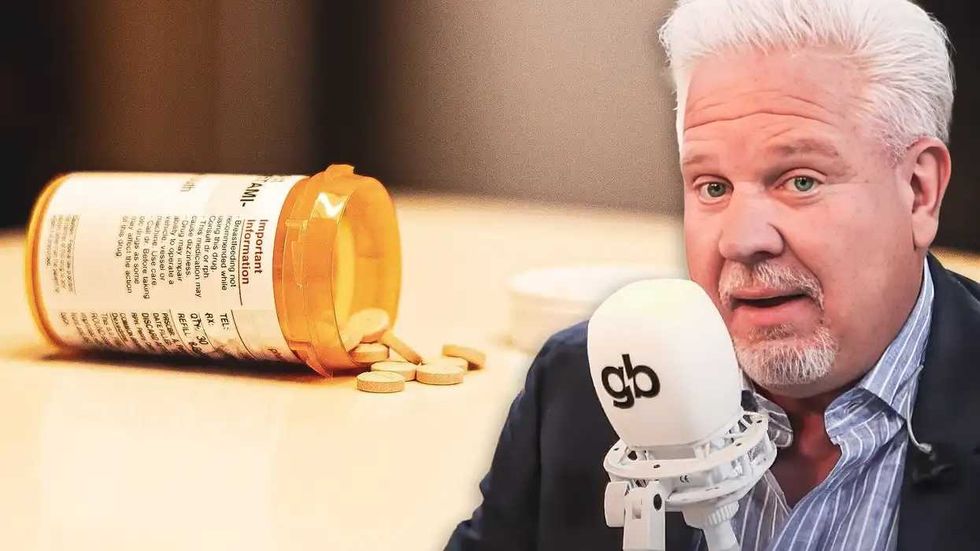
RELATED: Drugged for being boys: The TRUTH behind the ADHD scam
 Blaze Media
Free agency
Some people are just a little awkward, a little weird, a little absent-minded, or a little dry. Sure, they should try to meet society halfway in some reasonable sense — but that happens through early teaching, parental guidance, community expectations, and personal effort, not through a pill you pop every day. For most of the 20th century, we relied far more on those nonmedical supports.
All the pill-popping flattens our individualism and undercuts our own agency as humans. It presupposes that one cannot make oneself better, one cannot work to act right, and that one doesn’t have any control. This is a lie. Yes, of course, there are people who suffer with truly debilitating problems who need medication, and they should get that medication. But it is a small fraction of the population. Most people can make themselves better when they set their minds to it.
Don’t get me wrong. I’m not anti-psychiatry. I’m not into alternative medicine or any of the hippie stuff. I’m not denying that there are people with problems who are helped most effectively with medication. I’m thankful for the blessings of modern medicine and the advancements we continue to see every year.
But we have a problem with overdiagnosis in our country. We have a problem with losing sight of the individual. We have a problem with people who want to give up their agency and turn it all over to a pill, and we are worse off because of it.
Diesel under attack: EPA targets engines that power America
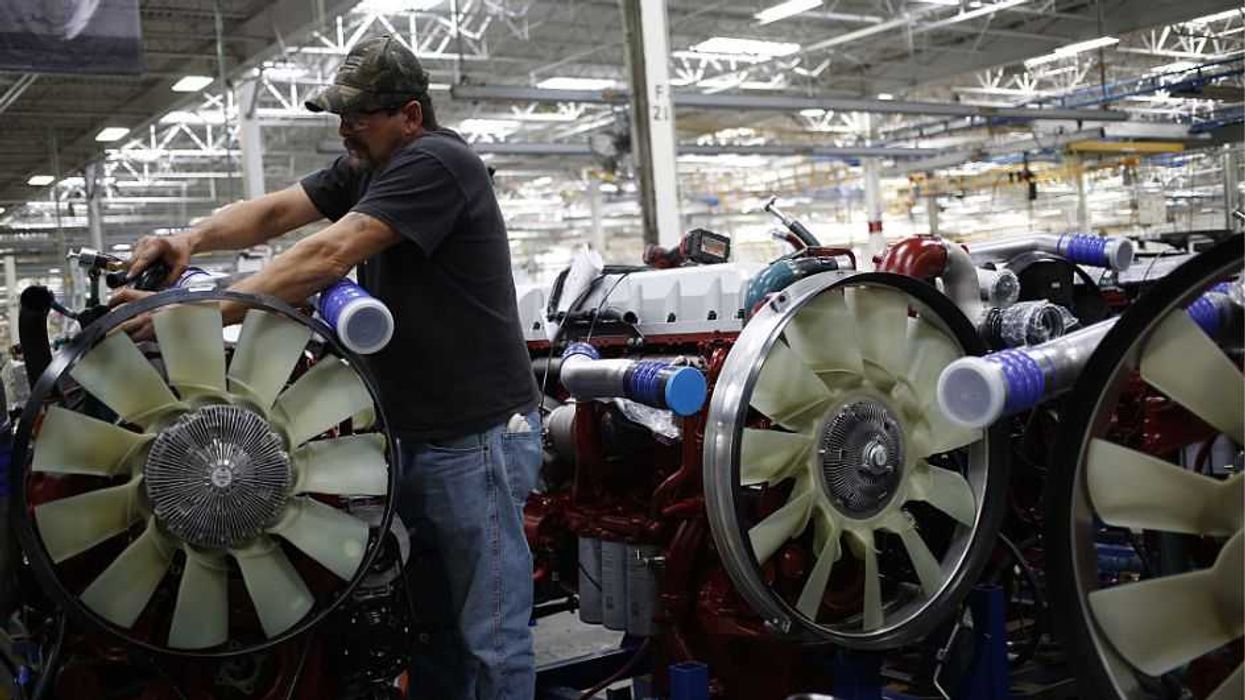
America runs on diesel. From freight haulers and farm equipment to fire trucks and snowplows, diesel engines are the torque behind our economy.
Yet the same engines that built the nation’s backbone are now in Washington’s crosshairs — strangled by layers of federal regulation that threaten the people who keep America moving.
Fire departments, ambulance services, and municipal snowplows all run on diesel. If their vehicles can’t move, lives are at risk.
The Environmental Protection Agency insists it’s cleaning the air. But for those who live and work beyond the Beltway, these mandates aren’t saving the planet — they’re shutting down livelihoods.
Cost of clean
Since 2010, every diesel engine sold in the U.S. has come fitted with diesel particulate filters and selective catalytic reduction systems — components meant to capture soot and neutralize nitrogen oxides. In theory, they’re good for the environment. In practice, they’re crippling the very trucks that keep shelves stocked and first responders rolling.
DPFs clog, SCR units freeze, and when that happens, engines “derate” into limp mode — losing power until the system is fixed. A single failure can leave a truck stranded for days and cost upwards of $5,000 to repair. For independent owner-operators, who haul 70% of the nation’s freight, that can mean the difference between survival and bankruptcy.
Even worse, under the Clean Air Act, simply repairing or modifying those failing systems can make a mechanic a federal felon.
Tamper tantrum
Meet Troy Lake, a 65-year-old diesel expert from Cheyenne, Wyoming. For decades, Lake kept his community’s fleets running — farm trucks, snowplows, ambulances, and school buses. But when emissions systems began failing in subzero temperatures, Lake found himself forced to choose between obeying Washington’s regulations or keeping critical vehicles on the road.
His fix? Remove the faulty components and reprogram the engine to restore performance — a commonsense solution that kept essential services moving. But the EPA saw it differently. Under federal law, “tampering” with emissions controls carries up to five years in prison and $250,000 in fines per vehicle.
In June 2024, Lake pleaded guilty to one count of emissions tampering. By December, a federal judge sentenced him to a year in prison. His shop was fined $52,500 and shut down. Ironically, during his sentence, Lake worked on the prison’s own diesel equipment — the same skills that, outside those walls, had made him a criminal.
Now home but barred from his trade, Lake carries a felony record that cost him his business, his rights, and his reputation — all for keeping his community’s engines running.
Endless repair cycles
No one disputes that diesel exhaust can harm air quality. The EPA’s emission rules dramatically cut pollution over the past decade. But these results have come at an unsustainable cost to the people who depend on diesel most.
According to the American Trucking Associations, emissions-related repairs account for roughly 13% of total maintenance costs for Class 8 trucks. Each incident costs an average of $1,500 and countless hours of downtime. Multiply that across millions of trucks, and the burden on small businesses and rural economies is staggering.
Farmers, truckers, and local governments can’t afford the endless repair cycles. For them, Washington’s mandates translate to fewer working trucks, higher consumer costs, and dangerous response delays in emergencies.
Senator Lummis fights back
Wyoming Senator Cynthia Lummis (R) sees what’s happening. She’s watched the federal government criminalize working Americans while ignoring the real-world consequences of its rules. In October 2025, she introduced the Diesel Truck Liberation Act — legislation designed to restore sanity and balance.
The bill would:
- Remove mandatory federal requirements for DPFs, SCRs, and onboard diagnostics;
- Limit the EPA’s enforcement powers over diesel tuning and emissions deletes;
- Protect mechanics and operators from prosecution for performing practical repairs; and
- Provide retroactive relief — vacating sentences, clearing records, and refunding fines for past convictions.
A call for flexibility
Environmental advocates warn that such legislation could reverse decades of progress under the Clean Air Act.
That’s a legitimate concern. Clean air matters. But it’s also true that today’s engine tuning and filtration technologies are far more advanced than those available when these mandates were written. Recent research shows that advanced, model-based engine controls and “virtual sensors” can significantly cut nitrogen oxide and particulate emissions and help engines stay within strict tailpipe limits while reducing dependence on extra physical sensors and minimizing urea and fuel penalties.
Even current EPA leadership has acknowledged the need for flexibility and modernization. The question isn’t whether we should protect the environment — it’s whether rigid, outdated enforcement is the best way to do it.
And the impact doesn’t stop at the loading dock. Fire departments, ambulance services, and municipal snowplows all run on diesel. If their vehicles can’t move, lives are at risk. A snowstorm doesn’t care about EPA compliance, and neither does a heart attack.
Who makes the rules?
Opponents of the Diesel Truck Liberation Act argue that removing emissions hardware would increase pollution, disproportionately harming urban and low-income communities. Supporters counter that Washington’s policies have already created economic inequality by crushing rural economies and small operators.
The divide isn’t really about clean air — it’s about who gets to make the rules. Should unelected bureaucrats in D.C. dictate how a farmer in Wyoming runs his truck? Or should local communities have the flexibility to balance environmental goals with economic reality?
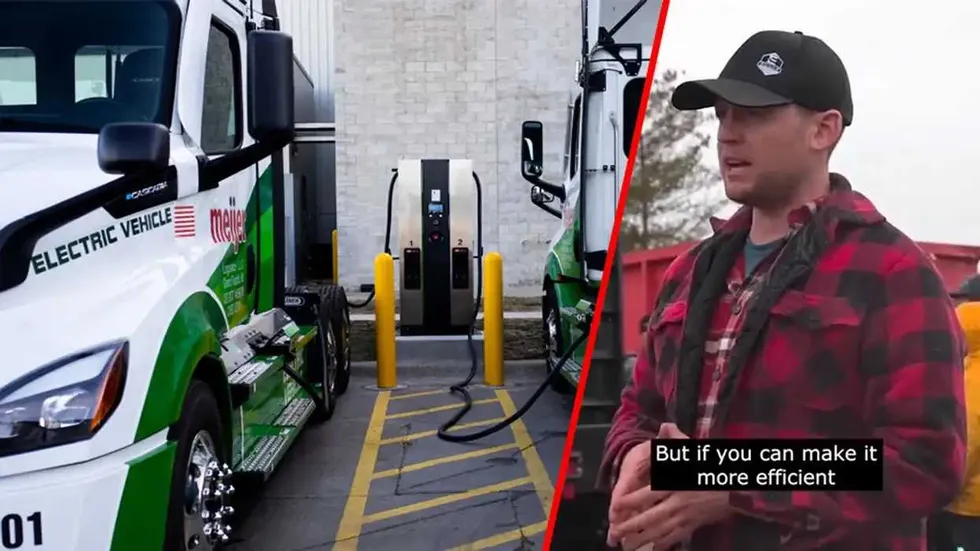 Image via @MusicScarf/X (screenshot)/Photographer: Emily Elconin/Bloomberg via Getty Images
Common sense prevails
The Diesel Truck Liberation Act doesn’t aim to destroy the Clean Air Act. It aims to reform it. It recognizes that environmental protection must work hand in hand with reliability, safety, and economic survival.
For people like Troy Lake, it’s about justice — not just for one man, but for thousands of mechanics and operators who’ve been punished for solving real problems in real America.
And there’s already a hopeful sign: President Trump recently issued a full pardon for Lake, acknowledging that enforcing broken regulations against hardworking Americans is not justice — it’s overreach.
The next step is whether Congress will follow through. The bill currently sits in the Senate Environment Committee, with hearings expected later this year. If it passes, it could set a precedent for rethinking how environmental policy is enforced — and how to protect the people who keep America running.
America’s diesel fleet isn’t the enemy. It’s the engine that powers our nation — from coast to coast, farm to factory, and every highway in between. Reasonable environmental goals are achievable, but not through criminalizing those who fix the equipment that keeps this country alive.
The question facing lawmakers is simple: Will they choose common sense — or continue punishing the very people who make modern life possible?
Elon Musk to reveal flying car next year
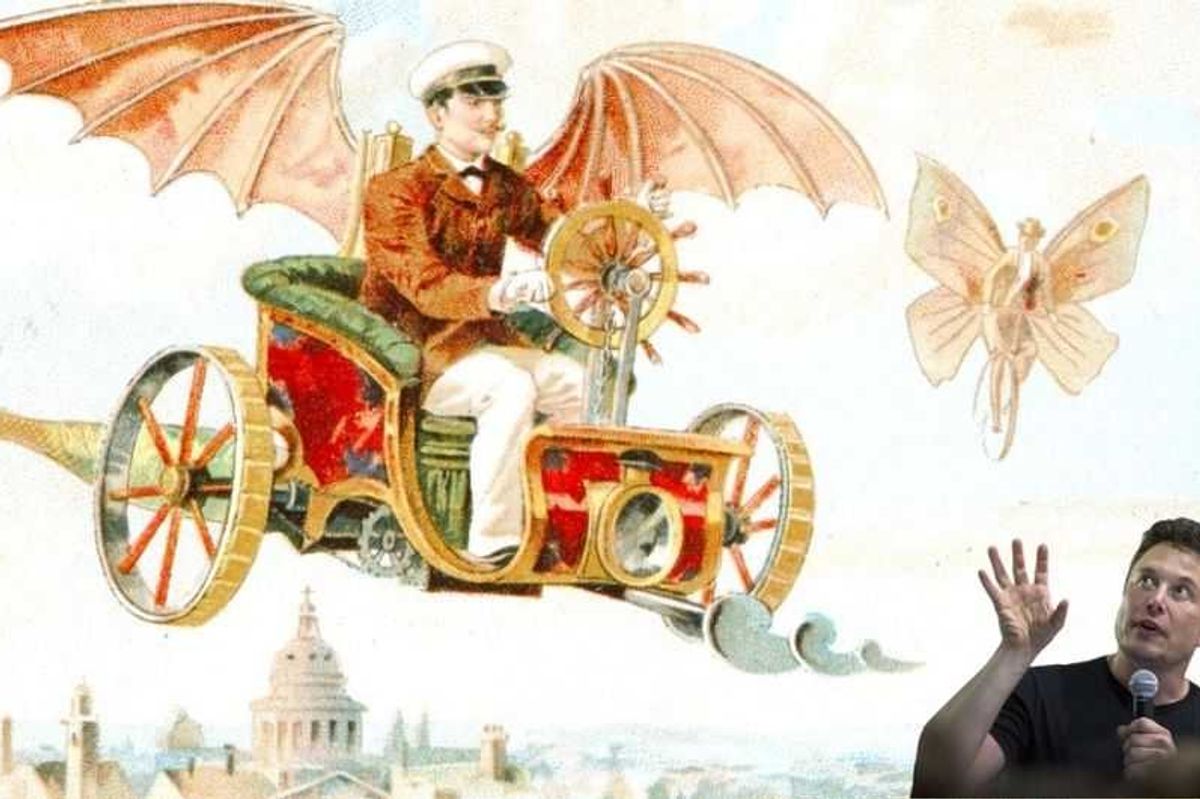
Elon Musk says the next Tesla Roadster might fly. Not figuratively — literally.
Imagine an all-electric supercar that hits 60 mph in under two seconds, then lifts off the pavement like something out of “The Jetsons.” It sounds impossible, even absurd. But during a recent appearance on “The Joe Rogan Experience,” Musk hinted that the long-delayed Tesla Roadster is about to do the unthinkable: merge supercar speed with vertical takeoff.
If the April 2026 demo delivers even a glimpse of flight, it will cement Tesla’s image as the company that still dares to dream big.
As someone who has test-driven nearly every kind of machine on four (and sometimes fewer) wheels, I’ve seen hype before. But this time, it’s not just marketing spin. Tesla is preparing a prototype demo that could change how we think about personal transportation — or prove that even Elon Musk can aim too high.
Rogan reveal
On Halloween, Musk told Joe Rogan that Tesla is “getting close to demonstrating the prototype,” adding with his usual flair: “One thing I can guarantee is that this product demo will be unforgettable.”
Rogan, always the skeptic, pushed for details. Wings? Hovering? Musk smirked: “I can’t do the unveil before the unveil. But I think it has a shot at being the most memorable product unveil ever.”
He even invoked his friend and PayPal co-founder Peter Thiel, who once said, “We wanted flying cars; instead we got 140 characters.”
Musk’s response: “I think if Peter wants a flying car, he should be able to buy one.”
That’s classic Elon — part visionary, part showman. But underneath the bravado lies serious engineering. Musk hinted at SpaceX technology powering the car.
The demonstration, now scheduled for April 1, 2026 (yes, April Fools’ Day), is meant to prove the impossible. Production could start by 2027 or 2028, but given Tesla’s history of optimistic timelines, it may be longer before any of us see a flying Roadster on the road — or in the air.
Good timing
Tesla’s timing isn’t accidental. The company’s Q3 2025 profits fell short due to tariffs, R&D spending, and the loss of federal EV tax credits. With electric vehicle demand cooling, Musk knows how to recapture attention: promise something audacious.
Remember the Cybertruck’s “unbreakable” windows? The demo didn’t go as planned — but it worked as a publicity move. A flying Tesla Roadster could do the same, turning investor eyes (and wallets) back toward Tesla’s most thrilling frontier.
Hovering hype
So can a Tesla actually fly? It may use cold-gas thrusters — essentially small rocket nozzles that expel compressed air for brief, powerful thrusts. The result could be hovering, extreme acceleration, or even short hops over obstacles.
There’s also talk of “fan car” technology, inspired by 1970s race cars that used vacuum fans to suck the car to the track for impossible cornering speeds. Combine that with Tesla’s AI-driven Full Self-Driving systems and new battery packs designed for over 600 miles of range, and the idea starts to sound just plausible enough.
The challenge? Energy density. Vertical flight consumes enormous power, and even Tesla’s advanced 4680 cells may struggle to deliver it without sacrificing range. And if the Roadster truly hovers, it will need reinforced suspension, stability controls, and noise-dampening tech to keep your driveway from turning into a launchpad.
Sky’s the limit
Musk isn’t the first to chase this dream. The “flying car” has tempted inventors since the 1910s — and disappointed them nearly as long.
In the optimistic 1950s, Ford’s Advanced Design Studio built the Volante Tri-Athodyne, a ducted-fan prototype that looked ready for takeoff but never left the ground. The Moulton Taylor Aerocar actually flew, cruising at 120 mph and folding its wings for the highway — but only five were ever built.
Even the military tried. The U.S. and Canadian armies funded the Avrocar, a flying saucer-style VTOL craft that could hover but not climb more than six feet. Every generation since has produced new attempts — from the AVE Mizar (a flying Ford Pinto that ended in tragedy) to today’s eVTOL startups like Joby and Alef Aeronautics, the latter already FAA-certified for testing.
The dream keeps coming back because it represents freedom — freedom from traffic, limits, and gravity itself.
Got a permit for that?
Here’s where reality checks in. The Federal Aviation Administration now classifies electric vertical takeoff and landing aircraft under a new category requiring both airplane and helicopter training. You would need a pilot’s license, medical exams, and specialized instruction to legally take off.
Insurance? Astronomical. Airspace? Restricted. Maintenance? Complex. In short: This won’t replace your daily driver any time soon. Even if the Roadster hovers, the FAA isn’t handing out flight permits for your morning commute.
RELATED: You can now buy a real-life Jetsons vehicle for the same price as a luxury car
 Image provided to Blaze News by Jetson
Free parachute with purchase
Flying cars sound thrilling until you consider what happens when one malfunctions. A blown tire is one thing; a blown thruster at 200 feet is another. Tesla’s autonomy might help mitigate pilot error, but weather, visibility, and battery reliability all pose major challenges.
NASA and the FAA are developing new air traffic systems to handle “urban air mobility,” but even best-case scenarios involve strict flight corridors, automated control, and years of testing.
In short: We’re closer than ever to a flying car — but not that close.
Sticking the landing
So will the Tesla Roadster really fly? Probably — at least for a few seconds. Will it transform personal transportation? Not yet.
But here’s the thing: Musk doesn’t have to deliver a mass-market flying car. He just has to prove that it’s possible. And that may be enough to reignite public imagination and investor faith at a time when both are fading for the EV industry.
If the April 2026 demo delivers even a glimpse of flight, it will cement Tesla’s image as the company that still dares to dream big. If it flops, it will join the long list of “flying car” fantasies that fell back to Earth.
Either way, we’ll be watching — because when Elon Musk says he’s going to make a car fly, the world can’t help but look up.
Bugs for thee, beef for me: How big business monopolizes meat

President Trump is right to turn his gaze toward the meatpacking industry. It’s one of the dirtiest businesses in America — not just in hygiene, but in habit. I grew up around beef cattle, familiar with the blood and bone that keep this machine alive.
What was once a farmer’s trade has become a monopoly’s empire. Four corporations now control nearly 85% of U.S. beef processing. They set the prices, squeeze the ranchers, and pass the pain to consumers — all while preaching “market efficiency,” that modern hymn for exploitation.
When the men who raise the cattle can’t afford to eat steak and the companies that kill them post record earnings, something stinks — and it isn’t the beef.
The transformation wasn’t sudden. It crept in, one merger at a time, one farm foreclosure after another. The local slaughterhouse — once a fixture of every rural county — vanished, replaced by sprawling steel citadels where flesh and spirit move down the same assembly line. The small family business that once sponsored Little League or donated to the parish fundraiser is gone, its name buried beneath a global brand logo. What remains is meat without meaning: shrink-wrapped, standardized, and severed from life.
Bled dry
The result is as dire as it is deliberate. Independent ranchers are being bled dry. Farmers sell out not because they want to, but because the alternative is bankruptcy. When four conglomerates dictate what you earn, what you buy, and what you eat, the free market ceases to be free — it becomes feudal. The serfs still wear denim and drive pickups, but they serve the same masters: corporate overlords with billion-dollar appetites and offshore addresses.
Consumers don’t fare much better. They pay more for lesser cuts, duped into believing the illusion of abundance. The supermarket shelves are full of choice, but the choice has already been made. The labels may differ, but the profits lead to the same boardrooms. When the men who raise the cattle can’t afford to eat steak and the companies that kill them post record earnings, something stinks — and it isn’t the beef.
RELATED: ‘Farmer’ George Clooney wouldn’t last a minute with my family’s sheep
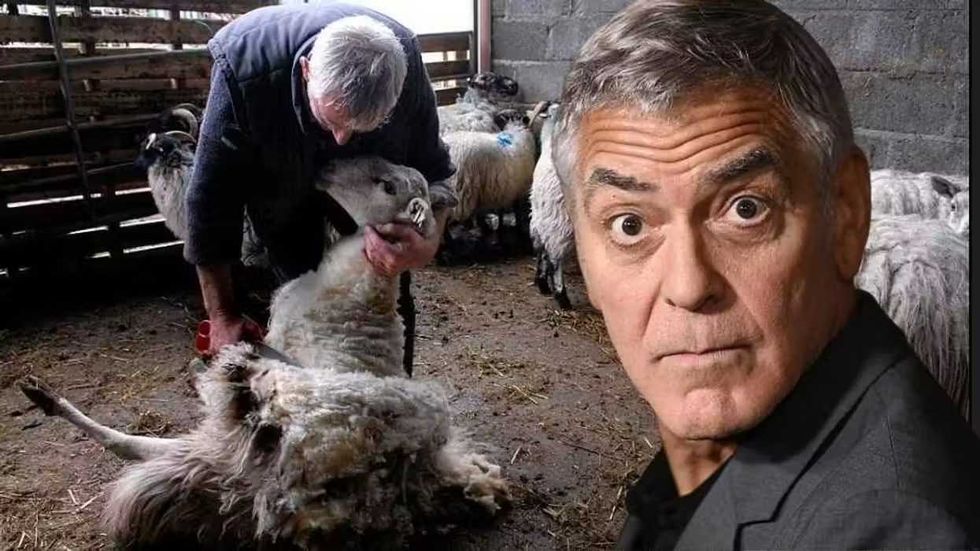 Axelle/Bauer-Griffin/Andia/Getty Images
Corporate cleavers
The story is no different across the Atlantic. In Europe, the meat trade has been quietly butchered by the same corporate cleavers. Small abattoirs — the lifeblood of rural France, Ireland, and Spain — have disappeared beneath the weight of regulation and consolidation. What used to be an honest trade of handshakes and hanging carcasses is now ruled by faceless conglomerates answering to Brussels and shareholders in Frankfurt. The European Union speaks loftily of “sustainability,” but its policies have done more to sustain monopolies than livelihoods.
Ask a French farmer about EU policy, and you’ll get a shrug somewhere between despair and disgust. In Ireland, cattle farmers — men like my father, who once fed nations through famine and war — now feed debt. In Germany, abattoir workers live in company dorms, shipped in from Eastern Europe to keep costs down. The romance of the pastoral has been replaced by the cold arithmetic of the spreadsheet.
From beef to bugs
Meanwhile, consumers are told to eat less meat “for the planet.” How convenient for the corporations that now sell the alternatives — lab-grown patties and insect protein, neatly packaged in recyclable guilt. They’ve found a way to profit from both sides of the moral ledger: first by monopolizing real meat, then by marketing its replacement. It’s a master class in hypocrisy and a catastrophe for the working class.
Trump’s decision to investigate the industry won’t fix a century of collusion overnight, but it is a long-overdue reckoning. For decades, Democrats and Republicans alike treated Big Meat as too big to question. The lobbyists wrote the laws, the lawyers buried the lawsuits, and the bureaucrats looked away. The result is a landscape where cattle ranchers depend on corporations that despise them and consumers rely on supply chains that could snap at any moment.
Food, the most basic human need, has become another instrument of control. When you own the meat, you own the man. Farmers used to raise herds; now they herd invoices and inspectors.
It’s tempting to believe that this system is simply broken. It isn’t. It works exactly as designed — to enrich the few and exhaust the many. The old rural ideal of self-reliance has been slaughtered on the altar of efficiency. What we are left with is a parody of plenty: full shelves, empty towns, and even emptier pockets..
Trump’s probe may not slay the beast, but at least someone is willing to pull back the curtain and show the nation what’s really being carved up. For decades, the Big Four packers have sliced the market to ribbons, fixing prices while farmers starved and consumers paid the bill. Now, for the first time in generations, there’s a man in power with the will to carve them up instead. Call it poetic justice: The butchers may finally find themselves on the block.
Trading in your car? Here’s how to get the biggest payout
When you find the right new car after a long search, it can be tempting to close as soon as possible. But before you sign, there’s one question that can save — or cost — you thousands.
What should you do with your current car?
Should you trade it in at the dealership or sell it privately? It’s more than a convenience question — it’s a strategy. And with used-car prices still unsettled, the right choice can make a real financial difference.
Let’s break down what actually matters and what the dealership won’t always volunteer.
Financial fork
Most buyers can’t keep their old car when upgrading. They use it as part of the down payment. But there are two very different paths:
- Trade it in.
- Sell it privately for typically more money.
Reality check: Dealerships rarely offer full market value. They need to buy low and sell high — it’s business. Knowing that puts you in control.
If your car is worth $15,000 privately, a dealer may offer $12,000. That’s $3,000 lost — money you could use to lower your loan or upgrade trims.
Why trade-ins win
Sometimes a trade-in is the smarter move — especially in states offering a sales tax credit.
Example: Buy a $40,000 car and trade in a $10,000 vehicle. You’re taxed only on $30,000, which can save you hundreds.
If the tax break closes the gap between your private-sale price and the trade-in offer, taking the trade may be the better move. Plus, there’s no hassle: no listings, no test drives, no strangers.
The timing sweet spot
Timing matters. The best moment to sell or trade is before your factory warranty expires.
- 3 years / 36,000 miles for basic.
- 5 years / 60,000 miles for powertrain.
Cars still under warranty are easier to resell and command higher prices. If your car is paid off, clean, and under those mileage limits, you’re in the prime window.
When you owe money
You can trade in a car with an outstanding loan — but be careful. If your car’s value is less than the payoff, that’s negative equity.
Your options: pay the difference Or roll it into your new loan (not ideal).
This is how people end up upside-down for years. Avoid it by calling your lender for your payoff amount and checking your car’s true value on KBB or Edmunds.
If you have positive equity, that difference becomes your down payment.
RELATED: Quick Fix: What’s the safest used car for my teenager?
 CBS/Getty Images
Watching the market
Used-car prices have swung wildly since the pandemic. The market is still strong for vehicles that are under five years old; well below 14,500 miles/year; and properly maintained.
If that describes your car, a private sale may be worth it. If not — high miles, cosmetic issues, or a soft local market — a trade-in may be the smarter, calmer choice.
Mileage and condition
Both private buyers and dealers care about the same things: mileage and condition. Before selling or trading, get the car detailed; fix small cosmetic flaws; replace worn tires or weak batteries; and gather maintenance records.
A clean, documented car always sells faster and for more.
The private sale payoff
Selling privately usually brings the highest price. But it has strings attached: writing the listing, taking photos, answering questions, meeting buyers, and handling title and payment. If that sounds like too much, a trade-in may be worth the lower price. But if you have a desirable car and the patience, a private sale can easily beat any dealer offer.
Final decision points
There’s no one-size-fits-all answer. The right move depends on your equity, your time, your state’s tax laws, your loan payoff, and your tolerance for hassle.
What matters is going in informed.
Know your numbers. Know your choices. Don’t let a dealer rush you. Done right, you can upgrade smoothly and walk away financially ahead.
Bottom line: Do your homework, understand the trade-offs, and choose the path that keeps the most money in your pocket.





