

Category: Opinion & analysis
The one virtue America lost — and desperately needs back
Faith is everything to me. I believe in Jesus Christ as my personal Savior, and I’m not shy about saying so. Many Americans feel uncomfortable talking about faith, and many others insist religion should stay out of the public square. I disagree. As a Christian, I want more people to know Jesus, who loves them more than they can imagine.
But I also know that people walk different spiritual paths. Some pray differently. Some worship a different god. Others reject religion altogether. America now holds more faith traditions — and more people with no faith — than at any point in our history. That diversity can spark friction, and as politics fills the void left by declining religious belief, many have turned ideological loyalties into a kind of substitute religion.
America’s diversity guarantees disagreement. It always has. But even in conflict, we can find places to unite.
The risk is obvious: These differences can push us toward a breaking point. The warning signs already surround us. In a moment like this, we need grace.
What grace demands
In Christianity, grace is God’s love poured out freely. Eternal life is His gift — not because we earn it or because we are good, but because God is good.
On Earth, grace takes a more practical form. It means giving each other the benefit of the doubt. It means forgiving mistakes. It means choosing generosity instead of suspicion. And it means approaching someone else’s beliefs with curiosity rather than contempt.
For reasons I still struggle to understand, Americans have stopped trying to understand one another.
Last year, I hosted a meeting of community, business, and faith leaders in my hometown of Grand Rapids, Michigan. The agenda was full of topics that normally light a fuse: poverty, economic exclusion, racial tensions. Before we began, I admitted that some of the terms we would use carried heavy baggage and that I might say something imperfectly myself. I asked only one thing: a little grace.
That simple request set the tone for the whole day. People pushed through the hard conversations and started looking for solutions. We found common ground in places no one expected. The debate stayed calm because everyone extended grace before they demanded it.
I wish that spirit were more common today.
Why grace is hard — and necessary
Too many people explode at the first sign of disagreement. They judge others more harshly than they judge themselves. They dismiss someone with a different view as beyond redemption. The unspoken thought is always the same: Why bother? They won’t listen to me, so why should I listen to them?
RELATED: Dear Christian: God didn’t call you to be a ‘beautiful loser’
 Photo by Beata Zawrzel/NurPhoto via Getty Images
It’s a natural impulse, but grace calls us to something higher. It reminds us that the person across from us carries the same human frailties we do.
Grace does not mean surrendering your convictions. It does not ask you to dilute what you believe or pretend serious disagreements don’t matter. It simply asks you to respect the strength of someone else’s convictions, even when you oppose them. It asks you to accept that everyone is imperfect — including you. And because each of us hopes for forgiveness when we stumble, grace asks that we extend that same forgiveness to others.
America’s diversity guarantees disagreement. It always has. But even in conflict, we can find places to unite. Recovering that unity starts with a simple choice: showing each other a little grace.
America didn’t lose its tech edge — globalist CEOs gave it away

Everything you interact with is now built by people who don’t understand you, and your kids are pushed out of the job market.
From the front lines of corporate tech, I can confirm what many Americans already suspect: The H-1B program has produced a workplace disaster. It has compromised security. It has degraded the quality of everyday software. Worst of all, it has crushed the job prospects of American workers.
We don’t need to accept a corporate-designed future in which our industries no longer employ us and the products no longer serve us.
I’ve spent more than a decade inside corporate tech. In that time — especially after COVID — the number of Americans on my left and right has steadily dropped. Meanwhile, offshore offices multiply and more foreign workers arrive under visas. And they’re not doing low-stakes tasks. They’re building internal portals for insurance companies, managing databases that store your medical records, and writing the code behind your bank and utility apps.
Look at the results. Your bank’s mobile app crawls. Basic online bill-pay feels like an endurance test. Everyday American services — airlines, grocery chains, utilities — deploy software that barely works. The root cause sits in boardrooms across the Fortune 500: fire Americans, import cheaper labor, and call it efficiency. Why pay an American engineer $150,000 when an H-1B worker costs $100,000 and can be deported for missing an unrealistic goal?
Here’s the pattern I’ve watched repeat across company after company.
An H-1B hire climbs the ladder to director or vice president. He earns that rise largely by finding “inefficiencies,” which usually means firing Americans. He then pushes leadership to open more H-1B slots or to contract with a “consulting firm” staffed almost entirely from abroad.
Executives applaud because the invoices are low and the offshore teams rarely say no to any request, no matter how impossible. And when the savings look good enough, leadership shutters the American division altogether and replaces it with an “innovation center” in Bangalore. Look at the savings!
The American worker who survives this gets a grim reward: meetings at 6 a.m. to accommodate India Standard Time, an office filled with co-workers who share neither language nor culture, an org chart dominated by unfamiliar and unpronounceable names, and a career path with no upward mobility. And that’s if the worker is fortunate enough to have a job at all. Bleak.
The numbers paint an even darker picture. According to the Cengage Group’s 2025 Employability Report, only 41% of 2024 college graduates found full-time work related to their fields. In 2025, that number fell to 30%. Some analysts blame AI, but the claim doesn’t survive contact with reality. A recent MIT report found that despite $30-$40 billion in corporate spending on AI tools, 95% of organizations show no return on that investment — even though nearly half of office workers already use AI in some form.
RELATED: The H-1B system is broken. Here’s how to fix it.
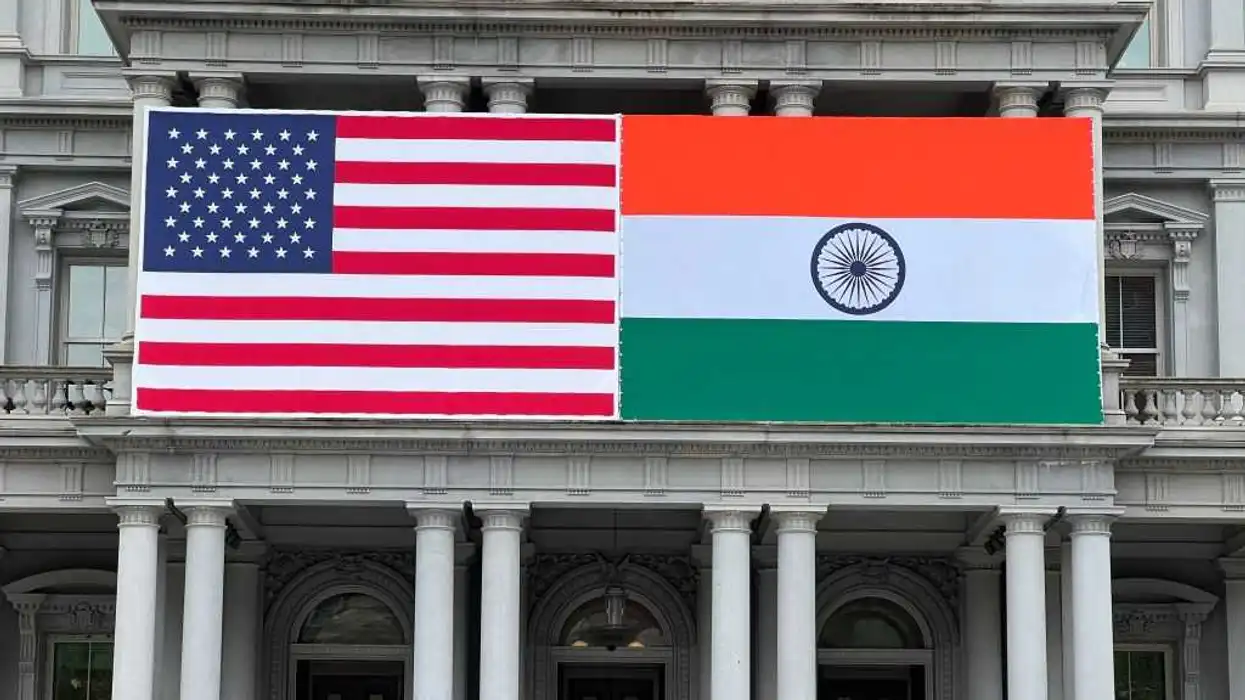 Photo by DANIEL SLIM/AFP via Getty Images
If AI were truly replacing white-collar workers at scale, why did these same corporations ask the federal government to approve 141,207 H-1B visas in 2024?
The truth is simpler: Importing cheaper, compliant labor remains the easiest way for corporate leadership to cut costs, pad bonuses, and build bigger homes in Southlake — while American workers pay the price.
America is not obligated to subsidize its own replacement. We don’t need to accept a corporate-designed future in which our industries no longer employ us and the products no longer serve us. The American middle class built the modern technology economy. It should not be pushed aside so that executives can chase savings that hollow out the country one layoff at a time.
Enough.
Young, broke, and voting blue: 2025’s harsh lesson for the right
In 1992, a young Democratic strategist on the Clinton campaign named James Carville coined the now-famous phrase “it’s the economy, stupid.” He directed it to the campaign workers to ensure that they remained laser-focused on kitchen-table issues. In November’s elections, voters delivered that same message, loud and clear, in New York City, Virginia, and New Jersey. The results were not surprising — even the margins were roughly in line with 2017, the last off-year elections in those localities when Trump was president.
The message was clear: Many young voters are hurting economically. Of course, the Trump administration is well aware of this. The government has been digging out of the economic disaster Joe Biden left behind. Compared to Europe and much of Asia, the U.S. is doing better, but the global macro environment is still challenging — especially for young people.
Once again and as ever: ‘It’s the economy, stupid.’
This is why almost immediately after the election, the administration focused on ramping up its communication efforts on the economy. President Trump indicated an urgent need to blow up the filibuster and enact a legislative agenda commensurate with the issues young voters are facing. Trump’s approach was echoed by Vice President JD Vance, who noted, “We’re going to keep working to make a decent life affordable in this country, and that’s the metric by which we’ll ultimately be judged in 2026 and beyond.”
It is useful to do a deep dive into the 2025 election data so that we can learn what happened and how we can be ready with the right political and policy prescriptions to win the much more important midterm elections in 2026.
A coalition of the ‘falling behind’
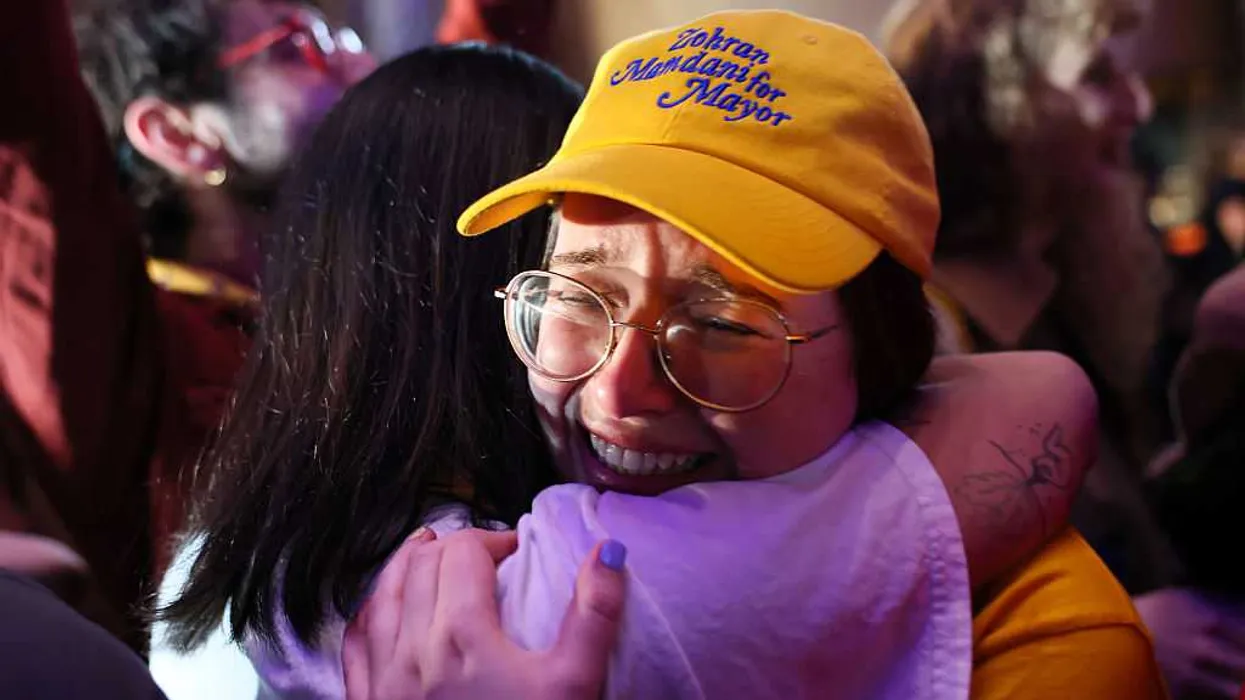
Contrary to the thinking of most political commentators, Zohran Mamdani’s win in the New York City mayoral race wasn’t about racial identity politics. I’m not saying he doesn’t believe in racial identity politics. It’s quite central to his worldview. After all, this is the guy who tweeted in 2020 that “Black + brown solidarity will overcome white supremacy.” Mamdani’s anti-Israel activities have also been well known and much remarked upon. But that’s not what led his coalition to victory on Nov. 4.
First, Mamdani’s campaign was fundamentally a youth movement. Young women ages 18-29, while a relatively small part of the electorate, gave him 81% of their support. These are staggering numbers. Overall, Mamdani won younger voters under 45 by an incredible 69%-25%, while former New York Gov. Andrew Cuomo (D) won voters over 45 by 51%-39%. Just as importantly, Mamdani actually won white voters by one point. He certainly did well with Muslims and in the South Asian community.
It’s possible that Mamdani may in fact be a Third-Worldist or Muslim supremacist, as some have alleged — but these were peripheral issues in electing him, and a look at his coalition suggests that focusing on them would fracture it.
Likewise, feelings about Israel were overblown. While it was a “major factor” in 38% of voters’ minds, it was essentially a political wash, with Mamdani losing 47%-46% among those who felt passionately about the issue. While Israel may be personally important for him, it was not a driving issue for most of his voters.
Mamdani’s coalition is spiritually and geographically rootless. While he did strongly among Muslims (presumably a significant chunk of the 14% of voters of “other religions” that he took 70% of), far more powerful was the 75% he took among the 24% of voters who claimed no religion. For those who have made politics their god, Mamdani is a comforting idol and socialism a powerful liturgy.
RELATED: Mao tried this first — New Yorkers will not like the ending
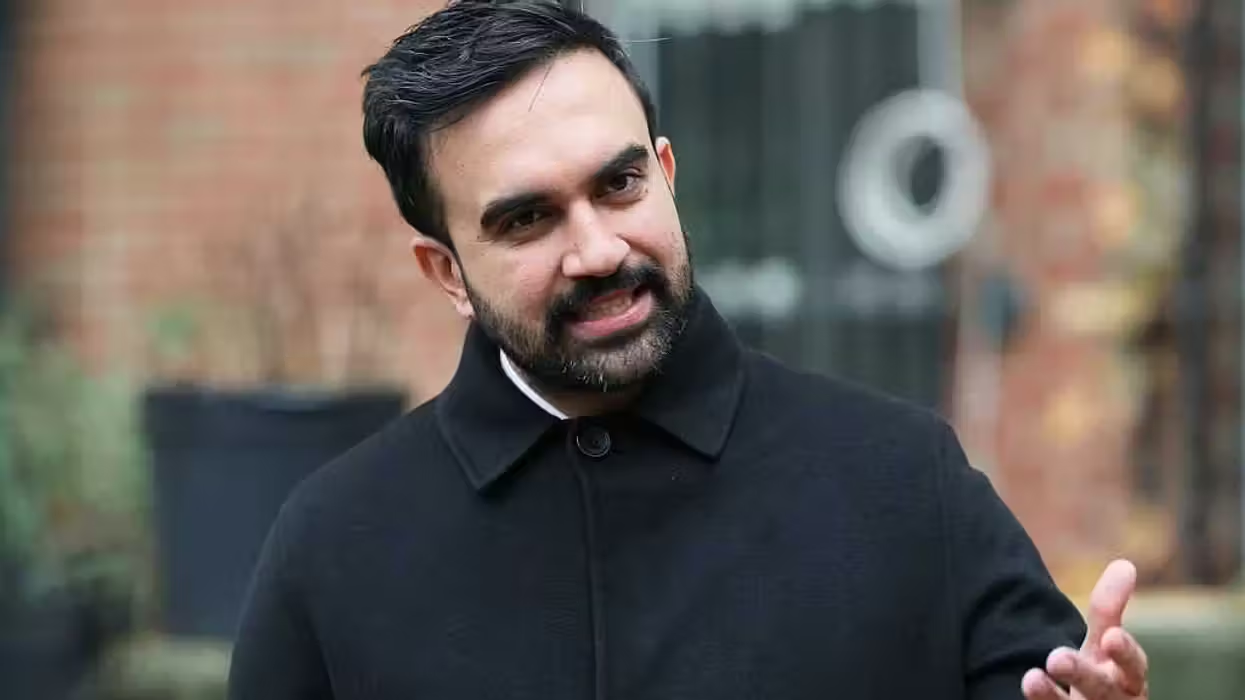 Photo by Michael M. Santiago/Getty Images
His is also a coalition of the mobile, anchored by those with shallow roots in New York — and, one might suspect, America. Mamdani dominated among newer arrivals, winning a staggering 82% among those who have lived in New York City for less than 10 years. Cuomo, meanwhile, carried the NYC-born 50%-38%, but that group comprised just 45% of the electorate. Likewise, Mamdani racked up a 59%-34% margin among renters.
The fundamental point that anchored Mamdani’s coalition was the economy: 25% of voters described themselves as democratic socialists, and he won 86% of them. And many appear to have been motivated by jealousy or frustration. He actually won 59% among those who thought the NYC economy was good, but also 59%-34% among those who felt they were personally falling behind. If you were among the one-third of voters who looked around and saw everyone else getting ahead but you, Mamdani was your candidate.
Fifty-six percent of voters said the cost of living was the most critical issue, and Mamdani won 66% of them. If he had only won these voters, Mamdani still would have come within a few percentage points of beating Cuomo (41%-37%). This is an essential message for the GOP to internalize if it wants to win back these voters at the 2026 midterms.
Of the 34% of voters who supported raising taxes, an incredible 86% were for Mamdani. But his coalition is not a working-class coalition. White voters with a degree supported Mamdani 57%-40%, while he took just 26% of white voters without a degree — a group that would have comprised eight out of ten voters in 1950 but just 14% today. Nor was it truly a coalition of the financial elite: Cuomo won 62%-33% among families earning over $300,000 per year.
Kitchen-table issues, again
While the circumstances in New York City were somewhat unique, the story in Virginia was more typical. There was a huge gender gap — which is really a marriage gap — though unfortunately, we have only the gender breakdown since pollsters, for whatever reason, didn’t ask about marital status, despite its enormous effect on women’s votes in particular. Republican Winsome Earle-Sears actually won men 51%-38%, but Abigail Spanberger crushed her among women, 65%-35%. If gender gap patterns here are similar to 2024, Spanberger took approximately 72% of single women’s votes.
Also notable is the incredible failure of tokenistic identity politics to appeal to left-wing identity groups. Earle-Sears, a black woman, took just 7% of the black vote — and, incredibly, just 3% of black women’s votes. Meanwhile, she took 61% of white men’s votes, even while losing by 14.5 points overall.
The lesson for the GOP is simple: Voters want tangible results on immigration, jobs, and affordability.
Spanberger was similarly dominant among youth, winning the under-45 vote 65%-34%, as opposed to a much narrower 53%-47% margin among the 45-and-over crowd. Similarly, we see how much the Democrats have become the party of the elite, with Spanberger winning 68%-32% among those with advanced degrees. Earle-Sears, meanwhile, won 2-1 among the one-third of Virginia voters who are white and do not have college degrees and 80% of white born-again Christians, who made up 28% of the voters.
Earle-Sears won 61%-37% among the 37% who are not affected financially by the shutdowns, while the 20% who are affected went for Spanberger 82%-18%. If you look at those Virginia voters who are only a little or not at all financially affected by federal cuts, Spanberger eked out only the narrowest victory over Earle-Sears. Almost her entire positive margin came from those 20% of voters who are substantially financially affected by federal job cuts. This illustrates in dramatic fashion how much Virginia has become a company town for the federal government, with politics that reflect that fact.
By a 58%-40% margin, Virginians said that the economy was good, but Spanberger won among the 23% who felt they were falling behind, by a 76%-24% margin. Again, we see that those who are unhappy with their place in the current economy went overwhelmingly for the Democrats.
Spanberger also won on kitchen-table issues. Among the 48% who felt the economy was the most important issue, she won 63% to 36%. And among the 21% who said health care was the most important issue, she won an incredible 81% to 18%.
By contrast, Earle-Sears had only a narrow advantage (50%-47%) on the transgender issue despite having made men in women’s or girls’ bathrooms and similar matters a centerpiece of her campaign. While it’s very likely that particular issue had a larger gap when related to men in women’s locker rooms than transgenderism as a whole, as insane as transgenderism is to most Republicans, it does not trump the economy for most swing voters.
RELATED: Accountability or bust: Trump’s second term test
 Photo by Anna Moneymaker/Getty Images
Carville’s maxim
In New Jersey, once again, we saw economic anxieties come to the fore. Like New York, most people in the Garden State said the economy was not good. But they did not blame the extended period of Democrat governance, including a two-term Democrat governor. Instead, they blamed the Republicans who have been in power for less than a year. Indeed, among the 24% of voters who felt they were economically falling behind, they went 69%-31% for Democrat Mikie Sherrill.
GOP candidate Jack Ciattarelli barely won white voters, 52%-47%, while 68% of Latinos and 82% of Asian Americans voted for Sherrill. For both Spanberger and Sherrill, the Democrats were gifted with almost ideal candidates — experienced, elected congresswomen — given their potential coalition: relatively moderate, affluent white women who could deliver enough red meat to their minority base to turn out most of them while feeling very safe for moderate white suburbanites. Notably, both Sherrill, a Naval Academy graduate and veteran, and Spanberger, a former CIA officer, are married suburban moms, which makes it hard for your average independent voter to portray them as unpatriotic.
One encouraging point was that these results may say less about Republicans and Democrats than one might think. Among a much more Democrat-skewed electorate than in 2024, party favorability for the GOP in New Jersey was only five points under water (46%-51%), while the Democrats (49%-48%) were barely viewed favorably. But a staggering 23% of those with a somewhat favorable view of the Republican Party voted for Sherrill, speaking to her ability to win independent voters.
The GOP retained some gains it made among Hispanic voters in 2024, but overall, 18% of Hispanic voters who voted GOP in 2024 switched to the Democrats in this election. This still represented a significant gain in Hispanic votes for the GOP compared to the last governor’s race in 2021, but it was not enough to keep the race close.
A silver lining
One bright spot from the exit polls after a tough evening for the GOP is that immigration remains a solid issue for Republicans, even with Democrat intransigence. The Trump administration’s aggressive actions haven’t soured voters. Winsome Earle-Sears won 88% among those who considered immigration the most critical issue in Virginia (unfortunately, only 11% of the electorate). Jack Ciattarelli won 72% among voters who cared most about immigration (but again, just 7%).
The economy is the dominant issue, which is why it’s essential to spend more time talking about deporting illegal aliens as a kitchen-table issue that frees up jobs and housing for citizens, while reducing the tax burden on social services.
In each of these constituencies — New York City, Virginia, and New Jersey — Trump’s immigration policies were more opposed than supported. But these are all liberal constituencies in a Democrat wave election. If Trump’s policies polled this well among these constituencies during this election, they still retain solid popular support nationwide.
In New Jersey, 47% said the next governor should cooperate with the president on immigration, versus 49% who said she should not, a virtual tie in a state where the GOP gubernatorial candidate lost by 13 points. By a 15-point margin, Virginians opposed Trump’s immigration policies, identical to the gap in the governor’s race. Even in NYC, 34% of voters wanted the city to cooperate with the Trump administration on immigration enforcement, versus 61% opposed. That 34% number is several points higher than the 30% Trump won in the city in 2024, which represented the highest vote total for a GOP candidate in NYC since 1988.
The lesson for the GOP is simple: Voters want tangible results on immigration, jobs, and affordability. Recent polling suggests that these are the top three issues for 60% of low-propensity voters. If the GOP delivers on these points, it can have a great 2026 midterm election. If not, 2026 will look a lot like 2025.
Once again and as ever: “It’s the economy, stupid.”
Editor’s note: A version of this article appeared originally at the American Mind.
Watergate was amateur hour compared to Arctic Frost
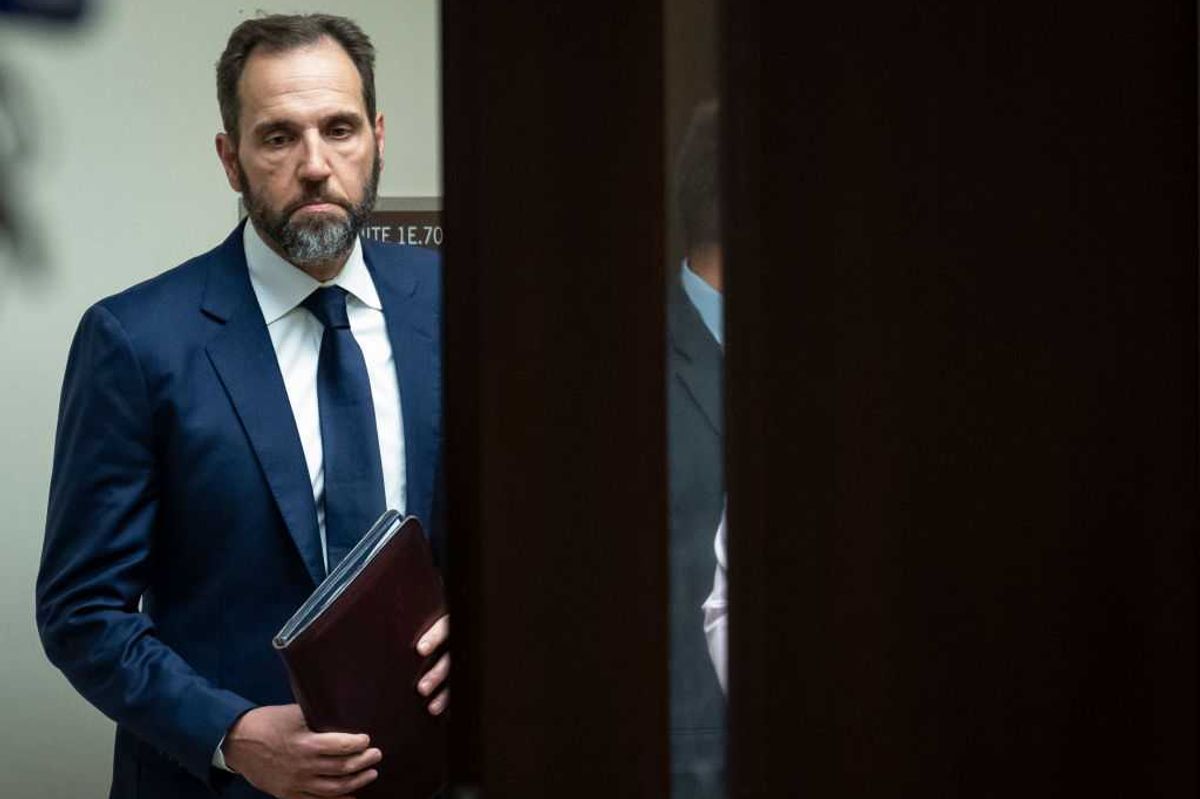
The FBI’s Arctic Frost investigation is confirmation that the left sees conservatives as enemies of the state and is fully intent on treating them as such.
Arctic Frost began in April 2022, with the approval of Joe Biden’s attorney general, Merrick Garland, along with Deputy Attorney General Lisa Monaco and FBI Director Christopher Wray. In November 2022, newly appointed special counsel Jack Smith took over the probe. Smith declared he was focused on the allegations of mishandling classified documents, but Arctic Frost shows he was much more ambitious. He helped turn the investigation into an effort to convict Donald Trump and cripple the Republican Party.
The report indicts Smith for failing at lawfare, not for the lawfare itself.
It was revealed last month that by mid-2023, the FBI had tracked the phone calls of at least a dozen Republican senators. Worse still, with the imprimatur of Justices Beryl Howell and James Boasberg of the U.S. District Court for the District of Columbia, Smith issued 197 subpoenas targeting the communications and financial records of nine members of Congress and at least 430 Republican entities and individuals.
The organizations targeted were a “Who’s Who” of the American right, including Turning Point USA, the Republican Attorneys General Association, the Conservative Partnership Institute, and the Center for Renewing America.
Not content with active politicians, these subpoenas also went after advisers, consulting firms, and nonprofits. One subpoena targeted communications with media companies, including CBS, Fox News, and Newsmax. Normally, a telecommunications company should inform its clients and customers about subpoenas. But Howell and Boasberg also ordered nondisclosure orders on the dubious grounds that standard transparency might result in “the destruction of or tampering of evidence” — as if a U.S. senator could wipe his phone records or a 501(c)(3) could erase evidence of its bank accounts.
The scale and secrecy of Arctic Frost are staggering. It was a massive fishing expedition, hunting for any evidence of impropriety from surveilled conservatives that might be grounds for criminal charges. One can see the strategy, typical among zealous prosecutors: the threat of criminal charges might compel a lower- or mid-level figure to turn government witness rather than resist.
But Smith had an even grander plan. By collecting financial records, he was trying to establish financial ties between those subpoenaed and Trump. Had Smith secured a conviction against Trump, he could then have pivoted to prosecuting hundreds of individuals and entities under the Racketeer Influenced and Corrupt Organizations Act. This would have led to asset freezes, seizures, and further investigations.
Smith laid out a road map for crushing conservative organizations that was supposed to be implemented throughout a prospective Biden second term or a Harris presidency.
Fortunately, voters foiled Smith’s efforts.
A false equivalence
The meager coverage of Arctic Frost thus far has compared the scandal to the revelations of Watergate. But the comparison doesn’t hold. Arctic Frost involved significantly more surveillance and more direct targeting of political enemies than the Senate Watergate hearings of 1973 and 1974 managed to expose.
Setting aside campaign finance matters and political pranks, the most serious crimes the hearings exposed pertained to the Nixon administration’s involvement with break-ins and domestic wiretapping.
In the summer of 1971, the White House formed a unit to investigate leaks. Called the “Plumbers,” this unit broke into the offices of Dr. Lewis Fielding, who was the psychiatrist of Daniel Ellsberg, the man who leaked the Pentagon Papers. Transferred over to the Committee to Re-elect the President at the end of the year, the unit then broke into the Democratic National Committee’s offices in the Watergate complex. The hearings exposed the burglars’ connection to CRP — and to the White House.
RELATED: Trump’s pardons expose the left’s vast lawfare machine
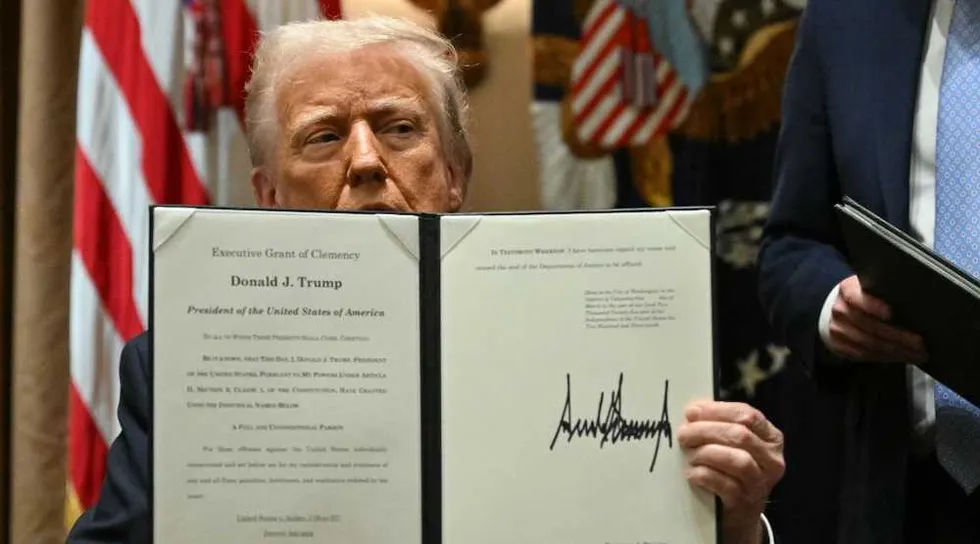 Photo by MANDEL NGAN/AFP via Getty Images
The administration also authorized warrantless wiretaps. From May 1969 until February 1971, in response to the disclosures of the secret bombing of Cambodia, the FBI ran a 21-month wiretap program to catch the leakers. This investigation eventually covered 13 government officials and four journalists. FBI Director J. Edgar Hoover submitted the wiretapping authorizations, and Attorney General John Mitchell signed them.
As a matter of optics, it was the surveillance of the members of the media that provoked the scandal. Since they were critical of the Nixon administration, it looked like the administration was targeting its political enemies. As a criminal matter, the issues were less about the actions themselves, as it was at least arguable that they were legal on national security grounds. Instead, it was more about the cover-up. When these wiretaps came up in the hearings, Mitchell and others deceived investigators, opening themselves up to charges of obstruction of justice.
A troubling parallel
One aspect revealed during the Watergate hearings could be compared to Arctic Frost. The hearings exposed extensive domestic spying that preceded the Nixon administration. The tip of the iceberg was the proposed Huston Plan of June 1970, which became one of the most sensational pieces of evidence against the Nixon administration. Named for the White House assistant who drafted it, the Huston Plan proposed formalizing intelligence coordination and authorizing warrantless surveillance and break-ins.
Nixon implemented the plan but rescinded it only five days later on the advice of Hoover and Mitchell.
Who were those Americans who might have had their civil liberties affected? It was the radical left, then in the process of stoking urban riots, inciting violence, and blowing up government buildings. The plan was an attempt to formalize ongoing practices; it was not a novel proposal. After Nixon resigned, the Senate concluded in 1976 that “the Huston plan, as we now know, must be viewed as but one episode in a continuous effort by the intelligence agencies to secure the sanction of higher authority for expanded surveillance at home and abroad.”
For years, ignoring the statutes that prohibited domestic spying, the CIA surveilled over three dozen radicals. The military and the Secret Service kept dossiers on many more. The FBI operated COINTELPRO, its surveillance of and plan to infiltrate the radical left, without Mitchell’s knowledge. And as the Senate discovered, “even though the President revoked his approval of the Huston plan, the intelligence agencies paid no heed to the revocation.” This was all excessive, to say the least.
RELATED: Damning new docs reveal who’s on Biden admin’s ‘enemies list,’ expose extent of FBI’s Arctic Frost
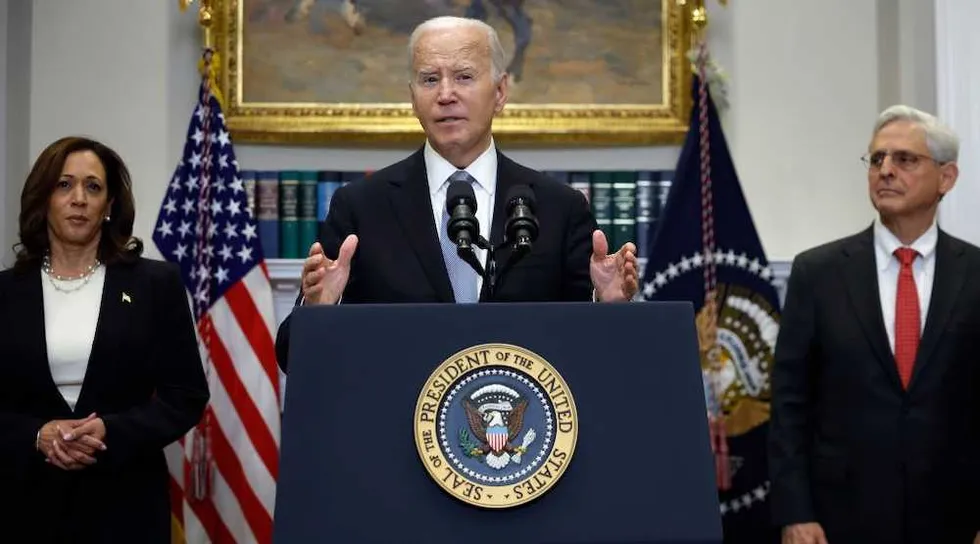 Photo by Kevin Dietsch/Getty Images
Watergate helped expose a far larger and longer surveillance operation against left-wing domestic terrorists. Comparing this to Arctic Frost suggests that the shoe is now on the other foot: the state regards right-wing groups as equivalent to domestic terrorists. Once, the national security state was abused to attack the left. Now, it’s abused to attack the right. This is hardly an encouraging comparison.
Lawfare for thee, not for me
There’s a third reason that the comparison to Watergate doesn’t hold. In the 1970s, abuses generated a reaction. The Huston Plan, for instance, was squashed by the head of the Department of Justice. Controversial surveillance plans wound down eventually. Wrongdoing was exposed, and the public was horrified, worsening the people’s growing mistrust of government. Lawmakers passed serious reforms to rein in intelligence agencies and defend Americans’ civil liberties.
Survey today’s landscape, and it doesn’t look like there will be any similar reaction. If you’re a conservative staffer, activist, contract worker, affiliate, donor, politician, or lawmaker, you’ve learned about the unabashed weaponization of the federal justice system against you without the presence of any crime. What’s even more disturbing is that this investigation went on for 32 months, longer than Mitchell’s wiretaps.
During that time, no senior official squashed the investigation, and no whistleblowers leapt to defend conservatives. There wasn’t a “Deep Throat” leaking wrongdoing, as there once was in Deputy Director of the FBI Mark Felt. There weren’t any scrupulous career bureaucrats or political appointees in the Justice Department or elsewhere ready to threaten mass resignations over a legally spurious program, as happened to George W. Bush in the spring of 2004.
No telecommunication company contested the subpoenas, as happened in early 2016 when Apple disputed that it had to help the government unlock the iPhone of one of the terrorists involved in the December 2015 San Bernardino shootings. Neither bureaucrats nor corporations are coming to the rescue of the civil liberties of conservatives.
Public opinion won’t help, either. Senator Eric Schmitt (R-Mo.) has called for “Watergate-style hearings.” But they wouldn’t work. Watergate was a public-relations disaster for the presidency because it spoke to an American public that held its government to a moral standard of impartial activity. Television unified this audience while also stoking righteous fury over the government’s failure to meet that standard.
 Photo by Win McNamee/Getty Images
The hearings were effective only because they reached a public sensitive to infringements of civil liberties and hostile to the weaponization of the state against domestic targets. But 2025 is not 1975. Even if one could unite the American public to watch the same media event, televised hearings on Arctic Frost wouldn’t bring about a major shift in public opinion. In fact, many voters would likely approve of Arctic Frost’s operations.
For one part of the country, lawfare happens and it’s a good thing. Jack Smith’s lawfare does not embarrass or shame the left. If anything, he is criticized for insufficiently weaponizing the law.
To date, the largest exposé of his methods to reach the legacy media, published in the Washington Post, criticizes Smith for prosecuting Trump’s alleged mishandling of classified documents in Florida (where the alleged crime occurred) rather than in the District of Columbia. It’s an impressive investigative report, assembling aides and experts to showcase Smith’s mistake. Left unstated is the answer to the naïve question: If the offense was committed in Florida, why was it a mistake not to pursue the case in D.C.? Because that was the only district where Smith could guarantee a favorable judge and jury.
To the conservative mind, most Americans still believe that protecting civil liberties matters more than attacking one’s enemies.
The report indicts Smith for failing at lawfare, not for the lawfare itself. In this environment, where lawfare is already taken for granted as the optimal strategy to defeat the enemy, exposing the details of Arctic Frost is like publicizing the Schlieffen Plan’s failure in 1915 and expecting the Germans to be ashamed enough to withdraw. They already know it didn’t work.
Exposing the plan won’t change anything. The election of Jay “Two Bullets” Jones as Virginia’s attorney general is an indication not only of the presence of a fanatic at the head of Virginia’s law enforcement but also of what a good proportion of the Democratic electorate expects from the state’s most vital prosecutor. His task is to bring pain to his enemies.
The 1970s saw the abuses of the national security state generate a forceful public reaction. That turned out to be a rare moment. Instead of a pendulum swing, we have seen a ratchet effect. The national security state has acquired more weapons over the intervening decades, and the resistance to it has grown weaker. This has hit conservatives hardest, because many still imagine that our constitutional culture remains largely intact.
To the conservative mind, most Americans still believe that protecting civil liberties matters more than attacking one’s enemies. From that point of view, American politicians operate under electoral and self-imposed restraints that will impel them to take their opponents’ due process rights seriously or risk being shamed and losing elections. But these restraints are now ineffectual and hardly worth mentioning.
Unlike in the 1970s, there will be no cultural resolution to the problem of lawfare. The problem will only be solved by political means: using power to punish wrongdoers, deter future abuses, and deconstruct the weaponized national security state.
When you’re presumed to be an enemy of the state, the only important question is who will fight back on your behalf.
Editor’s note: A version of this article appeared originally at The American Mind.
Mao tried this first — New Yorkers will not like the ending
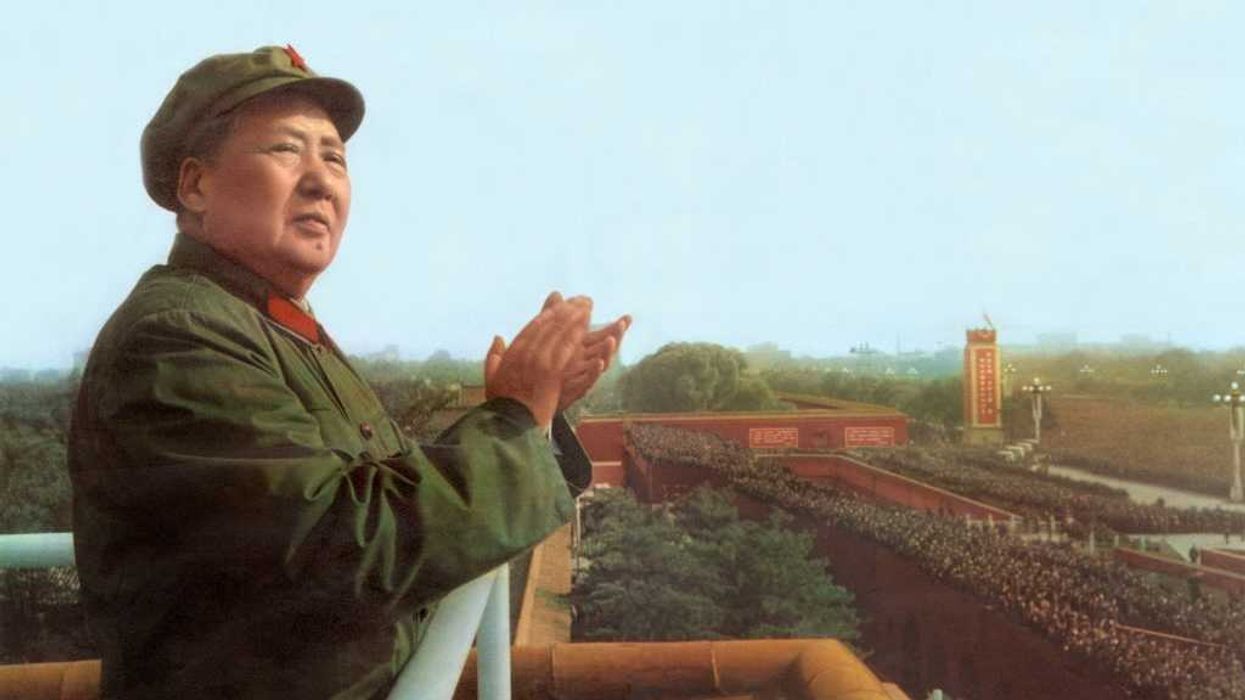
More than 50 years ago, I witnessed firsthand how Mao Zedong’s socialist experiment dismantled market competition, suppressed innovation, and plunged China into economic ruin. As a survivor of that experiment, I watched in horror last week as Zohran Mamdani won over 50% of the vote in New York City, promising a socialist illusion of city-owned grocery stores, free public transit, universal rent control, and a defunded police department.
Such proposals might sound compassionate, but they threaten to repeat the class warfare and state control that devastated China from the 1950s to the late 1970s, only this time they are taking place in the financial capital of the world.
The unpleasant truth is that America may have won the Cold War, but we are losing the ideological war at home.
Consider Mamdani’s push for “good cause eviction” laws and expanded rent control. He claims these measures protect tenants from exploitation, but they discourage property ownership and investment — just as Mao’s housing policies did.
In communist China, the state assigned apartments to urban families, but most people lived in poverty. My family of five was crammed into a 200-square-foot unit with no running water or a toilet. Today, rent control has already reduced housing supply by 20% in parts of New York City, driving up costs for everyone else. What Mamdani offers isn’t progress — it’s stagnation disguised as equity.
Mamdani’s support for “Medicare for All” and fare-free buses also ignores fiscal realities. Mao’s “barefoot doctors” promised class equity but delivered substandard care, contributing to millions of preventable deaths. America’s health care system leads the world in breakthroughs because of merit-driven research and competition, not government mandates. Meanwhile, New York City’s transit authority estimates free transit would cost taxpayers $1 billion annually without improving service. When socialism promises “free” services, it often delivers shortages, rationing, and inefficiency.
The proposal for city-owned grocery stores is another red flag. Under Mao, government-run stores led to chronic food shortages. Rice, cooking oil, and meat were rationed. Each urban citizen received only two pounds of meat per month. Even with ration coupons, I had to wake at 3 or 4 a.m. and wait in line for hours to buy a few ounces. Mamdani’s plan threatening private grocery competition risks repeating this nightmare.
Then there’s his support for defunding the police and replacing them with vague “community safety” alternatives. In 2020, he co-sponsored bills to slash NYPD funding by $1 billion, claiming it would combat systemic racism. This mirrors Mao’s Red Guards, who dismantled law enforcement and replaced it with ideological enforcers — leading to chaos, violence, and mass suffering.
Since 2020, crime in New York has risen by 15%, according to NYPD data. Weakening law enforcement doesn’t protect vulnerable communities — it leaves them exposed. As a father of a New Yorker, Mamdani’s reckless approach to policing is not just a political concern; it’s a personal one.
Mamdani also seeks to eliminate gifted and talented programs in public schools, calling them “inequitable.” But these programs offer high-achieving students — often from diverse backgrounds — a path to excellence.
RELATED: The right needs bigger ideas than tax cuts
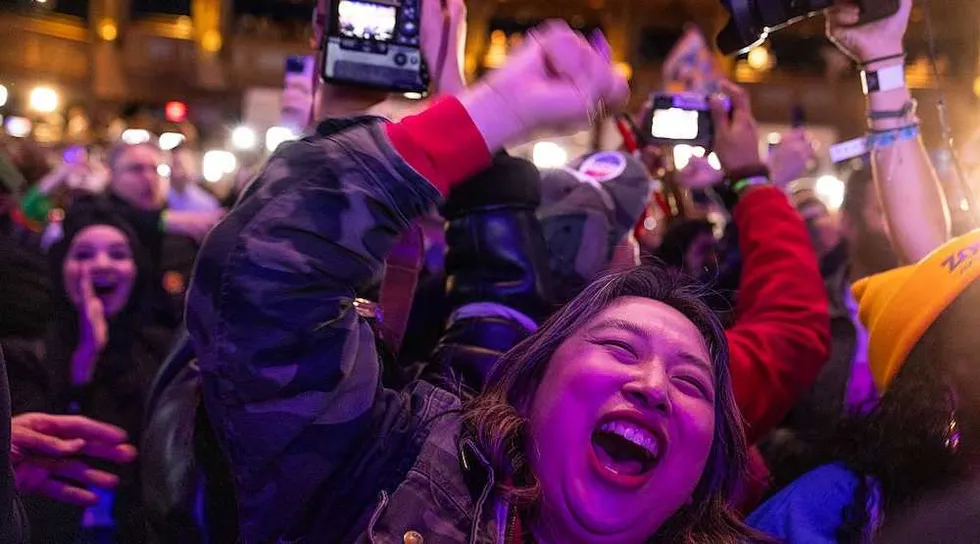 Photo by Andrew Lichtenstein/Corbis via Getty Images
During the Cultural Revolution, China crushed its intellectual class and smothered innovation. New York is making a similar mistake. Gifted programs lifted math proficiency by 25%, according to a 2022 Department of Education report, yet Mamdani wants them eliminated in the name of “equity.” As an Asian-American parent who raised a child in STEM, I’ve seen how excellence takes root: You cultivate talent; you don’t level it.
Mamdani’s agenda mirrors the same destructive ideology I fled from. Socialism thrives on utopian promises pitched to voters who have never lived through the consequences. I have. And I recognize the warning signs.
Yet according to CNN exit polls, 70% of voters ages 18-44 supported Mamdani, compared to just 40% of older voters. Even more alarming: 57% of New Yorkers with college degrees voted for him, versus only 42% without. This reflects the growing influence of pro-socialist indoctrination in American universities.
The unpleasant truth is that America may have won the Cold War, but we are losing the ideological war at home. To prevent a socialist takeover, we must fight back by reforming higher education and teaching our children the truth about socialism in K-12 classrooms.
Free markets don’t need federal babysitters
At a recent competition law symposium in Washington, the Trump administration’s antitrust chief, Gail Slater, made a welcome promise to keep markets open to new competitors and innovation.
That pledge comes at a critical moment. Too many politicians in both parties still believe government’s job is to engineer economic outcomes rather than let consumers decide. That mindset misunderstands what makes markets dynamic — and often locks in the very problems regulators claim they want to fix.
Republicans and Democrats alike have embraced ‘industrial policy’ when it serves their political interests. They call it leadership, but it’s just another form of central planning.
Cronyism takes many forms: subsidies for favored industries, tax breaks for politically connected firms, or lawsuits targeting companies for being too successful.
Take the Biden Department of Justice’s lawsuit against Visa. The administration said it “feared” Visa’s market share, even though the payments space is crowded with competitors — Mastercard, PayPal, Square, Apple Pay, and a swarm of fintech startups. Instead of protecting consumers, the Justice Department tried to punish one company for competing well and dictate the terms of an already vibrant market.
That’s not protecting competition — it’s manipulating it. When government intervenes this way, it distorts incentives, weakens confidence, and replaces consumer choice with bureaucratic preference.
Consumers always lose
When regulators overreach, consumers pay the price. Every dollar a company spends fending off groundless lawsuits is a dollar not spent on innovation. Every subsidy handed to a politically favored firm skews the playing field against smaller rivals. And every new dictate slows the experimentation that keeps markets alive.
Officials who justify these intrusions claim they’re “protecting competition.” But true competition doesn’t need Washington’s help. It needs Washington to step aside. Entrepreneurs, not regulators, create rivals. Consumers, not bureaucrats, decide who wins. The invisible hand disciplines firms far more effectively than any government lawyer.
Free markets need fewer meddlers
Government’s legitimate role is narrow: preventing fraud, enforcing contracts, and protecting property. That’s a far cry from deciding which companies are “too profitable,” which mergers are “too large,” or which industries deserve “strategic” subsidies. When officials cross that line, they stop refereeing and start playing the game themselves — badly.
This temptation spans parties. Republicans and Democrats alike have embraced “industrial policy” when it serves their political interests. They call it leadership, but it’s just another form of central planning that shackles consumers and businesses alike.
RELATED: Smash the health care cartel, free the market
 File photo/Miami Herald/Tribune News Service via Getty Images
The cure is restraint
The best way forward is simple. Washington should stop punishing success and stop handing out favors to friends. It should let consumers and entrepreneurs, not bureaucrats and lobbyists, determine winners and losers.
America’s prosperity was built on open competition and voluntary exchange — not government micromanagement. Crony capitalism is just socialism by another name, and it breeds the same stagnation and corruption.
President Trump’s team understands that prosperity comes from freedom, not favoritism. If policymakers truly care about fairness, they should start by doing the hardest thing in politics: stepping aside.
The railroad that could unite — and revive — America

When America completed its first nationwide railway in 1869, it did more than link two coasts. It united a nation. Railroads carried goods, materials, and people across vast distances at unprecedented speed, sparking an economic boom that forged a stronger, more unified country.
A century and a half later, the United States faces a new test. Globalization, supply-chain fragility, and inflation have exposed how dependent America has become on foreign systems and vulnerable networks. To meet these challenges, the nation must again invest in its own strength — beginning with its railroads.
Trucking currently dominates US freight, providing flexibility but at a steep cost in lives and highway damage. Railroads, by contrast, build and maintain their own infrastructure.
The proposed merger of Union Pacific and Norfolk Southern, announced in July, offers that opportunity. The combined company would create America’s first coast-to-coast rail network under a single U.S. carrier, spanning more than 50,000 route miles and linking 100 ports across 43 states.
A direct line to lower costs
A unified system means fewer handoffs between fragmented regional networks, faster delivery, and lower costs. Streamlined routes would eliminate the bureaucratic friction that slows commerce and adds uncertainty to shipping. For farmers, manufacturers, and consumers, that translates into stronger supply chains, lower prices, and renewed confidence in the American economy.
Trucking currently dominates U.S. freight, providing flexibility but at a steep cost. Federal data show that heavy trucks were involved in more than 150,000 crashes and 4,500 deaths in 2024. A single tractor-trailer inflicts the same highway damage as 9,600 cars — a massive public expense that taxpayers absorb.
Railroads, by contrast, build and maintain their own infrastructure. They reinvest billions each year without federal subsidies, move more goods with less fuel, and emit fewer pollutants. When uninterrupted by carrier transfers, rail shipping can be up to 60% more cost-efficient per ton than trucking.
A transcontinental system would amplify those advantages. Freight could move directly from origin to destination without costly delays. Lower transportation costs in agriculture, manufacturing, housing, and retail would ripple through the economy, easing inflation and boosting competitiveness for U.S. producers.
Strengthening American industry
The merger also complements the Trump administration’s effort to reshore manufacturing and rebuild domestic supply chains. With access to 100 ports and 10 international interchanges, a unified Union Pacific system would give U.S. manufacturers cheaper, more reliable routes for sourcing materials and delivering finished goods.
Expanded rail operations would also protect and grow good-paying union jobs in an industry that has powered America’s growth for more than a century. These are stable careers with benefits — the kind of work that anchors communities and sustains middle-class families.
Critics of rail mergers often warn of reduced competition or service quality. Those concerns deserve review. But in this case, the overlap between Union Pacific and Norfolk Southern is minimal. Rather than suppressing competition, the merger would strengthen it by enabling U.S. carriers to compete more effectively against trucking, air freight, and Canadian railroads — which have enjoyed uninterrupted transcontinental systems for decades.
RELATED: Trucks destroy roads, but railroads — yes, rail! — can save taxpayers billions
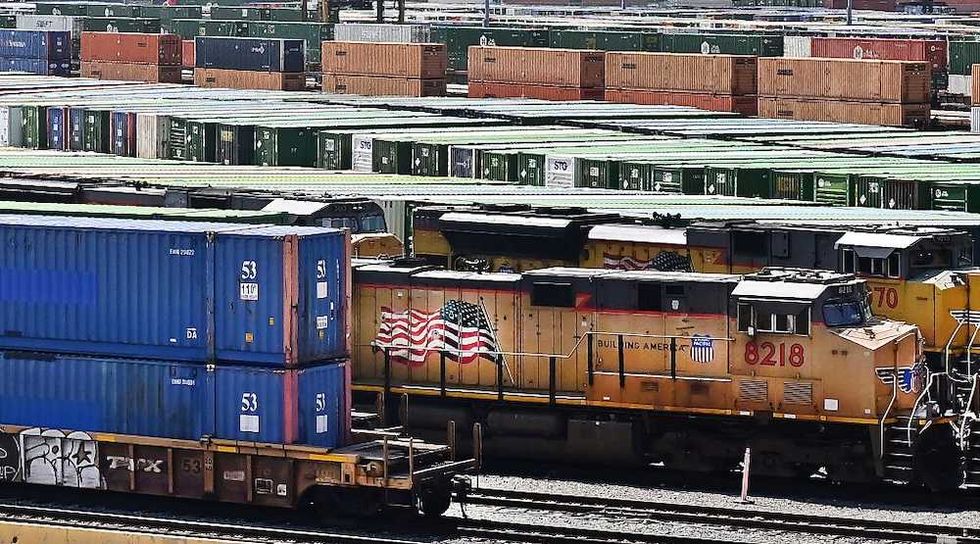 Photo by FREDERIC J. BROWN/AFP via Getty Images
A historic chance to unite the nation again
When the first cross-country railroad opened in 1869, it helped knit together a divided nation, fueled commerce, and launched America into the industrial age. The proposed Union Pacific-Norfolk Southern merger represents a similar moment of promise.
By creating the first true coast-to-coast rail network in U.S. history, this partnership could help reshore manufacturing, fortify supply chains, and make American transportation safer and more efficient.
Rebuilding American prosperity begins with reconnecting America itself. The next great chapter of that story could once again be written on steel rails.
Trump’s pardons expose the left’s vast lawfare machine
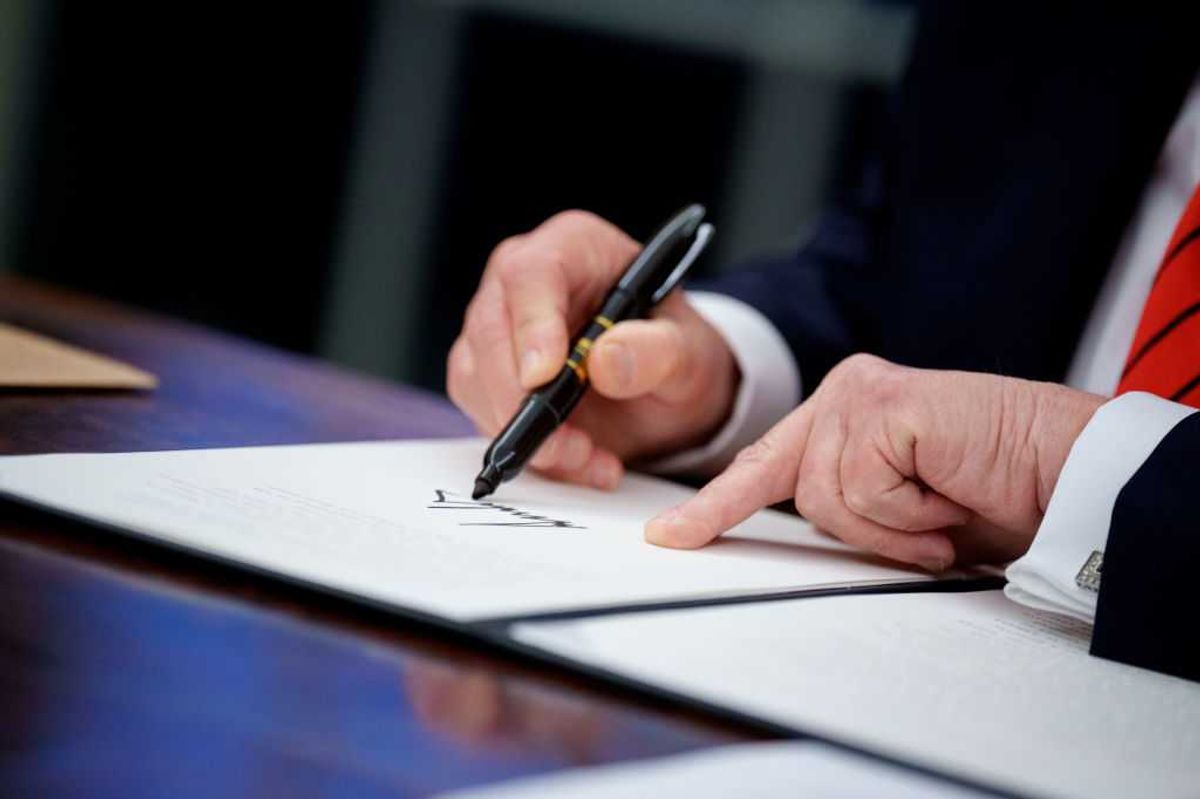
On Sunday night, the Oversight Project announced the culmination of a long effort: President Trump’s pardons for the so-called “alternate electors” and their affiliates who faced state-level prosecution for their role in the 2020 election.
Credit belongs to President Trump and Pardon Attorney Ed Martin for seeing this process through — and for having the political will and moral memory to leave no MAGA supporter behind. These pardons are the result of over a year of focused work by the Oversight Project. And because the corporate left-wing media has predictably denounced them for their politics, prudence, and legal effect, it’s worth explaining the pardons’ justification and impact.
Participation in a constitutional process is not a crime. Operation Arctic Frost and its imitators will not define the future of American justice. These pardons will.
First, terminology matters. “Contingent electors” is the correct phrase. “Alternate electors” or “fake electors” are loaded terms invented by the press to imply criminality.
In reality, these electors prepared slates to be submitted to Congress while investigations and legal challenges into the 2020 presidential election were still pending. Their purpose was simple: to preserve flexibility should fraud or irregularities be confirmed.
The 2020 election was unlike any in modern history. Under the pretext of COVID-19, officials across multiple states expanded mail-in voting without the safeguards required by law. Signature verification, chain-of-custody rules, and registration requirements were ignored. Courts refused to hear evidence, dismissing cases on procedural grounds rather than the merits.
And somehow, we were told that the vice president and Congress — bodies that have historically played a role in adjudicating electoral disputes — no longer had any role to play. As a result, President Biden’s victory will forever carry an asterisk in the history books.
Debunking modern myths
The notion that elections can only be challenged in court is a modern myth. Since the founding, Congress has played a central role in resolving disputed elections, as have state legislatures empowered to ensure the integrity of their own processes — including, when necessary, selecting electors directly.
The list of precedents is long.
- In 1797, John Adams, as president of the Senate, allowed time for objections to Vermont’s votes.
- In 1801, Thomas Jefferson counted Georgia’s contested votes — for himself.
- In 1857, a snowstorm kept Wisconsin’s electors from voting, but their ballots were counted anyway.
- In 1876, during the Hayes-Tilden standoff, Congress created a commission to adjudicate dueling slates from four states.
- In 1961, Hawaii submitted a contingent slate while its results were still being certified.
- In 2005, both chambers of Congress debated and ultimately rejected objections to Ohio’s votes.
- And as recently as 2017, multiple House members objected to electors from several states, though they lacked Senate co-sponsors.
This long record makes clear that the use of contingent electors is not criminal — it is, in fact, perfectly constitutional.
From constitutional to criminal
So why are good-faith contingent electors from 2020 now facing state prosecutions and financial ruin? The answer is weaponization.
During the Biden years, the federal government, blue-state prosecutors, and activist networks have coordinated to transform lawful political activity into criminal conduct. The same machinery that pursued President Trump through endless investigations was turned on ordinary citizens whose only “crime” was preserving constitutional options.
Operation Arctic Frost — the campaign of “map, harass, and isolate” tactics aimed at Trump allies — illustrates this perfectly. It was designed to intimidate lawyers, donors, and officials who supported Trump’s legal challenges, freezing them out of professional and financial life. The contingent electors were swept up in that same apparatus: coordinated prosecutions, media smears, and punitive lawfare intended to silence dissent.
RELATED: Biden FBI’s Arctic Frost surveillance of lawmakers could cost the government
 Photo by SAUL LOEB/AFP via Getty Images
From Fani Willis’ politically motivated prosecutions in Georgia to Michigan Secretary of State Jocelyn Benson’s efforts to organize partisan coalitions against perceived “threats,” the coordination has been unmistakable. Government, activist, and media arms all moved together with one goal: to erase the America First movement and criminalize its constitutional exercise of power.
That is the true definition of weaponization — using the law to destroy political opposition.
The legal case for Trump’s pardons
Critics claim the president cannot pardon state-level offenses. But that view collapses under constitutional scrutiny. States cannot prosecute conduct that falls under federal authority once it has been pardoned.
The selection of electors is a hybrid function — both state and federal — but the contingent electors acted in service of a federal purpose: the certification of the presidency. By issuing these pardons, the federal government has declared that these individuals acted lawfully, in good faith, and consistent with historic precedent.
If the federal government deems their actions lawful, how can states claim they committed crimes? That’s a question any fair court — or any fair jury — should be able to answer easily.
If these pardons are treated honestly, the state cases will collapse. More important, this should reassure every American committed to election integrity that defending the Constitution will never again be treated as a criminal act.
RELATED: The bureaucracy strikes back — and we’re striking harder
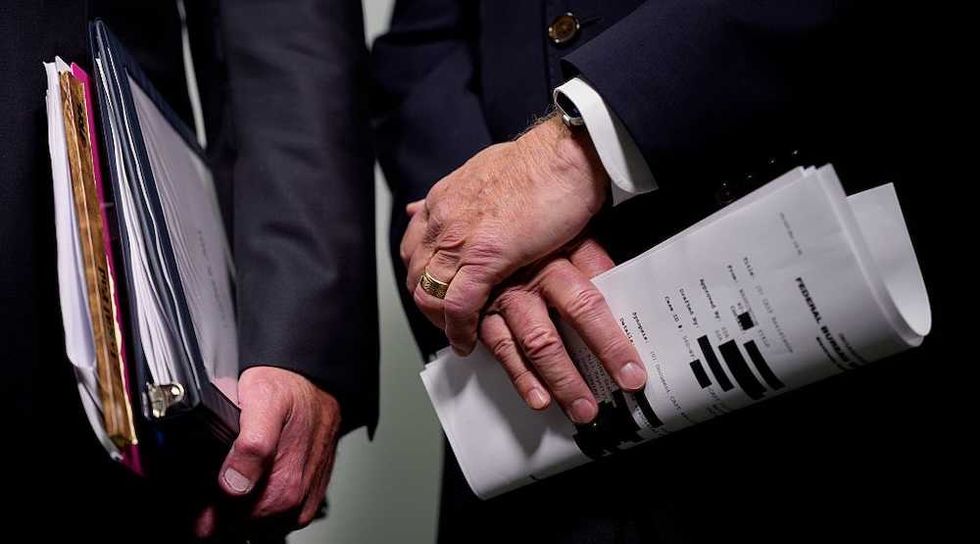 Photo by Andrew Harnik/Getty Images
Now what?
The toll on those targeted has been immense. Many have endured years of legal harassment, public vilification, and financial ruin simply for acting according to their constitutional duty.
The Oversight Project is exploring every possible avenue to secure restitution for those harmed — whether through private support, legislative action, or further executive remedies. These pardons mark the first step in correcting the record and restoring faith in the justice system.
They are not merely acts of mercy; they are acts of correction. They affirm that Americans who act to preserve election integrity, often at great personal cost, were right to do so.
The message is clear: Participation in a constitutional process is not a crime. Operation Arctic Frost and its imitators will not define the future of American justice. These pardons will.
Antifa burns, the media spin, and truth takes the hits
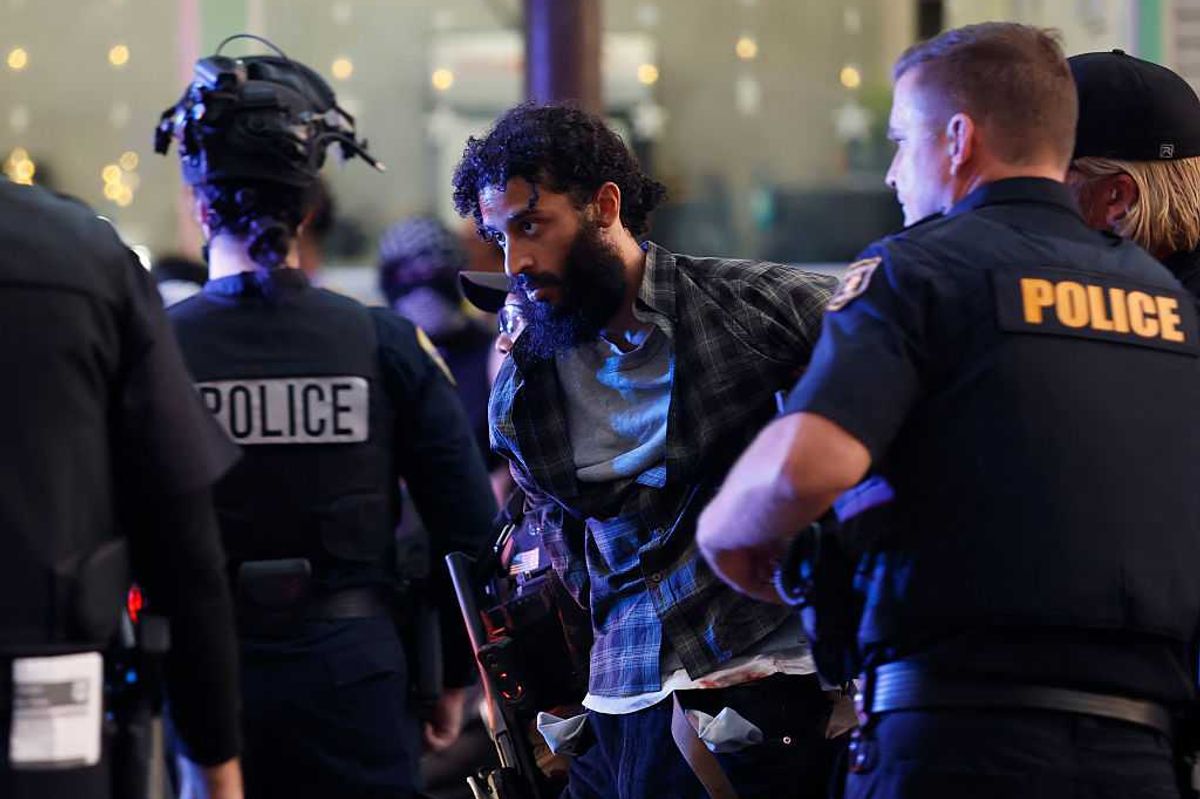
On Monday night, violence erupted at UC Berkeley. Again.
That sentence alone might not shock anyone. Berkeley and riots go together like gender studies and Marxist slogans — a tradition older than most of its students. But this time, the target was different.
Christians and conservatives should keep showing up. Every TPUSA Faith event, every lecture, every debate — attend them. The more witnesses, the less room for lies.
The mob didn’t come for a politician or a protest. It came for families.
The crowd surrounded a Turning Point USA Faith event hosted by an officially recognized student club, featuring Christian apologist Frank Turek and atheist Peter Boghossian, along with comedian Rob Schneider and British commentator and satirist Andrew Doyle. In one evening, TPUSA offered more intellectual diversity than the entire Berkeley humanities department has managed all year.
The riot that proved the stereotype
Picture families walking into a campus hall to hear a Christian and an atheist debate civilly. Now picture an angry crowd blocking the doors, throwing bottles, lighting fires, and chanting, “Punch a fascist in the face!”
Their only problem: No fascists were present. Unless, of course, you classify Turek, Boghossian, and a few Christian undergrads as Mussolini’s heirs. But that’s Berkeley logic — where “diversity” means everyone thinks the same and disagreement is treated like violence.
The radical left has no greater enemies than Christianity and free speech. Combine the two, and leftists melt down faster than a Berkeley sophomore trying to define the word “woman.”
How did we get here?
Berkeley has been the stage for riots since the 1960s. If campus unrest were Broadway, Berkeley would be “The Phantom of the Opera” — always running, always loud, always masked. But tradition doesn’t excuse terror.
The deeper problem is the culture feeding it. In today’s universities, students are marinated in ideology, not inquiry. The humanities have traded Socrates for slogans and replaced debate with denunciation.
This worldview breeds fragility and fanaticism: emotional dependence on outrage, intellectual intolerance, and the conviction that disagreement equals danger. It’s no wonder students’ activism now mimics the very authoritarianism they claim to resist.
Antifa’s unofficial motto might as well be: “Accuse your opponents of what you plan to do.”
The media’s complicity
Right on cue, the Guardian rushed to describe the riot as “mostly peaceful.” That phrase should be Berkeley’s new marketing slogan: Mostly Peaceful Since 1964.
The truth is simpler. The TPUSA attendees were peaceful. The rioters were not. They screamed in people’s faces, hurled debris, blocked exits, and called it “defending democracy.” Apparently, democracy now means assaulting Christians.
The radical playbook
If you want to decode the left’s method, just reverse the leftists’ accusations. They say, “Don’t demonize others,” while labeling everyone to the right of Lenin a fascist. They say, “All voices deserve to be heard,” while drowning opponents in primal screams.
They say, “Fight oppression,” while physically intimidating families trying to attend a faith event.
At Arizona State University, a colleague of mine once wrote, “I’m all for free speech — but not for bigots,” to justify banning Charlie Kirk from campus. Translation: I love freedom — as long as no one I dislike exercises it.
This is the moral logic of the modern left: Disagreement equals harm, and harm justifies censorship — or violence.
The ‘radical’ minority that isn’t
We keep calling these leftists radicals, but that implies rarity. Surveys say otherwise. The ideological monoculture dominates academia. The “moderate left” isn’t moderating anything; it’s supplying the radicals with silence, funding, and applause.
The tenured class that claims to value “diversity of thought” has created an institution where dissenters are treated like heretics.
RELATED: The Antifa mob at Berkeley showed us what evil looks like
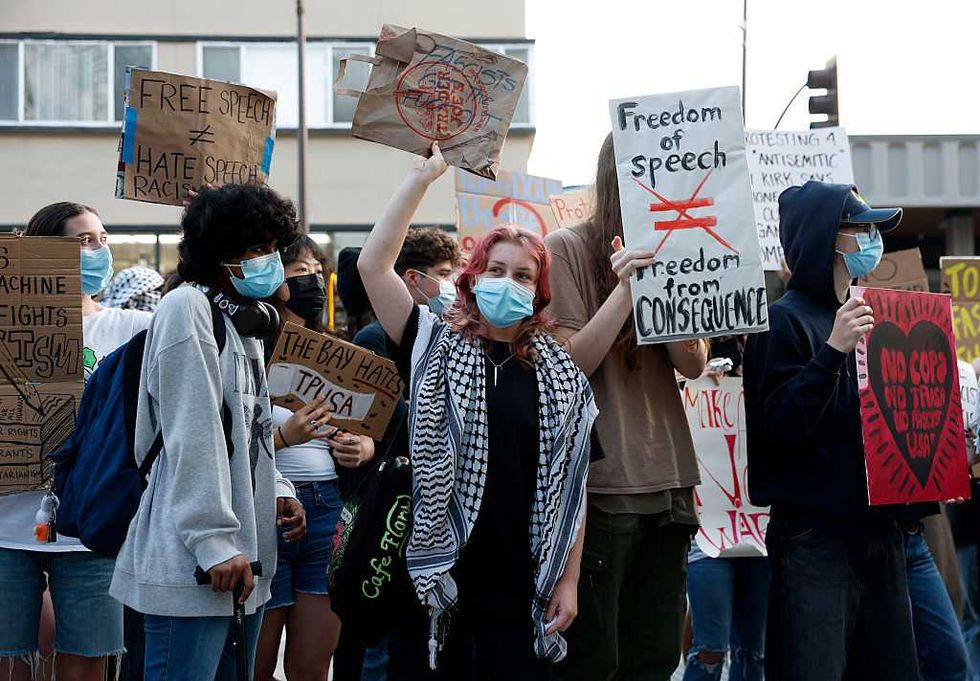 Justin Sullivan/Getty Images
What must be done
First, Christians and conservatives should keep showing up. Every TPUSA Faith event, every lecture, every debate — attend them. The more witnesses, the less room for lies.
Second, tell your state legislators you don’t want tax dollars funding violent intolerance disguised as higher learning.
Third, warn every parent and student what really happens on college campuses. Prepare your kids to challenge the ideological orthodoxy behind DEI, critical theory, and the alphabet soup of new moral dogmas.
Finally, support alternatives. Seek out institutions that teach truth instead of propaganda — and organizations like TPUSA Faith that defend free inquiry.
That’s why I started my Substack: to expose the rot inside American universities before your children discover it the hard way.
The cure for intellectual darkness is light. The cure for ideological riots is courage. And the cure for the Berkeley disease begins with showing up, speaking truth, and refusing to bow.
America’s addiction to Chinese money runs deeper than we care to admit
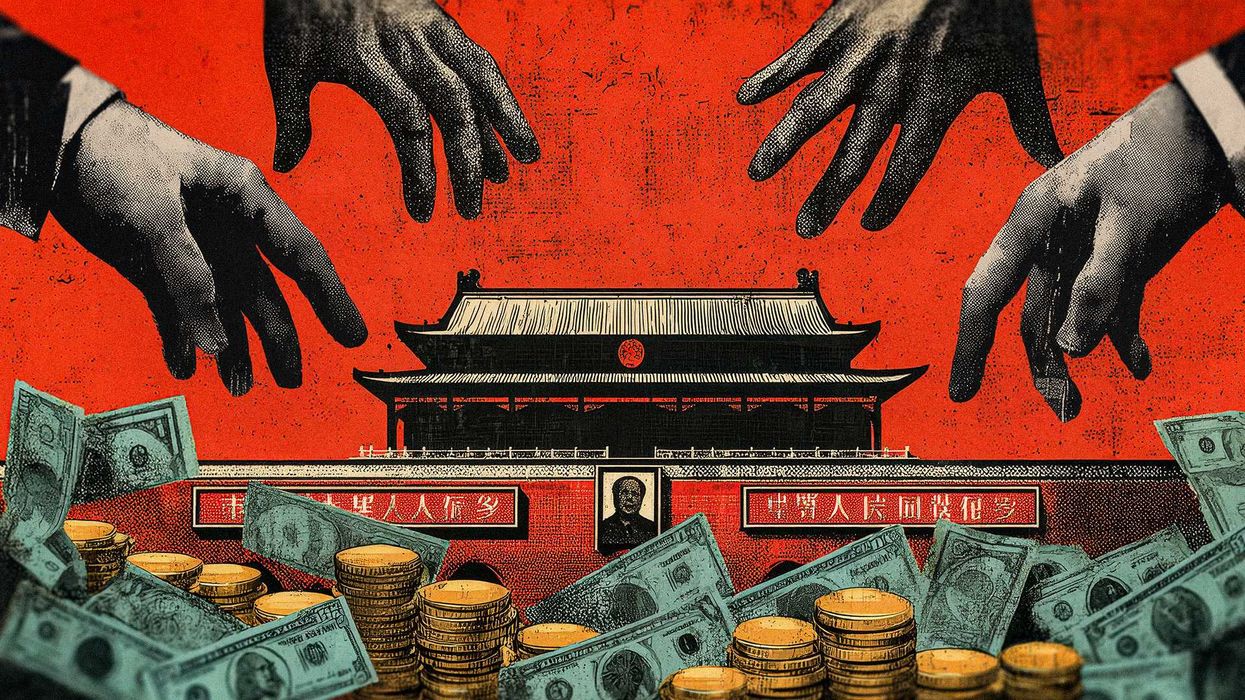
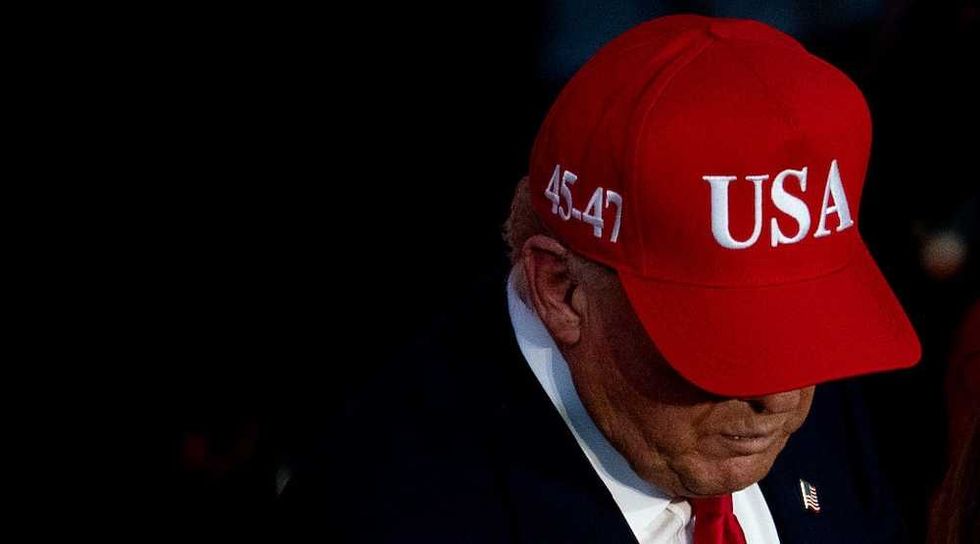
In a recent interview, President Trump defended his earlier claim that bringing 600,000 Chinese college students into the United States would be good for the country. When the interviewer questioned how that aligned with an America First agenda, Trump replied that without those students, “Half the colleges in America would go out of business.”
To most Trump supporters, that sounds like a win-win — fewer foreign students and fewer left-wing universities to subsidize. But Trump seemed to view the issue as a business transaction: Closing locations is bad, losing revenue is bad, and the substance of those “economic units” doesn’t really matter.
Why should we play Russian roulette with our national security to pad universities’ bottom lines?
His comments revealed a deeper confusion about what America First really means.
The China contradiction
America’s relationship with China has long been incoherent. Every Republican politician insists China is our chief geopolitical rival — a totalitarian power bent on unseating the United States as global hegemon. Yet few make any effort to restrict Chinese immigration, investment, or influence. At some point, it becomes difficult to take any of the rhetoric seriously.
The problem is obvious: China has too many people and too much money. The country’s strength lies in what America abandoned: manufacturing. While American corporations chased financial gimmicks and “service economies,” China focused on making tangible goods at scale. That discipline built a vast middle class and positioned Beijing at the center of global production. Now nearly every Western industry — film, retail, education — depends on access to China’s markets.
The result: American institutions bend over backward to please a government they claim to fear. Chinese nationals can buy land, start companies, and enroll by the hundreds of thousands in U.S. universities. It would be funny if it weren’t so corrupt.
The university addiction
Trump knows mass immigration hurts Americans, but he struggles to say no when big money is involved. Foreign students pour billions into universities, and administrators have built their entire business models around them. But counting up dollars isn’t the same as serving the national interest.
Universities are publicly subsidized and supposedly dedicated to educating Americans first and foremost. Instead, they’ve turned into pipelines credentialing foreign elites — and sometimes, spies. Every seat filled by a Chinese student is one less for an American, and every dollar that props up a hostile regime’s protégés deepens our dependence on that regime.
The Department of Justice has charged three Chinese nationals at the University of Michigan for smuggling research materials and stealing technology. Eric Weinstein has even suggested that theoretical physics is being throttled for fear of espionage. Yet the universities — and now, apparently, Trump — seem unfazed.
Why save the enemy’s seminary?
Propping up higher education with Chinese cash isn’t just shortsighted — it’s insane. Colleges and universities have become leftist seminaries, charging astronomical tuition for courses that teach Americans to despise their parents and their nation. They already receive lavish government subsidies and still demand more.
Trump’s claim that “half the colleges” would collapse without Chinese money is dubious, but if it were true, those institutions deserve to fail. Let them. Destroying the patronage networks that produce radical activists was once a Trumpian goal. Reviving them with foreign money would be an act of political masochism. Why should we play Russian roulette with our national security to pad their bottom line?
RELATED: The ‘China class’ sold out America. Now Trump is calling out the sellouts.
 Stefani Reynolds/Bloomberg via Getty Images
The broader threat
Chinese money poisons more than academia. Nationals and shell companies routinely buy American land — including, alarmingly, property near military bases. One recent purchase of an RV park in Missouri by a Chinese couple just happened to place them next to Whiteman Air Force Base, home of the B-2 stealth bomber fleet. Similar shadowy transactions dot the map.
The pandemic exposed the madness of this dependence. The same regime that unleashed a virus on the world also controlled the supply chains for the medicine and protective gear we needed to fight it. Yet America’s political class still refuses to sever the tie. They are too addicted to Chinese money — and too invested in pretending that dependency equals diplomacy.
If the GOP is serious about confronting China, it must start by cutting every cord of reliance. Banning Chinese students from U.S. universities would be a simple, symbolic first step — and it would strike directly at the heart of the progressive academic machine.





