

Category: Opinion & analysis
The right must choose: Fight the real war, or cosplay revolution online

Is principled conservatism dead? And would that even be good?
Robert P. George’s resignation from the board of the Heritage Foundation last week suggests a deeper shift inside the conservative world. George is one of the most respected conservative intellectuals alive — a Princeton professor who built the James Madison Program and shaped a generation of natural-law scholarship. His departure, prompted by how Heritage President Kevin Roberts handled Tucker Carlson’s interview with Nick Fuentes, exposes a widening fracture on the right about what conservatism is and what it should defend.
The first lesson conservatives should recover: Reason and faith are not optional in the public square.
I have watched this tension escalate since what some have called Charlie Kirk’s “martyrdom.” Voices from what garden-variety conservatives call “the far right,” what liberals lump together as “the right,” and what Antifa brands “fascist” are pushing for influence inside the movement. Some insist these agitators are leftist plants sent to fracture the right. Others believe God allows the intentions of every heart to be revealed.
Whatever the explanation, the attacks now directed at George follow a predictable pattern: an “OK, Boomer” dismissal of a man who has spent his life defending the unborn, natural marriage, and the created order.
Full disclosure: When I was a graduate student studying natural law at Arizona State University, George took time to meet with me and guide my work. Later as a tenured professor, I became a fellow in the very program he founded. One of my own undergraduate professors — the great ethicist Jeffrie Murphy — said George’s work compelled him to rethink everything.
So-called far-right critics now claim George will debate and even co-author books with Cornel West, with his ties to Louis Farrakhan, but refuses to work with people “to his right.” The charge — absurd on its face — is that he is some kind of “controlled dissenter,” a token conservative tolerated by the Ivy League so long as he stays within its boundaries. From there, the speculation drifts into unfounded theories about motives and self-preservation.
George does not need me to defend him. His life’s work refutes these claims. He has never backed away from his convictions. He has never trimmed the truth to curry favor with elite institutions. He debates West because he believes reason still matters, because he believes truth can be argued in public, and because he believes even fierce disagreement does not require abandoning basic human dignity. He refuses to compromise an inch while treating his interlocutors as human beings.
That shouldn’t be so difficult to understand.
In fact, that’s the first lesson conservatives should recover: Reason and faith are not optional in the public square. They are the foundation for honest argument, and honest argument is the only way a free people can persuade and be persuaded. If we descend into conspiracy theorizing, rage, or tribal loyalty as our primary modes of engagement, we abandon the very tools that made conservatism coherent.
Here is George’s warning: Don’t become postmodernists. Don’t imitate the left’s racial essentialism or identity politics. Don’t throw out reason because some Enlightenment thinkers misused it. If you want to rethink every narrative you’ve heard, fine — do it with reason, not with the power-dialectic that dominates progressive thought.
But principles alone are not enough. Being principled does not mean being naïve. Conservatives once understood strategy and tactics — long-term goals paired with immediate steps that move us toward them. I believe the United States should acknowledge the kingship of Jesus Christ. Presidents from both parties once referred to America as a Christian nation. If that is true, then we must engage publicly, argue publicly, and fight publicly for that idea of ordered liberty.
That means getting into the trenches. It means refuting Marxism and atheism clearly and without apology. It means being innocent as doves and wise as serpents, fighting to win without surrendering either virtue.
RELATED: Tucker Carlson, Nick Fuentes, and the war for the conservative soul
 Photo by Zach D Roberts/NurPhoto via Getty Images
What we cannot become is principled losers. The enemy welcomes our gentlemanly retreats. The progressive movement wants more than policy wins; it wants to redefine the human person, the family, and the moral order itself. A party that endorses abortion at any point, supports the mutilation of healthy children, and treats scripture as hate speech leaves no moral ambiguity about which side a Christian or natural-law conservative should support.
Read George’s arguments against liberalism. Read his defense of natural law. If you disagree with him, he will debate you — he always has. But you can learn from him that a revival of natural law and natural theology is essential right now. That requires teaching the truths in Romans 1 and learning from Acts how to speak across cultures and ideologies.
We are in a spiritual war. The weapons are spiritual, but the fight is real. The stakes are real. The consequences are real.
It is far better to be fighting through the mud of Mordor than fat, complacent, and conquered in the Shire.
When fathers fall, grace asks more of us

Families gather for all sorts of reasons — Thanksgiving, Christmas, weddings, funerals. And sometimes that’s when the fireworks start. There’s an old joke that any family gathering where the cops aren’t called is a successful one. Beneath the laughter sits a truth most families know. When people with long memories sit at the same table, old hurts rise right alongside the cranberry sauce.
Sin fractured families long before politics did. It divides hearts, poisons conversations, and leaves scars that last for generations. Every family bears some of that damage, and nowhere does the fracture cut deeper than between fathers and children.
Every father fails in some way, and those failures bring deep sadness. Grief isn’t a sin. Derision and resentment are.
A caller once told me about his alcoholic father, who had been abusive for years. The caller was 52, yet when he talked about being around his father, his voice broke. “Every time I’m around him,” he said, “I feel like I’m 9 years old.” The man’s father had fallen and now needed care, but the wounds had not healed. His wife and children were watching, waiting to see what he would do. His father was still drinking, still choosing the same path.
I told him, “You’ve made sure your father has food and care, but you’re not required to be subservient. Your family counts on you. Your father continues to make destructive choices, and you can’t change that. Your family’s well-being cannot come at the expense of his demands. He may not make it — but you have to.”
That conversation stayed with me. It reminded me how hard it is to see a parent’s weakness and not respond in anger or disgust or fear. We want to fix it, mock it, punish it, or walk away. Yet scripture gives us a different picture of what honor can look like when a father’s failings are laid bare.
After the flood, Noah planted a vineyard, drank too much, and passed out naked in his tent. His son Ham saw him exposed and mocked his shame. His brothers, Shem and Japheth, took a blanket, walked backward, and covered him.
It wasn’t easy. I imagine Shem and Japheth groaning at the sight of their father — maybe with tears in their eyes. Some fathers decline; some abandon; but every father fails in some way, and those failures bring deep sadness. Grief isn’t a sin. Derision and resentment are.
What do we do when we see our fathers in their weakness? When bitterness stirs, when old wounds reopen, when the urge to expose feels justified? The man who once loomed large now looks small. He wielded power over a child but appears diminished, not just by age but by the perspective that comes with time. That truth can stir anger or sorrow — or offer release.
In the garden, when Adam and Eve sinned, they saw their own nakedness for the first time and tried to cover it with leaves. The first act of grace in scripture was God covering their shame with garments He made Himself. Blood was shed to make those coverings — a quiet foreshadowing of what grace would one day cost.
That moment wasn’t about modesty. It was mercy. God did for them what they could not do for themselves. He covered their shame. From that moment on, grace has always moved toward covering — not humiliating.
At the cross, the story reached its fulfillment. The Son of God allowed Himself to be stripped bare. He bore the nakedness that belonged to us. What began in Eden with God covering human shame ended on Calvary with Christ carrying it. We were clothed in mercy because the innocent one was exposed.
Jesus told another story about a father and his sons. One rebelled and returned in disgrace. The other stayed but grew proud and resentful. Both disrespected their father — one through sin, the other through scorn. Yet the father ran to meet the prodigal and later went out to plead with the older son. He carried the same heart as Shem and Japheth. He covered shame, and even resentment, with grace.
RELATED: What we lose when we rush past pain
 O2O Creative via iStock/Getty Images
Caregiving brings old wounds to the surface fast, and the holidays push them even closer to the edge. Many caregivers know this. They spend their days covering weakness — with blankets, patience, or prayer. They honor parents who can’t return the favor, who may not even recognize them anymore. Sometimes they protect in spite of, not because of. Some fathers, like that caller’s, won’t change. But we can.
At some holiday tables, people say, “Please pass the turkey,” when what they really want to say is, “Why can’t you?” or “Why didn’t you?” Those moments expose the gap between what we feel and what we’re called to.
Some fathers failed in ways that make reconciliation impossible. Honoring them does not mean returning to harm, pretending nothing happened, or carrying the weight of their failures. Their shame is not ours to bear. But we’re also not given permission to parade it.
So we honor the office, tell the truth, and set safe boundaries. We refuse to be shaped by their sin and trust God to deal with what belongs to Him. And because grace covers us, we can choose dignity over bitterness — even when fathers fall.
The radical nonprofit that is destroying state education

For decades, U.S. education has been dominated by the American left. Its stranglehold was highly visible during the Biden administration, with countless stories about wildly inappropriate books in school libraries, critical race theory being taught in classrooms, and national associations calling for parents to be designated domestic terrorists.
How did our public school systems — including those in red states, from Iowa to Alaska — become infected with radical leftist ideology? The answer is education consulting groups.
As long as Republicans continue to outsource their governance and expertise to thinly veiled activist groups, nothing will change.
Most Americans don’t realize that every aspect of governance, from parks and wildlife departments to the curriculum in kids’ schools, has been outsourced to a coalition of nameless, faceless NGO consulting groups that are funded by millions of taxpayer dollars funneled through the government. One of the worst offenders is the American Institutes for Research.
AIR is currently under contract with at least 25 states, with the majority involving contracts to develop state standards. For those unfamiliar with education policy, standards determine what students need to learn and when they need to learn it. Lesson plans, curriculum, and textbooks are required by law to be aligned with standards.
AIR’s tentacles stretch from D.C. into health care and counseling policy — and education. It has long been entrenched in most red-state education departments to “facilitate” standards revisions. Take its influence in Alaska as a recent example.
Alaska has had multiple contracts with the nonprofit, including the School Climate and Connectedness Survey, which focuses on social-emotional learning and adult education content standards. AIR is also cited as a teaching resource for curriculum implementation.
On the Alaska Department of Education’s social studies website, AIR is listed as a source multiple times, including in the HQIM Rubric and in a PowerPoint presentation that was given to the state board, which was co-presented with an AIR employee. The presenters insisted that standards must have an equity focus and touted a shift from learning about social studies to student activism, or “action civics.”
These standards were implemented in Alaska’s new social studies curriculum, and the results are predictably a mess. Developed by a panel selected by race rather than merit, the standards are chock-full of land acknowledgments and other progressive claptrap. Alaska is now training its kids to be activists rather than teaching them about the American founding.
Worse yet, Alaska is also a partner with AIR for its Indigenous Student Identification Project, headed by Nara Nayar. On her LinkedIn account, she proudly lists her work “on comprehensive sexuality education for elementary and middle school students.”
This is where Alaskan taxpayer dollars are going: equity education, activism training, and filling the pockets of far-left education consultants who teach sex ed to elementary students.
Turning to the Midwest, Iowa’s social studies overhaul is in consultation with Stefanie Wager, a former AIR employee who is a glorified activist. She lists “racial justice, equity, and inclusion” as top priorities. Wager has an extensive list of extremist views that influence her work as an education consultant.
Wager was once president of the National Association for the Social Studies, a left-wing outfit that has shaped red-state history instruction. She has also worked as the education partner manager for Bill Gates’ personal office. Wager began as an AIR employee embedded within the Iowa Department of Education. When news broke about her involvement, she left AIR and joined the Iowa Department of Education full-time.
These aren’t just one-off examples — they are emblematic of the reach and influence of shadow consultant organizations that control public education. Peruse nearly any state department of education, and you will find rubrics with equity focuses, social studies curriculum full of progressive ideology, and AIR-linked content on state websites. Nebraska, for example, contracted AIR for a social studies report that is spotlighted on AIR’s website.
RELATED: Trump admin takes major step toward dismantling the Department of Education
 Aaron Schwartz/Bloomberg via Getty Images
The worst part is that state taxpayers are unknowingly funding all of this. South Dakota signed a nearly quarter-million-dollar contract with AIR to facilitate work-group meetings to revise the state’s social studies standards, which produced standards laced with wokeness. The blowback was so swift that then-Gov. Kristi Noem (R) had to intervene and force South Dakota’s Education Department to restart its standards revision work from scratch.
The result was some of the best standards in the country.
Alaska has likely paid millions for its various studies and surveys, but the cost of only one project, at $350,000, is publicly available. Iowa awarded AIR a $31 million contract for testing assessments. This is a patronage scheme using taxpayer dollars to fund pet leftist programs. To make matters worse, most red states keep all of this hidden. In Alaska, you have to pay the state for a contract to be disclosed.
As long as Republicans continue to outsource their governance and expertise to thinly veiled activist groups, nothing will change. Schools will continue to be breeding grounds for left-wing extremism, school libraries will be filled with radical propaganda — and taxpayers will keep funding all of it.
Red-state legislatures and governors need to look to trusted alternative providers that reflect their states’ values. They should create and fund parallel structures that put outcomes above partisan dogma and properly vet each person to whom they give their constituents’ money. This is the only way to begin countering the efforts of the shadow government in our states.
Editor’s note: A version of this article appeared originally at the American Mind.
Is a tariff a tax?
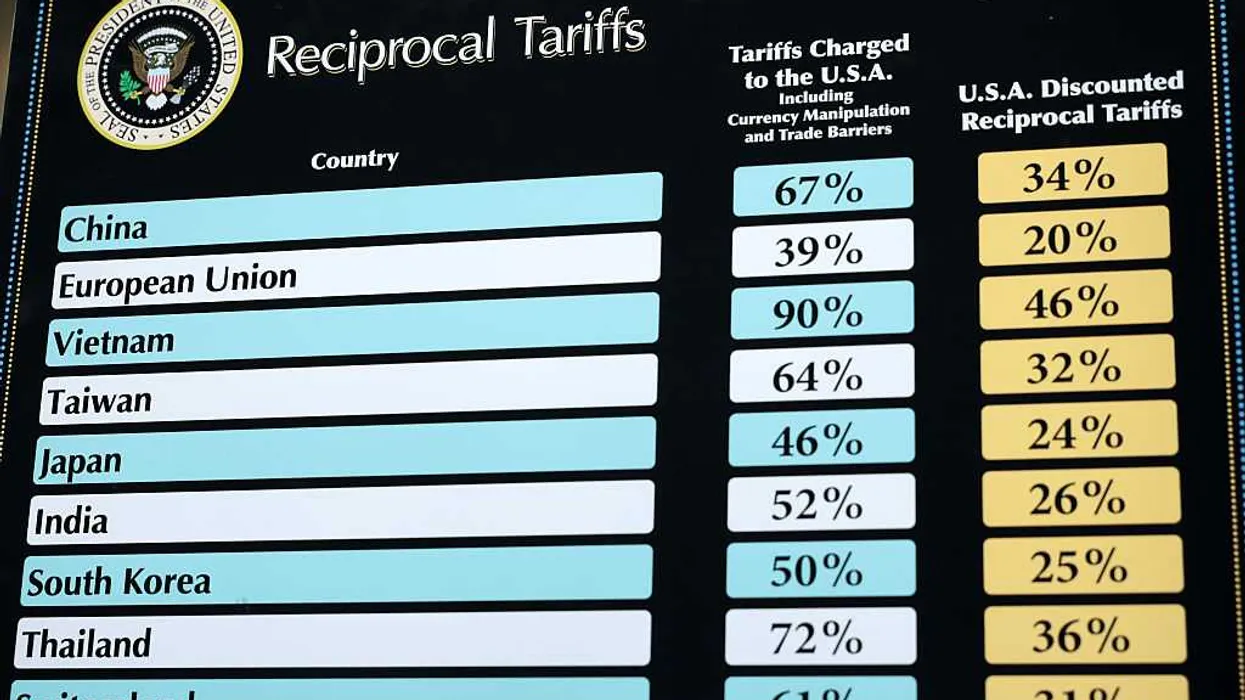
Is a tariff a tax? Many Americans have forgotten that this question, which has been in the news more or less all year, was fundamental to the American Revolution. And among American Patriots, or Whigs, meaning those who supported the colonists’ claims against Parliament, there was almost universal consensus that they were different things, constitutionally speaking.
Throughout the Imperial Crisis of 1763 to 1776, the consensus among the colonists was that Parliament had the right to regulate trade in the British Empire but had no right to tax the colonists. And they recognized that a regulation of trade might take the form of a duty imposed upon, for example, molasses imported from French colonies to favor molasses imported from British colonies.
The founding generation believed in the separation of powers.
In the colonists’ view, the Sugar Act of 1764 was an unconstitutional innovation. The Act was quite explicit, stating at the top that it was passed for the purpose of “applying the produce of such duties, and of the duties to arise by virtue of the said act, towards defraying the expences of defending, protecting, and securing the said colonies and plantations.” It was the first trade act to do that.
Townshend’s overreach
The Stamp Act of 1765, and the reaction to it, made the protest against the 1764 Sugar Act less conspicuous. The result of the actions taken against the Stamp Act was that many in Parliament did not grasp the American argument against the Sugar Act. Hence, Parliament passed the Townshend Acts in 1767, imposing duties on lead, glass, paper, paint, and tea to raise revenue. When the colonists complained, many in Parliament accused the colonists of moving the goalposts.
The charge was not accurate, but it did reflect what they believed. And, like many today, many members of Parliament were unable to grasp the difference between a duty imposed for the purpose of trade regulation and a duty imposed for the purpose of raising revenue.
The most famous criticism of the Townshend Acts, and the most popular writing of the era until Thomas Paine published “Common Sense” in January 1776, was John Dickinson’s “Letters from a Farmer in Pennsylvania.” In the second letter, Dickinson made the consensus Patriot argument logically, clearly, and eloquently.
There is another late act of parliament, which appears to me to be unconstitutional, and as destructive to the liberty of these colonies, as that mentioned in my last letter; that is, the act for granting the duties on paper, glass, etc.
The parliament unquestionably possesses a legal authority to regulate the trade of Great Britain, and all her colonies. Such an authority is essential to the relation between a mother country and her colonies; and necessary for the common good of all …
I have looked over every statute relating to these colonies, from their first settlement to this time; and I find every one of them founded on this principle, till the Stamp Act administration.* All before, are calculated to regulate trade, and preserve or promote a mutually beneficial intercourse between the several constituent parts of the empire. … The raising of a revenue thereby was never intended. … Never did the British parliament, till the period above mentioned, think of imposing duties in America for the purpose of raising a revenue. …
Here we may observe an authority expressly claimed and exerted to impose duties on these colonies; not for the regulation of trade; not for the preservation or promotion of a mutually beneficial intercourse between the several constituent parts of the empire, heretofore the sole objects of parliamentary institutions; but for the single purpose of levying money upon us.
This I call an innovation; and a most dangerous innovation.* It may perhaps be objected, that Great Britain has a right to lay what duties she pleases upon her exports.
That so many people today don’t seem to understand this distinction is a sign that the American bar seems to have gone Tory. The founding generation’s way of thinking about tariffs, and perhaps law in general, is in danger of being rendered foreign to our public policy discussion, perhaps even to constitutional discussion, even among people who mistakenly think of themselves as originalists.
This way of thinking, of course, says little about the current case, as the purpose of the law itself must be understood in light of the thinking of the men who passed it. But it is also true that the way of thinking that Dickinson represented, and which was broadly shared in the founding generation, might have something to say here.
Delegation’s limits
The founding generation believed in the separation of powers. The founders recognized, as “The Federalist” notes, that in practice the powers will inevitably overlap and sometimes clash. But they did operate within a way of legal and constitutional thinking that took it as a given that in order to guard the separation of powers, any delegation of legislative powers to the executive had to be limited and focused.
There is a difference between a reasonable and an unreasonable delegation of powers, just as there is between a tax and a regulation of trade, even if, in both cases, money is raised at customs houses. The kind of delegation the Trump administration is asserting in this case is difficult, perhaps impossible, to reconcile with the practice of separation of powers. Congress has no right to abdicate its obligation to set trade policy via legislation.
RELATED: Read it and weep: Tariffs work, and the numbers prove it
 Photo by Spencer Platt/Getty Images
The Trump administration’s assertion that it has the right to set tariffs worldwide, claiming unlimited emergency power based on a law designed to delegate to the president a narrow emergency power, resembles the kind of expansive, arbitrary interpretation that the founders’ legal heroes fought.
In the 1630s, King Charles claimed the right to collect “ship money” throughout England. By tradition, the king had the right to raise money, without Parliament’s consent, in port towns in time of war, or if war was imminent.
King Charles asserted a living constitution interpretation: Given modern circumstances, he claimed a general right to raise taxes if a war emergency was imminent. Dickinson mentioned the case in the first Farmer’s Letters, suggesting there was a connection between the logic of the one argument and the other.
Our difficulty recognizing the limits of the nondelegation doctrine — and our confusion about the difference between a duty imposed to raise revenue and one imposed to regulate trade — shows how much work remains if we want to understand the Constitution as the framers did. That understanding requires grappling with the ideas about human nature, government, and law that justified ratification in the first place and that still anchor our constitutional order.
Editor’s note: This article was originally published by RealClearPolitics and made available via RealClearWire.
The imperial judiciary strikes back
So far, more than 100 federal court judges have ruled against the Trump administration in hundreds of lawsuits filed by states, unions, nonprofit organizations, and individuals.
While some of these rulings are fairly grounded in the Constitution, federal law, and precedent, many are expressions of primal rage from judges offended by the administration and moving at breakneck speed to stop it.
Trump sometimes exceeds his authority. Activist judges substitute ‘frequently’ for ‘sometimes.’ The Constitution and the Supreme Court disagree.
According to a Politico analysis, 87 of 114 federal judges who ruled against the administration were appointed by Democratic presidents, and 27 by Republicans. Most of the lawsuits were filed in just a few districts, with repeat activist judges leading the opposition.
Lawsuits against the administration may be filed in the District of Columbia and, often, also in other districts. Initially cases are randomly assigned. Plaintiffs focus on districts with predominantly activist, progressive judges. Because related cases are usually assigned to the same judge, later plaintiffs file in districts in which related cases were assigned to friendly activists.
Conservative judges generally believe they should interpret the law and avoid ruling on political questions, while liberals tend to see themselves as protectors of their values. After 60 years of domination by activist liberals, the Supreme Court and conservative appeals court judges are finally demanding that district court judges respect the Constitution. The Supreme Court is also re-evaluating precedents established by far-left justices who substituted their values for the words and intentions embodied in the Constitution.
To date, the Supreme Court has reversed or stayed about 30 lower court injunctions blocking the administration, and appeals courts have reversed or stayed another dozen. Even Justice Ketanji Brown Jackson imposed an administrative stay on a district court decision requiring the immediate resumption of SNAP payments.
Federal judges who oppose Trump’s agenda are openly opposing the Supreme Court. In April, D.C. Chief Federal Judge James Boasberg sought to hold administration officials in criminal contempt for violating an order the court had vacated. In May, Fifth Circuit Court of Appeals Judge James Ho criticized the court’s demand that district courts act promptly on administration requests. In a September ruling, Boston Federal Judge Allison Burroughs challenged the court for expecting lower courts to treat its emergency orders as binding legal precedent.
Ten of 12 federal judges interviewed by NBC News in September, and 47 of 65 federal judges responding to a New York Times survey in October, thought the court was mishandling its emergency docket. They described orders as “incredibly demoralizing and troubling” and “a slap in the face to the district courts.”
Deservedly so. Though the Supreme Court and appeals courts judges have rebuked district court judges for ignoring higher courts and abusing their authority, they continue to do so with rulings focused on identity politics and a progressive lens on the woes of immigrants, minorities, women, and workers. They likely expect to be reversed on appeal, but they secure wins by causing delay and creating fodder for progressive activists to rally their supporters.
There is little that can be done about these judges. Removal requires a majority vote in the House and a two-thirds vote in the Senate. With Democrats supporting these judges, those votes are unrealistic.
RELATED: Who checks the judges? No one — and that’s the problem.
 Photo by Kevin Carter/Getty Images
Just a few of the dozens of examples of politicized judicial decisions:
In May, Myong Joun, a Biden appointee in Boston, enjoined layoffs at the Department of Education in a decision featuring an encomium to its anti-discrimination mission. The Supreme Court stayed his injunction.
Despite this precedent, Susan Illston, a Clinton appointee in San Francisco, issued a nationwide injunction barring the administration from firing union employees during or because of the government shutdown. Ignoring settled law, she bemoaned the “trauma” of workers who had been under “stress” ever since Trump’s election. Illston gambled correctly that the shutdown would end before her order could be reversed.
Indira Talwani, a federal district court judge in Boston, went further. Declaiming her fear that defunding Planned Parenthood would deprive women of access to abortions, she elided Article I of the Constitution, which requires all federal spending to be approved by Congress, nullifying a duly enacted statute that suspended funding of large abortion providers for a year. By the time she is reversed, the suspension will have expired.
In June, after San Francisco Federal Judge Charles Breyer enjoined Trump from federalizing the California National Guard, a three-judge panel of the Ninth Circuit unanimously stayed his order, explaining that on military matters, the president’s judgment stands unless it is dishonest. Nonetheless, Oregon Federal Judge Karin Immergut subsequently blocked deployments in Portland, substituting her assessment of the situation for the president’s.
An Obama-appointed judge recently interviewed by NBC explained, “Trump derangement syndrome is a real issue. As a result, judges are mad at what Trump is doing or the manner he is going about things; they are sometimes forgetting to stay in their lane.”
Trump sometimes exceeds his authority. Activist judges, who self-reverentially believe progressive technocrats and judges are democracy’s guardians, substitute “frequently” for “sometimes.” The Constitution and the Supreme Court disagree.
These banners don’t just signal ‘Pride’ — they announce conquest

On September 11, 2001, three New York firefighters raised an American flag above the wreckage of the World Trade Center. That moment was more than an image. It was a declaration that the country had buckled but not broken. That flag rallied millions, inspired enlistments, and stiffened a nation’s resolve mere hours after the most devastating attack in modern U.S. history.
In 2025, the opposite message is taking root in some of America’s cities. In Boise, Idaho, and Minneapolis, Minnesota, local leaders elevate symbolic banners that compete with, sidestep, or openly contradict the national and state standards that define shared civic space.
If we want unity, we must lead with the symbols that foster it. Because if we don’t plant our flags, someone else will.
In Boise, a blue island in a bright red state, Mayor Lauren McLean (D) kept the Pride flag flying over City Hall despite Idaho’s HB 96, a law restricting public property to the U.S. and state flags. After Attorney General Raúl Labrador (R) issued a cease-and-desist, McLean responded with a letter threatening legal action and framed her stance as “standing with my community.” The city council followed with a 5-1 vote to adopt the Pride flag as an official city emblem to get around the law.
In Minneapolis, state Sen. Omar Fateh (D) waved a Somali regional flag at an October campaign rally. Supporters defended the gesture as cultural outreach to the city’s large Somali population. Opponents saw something else: a political statement that placed clan or regional identity ahead of shared civic loyalty.
At first glance, these acts look harmless. But historians — and anyone who has studied conflict or national movements — know that flags communicate power. A flag marks territory, signals allegiance, and announces who intends to lead.
A banner raised in a civic space says something about the future of that space. It’s a symbol of conquest — in this case, conquest without firing a shot.
Minneapolis illustrates the stakes. Somali-Americans represent a large and active community, and political leaders court their votes aggressively. But clan politics from Somalia’s fractured landscape often follow families to the United States.
Analysts noted that Minneapolis’ recent mayoral race reflected clan splits, with blocs supporting or opposing Somali candidates not on ideology but lineage. That tension influences local elections and creates new pressures on civic life.
Political imagery matters when communities already navigate competing loyalties. A foreign regional flag held aloft at a campaign rally isn’t a neutral gesture; it’s an invitation to organize political power around identities that do not map cleanly onto American civic culture.
History amplifies that point. For centuries, flags have signaled triumph or defeat long before a treaty forced anyone’s hand. At Fort McHenry in 1814, the sight of the American flag still flying after a night of bombardment, energized defenders and inspired the poem that became our national anthem. At Iwo Jima in 1945, Marines raised the U.S. flag atop Mount Suribachi, transforming a brutal fight into a symbol of American resolve and shifting the morale of both sides.
Flags shape memory. They mark identity. They tell people who stands firm and who gives ground.
RELATED: The real danger isn’t immigration — it’s the refusal to become American
 Photo by Stephen Maturen/Getty Images
That is why the flags flown on public property matter now. McLean’s use of the Pride flag isn’t just about “love is love.” It supplants the symbol that binds Idahoans across differences. Fateh’s regional Somali flag isn’t simply cultural pride; it injects external political identities into municipal politics and signals a shift in who claims influence over public life.
Americans can shrug at this trend or take it seriously. Civic symbols either unite a people or divide them. A city hall flagpole should unify, not segment communities into competing camps. A political rally should appeal to voters as Americans, not as factions drawn from overseas allegiances.
The answer is not outrage or retaliation. The answer is clarity: reclaim civic symbols that express shared loyalty to a shared country. Fly the U.S. flag. Fly state flags. Encourage communities to celebrate their heritage while affirming the nation that binds them together.
A nation confident in itself does not surrender its symbols. It presents them proudly — on porches, at city halls, and at the center of public life. America’s strength begins with the values and commitments those flags represent.
If we want unity, we must lead with the symbols that foster it. Because if we don’t plant our flags, someone else will.
How GOP leadership can turn a midterm gift into a total disaster
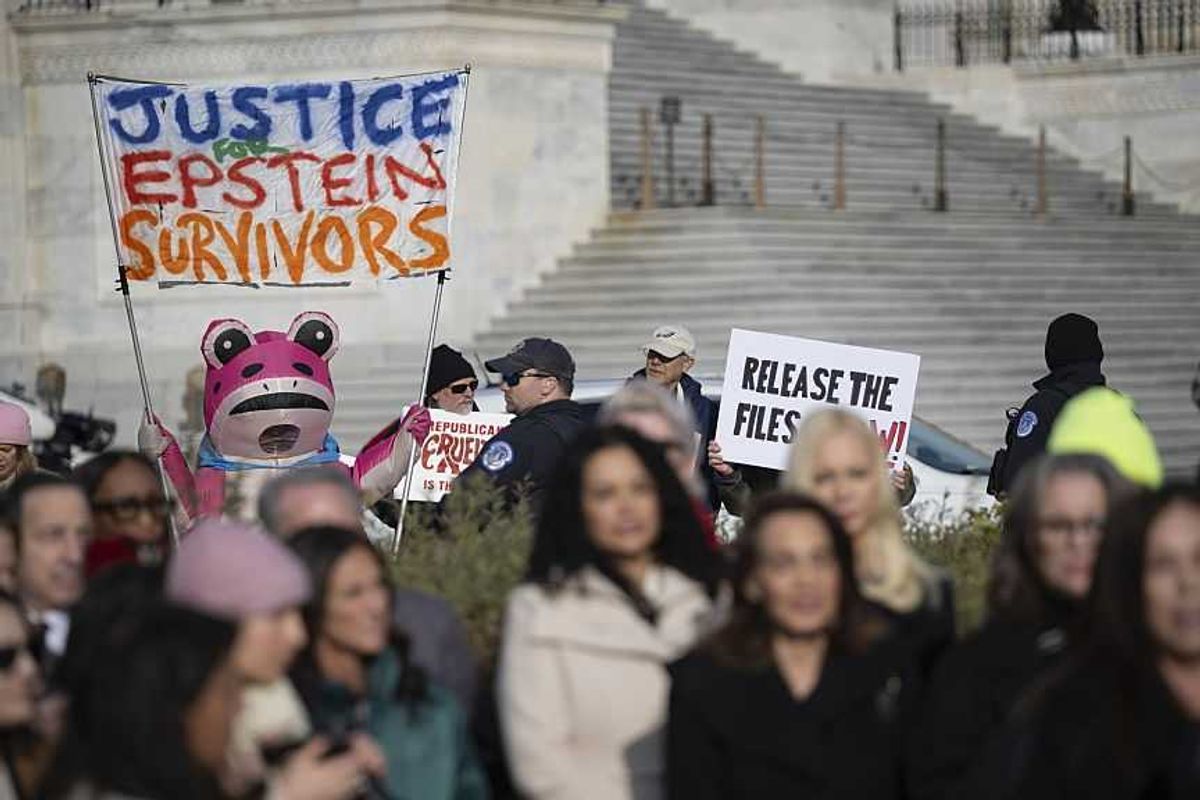
Did Donald Trump secretly plan this fight over the Jeffrey Epstein files to lure Democrats into another political trap? No. I don’t believe he did. I know people close to the president who were frustrated over the summer when he abruptly shifted from promising the files’ release to calling it a “distraction” and a “hoax.” I said at the time on my show that the switch was the first major misstep of Trump 2.0.
But I understand why the 4D-chess theory is so tempting now. It looks like a setup. House Minority Leader Hakeem Jeffries (D-N.Y.) spent months attacking Trump over Epstein. Then we learned that Jeffries may have accepted donor requests from Epstein after Epstein’s first sex-offense conviction. And a Democrat from the Virgin Islands — Epstein’s district — was literally taking dictation from Epstein on what questions to ask in a congressional hearing.
The 2026 midterms are coming fast. If the GOP wants to avoid another preventable disaster, it had better stop rehearsing the same script.
Those are facts, not theories.
The deeper truth, though, has nothing to do with strategy. American politics follows two patterns, and both showed up again this week.
First, Republicans pre-emptively surrender. Always.
Watch Democrats tell soldiers to ignore orders while Trump follows every instruction a federal judge hands him. His restraint isn’t Romney-level, but the Republicans around him shrink the space for any real fight. That’s why Attorney General Pam Bondi is developing a well-deserved reputation for overpromising and under-delivering.
RELATED: The right message: Justice. The wrong messenger: Pam Bondi.
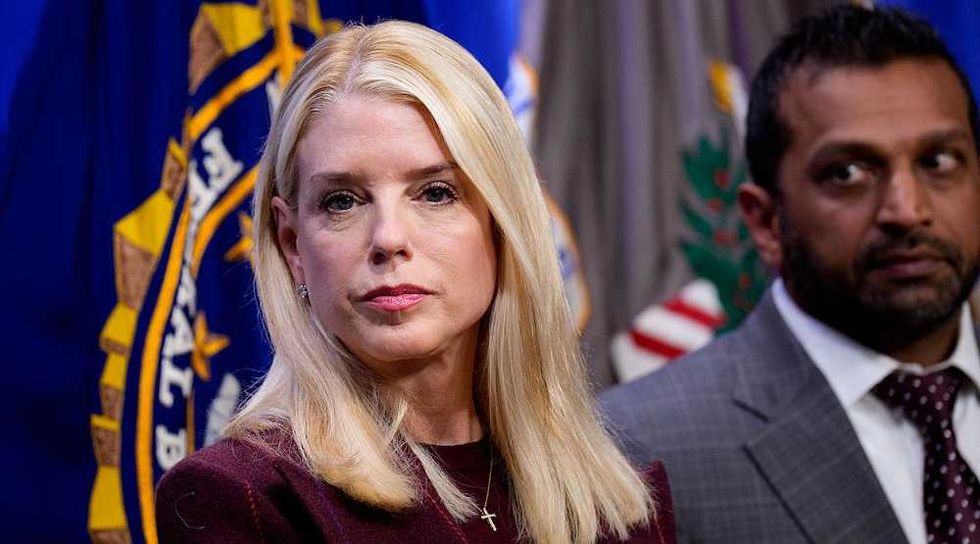 Photo by Andrew Harnik/Getty Images
Second, Democrats always overreach when Republicans fold.
We saw it in 2018 when Republicans gave up on repealing Obamacare and lost 40 House seats for their cowardice. The pattern continued in 2020, as Democrats pushed their false god evangelism into insane absolutism — on “fortifying” elections, on arresting Trump, on forcing people into taking the poisonous jab, on transitioning kids. It was mark of the beast stuff, and voters wanted no part of it.
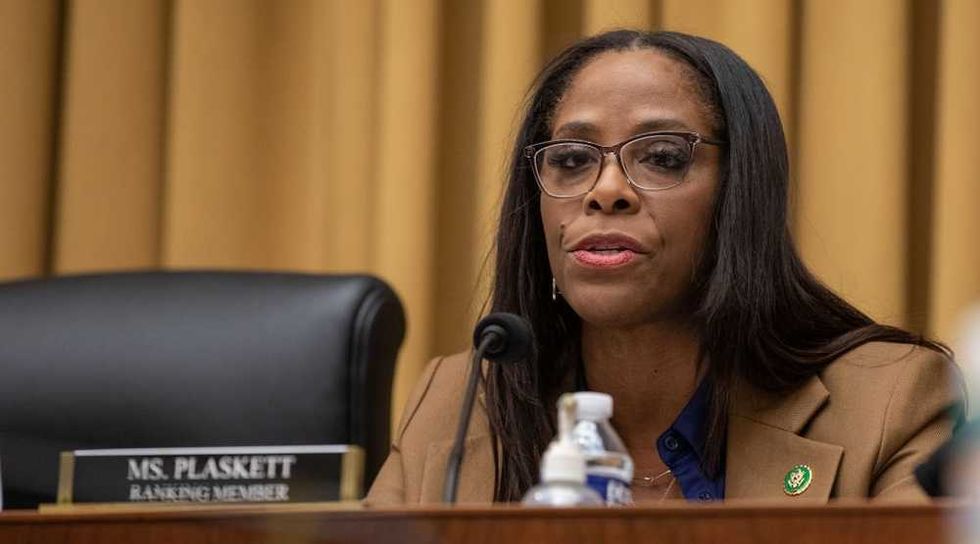
The latest example came this week, when Sen. Chuck Schumer (D-N.Y.) answered a question from a friendly reporter about why Democrats never pursued the Epstein files when they had the chance by snapping, “What is [Trump] hiding?” The Senate had just voted almost unanimously to release those files, and instead of revealing Trump, former Bill Clinton hack Lawrence Summers stood exposed for his ties to the sex offender, seeking his counsel as “wingman” in an effort to seduce the daughter of a high Chinese Communist Party official.
 Anna Rose Layden/Bloomberg via Getty Images
Both parties cling to their worst instincts. Republicans surrender too easily. Democrats push too far. And no politician in modern history has been buoyed more by his opponents’ excesses than Donald Trump.
So once again, Republicans hold the advantage on the Epstein files — at least for the moment. But early signs suggest they may squander it. House Speaker Mike Johnson (R-La.) and Pam Bondi appear ready to narrow or redact the release into something the base will see as betrayal. If that happens, Democrats won’t need to win the argument. Republicans will beat themselves.
The 2026 midterms are coming fast. If the GOP wants to avoid another preventable disaster, it had better stop rehearsing the same script.
A little discipline — and a little courage — would go a long way.
A payout scheme for senators deepens the gap between DC and the rest of us
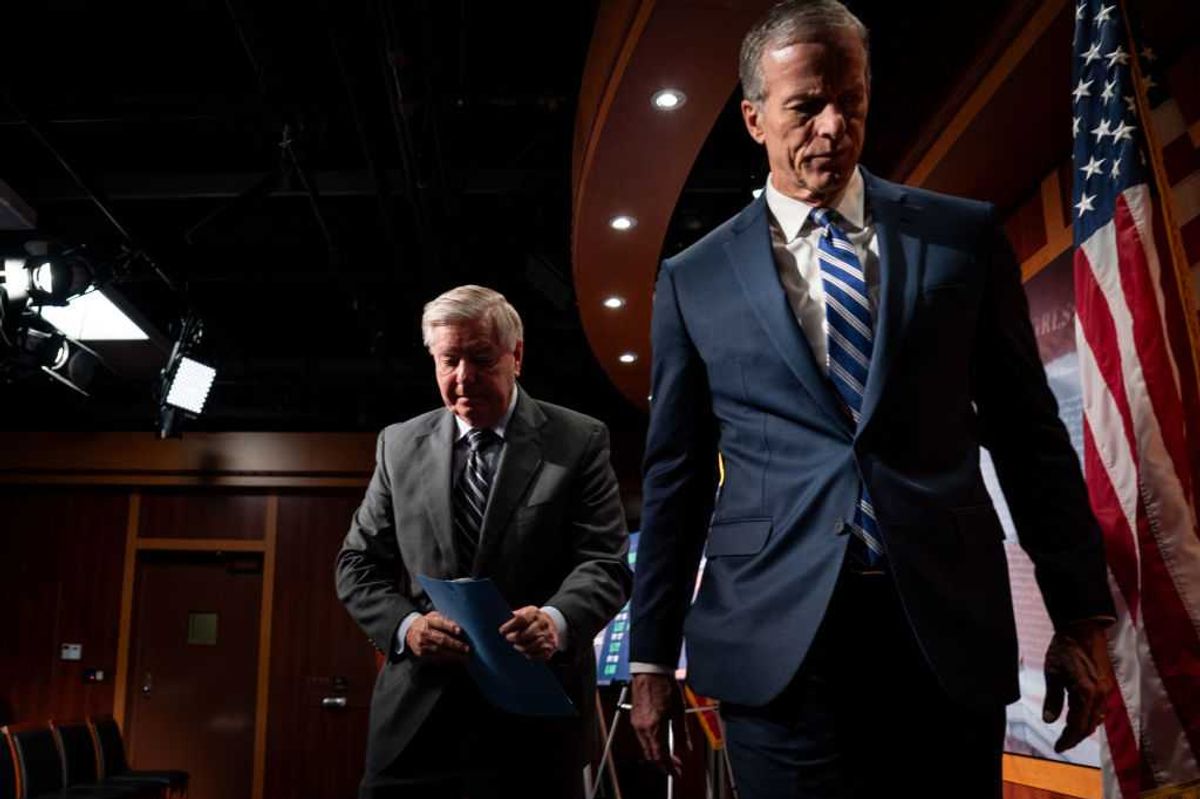
During the final hours of the shutdown fight earlier this month, Senate Majority Leader John Thune (R-S.D.) slipped a toxic provision into the continuing resolution that reopened the government. The clause created a special pathway for select senators to sue the federal government, bypass its usual legal defenses, and claim large payouts if their records were subpoenaed during the Arctic Frost investigation.
The result? About eight senators could demand $500,000 for every “instance” of seized data. Those instances could stack, pushing potential payouts into the tens of millions of taxpayer dollars. That is not an exaggeration. Sen. Lindsey Graham (R-S.C.) has all but celebrated the prospect.
Graham said he wanted ‘tens of millions of dollars’ for seized records while victims of weaponization still face shattered lives.
No one else would qualify for compensation. Only senators. Anyone who spent years helping victims of political weaponization — often pro bono, while prestige law firms chased billable hours — can see the corruption in plain view. The message this provision sends on the central Trump-era promise of accountability could not be weaker: screw the people, pay the pols.
The surveillance of senators was wrong. It should never have happened. But senators did not face what ordinary Americans endured. Senators maintain large campaign accounts to hire top lawyers. They operate out of official offices, armed with constitutional protections such as the Speech and Debate Clause. They do not lose their homes, jobs, savings, or businesses. Thousands of Americans did. Many still face legal bills, ruined livelihoods, and ongoing cases. They deserve restitution — not the politicians who failed them.
Graham helped push this provision forward. As public criticism grew, he defended it. On Sean Hannity’s show the other day, he said: “My phone records were seized. I’m not going to put up with this crap. I’m going to sue.” Hannity asked how much. Graham replied: “Tens of millions of dollars.”
Democrats will replay that clip across every battleground in the country going into an uphill midterm battle in 2026.
Graham embodies the worst messenger for this fight. He helped fuel weaponization long before he claimed victimhood. He urged the late Sen. John McCain (R-Ariz.) to pass the Steele dossier to the FBI. As chairman of the Senate Judiciary Committee, he did nothing to slow the Justice Department and FBI as they pursued political targets. He even supported many of President Joe Biden’s judicial nominees who later embraced aggressive lawfare tactics. If anyone owed restitution to victims, Graham sits high on the list.
RELATED: Trump’s pardons expose the left’s vast lawfare machine
 Photo by Win McNamee/Getty Images
Fortunately, enough Republicans recognize the political and moral disaster of funneling taxpayer funds to senators while real victims remain abandoned. The House advanced a measure today to repeal the provision. Led by Reps. Austin Scott (R-Ga.) and Chip Roy (R-Texas), the House forced the Senate to address in public what it attempted to smuggle through in private.
Thune defended the measure in comments to Axios. He argued that only senators suffered statutory violations and said the provision was crafted to avoid covering House members. He did not explain why any House member who was illegally surveilled should receive no remedy.
The Senate leader also claimed the financial penalty would deter a future Justice Department from targeting lawmakers, citing the actions of special counsel Jack Smith. His emphasis on “future” misconduct glossed over a critical fact: The provision is retroactive and would cover past abuses.
That defense cannot survive daylight. Repeal requires 60 Senate votes, and not a single Democrat will fight to preserve a payout for Graham. Republicans should not try either. Efforts to strike the measure need to begin immediately. Senators — especially Thune — should commit to an up-or-down vote. If they want to send tens of millions of dollars in taxpayer funds to Graham, they should do it in public, with the country watching.
Washington already reeks of grift and self-dealing this year. If senators protect this provision, that smell will spread nationwide.
When a ‘too big to fail’ America meets a government too broke to bail it out
I’ve been titanically bearish on America for years. Sorry. I can do math.
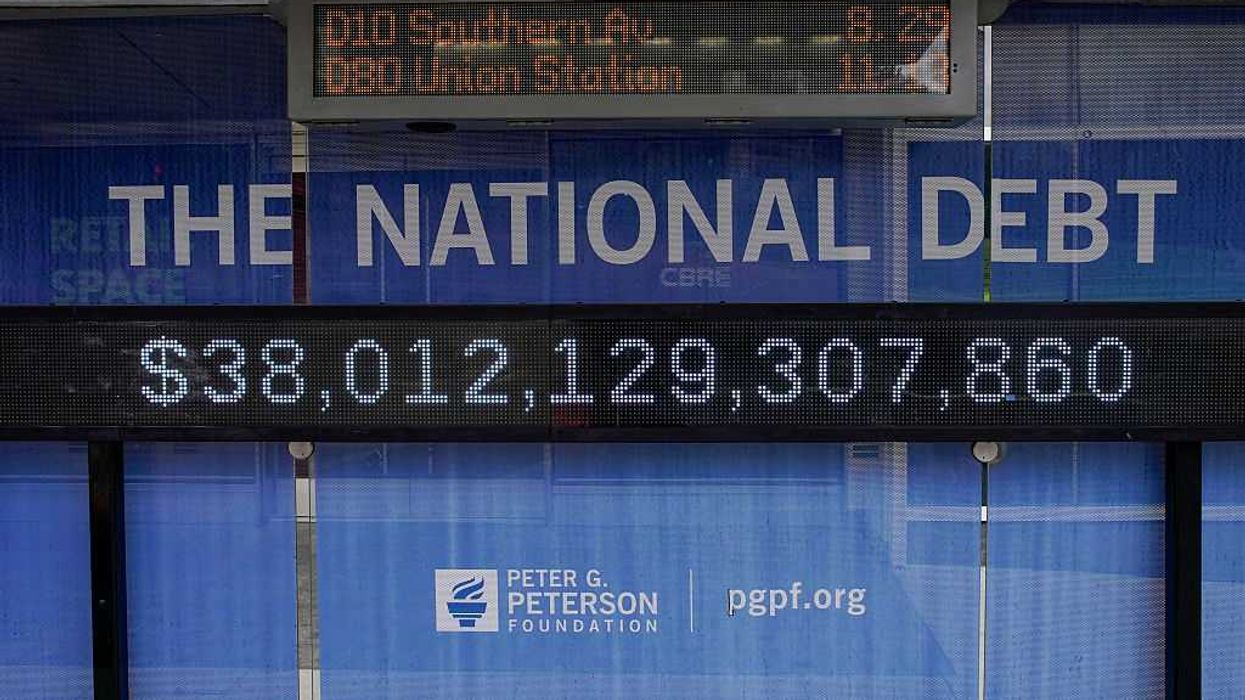
The United States owes more than $38 trillion. That alone makes the balance sheet hopeless. The debt is insurmountable.
America’s GDP in 2024 was $29.2 trillion, meaning the debt exceeds 130% of what we produce in a year. If this were a business, every financial adviser would tell you to file Chapter 11 and salvage what you can.
Washington keeps adding another trillion to the tab roughly every 100 days. As the debt climbs, interest payments climb faster. The country now spins in a debt spiral that ends only one way. Game over.
The more the world moves away from the dollar, the more tens of trillions of unwanted dollars come flooding home. You haven’t seen anything like real devaluation yet.
Then comes the $210 trillion in future unfunded liabilities — mostly Social Security and Medicare. Those numbers don’t pencil out in any universe.
Underneath all of it sits a sinking currency. The dollar lost 87% of its value since we abandoned the gold standard in 1971. For decades, the petrodollar arrangement held the world in our system by forcing oil purchases through the U.S. currency. Saudi Arabia let that mandate expire last year. Global energy deals immediately began shifting to other currencies.
The more the world moves away from the dollar, the more tens of trillions of unwanted dollars come flooding home. You haven’t seen anything like real devaluation yet.
To fund our binge, Washington must keep selling treasuries. But foreign buyers are losing interest. Rates rise. The government buys its own debt just to keep markets from buckling. The Cayman Islands now holds $1.85 trillion — the largest single foreign share and rising fast. Treasury officials tried to obscure the numbers. None of it signals stability.
Meanwhile, our economy rests on an absurdly fragile foundation: 70% consumption. Seven out of 10 dollars depend on Americans buying things they can no longer afford. Household debt hit a record $18.6 trillion — nearly two-thirds of GDP. Families now pay down debt instead of fueling growth.
Shrinking consumption means a shrinking economy. Shrinking economy means shrinking tax revenue. Combine that with a weakening dollar and the picture becomes darker still.
Enter artificial intelligence, the accelerant. AI threatens tens of millions of jobs within years, wiping out income and collapsing the consumption model even faster. A government facing falling revenue and exploding obligations cannot pretend to stay solvent.
Some cling to fantasies like universal basic income. With what money? The same government already $210 trillion short on existing promises? Please.
This all points toward an economic crash far larger than 2008. Washington froze that crisis with $29 trillion in bailouts — money it didn’t have then either. We conjured it and shoved it onto the national debt.
That option is gone.
Today the government sits too deep in debt, with a weaker dollar and fewer global buyers. And the next crisis won’t hit one sector. It hits everything:
• Record mortgage debt: $13.1 trillion
• Record credit-card debt: $1.2 trillion
• Collapsing commercial real estate: $4.9 trillion
• Big Tech borrowing hundreds of billions to inflate an AI bubble
OpenAI’s Sam Altman already expects an eventual government bailout for AI’s collapse.
RELATED: When the AI bubble bursts, guess who pays
 Photo by Andrew Harnik/Getty Images
Total U.S. debt — public and private — hit $102.2 trillion in 2024. Washington cannot rescue a single major sector, let alone all of them. The national debt was $10 trillion during bailout 2008. It’s four times that now. The dollar buys less. Foreign creditors show less patience.
So who steps in next time? Who buys the treasuries? Who absorbs the losses?
No one. Not abroad. Not at home. Nowhere on this planet.
That leaves Washington with only one move: Print tens of trillions in new dollars and hand them to itself — more IOIs (as opposed to IOUs) stacked on a pile already ready to topple.
And that printing wave will obliterate whatever value the dollar still holds.
Think the dollar’s fallen far? You haven’t seen anything yet.
The 2026 map tilts left if Republicans ignore what voters just told them

The Associated Press told us a partial truth after the November 4 elections: Republicans delude themselves when they brush off their losses. AP then added its usual spin, claiming GOP leaders deny that “affordability” drove their defeat. According to AP, soaring costs and economic uncertainty explain why Republican candidates collapsed across several high-profile races.
Republicans did not simply underperform. They were routed. GOP candidates lost in the marquee races in New Jersey and Virginia, and Democrats came within striking distance of a supermajority in the Virginia legislature. Democrats even clawed back ground in places like Luzerne County, Pennsylvania — a longtime working-class stronghold that had tilted red for decades.
The left treats politics as a total struggle. Republicans cannot keep treating it as a polite debate.
The GOP took a real shellacking.
AP captured only part of the story. Republican leaders keep denying the obvious, insisting the mid-cycle results followed the usual pattern for a party out of power. That excuse collapses when measured against the magnitude of the losses.
In New Jersey, a scandal-scarred, aggressively pro-LGBTQ Democrat crushed a strong Republican challenger by more than 14 points — in a state battered by high taxes, rising crime, and deep voter frustration. Jack Ciattarelli was supposedly running neck-and-neck with Mikie Sherrill. The final tally proved otherwise.
Virginia delivered an even starker picture. A hyper-progressive Democrat won the governor’s race against a conservative black Republican woman. The new attorney general prevailed despite revelations that he sent violent, disturbing text messages expressing rage toward a Democratic opponent and his children. Voters shrugged and voted for him anyway.
This election was not routine. It was a decisive, unmistakable rejection of the party in power. The results cannot be explained away by economic anxiety. Voters responded to ideology and identity — not affordability indexes.
Democratic voters turned out as a unified bloc against what they have been conditioned to believe is a dangerous, authoritarian movement. Media outlets, universities, Hollywood, and most major cultural institutions spent years drilling that narrative into the public. The left absorbed it fully and voted accordingly.
It’s hard to square AP’s affordability argument with the fact that voters rewarded Biden’s economically disastrous administration in the 2022 midterms — and continued to do so in these off-year races. By every major metric, economic conditions have improved dramatically since Trump returned to the White House. Inflation fell. Energy prices dropped. Markets hit record highs. Food and housing costs remain problems, but they remain high largely because the Federal Reserve refuses to cut rates — something Trump intends to fix when he replaces the current chair.
Meanwhile, Biden’s border catastrophe flooded the country with roughly 10 million illegal migrants, burdened taxpayers, and fueled a surge of crime. Yet he paid little political price. Voters did not punish him or his party.
To understand why, look at a recent Atlanta Journal-Constitution poll. Georgia Republicans list inflation and the economy as their top concerns. Georgia Democrats list something else entirely: a “tougher response” to Trump and MAGA Republicans. They rank economic issues and even abortion behind their desire to defeat an ideological enemy. For them, politics is a moral crusade.
RELATED: Mamdani sells socialism — and Republicans peddle the Temu version
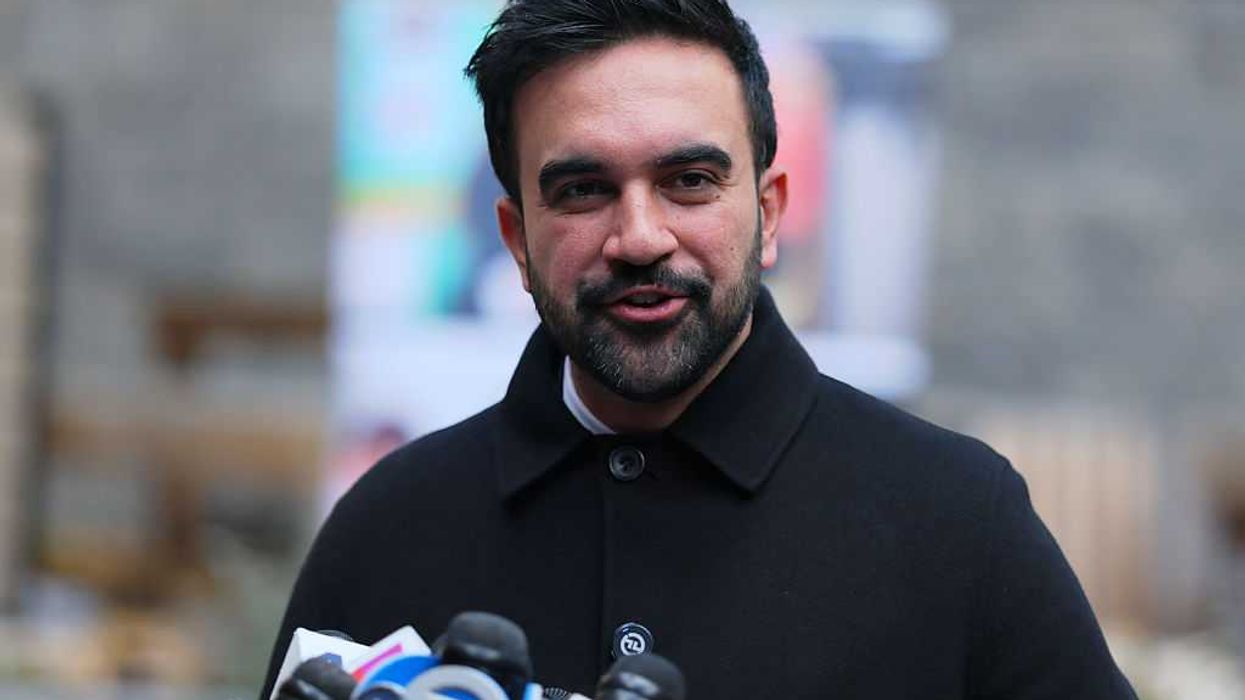 Photo by Michael M. Santiago/Getty Images
This reveals the central mismatch. Republicans speak the language of policy: inflation, taxes, energy, spending. Democrats speak the language of existential struggle. They believe they are at war with a malevolent force, and that belief animates them far more than grocery bills or mortgage rates. Trump derangement syndrome is very much alive and well with these voters.
Republicans just want to return to normal politics — debates over issues, clean contests, and sportsmanlike disagreements. Their media allies keep telling them nothing has changed since Trump beat a ditzy, verbally inept opponent in 2024.
Wrong. Everything has changed.
Republicans face a massive, highly motivated voting bloc determined to strip them of power. Democrats aim to defeat and humiliate their opposition, not negotiate with it. Their rhetoric against ICE, their nonstop attacks on Trump, and their saturation campaigns across media and education paid off. They fought harder. They fought longer. And they won nearly everywhere that mattered.
The GOP cannot afford to treat this moment as another cyclical setback. The left treats politics as a total struggle. Republicans cannot keep treating it as a polite debate. Until the GOP grasps the scale of the conflict, election nights will keep looking like this one.





