

Category: Opinion & analysis
The bureaucracy strikes back — and we’re striking harder
Old habits die hard. The Oversight Project filed another lawsuit against the FBI today. During the Biden years, we were in court constantly, suing the bureau more than a dozen times over weaponization and abuse. Many of the cases we fought then connect directly to the scandals now surfacing under the Trump administration. We were over the target back then — and Washington doesn’t do coincidences.
But this case is different.
We’re suing the FBI to force transparency — not for politics, but for accountability. Because if we don’t fix this now, we’ll look back and wish we had.
Monday’s lawsuit strikes at a deeper problem: the FBI’s claim that it has been “reformed” and is now “the most transparent in history.” That phrase is absurd on its face. Compared with the post-COINTELPRO reforms and the Church Committee era, today’s FBI is anything but transparent.
We’re suing because the bureau has built a system designed to violate the Freedom of Information Act. Over time, the FBI has developed a “pattern and practice” of breaking the law to hide information. Reporters across the political spectrum can tell you the same thing. The bureau stonewalls, delays, and hides behind boilerplate responses that make a mockery of the law.
Our case asks the federal judiciary to step in and force the FBI to fix this — to overhaul its FOIA process and follow the law it routinely ignores. This isn’t a step we took lightly. For nearly a year, we tried to resolve these problems through other channels. But the bureau’s “fixes” never came.
Bureaucratic shell game
The FBI has perfected a set of tricks to avoid scrutiny. It uses canned denials for well-defined requests, ignores the public-interest standard written into law, and buries documents under layers of redaction. Even by Washington’s anemic transparency standards, the FBI stands out as the worst offender.
This isn’t theoretical. In practice, the Oversight Project submitted requests naming specific agents — like the infamous Timothy Thibault — and identifying internal systems such as the Lync messaging platform. We asked for communications containing key terms like “Republican” or “Mar-a-Lago.” Those are precisely the requests the bureau continues to battle with gusto.
FBI Director Kash Patel deserves credit for some high-profile disclosures, but we can’t depend on him to keep discovering incriminating documents in “burn bags” or forgotten closets. That’s not transparency — that’s triage. The FBI cannot investigate itself or selectively release information without feeding public cynicism.
The point of FOIA is citizen oversight — not bureaucratic discretion. In a republic, the people are supposed to control government institutions, not the other way around.
A pattern of abuse
If the FBI had obeyed its own transparency standards all along, Americans would already know far more about the scandals that shook their confidence in government: Russiagate, the Mar-a-Lago raid, Operation Arctic Frost, the targeting of Catholic parishes and concerned parents, and the January 6 excesses. Each of these was compounded by secrecy and delay.
RELATED: Video sleuth challenges FBI Jan. 6 pipe-bomb narrative, unearths new evidence
 filo via iStock/Getty Images
The bureau’s institutional resistance to disclosure doesn’t just protect bad actors — it perpetuates them. It allows corruption to metastasize under color of national security and procedure.
Time to clean house
At some point, the FBI will no longer be in Kash Patel’s hands. That’s why reform should happen now while the issue is in the public eye. The systems that enable secrecy and abuse must be dismantled before the next crisis hits.
We’re suing the FBI to force transparency — not for politics, but for accountability. Because if we don’t fix this now, we’ll look back and wish we had.
Trucks destroy roads, but railroads — yes, rail! — can save taxpayers billions
Anyone who drives America’s highways knows the story: potholes, cracked pavement, and endless construction zones. States pour billions of tax dollars into road maintenance every year, yet the pavement always seems to crumble faster than it can be repaired. What most motorists don’t realize is that heavy trucks cause much of the damage — and pay almost nothing to fix it.
Federal estimates show that a single fully loaded 18-wheeler can inflict as much pavement damage as nearly 10,000 passenger cars. Fuel taxes and highway user fees from trucking companies cover only a small fraction of the destruction they cause. Taxpayers pick up the rest, footing the bill for constant repaving, bridge work, and the cycle of crumbling roads.
Every additional ton of freight shifted to rail represents pavement preserved and taxpayer dollars saved.
Trucking keeps the economy moving, and freight rail, shipping, and trucking together form the backbone of America’s supply chain. But shifting more freight to rail makes sense. The rail network is self-maintained by the companies that use it, and trains move goods more safely and efficiently than trucks. The more freight we move by rail, the less damage we’ll have to repair on the nation’s roads.
A merger serving Americans
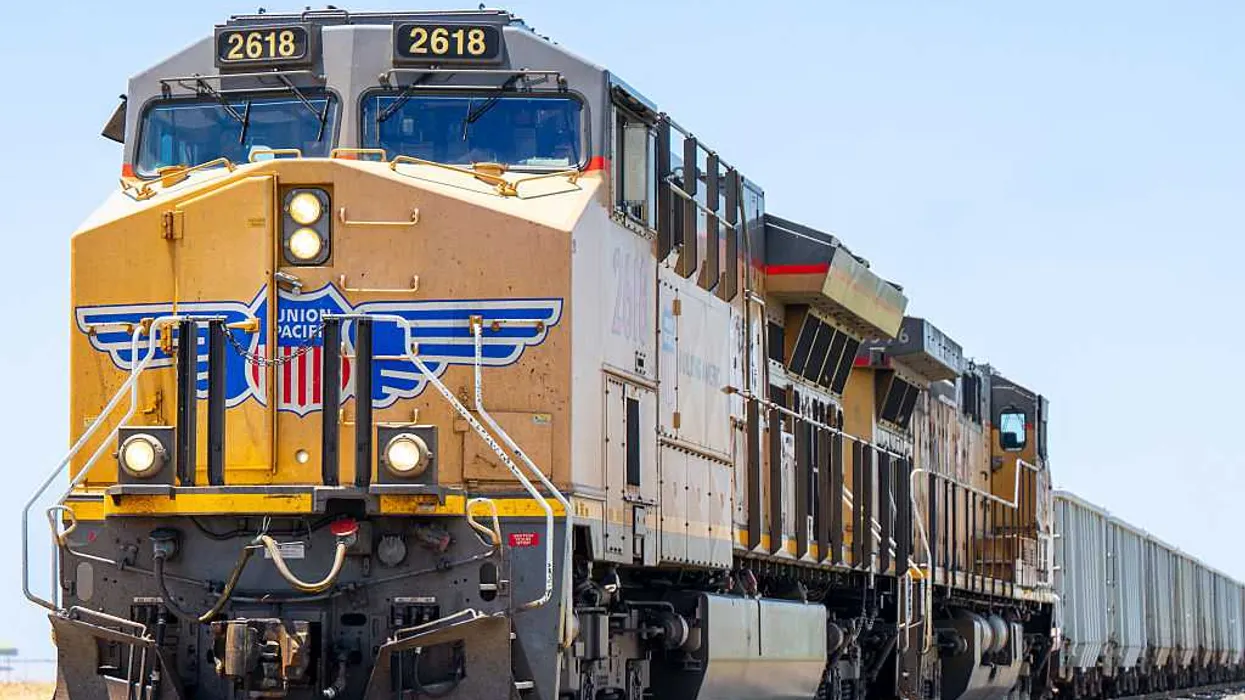
The recently proposed merger of Union Pacific and Norfolk Southern offers an opportunity to improve both our roads and our supply chains simultaneously. By creating a more efficient coast-to-coast rail network, the merger would allow railroads to capture more freight that currently travels by truck — relieving taxpayers of billions of dollars in hidden subsidies for road repair.
Merging Union Pacific’s vast western network with Norfolk Southern’s eastern lines would create the nation’s first true transcontinental railroad — from the Pacific to the Atlantic. For shippers, that means single-line pricing instead of juggling multiple operators to move goods from point A to point B.
It also means faster delivery, fewer interchanges, and lower costs.
Railroads, unlike trucking companies, build and maintain their own infrastructure. Every mile of track, every bridge, and every switching yard comes from private capital, not public funds.
When freight moves from trucks to trains, taxpayers win twice: less highway damage to repair and more freight handled by a system that pays its own way.
The savings aren’t theoretical. Heavy trucks cause roughly 40% of the wear on America’s roads while accounting for only about 10% of total miles driven.
A North Carolina Department of Transportation study found that trucks with four or more axles underpay for road damage by anywhere from 37% to 92%. State budgets from Texas to Pennsylvania tell the same story: Highway repair costs soar while trucking fees barely make a dent.
Every ton of freight shifted to rail means less pavement destroyed and more tax dollars saved.
False cries of monopoly
Naturally, critics of the merger will cry “monopoly,” as they always do when industries consolidate. But that misses the real competitive landscape. In addition to competing with other railroads, rail competes vigorously with trucks, which dominate American freight today.
Trucks control roughly 70% of domestic freight volume — subsidized in part by taxpayer-funded roads. Allowing railroads to offer a stronger alternative isn’t anti-competitive — on the contrary, it’s pro-market. It creates stronger competition for taxpayer-subsidized trucking.
RELATED: DOT withholds $40M from blue state for flouting English requirements for truckers
 Photo by Eric Lee/Bloomberg via Getty Images
At its heart, this merger is a test of whether the Trump administration trusts the free market to deliver solutions. Union Pacific and Norfolk Southern are not asking taxpayers to fund their merger. They are not asking for subsidies, grants, or carve-outs. They are investing their own capital to create a system that reduces public costs, strengthens supply chains, and keeps America competitive.
If policymakers are serious about preserving America’s battered roads, as well as strengthening our supply chain infrastructure, the choice is obvious. Let the free market work, and let railroads take more freight off the highways.
If it’s ‘worse than Watergate,’ then why the media blackout?
In a sense, this is old news. In December 2021, CNN reported that the House’s January 6 committee had subpoenaed phone records of more than 100 people.
But that was mostly Trump officials, including White House Chief of Staff Mark Meadows. No surprise there. After all, the January 6 Select Committee was empaneled for the specific purpose of turning President Donald Trump into a criminal for supposedly aiding and abetting the Jan. 6, 2021, breach of the Capitol.
It is well past time for the Republican Congress to fulfill its promise to hold accountable those who weaponized the federal government against Trump and his allies.
But when this story resurfaced earlier this month, there was something new, too. For one thing, the scope of the investigation was almost unbelievable — it turns out those subpoenaed phone records consisted of a staggering 30 million lines of phone data.
And when the select committee’s investigation went nowhere, one of the members — GOP malcontent and former Rep. Adam Kinzinger (Ill.) — informed the FBI about the phone data in Dec. 2023 when it was becoming apparent that Trump was the favorite to win the Republican nomination in 2024.
Greater than Watergate
More revelatory than the numbers of the phone records hauled in by the J6 committee was the news that the FBI had gone after these same records — and possibly more — in an effort to target Trump and his conservative allies. Not only did the agency have its eyes on Trump, it also went after nine Republican members of Congress — eight senators and a stray congressman, in an obvious effort to sweep up accomplices in the coup that never was.
Whether the FBI obtained the same phone records as the J6 committee is unclear. Kinzinger’s tip may have been moot, because an FBI memo released by Sen. Chuck Grassley (R-Iowa) shows that by September 2023, the agency had already “conducted preliminary … analysis” on the call data of several members of Congress, including Sens. Lindsey Graham (R-S.C.), Bill Hagerty (R-Tenn.), Ron Johnson (R-Wis.), and Marsha Blackburn (R-Tenn.).
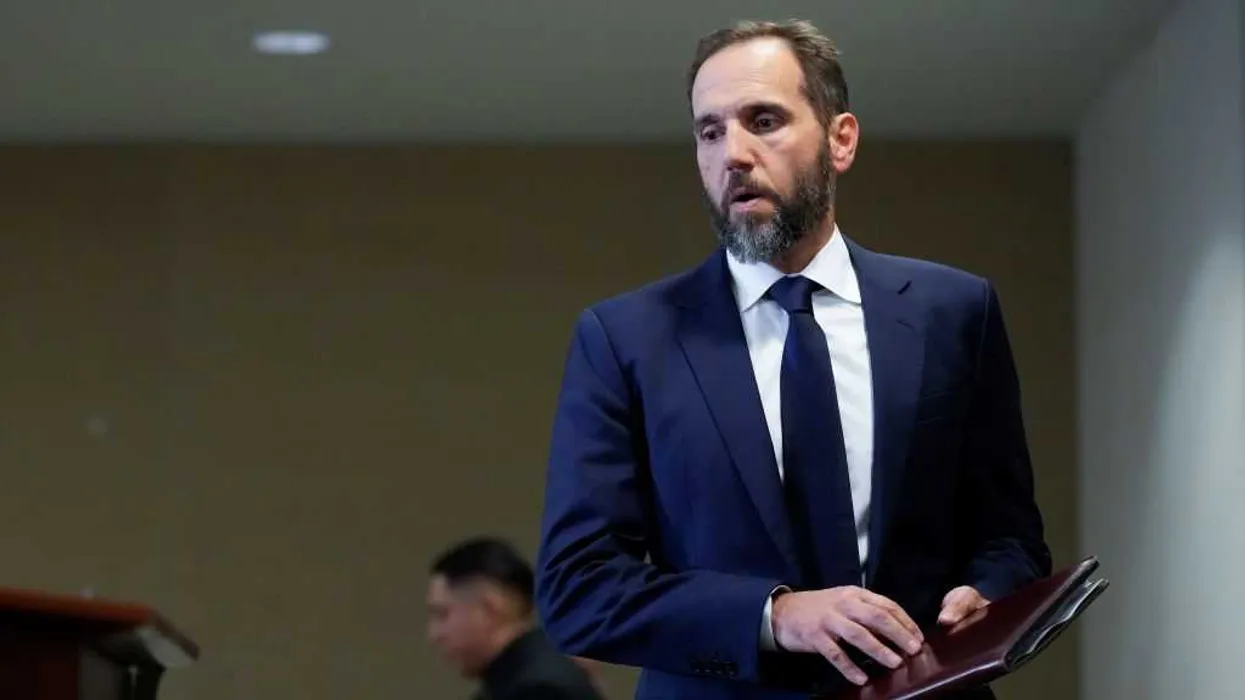
According to CNN, “The FBI, as part of special counsel Jack Smith’s Jan. 6 investigation, used court orders in 2023 to obtain the phone records of nine GOP lawmakers.” These were not actual phone calls or text messages, but rather information about who called or texted whom and when.
Grassley posted the memo to his X account, with the message:
This document shows the Biden FBI spied on 8 of my Republican Senate colleagues during its Arctic Frost investigation into “election conspiracy.” Arctic Frost later became Jack Smith’s elector case against Trump.
He concluded, in all caps: “BIDEN FBI WEAPONIZATION = WORSE THAN WATERGATE.”
Which raises the question: Why did the story turn out to be a one-day wonder? Here we have the discovery of a partisan investigation seeking to uncover dirt on fellow members of Congress (if the records did indeed start with the J6 committee), or at the very least a rogue element of the executive branch targeting political enemies in the legislative branch.
As Johnson said:
They’re casting this net, this fishing expedition against members of the Senate and the House. There is no predicate. There’s no reason for this other than a fishing expedition, which, again, should outrage and shock every American.
Once again, a member of Congress implied that we are witness to a political scandal (one of many in the Biden administration) that is among the worst in our history. Yet when you do a Google search for stories related to phone toll records being subpoenaed by either the J6 committee or the FBI, virtually nothing comes up beyond Oct. 7, the day after Grassley released the memo.
Crickets …
A few news outlets reported in the following days that FBI Director Kash Patel had fired agents involved in the Arctic Frost investigation. In addition, scattered reports surfaced on Hagerty questioning why Verizon released his phone records without informing him.
Verizon told Fox News Digital:
Federal law requires companies like Verizon to respond to grand jury subpoenas. We received a valid subpoena and a court order to keep it confidential. We weren’t told why the information was requested or what the investigation was about.
Grassley and Johnson followed up with their own letter to Verizon and three other telecommunication companies demanding to be supplied with the same data that was provided to the FBI or special counsel Jack Smith. In addition, the senators expressed their belief that the records should have been privileged because they concerned the official constitutional duties of certifying the 2020 presidential election.
It seems like a real story — one that deserves the full attention of the press — but where are the special investigation teams at the New York Times and the Washington Post? What have you heard about this story on CBS, NBC, and ABC newscasts? Very little if anything. Certainly nothing in comparison to the coverage provided to Watergate.
Most recently, Rep. Jim Jordan (R-Ohio), who chairs the House Judiciary Committee, sent a letter to Smith demanding a transcribed interview and documents along with communications related to his investigation of Trump. Well and good, but that interview will be conducted in secret, as were the interviews of Smith’s subordinates — one of whom, according to Jordan, “invoked the Fifth Amendment approximately 75 times.”
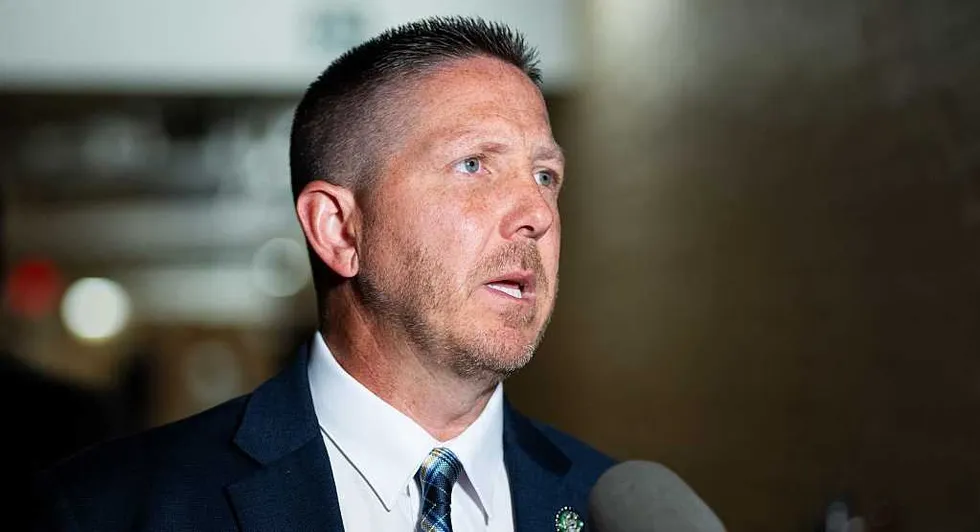 Photo by Bill Clark/CQ-Roll Call Inc. via Getty Images
Time for Congress to step up
It is well past time for the Republican Congress to fulfill its promise to hold accountable those who weaponized the federal government against Trump and his allies. Press releases and secret interviews won’t do the job. We need public televised hearings, with witnesses ranging from members of the J6 committee, including Kinzinger, former Rep. Liz Cheney (R-Wyo.), and now-Sen. Adam Schiff (D-Calif.), to former FBI Director Christopher Wray and Jack Smith.
Would the legacy media networks cover it? Probably not, because as we all know by now, those outfits are still after Trump’s scalp, and they will only seek to discredit Jordan and the other congressional investigators who want to know the truth. That doesn’t mean Republicans should give up.
Watergate started as a one-day story about a botched break-in. But even without Woodward and Bernstein, the famous team of reporters from the Washington Post, the story would never have been kept quiet unless Senate Democrats and congressmen didn’t do their job.
Now it’s time for Jordan, Grassley, and Patel to do theirs.
Editor’s note: This article was originally published by RealClearPolitics and made available via RealClearWire.
America can’t call itself great if it forgets its caregivers
America loves to celebrate those who stand tall. Our founding ideals are built around independence, and we even set aside a holiday to honor it. We cheer for pioneers, entrepreneurs, and innovators who rise by their own strength. Read moreChristians are refusing to compromise — and it’s terrifying all the right peopleBut a nation’s greatness
The archbishop who drove the gospel out of England
At Arizona State University, where I teach, faculty were recently told to “decolonize our curriculum.” On the surface, the directive sounded progressive: Expose power structures, elevate marginalized voices, and promote inclusion. But a closer look revealed something deeper. Read moreAmerica can’t call itself great if it forgets its caregivers“Decolonization,” as defined by many academic theorists,





